
-
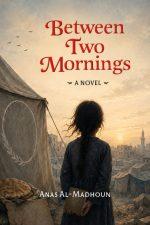
Between Two Mornings
Between Two Mornings is a novel that unfolds over a single day in Gaza—from six in the morning until four the next morning—following twelve ordinary people as they try to keep themselves, and each other, from disappearing. Lujain, a young girl, learns from her teacher Noor that “a person does not become zero.” Her father, Abu Wissam, stands in a distribution line and insists his family is seven, though the register says five. Samer runs from hospital to hospital clutching a photograph of his missing brother Tariq. Rahaf, a nursing student, delivers a baby in a tent with one glove and a shrinking bottle of water. A photographer named Hassan must decide when to raise his camera and when to set it down. An old man counts his grandchildren each night. A poet carries half a bucket of water. A mother sends one message: “I am here.”
Anas Al-Madhoun writes with devastating restraint, refusing spectacle and refusing despair. Each chapter is a door into a life that cannot be reduced to a number, a list, or a headline. The novel asks not for pity but for attention: see the person before the news, the name before the list, the hand that tried even when it could not succeed. In the conclusion, the book reveals what happened to each character—and in doing so, demands that they be remembered not as casualties, but as people who wrote, counted, taught, searched, healed, witnessed, and preserved. Between Two Mornings is a work of witness and of love, insisting that even an unfinished morning deserves to be noticed.
Key words: Gaza, literary fiction, displacement, Palestinian literature, war fiction, human resilience, Arabic novel
-
Sous le bourdonnement
USD $ 6.99 USD $ 28Price range: USD $ 6.99 through USD $ 28Select options This product has multiple variants. The options may be chosen on the product page
Sous le bourdonnement
USD $ 6.99 USD $ 28Price range: USD $ 6.99 through USD $ 28Le son est toujours là. Hmmm. Un bourdonnement continu, mécanique, qui ne s’arrête jamais—le bruit des drones qui survolent Gaza en permanence. Il est là depuis avant que les étudiants ne s’en souviennent. C’est le décor contre lequel ils ont refusé de cesser d’apprendre.
Sous le bourdonnement des drones raconte l’histoire des étudiants de Gaza à travers leurs propres mots et leurs peintures—et celle de la manière dont leurs voix ont atteint le monde.
Tout commence par une simple conversation autour d’un café en Angleterre. Un jeune universitaire gazoui a demandé : « Que pouvons-nous faire ? Ce qui a suivi, c’est un mouvement populaire que personne n’avait planifié. Soixante-dix professeurs d’anglais se sont portés volontaires pour enseigner via des notes vocales sur WhatsApp, enregistrées avec le bruit des drones en arrière-plan. Des universitaires ont diffusé des cours magistraux à des étudiants en médecine qui marchaient des kilomètres à travers les décombres pour capter un signal. Une communauté de Brighton a collecté des fonds pour les frais de scolarité et le matériel informatique. Une galerie a exposé gratuitement l’art des étudiants. Un éditeur a publié We Are Still Here, une anthologie de cinquante-huit étudiants de Gaza écrivant depuis des tentes de déplacés et des quartiers bombardés.
Hala a peint un homme tirant le monde entier de sa famille sur une charrette en bois, refusant de regarder en arrière vers les ruines. Sara a dessiné un olivier dont les feuilles sont devenues des linceuls, mais dont les racines restent fermement ancrées. Lama a croqué un enfant affamé d’après nature, refusant de le laisser disparaître sans témoin. De jeunes écrivains ont envoyé leurs mots les plus intimes à travers un écran de téléphone fissuré, confiants qu’ils seraient traités avec soin.
Nous sommes toujours là, ont-ils écrit. Et nous refusons de disparaître dans le silence.
Voici leur histoire. Un témoignage de courage, de dignité et d’une volonté inébranlable d’apprendre—même sous le bourdonnement des drones.</p>
Select options This product has multiple variants. The options may be chosen on the product page -
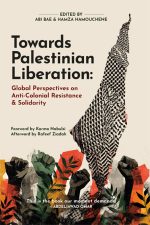
Towards Palestinian Liberation
USD $ 12 USD $ 38Price range: USD $ 12 through USD $ 38Select options This product has multiple variants. The options may be chosen on the product page
Towards Palestinian Liberation
USD $ 12 USD $ 38Price range: USD $ 12 through USD $ 38While awareness and global solidarity with Palestine have grown, mainstream frameworks often remain narrowly focused. Common approaches typically confine the issue to Israel, the West Bank, and Gaza, or reduce solidarity to a matter of human rights and international law violations.
Although engaging formal institutions to end Israel’s genocide, apartheid, and occupation is a necessary strategy, such a focus can inadvertently depoliticize the Palestinian struggle. It frequently overlooks the foundational settler-colonial nature of the Israeli state, the unwavering material and ideological support it receives from Western powers, and Palestine’s profound significance within broader historical and contemporary anti-colonial movements.
The ongoing Western-backed genocide has starkly revealed the political divergence between the West and the Global South. In contrast to institutional complicity and failure, the enduring legacy of anti-colonial solidarity across the Global South has resurfaced as a vital force. As liberal international systems prove ineffective, rebuilding and strengthening transnational solidarity networks has become an urgent imperative to halt the genocide and achieve a liberated Palestine.
A deeper understanding requires a framework that connects Palestine to wider regional dynamics, global power structures, and the long arc of anti-colonial resistance. Towards Palestinian Liberation is an edited volume that reaffirms the Palestinian struggle as an intersectional and transnational anti-colonial fight.
Bringing together diverse perspectives from scholars and activists worldwide, this collection moves beyond mainstream narratives. It explores the interconnectedness of global struggles, examines the role of economic and political interests, and critically assesses the opportunities and challenges facing international solidarity movements. This book is essential for anyone committed to understanding—and advancing—the cause of justice and liberation in Palestine.
Praise for Towards Palestinian Liberation
I can think of no other book that addresses the question of solidarity with Palestine and Palestinians as urgently and as eloquently as this collection – Laleh Khalili, author of Heroes and Martyrs of Palestine: The Politics of National Commemoration
A crucial intervention in these tumultuous times – Yara Hawari, co-director at Al-Shabaka: The Palestinian Policy Network
A book that proves once again that writing and recording is itself resistance – Anuradha Chenoy, Adjunct Professor, Jindal Global University, India; Associate, Transnational Institute
Wide-ranging yet coherent, intellectually ambitious yet grounded in praxis – Hossam El-Hamalawi, scholar specialising in the Egyptian military and policing
An astonishing book – an answer to despair … I can think of no more necessary or important book for those of us determined to revolutionise our world – Leo Zeilig, writer, novelist and author of A Revolutionary of Our Time: The Walter Rodney Story
It stands as both an ode to hope and a practical manual for liberation – Shahd Hammouri, Lecturer in International Law and Legal Theory, University of Kent
This book is a living archive of resistance – unfolding across geographies, histories, and generations … If there is one book to read in these times, this is it – Madhuresh Kumar, Resistance Studies Fellow, University of Massachusetts Amherst; former national convener of the National Alliance of People’s Movements, India.
The authors in this urgent collection demonstrate the world-historic character of the struggle for Palestinian liberation – Thea Riofrancos, author of Extraction: The Frontiers of Green Capitalism
This is the book our moment demands – Abdeljawad Omar, writer and Assistant Professor at Birzeit University, Palestine
This book is essential reading for anyone who wants to understand why Palestinian liberation cannot be separated from revolutionary and anti-colonial struggles across the world… [it] will play a vital role in educating a new generation of activists – Anne Alexander, author of Revolution is the Choice of People
This timely and generous collective effort by renowned scholars and activists is a must-read – Ndongo Samba Sylla, Head of Research and Policy for the Africa Region at International Development Economics Associates (IDEAs)
An indispensable book about one of our times’ most important political causes – Miriyam Aouragh, professor and author of Palestine Online
This book is a lesson in internationalism and the need to organise in order to practise it – Sabrina Fernandes, Brazilian economist, author and ecosocialist activist
This book is an indispensable resource for anyone committed to the belief that a better world is necessary and must be fought for – from many rivers to many seas – Salim Vally, Professor, Faculty of Education, University of Johannesburg
An indispensable intervention … Reading this book is an essential antidote to the darkness and despair that permeates this moment – Grieve Chelwa, Associate Professor of Political Economy, The Africa Institute, Global Studies University
This work stands as a guiding light for those committed to a liberated Palestine in a liberated world – ClaraMattei, author of Escape from Capitalism, founder of The Forum For Real Economic Emancipation (FREE)
What distinguishes this collection is its refusal to treat Palestine as an exception. It places Palestinian liberation where it belongs — at the centre of a global confrontation with empire, fossil capitalism, and the architectures of racial domination – Yanis Varoufakis, Greek economist and author of Technofeudalism: What Killed Capitalism
An essential read to keep hope alive and to remember Ghassan Kanafani’s words: ‘As long as we struggle, we are not defeated’ – Olfa Lamloum, political scientist, filmmaker and president of The Legal Agenda, Tunisia
Historically informed, strategically oriented … crucially important and timely – Gyekye Tanoh, Freedom and Justice for Palestine (Ghana) and member of Global Ecosocialist Network
A must-read for anyone interested in understanding the struggle for Palestine and beyond – Rima Majed, Associate Professor of Sociology at the American University of Beirut
Indispensable for an acquaintance with Palestinian resistance that goes beyond reading the headlines – Walden Bello, Filipino scholar-activist and Right Livelihood awardee 2003
This book could not be more timely. … A book from the movement and for the movement, it provides us with essential tools to continue and globalise the anti-imperialist struggle – Lucia Pradella, Reader in International Political Economy, King’s College London
Here, for the first time, we get a chance to see Palestine and its struggle through the eyes of the majority of humanity – the global South, that is … an invaluable resource – Andreas Malm, author of The Destruction of Palestine Is the Destruction of the Earth.
Shines a new and revealing light on decades of anti-colonial, anti-imperialist struggles … This book will be welcomed by both analysts and activists – Brid Brennan, Transnational Institute Fellow
The Palestinian struggle for liberation is inseparable from histories of anti-colonial resistance and internationalist solidarity … this volume reclaims that radical tradition – Omar Jabary Salamanca, Professor of Social Sciences, Université libre de Bruxelles.
A crucial collection for those of us trying to find a way forward in a world shaped by genocide, rising fascism, aggressive imperialism, and climate catastrophe. – Sai Englert, author of Settler Colonialism: An Introduction
For full versions of these endorsements, view the ‘Review’ tab below.
Select options This product has multiple variants. The options may be chosen on the product page -
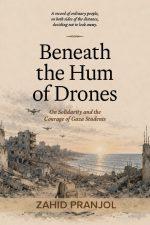
Beneath the Hum of Drones
USD $ 6.99 USD $ 25Price range: USD $ 6.99 through USD $ 25Select options This product has multiple variants. The options may be chosen on the product page
Beneath the Hum of Drones
USD $ 6.99 USD $ 25Price range: USD $ 6.99 through USD $ 25Royalties from this book go to the students in Gaza.
The Gazan students who refused to stop learning
Beneath the Hum of Drones: On Solidarity and the Courage of Gaza’s Students, a new book by Professor Zahid Pranjol, tells the story of how students in Gaza continued to learn through war, displacement and siege, and how an extraordinary network of volunteers from the UK came together to support them, drawing on first-hand testimony from Gaza, stories from inside the atrocities and personal reflection.
The new book follows students who continued to study, write, paint and organise while their universities and homes were being destroyed around them. Alongside their stories, it traces a grassroots movement that connected academics, teachers and communities across the UK with students in Gaza, providing teaching, financial support and opportunities for the students’ artwork and poetry to be seen and heard outside of the walls of Gaza and for their voices to be carried to the world. This book is about the author’s journey with a community of students in Gaza built together, across an impossible distance and in the middle of a genocide.
“This is not a book I set out to write. It began as a question asked over coffee by a scholarship student from Gaza who wanted to know what the two of us, in a university in the south of England, could actually do in the face of annihilation of the people of Palestine.” Professor Pranjol writes.
What followed was an extraordinary international effort. University academics, more than 70 volunteer English teachers, artists, healthcare professionals and hundreds of ordinary people came together, united by the belief that they could not stand by while Gaza’s students were denied their education. Together, they built a network of solidarity with members centred around the University of Sussex and communities across East Sussex, UK. Among those involved were English teachers, doctors, artists and university lecturers from across the UK who volunteered hundreds of hours to teach students in Gaza remotely.
Since early 2024, the initiative has grown into a wide-ranging programme of educational, creative and psychological support for students in Gaza. Its work includes English language teaching delivered by volunteer teachers, art therapy for children, specialist psycho-trauma therapy delivered remotely through Zoom and WhatsApp, and medical and psycho-trauma training for healthcare professionals working in Gaza. The wider initiative documented in the book has supported an estimated 4,000 to 5,000 students through educational programmes, financial assistance and wellbeing support.
The initiative has been shaped by listening to students in Gaza themselves to understand what their needs are. Organisers asked them to identify their most urgent priorities, time and again, they told of their immediate need for access to emergency medical training and mental health training, alongside financial support.
This new book tells their story. Rather than focusing on governments or institutions, Beneath the Hum of Drones centres the experiences of Gaza’s students themselves. Through essays, paintings, poems and personal testimony, the book presents young people determined to continue learning despite extraordinary circumstances.
Professor Pranjol says the students of Gaza became his teachers.
“I was not the teacher in this story. I was the student. The young people of Gaza, studying under bombardment, writing from the side of the road, painting the sea from rooftops beneath the drones, were the ones with something to teach, and this book is mostly a record of what they taught me.”
Since October 2023, universities across Gaza have been devastated, every school has been damaged or destroyed, and hundreds of thousands of students have seen their education disrupted. Palestinian academics have described the destruction of the higher education system as ‘scholasticide’, the systematic destruction of educational institutions and knowledge itself.
While much has been written about the destruction of Gaza, few books tell the story through the eyes of its students, or document the international community that emerged to support them. Beneath the Hum of Drones documents not only that destruction, but also the determination of students and educators to continue learning, and the communities around the world that chose to stand beside them.
“I have tried to write this book without looking away, and without reducing anyone person to a number or a symbol. The people in these chapters have names, and tastes, and ambitions. They argue and they make jokes. They are still hoping. They are, against years of siege and horror, still here.” Professor Pranjol remarks.
All author royalties from Beneath the Hum of Drones will go directly to supporting students in Gaza. By purchasing the book, readers are helping to fund educational opportunities and ensure that young people can continue learning despite the ongoing destruction of Gaza’s education system.
Professor Zahid Pranjol is Professor of Biomedical Sciences at the University of Sussex and a leading voice in inclusive science education and curriculum reform. He is also the co-author, with Dr Jacob Norris, of We Are Still Here, the 2025 anthology bringing together the voices of 58 university students writing from Gaza during the destruction of their universities and homes. Beneath the Hum of Drones tells the story behind that project and the wider movement it inspired.
Endorsements
“An extraordinary and inspiring story of the effort by global solidarity activists to keep Gaza’s students learning against near-impossible odds.” — Norman Finkelstein and Deborah Maccoby
“Testifies to the resilience of Gaza’s younger generation, whose determination should humble us all.” — Ilan Pappé
“A fellowship of endeavour proving that the truest bonds of humanity acknowledge neither distance nor siege.” — Vusi Madonsela
“An inspiring story of what happens when individuals decide to make a difference.” — Caroline Lucas
“Heart wrenching and inspiring, a model of what humanity can do in the rubble of the inhuman.” — Lila Abu-Lughod
“A remarkable testament to the enduring power of education, compassion, and courage.” — Professor Dr. Omar Kh. Melad
“In the face of scholasticide, Palestinian students give us hope.” — Neve Gordon
Closing
The genocide continues. Yet so does the extraordinary courage of Gaza’s students, and the growing network of solidarity that stands beside them. They are still teaching. They are still writing. They are still painting. They are still dreaming of a future. They are still here.
“The people of Gaza were never waiting to be saved. They were already doing the work. They asked only that the rest of us not leave them to do it alone.”
Select options This product has multiple variants. The options may be chosen on the product page -
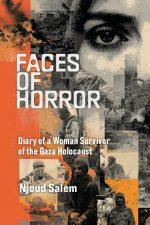
Faces of Horror
USD $ 6 USD $ 12Price range: USD $ 6 through USD $ 12Select options This product has multiple variants. The options may be chosen on the product page
Faces of Horror
USD $ 6 USD $ 12Price range: USD $ 6 through USD $ 12Faces of Horror is the searing, first-hand testimony of Njoud Salem, a Palestinian woman and mother documenting the near-total annihilation of life in Gaza. This diary chronicles the daily fight for survival against a relentless Israeli military campaign, capturing the genocide with an intimacy that no news report can convey.
The narrative begins on October 7, 2023, with the first thunder of rockets, and unfolds as Njoud, her husband, and their three young sons are violently uprooted from their home. They are thrust into a desperate odyssey for refuge, fleeing from hospitals turned into battlefields to the squalid tent cities of the south. The journal is a stark record of the “second Nakba”—a landscape of relentless bombing, starvation, and the systematic dehumanization of a people. Through her account, we witness the destruction of her cherished home and all her material possessions, yet she clings fiercely to her faith and the love for her family.
More than a war diary, Face of Horror is a profound meditation on human endurance and the indomitable will to bear witness. It serves as a critical, primary source document from a survivor of a Holocaust, a challenge to the world’s conscience, and a testament to the spirit of Gaza that refuses to be erased, even as it is buried under the rubble of a world that has turned its back.
Select options This product has multiple variants. The options may be chosen on the product page -
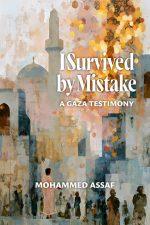
I Survived by Mistake
USD $ 10 USD $ 20Price range: USD $ 10 through USD $ 20Select options This product has multiple variants. The options may be chosen on the product page
I Survived by Mistake
USD $ 10 USD $ 20Price range: USD $ 10 through USD $ 20This deeply personal and introspective work explores survival—not merely physical survival, but emotional and spiritual endurance through love, war, and loss. Written by a Palestinian author against the backdrop of the Gaza genocide, the book weaves together reflections on love, betrayal, killings, displacement, and the search for meaning in a world stripped of humanity.
The narrative oscillates between intimate romantic relationships and the brutal realities of life under bombardment. The author chronicles a turbulent love affair marked by passion, jealousy, betrayal, and eventual dissolution, examining how relationships fracture under the weight of pride, misunderstanding, and external pressures. Simultaneously, he documents the devastating experience of genocidal attacks by Israel in Gaza: displacement, hunger, the loss of loved ones, the daily struggle for survival, and the erosion of human dignity.
Central themes include the nature of survival—questioning whether mere existence constitutes living, and whether those who survive emerge intact or fundamentally altered. The author grapples with grief over the death of his grandmother, the loss of his beloved, and the collective trauma of a people under siege. He explores the tension between hope and despair, the betrayal of humanitarian aid systems, the corruption of values in times of crisis, and the profound loneliness of carrying unspoken pain.
Writing serves as both confession and catharsis—an attempt to staunch internal bleeding and make sense of chaos. The prose is poetic, fragmented, and emotionally raw, reflecting the author’s belief that true survivors do not write; they simply endure. Ultimately, the book is a testament to the impossibility of returning unchanged from love or genocidal attacks, and the quiet dignity of continuing despite everything.
Select options This product has multiple variants. The options may be chosen on the product page -
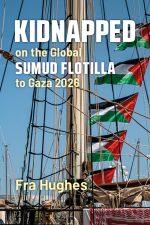
Kidnapped on the Global Sumud Flotilla to Gaza 2026
USD $ 6.99 USD $ 20Price range: USD $ 6.99 through USD $ 20Select options This product has multiple variants. The options may be chosen on the product page
Kidnapped on the Global Sumud Flotilla to Gaza 2026
USD $ 6.99 USD $ 20Price range: USD $ 6.99 through USD $ 20Kidnapped on the Global Sumud Lifeline to Gaza 2026 is the first-person account of Fra Hughes, a Belfast activist who sailed with the Global Sumud Flotilla in April 2026 on a humanitarian mission to break Israel’s siege of Gaza. Carrying food, medicine, and an unshakeable conviction that another world is possible, Hughes and his comrades were intercepted in international waters by Israeli commandos. What followed were three days of kidnapping, imprisonment, and deliberate degradation—from a metal shipping container in the Mediterranean to the high-security Ketziot Prison in the Negev desert.Told with unflinching honesty and dark Irish humour, this memoir spans three decades of activism. Hughes traces his journey from the streets of Belfast during the Troubles—where solidarity with Palestine was forged in the shadow of British occupation—through fifteen years of campaigns, convoys, and protests in Brussels, Barcelona, Cairo, and beyond. He documents the first Gaza convoys of 2010, the slow-burning solidarity movement that kept faith through years of failure, and the 2026 flotilla aboard the Alma: the preparations, the dangers, the extraordinary community of international activists who risked everything together on the water.The book weaves together multiple voices, including Tadhg Hickey’s account of a separate vessel in the same flotilla, and bears witness to atrocities—beatings, sexual assaults, mass arrests—documented in Istanbul medical centres and activist testimony. Against the normalisation of Gaza’s genocide, Hughes insists on naming what he saw.Returning to a hero’s welcome in Dublin and Belfast, his message is unambiguous: international solidarity is not charity but resistance. Kidnapped on the Global Sumud Lifeline to Gaza 2026 is a testament to sumud—steadfast endurance—and a call to action for everyone who refuses to look away.Select options This product has multiple variants. The options may be chosen on the product page -
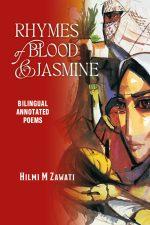
Rhymes of Blood and Jasmine
USD $ 25 USD $ 35Price range: USD $ 25 through USD $ 35Select options This product has multiple variants. The options may be chosen on the product page
Rhymes of Blood and Jasmine
USD $ 25 USD $ 35Price range: USD $ 25 through USD $ 35Rhymes of Blood and Jasmine is far more than a bilingual poetry collection; it is a poetic and cultural testimony that merges lyrical beauty with critical depth. Spanning over five decades of creative expression, Dr. Hilmi Zawati weaves verses charged with spiritual and romantic love, exile, memory, resistance, and identity. Symbols like jasmine, oranges, figs, and blood evoke a profound sense of homeland, sacrifice, and longing, forming an emotional tapestry firmly rooted in the Palestinian experience. This is poetry that does not simply describe a reality but embodies it, offering readers an intimate portal into a world shaped by history and sustained by hope.
KEY WORDS
Palestinian resistance poetry, alienation and exile, comparative world literature, translation studies, global resistance literature, Palestinian literature in the diaspora, modern Arabic poetry.
What makes this collection truly singular is its self-translation—a rare act that unites author and translator into a single, cohesive poetic voice. Zawati transcends conventional translation by recreating the essence of his Arabic poems in English with unmatched emotional and stylistic fidelity. His bilingual artistry breathes life into both texts, allowing them to resonate authentically across languages and cultures, ensuring that the nuance and musicality of the original are never lost.
This work speaks to a broad audience of readers, scholars, poets, translators, and students of translation studies, comparative literature, Palestinian history, and Arab diaspora cultures. It asserts translation as a form of cultural sovereignty—rejecting distortion, simplification, and marginalisation—while affirming the enduring presence of Arab poetic tradition within global literature. Rhymes of Blood and Jasmine is not just to be read; it is to be lived. A poetic bridge between languages and worlds, it revives silenced memories and restores the voice of love and homeland with grace, dignity, and truth. This collection is an essential contribution to world literature, offering a poignant reminder of poetry’s power to heal, resist, and connect.
Reviews
“This exquisite poetry collection interweaves Palestinian resistance, exile, love, and universal humanism into a moving tapestry of memory and justice. The spirit of the jurist-poet infuses each verse, where poetry transcends the limits of law to restore moral balance through beauty. With refined free verse, incantatory rhythms, and vivid imagery, Hilmi Zawati’s landmark book transforms stifled revolt into art—a luminous contribution to Palestinian, Arabic, and world literature.” —Daniela Rodica Firanescu, Associate Professor (Retired) of Arabic Studies, Dalhousie University, and poet.
“In this unique bilingual collection of Palestinian resistance poetry, Zawati offers a self-curated, self-translated selection from his poetic works. Rooted in Palestinian themes—love, exile, memory, and longing—his poems blend the personal and universal, linking the Palestinian experience with the broader human condition. The side-by-side presentation of Arabic and English makes this collection valuable for scholars and students of modern Arabic literature, universal comparative literature, and translation studies.” —Ines Aščerić-Todd, PhD, Senior Lecturer in Arabic &Middle Eastern Cultures, School of Literatures, Languages and Cultures, University of Edinburgh.
“‘History,’ said Byron, ‘is the devil’s scripture.’ This dismal fact’s inked in scarlet blood—especially in conflict annals, wherein saints get deemed sadists, while the slain get labelled suicides. Thus, Hilmi M. Zawati pens, for Palestine, plaidoiries—pleadings—because, ‘I returned to you, and you became the graveyard….’ He echoes Wilfred Owen: ‘The Poetry is in the pity.’ His poetry warns, where Justice is not, neither flourishes Freedom nor Love.” —George Elliott Clarke, E.J. Pratt Professor of Canadian Literature, University of Toronto
“A member of the Palestinian Diaspora and a prolific poet, Hilmi M. Zawati’s Rhymes of Blood and Jasmine present an emblematic story of heartbreak and displacement. His inspired verses evoke his peoples suffering coupled with a passionate devotion to ‘the beloved,’ as a free Palestine yet to be realized. This self-translated, dual language collection offers poems teeming with powerful, evocative imagery and lyric language that unflaggingly ‘look forward to freedom’.” —Giovanna Riccio, prize-winning poet, author of Plastic’s Republic.
“Powerful lyrical poems of one of the best poets of the Palestinian resistance. It provides a double witness of the act of creation: the original poems and the translations. With bubbling emotions and perceptive reflections, it offers a bridge between the past and the present, the painful reality and the metaphor of a country raped by colonialists, and forced exiting and the desire to return. Because of his love, he still hopes!” —John P. Portelli, Professor Emeritus, University of Toronto, poet and fiction writer.
“Though dedicated to Palestine, Zawati’s poems embody a universal story of dispossession, love, and longing. They speak from the heart to the heart, confronting belligerence and clinging to a distantbeloved—Palestine. For him, forgetting is a second death, the cruellest exile. Thus, he endures, steadfast, with nothing but his pen, while the only bullet he is willing to fire is its ink.” —Mireille Rebeiz, PhD, SJD, Chair of Middle East Studies & Associate Professor, Dickinson College
“Resistance in Zawati’s poetry extends beyond its immediate political dimension and manifests in various forms, including resistance to oblivion, marginalization, oppression, tyranny, and cultural or linguistic distortion, particularly within the context of poetry translation. Zawati’s engagement in translating his own works introduces an additional creative dimension, reflecting a deep critical awareness of the complexities inherent in conveying poetry and underscoring that translation constitutes a re-creation of the text in another language rather than a literal rendering”. —CAlī cAbd al-Fattāḥ, The Algerian Cultural Journal (August 2026)
“Zawati rejected ‘rigid literalism’ and instead used a methodology based on ‘symbolic precision’ and ‘emotional resonance.’ This approach highlights his dual role as author and translator, granting him a unique ‘interpretative authority’ to bridge Arabic poetic traditions and English-speaking audiences without resorting to ‘Orientalist simplification.’ His self-translation is described as ‘narrative justice’ and ‘moral diplomacy,’ as it resists the ‘westernisation’ of Arabic texts and challenges dominant representational politics that marginalise diverse Palestinian voices”. —Al-Qabas Newspaper (August 23, 2026)
“Rhymes of Blood and Jasmine is more than a translated selection of poetry—it is a poetic proclamation, a critical stance, and a vivid testament to the power of creativity to transcend linguistic, geographical, and symbolic borders. Through his meticulous self-translation, Dr. Hilmi Zawati not only conveys the beauty of his poetry but also takes a firm stand against reductive representation, engaging the political and cultural frameworks that have shaped how Palestinian poetry is received globally. This collection affirms the ability of resistant Palestinian verse to cross boundaries—linguistic, political, and emotional—enriching the global literary scene with a bilingual Arabic voice that remains true to its singular soul”. —Nada Chaddad, PhD., Addustour Newspaper (September 4th, 2026)\
Select options This product has multiple variants. The options may be chosen on the product page -
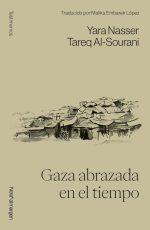
Gaza abrazada en el tiempo
USD $ 22.38Select options This product has multiple variants. The options may be chosen on the product page
Gaza abrazada en el tiempo
USD $ 22.38The Spanish translation of original English edition of Gaza Held in Time is now available, published by Nota al margen in Spain. Copies of this publication are available here: https://www.notalmargen.com/libros/gaza-abrazada-en-el-tiempo/
«Sigo sin saber por qué amamos a Gaza. Tal vez porque nadie más lo hará. O porque dejar de amarla significaría renunciar a nosotros mismos. Ta vez nunca entienda el por qué, o bien sea algo que no necesito explicar. Quizá el amor es lo que queda cuando no queda nada. O quizá, solo quizá, no sea amor en absoluto, sino dolor. Una negativa a dejar de preocuparse, incluso cuando está en llamas. Esto no es una respuesta. Es lo que descubrí cuando empecé a preguntar. Sentir amor por Gaza no es lógico»
Le solía contar cuentos a mi hermana pequeña antes de dormir. Inventaba ciudades con árboles mágicos y bicicletas voladoras, donde la gente no se escondía bajo el hueco de la escalera ni revisaba el depósito de agua a diario, donde nadie se moría ni se suspendían las clases porque la escuela había sido bombardeada.Ella se reía y me preguntaba:
—¿De verdad, eso existe?
—Todavía no —le respondía.
Ese era el truco en Gaza. Decíamos «todavía no», en lugar de «nunca».
Porque la esperanza era lo único que no podían bombardear.
El cielo gritaba fuerte. Y sigue haciéndolo.
Ahora, en lo más hondo de mí, espero el día en que todo se quede en silencio.
Y cuando eso ocurra, alzaré la mirada, no con miedo, sino en paz.
Ese día no ha llegado.
Pero seguimos soñando.
Y seguimos viviendo.«Busco por todas partes un cielo del que esté ausente la muerte. Estoy segura de que está ahí, cuando compruebo los callejones y las avenidas. Se dice que existe justicia bajo ese cielo. Justicia es lo que siempre he anhelado y buscado».
«¿Seguiremos durmiendo en tiendas de campaña durante años? ¿Crecerán los niños entre paredes de nailon, aprendiendo a dibujar con cenizas? ¿Qué ocurrirá cuando el mundo siga adelante —de nuevo— y los únicos que queden para recordar este horror sean quienes no pudieron huir de él?».
«si dejo de escribir, / el silencio escribirá en mi lugar. / Y temo lo que pueda contar».
Select options This product has multiple variants. The options may be chosen on the product page -
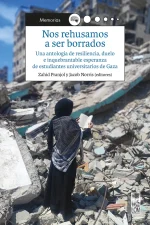
Nos rehusamos a ser borrados
USD $ 16Select options This product has multiple variants. The options may be chosen on the product page
Nos rehusamos a ser borrados
USD $ 16Con desgarro, con dolor, pero sobre todo con enorme dignidad, porfía y convicción, un grupo de estudiantes de Gaza nos hace sentir y escuchar su voz urgente y afirmativa en una frase valiente e inquebrantable: Nos rehusamos a ser borrados.
Con la universidad en ruinas, con la ciudad y el país transformado en escombros, con sus familias diezmadas por el éxodo incierto y un genocidio llevado adelante por el Estado de Israel, un conjunto de estudiantes gazatíes levanta un testimonio coral que documenta con un pulso literario desgarrador la ruptura absoluta de la cotidianidad civil a partir de octubre de 2023.
Con un tono profundamente descriptivo y despojado de eufemismos, los narradores exponen la caída de los hospitales, la precarización en claustrofóbicas tiendas de campaña y la instauración de una hambruna fabricada como táctica bélica, donde el intento de conseguir un simple saco de harina se convierte en un acto de inmolación.
Al documentar el asedio, los textos evidencian cómo el resguardo de la identidad y la educación emergen también como formas de resistencia. Estudiantes que buscan captar señal de internet en los tejados bajo el constante zumbido de los drones demuestran que mantener viva la necesidad de comunicar es el único antídoto contra la aniquilación sistemática.
La sección poética sublima el trauma físico, ofreciendo una exploración visceral sobre la pérdida, la orfandad cíclica y la culpa del sobreviviente. Más que un recuento de atrocidades, este libro es un imperativo ético contra el silencio del mundo.
Select options This product has multiple variants. The options may be chosen on the product page -

We Are Still Here
USD $ 7.99 USD $ 27Price range: USD $ 7.99 through USD $ 27Select options This product has multiple variants. The options may be chosen on the product page
We Are Still Here
USD $ 7.99 USD $ 27Price range: USD $ 7.99 through USD $ 27Since the start of the unfolding genocide against Palestinians in Gaza, carried out through settler-colonial Israeli violence, higher education institutions have been systematically destroyed. Campuses lie in ruins, academics and students have been killed or forcibly displaced, and what was once a thriving, intellectually vibrant student population now lives under daily threat of bombardment, forced starvation, and death. For nearly two years, students have been cut off not only from their universities, but from their dreams, their futures, and even their most basic sense of safety.
Yet, despite this unimaginable trauma, many are still writing.
We Are Still Here is an anthology of these voices—raw, unfiltered, and courageous. It features short and long stories, poems, essays, and testimonies written by students from Gaza’s universities. These are not retrospective reflections or distant analyses; they are real-time words, emerging from the depths of genocide, displacement, and grief. These writings may be their last hopes to reach the world, a final act of resistance through expression.
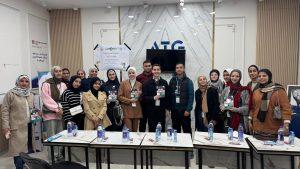
Listen to our podcast conversation
with the student contributors hereOr you can subscribe to Daraja Press podcasts wherever you get your podcasts.
All royalties from the sales of this book go to the student authors in Gaza.
Surviving at the darkest extremes of suffering, of destruction and displacement, famine and the constant threat of maiming or death, these young writers speak to us with piercing lucidity. Their resilience is their only form of optimism. Paradoxically, reading them lifts the heart.
– Ian McEwan, author of Atonement and Enduring LoveA moving, painful and yet hopeful collection of the younger generation of the people of Gaza. Sumud, resilience, was never so powerful and clear, as it appears in this must read and urgent collection. —Ilan Pappé, professor, University of Exeter’s College of Social Sciences and International Studies, author, A Very Short History of the Israel-Palestine Conflict
In the heart of suffering, words are born — and from beneath the rubble, creativity rises. This book is more than a collection of written pages; it is the echo of resilient souls and the cries of pens that spoke when voices were silenced. — Professor Dr. Omar Kh. Melad, President of Al-Azhar University– Gaza
We Are Still Here is not a book about war — it is a book about being alive after the world has decided you are already gone, written in rooms that may no longer stand. These pages are dispatches from the thin edge of the present: letters from hunger, fragments of interrupted lives, flashes of hope so unyielding it burns. Here, young people shape the record of their time on earth, knowing that their time may be short. You will not leave this book with the comfort of closure. It will stay with you long after the final page has turned. — Leila Sansour, filmmaker and founder of Open Bethlehem
These Gaza poignant reflections in prose and poetry from the midst of genocide are both heart-rending and full of life and promise. Israel may have physically killed many of their young authors, but will never kill their words, which live on in this powerful collection of their writings. — Ghada Karmi.
Death is not an ideation for these young writers, but an everyday reality. This collection is a testimony to the power of words. It reveals how love, creativity and hope can galvanise us against fear and inaction. — Selma Dabbagh, author of the novel Out of It and editor of the anthology We Wrote in Symbols; Love and Lust by Arab Women Writers.
Sara Alkhaldy, one of the contributors to We Are Still Here, a new Gazan anthology of student writing, says: ‘I wish I could bottle the scent of our home and take it with me as I left.’ Rula Elkhair writes of studying during displacement: ‘Even in places with no electricity, no water and no stable internet, I installed an eSIM on my phone and climbed to the rooftop under buzzing drones to download lectures. I took exams in cafés by the sea. I studied while hungry, while afraid, while grieving.’ — Selma Dabbagh in London Review of BooksKnowledge of the Relevant Facts
You can find the French language edition here: Nous Sommes Toujours Là
Select options This product has multiple variants. The options may be chosen on the product page -
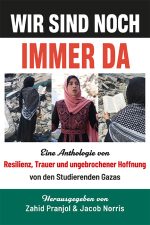
Wir sind noch immer da
USD $ 12 USD $ 27Price range: USD $ 12 through USD $ 27Select options This product has multiple variants. The options may be chosen on the product page
Wir sind noch immer da
USD $ 12 USD $ 27Price range: USD $ 12 through USD $ 27Professor Zahid Pranjol ist Professor für Biomedizinische Wissenschaften an der University of Sussex. Er ist eine führende Stimme in der inklusiven Wissenschaftsbildung und Lehrplanreform und leitet Bestrebungen zur Dekolonisierung des Lehrplans der Biowissenschaften, indem er eurozentrische Vorurteile hinterfragt und Leselisten diversifiziert. Seit April 2024 unterstützt er über 2.000 Studierende an drei großen Universitäten in Gaza, indem er Lehrmaterialien, Forschungsmentorate, Englischsprachtraining sowie Zugang zu professioneller und psychologischer Unterstützung bereitstellt.
Jacob Norris ist außerordentlicher Professor für Geschichte des Nahen Ostens an der University of Sussex. Er hat umfassend zur palästinensischen Geschichte im 19. und 20. Jahrhundert publiziert und arbeitet derzeit zur Geschichte der palästinensischen Solidarität in Lateinamerika.
Select options This product has multiple variants. The options may be chosen on the product page -
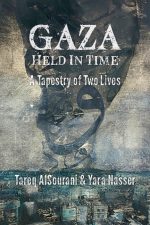
Gaza Held in Time
USD $ 6.99 USD $ 16Price range: USD $ 6.99 through USD $ 16Select options This product has multiple variants. The options may be chosen on the product page
Gaza Held in Time
USD $ 6.99 USD $ 16Price range: USD $ 6.99 through USD $ 16Gaza Held in Time
“A jewel of pain and memory.” —Patrizia Cecconi
Two Voices. One Shattered Homeland. A Story the World Can’t Ignore.
About the Book
Gaza Held in Time: A Tapestry of Two Lives is a groundbreaking memoir written by Tareq AlSourani and Yara Nasser, two Palestinian teenagers whose lives were torn apart by the 2023–2025 genocide. One fled to Egypt, carrying the guilt of escape. The other stayed, documenting Gaza’s descent into famine, mass graves, and the quiet rebellion of dreams.
Their alternating narratives—raw, poetic, and unflinchingly honest—weave together moments of piercing beauty (the scent of jasmine in Gaza’s streets, the taste of warm knafeh from Abu Al-Soud) with the horror of drone strikes, forced displacement, and the systematic erasure of their home.
This is not just a book about war. It’s about what it means to love a place the world is trying to destroy.
Why This Book Matters
- A Firsthand Account of Genocide: Written in real time from inside and outside Gaza, it shatters statistics with intimate, devastating testimony.
- A Testament to Resilience: From cooking over open fires to smuggling words past censorship, their creativity defies annihilation.
- A Call to Remember: “We wrote so Gaza would not fade into headlines.” This book is a lifeline to stories the world must not forget.
Praise for Gaza Held in Time
“Devastating… These could be our children. A brave and necessary book.”
—Yahia Lababidi, Palestinian poet“Their words should haunt us forever.”
—Lynne Segal, Birkbeck, University of London“A door left open for memory, for return, for rebuilding.”
—Aref Husseini, author of Half-AshkenaziExcerpt: The Day Everything Changed
“October 7, 2023. I woke to the sky screaming. By noon, the internet was gone. We played cards in silence, waiting for the ceiling to collapse. When it didn’t, we realized: this was the new normal. Gaza was being unmade in front of us.” —Yara Nasser
Order Now
Available in softcover and eBook.
Join the Conversation
- #GazaHeldInTime – Share quotes, reviews, and solidarity.
- Amplify Gaza’s Voices – Tag @DarajaPress & demand media coverage.
#GazaHeldInTime #ReadPalestine #GazaGenocide #Memoir #ResistanceLiterature #FreePalestine
“The story is not over because the sea still calls our names.”
Order. Read. Remember.Select options This product has multiple variants. The options may be chosen on the product page -

Palestine Wail: Poems
USD $ 18Select options This product has multiple variants. The options may be chosen on the product page
Palestine Wail: Poems
USD $ 18Lababidi’s Palestine Wail calls for the simplest, barest humanity, and it reminds us that loss of life, occupation, and genocide take an impossible toll on everyone. Finally, it holds us all accountable to address injustice, to dispel oppression and to work toward collaborative and restorative justice. In our interview, we focused on what he saw as our responsibility to humanity. — How Hope Outlasts Despair: An Interview with Yahia Lababidi — https://www.clereviewofbooks.com/writing/how-hope-outlasts-despair-an-interview-with-yahia-lababidi
…a poignant message of compassion and hope, the kind beautifully expressed by Yahia Lababidi in his #book #Palestine Wail,
@DarajaPress.
“Since purchasing the book, I have read the poem every day—it tends to feed my imagination.” https://boundlessphilanthropy.com/writings/tending-the-imagination-the-practice-of-creativity-care-challenge-compassion #poetry #GazaRenowned aphorist Yahia Lababidi’s Palestine Wail writes alongside a catastrophe beyond words, trying to shelter in words what remains of our humanity. To be a Minister of Loneliness and Lightkeeper, tending to the light. — Philip Metres, author of Fugitive/Refuge
Palestine is personal for writer, Yahia Lababidi. His Palestinian grandmother, Rabiha Dajani — educator, activist & social worker — was forced to flee her ancestral home in Jerusalem, at gunpoint, some eighty years ago.
As an Arab-American, Lababidi feels deeply betrayed by the USA’s blind support of Israel’s genocide of Palestinians.
In Palestine Wail, he reminds us that religion is not politics, Judaism is not Zionism, and to criticize the immoral, illegal actions of Israel is not antisemitism — especially since, as an Arab, Lababidi is a Semite, himself.
Using both poetry and prose, Lababidi reflects on how we are neither our corrupt governments, nor our compromised media. Rather, we are partners in humanity, members of one human family. Not in Our Name will the unholy massacres of innocent Palestinians be committed (two-thirds of whom are women and children) nor in the false name of ‘self-defense’.
In turn, Lababidi reminds us that starvation as a weapon of war is both cruel and criminal, as is collective punishment.
Palestine Wail invites us to bear witness to this historical humanitarian crisis, unfolding in real-time, while not allowing ourselves to be deceived, intimidated or silenced. We are made aware of the basic human truths that no lasting peace can be founded upon profound injustice and that the jailor is never Free…
Yahia Lababidi, an Arab-American writer of Palestinian background, has crafted a poignant collection which serves as a heartfelt tribute to the Palestinian people, their struggles, and their resilience in the face of an ongoing genocide and ethnic cleansing.
The collection, described as a love letter to Gaza, draws inspiration from the rich literary tradition of Palestinian resistance literature. Lababidi, known for his critically-acclaimed books of aphorisms, essays, and poetry, brings his unique voice to this personal, political and spiritual work.
Palestine Wail addresses us in a variety of voices: outrage, lamentation and pity, in attempting to honor the pain of the oppressed Palestinian people, while also celebrating their enduring spirit.
Lababidi’s Wail, ultimately, is a prayerful work seeking peace, healing and reconciliation—a testament to the transformative power of literature to keep hope alive in the face of seemingly insurmountable odds.
These are necessary and truthful poems. Yahia Lababidi powerfully illuminates this heartbreaking time and terrible season in the history of our world. This book, like a lantern in darkness, brings to light the truth of lives we must learn to honor and remember. — James Crews, author of Unlocking the Heart: Writing for Mindfulness, Creativity, and Self-Compassion
Yahia Lababidi’s stunning and resonant collection, Palestine Wail, addresses the outrage felt by many of the oppressed Palestinian supporters and more. He also speaks of the lamentations of his people and the show of pity, compassion, and empathy from many members of the human family from all around the world. — The Indefatigable Longing For Peace And Rapprochement In Yahia Lababidi’s Palestine Wail By Michael Parker.
Select options This product has multiple variants. The options may be chosen on the product page -

Unsilenced
From: USD $ 10Select options This product has multiple variants. The options may be chosen on the product page
Unsilenced
From: USD $ 10Unsilenced: Poems for Palestine is a collection of poems that convey profound emotions and serious reflections on the ongoing situation in Gaza and Palestine since the Nakba. The anthology seeks to express the moral outrage felt by poets from around the world, highlighting the perceived double standards of the West regarding international law and the suffering of the Palestinian people. The poems examine the daily realities of life and philosophical perspectives on the human condition, using nature as a motif to articulate emotions and explore themes of homeland, childhood, exile, genocide, and war. All proceeds from the sale of the collection will be donated to Gaza, demonstrating the poets’ commitment to fostering positive change through their art. Contributors include diverse voices from various countries, each recognizing the urgency and necessity of addressing the inhumane actions perpetrated against Palestine.
Income from the sale of this title will be donated for Palestine.
Praise for Unsilenced
Haunting verses by poets fluent in the language of death and genocide. Each poem rings out as a piece of memory, a bridge and a dream. This elegy will stand as a testimonial, a witness, by brave voices exhausted by the deafening silence of a traumatized world. —Nnimmo Bassey, author of I See the Invisible (poems) and Laureate of the Right to Livelihood Award 2010
… the priceless value of an anthology of lyrics from yet another encircled, blitzed, strafed, and bombarded commune, ghetto, or kibbutz, is that it bears indelible witness to the unbreakable human spirit yearning for freedom, for peace, for bread and wine and water set amid an olive grove or a lemon orchard. That is what you will unfold in editor John P. Portelli’s Unsilenced: Poetry for Palestine. Poets—Jew and Arab, Muslim and Christian, Atheist and Surrealist—voice suffering, resilience, despair, and hope, speaking out of their fragile humanity to demand that vile atrocities cease. — George Elliott Clarke, author of Canticles I-III, 6 vols, MMXVI-MMXXIII (2016-2023)
Unsilenced shows how poetry is written to trigger and provoke, to bear witness, to look at the sky and shout, over and over, as loudly as necessary against injustice. Immanuel Mifsud, Associate Professor, University of Malta and winner of the European Union Prize for Literature (2011).
Contributing Authors
Poems by: Raed Anis Al-Jishi (Kingdom of Saudi Arabia), Ridvan Ardic (Türkiye), Lil Blume (Canada), Taghrid Bou Merhi (Lebanon and Brazil), Hasan Bozdaş (Türkiye), Norbert Bugeja (Malta), Tatev Chakhian (Armenia), Franca Colozzo (Italy), Lana Derkač (Croatia), Josie Di Sciascio-Andrews (Canada), Leanne Ellul (Malta), Marthese Fenech (Malta), Abigail George (South Africa), Joe Giampaolo (Canada), Elham Hamedi (Iran), Xanthi Handrou-Hill (Greece), Jennifer Hosein (Canada), Fady Joudah (USA), Sheema Kalbasi (Iran, Denmark, USA), Rula Kahil (Lebanon and Canada), Nibal Khalil (Palestine), Zeyneb Karaca (Türkiye), Yahia Lababidi (USA), Milica Jeftimijević Lilić (Serbia), Sonia Maddouri (Tunisia), Lisa Suhair Majaj (Palestine, U.S.A., and Cyprus), Marwan Makhoul (Palestine), Leila Marshy (Canada), Taghrid Bou Merhi (Lebanon and Brazil), Ahmed Miqdad (Palestine), Maria Miraglia (Italy), Walid Nabhan (Malta, Jordan, Palestine), Mirela Necula (Romania), Mansour Noorbakhsh (Canada), Joseph C. Ogbonna (Nigeria), Muhammed Huseyin Ozer (Türkiye), John P. Portelli (Malta and Canada), Niloy Rafiq (Bangladesh), Shirani Rajapakse (Sri Lanka), Giovanna Riccio (Canada), Omar Sabbagh (Lebanon), Paul Salvatori (Canada), Eray Saricam (Türkiye), Zulal Sema (Türkiye), Cao Shui (China), Kadir Tepe (Türkiye), Graciela Noemi Villaverde (Argentina), Mirela Leka Xhava (France, Albania), Klara Vassallo (Malta), Anna Yin (Canada), Ghassan Zaqtan (Palestine)Select options This product has multiple variants. The options may be chosen on the product page -
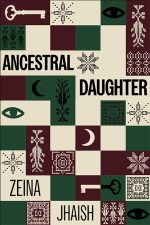
Ancestral Daughter
USD $ 15 USD $ 28Price range: USD $ 15 through USD $ 28Select options This product has multiple variants. The options may be chosen on the product page
Ancestral Daughter
USD $ 15 USD $ 28Price range: USD $ 15 through USD $ 28Ancestral Daughter is a poignant collection of free-verse poetry by Palestinian writer Zeina Jhaish, exploring themes of diaspora, identity, resistance, and love. Through vivid imagery and raw emotion, Jhaish navigates her dual existence as a Palestinian woman from Gaza living in the diaspora, weaving personal and collective histories into her verses. The book is divided into two parts: “Ancestral,” which delves into exile, land, and the trauma of occupation, and “Daughter,” which reflects on womanhood, heartbreak, and rebirth. Poems like “Haifa on 85th Avenue” and “Godforsaken Homes” juxtapose longing for homeland with the alienation of displacement, while “Being a Palestinian Woman: A Guide” celebrates resilience. Jhaish honors her heritage, mourns ongoing violence, and clings to hope, dedicating the work to Gaza and Palestinian martyrs. Blending English and Arabic, her poetry is a testament to ancestral love and the unyielding spirit of her people.
20% of the income from e-book orders will be donated to the Palestine Children’s Relief Fund.
If you are a bookstore, please get in touch with [email protected] for special offers.
Select options This product has multiple variants. The options may be chosen on the product page -

Beside the Sickle Moon: A Palestinian Story
From: USD $ 5Select options This product has multiple variants. The options may be chosen on the product page
Beside the Sickle Moon: A Palestinian Story
From: USD $ 5Beside the Sickle Moon is near future literary activism based on Israel’s occupation of Palestine. The story tells a first person narrative through Laeth Awad, a Palestinian who lives above his convenience store experiencing days pass through smoke clouds with his cousin Aylul. One night upon returning to their village from Ramallah they encounter an Israeli checkpoint within the buffer zone that hadn’t been there before. It isn’t long until the two stumble upon Israel’s plans to construct a luxury hotel for incoming settlers, Ma’al Luz. Demolition crews and military personnel are due to fulfill this contract in the months to come and with them as overseer is the infamous Meir Cohen, a Mossad operative who played a key role in the fall of Gaza.
Aylul believes from their father, an Al Qassam militant who died in the battle for Jericho, that only the threat of annihilation breeds the best of human action. They use their contacts to connect with the factions, who grant them strength to defend their village from occupation. With these resources in hand Aylul forms Al Mubarizun, a group crowning themselves Palestine’s final resistance.
Laeth doubts the existence of a future, lost in philosophical ambivalence as he tries to follow his cousin into the depths of guerrilla warfare. He questions the futility of resistance when all former allies have normalized relations with Israel. And what of the innocents on the other side of the Wall who had no say in where they were born? Though a minority of the population, he is not alone in this sentiment. Palestinian youth begin to empathize with this logic enough to create a new social movement, the Forgotten Ones. Coining the derogatory term that their critics slung, the NGO advocates for a peaceful transition to Israel’s colonization where most Palestinians hear whimpers of surrender.
Set in a hauntingly plausible future, where Israel has marked a century of Palestinian occupation … As a novel of the future, Beside the Sickle Moon is, unsurprisingly, preoccupied with temporality, attempting to reconcile the vastness of macro-historical events with the immediacy of everyday life. … One of the most chilling features of Husien’s novel as history is the world’s renewed abandonment of Palestine. In a future of systemic global crisis, nations have closed ranks and shut their eyes. Israeli mines run on the slave labor of Palestinian captives, and refugee camps have become invisibilized death zones … — Londiwe Gamedze https://africasacountry.com/2024/11/reading-the-present-as-history
Select options This product has multiple variants. The options may be chosen on the product page -
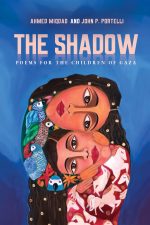
The Shadow
USD $ 0.01 USD $ 16Price range: USD $ 0.01 through USD $ 16Select options This product has multiple variants. The options may be chosen on the product page
The Shadow
USD $ 0.01 USD $ 16Price range: USD $ 0.01 through USD $ 16Discover The Shadow: Poems for the Children of Gaza, a poignant collection by Palestinian poet Ahmed Miqdad and Maltese-Canadian poet John P. Portelli. Written amidst the horrors of Gaza’s genocide and the personal battle with cancer, these 42 poems bear witness to the intersection of political violence and personal mortality. Through raw emotion and lyrical defiance, the poets forge solidarity across borders, offering a glimmer of hope in the face of erasure.
Featuring evocative art by Malak Mattar and a foreword by Professor Jamil Khader, this collection is a call to remember, resist, and reclaim humanity. A portion of proceeds will support Palestinian relief efforts.
Select options This product has multiple variants. The options may be chosen on the product page -
 Select options This product has multiple variants. The options may be chosen on the product page
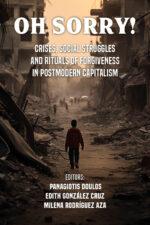
Oh, Sorry! Rituals of Forgiveness, Crises and Social Struggles in Postmodern Capitalism
USD $ 20As the world grapples with the legacy of crimes of enslavement, colonialism, genocide and mass killings, imprisonment and murder of children, attempts at eliminating cultures and history of Indigenous peoples, looting and other crimes against humanity, the performance of public atonement has become increasingly prevalent. Apologies from state actors and institutions are issued in solemn ceremonies, often acknowledging the collective guilt for historical atrocities. Despite the solemnity of these events, there is a growing scepticism surrounding the sincerity of these apologies, particularly when they are not accompanied by tangible reparations, healing, reconciliation or systemic change. This scepticism is rooted in a perception that these acts of contrition are sometimes less about making amends to the aggrieved and more about assuaging the guilt of the aggressors and maintaining the status quo, providing the illusion of progress without the substance.
In this compelling work, Oh, Sorry! Rituals of Forgiveness, Crises and Social Struggles in Postmodern Capitalism, the authors unveil the complex interplay between public apologies, social justice and popular mobilisations. The chapters are devoted primarily to the experiences of Latin America, particularly of Mexico, Guatemala, Chile, and Brazil. But there is also a chapter on the struggles for Palestine — so relevant in the face of the current genocidal invasion by the Zionist State of Israel into Gaza, the world’s largest and most densely populated concentration camp.Select options This product has multiple variants. The options may be chosen on the product page -
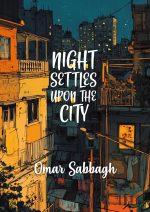
Night Settles Upon The City
USD $ 15 USD $ 16Price range: USD $ 15 through USD $ 16Select options This product has multiple variants. The options may be chosen on the product page
Night Settles Upon The City
USD $ 15 USD $ 16Price range: USD $ 15 through USD $ 16Written with urgency out of a war-time Beirut, this poetry collection registers the griefs and the heroism of the Lebanese, under siege yet again. Sabbagh lends his lyrical voice here, to give a voice to the voiceless, trying to find some harmonic sense out of catastrophe. This book will compel readers, both Lebanese and those with any kind of human heart. While much of the work was written swiftly, on impulse, and almost like, as one of the poem’s title’s has it, a ‘War Diary,’ in verse, this work aims nonetheless to last in its significance and resonance at a time when the world as a whole (let alone Lebanon herself) has become so unpredictable, so fickle and so perilous. Night Settles Upon The City aims to be a worthwhile addition to the contemporary literature of war and, more specifically, to the literary representations of the modern Lebanese reality and experience.
Omar Sabbagh is a poet who is privileged to write about war and destruction from the relative safety of his study. But this double-edged illusion is insidious — mental and emotional inwardly, and physical for those who are directly under attack. It is visceral, political, heart-wrenching — yet the poet seeks out light and hope through the act of writing, for the sake of ownership and sharing. He may say that “I cannot read minds and nor / will I ever wish to”, but he writes for the importance of record-keeping, seeking solace, both private and public — as the Night Settles Upon The City of Beirut.
— Sudeep Sen, Winner of the Rabindranath Tagore Literary PrizeOmar Sabbagh has long brought us a world in which personal experience stitches a hyphen between the eastern Mediterranean and the northerly British archipelago. Now he makes the tension inherent within that richness explicit, in a love-letter to his family and home city of Beirut. Written while the ‘night’ of war ‘settles upon the city’, his introductory ‘Thoughts’ show us how unthinkable war remains, even when it arrives on the doorstep. This is a book of witness to what cannot happen, and yet does.
– Fiona Sampson, Professor Fiona Sampson MBE FRSL.Two-Way Mirror: The Life of Elizabeth Barrett Browning WW Norton 2022 – Washington Post Book of the Year, New York Times Editors’ Choice, finalist Plutarch Prize, finalist PEN Jacqueline Bograd Award, Sunday Times Paperback of the year.The poet Omar Sabbagh lives in Beirut. His voice is playful, almost surreal at times. He talks of ‘the hairbrained monocle of war’ and suggests that if you live long enough in a place like Beirut ‘laughter becomes a lover’s distance-giving kiss’. Night Settles Upon the City offers us a poetry that is neither ideological nor partisan, not of the frontline but of a deeply threatened warzone. Its terms are easy-going, sorrowful, humane, formally intelligent and tinged with apprehension. It is humanity being human. Reading it is relief and hope.’
— George Szirtes FRSL, Eliot Prize winner.Night Settles Upon the City by Omar Sabbagh is a profoundly reflective and evocative collection that blends personal experience with the brutal realities of life in a war-torn Beirut. Through a tapestry of poems, essays, and prose, Sabbagh explores the intersections of love, grief, intellectual contemplation, and the relentless backdrop of violence. The writing oscillates between moments of tender introspection and stark depictions of societal collapse, embodying a kind of philosophical meditation on suffering and survival. Sabbagh’s voice is distinctively lyrical, capturing both the intimacy of individual loss and the broader existential weight of conflict. His reflections on war and its aftermath are imbued with a sense of historical consciousness, yet deeply grounded in the immediacy of personal anguish and resilience. The collection is not just about bearing witness to destruction, but also about finding fragments of humanity amidst the ruins. A haunting and powerful work that invites readers into the fragile space between beauty and despair.—Dr. Pamela Chrabieh, Kulturnest Co-founder & Managing Director
The Arabic term for poet means the one who feels, unlike the Greek origin of poetry, which describes the craft itself. Omar Sabbagh is the quintessential poet in the Arabic sense. In this collection, he vibrates with Beirut, where he now lives, at a time when the city’s famous cultural vibrations are overwhelmed by murderous quakes caused by the Israeli war machine.
—Gilbert Achcar, Professor of Development Studies and International Relations at SOAS University of London.Beirut’s Omar Sabbagh, lover of beauty, poet of lush lyrical power, addresses the spirit of the great Dr. Edward W. Said in one poem, saying these troubled seasons make him “restless now in (his) resting place.” I’m captivated by a further description of Said, “living paper, breathing ink of one whose thoughts still seem to think.” There is healing in such sensitive recognition. Wise voices we always needed are suddenly needed desperately. Sabbagh invokes his love for a precious home frequently under siege and his care for all the people who made and surround him. Gratitude for the wisdom, kindness and rich affections of Night Settles Upon the City.—Naomi Shihab Nye, recipient Lifetime Achievement in Poetry Award, the Wallace Stevens prizeIn Night Settles on the City, Omar Sabbagh gives voice to the bewilderment, fear, rage, and despair so many of us in the Middle East are currently feeling. His eloquent, tender poems grapple with the impossibility—yet absolute necessity—of language at a moment when words otherwise fail. Like all the best poems, Sabbagh’s challenge, soothe, haunt, and rehumanize us, ultimately arousing our better selves.
—Mai Al-Nakib, author of An Unlasting Home and The Hidden Light of ObjectsBoth erudite and demotic, felt through the body and ‘guided by ear’ Omar Sabbagh’s voice powers through the remote attacks on Beirut – the city in which he currently lives – the hourly atrocities and unspeakable suffering to reach us and to speak for us. ‘What’s to understand?’ he asks ‘That murder can be finessed?’ In his seminal new collection, Night Settles Upon the City, night becomes a ‘dark and violent animal’ with its ‘panther’s pelt’ of terror ‘slowly curving round us’ through which we hear the voice of the aggressor reflecting that ‘…each murderous attack/ I order seems to drain this world of innocence.’ Yet Sabbagh’s own voice remains measured, balanced, especially in the portraits he paints of his beloved father…‘It gets worse each day watching him/ ageing’ (‘The Old Man and his Walking Stick’). This poem ends with the lines ‘an old man and his son, fighting a war/ in a warzone we all must visit’. Alongside unimaginable horror we are shown the ordinary griefs and losses that we all suffer – of ageing, of failing, of being human; and it’s the humanity and compassion with which Sabbagh bears witness that will secure this book’s future among the handful of classics that will come to define our era.
— Jenny Lewis, MA Oxon., MPhil., PhD, Tutor for Poetry, Oxford UniversitySelect options This product has multiple variants. The options may be chosen on the product page