Lababidi’s Palestine Wail calls for the simplest, barest humanity, and it reminds us that loss of life, occupation, and genocide take an impossible toll on everyone. Finally, it holds us all accountable to address injustice, to dispel oppression and to work toward collaborative and restorative justice. In our interview, we focused on what he saw as our responsibility to humanity. — How Hope Outlasts Despair: An Interview with Yahia Lababidi — https://www.clereviewofbooks.com/writing/how-hope-outlasts-despair-an-interview-with-yahia-lababidi
…a poignant message of compassion and hope, the kind beautifully expressed by Yahia Lababidi in his #book #Palestine Wail,
@DarajaPress.
“Since purchasing the book, I have read the poem every day—it tends to feed my imagination.” https://boundlessphilanthropy.com/writings/tending-the-imagination-the-practice-of-creativity-care-challenge-compassion #poetry #Gaza
Renowned aphorist Yahia Lababidi’s Palestine Wail writes alongside a catastrophe beyond words, trying to shelter in words what remains of our humanity. To be a Minister of Loneliness and Lightkeeper, tending to the light.— Philip Metres,author of Fugitive/Refuge
Palestine is personal for writer, Yahia Lababidi. His Palestinian grandmother, Rabiha Dajani — educator, activist & social worker — was forced to flee her ancestral home in Jerusalem, at gunpoint, some eighty years ago.
As an Arab-American, Lababidi feels deeply betrayed by the USA’s blind support of Israel’s genocide of Palestinians.
In Palestine Wail, he reminds us that religion is not politics, Judaism is not Zionism, and to criticize the immoral, illegal actions of Israel is not antisemitism — especially since, as an Arab, Lababidi is a Semite, himself.
Using both poetry and prose, Lababidi reflects on how we are neither our corrupt governments, nor our compromised media. Rather, we are partners in humanity, members of one human family. Not in Our Name will the unholy massacres of innocent Palestinians be committed (two-thirds of whom are women and children) nor in the false name of ‘self-defense’.
In turn, Lababidi reminds us that starvation as a weapon of war is both cruel and criminal, as is collective punishment.
Palestine Wail invites us to bear witness to this historical humanitarian crisis, unfolding in real-time, while not allowing ourselves to be deceived, intimidated or silenced. We are made aware of the basic human truths that no lasting peace can be founded upon profound injustice and that the jailor is never Free…
Yahia Lababidi, an Arab-American writer of Palestinian background, has crafted a poignant collection which serves as a heartfelt tribute to the Palestinian people, their struggles, and their resilience in the face of an ongoing genocide and ethnic cleansing.
The collection, described as a love letter to Gaza, draws inspiration from the rich literary tradition of Palestinian resistance literature. Lababidi, known for his critically-acclaimed books of aphorisms, essays, and poetry, brings his unique voice to this personal, political and spiritual work.
Palestine Wail addresses us in a variety of voices: outrage, lamentation and pity, in attempting to honor the pain of the oppressed Palestinian people, while also celebrating their enduring spirit.
Lababidi’s Wail, ultimately, is a prayerful work seeking peace, healing and reconciliation—a testament to the transformative power of literature to keep hope alive in the face of seemingly insurmountable odds.
These are necessary and truthful poems. Yahia Lababidi powerfully illuminates this heartbreaking time and terrible season in the history of our world. This book, like a lantern in darkness, brings to light the truth of lives we must learn to honor and remember. — James Crews, author of Unlocking the Heart: Writing for Mindfulness, Creativity, and Self-Compassion
Yahia Lababidi’s stunning and resonant collection, Palestine Wail, addresses the outrage felt by many of the oppressed Palestinian supporters and more. He also speaks of the lamentations of his people and the show of pity, compassion, and empathy from many members of the human family from all around the world. — The Indefatigable Longing For Peace And Rapprochement In Yahia Lababidi’s Palestine Wail By Michael Parker.
Yahia Lababidi, author of eleven collections of poetry and prose. His aphorisms and poems have gone viral and are used in classrooms and religious services and have been featured at international film festivals. Lababidi has also contributed to news, literary,…
Yahia Lababidi’s new collection of poetry Palestine Wail offers a profound and poignant exploration of human emotions, social injustices, and the resilience of the human spirit. Lababidi weaves together themes of hope, suffering, and solidarity with a keen sensitivity that resonates deeply.— Richard Modiano https://synchchaos.com/richard-modiano-reviews-yahia-lababidis-poetry-collection-palestine-wail/
August 3, 2024
Angele Ellis
Angele Ellis: Love in a Time of Genocide | In Palestine Wail, Yahia Lababidi seeks the redemption of the human soul: Yahia Lababidi’s eleventh book draws on the spiritual and aphoristic traditions of Middle Eastern and Arab American poetry—from Rumi to Kahlil Gibran—as well as on its vein of political and social critique. This makes Lababidi’s brief free verse poems at once meditations on peace and bulletins from the battlefield.
In his introduction to this collection, Lababidi references not only the Sufi mystic Rumi and the Christian allegorist Gibran, but a range of notable writers and rebels of the past century, including Martin Luther King, Scott Peck, Leonard Cohen, and Elie Wiesel.
In a passionate afterword, Lababidi evokes the spirits of Palestinian poets Ghassan Kanafani (1936-1972) and Refaat Alareer (1979-2023)—separated by a generation, yet both killed by Israeli bombs, along with members of their families. He advocates for an end to the “daily horrors” which since this past October, have deprived 2.3 million Palestinians of their homes. According to the latest figures provided by the Gaza Health Ministry, more than 40,000 Palestinians have been killed in Israeli attacks, and thousands more are buried under rubble and threatened by illness.
Lababidi began writing Palestine Wail – in effect, a love letter to Gaza – after October 7th last year. Its introduction and afterword, both written by the author, include ample references to others; mostly poets such as Rumi and Gibran, but also writers, activists, artists, scholars, and intellectuals.
How any poet can hope to do justice to the magnitude of Gaza may seem baffling. For it is mostly beyond words. But Lababidi does, at least as far as it is possible to do so. Also by acknowledging the futility of words – especially if insincerely expressed – he deftly uses his prose and poems to explore the relentless horror, anguish, and suffering; the understandable resulting anger; and then something – however intangible – resembling trust, compassion, and hope. He warns us that if we ignore the latter – which he refers to as ‘spiritual laws’ – the repercussions will be insurmountable. Throughout Palestine Wail, he ultimately attempts to transcend ire and embrace hope, emphasising the moral duty we have towards each other.
In light of recent evidence including that from Israel’s network of torture camps and prisons, these monstrosities likely extend way beyond what has been exposed so far. Then there is the growing 95,000 injured and the 1.9 million people displaced.
Lababidi calls out the complicity of so-called democratic Western leaders in one of the world’s longest running, unresolved wars of the twenty-first century. The seeds of which in truth were partly planted by Europe – especially the British with Balfour – over a century ago – resulting in a ‘war’ that has cumulated in the genocide of all genocides.
The continued danger of this blinded complicity means that Israel will not only extend its atrocities but will never be held accountable in any way either.
By far one of the worst genocides of the twenty-first century, Gaza will go down in history for generations to come, just as the Holocaust did. And does. And along with its silence and complicity, not dissimilar to that of Nazi Germany.
Israel is now seen to be exploiting its war on Gaza to justify actions against Palestinians and to expand control over Gaza and the West Bank.
I await further work from Yahia Lababidi.
September 18, 2024
Amanda Holmes Duffy
Poetry is also song in language. And what is song if not harmony in which we might find healing? Writing from the Palestinian diaspora, Yahia Lababidi, an Egyptian American of Palestinian descent, dedicates Palestine Wail (Daraja Press) to his grandmother, Rabiha Dajani. “Forced to flee her ancestral home in Palestine at gunpoint nearly 80 years ago,” he writes, “she went on to become a remarkable educator, activist, and social worker.”
The collection’s opening section, “Unbearable Casualties,” is angry, confused, and conflicted. You feel the poet trying to write himself sane (his phrase to me in a recent communication). Perhaps some of these poems hatched a little early, but the subsequent sections, “Lingering at the Threshold” and “On a Far Shore,” are marked by spiritual and philosophical yearning. For him, during Ramadan:
To fast is to slow down
Almost to a stillness
And distill what is necessary:
Sacrifice, patience, obedience
— In other words, radical gratitude.
He also reaches for wise humor in such poems as “Minister of Loneliness,” which is an actual position recently formed by the U.K. government. He writes:
Successful candidates must be virtuosos of suffering
sensitive, of course, yet impervious to lingering sadness
tirelessly capable of encouraging others despite,
at times, feeling defeated or assaulted by pointlessness
The collection, described as a love letter to Gaza, draws inspiration from the rich literary tradition of Palestinian resistance literature. Lababidi, known for his critically-acclaimed books of aphorisms, essays, and poetry, brings his unique voice to this personal, political and spiritual work.
Palestine Wail addresses us in a variety of voices: outrage, lamentation and pity, in attempting to honor the pain of the oppressed Palestinian people, while also celebrating their enduring spirit.
Lababidi’s Wail, ultimately, is a prayerful work seeking peace, healing and reconciliation—a testament to the transformative power of literature to keep hope alive in the face of seemingly insurmountable odds.
These are necessary and truthful poems. Yahia Lababidi powerfully illuminates this heartbreaking time and terrible season in the history of our world. This book, like a lantern in darkness, brings to light the truth of lives we must learn to honor and remember. — James Crews, author of Unlocking the Heart: Writing for Mindfulness, Creativity, and Self-Compassion
September 19, 2024
Michael Parker
Yahia Lababidi’s stunning and resonant collection, Palestine Wail, addresses the outrage felt by many of the oppressed Palestinian supporters and more. He also speaks of the lamentations of his people and the show of pity, compassion, and empathy from many members of the human family from all around the world. — The Indefatigable Longing For Peace And Rapprochement In Yahia Lababidi’s Palestine Wail By Michael Parker.
September 19, 2024
Shohreh Laici
Yahia Lababidi’s poems conjure a seemingly impossible future in the Middle East that readers can imagine now. He shows a kind of world that can only exist if there is freedom of expression in the first place. … Lababidi attempts to build a language in Palestine Wail that challenges the dominant lexicon about Gaza and Israel. He is protecting language—the ability to call things what they are—and in doing so, he is protecting humanity. … Because of his struggle to get Palestine Wail even published, Lababidi’s poetry, and its cry for peace, took on new meaning for me—about the ability to speak openly, to express yourself freely. A poet’s identity is to use words to create new language. A poet’s responsibility is to create language that challenges institutions of power and revolts against the domineering narratives in society, especially when they try to restrict any alternative. When a publisher like the one who dropped Lababidi’s book threatens words themselves, free expression itself is threatened.— Shohreh Laici https://dawnmena.org/on-yahia-lababidis-palestine-wail-and-the-poetry-of-free-expression/
November 25, 2024
Jewish Voice for Labour
https://www.jewishvoiceforlabour.org.uk/article/a-poetic-love-letter-to-gaza-a-belief-in-hope/
Palestinian poets have long been – and remain – important within the struggle for justice. Yahia Lababidi has published many collections of poetry an d prose and we commend his latest. Below we also publish an interview with the publisher of his latest work. But take it perhaps from Ken Loach who says of “Palestine Wail”: ‘In their simplicity and poignancy these poems are immensely touching. They show that Palestinians, like all of us, find solace from the eternal rhythms of the natural world. And this at a time when they struggle to survive in the midst of the horrors and cruelty inflicted on them by Israel and their powerful supporters. Please read Yahia Lababidi’s poems, and share his glimpse of hope in the darkest of times.’ Yahia Lababidi cannot help but be political and he, like so many who speak out, has faced censorship; in an interview with PEN America when asked about experience of censorship he said: “In a two hour Zoom meeting, the publisher let me know that they were uneasy with my use of words like Genocide, even murder — as they felt that it was “prejudging a legal matter” — and they went so far as to suggest that if they were to publish my book, it would result in scandal for them and some of their authors would walk out.” (his complete answer to the question and link to the interview is at the end of this post, Ed.)
November 27, 2024
Ken Loach
‘In their simplicity and poignancy these poems are immensely touching. They show that Palestinians, like all of us, find solace from the eternal rhythms of the natural world. And this at a time when they struggle to survive in the midst of the horrors and cruelty inflicted on them by Israel and their powerful supporters. Please read Yahia Lababidi’s poems, and share his glimpse of hope in the darkest of times.’
November 27, 2024
Rebecca Romani
Lababidi links Gaza clearly to other genocides, passing through Elie Wiesel to the memories of genocide at the hands of the American government for the Lakota and Dakota Sioux at Standing Rock. It is these genocides as well as the Armenian Genocide of the early 20th century, which formed the backbone of the Final Solution and now find their echo in the events in Gaza.
Lababidi invokes other writers, other voices such as the Persian poet Rumi and the Lebanese writer, Khalil Gibran to lend fullness to his grief. But Lababidi also uses this opening essay to encourage the reader to be open to the thought that wounded people (those acted against), often turn that violence on others and to reflect that our modern societies are often wounded both by what was done to us and what we have done in return.
[…]
Flowers, trees, birds, music, and sunshine, break through the fog of despair that lingers over the collection. It is no accident that Lababidi invokes nature, almost like a major component of hope and healing. The garden, a collaboration with nature, is stronger than the urbicide – the murder of urban centers. Olive trees that have stood for centuries, flowers that bloom every season recall the beauty and magic of Islamic gardens which themselves serve as invocations of Paradise.
—Rebecca Romani https://www.palestinechronicle.com/to-mourn-is-to-be-human-a-review-of-palestinian-wail-by-yahia-lababidi/
December 4, 2024
Soha Hesham
This poignant collection in Palestine Wail is a blend of poetry and prose in which Lababidi underscores a crucial distinction between religion and politics, and Judaism that should not be confused with Zionism, articulating how people are not defined by their governments or the biased narratives of the media. The collection delves deeply into the humanitarian crisis that’s been going on for more than a year in Gaza and is a call for people to speak out against lies and silence. Lababidi captures the struggle of the Palestinian people as well as their exceptional resilience. — Soha Hesham, https://english.ahram.org.eg/News/536781.aspx
December 25, 2024
Narendra Pachkede
In just under 100 pages, Lababidi weaves grief, rage, and compassion into a tapestry of moral clarity, forcing readers to confront the cost of indifference. If his words are not heeded, Gaza will indeed stand as a testament to one of the most egregious genocides of the century, its suffering echoing across generations—much like the Holocaust, with silence and complicity damning us all over again.— Narendra Pachkede, https://timesheadline.in/en/2024/12/31/peace-lily/
December 31, 2024
Omar Sabbagh
These poems are raw and moving. While in one sense Lababidi is realistic enough to recognize “The Limits
of Love,” as one title has it, in another, he can speak of the “limitless heart” (“Walls”). This returns me to Gillian Rose [Mourning Becomes the Law]. One of her final insights in life turned on the capacity of the individual to recognize that the only “unconditionality” of love was to be found in its very
conditionality. And Lababidi’s book lives this out, by its continuous questioning of and between self and other, there and here, now and then – our wounds, again, as “peepholes.” And at the last, the Palestinian wail has been heard – and may it be heard the more and more and more.- Omar Sabbagh, review in Two Thirds North, 2025 p164-8.https://www.su.se/department-of-english/research/publications/two-thirds-north-1.645406
February 14, 2025
Madelaine Caritas Longman
This collection will appeal to those seeking an introduction to the realities of life in Gaza, and to those seeking a hopeful voice in a devastating time. Montreal Review of Books. Madelaine Caritas Longman https://mtlreviewofbooks.ca/reviews/palestine-wail/
July 4, 2025
Arthur Willemse
If Palestine is abandoned to its death, poetry bears witness. The work done here does
not explain or make sense of suffering but, in recounting suffering, realigns it with dignity
and transcendence. … Palestine Wail is at every moment a protest and a prayer … Palestine Wail is a work of hope.
November 7, 2025
Only logged in customers who have purchased this product may leave a review.
Cradles is a collection poems on the nature(s) and nurturing that cradle us. They are divided into four parts: Womb is the first cradle, both ‘nature’ and ‘nurture’, under-acknowledged and often unmentioned. Beyond the physical womb of individuals, there are collective wombs that incubate on yet grander and greater scales. Land(s) are the cradles we typically identify as our ‘origins’, but as the Cradle of Humankind teaches, the many lands of today are interlaced in many concealed ways and originated in a single, little understood place. Tides are the many migrations and cycles of time that shape us. They can shift, upset and remake the nurturing of cradles; but also cradle us in cycles of wreckage. Wind sets us free of places and times of origin. This detachment can bring freedom, a sense of loss/lostness, and the many things in between. The freedom/loss/lostness spiral whirls with the wind and transforms. In surrendering to it we can alter its pace to our needs and desires.
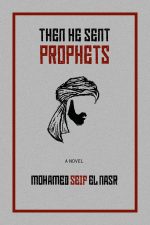
Morocco, 1359. The people of Fes are living in deprivation under the rule of an unjust sultan. Zakaria is a young Muslim scholar trying to sustain his family while committing to a rigid moral code. To provide for his sickly daughter, he sacrifices his principles and seeks a job at the palace, where he gradually becomes entangled in a web of intrigue, his conscience tormented by serving the sultan. In the hope of fleeing from the constraints of his world, he joins the quest of Muhammad ibn Yusuf, the exiled king of Granada, and his enchanting sister, Aisha, to reclaim their throne. Together, they set out to Andalusia on a journey that will call into question all of Zakaria’s beliefs and change the history of the Iberian Peninsula for decades to come.
Then He Sent Prophets is a story about the suffering of young idealists in a world of inevitable compromise. Throughout his journey, Zakaria faces internal struggles that are timeless and universal, strives to reconcile his faith with the world, doubts the motives behind his desire to live morally, and ends up wondering whether a life consisting of one compromise after another is one worth living.
Then He Sent Prophets is a novel for our moment. Set around the political struggles of fourteenth-century Granada, it is a deeply sympathetic and passionately human look at how one might make—or fail to make—moral, decent choices when living in a violent, indecent world.
— MarciaLynx Qualey, founding editor of ArabLit
Circumstances present Zakaria with a position at the palace. […] Can someone critical of the sultan and conscious of his corruption maintain integrity while serving at the palace? And what’s the line between complete innocence and partial complicity? These are the questions at the crux of his ethical dilemma. […] It’s easy to make connections between Zakaria’s inner dilemmas and those many of us grapple with today.
— Hafsa Lodi in The New Arab
Love after Babel is a collection of poems that deal with themes such as caste, the resistance of Dalit people, Dalit literature, islamophobia and other political themes, with almost one hundred poems divided into three sections (Call Me Ishmail Tonight; Name Me a Word; Love after Babel). The introduction is by Suraj Yengde (award-winning scholar and activist from India, author of the bestseller Caste Matters, inaugural postdoctoral fellow at the Initiative for Institutional Anti-racism and Accountability, Shorenstein Center on Media, Politics and Public Policy at the Harvard Kennedy School).
Chandramohan’s poems are dialogues of the ‘ self’ with the ‘other’. He brings to life a world that subverts myths, literary canons, gender and caste stereotypes by pooling in sparklingly new metaphors with sensitivity and care. He draws his images from contemporary incidents as well as myths and legends of yore, and delves deep into the politicized realm, thus ‘rupturing the hymen of demarcations’ of identity, resistance, repression and love.
Spoon and Shrapnel uniquely combines poetry and recipes to explore the experience of surviving the Iran-Iraq War through a child’s eyes. As a survivor herself, Sheema Kalbasi brings forth raw memories of fear, loss, and resilience through verse, while accompanying these poignant moments with simple, nourishing recipes that sustained her family amidst scarcity and danger. Each poem is paired with a recipe, alternating between the emotional depth of poetry and the practical art of cooking traditions that offered hope during wartime. The poems deliver vivid, emotional insights into life during the conflict, while the recipes—crafted with scarce ingredients—represent moments of comfort and survival. Together, they form a narrative tapestry where food and poetry intertwine, reflecting how one family, and an entire culture, persevered.
Kalbasi’s work goes beyond her personal experience to present a universal story of resilience, illustrating how, even in the harshest conditions, humanity finds strength in the simple rituals of cooking, eating, and storytelling. Spoon and Shrapnel is a tribute to both physical and emotional survival, offering readers a rare glimpse into everyday life during war.
The book explores the challenges Palestinian filmmakers confront to develop a cinema that gives expression to the national narrative. The research is based on collaborative work to research and screen Palestinian films involving Film Lab Palestine, Sheffield Palestine Cultural Exchange and Sheffield Hallam University as part of the Creative Interruptions research project (https://creativeinterruptions.com/palestiniancinema/). We explored the political, economic and cultural factors that impact on Palestinian film production and some of the barriers encountered in profiling and screening Palestinian films in Britain.
As the world grapples with the legacy of crimes of enslavement, colonialism, genocide and mass killings, imprisonment and murder of children, attempts at eliminating cultures and history of Indigenous peoples, looting and other crimes against humanity, the performance of public atonement has become increasingly prevalent. Apologies from state actors and institutions are issued in solemn ceremonies, often acknowledging the collective guilt for historical atrocities. Despite the solemnity of these events, there is a growing scepticism surrounding the sincerity of these apologies, particularly when they are not accompanied by tangible reparations, healing, reconciliation or systemic change. This scepticism is rooted in a perception that these acts of contrition are sometimes less about making amends to the aggrieved and more about assuaging the guilt of the aggressors and maintaining the status quo, providing the illusion of progress without the substance.
In this compelling work, Oh, Sorry! Rituals of Forgiveness, Crises and Social Struggles in Postmodern Capitalism, the authors unveil the complex interplay between public apologies, social justice and popular mobilisations. The chapters are devoted primarily to the experiences of Latin America, particularly of Mexico, Guatemala, Chile, and Brazil. But there is also a chapter on the struggles for Palestine — so relevant in the face of the current genocidal invasion by the Zionist State of Israel into Gaza, the world’s largest and most densely populated concentration camp.
USD $ 20.00
Select options
This product has multiple variants. The options may be chosen on the product page
“Once I Forget,” a collection of poems by John P. Portelli, originally written in Maltese and translated by Aaron Aquilina and John Martin. These sections include the title page, a preface by Professor Norbert Bugeja, and portions of the poems themselves, which explore themes of memory, exile, loss, and the poet’s childhood village, Ħad-Dingli. The preface highlights Portelli’s struggle with forgetfulness and his focus on the vanishing past, connecting his work to literary figures like Yeats and Walcott. Furthermore, the source provides biographical notes on the author, translators, and cover artist, Carmel Micallef, along with endorsements that praise the poetry’s transcendence of the lyric and its powerful exploration of nostalgia and the impossibility of return.
Translated from the Maltese by Aaron Aquilina and John Martin.
John P. Portelli treads along those nebulous cliff-edges where forgetfulness attempts to pick at the treacherous scabs of recall, capturing the vertigo of a distant childhood as it inches outward
into the land’s end of metaphor. — Prof. Norbert Bugeja
Portelli’s gorgeous poems speak of exile, searching, and loss in such a way that the reader becomes one with the village of his birth, the cliffs, the smells, his frail body, and the sea. —Jennifer Hosein, Tiohtià:ke/ Montreal-born writer, visual artist and educator, author A Map of Rain Days
..the poems of Once I Forget restore our faith in the transcendence of the lyric, in the power of song and secular psalm. — Karen Shenfeld, Canadian writer and film-maker,
author The Law of Return
Select options
This product has multiple variants. The options may be chosen on the product page
On love (xxxiii) 13 Dorothy Masuku in Sophiatown 2018 14 Re-Map 16 On love (xxxiv) 18 56 Chapman Street 19 Yesterday Today Tomorrow 20 Marlboro Winter 21 Diepsloot Winter (pre-loadshedding) 22 Only in Jozi 23 Dispossession 24 Ontvangs B Helen Joseph Hospital 25 Mammogram Waiting Room Roodepoort 26 Pholosong Emergency 27 1st Road 28 Inclines 29 Counterclock Clock 30 airbnb Meldene 32 Meldene to Melville, COVID-19 late third wave 33 Excess death or, Acer rubrum 34 Westdene Winter or, Masculinity 35 Shrieking yellow 36 Fleurhof 37 Intraction Extraction 38 On love (xxxv) 40 Moon Garden 41 On love (xxxvi) 42 Garnets or, On love (xxxvii) 43 Spirit 44 Lower 4th Westdene or, On love (xxxviii) 45 On love (xxxix) 46 Natalia Molebatsi and Bab’Themba Mokoena in dance 47 Maps 48 inimba 49 On love (xl) 50 On love (xli) 51 Footsteps 52 inimba (ii) 53 On love (xlii) 54 iSothamilo or, On love (xliii) 55 big little forest 56 On love (xliv) 57
EGoli
or, Only in Jozi (ii) or, On love (xlv) 62 Origins 63 metsi/amanzi/emanti/mvura/madzi/ruwa/water/ /l’eau/ 65 Down Main Street Melville or, Umsebenzi 66 Umsebenzi (ii) 67 Footsteps (ii) 68 Where will we go? 69 RosesRunways 70 On love (xlvi) or, Umsebenzi (iii) 71 72 Wealth 74 Recipe or, Wealth (ii) 75 On love (xlvii) 76 sodade (iii) or, Joy of Jazz Sandton 2017 77 Mushrooms in Mint or, On love (xlviii) 78 Footsteps (iii) 80 Distances 81 Only in Jozi (iii) 82 Greenhill Grocer or, On love (xlix) 83 Only in Jozi (iv) or, On love (l) 84 Fidel Castro at Lillisleaf Farm 2017 or, On love (li) 87 After the launch of Cradles or, 2018 or, On love (lii) 90 sodade (iv) EGoli or, On love (liii) On love (liv)
A new collection of poems by Salimah Valiani. IGoli EGoli is a sociopolitical reading of Johannesburg drawing on its famous, and not so famed, people, places, plants & pronouncements.
Richard Modiano
Yahia Lababidi’s new collection of poetry Palestine Wail offers a profound and poignant exploration of human emotions, social injustices, and the resilience of the human spirit. Lababidi weaves together themes of hope, suffering, and solidarity with a keen sensitivity that resonates deeply.— Richard Modiano https://synchchaos.com/richard-modiano-reviews-yahia-lababidis-poetry-collection-palestine-wail/
Angele Ellis
Angele Ellis: Love in a Time of Genocide | In Palestine Wail, Yahia Lababidi seeks the redemption of the human soul: Yahia Lababidi’s eleventh book draws on the spiritual and aphoristic traditions of Middle Eastern and Arab American poetry—from Rumi to Kahlil Gibran—as well as on its vein of political and social critique. This makes Lababidi’s brief free verse poems at once meditations on peace and bulletins from the battlefield.
In his introduction to this collection, Lababidi references not only the Sufi mystic Rumi and the Christian allegorist Gibran, but a range of notable writers and rebels of the past century, including Martin Luther King, Scott Peck, Leonard Cohen, and Elie Wiesel.
In a passionate afterword, Lababidi evokes the spirits of Palestinian poets Ghassan Kanafani (1936-1972) and Refaat Alareer (1979-2023)—separated by a generation, yet both killed by Israeli bombs, along with members of their families. He advocates for an end to the “daily horrors” which since this past October, have deprived 2.3 million Palestinians of their homes. According to the latest figures provided by the Gaza Health Ministry, more than 40,000 Palestinians have been killed in Israeli attacks, and thousands more are buried under rubble and threatened by illness.
Tina Bexson
‘Palestine Wail’ by Yahia Lababidi, reviewed by Tina Bexson
Lababidi began writing Palestine Wail – in effect, a love letter to Gaza – after October 7th last year. Its introduction and afterword, both written by the author, include ample references to others; mostly poets such as Rumi and Gibran, but also writers, activists, artists, scholars, and intellectuals.
How any poet can hope to do justice to the magnitude of Gaza may seem baffling. For it is mostly beyond words. But Lababidi does, at least as far as it is possible to do so. Also by acknowledging the futility of words – especially if insincerely expressed – he deftly uses his prose and poems to explore the relentless horror, anguish, and suffering; the understandable resulting anger; and then something – however intangible – resembling trust, compassion, and hope. He warns us that if we ignore the latter – which he refers to as ‘spiritual laws’ – the repercussions will be insurmountable. Throughout Palestine Wail, he ultimately attempts to transcend ire and embrace hope, emphasising the moral duty we have towards each other.
In light of recent evidence including that from Israel’s network of torture camps and prisons, these monstrosities likely extend way beyond what has been exposed so far. Then there is the growing 95,000 injured and the 1.9 million people displaced.
Lababidi calls out the complicity of so-called democratic Western leaders in one of the world’s longest running, unresolved wars of the twenty-first century. The seeds of which in truth were partly planted by Europe – especially the British with Balfour – over a century ago – resulting in a ‘war’ that has cumulated in the genocide of all genocides.
The continued danger of this blinded complicity means that Israel will not only extend its atrocities but will never be held accountable in any way either.
By far one of the worst genocides of the twenty-first century, Gaza will go down in history for generations to come, just as the Holocaust did. And does. And along with its silence and complicity, not dissimilar to that of Nazi Germany.
Israel is now seen to be exploiting its war on Gaza to justify actions against Palestinians and to expand control over Gaza and the West Bank.
I await further work from Yahia Lababidi.
Amanda Holmes Duffy
Poetry is also song in language. And what is song if not harmony in which we might find healing? Writing from the Palestinian diaspora, Yahia Lababidi, an Egyptian American of Palestinian descent, dedicates Palestine Wail (Daraja Press) to his grandmother, Rabiha Dajani. “Forced to flee her ancestral home in Palestine at gunpoint nearly 80 years ago,” he writes, “she went on to become a remarkable educator, activist, and social worker.”
The collection’s opening section, “Unbearable Casualties,” is angry, confused, and conflicted. You feel the poet trying to write himself sane (his phrase to me in a recent communication). Perhaps some of these poems hatched a little early, but the subsequent sections, “Lingering at the Threshold” and “On a Far Shore,” are marked by spiritual and philosophical yearning. For him, during Ramadan:
To fast is to slow down
Almost to a stillness
And distill what is necessary:
Sacrifice, patience, obedience
— In other words, radical gratitude.
He also reaches for wise humor in such poems as “Minister of Loneliness,” which is an actual position recently formed by the U.K. government. He writes:
Successful candidates must be virtuosos of suffering
sensitive, of course, yet impervious to lingering sadness
tirelessly capable of encouraging others despite,
at times, feeling defeated or assaulted by pointlessness
Lababidi continually endeavors to tend the light during times of darkness. To breathe in his poems is to embark on a journey from a heartfelt wail of sorrow and despair into silent prayer.
—Amanda Holmes Duffy https://www.washingtonindependentreviewofbooks.com/features/on-poetry-september-2024
James Crews
The collection, described as a love letter to Gaza, draws inspiration from the rich literary tradition of Palestinian resistance literature. Lababidi, known for his critically-acclaimed books of aphorisms, essays, and poetry, brings his unique voice to this personal, political and spiritual work.
Palestine Wail addresses us in a variety of voices: outrage, lamentation and pity, in attempting to honor the pain of the oppressed Palestinian people, while also celebrating their enduring spirit.
Lababidi’s Wail, ultimately, is a prayerful work seeking peace, healing and reconciliation—a testament to the transformative power of literature to keep hope alive in the face of seemingly insurmountable odds.
These are necessary and truthful poems. Yahia Lababidi powerfully illuminates this heartbreaking time and terrible season in the history of our world. This book, like a lantern in darkness, brings to light the truth of lives we must learn to honor and remember. — James Crews, author of Unlocking the Heart: Writing for Mindfulness, Creativity, and Self-Compassion
Michael Parker
Yahia Lababidi’s stunning and resonant collection, Palestine Wail, addresses the outrage felt by many of the oppressed Palestinian supporters and more. He also speaks of the lamentations of his people and the show of pity, compassion, and empathy from many members of the human family from all around the world. — The Indefatigable Longing For Peace And Rapprochement In Yahia Lababidi’s Palestine Wail By Michael Parker.
Shohreh Laici
Yahia Lababidi’s poems conjure a seemingly impossible future in the Middle East that readers can imagine now. He shows a kind of world that can only exist if there is freedom of expression in the first place. … Lababidi attempts to build a language in Palestine Wail that challenges the dominant lexicon about Gaza and Israel. He is protecting language—the ability to call things what they are—and in doing so, he is protecting humanity. … Because of his struggle to get Palestine Wail even published, Lababidi’s poetry, and its cry for peace, took on new meaning for me—about the ability to speak openly, to express yourself freely. A poet’s identity is to use words to create new language. A poet’s responsibility is to create language that challenges institutions of power and revolts against the domineering narratives in society, especially when they try to restrict any alternative. When a publisher like the one who dropped Lababidi’s book threatens words themselves, free expression itself is threatened.— Shohreh Laici https://dawnmena.org/on-yahia-lababidis-palestine-wail-and-the-poetry-of-free-expression/
Jewish Voice for Labour
https://www.jewishvoiceforlabour.org.uk/article/a-poetic-love-letter-to-gaza-a-belief-in-hope/
Palestinian poets have long been – and remain – important within the struggle for justice. Yahia Lababidi has published many collections of poetry an d prose and we commend his latest. Below we also publish an interview with the publisher of his latest work. But take it perhaps from Ken Loach who says of “Palestine Wail”: ‘In their simplicity and poignancy these poems are immensely touching. They show that Palestinians, like all of us, find solace from the eternal rhythms of the natural world. And this at a time when they struggle to survive in the midst of the horrors and cruelty inflicted on them by Israel and their powerful supporters. Please read Yahia Lababidi’s poems, and share his glimpse of hope in the darkest of times.’ Yahia Lababidi cannot help but be political and he, like so many who speak out, has faced censorship; in an interview with PEN America when asked about experience of censorship he said: “In a two hour Zoom meeting, the publisher let me know that they were uneasy with my use of words like Genocide, even murder — as they felt that it was “prejudging a legal matter” — and they went so far as to suggest that if they were to publish my book, it would result in scandal for them and some of their authors would walk out.” (his complete answer to the question and link to the interview is at the end of this post, Ed.)
Ken Loach
‘In their simplicity and poignancy these poems are immensely touching. They show that Palestinians, like all of us, find solace from the eternal rhythms of the natural world. And this at a time when they struggle to survive in the midst of the horrors and cruelty inflicted on them by Israel and their powerful supporters. Please read Yahia Lababidi’s poems, and share his glimpse of hope in the darkest of times.’
Rebecca Romani
Lababidi links Gaza clearly to other genocides, passing through Elie Wiesel to the memories of genocide at the hands of the American government for the Lakota and Dakota Sioux at Standing Rock. It is these genocides as well as the Armenian Genocide of the early 20th century, which formed the backbone of the Final Solution and now find their echo in the events in Gaza.
Lababidi invokes other writers, other voices such as the Persian poet Rumi and the Lebanese writer, Khalil Gibran to lend fullness to his grief. But Lababidi also uses this opening essay to encourage the reader to be open to the thought that wounded people (those acted against), often turn that violence on others and to reflect that our modern societies are often wounded both by what was done to us and what we have done in return.
[…]
Flowers, trees, birds, music, and sunshine, break through the fog of despair that lingers over the collection. It is no accident that Lababidi invokes nature, almost like a major component of hope and healing. The garden, a collaboration with nature, is stronger than the urbicide – the murder of urban centers. Olive trees that have stood for centuries, flowers that bloom every season recall the beauty and magic of Islamic gardens which themselves serve as invocations of Paradise.
—Rebecca Romani https://www.palestinechronicle.com/to-mourn-is-to-be-human-a-review-of-palestinian-wail-by-yahia-lababidi/
Soha Hesham
This poignant collection in Palestine Wail is a blend of poetry and prose in which Lababidi underscores a crucial distinction between religion and politics, and Judaism that should not be confused with Zionism, articulating how people are not defined by their governments or the biased narratives of the media. The collection delves deeply into the humanitarian crisis that’s been going on for more than a year in Gaza and is a call for people to speak out against lies and silence. Lababidi captures the struggle of the Palestinian people as well as their exceptional resilience. — Soha Hesham, https://english.ahram.org.eg/News/536781.aspx
Narendra Pachkede
In just under 100 pages, Lababidi weaves grief, rage, and compassion into a tapestry of moral clarity, forcing readers to confront the cost of indifference. If his words are not heeded, Gaza will indeed stand as a testament to one of the most egregious genocides of the century, its suffering echoing across generations—much like the Holocaust, with silence and complicity damning us all over again.— Narendra Pachkede, https://timesheadline.in/en/2024/12/31/peace-lily/
Omar Sabbagh
These poems are raw and moving. While in one sense Lababidi is realistic enough to recognize “The Limits
of Love,” as one title has it, in another, he can speak of the “limitless heart” (“Walls”). This returns me to Gillian Rose [Mourning Becomes the Law]. One of her final insights in life turned on the capacity of the individual to recognize that the only “unconditionality” of love was to be found in its very
conditionality. And Lababidi’s book lives this out, by its continuous questioning of and between self and other, there and here, now and then – our wounds, again, as “peepholes.” And at the last, the Palestinian wail has been heard – and may it be heard the more and more and more.- Omar Sabbagh, review in Two Thirds North, 2025 p164-8.https://www.su.se/department-of-english/research/publications/two-thirds-north-1.645406
Madelaine Caritas Longman
This collection will appeal to those seeking an introduction to the realities of life in Gaza, and to those seeking a hopeful voice in a devastating time. Montreal Review of Books. Madelaine Caritas Longman https://mtlreviewofbooks.ca/reviews/palestine-wail/
Arthur Willemse
If Palestine is abandoned to its death, poetry bears witness. The work done here does
not explain or make sense of suffering but, in recounting suffering, realigns it with dignity
and transcendence. … Palestine Wail is at every moment a protest and a prayer … Palestine Wail is a work of hope.