Forthcoming
-
Ghostlines – Re-Drawing the LAPSSET Corridor in Kenya
Ghostlines is a graphic novel that describes the journey of the author and three Kenyan artists along the LAPSSET development corridor, a braid of roads, pipelines, and resort cities that promises to bring development to Kenya’s marginalized north. It mixes conceptual and empirical insights into the human geography of infrastructure with the narrative flexibility and depth afforded by the medium graphic novel – a geo-graphic novel.
They meet Peter, a retired pilot who had previously worked for a conservancy and can tell stories about the LAPSSET from high above and from the ground. He understands how everyone involved is seeking to benefit from the corridor in their own way, even if that means building uninhabited “ghost huts” that manifest the presence of pastoral communities and thus qualify them for compensation. Jane is an activist for a women’s and Indigenous rights organization. She’s been fighting invisible monsters her entire life: stalking hyenas (metaphorical and real), corrupt politicians, and the patriarchy itself. The spectre of the LAPSSET is only the last one of these hidden monsters. They meet Joseph, a herder, who hopes that the LAPSSET might connect him to far places but worries that it will instead cut him off of the grazing grounds that are essential for the survival of his family. What is the LAPSSET – a road or a fence? In Oldonyoro they meet Rashid, a poet, who writes about the long history of the corridor. In his mind, it reaches far back to colonial times. “My grandfather suffered greatly,” he writes, “Is it my turn to face the worst? I wonder, a tricky treasure”. In the last village on their journey, they meet a group of women who have come together to support each other. Their position on the LAPSSET is more optimistic. The real connections of solidarity they forged contrast with the imaginary ghostlines of the LAPSSET. The narrative structure of the geo-graphic novel draws connections between the narrators, that is, the team of researchers and artists and the interviewees. They seek to unravel the idea of the omniscient or unbiased narrator and to reveal how storytellers bring their own ghosts into stories. By connecting all of these narratives along their journey, they challenge the single, universalist story that planners tell about large-scale infrastructure projects. Instead, they invite the reader to embrace the often-contradictory multiplicity of infrastructural relations, to see the ostensibly solid lines on maps for what they are: a messy, ever-changing braiding of multitudes.
-
Cinema of Unfinished Witnessing
This is not a book about films in the conventional sense. It is a book about the conditions under which films become legible, forgettable, weaponised, or necessary.
Across essays that move between review and reportage, festival and platform, myth and documentary, Narendra Pachkhédé reads global cinema as a moral technology of the present. He follows the contemporary attention regime, the coercions of watchability, the choreography of awards and public virtue, and the quiet ways propaganda teaches a society what to feel plausible. The question is not only what we watch, but how we have been conditioned to watch: how viewing is trained by ideological settings, how sensibility is numbed by repetition and spectacle, how attention is corralled into habits that feel like choice.
This is a book about the world of cinema and its assemblages. It attends to cinema’s extended life in media ecologies: streaming interfaces and festival circuits, platform logics and institutional gatekeeping, the politics of narrative and the global circulation of stories. It returns repeatedly to the politics of reception, where a work is domesticated or rejected, where controversy polices a field, where filmmakers bond, quarrel, protect, and betray, and where institutions decide what counts as witness. Cinema, here, is not only an art form but a system of mediation that defines the political terms under which stories are consumed.
The book crosses geographies and film worlds, tracing how nations dream through genre and how history is refashioned into culture, suspended between memory and forgetting. From the seductions of nostalgia to the endurance of Béla Tarr, from Korean modernity’s neutralised ruptures to Palestinian cinema’s custody under pressure, these essays insist that cinema is never only an image. It is an argument about reality, and a rehearsal for what a public can bear to know.
The Cinema of Unfinished Witnessing asks a simpler, harsher question: why do some stories become global vigils while others vanish into the feed? It is a book about how we come to believe what we believe, and what cinema has to do with that failure. It is also a wager that, by looking closely and naming the terms of looking, one can still be a form of care.
-
The Stories We Carry
The Stories We Carry is a compelling collection of essays that explore identity, trauma, and resilience through deeply personal narratives. Edited by Merlyna Lim and Kathy Dobson, this volume brings together twenty-two contributors—academics, artists, journalists, and storytellers—who refuse to separate personal experience from scholarly inquiry.
The collection unfolds in three interconnected movements: Self, Scar, and Struggle, examining how identity is shaped through history, gender, embodiment, and migration; how trauma and exclusion leave lasting marks; and how survival requires ongoing negotiation with institutions, technology, and community. Each essay is accompanied by hand-drawn illustrations, making the personal visible and visceral.
The contributors challenge academic conventions that dismiss personal writing as less rigorous, arguing instead that the narrated self is a legitimate site of knowledge. Their stories address Islamophobia, poverty, colonialism, queerness, neurodivergence, immigration bureaucracy, and the politics of belonging. This is not a book seeking inclusion in broken institutions, but one that insists the table itself must be rebuilt. It asks readers to sit with complexity, contradiction, and the unfinished work of being human.
-
I Survived by Mistake
USD $ 20.00Select options This product has multiple variants. The options may be chosen on the product pageI Survived by Mistake
USD $ 20.00This deeply personal and introspective work explores survival—not merely physical survival, but emotional and spiritual endurance through love, war, and loss. Written by a Palestinian author against the backdrop of the Gaza genocide, the book weaves together reflections on love, betrayal, killings, displacement, and the search for meaning in a world stripped of humanity.
The narrative oscillates between intimate romantic relationships and the brutal realities of life under bombardment. The author chronicles a turbulent love affair marked by passion, jealousy, betrayal, and eventual dissolution, examining how relationships fracture under the weight of pride, misunderstanding, and external pressures. Simultaneously, he documents the devastating experience of genocidal attacks by Israel in Gaza: displacement, hunger, the loss of loved ones, the daily struggle for survival, and the erosion of human dignity.
Central themes include the nature of survival—questioning whether mere existence constitutes living, and whether those who survive emerge intact or fundamentally altered. The author grapples with grief over the death of his grandmother, the loss of his beloved, and the collective trauma of a people under siege. He explores the tension between hope and despair, the betrayal of humanitarian aid systems, the corruption of values in times of crisis, and the profound loneliness of carrying unspoken pain.
Writing serves as both confession and catharsis—an attempt to staunch internal bleeding and make sense of chaos. The prose is poetic, fragmented, and emotionally raw, reflecting the author’s belief that true survivors do not write; they simply endure. Ultimately, the book is a testament to the impossibility of returning unchanged from love or genocidal attacks, and the quiet dignity of continuing despite everything.
Select options This product has multiple variants. The options may be chosen on the product page -
Select options This product has multiple variants. The options may be chosen on the product page
Faces of Horror
Faces of Horror is the searing, first-hand testimony of Njoud Salem, a Palestinian woman and mother documenting the near-total annihilation of life in Gaza. This diary chronicles the daily fight for survival against a relentless Israeli military campaign, capturing the genocide with an intimacy that no news report can convey.
The narrative begins on October 7, 2023, with the first thunder of rockets, and unfolds as Njoud, her husband, and their three young sons are violently uprooted from their home. They are thrust into a desperate odyssey for refuge, fleeing from hospitals turned into battlefields to the squalid tent cities of the south. The journal is a stark record of the “second Nakba”—a landscape of relentless bombing, starvation, and the systematic dehumanization of a people. Through her account, we witness the destruction of her cherished home and all her material possessions, yet she clings fiercely to her faith and the love for her family.
More than a war diary, Face of Horror is a profound meditation on human endurance and the indomitable will to bear witness. It serves as a critical, primary source document from a survivor of a Holocaust, a challenge to the world’s conscience, and a testament to the spirit of Gaza that refuses to be erased, even as it is buried under the rubble of a world that has turned its back.
Select options This product has multiple variants. The options may be chosen on the product page -
El Precio de la Dignidad
Este libro narra la conmovedora historia de Patrocinia Polanco Rivas, una campesina salvadoreña que personifica la lucha por la dignidad en medio de la adversidad. A través de su testimonio y el análisis del autor Andrés McKinley, la obra recorre su vida, desde una infancia marcada por la pobreza extrema y la opresión de la oligarquía cafetalera, hasta su participación en la guerra civil como operadora de radio del FMLN tras el asesinato de su mentor, el padre Rutilio Grande. La guerra le arrebata a su padre, pero forja en ella una resistencia inquebrantable.
Tras los Acuerdos de Paz de 1992, la esperanza de una vida digna se desvanece ante la persistente pobreza y las políticas neoliberales que mantienen a las familias campesinas en la miseria. Para sobrevivir, Patrocinia trabaja incansablemente cortando caña de azúcar, mientras la falta de oportunidades lleva a su esposo y, posteriormente, a sus seis hijos a emprender el peligroso viaje migratorio hacia Estados Unidos. El libro documenta los horrores de este periplo: el abandono, la extorsión, el secuestro y la constante amenaza de la muerte.
Una vez en el norte, los hijos de Patrocinia se enfrentan a la dura realidad de la vida indocumentada y a la maquinaria represiva del ICE, especialmente bajo la administración de Donald Trump. La autora establece un poderoso paralelismo entre la violencia de los escuadrones de la muerte en El Salvador y la persecución sistemática de los migrantes.
El Precio de la Dignidad es un testimonio de la resiliencia humana, mostrando que la dignidad no reside en el éxito de la lucha, sino en la propia lucha, un legado que Patrocinia heredó de su padre. El libro se erige como un recordatorio urgente de las consecuencias humanas de la guerra, de la injusticia económica y de las políticas migratorias despiadadas.
-
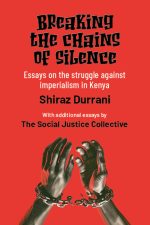
Breaking the Chains of Silence
Breaking the Chains of Silence opens where any serious account of Kenya must begin: with silence. But this is not the quiet of peace or the calm of justice. It is a manufactured silence—forged by land theft, detention, exile, assassinations, police bullets, and media too intimidated to print the truth. It is the silence that follows the gun and precedes the next uprising.
This book bravely refuses that silence. It dismantles the comfortable myth that Kenya became free simply because a flag was raised in 1963. It rejects the official narrative that the struggle ended with independence, leaving citizens as spectators while a small elite inherited the state, the land, the police, and the economy. Instead, it insists that Kenya’s real history is not the story of presidents, but of working people—first fighting colonialism, then confronting the imperialism that survived under new flags and through local agents.
Crucially, the book refuses to imprison resistance in the past. It reads the present with urgency, seeing the courage of the Gen Z movement, the defiance of the RutoMustGo protests, and the young people who walked into streets patrolled by a contemptuous state. It sees their rejection of taxation, corruption, and police violence. Yet it refuses to flatter that moment into myth. It insists that spontaneous anger must evolve into organisation, protest into political education, and generational revolt must find its class foundation. The cry of the youth must meet the power of workers.
While the essays engage with current contradictions, they remain rooted in theory—one essential element for revolutionary change. The other is practice: putting ideas into action and facing the enemy where bullets and prisons are the reality. This combination of theory and practice lays the groundwork for a people’s revolution. It is for this reason the book includes Gathanga Ndung’u’s vital essay, From Mau Mau to Ruto Must Go: A Genealogy of Resistance, which connects historical struggle to today’s frontline.