
No Author assigned to this book
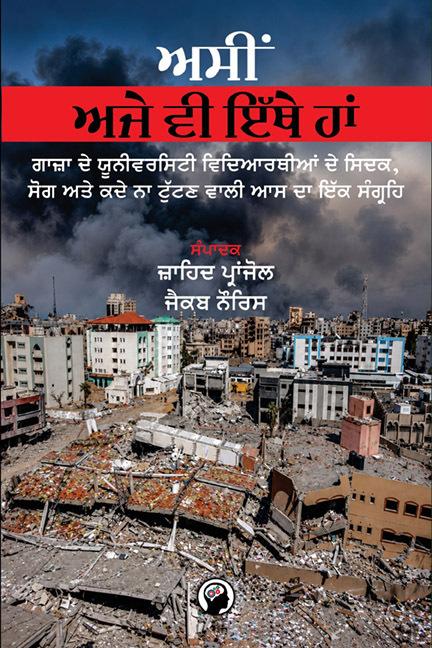
We Are Still Here (Punjabi edition)
An anthology of resilience, grief, and unshattered hope from Gaza’s university students
Categories: Forthcoming, Gaza, India, Palestine, West Asia / Middle East
Print book available from: RETHINK BOOKS
Customer Reviews
There are no reviews yet.
Only logged in customers who have purchased this product may leave a review.
Related products
-

Unsilenced
From: USD $ 10.00Select options This product has multiple variants. The options may be chosen on the product page
Unsilenced
From: USD $ 10.00Unsilenced: Poems for Palestine is a collection of poems that convey profound emotions and serious reflections on the ongoing situation in Gaza and Palestine since the Nakba. The anthology seeks to express the moral outrage felt by poets from around the world, highlighting the perceived double standards of the West regarding international law and the suffering of the Palestinian people. The poems examine the daily realities of life and philosophical perspectives on the human condition, using nature as a motif to articulate emotions and explore themes of homeland, childhood, exile, genocide, and war. All proceeds from the sale of the collection will be donated to Gaza, demonstrating the poets’ commitment to fostering positive change through their art. Contributors include diverse voices from various countries, each recognizing the urgency and necessity of addressing the inhumane actions perpetrated against Palestine.
Income from the sale of this title will be donated for Palestine.
Praise for Unsilenced
Haunting verses by poets fluent in the language of death and genocide. Each poem rings out as a piece of memory, a bridge and a dream. This elegy will stand as a testimonial, a witness, by brave voices exhausted by the deafening silence of a traumatized world. —Nnimmo Bassey, author of I See the Invisible (poems) and Laureate of the Right to Livelihood Award 2010
… the priceless value of an anthology of lyrics from yet another encircled, blitzed, strafed, and bombarded commune, ghetto, or kibbutz, is that it bears indelible witness to the unbreakable human spirit yearning for freedom, for peace, for bread and wine and water set amid an olive grove or a lemon orchard. That is what you will unfold in editor John P. Portelli’s Unsilenced: Poetry for Palestine. Poets—Jew and Arab, Muslim and Christian, Atheist and Surrealist—voice suffering, resilience, despair, and hope, speaking out of their fragile humanity to demand that vile atrocities cease. — George Elliott Clarke, author of Canticles I-III, 6 vols, MMXVI-MMXXIII (2016-2023)
Unsilenced shows how poetry is written to trigger and provoke, to bear witness, to look at the sky and shout, over and over, as loudly as necessary against injustice. Immanuel Mifsud, Associate Professor, University of Malta and winner of the European Union Prize for Literature (2011).
Contributing Authors
Poems by: Raed Anis Al-Jishi (Kingdom of Saudi Arabia), Ridvan Ardic (Türkiye), Lil Blume (Canada), Taghrid Bou Merhi (Lebanon and Brazil), Hasan Bozdaş (Türkiye), Norbert Bugeja (Malta), Tatev Chakhian (Armenia), Franca Colozzo (Italy), Lana Derkač (Croatia), Josie Di Sciascio-Andrews (Canada), Leanne Ellul (Malta), Marthese Fenech (Malta), Abigail George (South Africa), Joe Giampaolo (Canada), Elham Hamedi (Iran), Xanthi Handrou-Hill (Greece), Jennifer Hosein (Canada), Fady Joudah (USA), Sheema Kalbasi (Iran, Denmark, USA), Rula Kahil (Lebanon and Canada), Nibal Khalil (Palestine), Zeyneb Karaca (Türkiye), Yahia Lababidi (USA), Milica Jeftimijević Lilić (Serbia), Sonia Maddouri (Tunisia), Lisa Suhair Majaj (Palestine, U.S.A., and Cyprus), Marwan Makhoul (Palestine), Leila Marshy (Canada), Taghrid Bou Merhi (Lebanon and Brazil), Ahmed Miqdad (Palestine), Maria Miraglia (Italy), Walid Nabhan (Malta, Jordan, Palestine), Mirela Necula (Romania), Mansour Noorbakhsh (Canada), Joseph C. Ogbonna (Nigeria), Muhammed Huseyin Ozer (Türkiye), John P. Portelli (Malta and Canada), Niloy Rafiq (Bangladesh), Shirani Rajapakse (Sri Lanka), Giovanna Riccio (Canada), Omar Sabbagh (Lebanon), Paul Salvatori (Canada), Eray Saricam (Türkiye), Zulal Sema (Türkiye), Cao Shui (China), Kadir Tepe (Türkiye), Graciela Noemi Villaverde (Argentina), Mirela Leka Xhava (France, Albania), Klara Vassallo (Malta), Anna Yin (Canada), Ghassan Zaqtan (Palestine)Select options This product has multiple variants. The options may be chosen on the product page -
Sous le bourdonnement
USD $ 6.99 USD $ 28.00Price range: USD $ 6.99 through USD $ 28.00Select options This product has multiple variants. The options may be chosen on the product page
Sous le bourdonnement
USD $ 6.99 USD $ 28.00Price range: USD $ 6.99 through USD $ 28.00Le son est toujours là. Hmmm. Un bourdonnement continu, mécanique, qui ne s’arrête jamais—le bruit des drones qui survolent Gaza en permanence. Il est là depuis avant que les étudiants ne s’en souviennent. C’est le décor contre lequel ils ont refusé de cesser d’apprendre.
Sous le bourdonnement des drones raconte l’histoire des étudiants de Gaza à travers leurs propres mots et leurs peintures—et celle de la manière dont leurs voix ont atteint le monde.
Tout commence par une simple conversation autour d’un café en Angleterre. Un jeune universitaire gazoui a demandé : « Que pouvons-nous faire ? Ce qui a suivi, c’est un mouvement populaire que personne n’avait planifié. Soixante-dix professeurs d’anglais se sont portés volontaires pour enseigner via des notes vocales sur WhatsApp, enregistrées avec le bruit des drones en arrière-plan. Des universitaires ont diffusé des cours magistraux à des étudiants en médecine qui marchaient des kilomètres à travers les décombres pour capter un signal. Une communauté de Brighton a collecté des fonds pour les frais de scolarité et le matériel informatique. Une galerie a exposé gratuitement l’art des étudiants. Un éditeur a publié We Are Still Here, une anthologie de cinquante-huit étudiants de Gaza écrivant depuis des tentes de déplacés et des quartiers bombardés.
Hala a peint un homme tirant le monde entier de sa famille sur une charrette en bois, refusant de regarder en arrière vers les ruines. Sara a dessiné un olivier dont les feuilles sont devenues des linceuls, mais dont les racines restent fermement ancrées. Lama a croqué un enfant affamé d’après nature, refusant de le laisser disparaître sans témoin. De jeunes écrivains ont envoyé leurs mots les plus intimes à travers un écran de téléphone fissuré, confiants qu’ils seraient traités avec soin.
Nous sommes toujours là, ont-ils écrit. Et nous refusons de disparaître dans le silence.
Voici leur histoire. Un témoignage de courage, de dignité et d’une volonté inébranlable d’apprendre—même sous le bourdonnement des drones.</p>
Select options This product has multiple variants. The options may be chosen on the product page -
Faces of Horror
USD $ 6.00 USD $ 12.00Price range: USD $ 6.00 through USD $ 12.00Select options This product has multiple variants. The options may be chosen on the product page
Faces of Horror
USD $ 6.00 USD $ 12.00Price range: USD $ 6.00 through USD $ 12.00Faces of Horror is the searing, first-hand testimony of Njoud Salem, a Palestinian woman and mother documenting the near-total annihilation of life in Gaza. This diary chronicles the daily fight for survival against a relentless Israeli military campaign, capturing the genocide with an intimacy that no news report can convey.
The narrative begins on October 7, 2023, with the first thunder of rockets, and unfolds as Njoud, her husband, and their three young sons are violently uprooted from their home. They are thrust into a desperate odyssey for refuge, fleeing from hospitals turned into battlefields to the squalid tent cities of the south. The journal is a stark record of the “second Nakba”—a landscape of relentless bombing, starvation, and the systematic dehumanization of a people. Through her account, we witness the destruction of her cherished home and all her material possessions, yet she clings fiercely to her faith and the love for her family.
More than a war diary, Face of Horror is a profound meditation on human endurance and the indomitable will to bear witness. It serves as a critical, primary source document from a survivor of a Holocaust, a challenge to the world’s conscience, and a testament to the spirit of Gaza that refuses to be erased, even as it is buried under the rubble of a world that has turned its back.
Select options This product has multiple variants. The options may be chosen on the product page -
Singing to Liberation: Songs of Freedom and Nights of Resistance on Indian Campuses
USD $ 5.00 USD $ 16.00Price range: USD $ 5.00 through USD $ 16.00Select options This product has multiple variants. The options may be chosen on the product page
Singing to Liberation: Songs of Freedom and Nights of Resistance on Indian Campuses
USD $ 5.00 USD $ 16.00Price range: USD $ 5.00 through USD $ 16.00Student activism and cultural activism go hand in hand on Indian campuses. Over the last few years, especially after 2014, student movements in the country against social injustice have increased in numbers and tenacity. Cultural modes of expressing dissent have played a key role within this new wave of student movements that have gripped the nation. This book takes the reader through a journey into the ways cultural activists analyse cultural modes of protest, especially in the context of student movements in the Global South. The book delves into the political and ideological contours set by organisations such as the Indian Progressive Theatre Association (IPTA) and the Progressive Writers’ Association (PWA), and by figures such as Faiz Ahmed Faiz, Habib Jalib, Hemanga Biswas and Safdar Hashmi. The book locates them within the contemporary wave of cultural protests, analyses their continued relevance and argues for a revival of theoretical and practical engagement with the early progenitors of the progressive cultural movement in India.
Select options This product has multiple variants. The options may be chosen on the product page -
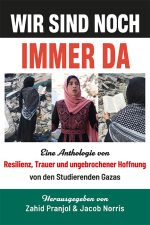
Wir sind noch immer da
USD $ 12.00 USD $ 27.00Price range: USD $ 12.00 through USD $ 27.00Select options This product has multiple variants. The options may be chosen on the product page
Wir sind noch immer da
USD $ 12.00 USD $ 27.00Price range: USD $ 12.00 through USD $ 27.00Professor Zahid Pranjol ist Professor für Biomedizinische Wissenschaften an der University of Sussex. Er ist eine führende Stimme in der inklusiven Wissenschaftsbildung und Lehrplanreform und leitet Bestrebungen zur Dekolonisierung des Lehrplans der Biowissenschaften, indem er eurozentrische Vorurteile hinterfragt und Leselisten diversifiziert. Seit April 2024 unterstützt er über 2.000 Studierende an drei großen Universitäten in Gaza, indem er Lehrmaterialien, Forschungsmentorate, Englischsprachtraining sowie Zugang zu professioneller und psychologischer Unterstützung bereitstellt.
Jacob Norris ist außerordentlicher Professor für Geschichte des Nahen Ostens an der University of Sussex. Er hat umfassend zur palästinensischen Geschichte im 19. und 20. Jahrhundert publiziert und arbeitet derzeit zur Geschichte der palästinensischen Solidarität in Lateinamerika.
Select options This product has multiple variants. The options may be chosen on the product page -
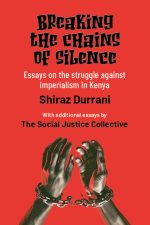
Breaking the Chains of Silence
Breaking the Chains of Silence opens where any serious account of Kenya must begin: with silence. But this is not the quiet of peace or the calm of justice. It is a manufactured silence—forged by land theft, detention, exile, assassinations, police bullets, and media too intimidated to print the truth. It is the silence that follows the gun and precedes the next uprising.
This book bravely refuses that silence. It dismantles the comfortable myth that Kenya became free simply because a flag was raised in 1963. It rejects the official narrative that the struggle ended with independence, leaving citizens as spectators while a small elite inherited the state, the land, the police, and the economy. Instead, it insists that Kenya’s real history is not the story of presidents, but of working people—first fighting colonialism, then confronting the imperialism that survived under new flags and through local agents.
Crucially, the book refuses to imprison resistance in the past. It reads the present with urgency, seeing the courage of the Gen Z movement, the defiance of the RutoMustGo protests, and the young people who walked into streets patrolled by a contemptuous state. It sees their rejection of taxation, corruption, and police violence. Yet it refuses to flatter that moment into myth. It insists that spontaneous anger must evolve into organisation, protest into political education, and generational revolt must find its class foundation. The cry of the youth must meet the power of workers.
While the essays engage with current contradictions, they remain rooted in theory—one essential element for revolutionary change. The other is practice: putting ideas into action and facing the enemy where bullets and prisons are the reality. This combination of theory and practice lays the groundwork for a people’s revolution. It is for this reason the book includes Gathanga Ndung’u’s vital essay, From Mau Mau to Ruto Must Go: A Genealogy of Resistance, which connects historical struggle to today’s frontline.
-
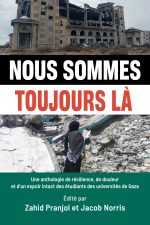
Nous sommes toujours là
USD $ 18.00Select options This product has multiple variants. The options may be chosen on the product page
Nous sommes toujours là
USD $ 18.00Depuis le début du génocide contre les Palestiniens à Gaza, mené par la violence coloniale israélienne, les établissements d’enseignement supérieur ont été systématiquement détruits. Les campus sont en ruines, les universitaires et les étudiants ont été tués ou déplacés de force, et ce qui était autrefois une population étudiante florissante et intellectuellement dynamique vit maintenant sous la menace quotidienne de bombardement, de famine forcée et de mort. Pendant près de deux ans, les étudiants ont été coupés non seulement de leurs universités, mais aussi de leurs rêves, de leur avenir et même de leur sentiment de sécurité le plus élémentaire.
Pourtant, malgré ce traumatisme inimaginable, beaucoup écrivent encore.
Nous sommes toujours là est une anthologie de ces voix – brutes, non filtrées et courageuses. Il présente des histoires courtes et longues, des poèmes, des essais et des témoignages écrits par des étudiants des universités de Gaza. Ce ne sont pas des réflexions rétrospectives ou des analyses à distance ; ce sont des mots en temps réel, émergeant des profondeurs du génocide, du déplacement et du deuil. Ces écrits peuvent être leurs derniers espoirs d’atteindre le monde, un dernier acte de résistance par l’expression.
Les droits d’auteur de la vente de ce livre sont intégralement reversés aux étudiants auteurs de Gaza.
Survivant aux extrêmes les plus sombres de la souffrance, de la destruction et du déplacement, de la famine et de la menace constante de mutilation ou de mort, ces jeunes écrivains nous parlent avec une lucidité perçante. Leur résilience est leur seule forme d’optimisme. Paradoxalement, les lire soulève le cœur.
– Ian McEwan, auteur d’Expiation et d’Amour ÉternelUn recueil bouleversant, douloureux et pourtant plein d’espoir, de la jeune génération du peuple de Gaza. Le Sumud, la résilience, n’a jamais été aussi puissant et clair qu’il ne l’apparaît dans cette collection incontournable et urgente. —Ilan Pappé, professeur au Collège des Sciences Sociales et des Études Internationales de l’Université d’Exeter, auteur de Une histoire très courte du conflit israélo-palestinien
Au cœur de la souffrance, les mots naissent — et sous les décombres, la créativité s’élève. Ce livre est plus qu’un recueil de pages écrites ; c’est l’écho d’âmes résilientes et le cri de plumes qui ont parlé lorsque les voix ont été réduites au silence. — Professeur Dr. Omar Kh. Melad, Président de l’Université Al-Azhar de Gaza
Nous Sommes Toujours Là n’est pas un livre sur la guerre — c’est un livre sur le fait d’être en vie après que le monde a décidé que vous avez déjà disparu, écrit dans des pièces qui ne tiennent peut-être plus debout. Ces pages sont des dépêches du fil étroit du présent : des lettres de la faim, des fragments de vies interrompues, des éclairs d’espoir si inflexibles qu’ils brûlent. Ici, des jeunes gens façonnent le témoignage de leur temps sur terre, sachant que leur temps peut être court. Vous ne quitterez pas ce livre avec le confort d’une conclusion. Il restera avec vous bien après que la dernière page aura été tournée. — Leila Sansour, réalisatrice et fondatrice d’Open Bethlehem
Ces réflexions poignantes de Gaza, en prose et en poésie, du milieu d’un génocide, sont à la fois déchirantes et pleines de vie et de promesse. Israël a peut-être physiquement tué nombre de leurs jeunes auteurs, mais il ne tuera jamais leurs mots, qui vivent dans ce puissant recueil de leurs écrits. — Ghada Karmi.
La mort n’est pas une idée pour ces jeunes écrivains, mais une réalité quotidienne. Ce recueil témoigne de la puissance des mots. Il révèle comment l’amour, la créativité et l’espoir peuvent nous galvaniser contre la peur et l’inaction. — Selma Dabbagh, auteure du roman Out of It et éditrice de l’anthologie We Wrote in Symbols; Love and Lust by Arab Women Writers.
Sara Alkhaldy, l’une des contributrices de Nous Sommes Toujours Là, une nouvelle anthologie d’écrits d’étudiants de Gaza, déclare : “Je voudrais pouvoir mettre en bouteille l’odeur de notre maison et l’emporter avec moi en partant.” Rula Elkhair écrit à propos des études pendant le déplacement : “Même dans des endroits sans électricité, sans eau et sans internet stable, j’ai installé un eSIM sur mon téléphone et je suis montée sur le toit sous le bourdonnement des drones pour télécharger des cours. J’ai passé des examens dans des cafés au bord de la mer. J’ai étudié en ayant faim, en ayant peur, en étant en deuil.” — Selma Dabbagh dans la London Review of Books Connaissance des Faits Pertinents.
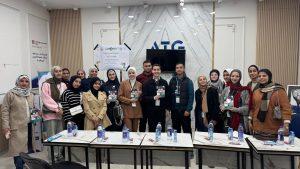 Écoutez notre conversation en podcast
avec les étudiants contributeursLa version anglaise de ce livre est disponible ici : We Are Still Here
Select options This product has multiple variants. The options may be chosen on the product page -
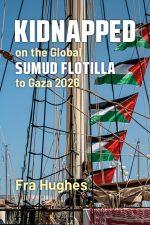
Kidnapped on the Global Sumud Flotilla to Gaza 2026
USD $ 6.99 USD $ 20.00Price range: USD $ 6.99 through USD $ 20.00Select options This product has multiple variants. The options may be chosen on the product page
Kidnapped on the Global Sumud Flotilla to Gaza 2026
USD $ 6.99 USD $ 20.00Price range: USD $ 6.99 through USD $ 20.00Kidnapped on the Global Sumud Lifeline to Gaza 2026 is the first-person account of Fra Hughes, a Belfast activist who sailed with the Global Sumud Flotilla in April 2026 on a humanitarian mission to break Israel’s siege of Gaza. Carrying food, medicine, and an unshakeable conviction that another world is possible, Hughes and his comrades were intercepted in international waters by Israeli commandos. What followed were three days of kidnapping, imprisonment, and deliberate degradation—from a metal shipping container in the Mediterranean to the high-security Ketziot Prison in the Negev desert.Told with unflinching honesty and dark Irish humour, this memoir spans three decades of activism. Hughes traces his journey from the streets of Belfast during the Troubles—where solidarity with Palestine was forged in the shadow of British occupation—through fifteen years of campaigns, convoys, and protests in Brussels, Barcelona, Cairo, and beyond. He documents the first Gaza convoys of 2010, the slow-burning solidarity movement that kept faith through years of failure, and the 2026 flotilla aboard the Alma: the preparations, the dangers, the extraordinary community of international activists who risked everything together on the water.The book weaves together multiple voices, including Tadhg Hickey’s account of a separate vessel in the same flotilla, and bears witness to atrocities—beatings, sexual assaults, mass arrests—documented in Istanbul medical centres and activist testimony. Against the normalisation of Gaza’s genocide, Hughes insists on naming what he saw.Returning to a hero’s welcome in Dublin and Belfast, his message is unambiguous: international solidarity is not charity but resistance. Kidnapped on the Global Sumud Lifeline to Gaza 2026 is a testament to sumud—steadfast endurance—and a call to action for everyone who refuses to look away.Select options This product has multiple variants. The options may be chosen on the product page