Kidnapped on the Global Sumud Lifeline to Gaza 2026
| Categories: | Autobiography, Flotilla, Forthcoming, Gaza, Occupation, Palestine, Solidarity, West Asia / Middle East |
|---|---|
| Tags: | #DarajaPress, #FreePalestine, #GazaFlotilla, #PalestineSolidarity, #Sumud |
Related products
-
Select options This product has multiple variants. The options may be chosen on the product page
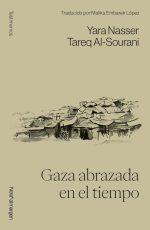
Gaza abrazada en el tiempo
USD $ 32.00The Spanish translation of original English edition of Gaza Held in Time is now available, published by Nota al margen in Spain. Copies of this publication are available here: https://www.notalmargen.com/libros/gaza-abrazada-en-el-tiempo/
«Sigo sin saber por qué amamos a Gaza. Tal vez porque nadie más lo hará. O porque dejar de amarla significaría renunciar a nosotros mismos. Ta vez nunca entienda el por qué, o bien sea algo que no necesito explicar. Quizá el amor es lo que queda cuando no queda nada. O quizá, solo quizá, no sea amor en absoluto, sino dolor. Una negativa a dejar de preocuparse, incluso cuando está en llamas. Esto no es una respuesta. Es lo que descubrí cuando empecé a preguntar. Sentir amor por Gaza no es lógico»
Le solía contar cuentos a mi hermana pequeña antes de dormir. Inventaba ciudades con árboles mágicos y bicicletas voladoras, donde la gente no se escondía bajo el hueco de la escalera ni revisaba el depósito de agua a diario, donde nadie se moría ni se suspendían las clases porque la escuela había sido bombardeada.Ella se reía y me preguntaba:
—¿De verdad, eso existe?
—Todavía no —le respondía.
Ese era el truco en Gaza. Decíamos «todavía no», en lugar de «nunca».
Porque la esperanza era lo único que no podían bombardear.
El cielo gritaba fuerte. Y sigue haciéndolo.
Ahora, en lo más hondo de mí, espero el día en que todo se quede en silencio.
Y cuando eso ocurra, alzaré la mirada, no con miedo, sino en paz.
Ese día no ha llegado.
Pero seguimos soñando.
Y seguimos viviendo.«Busco por todas partes un cielo del que esté ausente la muerte. Estoy segura de que está ahí, cuando compruebo los callejones y las avenidas. Se dice que existe justicia bajo ese cielo. Justicia es lo que siempre he anhelado y buscado».
«¿Seguiremos durmiendo en tiendas de campaña durante años? ¿Crecerán los niños entre paredes de nailon, aprendiendo a dibujar con cenizas? ¿Qué ocurrirá cuando el mundo siga adelante —de nuevo— y los únicos que queden para recordar este horror sean quienes no pudieron huir de él?».
«si dejo de escribir, / el silencio escribirá en mi lugar. / Y temo lo que pueda contar».
Select options This product has multiple variants. The options may be chosen on the product page -
Breaking the Frontiers
Breaking Frontiers: Debates in Marxist Theory Today is a comprehensive collection of contemporary Western-Marxist critiques of capitalism, curated by Sun Liang and John Holloway. Born from an ambitious project to introduce cutting-edge Marxist theory to Chinese debates, this collection has evolved into a vital English-language intervention examining our most urgent contemporary crises.
The editors articulate a fundamental shift in both anti-capitalist struggle and Marxist theory. Where traditional analysis framed the central antagonism of capitalism as labor against capital, the collection argues for a reconceptualization: life against money. This reframing reflects how social movements increasingly articulate resistance not merely against present oppression but against the existential threat capital poses to human survival itself—exemplified by crises ranging from environmental catastrophe to the normalized inhumanity of Gaza.
The collection integrates discussion of emergent concerns, particularly artificial intelligence, with foundational Marxist analysis of value, abstract labor, and money. Contributors explore how understanding capital’s logic through the lens of abstract labor and value creation illuminates both current struggles and possibilities for radical transformation. The work draws from heterodox and critical-Marxist approaches, combining theoretical rigor with practical engagement.
Within this framework, the collection addresses fascism’s resurgence, the ecology of capital, identity politics, the critique of technology, and alternative modes of thinking and being. Rather than offering explanations that settle into domination and doom, Breaking Frontiers presents a thinking of struggle—proposing not just resistance but visions of how we might create different worlds.
Essential for activists, scholars, and anyone seeking to understand contemporary capitalism and imagine radical alternatives, this collection affirms that another world remains not only possible but necessary. It demonstrates that Marxist theory, constantly rethought in dialogue with our terrifying present, remains an indispensable tool for understanding and transforming the world.
-
El Precio de la Dignidad
Este libro narra la conmovedora historia de Patrocinia Polanco Rivas, una campesina salvadoreña que personifica la lucha por la dignidad en medio de la adversidad. A través de su testimonio y el análisis del autor Andrés McKinley, la obra recorre su vida, desde una infancia marcada por la pobreza extrema y la opresión de la oligarquía cafetalera, hasta su participación en la guerra civil como operadora de radio del FMLN tras el asesinato de su mentor, el padre Rutilio Grande. La guerra le arrebata a su padre, pero forja en ella una resistencia inquebrantable.
Tras los Acuerdos de Paz de 1992, la esperanza de una vida digna se desvanece ante la persistente pobreza y las políticas neoliberales que mantienen a las familias campesinas en la miseria. Para sobrevivir, Patrocinia trabaja incansablemente cortando caña de azúcar, mientras la falta de oportunidades lleva a su esposo y, posteriormente, a sus seis hijos a emprender el peligroso viaje migratorio hacia Estados Unidos. El libro documenta los horrores de este periplo: el abandono, la extorsión, el secuestro y la constante amenaza de la muerte.
Una vez en el norte, los hijos de Patrocinia se enfrentan a la dura realidad de la vida indocumentada y a la maquinaria represiva del ICE, especialmente bajo la administración de Donald Trump. La autora establece un poderoso paralelismo entre la violencia de los escuadrones de la muerte en El Salvador y la persecución sistemática de los migrantes.
El Precio de la Dignidad es un testimonio de la resiliencia humana, mostrando que la dignidad no reside en el éxito de la lucha, sino en la propia lucha, un legado que Patrocinia heredó de su padre. El libro se erige como un recordatorio urgente de las consecuencias humanas de la guerra, de la injusticia económica y de las políticas migratorias despiadadas.
-
Beneath the Hum of Drones
The sound is always there. Hmmm. A low, continuous, mechanical hum that never stops. It is the sound of drones—circling above Gaza at all times, surveilling everything below, a permanent reminder that someone is always watching. It has been there since before the students could remember. Since childhood, when it disrupted their favourite cartoons. It is the backdrop against which Gaza’s students refused to stop learning.
Beneath the Hum of Drones tells the story of those students through their own words and paintings—and the story of how their voices reached the world.
Beneath the roar of drones and the shadow of annihilation, we will keep learning until our last breath. Education is our final refuge.
– Saad Muhana, Mechanical engineering graduate, Islamic University of Gaza, Palestine and contributor to We Are Still Here.It begins with a single conversation over coffee in England. A young Gazan scholar asked: What can we do? Not governments. Not international bodies. We, the two of us, here, with what we have. What could be done for the students of Gaza, right now?
What followed was a grassroots movement that nobody had planned. Seventy English teachers volunteered to teach through WhatsApp voice notes, listening to recordings made with the constant sound of surveillance overhead. Academics from across the UK delivered recorded lectures to medical students who walked miles through rubble for a signal. A community in Brighton and Hove raised funds for tuition fees and devices, sold student artwork as tote bags and stickers, and packed rooms for readings that left strangers weeping. A gallery in Hailsham hung the students’ paintings free of charge. A publisher brought out We Are Still Here, an anthology of poetry and prose by fifty-eight Gazan students writing from displacement tents and bombed-out neighbourhoods.
But this book is not only about what was built. It is about who built it—and who they built it for.
Hala painted a man pulling his family’s entire world on a wooden cart, refusing to look back at the ruins behind him. Sara drew an olive tree whose leaves had become shrouds, yet whose roots held firm. Lama sketched a starving child from life, because she would not let that child pass unwitnessed. Medical students climbed rooftops for a signal. Children who had not played in two years were finally given paint and paper. Young writers sent their most private words across a cracked phone screen, trusting that someone on the other side would handle them with care.
We are still here, they wrote. And we refuse to disappear in silence.
This is their story. It is a testament to courage, dignity, and the unbreakable will to learn—even beneath the hum of drones.
-
Select options This product has multiple variants. The options may be chosen on the product page
Night Settles Upon The City
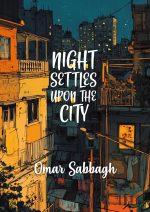
USD $ 22.00 – USD $ 23.00Price range: USD $ 22.00 through USD $ 23.00Written with urgency out of a war-time Beirut, this poetry collection registers the griefs and the heroism of the Lebanese, under siege yet again. Sabbagh lends his lyrical voice here, to give a voice to the voiceless, trying to find some harmonic sense out of catastrophe. This book will compel readers, both Lebanese and those with any kind of human heart. While much of the work was written swiftly, on impulse, and almost like, as one of the poem’s title’s has it, a ‘War Diary,’ in verse, this work aims nonetheless to last in its significance and resonance at a time when the world as a whole (let alone Lebanon herself) has become so unpredictable, so fickle and so perilous. Night Settles Upon The City aims to be a worthwhile addition to the contemporary literature of war and, more specifically, to the literary representations of the modern Lebanese reality and experience.
Omar Sabbagh is a poet who is privileged to write about war and destruction from the relative safety of his study. But this double-edged illusion is insidious — mental and emotional inwardly, and physical for those who are directly under attack. It is visceral, political, heart-wrenching — yet the poet seeks out light and hope through the act of writing, for the sake of ownership and sharing. He may say that “I cannot read minds and nor / will I ever wish to”, but he writes for the importance of record-keeping, seeking solace, both private and public — as the Night Settles Upon The City of Beirut.
— Sudeep Sen, Winner of the Rabindranath Tagore Literary PrizeOmar Sabbagh has long brought us a world in which personal experience stitches a hyphen between the eastern Mediterranean and the northerly British archipelago. Now he makes the tension inherent within that richness explicit, in a love-letter to his family and home city of Beirut. Written while the ‘night’ of war ‘settles upon the city’, his introductory ‘Thoughts’ show us how unthinkable war remains, even when it arrives on the doorstep. This is a book of witness to what cannot happen, and yet does.
– Fiona Sampson, Professor Fiona Sampson MBE FRSL.Two-Way Mirror: The Life of Elizabeth Barrett Browning WW Norton 2022 – Washington Post Book of the Year, New York Times Editors’ Choice, finalist Plutarch Prize, finalist PEN Jacqueline Bograd Award, Sunday Times Paperback of the year.The poet Omar Sabbagh lives in Beirut. His voice is playful, almost surreal at times. He talks of ‘the hairbrained monocle of war’ and suggests that if you live long enough in a place like Beirut ‘laughter becomes a lover’s distance-giving kiss’. Night Settles Upon the City offers us a poetry that is neither ideological nor partisan, not of the frontline but of a deeply threatened warzone. Its terms are easy-going, sorrowful, humane, formally intelligent and tinged with apprehension. It is humanity being human. Reading it is relief and hope.’
— George Szirtes FRSL, Eliot Prize winner.Night Settles Upon the City by Omar Sabbagh is a profoundly reflective and evocative collection that blends personal experience with the brutal realities of life in a war-torn Beirut. Through a tapestry of poems, essays, and prose, Sabbagh explores the intersections of love, grief, intellectual contemplation, and the relentless backdrop of violence. The writing oscillates between moments of tender introspection and stark depictions of societal collapse, embodying a kind of philosophical meditation on suffering and survival. Sabbagh’s voice is distinctively lyrical, capturing both the intimacy of individual loss and the broader existential weight of conflict. His reflections on war and its aftermath are imbued with a sense of historical consciousness, yet deeply grounded in the immediacy of personal anguish and resilience. The collection is not just about bearing witness to destruction, but also about finding fragments of humanity amidst the ruins. A haunting and powerful work that invites readers into the fragile space between beauty and despair.—Dr. Pamela Chrabieh, Kulturnest Co-founder & Managing Director
The Arabic term for poet means the one who feels, unlike the Greek origin of poetry, which describes the craft itself. Omar Sabbagh is the quintessential poet in the Arabic sense. In this collection, he vibrates with Beirut, where he now lives, at a time when the city’s famous cultural vibrations are overwhelmed by murderous quakes caused by the Israeli war machine.
—Gilbert Achcar, Professor of Development Studies and International Relations at SOAS University of London.Beirut’s Omar Sabbagh, lover of beauty, poet of lush lyrical power, addresses the spirit of the great Dr. Edward W. Said in one poem, saying these troubled seasons make him “restless now in (his) resting place.” I’m captivated by a further description of Said, “living paper, breathing ink of one whose thoughts still seem to think.” There is healing in such sensitive recognition. Wise voices we always needed are suddenly needed desperately. Sabbagh invokes his love for a precious home frequently under siege and his care for all the people who made and surround him. Gratitude for the wisdom, kindness and rich affections of Night Settles Upon the City.—Naomi Shihab Nye, recipient Lifetime Achievement in Poetry Award, the Wallace Stevens prizeIn Night Settles on the City, Omar Sabbagh gives voice to the bewilderment, fear, rage, and despair so many of us in the Middle East are currently feeling. His eloquent, tender poems grapple with the impossibility—yet absolute necessity—of language at a moment when words otherwise fail. Like all the best poems, Sabbagh’s challenge, soothe, haunt, and rehumanize us, ultimately arousing our better selves.
—Mai Al-Nakib, author of An Unlasting Home and The Hidden Light of ObjectsBoth erudite and demotic, felt through the body and ‘guided by ear’ Omar Sabbagh’s voice powers through the remote attacks on Beirut – the city in which he currently lives – the hourly atrocities and unspeakable suffering to reach us and to speak for us. ‘What’s to understand?’ he asks ‘That murder can be finessed?’ In his seminal new collection, Night Settles Upon the City, night becomes a ‘dark and violent animal’ with its ‘panther’s pelt’ of terror ‘slowly curving round us’ through which we hear the voice of the aggressor reflecting that ‘…each murderous attack/ I order seems to drain this world of innocence.’ Yet Sabbagh’s own voice remains measured, balanced, especially in the portraits he paints of his beloved father…‘It gets worse each day watching him/ ageing’ (‘The Old Man and his Walking Stick’). This poem ends with the lines ‘an old man and his son, fighting a war/ in a warzone we all must visit’. Alongside unimaginable horror we are shown the ordinary griefs and losses that we all suffer – of ageing, of failing, of being human; and it’s the humanity and compassion with which Sabbagh bears witness that will secure this book’s future among the handful of classics that will come to define our era.
— Jenny Lewis, MA Oxon., MPhil., PhD, Tutor for Poetry, Oxford UniversitySelect options This product has multiple variants. The options may be chosen on the product page -
Hand On The Sun: A passionate and powerful novel of race and class
USD $ 8.00 – USD $ 26.00Price range: USD $ 8.00 through USD $ 26.00Select options This product has multiple variants. The options may be chosen on the product pageHand On The Sun: A passionate and powerful novel of race and class
USD $ 8.00 – USD $ 26.00Price range: USD $ 8.00 through USD $ 26.00This was Tariq Mehmood’s first novel, published by Penguin Books in 1983, charting the experience of the second generation migrants to the UK. Set in the declining textile industry of the North of England, it is a raw story of pain and anger at the relentlessness of British racism, from the street to the state – a story of an unquenchable desire for justice, and reclaiming human dignity. A dignity that is wrapped around new questions of Identity, a crossroad between religion, language, history and resistance. It is a little big story, that talks to the extremities of social, political and literary issues today? Can stories of a generation be appropriated? How important is religion in identity? If all you have is a story to tell, who should you tell it? Are the issues of today, just the issues of today or can we learn something from the past? In these stories, friendship is not defined by religion or colour, but by humanity. And racism is much more than skin deep. It is an exhilarating read that bears witness to the urgent 80’s battles against state and popular racism. As important now as then. In this new edition, Mehmood provides a Foreword that describes how the novel came to be written and the lives of real people on whom the characters were created. In the Afterword, Mehmood revisits some of the characters who are now 40-years older, and reflects on how the book would have been written today where the conditions of mass mobilizations no longer exist in neoliberal Britain.
Select options This product has multiple variants. The options may be chosen on the product page -
Select options This product has multiple variants. The options may be chosen on the product page
From Citizen to Refugee: Uganda Asians Come to Britain
USD $ 22.00In his introduction to this new edition of From Citizen to Refugee: Uganda Asians Come to Britain, Mahmood Mamdani reminds us that long before 1972, most Ugandan ‘Asians’ had already been disenfranchised by law, both Ugandan and British. Despite a global industry that insists otherwise, Uganda Asians are a poor fit as victims: there was no large-scale loss of life during the expulsion, nor were there massacres of Asians, only of ‘indigenous’ peoples. Asians in Uganda, as in East or Southern Africa, he argues, were immigrants, not settlers: immigrants are prepared to be a part of the political community, whereas settlers ‘create their own political community, a colony, more precisely, settler colonialism.’ Mamdani insists that there is no single Asian legacy. there are several and they are contradictory. The Asian question in Uganda remains, but it is no longer the original Asian question. But it does allow us to think more broadly. Just as US law recognizes African Americans as Americans of African descent, so too must those of Asian origin in Africa consider themselves, and be considered, Asian Africans. It is in his bittersweet and touching book on the Asian expulsion from Uganda that one can trace the beginnings of author and intellectual Mahmood Mamdani’s world-view.. … In From Citizen to Refugee: Uganda Asians Come to Britain Mamdani offers portraits of people reduced to a vegetative existence in refugee camps, feeling the burden of not being fluent in English and struggling with the uncomfortably cold weather. Not surprisingly, these few months played a pivotal role in shaping Mamdani’s theoretical and political leanings, and it is here that one can locate his preoccupation with the formation of racial, ethnic and class identities during the colonial era and his overarching concern with issues of citizenship.
Select options This product has multiple variants. The options may be chosen on the product page -
Select options This product has multiple variants. The options may be chosen on the product page
We Are Still Not Counted As Human
S’bu Zikode’s reflections chronicle the profound struggle of Abahlali baseMjondolo (residents of the shacks), the largest popular movement to emerge in South Africa since apartheid. Founded in Durban in 2005, the movement now boasts over 180,000 members organised into more than 100 branches across four provinces (as of September 2025).
The movement arose from a deep disappointment following the initial promise of democracy, realizing that “freedom and the African National Congress (ANC) were two different things”. The poor were immediately excluded from public life and discussions about their own lives, often treated as “criminals” or “rubbish”. This systematic dehumanisation—where their very presence was deemed criminal—showed that democracy, in practice, referred primarily to the middle class and the rich.
At the heart of Abahlali baseMjondolo’s organizing is the non-negotiable demand for the recognition of their humanity and dignity. They built their foundation on the principles and values of ubuntu, viewing dignity as requiring respectful engagement and full participation in decision-making—not merely accepting ‘service delivery’. They insist on thinking and speaking for themselves, adopting the slogan ‘nothing for us, without us’.
AbM developed a unique ‘politics of the poor’ to create a space for the impoverished to think together, build power, and advance their interests outside of political parties or trade unions. The goal is establishing a democratic socialism built from below—a “living communism”—grounded in community praxis.
This struggle has been met with intense repression, including police violence, torture, criminalisation, and assassinations, with more than twenty lives lost. The state’s actions, intended to teach the poor to “know their place,” instead taught them that democracy was not for them, reinforcing the need to organize and be strong together. The movement continues to fight for the destruction of the capitalist system and the reconstruction of a new system centred on the humanity and dignity of all people.
STOP PRESS: Citation of Honour to S’bu Zikode.
29 October 2025
Human Rights Commission Presents a Citation of Honour to S’bu Zikode
Today the South African Human Rights Commission presented a Citation of Honour to S’bu Zikode.
Professor Tshepo Madlingozi, who presented the citation, specifically noted our movement’s work for land reparation, spatial justice and food sovereignty, and our commitment to oppose xenophobia and gender-based violence. He praised our movement as “true advocates of human rights, the restoration of dignity, and full liberation” and said that Zikode’s “legacy will forever guide and inspire future generations”.
In his acceptance speech Zikode accepted the Citation of Honour on behalf of the movement saying that “An award for me is also an award for the movement, Abahlali baseMjondolo, and for the determination and courage of all the people of South Africa — and all those who have kept our movement going for twenty years despite the challenges we continue to face.” He dedicated the award to the 25 comrades who have lost their lives in the course of our struggle.
Later, speaking to the leadership of the movement he said that “I am forever grateful to the red sea that has carried me over and over. I deeply appreciate you all.”
Our movement welcomes this award of a Citation of Honour to our president. It is an important recognition of the justice and power of our struggle, and the determination and courage of our members. In a time in which human rights are coming under sustained attack from right-wing forces, in and out of the ANC, we reaffirm our solidarity with the Commission, with the Socio-Economic Rights Institute and with all other human rights organisations under attack from the right.
The rights and dignity of every person must be respected – without exception – and we need to build a united front in support of this principle.
Contact:
Thapelo Mohapi 084 576 5117
Snenhlanhla Mcanyana 073 832 331
S’bu Zikode 083 547 0474Select options This product has multiple variants. The options may be chosen on the product page