
-
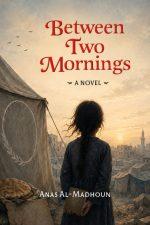
Between Two Mornings
Between Two Mornings is a novel that unfolds over a single day in Gaza—from six in the morning until four the next morning—following twelve ordinary people as they try to keep themselves, and each other, from disappearing. Lujain, a young girl, learns from her teacher Noor that “a person does not become zero.” Her father, Abu Wissam, stands in a distribution line and insists his family is seven, though the register says five. Samer runs from hospital to hospital clutching a photograph of his missing brother Tariq. Rahaf, a nursing student, delivers a baby in a tent with one glove and a shrinking bottle of water. A photographer named Hassan must decide when to raise his camera and when to set it down. An old man counts his grandchildren each night. A poet carries half a bucket of water. A mother sends one message: “I am here.”
Anas Al-Madhoun writes with devastating restraint, refusing spectacle and refusing despair. Each chapter is a door into a life that cannot be reduced to a number, a list, or a headline. The novel asks not for pity but for attention: see the person before the news, the name before the list, the hand that tried even when it could not succeed. In the conclusion, the book reveals what happened to each character—and in doing so, demands that they be remembered not as casualties, but as people who wrote, counted, taught, searched, healed, witnessed, and preserved. Between Two Mornings is a work of witness and of love, insisting that even an unfinished morning deserves to be noticed.
Key words: Gaza, literary fiction, displacement, Palestinian literature, war fiction, human resilience, Arabic novel
-
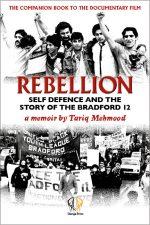
REBELLION
USD $ 23Select options This product has multiple variants. The options may be chosen on the product page
REBELLION
USD $ 23Rebellion: Self Defence and the Story of the Bradford 12 is a gripping first-hand account of one of the most important – and forgotten – trials in modern British history.
In July 1981, twelve young Asian men in Bradford were arrested and charged with terrorism. Their crime: making petrol bombs to defend their community against a threatened invasion by racist skinheads. The police called it a bomb factory. The state called it conspiracy. The community called them their sons.
In this powerful memoir, Tariq Mehmood – one of the Bradford 12 – tells the story from the inside: the racist violence of 1970s and 80s Britain, the founding of the United Black Youth League, the dawn raids, the interrogations, the betrayal, and the five-week trial at Leeds Crown Court. He reveals how the police fabricated evidence, denied defendants access to solicitors, and placed a fascist skinhead in his cell. He also shows how a mass community campaign, built on the slogan Self-Defence Is No Offence, helped secure the acquittal of all twelve defendants.
Published alongside the BFI documentary film, Rebellion connects that historic struggle to the present: the rise of the far right, the criminalisation of Palestine solidarity, and the ongoing fight against state racism. As the author writes, this is not a finished story. It is an unfinished one – and you are part of it.
A gripping story about a forgotten episode. The courage of the Bradford 12 who took on racism and police brutality in their city is told here for the first time without any holds barred. It should be read by anyone who is interested in the history of the postwar migration to Britain. And some within the Asian community today might be surprised that none of the Bradford 12 was imbued with religion. I think the jury that acquitted them would agree with this assessment.— Tariq Ali, political activist, writer, journalist, filmmaker, and public intellectual
Select options This product has multiple variants. The options may be chosen on the product page -
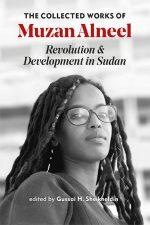
Revolution and Development in Sudan
USD $ 12 USD $ 27Price range: USD $ 12 through USD $ 27Select options This product has multiple variants. The options may be chosen on the product page
Revolution and Development in Sudan
USD $ 12 USD $ 27Price range: USD $ 12 through USD $ 27A Monumental Voice for a People-Centered Revolution
Muzan Alneel—engineer, revolutionary, and organic intellectual—was a pulse of Sudan’s historic December 2018 uprising and its voice to the world. This posthumous collection charts her urgent vision for a people-centred transformation. Combining activist theory and on-the-ground praxis, Muzan dissects the class struggles and grassroots organizing of the Resistance Committees, provides a clear-eyed critique of counter-revolutionary forces, and outlines a bold framework for sustainable, democratic industrial policy.
Connecting the struggles of Sudan to Palestine and the Global South, her writings argue that genuine liberation must be built from the bottom up. A powerful repository of radical thought, this book is both a tribute to a brilliant thinker taken too soon and a vital resource for anyone committed to building a future defined by justice, freedom, and people’s power.
This posthumous collection brings together the essential writings of Muzan Alneel, a revolutionary intellectual, engineer, and activist whose life was cut tragically short at age 39. A cornerstone of Sudan’s 2018 December Revolution, Muzan embodied a unique blend of grassroots organizing and rigorous scholarly analysis. Her work traversed the critical intersections of revolution, development, and global solidarity.
The book’s first section dissects the political dynamics of Sudan’s uprising, providing crucial insights into the role of the Resistance Committees and the class struggles that define the country’s revolutionary path. It offers an unparalleled analysis of the “counter-revolution” and the challenges facing the transition to civilian rule.
Select options This product has multiple variants. The options may be chosen on the product page -
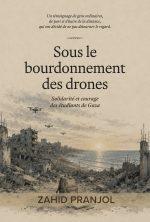
Sous le bourdonnement
USD $ 6.99 USD $ 28Price range: USD $ 6.99 through USD $ 28Select options This product has multiple variants. The options may be chosen on the product page
Sous le bourdonnement
USD $ 6.99 USD $ 28Price range: USD $ 6.99 through USD $ 28Le son est toujours là. Hmmm. Un bourdonnement continu, mécanique, qui ne s’arrête jamais—le bruit des drones qui survolent Gaza en permanence. Il est là depuis avant que les étudiants ne s’en souviennent. C’est le décor contre lequel ils ont refusé de cesser d’apprendre.
Sous le bourdonnement des drones raconte l’histoire des étudiants de Gaza à travers leurs propres mots et leurs peintures—et celle de la manière dont leurs voix ont atteint le monde.
Tout commence par une simple conversation autour d’un café en Angleterre. Un jeune universitaire gazoui a demandé : « Que pouvons-nous faire ? Ce qui a suivi, c’est un mouvement populaire que personne n’avait planifié. Soixante-dix professeurs d’anglais se sont portés volontaires pour enseigner via des notes vocales sur WhatsApp, enregistrées avec le bruit des drones en arrière-plan. Des universitaires ont diffusé des cours magistraux à des étudiants en médecine qui marchaient des kilomètres à travers les décombres pour capter un signal. Une communauté de Brighton a collecté des fonds pour les frais de scolarité et le matériel informatique. Une galerie a exposé gratuitement l’art des étudiants. Un éditeur a publié We Are Still Here, une anthologie de cinquante-huit étudiants de Gaza écrivant depuis des tentes de déplacés et des quartiers bombardés.
Hala a peint un homme tirant le monde entier de sa famille sur une charrette en bois, refusant de regarder en arrière vers les ruines. Sara a dessiné un olivier dont les feuilles sont devenues des linceuls, mais dont les racines restent fermement ancrées. Lama a croqué un enfant affamé d’après nature, refusant de le laisser disparaître sans témoin. De jeunes écrivains ont envoyé leurs mots les plus intimes à travers un écran de téléphone fissuré, confiants qu’ils seraient traités avec soin.
Nous sommes toujours là, ont-ils écrit. Et nous refusons de disparaître dans le silence.
Voici leur histoire. Un témoignage de courage, de dignité et d’une volonté inébranlable d’apprendre—même sous le bourdonnement des drones.</p>
Select options This product has multiple variants. The options may be chosen on the product page -

Breaking Frontiers
USD $ 15 USD $ 40Price range: USD $ 15 through USD $ 40Select options This product has multiple variants. The options may be chosen on the product page
Breaking Frontiers
USD $ 15 USD $ 40Price range: USD $ 15 through USD $ 40Breaking Frontiers: Debates in Marxist Theory Today brings together twenty-four groundbreaking essays from leading critical-Marxist thinkers across the globe, offering a panoramic view of the most urgent debates in contemporary Marxist theory. Edited by John Holloway and Sun Liang, this collection emerges from a cross-cultural dialogue that bridges Western and Chinese Marxist traditions, challenging readers to rethink the very possibilities of anti-capitalist struggle in an era of deepening crisis.
The book spans a remarkable range of themes: from artificial intelligence and cognitive capitalism to the crisis of social reproduction, from the critique of the state and world market to the politics of time, urban commons, and the rise of posthuman fascism. Contributors include Silvia Federici, Franco Berardi, Ariel Salleh, Michael Neocosmos, Werner Bonefeld, and many others, each offering distinctive perspectives on how Marxism can speak to the catastrophes of our present.
At its core, the collection wrestles with a defining question: does Marxism today merely theorise catastrophe, or can it still think revolution? The chapters engage with the fragmentation of the working class, the transformation of labor under AI, the centrality of reproductive work, the nature of state power, and the temporalities of rebellion. The book closes with a dialogue between the editors, debating the role of the Party, the state, and subjective agency in social transformation.
Breaking Frontiers does not offer easy answers. It invites readers into a turmoil of thinking, affirming that another world is not only possible but more urgently necessary than ever. Essential reading for scholars, activists, and anyone seeking to understand capitalism’s destructiveness and the possibilities of resistance.
Select options This product has multiple variants. The options may be chosen on the product page -
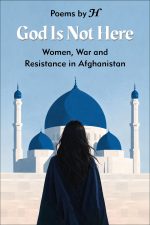
God Is Not Here
God Is Not Here is a collection of 50 poems written in response to the profound political, social, and human crisis in Afghanistan, particularly the systematic erasure of women from public life under an extremist and patriarchal regime. Through poetry, the collection records the experiences of women living under restrictions, fear, forced silence, and the loss of their fundamental freedoms.
At the heart of the collection is the belief that writing can be an act of resistance. When women are denied the right to speak, study, work, move freely, and participate in society, poetry becomes a way of reclaiming voice and presence. These poems transform personal pain, fear, anger, grief, and isolation into language, testimony, and resistance.
The collection moves between intimate and collective experiences. Kabul and Kandahar appear as landscapes marked by grief, memory, war, silence, and survival. Images of walls, abandoned cities, mosques, darkness, pomegranates, flowers, butterflies, and women’s bodies create a tension between confinement and freedom, death and life, silence and speech.
The poems also question the use of religion and morality as instruments of control, confronting the contradictions between religious rhetoric and the violence inflicted upon women in its name. At the same time, the collection insists that women remain capable of hope, dignity, awareness, and resistance even under extreme conditions.
The central argument is that the suffering of Afghan women must not disappear into silence or be forgotten by history. The poems seek to preserve the voices and experiences of women who have been pushed out of public space and to challenge the idea that silence means consent.
Ultimately, God Is Not Here is both a personal and collective act of resistance: an attempt to turn pain into art and confinement into voice, and a testament to the power of the pen and a hope for freedom and awareness.
-
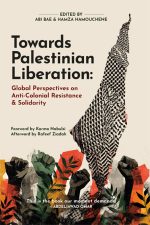
Towards Palestinian Liberation
USD $ 12 USD $ 38Price range: USD $ 12 through USD $ 38Select options This product has multiple variants. The options may be chosen on the product page
Towards Palestinian Liberation
USD $ 12 USD $ 38Price range: USD $ 12 through USD $ 38While awareness and global solidarity with Palestine have grown, mainstream frameworks often remain narrowly focused. Common approaches typically confine the issue to Israel, the West Bank, and Gaza, or reduce solidarity to a matter of human rights and international law violations.
Although engaging formal institutions to end Israel’s genocide, apartheid, and occupation is a necessary strategy, such a focus can inadvertently depoliticize the Palestinian struggle. It frequently overlooks the foundational settler-colonial nature of the Israeli state, the unwavering material and ideological support it receives from Western powers, and Palestine’s profound significance within broader historical and contemporary anti-colonial movements.
The ongoing Western-backed genocide has starkly revealed the political divergence between the West and the Global South. In contrast to institutional complicity and failure, the enduring legacy of anti-colonial solidarity across the Global South has resurfaced as a vital force. As liberal international systems prove ineffective, rebuilding and strengthening transnational solidarity networks has become an urgent imperative to halt the genocide and achieve a liberated Palestine.
A deeper understanding requires a framework that connects Palestine to wider regional dynamics, global power structures, and the long arc of anti-colonial resistance. Towards Palestinian Liberation is an edited volume that reaffirms the Palestinian struggle as an intersectional and transnational anti-colonial fight.
Bringing together diverse perspectives from scholars and activists worldwide, this collection moves beyond mainstream narratives. It explores the interconnectedness of global struggles, examines the role of economic and political interests, and critically assesses the opportunities and challenges facing international solidarity movements. This book is essential for anyone committed to understanding—and advancing—the cause of justice and liberation in Palestine.
Praise for Towards Palestinian Liberation
I can think of no other book that addresses the question of solidarity with Palestine and Palestinians as urgently and as eloquently as this collection – Laleh Khalili, author of Heroes and Martyrs of Palestine: The Politics of National Commemoration
A crucial intervention in these tumultuous times – Yara Hawari, co-director at Al-Shabaka: The Palestinian Policy Network
A book that proves once again that writing and recording is itself resistance – Anuradha Chenoy, Adjunct Professor, Jindal Global University, India; Associate, Transnational Institute
Wide-ranging yet coherent, intellectually ambitious yet grounded in praxis – Hossam El-Hamalawi, scholar specialising in the Egyptian military and policing
An astonishing book – an answer to despair … I can think of no more necessary or important book for those of us determined to revolutionise our world – Leo Zeilig, writer, novelist and author of A Revolutionary of Our Time: The Walter Rodney Story
It stands as both an ode to hope and a practical manual for liberation – Shahd Hammouri, Lecturer in International Law and Legal Theory, University of Kent
This book is a living archive of resistance – unfolding across geographies, histories, and generations … If there is one book to read in these times, this is it – Madhuresh Kumar, Resistance Studies Fellow, University of Massachusetts Amherst; former national convener of the National Alliance of People’s Movements, India.
The authors in this urgent collection demonstrate the world-historic character of the struggle for Palestinian liberation – Thea Riofrancos, author of Extraction: The Frontiers of Green Capitalism
This is the book our moment demands – Abdeljawad Omar, writer and Assistant Professor at Birzeit University, Palestine
This book is essential reading for anyone who wants to understand why Palestinian liberation cannot be separated from revolutionary and anti-colonial struggles across the world… [it] will play a vital role in educating a new generation of activists – Anne Alexander, author of Revolution is the Choice of People
This timely and generous collective effort by renowned scholars and activists is a must-read – Ndongo Samba Sylla, Head of Research and Policy for the Africa Region at International Development Economics Associates (IDEAs)
An indispensable book about one of our times’ most important political causes – Miriyam Aouragh, professor and author of Palestine Online
This book is a lesson in internationalism and the need to organise in order to practise it – Sabrina Fernandes, Brazilian economist, author and ecosocialist activist
This book is an indispensable resource for anyone committed to the belief that a better world is necessary and must be fought for – from many rivers to many seas – Salim Vally, Professor, Faculty of Education, University of Johannesburg
An indispensable intervention … Reading this book is an essential antidote to the darkness and despair that permeates this moment – Grieve Chelwa, Associate Professor of Political Economy, The Africa Institute, Global Studies University
This work stands as a guiding light for those committed to a liberated Palestine in a liberated world – ClaraMattei, author of Escape from Capitalism, founder of The Forum For Real Economic Emancipation (FREE)
What distinguishes this collection is its refusal to treat Palestine as an exception. It places Palestinian liberation where it belongs — at the centre of a global confrontation with empire, fossil capitalism, and the architectures of racial domination – Yanis Varoufakis, Greek economist and author of Technofeudalism: What Killed Capitalism
An essential read to keep hope alive and to remember Ghassan Kanafani’s words: ‘As long as we struggle, we are not defeated’ – Olfa Lamloum, political scientist, filmmaker and president of The Legal Agenda, Tunisia
Historically informed, strategically oriented … crucially important and timely – Gyekye Tanoh, Freedom and Justice for Palestine (Ghana) and member of Global Ecosocialist Network
A must-read for anyone interested in understanding the struggle for Palestine and beyond – Rima Majed, Associate Professor of Sociology at the American University of Beirut
Indispensable for an acquaintance with Palestinian resistance that goes beyond reading the headlines – Walden Bello, Filipino scholar-activist and Right Livelihood awardee 2003
This book could not be more timely. … A book from the movement and for the movement, it provides us with essential tools to continue and globalise the anti-imperialist struggle – Lucia Pradella, Reader in International Political Economy, King’s College London
Here, for the first time, we get a chance to see Palestine and its struggle through the eyes of the majority of humanity – the global South, that is … an invaluable resource – Andreas Malm, author of The Destruction of Palestine Is the Destruction of the Earth.
Shines a new and revealing light on decades of anti-colonial, anti-imperialist struggles … This book will be welcomed by both analysts and activists – Brid Brennan, Transnational Institute Fellow
The Palestinian struggle for liberation is inseparable from histories of anti-colonial resistance and internationalist solidarity … this volume reclaims that radical tradition – Omar Jabary Salamanca, Professor of Social Sciences, Université libre de Bruxelles.
A crucial collection for those of us trying to find a way forward in a world shaped by genocide, rising fascism, aggressive imperialism, and climate catastrophe. – Sai Englert, author of Settler Colonialism: An Introduction
For full versions of these endorsements, view the ‘Review’ tab below.
Select options This product has multiple variants. The options may be chosen on the product page -
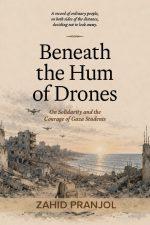
Beneath the Hum of Drones
USD $ 6.99 USD $ 25Price range: USD $ 6.99 through USD $ 25Select options This product has multiple variants. The options may be chosen on the product page
Beneath the Hum of Drones
USD $ 6.99 USD $ 25Price range: USD $ 6.99 through USD $ 25Royalties from this book go to the students in Gaza.
The Gazan students who refused to stop learning
Beneath the Hum of Drones: On Solidarity and the Courage of Gaza’s Students, a new book by Professor Zahid Pranjol, tells the story of how students in Gaza continued to learn through war, displacement and siege, and how an extraordinary network of volunteers from the UK came together to support them, drawing on first-hand testimony from Gaza, stories from inside the atrocities and personal reflection.
The new book follows students who continued to study, write, paint and organise while their universities and homes were being destroyed around them. Alongside their stories, it traces a grassroots movement that connected academics, teachers and communities across the UK with students in Gaza, providing teaching, financial support and opportunities for the students’ artwork and poetry to be seen and heard outside of the walls of Gaza and for their voices to be carried to the world. This book is about the author’s journey with a community of students in Gaza built together, across an impossible distance and in the middle of a genocide.
“This is not a book I set out to write. It began as a question asked over coffee by a scholarship student from Gaza who wanted to know what the two of us, in a university in the south of England, could actually do in the face of annihilation of the people of Palestine.” Professor Pranjol writes.
What followed was an extraordinary international effort. University academics, more than 70 volunteer English teachers, artists, healthcare professionals and hundreds of ordinary people came together, united by the belief that they could not stand by while Gaza’s students were denied their education. Together, they built a network of solidarity with members centred around the University of Sussex and communities across East Sussex, UK. Among those involved were English teachers, doctors, artists and university lecturers from across the UK who volunteered hundreds of hours to teach students in Gaza remotely.
Since early 2024, the initiative has grown into a wide-ranging programme of educational, creative and psychological support for students in Gaza. Its work includes English language teaching delivered by volunteer teachers, art therapy for children, specialist psycho-trauma therapy delivered remotely through Zoom and WhatsApp, and medical and psycho-trauma training for healthcare professionals working in Gaza. The wider initiative documented in the book has supported an estimated 4,000 to 5,000 students through educational programmes, financial assistance and wellbeing support.
The initiative has been shaped by listening to students in Gaza themselves to understand what their needs are. Organisers asked them to identify their most urgent priorities, time and again, they told of their immediate need for access to emergency medical training and mental health training, alongside financial support.
This new book tells their story. Rather than focusing on governments or institutions, Beneath the Hum of Drones centres the experiences of Gaza’s students themselves. Through essays, paintings, poems and personal testimony, the book presents young people determined to continue learning despite extraordinary circumstances.
Professor Pranjol says the students of Gaza became his teachers.
“I was not the teacher in this story. I was the student. The young people of Gaza, studying under bombardment, writing from the side of the road, painting the sea from rooftops beneath the drones, were the ones with something to teach, and this book is mostly a record of what they taught me.”
Since October 2023, universities across Gaza have been devastated, every school has been damaged or destroyed, and hundreds of thousands of students have seen their education disrupted. Palestinian academics have described the destruction of the higher education system as ‘scholasticide’, the systematic destruction of educational institutions and knowledge itself.
While much has been written about the destruction of Gaza, few books tell the story through the eyes of its students, or document the international community that emerged to support them. Beneath the Hum of Drones documents not only that destruction, but also the determination of students and educators to continue learning, and the communities around the world that chose to stand beside them.
“I have tried to write this book without looking away, and without reducing anyone person to a number or a symbol. The people in these chapters have names, and tastes, and ambitions. They argue and they make jokes. They are still hoping. They are, against years of siege and horror, still here.” Professor Pranjol remarks.
All author royalties from Beneath the Hum of Drones will go directly to supporting students in Gaza. By purchasing the book, readers are helping to fund educational opportunities and ensure that young people can continue learning despite the ongoing destruction of Gaza’s education system.
Professor Zahid Pranjol is Professor of Biomedical Sciences at the University of Sussex and a leading voice in inclusive science education and curriculum reform. He is also the co-author, with Dr Jacob Norris, of We Are Still Here, the 2025 anthology bringing together the voices of 58 university students writing from Gaza during the destruction of their universities and homes. Beneath the Hum of Drones tells the story behind that project and the wider movement it inspired.
Endorsements
“An extraordinary and inspiring story of the effort by global solidarity activists to keep Gaza’s students learning against near-impossible odds.” — Norman Finkelstein and Deborah Maccoby
“Testifies to the resilience of Gaza’s younger generation, whose determination should humble us all.” — Ilan Pappé
“A fellowship of endeavour proving that the truest bonds of humanity acknowledge neither distance nor siege.” — Vusi Madonsela
“An inspiring story of what happens when individuals decide to make a difference.” — Caroline Lucas
“Heart wrenching and inspiring, a model of what humanity can do in the rubble of the inhuman.” — Lila Abu-Lughod
“A remarkable testament to the enduring power of education, compassion, and courage.” — Professor Dr. Omar Kh. Melad
“In the face of scholasticide, Palestinian students give us hope.” — Neve Gordon
Closing
The genocide continues. Yet so does the extraordinary courage of Gaza’s students, and the growing network of solidarity that stands beside them. They are still teaching. They are still writing. They are still painting. They are still dreaming of a future. They are still here.
“The people of Gaza were never waiting to be saved. They were already doing the work. They asked only that the rest of us not leave them to do it alone.”
Select options This product has multiple variants. The options may be chosen on the product page -
Every Country Gets the Fascism It Deserves
USD $ 5 USD $ 12Price range: USD $ 5 through USD $ 12Select options This product has multiple variants. The options may be chosen on the product page
Every Country Gets the Fascism It Deserves
USD $ 5 USD $ 12Price range: USD $ 5 through USD $ 12Every Country Gets the Fascism It Deserves documents the systematic construction of xenophobic violence as a political project in post-apartheid South Africa. Richard Pithouse traces how the state, media and organised political forces have cultivated hatred against migrants, transforming social pain into organised cruelty.
The book begins with the May 2008 pogroms that killed 62 people and displaced 100,000, showing how the mob followed the logic of a state that had already begun dehumanising migrants. It documents the rise of the All Truck Drivers Foundation, which murdered more than 200 drivers in organised attacks, and the subsequent emergence of Operation Dudula and March and March—well-funded astroturfed movements that normalised fascist language and violence.
Pithouse reveals the complicity of the police, media and major political parties—including the ANC, DA, MKP, ActionSA and Patriotic Alliance—in legitimating xenophobic violence. He shows how the mob and state have collaborated to drive more than 150,000 people across South Africa’s borders in a matter of weeks, with government infrastructure facilitating mass deportation.
Drawing on the work of Aijaz Ahmad, Alain Badiou and Richard Seymour, Pithouse argues that the erosion of democratic norms, the reactivation of ethnic mobilisation, and the normalisation of sadism constitute a fascist challenge to the constitutional order. The book insists that the answer to the far right is never to move rightward, but always to build a politics of universal solidarity rooted in the principle that a person is a person wherever they may find themselves.
With a foreword by Michael Neocosmos and an afterword by Abahlali baseMjondolo founder S’bu Zikode, this is an urgent account of a country’s descent into organised cruelty—and a powerful call for a politics of human dignity.
This essay was originally published on Richard Pithouse’s Substack: https://substack.com/profile/143275356-richard-pithouse
Select options This product has multiple variants. The options may be chosen on the product page -
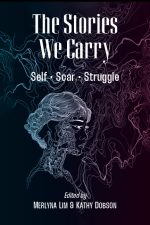
The Stories We Carry
USD $ 25Select options This product has multiple variants. The options may be chosen on the product page
The Stories We Carry
USD $ 25The Stories We Carry is a compelling collection of essays that explore identity, trauma, and resilience through deeply personal narratives. Edited by Merlyna Lim and Kathy Dobson, this volume brings together twenty-two contributors—academics, artists, journalists, and storytellers—who refuse to separate personal experience from scholarly inquiry.
The collection unfolds in three interconnected movements: Self, Scar, and Struggle, examining how identity is shaped through history, gender, embodiment, and migration; how trauma and exclusion leave lasting marks; and how survival requires ongoing negotiation with institutions, technology, and community. Each essay is accompanied by hand-drawn illustrations, making the personal visible and visceral.
The contributors challenge academic conventions that dismiss personal writing as less rigorous, arguing instead that the narrated self is a legitimate site of knowledge. Their stories address Islamophobia, poverty, colonialism, queerness, neurodivergence, immigration bureaucracy, and the politics of belonging. This is not a book seeking inclusion in broken institutions, but one that insists the table itself must be rebuilt. It asks readers to sit with complexity, contradiction, and the unfinished work of being human.
Select options This product has multiple variants. The options may be chosen on the product page -
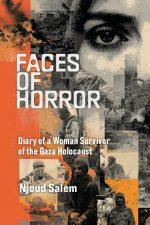
Faces of Horror
USD $ 6 USD $ 12Price range: USD $ 6 through USD $ 12Select options This product has multiple variants. The options may be chosen on the product page
Faces of Horror
USD $ 6 USD $ 12Price range: USD $ 6 through USD $ 12Faces of Horror is the searing, first-hand testimony of Njoud Salem, a Palestinian woman and mother documenting the near-total annihilation of life in Gaza. This diary chronicles the daily fight for survival against a relentless Israeli military campaign, capturing the genocide with an intimacy that no news report can convey.
The narrative begins on October 7, 2023, with the first thunder of rockets, and unfolds as Njoud, her husband, and their three young sons are violently uprooted from their home. They are thrust into a desperate odyssey for refuge, fleeing from hospitals turned into battlefields to the squalid tent cities of the south. The journal is a stark record of the “second Nakba”—a landscape of relentless bombing, starvation, and the systematic dehumanization of a people. Through her account, we witness the destruction of her cherished home and all her material possessions, yet she clings fiercely to her faith and the love for her family.
More than a war diary, Face of Horror is a profound meditation on human endurance and the indomitable will to bear witness. It serves as a critical, primary source document from a survivor of a Holocaust, a challenge to the world’s conscience, and a testament to the spirit of Gaza that refuses to be erased, even as it is buried under the rubble of a world that has turned its back.
Select options This product has multiple variants. The options may be chosen on the product page -
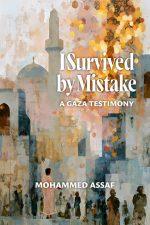
I Survived by Mistake
USD $ 10 USD $ 20Price range: USD $ 10 through USD $ 20Select options This product has multiple variants. The options may be chosen on the product page
I Survived by Mistake
USD $ 10 USD $ 20Price range: USD $ 10 through USD $ 20This deeply personal and introspective work explores survival—not merely physical survival, but emotional and spiritual endurance through love, war, and loss. Written by a Palestinian author against the backdrop of the Gaza genocide, the book weaves together reflections on love, betrayal, killings, displacement, and the search for meaning in a world stripped of humanity.
The narrative oscillates between intimate romantic relationships and the brutal realities of life under bombardment. The author chronicles a turbulent love affair marked by passion, jealousy, betrayal, and eventual dissolution, examining how relationships fracture under the weight of pride, misunderstanding, and external pressures. Simultaneously, he documents the devastating experience of genocidal attacks by Israel in Gaza: displacement, hunger, the loss of loved ones, the daily struggle for survival, and the erosion of human dignity.
Central themes include the nature of survival—questioning whether mere existence constitutes living, and whether those who survive emerge intact or fundamentally altered. The author grapples with grief over the death of his grandmother, the loss of his beloved, and the collective trauma of a people under siege. He explores the tension between hope and despair, the betrayal of humanitarian aid systems, the corruption of values in times of crisis, and the profound loneliness of carrying unspoken pain.
Writing serves as both confession and catharsis—an attempt to staunch internal bleeding and make sense of chaos. The prose is poetic, fragmented, and emotionally raw, reflecting the author’s belief that true survivors do not write; they simply endure. Ultimately, the book is a testament to the impossibility of returning unchanged from love or genocidal attacks, and the quiet dignity of continuing despite everything.
Select options This product has multiple variants. The options may be chosen on the product page -
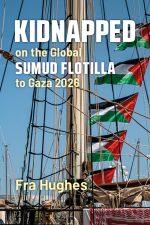
Kidnapped on the Global Sumud Flotilla to Gaza 2026
USD $ 6.99 USD $ 20Price range: USD $ 6.99 through USD $ 20Select options This product has multiple variants. The options may be chosen on the product page
Kidnapped on the Global Sumud Flotilla to Gaza 2026
USD $ 6.99 USD $ 20Price range: USD $ 6.99 through USD $ 20Kidnapped on the Global Sumud Lifeline to Gaza 2026 is the first-person account of Fra Hughes, a Belfast activist who sailed with the Global Sumud Flotilla in April 2026 on a humanitarian mission to break Israel’s siege of Gaza. Carrying food, medicine, and an unshakeable conviction that another world is possible, Hughes and his comrades were intercepted in international waters by Israeli commandos. What followed were three days of kidnapping, imprisonment, and deliberate degradation—from a metal shipping container in the Mediterranean to the high-security Ketziot Prison in the Negev desert.Told with unflinching honesty and dark Irish humour, this memoir spans three decades of activism. Hughes traces his journey from the streets of Belfast during the Troubles—where solidarity with Palestine was forged in the shadow of British occupation—through fifteen years of campaigns, convoys, and protests in Brussels, Barcelona, Cairo, and beyond. He documents the first Gaza convoys of 2010, the slow-burning solidarity movement that kept faith through years of failure, and the 2026 flotilla aboard the Alma: the preparations, the dangers, the extraordinary community of international activists who risked everything together on the water.The book weaves together multiple voices, including Tadhg Hickey’s account of a separate vessel in the same flotilla, and bears witness to atrocities—beatings, sexual assaults, mass arrests—documented in Istanbul medical centres and activist testimony. Against the normalisation of Gaza’s genocide, Hughes insists on naming what he saw.Returning to a hero’s welcome in Dublin and Belfast, his message is unambiguous: international solidarity is not charity but resistance. Kidnapped on the Global Sumud Lifeline to Gaza 2026 is a testament to sumud—steadfast endurance—and a call to action for everyone who refuses to look away.Select options This product has multiple variants. The options may be chosen on the product page -
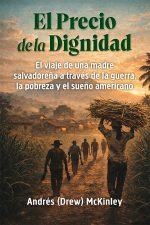
El Precio de la Dignidad
USD $ 21Select options This product has multiple variants. The options may be chosen on the product page
El Precio de la Dignidad
USD $ 21Este libro narra la conmovedora historia de Patrocinia Polanco Rivas, una campesina salvadoreña que personifica la lucha por la dignidad en medio de la adversidad. A través de su testimonio y el análisis del autor Andrés McKinley, la obra recorre su vida, desde una infancia marcada por la pobreza extrema y la opresión de la oligarquía cafetalera, hasta su participación en la guerra civil como operadora de radio del FMLN tras el asesinato de su mentor, el padre Rutilio Grande. La guerra le arrebata a su padre, pero forja en ella una resistencia inquebrantable.
Tras los Acuerdos de Paz de 1992, la esperanza de una vida digna se desvanece ante la persistente pobreza y las políticas neoliberales que mantienen a las familias campesinas en la miseria. Para sobrevivir, Patrocinia trabaja incansablemente cortando caña de azúcar, mientras la falta de oportunidades lleva a su esposo y, posteriormente, a sus seis hijos a emprender el peligroso viaje migratorio hacia Estados Unidos. El libro documenta los horrores de este periplo: el abandono, la extorsión, el secuestro y la constante amenaza de la muerte.
Una vez en el norte, los hijos de Patrocinia se enfrentan a la dura realidad de la vida indocumentada y a la maquinaria represiva del ICE, especialmente bajo la administración de Donald Trump. La autora establece un poderoso paralelismo entre la violencia de los escuadrones de la muerte en El Salvador y la persecución sistemática de los migrantes.
El Precio de la Dignidad es un testimonio de la resiliencia humana, mostrando que la dignidad no reside en el éxito de la lucha, sino en la propia lucha, un legado que Patrocinia heredó de su padre. El libro se erige como un recordatorio urgente de las consecuencias humanas de la guerra, de la injusticia económica y de las políticas migratorias despiadadas.
Select options This product has multiple variants. The options may be chosen on the product page -
 Select options This product has multiple variants. The options may be chosen on the product page
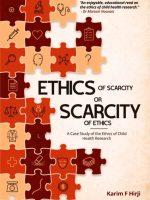
Ethics of Scarcity or the Scarcity of Ethics
USD $ 23Ethics of Scarcity or Scarcity of Ethics is a journey into child health research with implications on the broader field of ethics of health research in the Global South. In contrast to other books on the topic, Ethics covers a wide terrain from micro-ethics to macro-ethics, conservative realism to radical realism, and immediate causes to systemic, root causes.
Ethics is written in a clear and engaging style by Dr. Karim F Hirji, a retired Professor of Medical Statistics, who was catalyzed by his participation in a study that utilized chest circumference to identify low birth weight babies. Hirji is an award winning biostatistician who has led research projects and taught in the United States, Norway and Tanzania. In Ethics, Hirji presents a critique of research methods that fail to confront the economic and political structures underlying the health issues faced by the people of the Global South.
Ethics begins with a sanguine interaction between two pediatricians and the author at the Muhimbili National Hospital in Dar es Salaam, Tanzania. Their exchange leads to the design, conduct, analysis and publication of a study that tackles a need to identify low birth weight babies in areas where weighing scales are not available. At the outset, the study is deemed a scientifically valid and ethically laudable undertaking. Yet, later revelations raise questions about its ethics and rationale. These doubts compel Professor Hirji years later, to reevaluate his own study and undertake a comprehensive survey of the literature on low-birth-weight studies from a systemic perspective.
Hirji determines a fundamental flaw in the low birth weight studies in that they accept the notion of scarcity of resources, a notion that he presents as ethically and factually dubious. The low birth weight studies fail to examine the misuse and abuse of resources that often lie at the root of the health maladies in the poor nations. The authors of the low birth weight studies do not question the priorities of nations that invest in large military budgets but not key items like weighing scales in rural clinics. The low birth weight studies, including his own, bypass these fundamental issues and instead seek a proxy measure to replace direct weighing. Hirji finds that not only is the general the scientific quality of the reviewed studies substandard, but also deems that their adherence to the tenets of the Nuremberg Code of research on human subjects wanting.
Ethics is an exposé of how health research in the poor nations superficially address or ignore fundamental features of the societal context that cause scarcity. Hirji illustrates this through examples, including the double standard of western researchers whose ethical focus is informed consent, while ignoring the broader moral issues of governments that violate human dignity with impunity. On the question of informed consent, consent from the authorities is taken as a valid substitute for individual consent. Ethics calls on researchers to avoid elitist conceptions of ethics and probe the root causes of health maladies, address systemic problems, ask critical questions and genuinely respect human dignity when undertaking health studies.
Select options This product has multiple variants. The options may be chosen on the product page -
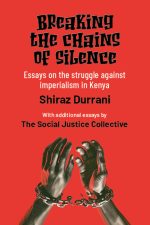
Breaking the Chains of Silence
Breaking the Chains of Silence opens where any serious account of Kenya must begin: with silence. But this is not the quiet of peace or the calm of justice. It is a manufactured silence—forged by land theft, detention, exile, assassinations, police bullets, and media too intimidated to print the truth. It is the silence that follows the gun and precedes the next uprising.
This book bravely refuses that silence. It dismantles the comfortable myth that Kenya became free simply because a flag was raised in 1963. It rejects the official narrative that the struggle ended with independence, leaving citizens as spectators while a small elite inherited the state, the land, the police, and the economy. Instead, it insists that Kenya’s real history is not the story of presidents, but of working people—first fighting colonialism, then confronting the imperialism that survived under new flags and through local agents.
Crucially, the book refuses to imprison resistance in the past. It reads the present with urgency, seeing the courage of the Gen Z movement, the defiance of the RutoMustGo protests, and the young people who walked into streets patrolled by a contemptuous state. It sees their rejection of taxation, corruption, and police violence. Yet it refuses to flatter that moment into myth. It insists that spontaneous anger must evolve into organisation, protest into political education, and generational revolt must find its class foundation. The cry of the youth must meet the power of workers.
While the essays engage with current contradictions, they remain rooted in theory—one essential element for revolutionary change. The other is practice: putting ideas into action and facing the enemy where bullets and prisons are the reality. This combination of theory and practice lays the groundwork for a people’s revolution. It is for this reason the book includes Gathanga Ndung’u’s vital essay, From Mau Mau to Ruto Must Go: A Genealogy of Resistance, which connects historical struggle to today’s frontline.
-
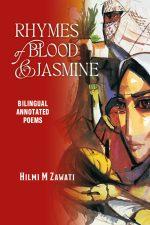
Rhymes of Blood and Jasmine
USD $ 25 USD $ 35Price range: USD $ 25 through USD $ 35Select options This product has multiple variants. The options may be chosen on the product page
Rhymes of Blood and Jasmine
USD $ 25 USD $ 35Price range: USD $ 25 through USD $ 35Rhymes of Blood and Jasmine is far more than a bilingual poetry collection; it is a poetic and cultural testimony that merges lyrical beauty with critical depth. Spanning over five decades of creative expression, Dr. Hilmi Zawati weaves verses charged with spiritual and romantic love, exile, memory, resistance, and identity. Symbols like jasmine, oranges, figs, and blood evoke a profound sense of homeland, sacrifice, and longing, forming an emotional tapestry firmly rooted in the Palestinian experience. This is poetry that does not simply describe a reality but embodies it, offering readers an intimate portal into a world shaped by history and sustained by hope.
KEY WORDS
Palestinian resistance poetry, alienation and exile, comparative world literature, translation studies, global resistance literature, Palestinian literature in the diaspora, modern Arabic poetry.
What makes this collection truly singular is its self-translation—a rare act that unites author and translator into a single, cohesive poetic voice. Zawati transcends conventional translation by recreating the essence of his Arabic poems in English with unmatched emotional and stylistic fidelity. His bilingual artistry breathes life into both texts, allowing them to resonate authentically across languages and cultures, ensuring that the nuance and musicality of the original are never lost.
This work speaks to a broad audience of readers, scholars, poets, translators, and students of translation studies, comparative literature, Palestinian history, and Arab diaspora cultures. It asserts translation as a form of cultural sovereignty—rejecting distortion, simplification, and marginalisation—while affirming the enduring presence of Arab poetic tradition within global literature. Rhymes of Blood and Jasmine is not just to be read; it is to be lived. A poetic bridge between languages and worlds, it revives silenced memories and restores the voice of love and homeland with grace, dignity, and truth. This collection is an essential contribution to world literature, offering a poignant reminder of poetry’s power to heal, resist, and connect.
Reviews
“This exquisite poetry collection interweaves Palestinian resistance, exile, love, and universal humanism into a moving tapestry of memory and justice. The spirit of the jurist-poet infuses each verse, where poetry transcends the limits of law to restore moral balance through beauty. With refined free verse, incantatory rhythms, and vivid imagery, Hilmi Zawati’s landmark book transforms stifled revolt into art—a luminous contribution to Palestinian, Arabic, and world literature.” —Daniela Rodica Firanescu, Associate Professor (Retired) of Arabic Studies, Dalhousie University, and poet.
“In this unique bilingual collection of Palestinian resistance poetry, Zawati offers a self-curated, self-translated selection from his poetic works. Rooted in Palestinian themes—love, exile, memory, and longing—his poems blend the personal and universal, linking the Palestinian experience with the broader human condition. The side-by-side presentation of Arabic and English makes this collection valuable for scholars and students of modern Arabic literature, universal comparative literature, and translation studies.” —Ines Aščerić-Todd, PhD, Senior Lecturer in Arabic &Middle Eastern Cultures, School of Literatures, Languages and Cultures, University of Edinburgh.
“‘History,’ said Byron, ‘is the devil’s scripture.’ This dismal fact’s inked in scarlet blood—especially in conflict annals, wherein saints get deemed sadists, while the slain get labelled suicides. Thus, Hilmi M. Zawati pens, for Palestine, plaidoiries—pleadings—because, ‘I returned to you, and you became the graveyard….’ He echoes Wilfred Owen: ‘The Poetry is in the pity.’ His poetry warns, where Justice is not, neither flourishes Freedom nor Love.” —George Elliott Clarke, E.J. Pratt Professor of Canadian Literature, University of Toronto
“A member of the Palestinian Diaspora and a prolific poet, Hilmi M. Zawati’s Rhymes of Blood and Jasmine present an emblematic story of heartbreak and displacement. His inspired verses evoke his peoples suffering coupled with a passionate devotion to ‘the beloved,’ as a free Palestine yet to be realized. This self-translated, dual language collection offers poems teeming with powerful, evocative imagery and lyric language that unflaggingly ‘look forward to freedom’.” —Giovanna Riccio, prize-winning poet, author of Plastic’s Republic.
“Powerful lyrical poems of one of the best poets of the Palestinian resistance. It provides a double witness of the act of creation: the original poems and the translations. With bubbling emotions and perceptive reflections, it offers a bridge between the past and the present, the painful reality and the metaphor of a country raped by colonialists, and forced exiting and the desire to return. Because of his love, he still hopes!” —John P. Portelli, Professor Emeritus, University of Toronto, poet and fiction writer.
“Though dedicated to Palestine, Zawati’s poems embody a universal story of dispossession, love, and longing. They speak from the heart to the heart, confronting belligerence and clinging to a distantbeloved—Palestine. For him, forgetting is a second death, the cruellest exile. Thus, he endures, steadfast, with nothing but his pen, while the only bullet he is willing to fire is its ink.” —Mireille Rebeiz, PhD, SJD, Chair of Middle East Studies & Associate Professor, Dickinson College
“Resistance in Zawati’s poetry extends beyond its immediate political dimension and manifests in various forms, including resistance to oblivion, marginalization, oppression, tyranny, and cultural or linguistic distortion, particularly within the context of poetry translation. Zawati’s engagement in translating his own works introduces an additional creative dimension, reflecting a deep critical awareness of the complexities inherent in conveying poetry and underscoring that translation constitutes a re-creation of the text in another language rather than a literal rendering”. —CAlī cAbd al-Fattāḥ, The Algerian Cultural Journal (August 2026)
“Zawati rejected ‘rigid literalism’ and instead used a methodology based on ‘symbolic precision’ and ‘emotional resonance.’ This approach highlights his dual role as author and translator, granting him a unique ‘interpretative authority’ to bridge Arabic poetic traditions and English-speaking audiences without resorting to ‘Orientalist simplification.’ His self-translation is described as ‘narrative justice’ and ‘moral diplomacy,’ as it resists the ‘westernisation’ of Arabic texts and challenges dominant representational politics that marginalise diverse Palestinian voices”. —Al-Qabas Newspaper (August 23, 2026)
“Rhymes of Blood and Jasmine is more than a translated selection of poetry—it is a poetic proclamation, a critical stance, and a vivid testament to the power of creativity to transcend linguistic, geographical, and symbolic borders. Through his meticulous self-translation, Dr. Hilmi Zawati not only conveys the beauty of his poetry but also takes a firm stand against reductive representation, engaging the political and cultural frameworks that have shaped how Palestinian poetry is received globally. This collection affirms the ability of resistant Palestinian verse to cross boundaries—linguistic, political, and emotional—enriching the global literary scene with a bilingual Arabic voice that remains true to its singular soul”. —Nada Chaddad, PhD., Addustour Newspaper (September 4th, 2026)\
Select options This product has multiple variants. The options may be chosen on the product page -
 Select options This product has multiple variants. The options may be chosen on the product page
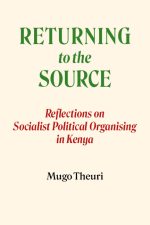
Returning to the Source
Returning to the Source offers a bold and critical examination of Kenya’s political evolution, tracing how colonial rule laid the groundwork for an exclusionary democracy that persists today. The book dissects the contradictions at the heart of the nation’s post-independence politics—from elite handshakes and voter cynicism to the repeated stalling of leftist organising. Moving beyond conventional histories, the author explores why socialist movements in Kenya have struggled to gain traction, examining internal rivalries, caution, and the lingering shadows of figures like Jaramogi Oginga Odinga and the banned Kenya People’s Union (KPU). The book also sheds light on the complex, contradictory unity among leaders such as Kenyatta, Mboya, and Odinga, and argues for a politics based on listening and moral authority rather than raw power. Crucially, Returning to the Source confronts the erasure of women from political memory and the patriarchal shackles that continue to limit liberation. It calls for localising heroism and recovering indigenous political intelligence as essential tools for rebuilding genuine socialist organising. By recovering erased histories and championing local heroes, the book offers both a critique and a path forward—urging a return to listening, collective action, and a more inclusive, transformative politics for Kenya and beyond.
The author is a Kenyan political thinker, organiser, and scholar whose work sits at the intersection of history, socialist theory, and grassroots mobilisation. Drawing on decades of engagement with social movements and a deep commitment to recovering suppressed narratives, they bring both academic rigour and lived political experience to the page. Having themselves been imprisoned and tortured for their political beliefs, the author writes not from abstract detachment but from the brutal reality of state repression. This personal history of surviving state violence infuses every chapter, lending the book an urgent moral weight and an unflinching honesty. Their writing challenges conventional hero worship and instead centres collective action, indigenous intelligence, and the often-overlooked roles of women and local figures in liberation struggles. Returning to the Source is the culmination of a lifelong commitment forged in resistance—understanding why progressive change in Kenya has repeatedly faltered, and how it might yet be revived through courage, listening, and solidarity.
1. How Colonialism Shaped an Exclusionary Democracy, 19
2, The Nationalist Inheritance and Its Blind Spots, 33
3, Democracy: Handshakes, Elite Pacts, Voter Cynicism, 44
4, Why Leftist Organising in Kenya Keeps Stalling, 69
5, Politics of Hesitation, Caution, and Internal Rivalry, 86
6, Lessons from Kenya’s Socialist Movements, 100
7, Challenges of Socialist Organising after Jaramogi’s KPU, 113
8, The Place of Indigenous Political Intelligence in Organising, 123
9, The Contradictory Unity: Kenyatta, Mboya and Odinga, 135
10, Leadership as Listening: Moral Authority Vs. Power, 146
11, The Erasure of Women from Political Memory, 158
12, Liberating Women from the Shackles of Patriarchy, 179
13, Localising Liberation Heroism to Rescue Erased Histories, 194
14, Local Heroes and the Struggle for Socialist Organising, 221
Bibliography, 240
About the Author, 251Select options This product has multiple variants. The options may be chosen on the product page -
 Select options This product has multiple variants. The options may be chosen on the product page
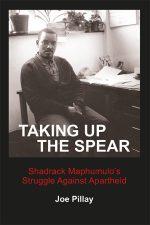
Taking up the Spear
Taking Up the Spear is the firsthand account of Shadrack Maphumulo, an ordinary South African who becomes a freedom fighter against apartheid. The narrative traces his life from a rural Zulu childhood, shaped by stories of the Bambatha Rebellion, to his early working years in Durban where he faces systemic racism, slave wages, and the humiliating pass laws. His entrepreneurial dreams—first a taxi, then a shop—are systematically crushed by a white supremacist government that reserves prosperity for whites, forcing him to realize that individual effort cannot overcome the oppressive system.
Radicalized, Maphumulo joins the trade union movement SACTU and later the banned ANC and its armed wing, Umkhonto we Sizwe (MK). He details his rudimentary training in sabotage and participates in several missions, including bombing an Afrikaner newspaper office and attacking municipal beer halls. Arrested in 1963, he endures brutal torture and solitary confinement before being sentenced to ten years on Robben Island. On the island, he details the horrific conditions, daily beatings, and hunger strikes, but also the political education and solidarity among prisoners. After his release in 1975, he resumes underground work, leading to another arrest, torture, and banning. The story ends with his escape into exile in Swaziland, where he continues the struggle. The epilogue reveals his assassination by South African security forces in 1986, cementing his legacy as a hero who sacrificed everything for a free South Africa.
Select options This product has multiple variants. The options may be chosen on the product page -
Beyond the Neocolonial
USD $ 7.99 USD $ 30Price range: USD $ 7.99 through USD $ 30Select options This product has multiple variants. The options may be chosen on the product page
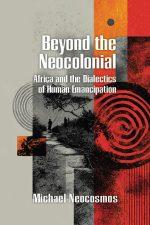
Beyond the Neocolonial
USD $ 7.99 USD $ 30Price range: USD $ 7.99 through USD $ 30Humanity faces existential crises driven by the persistence of neocolonial capitalism and a state form that continues to de-humanise the majority. In Beyond the Neocolonial, Michael Neocosmos argues that the failure to enable, let alone to realise the popular desire for freedom in post-independence Africa lies in the continuity of the colonial state and the dominance of analytical, statist thought over the transformative power of the dialectic.
Tracing the genealogy of emancipatory politics from the ancient wisdom of Egypt’s Ma’at and Ionia’s isonomia to the revolutionary theories of Lenin, Mao, Fanon, and Cabral, Neocosmos asserts that politics must be understood as a collective thought-practice of universal equality. He challenges the “stasis” of the current world order by recovering silenced histories of African popular inventiveness: from the egalitarian society constructed by the Bossales in Haiti to the mass democratic experiments of the United Democratic Front in South Africa.
Critiquing the exhausted “party form” and the myth of the “heroic liberator,” the book highlights the emancipatory potential within African popular culture, arguing that proverbs and the Palaver contain latent prescriptions for resolving contradictions and healing community. This work is a call to abandon the “epistemology of ignorance” and revive a dialectics of becoming, locating the agency for a truly human future not in the state, but in the masses who make history.
Listen to Michael Neocosmos talking about his book.
Table of Contents
Three Poems by Bertolt Brecht, Okot p’Bitek, and Yannis Ritsos
Dedications and Acknowledgments
Prefatory Remark
In Lieu of a Foreword: some inspirational declarations and metaphors
Introduction: what is to be thought?
1. Politics as a Collective Thought-Practice and Human Emancipation as its Essence: thinking the common good
2. The Ancients and the Thought of Politics: arkhē and the dialectic of physis and nomos
3. Sourcing an Emancipatory Politics for Today: reviewing the classics
4. Thinking Emancipatory Politics through African Popular Culture
5. Resolving Contradictions among the People and the Dialectical Emancipatory Potential of Proverbial Metaphors
6. Haiti from Inventive Popular Sovereignty to Neocolonial State
7. Beyond the Party Form? An alternative political experiment and the figure of the heroic liberator
8. Democracy as Perverted Freedom: the anatomy of the African neocolonial state
Conclusion: silencing as analytical procedure in political theory and practice
References
Author bio
Select options This product has multiple variants. The options may be chosen on the product page