
-
Beneath the Hum of Drones
USD $ 6.99 USD $ 25Price range: USD $ 6.99 through USD $ 25Select options This product has multiple variants. The options may be chosen on the product page
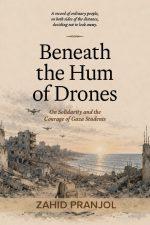
Beneath the Hum of Drones
USD $ 6.99 USD $ 25Price range: USD $ 6.99 through USD $ 25Royalties from this book go to the students in Gaza.
The Gazan students who refused to stop learning
Beneath the Hum of Drones: On Solidarity and the Courage of Gaza’s Students, a new book by Professor Zahid Pranjol, tells the story of how students in Gaza continued to learn through war, displacement and siege, and how an extraordinary network of volunteers from the UK came together to support them, drawing on first-hand testimony from Gaza, stories from inside the atrocities and personal reflection.
The new book follows students who continued to study, write, paint and organise while their universities and homes were being destroyed around them. Alongside their stories, it traces a grassroots movement that connected academics, teachers and communities across the UK with students in Gaza, providing teaching, financial support and opportunities for the students’ artwork and poetry to be seen and heard outside of the walls of Gaza and for their voices to be carried to the world. This book is about the author’s journey with a community of students in Gaza built together, across an impossible distance and in the middle of a genocide.
“This is not a book I set out to write. It began as a question asked over coffee by a scholarship student from Gaza who wanted to know what the two of us, in a university in the south of England, could actually do in the face of annihilation of the people of Palestine.” Professor Pranjol writes.
What followed was an extraordinary international effort. University academics, more than 70 volunteer English teachers, artists, healthcare professionals and hundreds of ordinary people came together, united by the belief that they could not stand by while Gaza’s students were denied their education. Together, they built a network of solidarity with members centred around the University of Sussex and communities across East Sussex, UK. Among those involved were English teachers, doctors, artists and university lecturers from across the UK who volunteered hundreds of hours to teach students in Gaza remotely.
Since early 2024, the initiative has grown into a wide-ranging programme of educational, creative and psychological support for students in Gaza. Its work includes English language teaching delivered by volunteer teachers, art therapy for children, specialist psycho-trauma therapy delivered remotely through Zoom and WhatsApp, and medical and psycho-trauma training for healthcare professionals working in Gaza. The wider initiative documented in the book has supported an estimated 4,000 to 5,000 students through educational programmes, financial assistance and wellbeing support.
The initiative has been shaped by listening to students in Gaza themselves to understand what their needs are. Organisers asked them to identify their most urgent priorities, time and again, they told of their immediate need for access to emergency medical training and mental health training, alongside financial support.
This new book tells their story. Rather than focusing on governments or institutions, Beneath the Hum of Drones centres the experiences of Gaza’s students themselves. Through essays, paintings, poems and personal testimony, the book presents young people determined to continue learning despite extraordinary circumstances.
Professor Pranjol says the students of Gaza became his teachers.
“I was not the teacher in this story. I was the student. The young people of Gaza, studying under bombardment, writing from the side of the road, painting the sea from rooftops beneath the drones, were the ones with something to teach, and this book is mostly a record of what they taught me.”
Since October 2023, universities across Gaza have been devastated, every school has been damaged or destroyed, and hundreds of thousands of students have seen their education disrupted. Palestinian academics have described the destruction of the higher education system as ‘scholasticide’, the systematic destruction of educational institutions and knowledge itself.
While much has been written about the destruction of Gaza, few books tell the story through the eyes of its students, or document the international community that emerged to support them. Beneath the Hum of Drones documents not only that destruction, but also the determination of students and educators to continue learning, and the communities around the world that chose to stand beside them.
“I have tried to write this book without looking away, and without reducing anyone person to a number or a symbol. The people in these chapters have names, and tastes, and ambitions. They argue and they make jokes. They are still hoping. They are, against years of siege and horror, still here.” Professor Pranjol remarks.
All author royalties from Beneath the Hum of Drones will go directly to supporting students in Gaza. By purchasing the book, readers are helping to fund educational opportunities and ensure that young people can continue learning despite the ongoing destruction of Gaza’s education system.
Professor Zahid Pranjol is Professor of Biomedical Sciences at the University of Sussex and a leading voice in inclusive science education and curriculum reform. He is also the co-author, with Dr Jacob Norris, of We Are Still Here, the 2025 anthology bringing together the voices of 58 university students writing from Gaza during the destruction of their universities and homes. Beneath the Hum of Drones tells the story behind that project and the wider movement it inspired.
Endorsements
“An extraordinary and inspiring story of the effort by global solidarity activists to keep Gaza’s students learning against near-impossible odds.” — Norman Finkelstein and Deborah Maccoby
“Testifies to the resilience of Gaza’s younger generation, whose determination should humble us all.” — Ilan Pappé
“A fellowship of endeavour proving that the truest bonds of humanity acknowledge neither distance nor siege.” — Vusi Madonsela
“An inspiring story of what happens when individuals decide to make a difference.” — Caroline Lucas
“Heart wrenching and inspiring, a model of what humanity can do in the rubble of the inhuman.” — Lila Abu-Lughod
“A remarkable testament to the enduring power of education, compassion, and courage.” — Professor Dr. Omar Kh. Melad
“In the face of scholasticide, Palestinian students give us hope.” — Neve Gordon
Closing
The genocide continues. Yet so does the extraordinary courage of Gaza’s students, and the growing network of solidarity that stands beside them. They are still teaching. They are still writing. They are still painting. They are still dreaming of a future. They are still here.
“The people of Gaza were never waiting to be saved. They were already doing the work. They asked only that the rest of us not leave them to do it alone.”
Select options This product has multiple variants. The options may be chosen on the product page -

Beside the Sickle Moon: A Palestinian Story
From: USD $ 5Select options This product has multiple variants. The options may be chosen on the product page
Beside the Sickle Moon: A Palestinian Story
From: USD $ 5Beside the Sickle Moon is near future literary activism based on Israel’s occupation of Palestine. The story tells a first person narrative through Laeth Awad, a Palestinian who lives above his convenience store experiencing days pass through smoke clouds with his cousin Aylul. One night upon returning to their village from Ramallah they encounter an Israeli checkpoint within the buffer zone that hadn’t been there before. It isn’t long until the two stumble upon Israel’s plans to construct a luxury hotel for incoming settlers, Ma’al Luz. Demolition crews and military personnel are due to fulfill this contract in the months to come and with them as overseer is the infamous Meir Cohen, a Mossad operative who played a key role in the fall of Gaza.
Aylul believes from their father, an Al Qassam militant who died in the battle for Jericho, that only the threat of annihilation breeds the best of human action. They use their contacts to connect with the factions, who grant them strength to defend their village from occupation. With these resources in hand Aylul forms Al Mubarizun, a group crowning themselves Palestine’s final resistance.
Laeth doubts the existence of a future, lost in philosophical ambivalence as he tries to follow his cousin into the depths of guerrilla warfare. He questions the futility of resistance when all former allies have normalized relations with Israel. And what of the innocents on the other side of the Wall who had no say in where they were born? Though a minority of the population, he is not alone in this sentiment. Palestinian youth begin to empathize with this logic enough to create a new social movement, the Forgotten Ones. Coining the derogatory term that their critics slung, the NGO advocates for a peaceful transition to Israel’s colonization where most Palestinians hear whimpers of surrender.
Set in a hauntingly plausible future, where Israel has marked a century of Palestinian occupation … As a novel of the future, Beside the Sickle Moon is, unsurprisingly, preoccupied with temporality, attempting to reconcile the vastness of macro-historical events with the immediacy of everyday life. … One of the most chilling features of Husien’s novel as history is the world’s renewed abandonment of Palestine. In a future of systemic global crisis, nations have closed ranks and shut their eyes. Israeli mines run on the slave labor of Palestinian captives, and refugee camps have become invisibilized death zones … — Londiwe Gamedze https://africasacountry.com/2024/11/reading-the-present-as-history
Select options This product has multiple variants. The options may be chosen on the product page -

Decolonization and Afro-Feminism
USD $ 12 USD $ 32Price range: USD $ 12 through USD $ 32Select options This product has multiple variants. The options may be chosen on the product page
Decolonization and Afro-Feminism
USD $ 12 USD $ 32Price range: USD $ 12 through USD $ 32In Decolonization and Afro-Feminism, Sylvia Tamale presents a powerful and urgent call for Africa’s intellectual, cultural, and political liberation through an Afro-feminist lens. The book critically examines how colonialism has deeply entrenched systems of oppression—based on race, gender, sexuality, class, and knowledge production—and argues that true decolonization requires more than political independence; it demands a radical rethinking of African identities, histories, and futures.
Tamale challenges Eurocentric and patriarchal frameworks that continue to dominate African societies, institutions, and academia. She explores themes such as:
-
The coloniality of gender and sexuality, using case studies like Caster Semenya to expose how Western norms pathologize African bodies.
-
The importance of intersectionality in understanding overlapping systems of oppression.
-
The role of Afro-ecofeminism in reconnecting African ecological wisdom with social justice.
-
The need to decolonize African academia, law, and family structures to recenter Indigenous knowledge and epistemologies.
-
The potential of Ubuntu as a framework for justice, community, and relationality.
The book is both a scholarly critique and a visionary roadmap, emphasizing that decolonization must be a feminist, inclusive, and holistic project—one that reclaims Africa’s dignity, autonomy, and intellectual sovereignty.
Written with clarity and passion, Decolonization and Afro-Feminism is essential reading for students, activists, scholars, and anyone committed to understanding and advancing Africa’s liberation in the 21st century.
Select options This product has multiple variants. The options may be chosen on the product page -
-

Being Anti-Colonial
USD $ 5 USD $ 25Price range: USD $ 5 through USD $ 25Select options This product has multiple variants. The options may be chosen on the product page
Being Anti-Colonial
USD $ 5 USD $ 25Price range: USD $ 5 through USD $ 25Being Anti-Colonial by Jayan Nayar presents a profound critique of the contemporary engagements with ‘decolonial theory’ and the popular usage of ‘decolonisation’. This work argues that much of the current discourse within critical theory tends to overlook the intricate, essentially praxiological underpinnings of the anti-colonial struggle, thereby comfortably situating itself within the post-colonial status quo. Nayar’s book serves as a radical call to authentically re-engage with the anti-colonial ethos, emphasizing the necessity to confront the enduring architectures of coloniality that define our present. Distinctly divided into two parts, the book first elucidates the conceptual groundwork to reconceptualise ‘anti-colonial’ as a philosophical stance deeply entwined with the fabric of the global (post)colonial reality. Through meticulously argued philosophical foundations, Nayar underscores the (post)colonial present as a state of ‘resettlement’, where the architecture of post-colonial world-making loses sight of its colonial matrices. Being Anti-Colonial is both an invitation and a challenge to the academic community to critically revisit and re-energize the conversation about coloniality.
With his impressive scholarship, Jayan Nayar challenges critics of coloniality, himself included, to question their standpoints. Critical scholars are implicated in assuming the reality of a post-colonial world as ‘(b)ordered’ but requiring reform and justice. Through an incisive critique of coloniality, of the idea of ‘Europe’ of ‘Blacked Lives Matter’ of ‘Zionist-Israelism’, he demands engagement on the frontline of anti-colonial struggles of the violated, subjugated, impoverished ‘subjects’ of (post) colonial normality. — Abdul Paliwala, Professor of Law at School of Law, University of Warwick
Select options This product has multiple variants. The options may be chosen on the product page -
 Select options This product has multiple variants. The options may be chosen on the product page
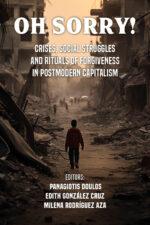
Oh, Sorry! Rituals of Forgiveness, Crises and Social Struggles in Postmodern Capitalism
USD $ 20As the world grapples with the legacy of crimes of enslavement, colonialism, genocide and mass killings, imprisonment and murder of children, attempts at eliminating cultures and history of Indigenous peoples, looting and other crimes against humanity, the performance of public atonement has become increasingly prevalent. Apologies from state actors and institutions are issued in solemn ceremonies, often acknowledging the collective guilt for historical atrocities. Despite the solemnity of these events, there is a growing scepticism surrounding the sincerity of these apologies, particularly when they are not accompanied by tangible reparations, healing, reconciliation or systemic change. This scepticism is rooted in a perception that these acts of contrition are sometimes less about making amends to the aggrieved and more about assuaging the guilt of the aggressors and maintaining the status quo, providing the illusion of progress without the substance.
In this compelling work, Oh, Sorry! Rituals of Forgiveness, Crises and Social Struggles in Postmodern Capitalism, the authors unveil the complex interplay between public apologies, social justice and popular mobilisations. The chapters are devoted primarily to the experiences of Latin America, particularly of Mexico, Guatemala, Chile, and Brazil. But there is also a chapter on the struggles for Palestine — so relevant in the face of the current genocidal invasion by the Zionist State of Israel into Gaza, the world’s largest and most densely populated concentration camp.Select options This product has multiple variants. The options may be chosen on the product page -
 Select options This product has multiple variants. The options may be chosen on the product page
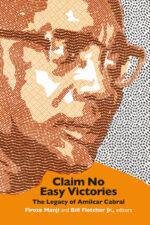
Claim No Easy Victories: The Legacy of Amilcar Cabral
USD $ 26“Never has it been more certain that our victory depends principally on our own actions. Tell no lies, claim no easy victories . . .” —Amílcar Cabral On the centennial of Amílcar Cabral’s birth, and fifty years after his passing, Claim No Easy Victories brings to life the resonance of his thought for today’s freedom movements. World-renowned revolutionary, poet, liberation philosopher, and leader of the anticolonial independence movement of Guinea Bissau and Cape Verde, Amílcar Cabral’s legacy stretches well beyond the shores of West Africa. His profound influence on the pan-Africanist movement and the Black liberation movement in the United States and the English-speaking world spans the ages—and is only growing in an era of renewed anti-imperialist internationalist struggle. In this unique collection of essays, radical thinkers from across Africa, the United States, and internationally commemorate Cabral’s life and legacy and his relevance to contemporary struggles for self-determination and emancipation. Claim No Easy Victories serves equally as an introduction or reintroduction to a figure and militant history that the rulers and beneficiaries of global racial capitalism would rather see forgotten. Understanding Cabral then and now sheds light on the necessity of grounding radical change in the creation of theory based on the actual conditions within which movements develop. The depth and dimension of Cabral’s theoretical ideas and revolutionary practice of building popular movements for liberation are assessed by each of the authors and critically reanimated for a new generation of freedom fighters. The book features contributions by: Kali Akuno, Samir Amin, David Austin, Jesse Benjamin, Angela Davis, Bill Fletcher Jr, Mireille Fanon-Mendès France, Lewis Gordon, Firoze Manji, Asha Rodney, Patricia Rodney, Olúfémi Táíwò—and others.
Select options This product has multiple variants. The options may be chosen on the product page -

I see the invisible
USD $ 5 USD $ 20Price range: USD $ 5 through USD $ 20Select options This product has multiple variants. The options may be chosen on the product page
I see the invisible
USD $ 5 USD $ 20Price range: USD $ 5 through USD $ 20Truth be told, I never thought I would write another volume of poetry after the last, I will not Dance to Your Beat (2011). The reason was that my previous volumes were reactive to the circumstances of the times. Patriots and Cockroaches (1992) was a reaction to the socio-political corruption that had engulfed Africa and dimmed the enthusiasm that had been built by the years of struggle for independence. Whereas we thought we were stepping into a post-colonial era, what we stepped into was a vicious neo-colonial times. The next collection, Poems on the Run (1995) was a reaction to military autocracy and the repression that followed. The volume was literally written underground. This was followed by Intercepted (1998) all written while detained at Kalakuta Republic of Alagbon Close. We Thought it was Oil But it was Blood (2002) responded to two things primarily – extractivism and the accompanying human and environmental rights abuses in the Niger Delta and elsewhere. The massive erosion of biodiversity and attacks on food sovereignty through the introduction of genetically modified organisms (GMOs) into our agricultural system inspired I Will not Dance to your Beat.
What you have in your hands, or on your screens, is a compilation that is largely more meditative than the previous collections. There are moments of reflection on the colonial and neoliberal foundations that permit a willful disconnection from nature and the resultant destructive extractivism.
Some of the poems came through conversations and poetry writing sessions with Peter Molnar, Maryam al-Khawaja — Rafto Human Rights laureates and Salil Tripathi, a member of the board of PEN International, in August 2017. The sessions held at a beautifully rustic location in Celleno, Italy, were documented on celluloid by the duo of Maria Galliana Dyrvik and Anita Jonsterhaug Vedå of SMAU, a multimedia firm in Norway. Poetic relationship with Maria and Anita has continued over the years and their work continues to inspire more and more poems.
Select options This product has multiple variants. The options may be chosen on the product page -
Rastafari Movement, The: A Beginners Guide
USD $ 5 USD $ 15Price range: USD $ 5 through USD $ 15Select options This product has multiple variants. The options may be chosen on the product page
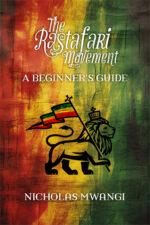
Rastafari Movement, The: A Beginners Guide
USD $ 5 USD $ 15Price range: USD $ 5 through USD $ 15Why is this book necessary today?
Rastafari: A Beginner’s Guide” holds immense relevance due to its unique approach to addressing the complex movement of Rastafarianism. It’s complex nature, encompassing elements of social movements, Pan-Africanism, Afrocentrism, philosophy, and religion, can be overwhelming for new readers. This book serves as an accessible introduction, providing a foundational understanding that caters to both Rastafarians and individuals with limited knowledge of the movement.
By delving into the essence of the Rastafari lifestyle beyond superficial attributes like dreadlocks and cannabis use, the book helps dispel misconceptions and offers a more accurate representation of the movement’s beliefs and principles. Further, this guide aids in shedding light on the depth and significance of Rastafarianism’s contributions to culture, spirituality, and social thought but also its philosophical challenges.
The book’s coverage of Rastafarianism’s historical trajectory and foundational values provides crucial context for understanding its development over time. By highlighting its evolution from its origins in Jamaican ghettoes to its expansion into a more inclusive and diverse community that includes professionals and the middle class, the book underscores the movement’s adaptability and relevance in changing societal landscapes.
Despite existing scholarly contributions, there remains a need for a concise, approachable guide that synthesizes the wealth of information available on Rastafarianism. This book fills that gap, providing readers with a comprehensive yet accessible overview that can serve as a starting point for further exploration.
Select options This product has multiple variants. The options may be chosen on the product page -
 Select options This product has multiple variants. The options may be chosen on the product page
Episodes From a Colonial Present
Editors and Authors: Daniel Bendix, Chandra-Milena Danielzik, Franziska Müller, Lata Narayanaswamy, Juan Telleria, Miriam friz Trzeciak, Aram Ziai
Artists: Hangula Werner, Roshni Vyam, Michel Esselbrügge, Qi Zhou, RotmInas – Rotmi Enciso & Ina Riaskov, Maite Mentxaka Tena, Lena Ziyal
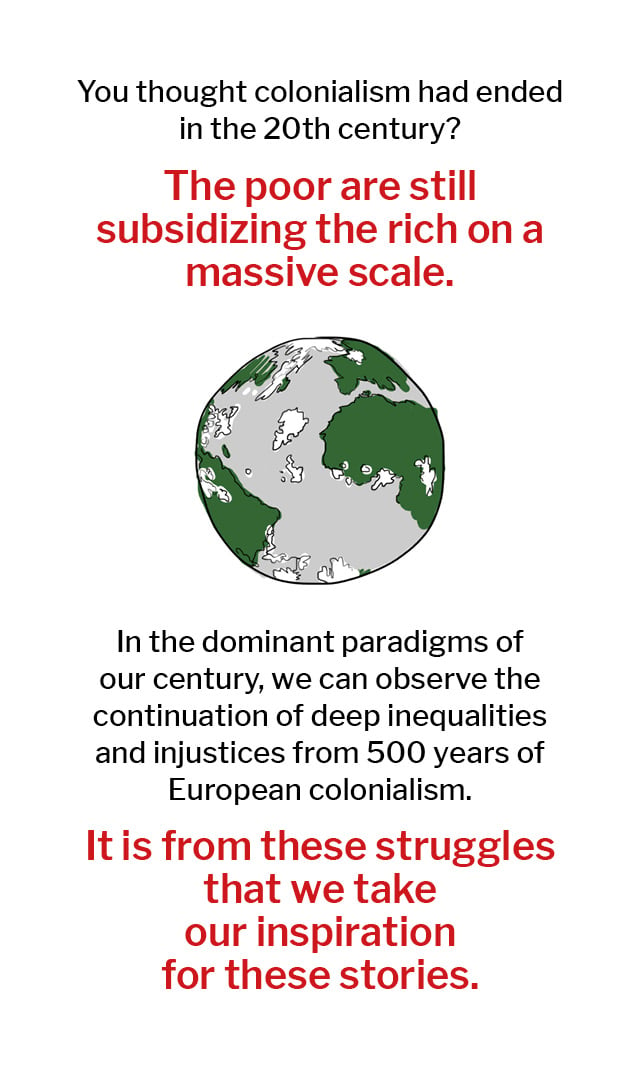
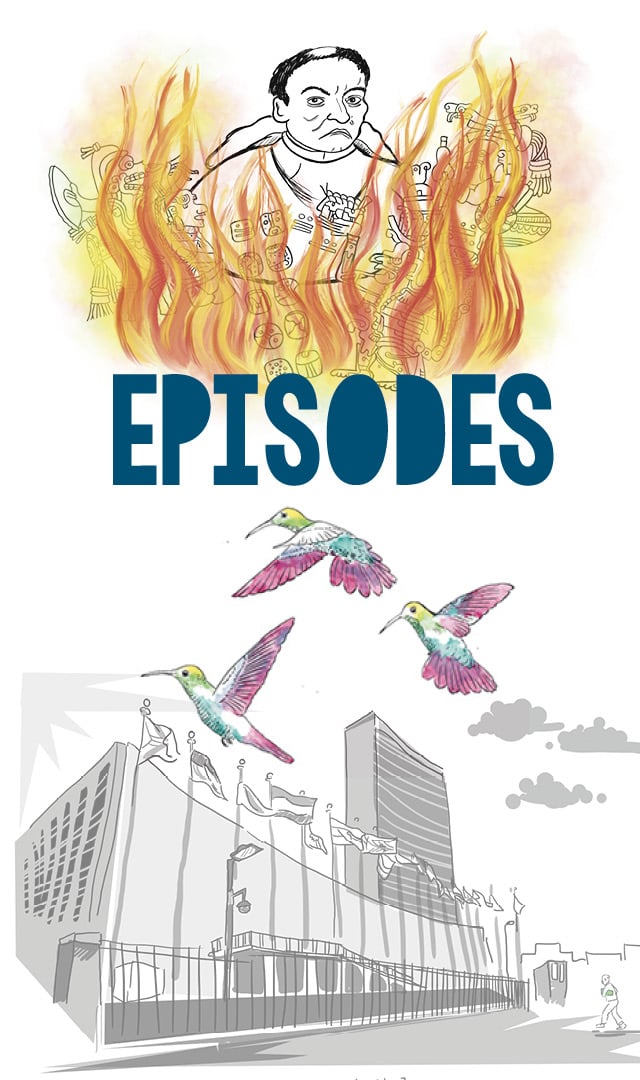
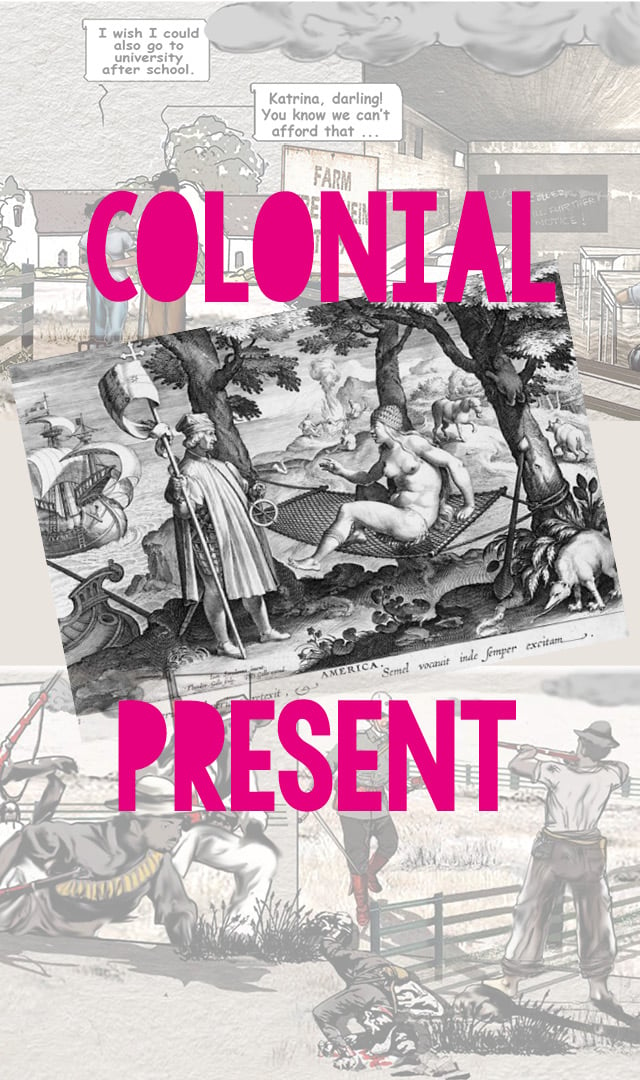
Postcolonial critique reveals the traces of the colonial past in every corner of our present lives and exposes the colonial violence inherent in global inequality. This collective comic project illuminates the coloniality of everyday life as well as the decolonising potential of everyday struggles in the spaces, discourses and practices of so-called global development.

Reviews
What an absolute impertinence! My lawyers are already involved. It’s just as well that I was able to use tax money for the purchase.
—Queen Elizabeth III love true crime books, but this one got a bit boring after a while. It could do with more bloodshed.
—Lothar von TrothaI added this book to my list to burn. Just saying.
—Diego de LandaA waste of time. So glad I didn’t buy it, but stole my copy.
—Christopher ColumbusI didn’t get it. Are they suggesting colonialism is not quite over?
—Harry S. TrumanSelect options This product has multiple variants. The options may be chosen on the product page -
Anticapitalist Economy in Rojava: The Contradictions of Revolution in the Kurdish Struggles
USD $ 5 USD $ 22Price range: USD $ 5 through USD $ 22Select options This product has multiple variants. The options may be chosen on the product page
Anticapitalist Economy in Rojava: The Contradictions of Revolution in the Kurdish Struggles
USD $ 5 USD $ 22Price range: USD $ 5 through USD $ 22This book looks at the anti-capitalist economy and the organization of social relations in the context of the revolution and autonomy of Rojava (Kurdistan-Syria). It questions both the limitations and the historical problems of the phenomenon of revolution, and the conflicts and contradictions that emerge in this process. It also draws from the conflicts and contradictions the author has consistently felt as a “political subject” who wants to change the world, especially through her experience in the Kurdish struggle and the Kurdish Movement. For this reason, every question she raises and attempts to answer in this book—about the Kurds, Rojava, and the world in general, involves what she says is her own subjectivity.
The idea and dreams of revolution have existed since humans created systems of domination. Indeed, revolution, meaning the liberation from systems of domination, has undoubtedly been one of the most discussed subjects in history. There have been moments when the possibility of revolution has been clearer, and there have also been certain agreements on what it is and how to get there, but it has never been something completely definable. This continues to be true today. This book does not intend to define this great phenomenon, rather it looks at the revolutionary practices that create emancipating realities and embraces revolution as an undefined, contradictory and dynamic process. Although the rulers have traditionally written history, the history of social struggles has been and is still being created by many revolutionary and transformational processes. The future is being shaped based on desired revolutions and the struggles that, in turn, transform their actors, the people. Therefore, the desire and quest of the Kurdish people for liberation from the colonial rule of the nation-states of the Middle East—the subject of this book—has always been directly linked to the phenomenon of revolution.Select options This product has multiple variants. The options may be chosen on the product page -
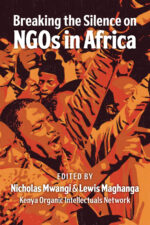
Breaking the Silence on NGOs in Africa
USD $ 5 USD $ 14Price range: USD $ 5 through USD $ 14Select options This product has multiple variants. The options may be chosen on the product page
Breaking the Silence on NGOs in Africa
USD $ 5 USD $ 14Price range: USD $ 5 through USD $ 14Members of the Organic Intellectuals Network are active organizers in the struggle to achieve social justice. They have experienced the contradictions of the NGO discourse and, just like others before them, have found themselves in the struggle versus survival dilemma. To get a clear picture of our contemporary struggles and the despair of NGOs operating in the proletarian movement, comrades decided to reflect, study, and analyze Prof. Issa Shivji’s book Silences in NGO Discourse: The Role and Future of NGOs in Africa. For the authors, these analyses and reflections are based on personal experiences in their day-to-day organizing. In summarizing the authors’ observations regarding the impacts of NGOs in organizing, this book calls into question the fundamental question, ‘why do NGOs exist?’ To answer this question, the authors provide a historical chronology of the resistance in Kenya, Zimbabwe and the rest of Africa, relating those to the subjective factors in existence at every period. Through this, a scientific relationship can be drawn between social movements and NGOs in our current epoch. From their experiences with NGOs, the authors, representing grassroots social movements, highlight the dangers associated with donor funding. Often, donor funding ends abruptly after making people dependent on them, creating severe strain on grassroots organizations. The more one engages with NGOs, the softer one becomes to critique NGOs, particularly in highlighting their relationship to imperialism. Further, NGOs usually help in driving reforms. However, they play no part in revolutionary work. As a result, they merely preserve the present order and help exacerbate the frustrations arising from massive inequality in our society. In the long run, NGOs play a critical role in stifling the development and independence of grassroots social movements. This publication also includes two previously published essays by Prof Issa G Shivji, Silences in NGO Discourse: The Role and Future of NGOs in Africa, &, Reflections on NGOs in Tanzania: What We Are, What We Are Not and What We Ought To Be.
Select options This product has multiple variants. The options may be chosen on the product page -
 Select options This product has multiple variants. The options may be chosen on the product page
The Unfinished Business of Liberation and Transformation: Revisiting The 1958 All-African People’s Conference
USD $ 47This book features essays, speeches, and reflections from the 60th-anniversary commemoration of the All-African People’s Conference (AAPC), an epochal event in the history of Africa’s fight for liberation. The four-day conference was a collaboration between the Institute of African Studies, the Trades Union Congress of Ghana, the Socialist Forum of Ghana, Lincoln University, and the Third World Network Africa. The stories, essays, speeches, and poems featured in this book are not simply a reflection of the past – they are a call to action for the present and future generations of Pan‑Africanists. May this book serve as a reminder that our liberation is intertwined with the liberation of others and that we must work together toward building a more just and equitable world. Let us continue to inspire the next generation of Pan-Africanists and keep the spirit of the All‑African People’s Conference alive. The book offers valuable perspectives on Africa’s current predicaments and what a truly liberated Africa can offer to the world.
The Unfinished Business of African Liberation is a path‐breaking collection of proceedings commemorating the 1958 landmark All African People’s Conference. The volume is essential reading for all those interested in pursuing African decolonization and liberation in the 21st century.
— Amina Mama, Professor, Gender, Sexuality & Women’s Studies, University of California, Davis, former Kwame Nkrumah Chair in African Studies at the University of GhanaIt is a must‐read for all who care about the contemporary plight of African people.
— Sylvia Tamale, Decolonial feminist & Professor of Law, School of Law, Makerere University, UgandaThis collection presents critical thinking by a wide spectrum of Pan‐African workers, youth, women, students, intellectuals, businesspeople, activists, academics, and politicians. — Adotey Bing-Pappoe, Senior Lecturer, Department of Economics and International Business, University of Greenwich
Select options This product has multiple variants. The options may be chosen on the product page -

Post Capitalist Philanthropy
USD $ 7.99 USD $ 49Price range: USD $ 7.99 through USD $ 49Select options This product has multiple variants. The options may be chosen on the product page
Post Capitalist Philanthropy
USD $ 7.99 USD $ 49Price range: USD $ 7.99 through USD $ 49“Post capitalist philanthropy is a paradox in terms. A paradox is the appropriate starting place for the complex, entangled, messy context we find ourselves in as a species.” This is how long-time activists, political strategists, and accidental philanthropy advisors Alnoor Ladha and Lynn Murphy start their treatise on Post Capitalist Philanthropy. This book is a result of decades of practice and research, including a hundred plus interviews with leading activists, philanthropists, philosophers, social scientists, cosmologists and wisdom keepers.
The authors take us on a journey from the history of wealth accumulation to the current logic of late-stage capitalism to the lived possibilities of other ways of knowing, sensing and being that can usher in life-centric models. This “ontological shift”, as they call it, is at the heart of the text – creating new-ancient-emerging realities is not simply about how we redistribute wealth or “fight power”, but rather, how we perceive and embody our actions in relationship to a dynamic, animistic world and cosmos.
This book is made available by Daraja Press on behalf of the Transition Resource Circle.
The Spanish version of this book is available at
Select options This product has multiple variants. The options may be chosen on the product page -

Heroes of the African Revolution Volume 2
USD $ 11.50We made this coloring book in order to expose African children to their authentic history. Malcolm X told us decades ago that we had to take responsibility for our children’s education because he understood that our people had been intentionally robbed of their true history. We can no longer rely on institutions to educate our children and must take it upon ourselves to equip our children with the truth so that they can bring a positive contribution to our people’s struggle for justice and freedom.
In Volume 2 of the coloring book, new African revolutionaries are introduced. Some well-known figures, such as Patrice Lumumba and Amilcar Cabral, but we’ve also brought to light lesser-known freedom fighters, such as Fatima Ahmed Ibrahim of Sudan and Elma Francois of Trinidad and Tobago.We have also introduced some games, such as a word search and a maze, both with a Pan-Afican theme. Finally, we included a glossary (with Swahili translations ) highlighting the kind of vocabulary we wish to instill in our youth -

Heroes of the African Revolution: Colouring Book: Volume 1
USD $ 11.50We made this coloring book in order to expose African children to their authentic history. Malcolm X told us decades ago that we had to take responsibility for our children’s education because he understood that our people had been intentionally robbed of their true history. We can no longer rely on institutions to educate our children and must take it upon ourselves to equip our children with the truth so that they can bring a positive contribution to our people’s struggle for justice and freedom. This book highlights some of the key figures within the struggle to achieve Pan-Africanism which is the total liberation and unification of Africa. All of the brave women and men featured in this book were Pan-Africanists. They understood that people of African descent throughout the world faced the same issues and therefore had to unite in order to overcome those issues. We hope this book can inspire the next generation of African children to become Pan-Africanists and to join the struggle to liberate and unite Africa.
-
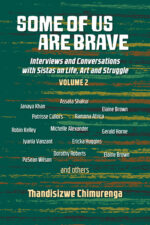
Some Of Us Are Brave (Vol 2): Interviews and Conversations with Sistas in Life and Struggle
USD $ 5 USD $ 23Price range: USD $ 5 through USD $ 23Select options This product has multiple variants. The options may be chosen on the product page
Some Of Us Are Brave (Vol 2): Interviews and Conversations with Sistas in Life and Struggle
USD $ 5 USD $ 23Price range: USD $ 5 through USD $ 23A society born of white supremacy and patriarchy must, by definition, ignore the voices of Black women. We know that unfortunately, such an attitude will also naturally seep into every stratum of that society
Part of the contribution to correct that was the centering and airing of Black women’s voices through Some of Us Are Brave: A Black Women’s Radio Program that aired on Pacifica’s Los Angeles radio station (KPFK) from 2003 until 2011.
The program covered a myriad of issues by amplifying the voices of a broad cross-section of Black women. Some of those voices have been preserved here in this volume. In addition to capturing various moments in time with a variety of women, this is also a means of taking the intellectual production of and about Black women out of the hands of institutions that are both fundamentally anti-Black and anti-woman.
Volume 1 contains interviews under the headings The Shoulders on Which We Stand and Black Lives Have Always Mattered.
Volume 2 covers Black Women’s Health, Bruthas on Sistas, and Sistas in Struggle.
Select options This product has multiple variants. The options may be chosen on the product page -
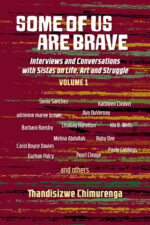
Some of Us Are Brave (Volume 1): Interviews and Conversations with Sistas in Life and Struggle
USD $ 5 USD $ 23Price range: USD $ 5 through USD $ 23Select options This product has multiple variants. The options may be chosen on the product page
Some of Us Are Brave (Volume 1): Interviews and Conversations with Sistas in Life and Struggle
USD $ 5 USD $ 23Price range: USD $ 5 through USD $ 23This is the literature of liberation! The truth. It waters the roots of a strong and timeless tree and bears the fruit of freedom. In the tradition of Ida B. Wells, Thandisizwe Chimurenga writes for the people because she is the people, and she loves the people. The interviews and conversations in Some Of Us Are Brave include Black women and Black men on Black women. This book will educate, inspire and strengthen the mind and spirit of Black women and those that love them. —Dr. Alice Nicholas, Africologist, Assistant Professor, Poet
Some of Us Are Brave is a courageous exploration of Black feminism within the Black left, offering invaluable insights and igniting much-needed conversations. It is a must-read for anyone seeking a deeper understanding of this vital aspect of our history and the transformative power of Black feminist thought. In a media landscape that often falls short when it comes to representing the voices of Black feminists, this series is a breath of fresh air. — Piper Carter, Detroit-based Arts & Culture Organizer
Host of “Beyond Breaking Barriers” podcast on Black Power MediaA society born of white supremacy and patriarchy must, by definition, ignore the voices of Black women. We know that unfortunately, such an attitude will also naturally seep into every stratum of that society
Part of the contribution to correct that was the centering and airing of Black women’s voices through Some of Us Are Brave: A Black Women’s Radio Program that aired on Pacifica’s Los Angeles radio station (KPFK) from 2003 until 2011.
The program covered a myriad of issues by amplifying the voices of a broad cross-section of Black women. Some of those voices have been preserved here in this volume. In addition to capturing various moments in time with a variety of women, this is also a means of taking the intellectual production of and about Black women out of the hands of institutions that are both fundamentally anti-Black and anti-woman.
Volume 1 contains interviews under the headings The Shoulders on Which We Stand and Black Lives Have Always Mattered.
Volume 2 covers Black Women’s Health, Bruthas on Sistas, and Sistas in Struggle.
Select options This product has multiple variants. The options may be chosen on the product page -
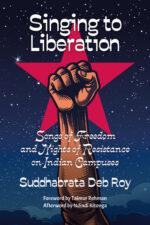
Singing to Liberation: Songs of Freedom and Nights of Resistance on Indian Campuses
USD $ 5 USD $ 16Price range: USD $ 5 through USD $ 16Select options This product has multiple variants. The options may be chosen on the product page
Singing to Liberation: Songs of Freedom and Nights of Resistance on Indian Campuses
USD $ 5 USD $ 16Price range: USD $ 5 through USD $ 16Student activism and cultural activism go hand in hand on Indian campuses. Over the last few years, especially after 2014, student movements in the country against social injustice have increased in numbers and tenacity. Cultural modes of expressing dissent have played a key role within this new wave of student movements that have gripped the nation. This book takes the reader through a journey into the ways cultural activists analyse cultural modes of protest, especially in the context of student movements in the Global South. The book delves into the political and ideological contours set by organisations such as the Indian Progressive Theatre Association (IPTA) and the Progressive Writers’ Association (PWA), and by figures such as Faiz Ahmed Faiz, Habib Jalib, Hemanga Biswas and Safdar Hashmi. The book locates them within the contemporary wave of cultural protests, analyses their continued relevance and argues for a revival of theoretical and practical engagement with the early progenitors of the progressive cultural movement in India.
Select options This product has multiple variants. The options may be chosen on the product page -
 Select options This product has multiple variants. The options may be chosen on the product page
Partitions of the Heart: Unmaking the Idea of India
USD $ 18In Partitions of the Heart: Unmaking the Idea of India, human rights and peace worker Harsh Mander takes stock of whether the republic has upheld the values it set out to achieve and offers painful, unsparing insight into the contours of hate violence. Through vivid stories from his own work, Mander shows that hate speech, communal propaganda and vigilante violence are mounting a fearsome climate of dread, that targeted crime is systematically fracturing our community, and that the damage to the country’s social fabric may be irreparable. At the same time, he argues that hate can indeed be fought, but only with solidarity, reconciliation and love, and when all of these are founded on fairness.
‘At last a book that turns a powerful searchlight on the evil tide of hatred and violence stalking our country, where our minorities live in fear, and Muslims among us are killed under a government that has declared war on Islam.’ —Nayantara Sahgal, journalist, author of Day of Reckoning: Stories (2015).
‘Harsh Mander’s is the voice of Kabir come alive in our violent times. We can hear it to our redemption, ignore it to our peril.’ —Gopalkrishna Gandhi, former administrator and diplomat, Governor of West Bengal 2004-2009
This book is absolutely mandatory reading. You owe it to the much-vaunted “motherland” which is being abused so shamelessly.’—Kiran Nagarkar, novelist, playwright, film critic and screenwriter.
Select options This product has multiple variants. The options may be chosen on the product page -

Dark PR: How Corporate Disinformation Undermines Our Health and the Environment
USD $ 6.99 USD $ 21Price range: USD $ 6.99 through USD $ 21Select options This product has multiple variants. The options may be chosen on the product page
Dark PR: How Corporate Disinformation Undermines Our Health and the Environment
USD $ 6.99 USD $ 21Price range: USD $ 6.99 through USD $ 21If you’re interested in how powerful forces of marketing & manipulation make the positive change we badly need MUCH harder, read @grantennis.bsky.social’ great book “Dark PR.” – Brent Toderian, Bluesky
“Think global, act local!” “Be the change you want to see in the world!” “Every little bit counts!” We can all get on board with such sentiments, right? That, of course, is exactly what corporate spin-masters across the world are banking on. By weaponizing such seemingly innocuous yet powerful narratives, change becomes a matter of personal choice, something each of us must slave away at day by day: switching off lightbulbs to save the environment or exercising to shed the weight we’ve gained from consuming junk food. All the while, the corporate welfare tap continues to flow, with over $6 trillion worth of annual subsidies dished out to industries that directly contribute to the deaths of over 5.5 million people each year through diabetes, road deaths, global warming, and other crises. But such framing is just the tip of the iceberg when it comes to the corporate disinformation playbook. This playbook is the dark matter of activist work: the unseeable element shaping harmful spin across all issues. It has never been reverse engineered – until now.
In Dark PR, Grant Ennis – drawing on his decades of experience working in the environmental, philanthropy, and public health sectors – reveals exactly how multinationals go about hoodwinking and manipulating us. In doing so, he lifts the lid on the nine devious frames contained within the cross-industry corporate disinformation playbook: through denialism, normalization, victim-blaming, multifactorialism, and a variety of other tried-and-tested tactics, corporations divert citizens’ attention away from the real causes of global problems, leading them into counter-productive blind-alley “solutions” like ethical consumerism and divestment. Sadly, though, buying Fair Trade chocolate has not and never will save the world. Only by collectively organizing to lobby our governments can we break this destructive cycle of lies and deadly incentives and reclaim control of our lives.
Dark PR: How Corporate Disinformation Harms Our Health and the Environment referenced in the UK House of Lords.
“I’m really interested in a piece of work that’s written by a guy named Grant Ennis, and I would advise you to have a look at his book on subsidy. So actually the Government provide an awful lot of subsidy to unhealthy food producers. Actually we could reduce the subsidy that is provided for that food and use the money in a different way to do different things. He is the expert in that”
– Alice Wiseman, Director of Public Health for Gateshead, EnglandLink: https://lnkd.in/e6AnKssm Minute 11:34:24
Select options This product has multiple variants. The options may be chosen on the product page