
-

I see the invisible
USD $ 5 USD $ 20Price range: USD $ 5 through USD $ 20Select options This product has multiple variants. The options may be chosen on the product page
I see the invisible
USD $ 5 USD $ 20Price range: USD $ 5 through USD $ 20Truth be told, I never thought I would write another volume of poetry after the last, I will not Dance to Your Beat (2011). The reason was that my previous volumes were reactive to the circumstances of the times. Patriots and Cockroaches (1992) was a reaction to the socio-political corruption that had engulfed Africa and dimmed the enthusiasm that had been built by the years of struggle for independence. Whereas we thought we were stepping into a post-colonial era, what we stepped into was a vicious neo-colonial times. The next collection, Poems on the Run (1995) was a reaction to military autocracy and the repression that followed. The volume was literally written underground. This was followed by Intercepted (1998) all written while detained at Kalakuta Republic of Alagbon Close. We Thought it was Oil But it was Blood (2002) responded to two things primarily – extractivism and the accompanying human and environmental rights abuses in the Niger Delta and elsewhere. The massive erosion of biodiversity and attacks on food sovereignty through the introduction of genetically modified organisms (GMOs) into our agricultural system inspired I Will not Dance to your Beat.
What you have in your hands, or on your screens, is a compilation that is largely more meditative than the previous collections. There are moments of reflection on the colonial and neoliberal foundations that permit a willful disconnection from nature and the resultant destructive extractivism.
Some of the poems came through conversations and poetry writing sessions with Peter Molnar, Maryam al-Khawaja — Rafto Human Rights laureates and Salil Tripathi, a member of the board of PEN International, in August 2017. The sessions held at a beautifully rustic location in Celleno, Italy, were documented on celluloid by the duo of Maria Galliana Dyrvik and Anita Jonsterhaug Vedå of SMAU, a multimedia firm in Norway. Poetic relationship with Maria and Anita has continued over the years and their work continues to inspire more and more poems.
Select options This product has multiple variants. The options may be chosen on the product page -
 Select options This product has multiple variants. The options may be chosen on the product page
Episodes From a Colonial Present
Editors and Authors: Daniel Bendix, Chandra-Milena Danielzik, Franziska Müller, Lata Narayanaswamy, Juan Telleria, Miriam friz Trzeciak, Aram Ziai
Artists: Hangula Werner, Roshni Vyam, Michel Esselbrügge, Qi Zhou, RotmInas – Rotmi Enciso & Ina Riaskov, Maite Mentxaka Tena, Lena Ziyal
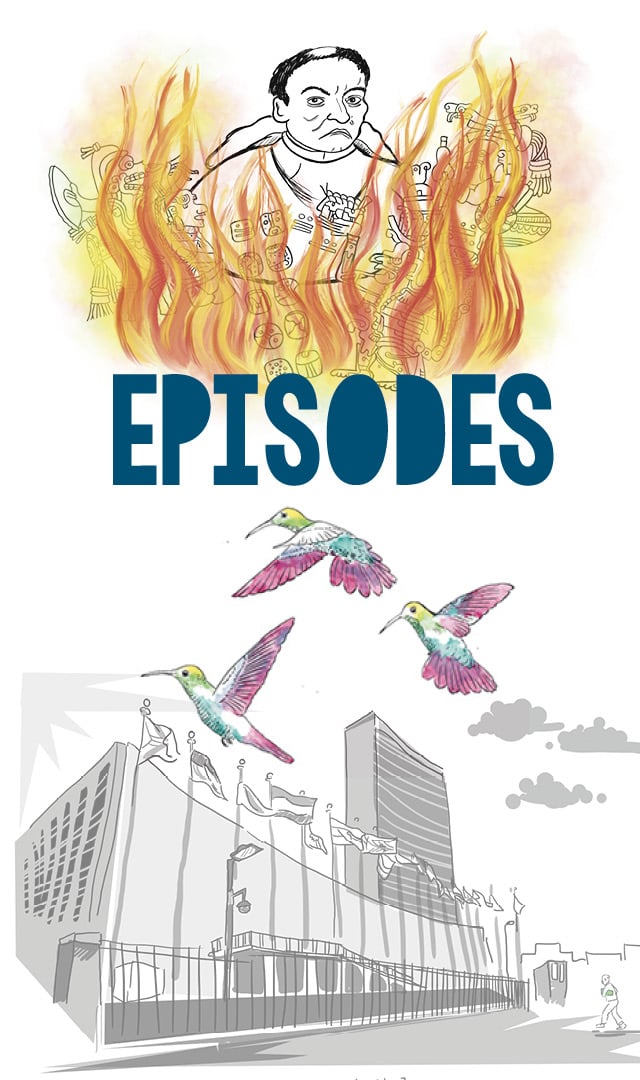
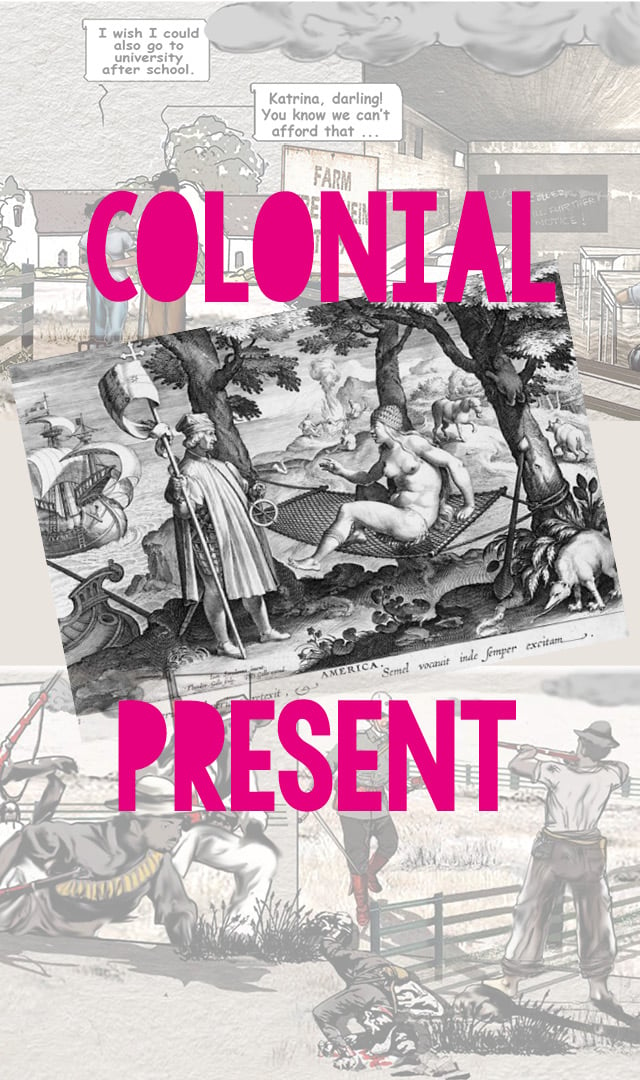
Postcolonial critique reveals the traces of the colonial past in every corner of our present lives and exposes the colonial violence inherent in global inequality. This collective comic project illuminates the coloniality of everyday life as well as the decolonising potential of everyday struggles in the spaces, discourses and practices of so-called global development.

Reviews
What an absolute impertinence! My lawyers are already involved. It’s just as well that I was able to use tax money for the purchase.
—Queen Elizabeth III love true crime books, but this one got a bit boring after a while. It could do with more bloodshed.
—Lothar von TrothaI added this book to my list to burn. Just saying.
—Diego de LandaA waste of time. So glad I didn’t buy it, but stole my copy.
—Christopher ColumbusI didn’t get it. Are they suggesting colonialism is not quite over?
—Harry S. TrumanSelect options This product has multiple variants. The options may be chosen on the product page -
Politics of Turbulent Waters: Reflections on Ecological, Environmental and Climate Crises in Africa
USD $ 5 USD $ 20Price range: USD $ 5 through USD $ 20Select options This product has multiple variants. The options may be chosen on the product page
Politics of Turbulent Waters: Reflections on Ecological, Environmental and Climate Crises in Africa
USD $ 5 USD $ 20Price range: USD $ 5 through USD $ 20For the past 10 years, the Health of Mother Earth Foundation (HOMEF) has been on the front line of the struggle for environmental justice, climate justice and food sovereignty in Africa and the globe. It has been a decade of non-stop probing of the exploitation of resources, peoples and nations, which has given rise to numerous environmental and climate injustices. HOMEF has had a decade of witnessing and standing against the injustice, the powers and structures (industries and policies) suffocating the rights of the people to a healthy environment and standing with the neglected to take charge of their once self-managed food and agricultural systems. The struggle has necessitated the reawakening of communities’ consciousness to the injustices that besiege them and to their ‘people power’ – power to be utilized in seeking the desired change.mPolitics of Turbulent Waters is a compendium of selected articles in the 36 issues of the Eco-instigator published from 2013 to 2022. The Eco-instigator is yet another tool used by HOMEF to pull together thoughts and reports of activities that advance environmental justice and food sovereignty. Issue by issue, these thoughts and reports flow from within HOMEF and other environmental/climate justice and food sovereignty advocates from across Africa and the globe.They form this rich assemblage (Politics of turbulent waters) to commemorate HOMEF’s 10th anniversary. The title of the book is one of Nnimmo Bassey’s (the director of HOMEF) numerous articles that have graced some pages of the different issues of the Eco-instigator. The article cum title encapsulates the messages that the book intends to convey to you, the reader. It crystallizes the dire condition of Africa and its waters and the power imbalance together with the spatial disposition that plunged the continent into the calamitous environmental situation it faces. It speaks of the politics of economic development and market fundamentalism that avows to maintain the status quo in terms of destructive exploitation of Africa’s marine and other natural resources.
Select options This product has multiple variants. The options may be chosen on the product page -
 Select options This product has multiple variants. The options may be chosen on the product page
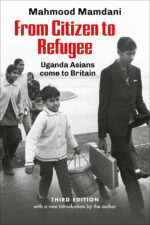
From Citizen to Refugee: Uganda Asians Come to Britain
USD $ 15.50In his introduction to this new edition of From Citizen to Refugee: Uganda Asians Come to Britain, Mahmood Mamdani reminds us that long before 1972, most Ugandan ‘Asians’ had already been disenfranchised by law, both Ugandan and British. Despite a global industry that insists otherwise, Uganda Asians are a poor fit as victims: there was no large-scale loss of life during the expulsion, nor were there massacres of Asians, only of ‘indigenous’ peoples. Asians in Uganda, as in East or Southern Africa, he argues, were immigrants, not settlers: immigrants are prepared to be a part of the political community, whereas settlers ‘create their own political community, a colony, more precisely, settler colonialism.’ Mamdani insists that there is no single Asian legacy. there are several and they are contradictory. The Asian question in Uganda remains, but it is no longer the original Asian question. But it does allow us to think more broadly. Just as US law recognizes African Americans as Americans of African descent, so too must those of Asian origin in Africa consider themselves, and be considered, Asian Africans. It is in his bittersweet and touching book on the Asian expulsion from Uganda that one can trace the beginnings of author and intellectual Mahmood Mamdani’s world-view.. … In From Citizen to Refugee: Uganda Asians Come to Britain Mamdani offers portraits of people reduced to a vegetative existence in refugee camps, feeling the burden of not being fluent in English and struggling with the uncomfortably cold weather. Not surprisingly, these few months played a pivotal role in shaping Mamdani’s theoretical and political leanings, and it is here that one can locate his preoccupation with the formation of racial, ethnic and class identities during the colonial era and his overarching concern with issues of citizenship.
Select options This product has multiple variants. The options may be chosen on the product page -
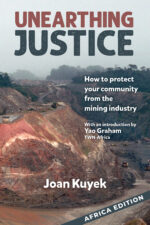
Unearthing justice: How to protect your community from the mining industry AFRICA EDITION
ONLY AVAILABLE IN EASTERN AND SOUTHERN AFRICA
We are pleased to announce that Daraja Press will soon be making Unearthing Justice, originally published by Between The Lines, available in Africa through our partners at Zand Graphics Ltd (throughout East Africa and the Horn) and Sherwood Books (South Africa, Namibia, Botswana, Lesotho, Mozambique and Swaziland).
Originally published in 2019, this new edition has an Introduction by Yao Graham, TWN-Africa. The author, Joan Kuyek, is a community-focused mining analyst and organizer living in Ottawa. She was the founding National Co-ordinator of MiningWatch Canada from 1999–2009 and continues to do work for MiningWatch and for a number of communities affected by mining.
The mining industry continues to be at the forefront of colonial dispossession around the world. It controls information about its intrinsic costs and benefits, propagates myths about its contribution to the economy, shapes government policy and regulation, and deals ruthlessly with its opponents.
Brimming with case studies, anecdotes, resources, and illustrations, Unearthing Justice exposes the mining process and its externalized impacts on the environment, Indigenous Peoples, communities, workers, and governments. But, most importantly, the book shows how people are fighting back. Whether it is to stop a mine before it starts, to get an abandoned mine cleaned up, to change laws and policy, or to mount a campaign to influence investors, Unearthing Justice is an essential handbook for anyone trying to protect the places and people they love.
-

Agroecología Abolicionista, Soberanía Alimentaria y Prevención de Pandemias
USD $ 5 USD $ 15Price range: USD $ 5 through USD $ 15Select options This product has multiple variants. The options may be chosen on the product page
Agroecología Abolicionista, Soberanía Alimentaria y Prevención de Pandemias
USD $ 5 USD $ 15Price range: USD $ 5 through USD $ 15La COVID-19 ha expuesto la naturaleza racializada de los sistemas alimentarios, pero también potencialmente otorga oportunidades para construir de nuevo. Maywa Montenegro explora una serie de defectos, desde las cadenas de suministro fracturadas hasta las infecciones no controladas entre los trabajadores de alimentos esenciales y comunidades negras, marrones e indígenas victimizadas por el virus a lo largo de viejos surcos de opresión racial. Ella rastrea los orígenes probables de la COVID-19 hasta los sitios de desborde forjados por la expansión agroindustrial en regiones boscosas donde los patógenos brotan libremente e infectan a los humanos. La agricultura animal de tipo industrial impulsa estos cambios ecológicos que incuban futuros brotes. Las pandemias tienen sus raíces en la separación violenta de las comunidades de sus territorios, semillas, conocimientos y riqueza. El racismo permite ese robo como elemento fundamental para la expansión capitalista.
Para hacer frente a las pandemias y las injusticias alimentarias, Montenegro invoca una agroecoecología abolicionista. Ninguna alternativa anticapitalista puede ignorar el racismo que es fundamental para el sistema alimentario industrial transnacional. Académicos como Angela Davis, Ruth Wilson Gilmore y Mariame Kaba han argumentado que, aunque la abolición se ve con frecuencia como una estrategia de oposición, para erradicar, por ejemplo, prisiones y policía: la abolición es igualmente propositiva. Una agroecología abolicionista abre múltiples posibilidades que responden a las exigencias de un planeta pandémico: no existe una “normalidad” a la que podamos regresar con seguridad.
Select options This product has multiple variants. The options may be chosen on the product page -
Abolitionist Agroecology, Food Sovereignty and Pandemic Prevention
USD $ 5 USD $ 15Price range: USD $ 5 through USD $ 15Select options This product has multiple variants. The options may be chosen on the product page
Abolitionist Agroecology, Food Sovereignty and Pandemic Prevention
USD $ 5 USD $ 15Price range: USD $ 5 through USD $ 15COVID-19 has exposed the racialized nature of food systems, but also potentially grants opportunities to build anew. Maywa Montenegro explores a series of breakdowns, from fractured supply chains to uncontrolled infection among essential food workers to Black, Brown, and Indigenous communities scythed through by the virus along old grooves of race-class oppression. She traces the likely origins of COVID-19 to spillover sites forged by agroindustrial expansion into forested regions where pathogens spring free and infect humans. Industrial animal agriculture drives these ecological changes that incubate future outbreaks. Pandemics have their roots in the violent separation of communities from their territories, seeds, knowledge and wealth. Racism enables such theft as fundamental to capitalist expansion.
To tackle pandemics and food injustices, Montenegro calls for an abolitionist agroecology. No anti-capitalist alternative can ignore the racism that is central to the transnational industrial food system. Scholars including Angela Davis, Ruth Wilson Gilmore, and Mariame Kaba have argued that although abolition is frequently seen as an oppositional strategy — to eradicate, for example, prisons and police — abolition is equally propositional. An abolitionist agroecology cracks open multiple possibilities that respond to the exigencies of a pandemic planet — there is no ‘normal’ to which we can safely return.
Select options This product has multiple variants. The options may be chosen on the product page -
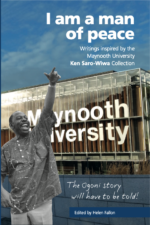
I am a man of peace: Writings inspired by the Maynooth University Ken Saro-Wiwa Collection
USD $ 5 USD $ 20Price range: USD $ 5 through USD $ 20Select options This product has multiple variants. The options may be chosen on the product page
I am a man of peace: Writings inspired by the Maynooth University Ken Saro-Wiwa Collection
USD $ 5 USD $ 20Price range: USD $ 5 through USD $ 20This book marks the 25th anniversary of the execution of Nigerian activist and written Ken Saro-Wiwa. The 21 essays, by international contributors, and 42 poems by new and established poets, are inspired by his ideals and activism.
The volume includes contributions by people intimately connected with Saro-Wiwa. His brother Dr Owens Wiwa recounts how his older brother awakened and nurtured his awareness of the tremendous damage Royal Dutch Shell was doing to their homeland, in collaboration with the then Nigerian military government. His firsthand account of the brutality of the military government and its impact; his unsuccessful efforts to save the life of his brother; his time in hiding and subsequent escape, with his family, from Nigeria and his efforts to retrieve the remains of his brother for burial, makes for very moving reading. Likewise, Noo Saro-Wiwa shares her story of growing up in England with strong links to family in Nigeria, and the trauma of hearing of her father’s execution while at University.
Maynooth University, where the editor works as Deputy Librarian, holds the death row correspondence from Ken Saro-Wiwa to Sister Majella McCarron. McCarron provides two personal essays. One, a reflection on the events that shaped her work with Saro-Wiwa in Nigeria and her subsequent efforts to save the lives of the Ogoni 9: the second essay explores her experience as a table observer of the Shell to Sea campaign, which strove to have gas, discovered off the west coast of Ireland, refined at sea rather than inland.
The damage that Shell has caused in Ogoni and the issue of redress are topics addressed in essays by experts including Mark Dummett, of Amnesty International, who investigated how Shell and other oil companies have caused or contributed to human rights abuses through their operations in the Niger Delta. Daniel Leader, a barrister and partner at Leigh Day’s international law department, the firm who have led a number of ground breaking human rights cases, including a series of cases against Shell on behalf of Nigerian communities, explores the issue of legal redress. Architect, environmental activist, author and poet Nnimmo Bassesy’s wide ranging essay presents Saro-Wiwa as activist and writer and creator of the Ogoni Bill of Rights, against the backdrop of the UNEP report of the Environmental Assessment of Ogoniland, which recorded that drinking water in Ogoni had benzene, a carcinogen, at over 900 times the level permitted
Select options This product has multiple variants. The options may be chosen on the product page -
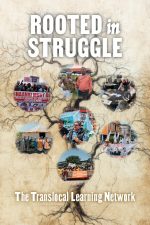
Rooted in struggle
Edited by
Anne Harley and Jonathan LangdonWith
Edward Adeti, Coleman Agyeyomah, Sheena Cameron, Amanor Dzeagu, Leocadio Juracan Salome, Thapelo Mohapi, Zodwa Nsibande, Ro Paradela, Alhassan Shani, Wojciech Tokarz, & Nyeya YenThis book is the culmination of several years of partnership between social movements, social justice organizations and academics in Ghana, South Africa, Guatemala and Canada. Called the Translocal Learning Network, this partnership has generated a space for those facing the multiple and overlapping crises of our time to come together and share knowledge and mutually solidarize with each other’s struggles. This knowledge exchange and mutual solidarity has been non-hierarchical and collaborative in nature, and has taken the form of sharing and commenting on complex stories of these struggles through a participatory research methodology known as narrative restorying. As such, this book will focus on the stories each partner has shared, along with engagement with these stories by other members of the network. This interplay of knowledge sharing will provide a window into the social movement learning of network members.
The central argument of the book was best captured by Thapelo Mohapi from South Africa’s Abahlali baseMjondolo: “It is always assumed that when you are poor, when you are living in a shack, when you live in a rural area, when you are marginalized, that you cannot think for yourself, that you cannot be involved in development, because you are poor”; instead of this “People must make decisions and must be consulted, and they must have a voice to speak about their own development. It must be initiated and completed with the people.” This book is literally a space where those on the front line of struggles against land & livelihood dispossession, violent resource exploitation, climate-fueled emergencies, and the denigration of cultural and traditional indigenous knowledge share their experiences, learning, successes, and defeats, with those facing similar and related struggles but in different contexts.
In addition to the stories of these front-line voices, scholars working alongside these struggles also share some of their learnings and ideas that have emerged from the partnership in the book. Students supporting the partnership also share their learning in the book, as well as describing how their activism also provoked learning in the network. In other words, this book provides a window into a rich, ongoing dialogue of mutual learning and support that will speak to audiences in the activist and critical academic communities.
To that point, this translocal network uses the notion of translocality to push back on the capitalist, colonial, and neo-liberal agenda of a) maintaining divisions between people struggling against oppression in different parts of the world (through border controls, language divisions, and colonial racialized othering); and, b) maintaining a knowledge hierarchy that states, international institutions, intellectual institutions, and corporations are those best able to contend with the many crises we face, and even within activists, it is those movements and organizations with broad, multinational reach that can best speak for the affected. Translocality argues that it is those with local knowledge of crises and context that are best positioned to speak to what needs to change, and that local struggles meeting each other as equals, translocally, is the best way to learn from one another without imposing new forms of knowledge hierarchies. Everaldo Morales Baján, from Commité Campisino del Altiplano (CCDA) in Guatemala captures this sentiment well when he says: “This book captures the essence and importance of the different struggles that exist in various parts of the world, but which converge on always caring for the planet and human rights.”
Chapter Summaries
Introduction: Translocal social movement learning: building mutual solidarity and contesting development for social and environmental justice
Jonathan Langdon; Sheena Cameron; Rodrigo Paradela; Wojciech Tokarz
In an effort to encourage connection and mutual learning between local movements, the Translocal Learning Network (TLN) serves as an effective social justice framework that attempts to build and maintain local to local (i.e. translocal) non-hierarchical connections between movements. The overall goal of this research partnership is to catalyze and animate translocal learning as a means to build capacity among localized movements in their struggles for a climate just and anti-capitalist future, and in so doing trace the contours of a theory of translocal learning – learning based on local to local learning as opposed to top down learning that mimics the very problematic of global dominance these movements contest. Key to this process is an insistence that movements and groups rooted in local social change efforts are crucial authors and actors of a climate just and anti-capitalist future. The members of the TLN address ongoing and emergent injustices to claim rights, assert agency, and demand representation and the redistribution of resources for marginalized communities in South Africa, Ghana, Guatemala and Canada. Creating shared spaces for connection, support, and learning through the ongoing struggles of each social movement has provided continuous moments of solidarity and opportunities for reimagining being in the world. This book showcases the perspectives of our partners, providing rich accounts of their experiences that illuminate struggles, insights, and successes. It also includes academic reflections on intercultural exchanges and offers an in-depth analysis of the collaborative learning process.
‘Players change but the game remains the same’: current realities of the poor, particularly in KwaZulu Natal
Zodwa Nsibande, Church Land Programme
This phrase was used by one member of Abahlali baseMjondolo in a meeting where we were talking about elections and the impact it has on people on the ground, especially who are marginalized and yet they are still expected to participate in the upcoming elections. She cautions that we need to be mindful that even if we change the ruling party, the ‘game’, the electoral system, remains the same, producing elites. Apartheid system favored ‘white’ people. Now the current system favors the elite. The ones who are poor remain poor and left with hope that someday things will change; hope that is shattered yet renewed every five years.
While there is less intense focus on South Africa now that apartheid is over, the sociological legacies continue and the fundamental nature or rules of the game remain intact. It points to the idea that regardless of who is involved, the main objectives, strategies, and overall dynamics of the game do not change. It emphasizes the notion that although the participants may alter, the essence of the game remains unchanged.
CLP will discuss the current realities of the poor, particularly in KwaZulu Natal, under the ongoing oppressive systems in South Africa, that permeates to all aspects of life, including the electoral system that favors the elites, the failing electricity system with load-sharing, and the improper stormwater drainage systems in townships and shack settlements, flood-prone areas (compounded by climate change) that results in loss of homes, food, and lives when it rains.
The Talensi-Nabdam Gold Rush: Local Complicity, Resource Exploitation, and the Crisis of Dignity
Coleman Agyeyomah Venceremos & Alhanssan Shani
This discussion will delve into the profound impact of multi-national mining activities on the communities of the Upper East Region in Ghana, specifically focusing on the alarming stories of dispossession of ancestral lands. The region, rich in cultural heritage and agricultural livelihoods, faces a growing threat as multi-national mining companies seek to exploit its abundant gold resources in collusion with State Institutions.
Through an exploration of real-life stories, light will be shed on the multifaceted consequences of multinational mining-induced dispossession of community lands. From the loss of cultural identity to the disruption of traditional farming practices and land degradation, this narrative will highlight the social, economic, and environmental toll on the affected communities.
The discussion will also provide a comprehensive overview of the mechanisms employed by multinational mining companies to acquire land and the subsequent displacement of local populations. Additionally, throws light on the challenges and complicity faced by these communities in seeking justice and recognition of their rights in the face of powerful corporate interests.
Gold Slavery in Talensi
Edward Adeti & Yen Nyeya, Savannah Research and Advocacy Network
Talensi is a small community in the Upper East Region of Ghana. The Upper East is one of the smallest regions in the country in terms of land size. The people of Talensi are predominantly subsistence farmers who rely on livestock and crop cultivation for their livelihoods.
Mining is one of the commercial activities that require huge parcels of land. Lands earmarked for mining are often fenced and are not available for any other activity even grazing of animals is often not allowed.
The people of Talensi stand the risk of losing their livelihoods due to the influx of a number of mining companies taking up almost 70% of lands earmarked for farming activities
The Río Negro massacre: The abandonment and criminalization of communities in Resistance by the State of Guatemala
Leocadio Juracan Salome, Commité Campisino del Altiplano (CCDA)
The water resource in the highlands of Guatemala, especially in the Verapaces region, has been the scene of large massacres against Indigenous peoples for the implementation of Hydroelectric Plants.
In the 70’s, resistance communities in the banks of Río Negro began facing persecution, dispossession, and criminalization. Río Negro is one of the great rivers that supply the largest Hydroelectric Plant in Guatemala called Chixoy. There were massacres, many disappeared, others forcibly displaced, exiled from their territories where they were born and others who remained in resistance.
With the largest hydroelectric plant in the country 4 kilometers away and despite suffering dispossession and criminalization, more than 500 families from the departments of Quiché, Alta and Baja Verapaz live in conditions of abandonment, without electricity, without development programs for health, housing, education etc.
Despite all the violations against humanity committed in the Río Negro Massacre, many Q’eqch’i’ Mayan families are still waiting for compliance with the resolutions of the Inter-American Court of Human Rights -IACHR-, which mandates the recognition of the violations of Human Rights, the compensation to the families and the legalization of some 1,500 caballerías of territory in favor of the families by the State of Guatemala.
We are not opposed to the energy transition, but respect for the lives of families, their development, respect for the life cycle of Rivers and Mother Nature.
Nothing about us without us – Everybody Thinks!
Thapelo Mohapi, Abahlali baseMjondolo
The dignity of the poor can only be achieved if they are part of their own development, becoming stewards and active participants on their own terms and by their own design. This must be a process undertaken from below, democratically, with people being consulted and making decisions, having a voice to speak about their own development. It must be initiated and completed with the people. “Nothing about us, without us”, the slogan used by many movements to demand that the full and direct participation of members must be integral to decision-making, grounds the work of Abahlali baseMjondolo, a shack dwellers movement in South Africa, with more than 180,000 members that was formed in 2005 to fight for, promote and advance the interests of the poor and marginalized.This contribution grows out of a critique of development and is grounded in the understanding that development is neo-colonial and neo-imperial and that is something that is imposed and done to poor people in the formerly colonized countries, with the backing and financial support of Western governments, aid agencies, companies, and local governments. It is always assumed that when you are poor, when you are living in a shack, when you live in a rural area, when you are poor and marginalized, that you cannot think for yourself, that you cannot be involved in development, because you are poor. AbM demonstrates that people and movements are capable of determining what is best for themselves and to ensure the dignity and rights of the poor.
Ada Songor Lagoon; Our Heartbeat!
Amanor Dzeagu, Radio Ada
November 6, 2023 has become another taboo day for the local salt producers in Ada, just as the police confrontation with community members that led to the death of a pregnant woman in 1985. The Story of the Songor Lagoon: Who Killed Maggie?
Mr. John Korletey Agormedah, a 52 year old salt winner died of bullet wounds after he has been shot three times during an attempt to protect his salt winning business. His killing occurred when a joint taskforce and state police sent by Electrochem Ghana Limited, a private company awarded the entire Ada Songor Lagoon in a monopoly lease by the government and some local chiefs to destroy the community members salt winning equipment in the lagoon communities. Local chiefs fail to condemn the barbaric killing of their subject after three months, rather, they quickly reacted and condemn a political candidate for his comments which has been deemed, uncultured language in a viral video. He has been fined 30,000 Ghana cedis, 4 Rams, 4 foreign schnapps or face a ban in the elections. The police continue to arrest, detain and prosecuting community members including chiefs with the offence of inciting community members against the private company.
Translation, Care, and Political Commitment in the Translocal Learning Network
Ro Paradela; Wojciech Tokarz
This chapter examines translation within the Translocal Learning Network as political infrastructure that shapes collaborative knowledge production. Through translator Ro Paradela’s work – employing gender-inclusive Spanish, strategic domestication, and simultaneous interpretation – translation emerges as relational labor that negotiates power, affirms identities, and fosters belonging across linguistic boundaries, transforming communication into an act of care and solidarity.
Research Assistant Learning from Social Movements (Pending)
Sheena Cameron; Ro Paradela
Cameron and Paradela add another dimension of learning in their chapter, sharing their own learnings and reflections from their participation in this network as research assistants, in relation to the changing context and expressed learnings of other former research assistants over the last twelve years, while simultaneously engaged in their own studies – Paradela as an undergraduate honours student, and Cameron as a PhD student.
Learning from subaltern social movements
Anne Harley; Jonathan Langdon
As engaged scholars, with a long interest in social movements, we have been working with some of the social movements who form part of this group over a number of years. We have learned a great deal from our interaction with them, and have worked together to begin to theorize this learning. In this contribution, we discuss what we mean by the concept ‘subaltern social movement’, and why we feel that the learning from such social movements is critical in current times.
Concluding Chapter
Translocal Learning Network
This chapter emerges from the collective reflections of the network on the process of creating the book, and what we have learned along the way. It will respond to the emergent themes and interlinkages identified in the opening chapter, but also highlight the ways in which we have all responded to each other’s stories, comments and analyses.
Author Bios
Edward Adeti, is a Ghanaian-born investigative journalist widely known for his anti-corruption work and courageous journalism despite facing threats. He was named Ghana’s best journalist in 2024 and won the best investigative journalist award the same year. Some of his notable works include: exposing Ghana’s justice system, leading to a judge’s recusal and a minister’s resignation; the documentary “Cash for Justice”, which led to a senior state attorney’s dismissal; “Stealing from the Sick”, an investigative piece exposing medicine theft at a government hospital, leading to arrests and prosecution of some members of a syndicate; and “Blood Gold”, a series he co-authored with Eryk Bagshaw, an Australian investigative journalist, on human rights violations by mining companies in Ghana, winning multiple international awards in 2023. He is a member of SRAN.
Coleman Agyeyomah formerly of Venceremos Development Consult is currently the Director, of Innovation Development Alternatives (IDEAs), a devolvement and organizational change NGO. Agyeyomah has over 20 years in facilitating and the mobilizing of Community Based Organizations/leaders for social change in poor and vulnerable communities of northern Ghana. Above all, he also teaches and provides field-based experiential learning support for students from Universities of Trent and St. Francis Xavier Canada.
Sheena Cameron is a Lecturer at St. Francis Xavier University (Canada) as well as a Research Coordinator of the Translocal Learning Network. She brings decades of community work in West Africa, Guatemala and Canada and community radio and podcasting experience to the writing of her chapter. She holds a Masters in Communication and Social Justice and she is currently completing a PhD in Social Justice Education at the Ontario Institute for the Study of Education (OISE) at the University of Toronto.
Amanor Dzeagu is a community radio practitioner and development communicator working with Radio Ada, a community radio station in the Greater Accra Region of Ghana. He works closely with local communities to tell their stories, document their traditions, and advocate for inclusive development through radio and community engagement. With a deep respect for the Dangme culture and indigenous systems, Amanor uses the community radio as a bridge between tradition, development, and the voices of the people. He brings more than two decades of community broadcasting experience to the writing of this chapter.
Anne Harley is a senior lecturer in adult education at the University of KwaZulu-Natal (Pietermaritzburg) in South Africa. Working within the radical adult education tradition, she is particularly interested in informal adult education/learning in/through/with struggle, and her work focuses on counter-hegemonic learning and theorising, particularly in subaltern social movements, and is thus related to issues of emancipatory politics, the notion of civil society, and discourses of ‘development’ in South Africa and beyond.
Leocadio Juracan Salome is one of the leaders of the Comité Campasino del Altiplano (CCDA), a large movement of peasant farmers in Guatemala. Leocadio brings decades of political and community organizing experience to CCDA’s contribution to the book.
Jonathan Langdon is a Professor at St. Francis Xavier University (Canada) in Development Studies and Adult Education. Langdon has over 20 years of community engagement, activist organizing and facilitation work, as well as being the convener of the Translocal Learning Network for the last 3 years.
Thapelo Mohapi was born in Matatiele in the Eastern Cape and raised in Durban, KwaZulu Natal. He is the current elected General Secretary of Abahlali baseMjondolo Movement SA, the movement of informal settlements in South Africa, numbering over 180,000 members. Prior to that, he was the chairperson of the Briardene branch in Durban within the movement. He also served as the Provincial Secretary of KwaZulu Natal. AbM is a movement that fights for land, housing and the dignity of the poor in South Africa.
Zodwa Nsibande is a social justice advocate and community leader from Durban, South Africa. She served as General Secretary of the Abahlali baseMjondolo youth league in 2009, she spoke out against the harmful effects of the FIFA 2010 World Cup on shack settlements , leading to threats that forced her into hiding. In 2011, she joined the South African delegation to the Ecumenical Accompaniment Programme in Israel and Palestine (EAPPI), spending three months advocating for peace and human rights. Since 2013, Zodwa has served as a Programme Activist at the Church Land Programme, supporting marginalized communities in securing land rights and dignified living conditions in both rural and urban areas. Most recently, she was a visiting scholar at the University of Sheffield’s School of Law in the United Kingdom from June 24 to July 26, 2024.
Ro Paradela (they/she) is a transfeminist activist from Mexico City. They graduated St. Francis Xavier University with Honours in Sociology and a Subsidiary in Women’s and Gender Studies. They are currently organizing in the fight against the crisis of transfemicidal violence in Mexico.
Alhassan Shani is a development practitioner and works with IDEAs, Northern-Ghana. He has over nine (9) years of experience in development research, community mobilization, social accountability, monitoring and evaluation of projects and development planning process. Alhassan’s development orientation is firmly rooted in participatory development. Additionally, he is passionate about research that encourages community participation, learning and action.
Wojciech Tokarz is a scholar and administrator serving as Associate Professor of Spanish and Interim Dean of the Faculty of Arts at St. Francis Xavier University (Canada). His research examines post-dictatorship Argentine literature, Indigenous representation, and translation theory, in particular how translation facilitates negotiation of Indigenous and LGBTQ+ identities, fostering belonging and advancing decolonial ethics. More information: https://wojciechtokarz.academia.edu
Nyeya Yen is a lifelong social justice activist with over 50 years of advocacy in Ghana and Africa. Exiled in 1982 under the Rawlings regime, he lived in Togo and the UK while campaigning for political justice. Returning in 2014, he continues to fight marginalization in mining-affected communities in Ghana’s Upper East Region.
-

Silence Would Be Treason
USD $ 10 USD $ 20Price range: USD $ 10 through USD $ 20Select options This product has multiple variants. The options may be chosen on the product page
Silence Would Be Treason
USD $ 10 USD $ 20Price range: USD $ 10 through USD $ 20These letters and poems are invaluable fragments of a living conversation that portrays the indomitable power in humans to stay alive in the face of certain death – to stay alive even in death.
Reading through the treasure trove of the letters and poems compiled here as The Last Writings of Ken Saro-Wiwa evokes intense memories of his resolute struggles against an oil behemoth and a deaf autocratic government. His crusade frames one of the most tumultuous periods of Nigeria’s history; his tragic story evokes anger and demands action to resolve the crises that first led the Ogoni people to demand that Shell clean up Ogoni lands or clear out of the territory.
Select options This product has multiple variants. The options may be chosen on the product page -

Oil Politics
USD $ 1 USD $ 25Price range: USD $ 1 through USD $ 25Select options This product has multiple variants. The options may be chosen on the product page
Oil Politics
USD $ 1 USD $ 25Price range: USD $ 1 through USD $ 25The essays here contribute to developing and deepening an understanding of the ecological challenges ravaging Nigeria, Africa and our world today. They illustrate the global nature of these terrors. These essays are not meant just to enable for coffee table chatter: they are intended as calls to action, as a means of encouraging others facing similar threats to share their experiences.
Set out in seven sections, this book of 54 essays deals with deep ecological changes taking place primarily in Nigeria but with clear linkages to changes elsewhere in the world. The essays are laid out with an undergird of concerns that characterise the author’s approach to human rights and environmental justice advocacy. The first section rightly presents broad spectrum ecological wars manifesting through disappearing trees, spreading desertification, floods, gas flaring and false climate solutions.
Select options This product has multiple variants. The options may be chosen on the product page -

Stratégies familiales, diasporas et investissements
USD $ 5 USD $ 30Price range: USD $ 5 through USD $ 30Select options This product has multiple variants. The options may be chosen on the product page
Stratégies familiales, diasporas et investissements
USD $ 5 USD $ 30Price range: USD $ 5 through USD $ 30À rebours des thèses soutenant que la migration contribue au développement ou que l’in- vestissement dans le développement réduit la croissance de la migration « irrégulière », ce livre marque une rupture tonifiante avec les idées communes abondamment véhiculées dans la littérature sur les liens entre migration, mobilités et développement en Afrique. Il accorde un intérêt manifeste pour la plus grande part des mobilités africaines, lesquelles se situent à l’intérieur du continent, et à la formation des diasporas en dehors des fron- tières nationales et continentales. Cette considération conjointe des mobilités « Sud-Sud » et « Sud-Nord » permet de remettre en cause l’hypothèse selon laquelle il existe des diffé- rences fondamentales entre elles.
Cet ouvrage examine les fluctuations ordinaires des mouvements de populations – à travers l’Afrique, comme dans le reste du monde –, qui étendent les familles, génèrent de nouvelles relations, reconfigurent les connexions économiques et politiques, et sont intégrées dans l’expérience quotidienne des millions de personnes qui y prennent part.
The in-depth knowledge of the mostly African authors adds to the quality of a research field, which was for long far too Eurocentric. – Ilke ADAM, Vrije Universiteit Brussel (Belgium)
Il était temps de mettre en lumière ce que migration et mobilité représentent en Afrique. L’ouvrage offre une perspective originale et décoloniale sur le sujet. – Eric HAHONOU, Roskilde Universitet (Denmark)
Christian Bouquet, « Quelques éclairages nouveaux sur les migrations africaines », EspacesTemps.net [En ligne], Books, 2020 | Mis en ligne le 20 November 2020, consulté le 20.11.2020. URL : https://www.espacestemps.net/en/articles/quelques-eclairages-nouveaux-sur-les-migrations-africaines/ ; DOI : 10.26151/esapcestemps.net-jc2a-6b03
Avec la participation de John O. IGUE, Saydou KOUDOUGOU, Pierre-Joseph LAURENT, Bassirou MALAM SOULEY, Hamidou MANOU NABARA, Marème NIANG NDIAYE, Amadou SARR DIOP, Sadio SOUKOUNA , Eric Stève TAMO MBOUYOU et Astadjam YAOUBA.
Select options This product has multiple variants. The options may be chosen on the product page -

Mobilités, circulations et frontières
USD $ 5 USD $ 30Price range: USD $ 5 through USD $ 30Select options This product has multiple variants. The options may be chosen on the product page
Mobilités, circulations et frontières
USD $ 5 USD $ 30Price range: USD $ 5 through USD $ 30Ce livre est un apport précieux pour demander à changer de focale et de perspective au sujet des migrations à l’intérieur du continent africain. Celles-ci sont bien plus importantes quan- titativement, mais aussi économiquement et historiquement, que les migrations de l’Afrique vers l’Europe. Elles sont beaucoup plus silencieuses et infiniment moins étudiées que celles du Sud vers le Nord. Ces migrations sont vitales, tant pour les pays de départ que pour ceux d’arrivée. Ainsi, des millions de jeunes partent chaque année pour les pays de la côte, et cela sans susciter les mêmes résistances, fantasmes et peurs qu’en Europe.
Cet ouvrage a le grand mérite d’intégrer les migrations dans la perspective plus large des mobilités, puis d’en examiner les liens avec le développement. Il est rédigé par de jeunes chercheurs africains, qui produisent à partir de leurs terrains spécifiques des analyses à valeur générale sur les sociétés contemporaines. Ils contribuent ainsi au renouvellement des sciences sociales à partir des pays africains.
On peut en revanche souligner que l’ouvrage a relevé un défi important : celui d’éclairer à la fois les dynamiques de l’expérience migratoire, des trajectoires suivies par les migrants et des espaces migratoires à l’intérieur de l’Afrique. — Sylvie Ayimpam, « Mobilités, circulations et frontières. Migrations, mobilités et développement en Afrique », Anthropologie & développement [En ligne], 51 | 2020, mis en ligne le 01 décembre 2020, consulté le 23 février 2021. URL : http://journals.openedition.org/anthropodev/1068 ; DOI : https://doi.org/10.4000/anthropodev.1068
These companion volumes are refreshing because they introduce us to many less well- known instances which amply illustrate just how mobile African populations really are at the regional, intra-regional and global scales. – Paul NUGENT, University of Edinburgh (United Kingdom)
Un ouvrage d’une grande actualité qui aborde la question des migrations sous un angle radicalement nouveau et original : l’articulation dynamique entre la migration, la mobilité et le développement en Afrique de l’Ouest. Ces deux volumes bilingues renouvellent le débat sur les migrations : de quoi faire réfléchir ensemble l’Afrique et l’Europe. – Marie-Caroline SAGLIO-YATZIMIRSKY, INALCO, CESSMA Paris (France)
Christian Bouquet, « Quelques éclairages nouveaux sur les migrations africaines », EspacesTemps.net [En ligne], Books, 2020 | Mis en ligne le 20 November 2020, consulté le 20.11.2020. URL : https://www.espacestemps.net/en/articles/quelques-eclairages-nouveaux-sur-les-migrations-africaines/ ; DOI : 10.26151/esapcestemps.net-jc2a-6b03
Avec la participation de Naluwembe BINAISSA, Alimou DIALLO, Nyalo Barkissa DRABO, Sylvester KOHOL, A. Aziz MOSSI, Loppa NGASSOU, Lawrence Rafaih OKELLO, Mutiat Titilope OLADEJO, Zakaria SORÉ, Astadjam YAOUBA et Irissa ZIDNABA.
Select options This product has multiple variants. The options may be chosen on the product page -

PAS DE REDD EN AFRIQUE
USD $ 10La présente publication du Réseau Pas de REDD en Afrique (No REDD in Africa Network) a pour but de démystifier le REDD, les projets de type REDD et toutes leurs variantes, et de montrer ce qu’ils sont vraiment : des mécanismes injustes conçus pour lancer une nouvelle phase de colonisation du continent africain. Les exemples présentés démontrent clairement que le REDD est une escroquerie et que les pollueurs savent qu’il leur permet d’acheter le « droit » de polluer.
-

The great climate robbery: How the food system drives climate change and what we can do about it
USD $ 25.99The industrial food system is a major driver of climate change. Food sovereignty is critical to any lasting and just solution. The Great Climate Robbery shows readers how the industrial food system causes climate change, how food and agribusiness corporations are getting away with it and what can be done to turn things around.