
-

“Nada mal para um N—, Não?” “No está mal para un N—, ¿no?”
USD $ 5 USD $ 15Price range: USD $ 5 through USD $ 15Select options This product has multiple variants. The options may be chosen on the product page
“Nada mal para um N—, Não?” “No está mal para un N—, ¿no?”
USD $ 5 USD $ 15Price range: USD $ 5 through USD $ 15Escrito durante as comemorações do septuagésimo quinto aniversário da publicação de Black Skin, White Masks (“Pele Negra, Máscaras Brancas”), de Frantz Fanon, “Not Bad for a N—, No?” oferece reflexões sobre as circunstâncias da publicação desta obra clássica com os insights de Fanon sobre o que ele chamou de tentativa de “assassinato do homem” e a necessidade urgente de a humanidade se tornar “acional”.
Escrito durante las celebraciones del septuagésimo quinto aniversario de la publicación de Black Skin, White Masks (“Piel negra, máscaras blancas”) de Frantz Fanon, “Not Bad for a N—, No?” ofrece reflexiones sobre las circunstancias de la publicación de esta obra clásica con las ideas de Fanon sobre lo que llamó el intento de “asesinato del hombre” y la urgente necesidad de que la humanidad se vuelva “acción”.
Select options This product has multiple variants. The options may be chosen on the product page -

“Not Bad for a N—, No?” / «Pas mal pour un N—, n’est-ce pas? »
USD $ 5 USD $ 11Price range: USD $ 5 through USD $ 11Select options This product has multiple variants. The options may be chosen on the product page
“Not Bad for a N—, No?” / «Pas mal pour un N—, n’est-ce pas? »
USD $ 5 USD $ 11Price range: USD $ 5 through USD $ 11Written during the seventy-fifth anniversary celebrations of the publication of Frantz Fanon’s Peau noir, masques blancs (“Black Skin, White Masks”), “Not Bad for a N—, No?” offers reflections on the circumstances of the publication of this classic work with Fanon’s insights on what he called the attempted “murder of man” and the urgent need for humanity to become “actional.”
Écrit lors des célébrations du soixante-quinzième anniversaire de la publication de Frantz Fanon de Peau noir masques blancs, «Pas mal pour un N—, n’est-ce pas? » offre des réflexions sur les circonstances de la publication de cette œuvre classique avec les idées de Fanon sur ce qu’il a appelé la tentative de «meurtre de l’homme» et le besoin urgent que l’humanité devienne «actionnelle».
Select options This product has multiple variants. The options may be chosen on the product page -
 Select options This product has multiple variants. The options may be chosen on the product page
(Arabic edition) الهندوتفا وعلاقتها بالصهيونية
هندوتفا
وارتباطها بالصهيونيةأمريت ويلسون
سلسلة محاضرات عن إسرائيل
المساهمة: لاهور ألباست، مؤسسة الدراسات الفلسطينية، الولايات المتحدة الأمريكية
المشرف: الدكتور فيريندر سينغ كالرا
المحرر: طارق محمود، الجامعة الأميركية في بيروتكتب هذا النص في كانون الأول/ديسمبر 2022، وهو مقتبس من محاضرة ألقيت بدعوة من مؤسسة الدراسات الفلسطينية. ومنذ ذلك الحين، تعمقت العلاقات بين إسرائيل والهند وتصاعدت الفظائع في كلا البلدين. في 5 إبريل 2023، اقتحمت قوات الاحتلال الإسرائيلي باحات المسجد الأقصى في القدس الشرقية المحتلة، واعتدت على المصلين بداخله. وفي الوقت نفسه، تواجه إسرائيل اضطرابات داخلية في الصراع بين مجموعة متنوعة، بما في ذلك أولئك الذين يعتقدون أن المستعمرة الاستيطانية الحالية هي دولة ديمقراطية ويريدون أن تبقى الأمور على ما هي عليه، وكذلك أولئك الذين يقفون على اليمين. والأهم من ذلك أن الحزب الحاكم في الهند، حزب بهاراتيا جاناتا، يدعم الخيار الأخير. يدور الكتاب حول هندوتفا، الأيديولوجية التي تحرك حكومة رئيس الوزراء ناريندرا مودي، حزب بهاراتيا جاناتا الذي يهيمن عليه الهندوس، والصهيونية، أيديولوجية دولة الفصل العنصري الإسرائيلية. وفي هذا العصر الذي يتسم بالفاشية الناشئة، تشكل هاتان الأيديولوجيتان المتشابهتان إلى حد لافت للنظر أهمية بالغة في تعزيز التحالفات الاقتصادية والعسكرية بين اثنتين من أكثر الدول اليمينية قمعية في العالم ـ وفي الوقت نفسه إضفاء الشرعية عليها في الساحات الثقافية. إن إسرائيل بلا شك دولة استعمارية استيطانية، لكنها أيضًا دولة فاشية، مثل الهند، ليس فقط بسبب “الأحزاب المتطرفة التي تشكل جزءًا من الحكومة” ولكن أيضًا “على حد تعبير مسؤوليها – نتنياهو ومروان بشارة”. نتنياهو هو “الأب الروحي للفاشية الإسرائيلية الحديثة”.
Written in December 2022, this text is based on a lecture given earlier at the invitation of the Institute of Palestine Studies. Since then, the relationship between Israel and India has deepened further and atrocities have skyrocketed in both countries. On 5 April 2023, Israeli forces stormed Al Aqsa Mosque compound in occupied East Jerusalem and attacked worshippers inside. At the same time, Israel is facing internal turmoil in a battle between a diverse group, including those who think the current settler colony is a democratic nation and want things to remain as they are, and those who stand even further to the right. Significantly, the BJP, India’s ruling party, supports the latter. This book is about Hindutva, the ideology which drives the Hindu-supremacist Bharatiya Janata Party (BJP) regime of Prime Minister Narendra Modi, and Zionism, the ideology of the Israeli apartheid state. In this era of rising fascism, these two remarkably similar ideologies are crucially important in cementing the economic and military alliance between two of the world’s most repressive right-wing states – while helping to legitimize them in cultural arenas. Israel is, of course, a settler colonial state, but it is also, like India, a fascist state, not only because of ‘the extremist parties that [are] part of the government’ but also because of ‘their enablers – Netanyahu and his chauvinistic Likud party which long strove for a Jewish state dominating both sides of the Jordan River.’ In the words of Marwan Bishara, Netanyahu is ‘the godfather of modern Israeli fascism.’
Select options This product has multiple variants. The options may be chosen on the product page -

(Bengali edition) হিন্দুত্ববাদ ও ইহুদী জাতীয়তাবাদ : একটি ক্রমবর্ধমান সম্পর্ক)
USD $ 5 USD $ 10Price range: USD $ 5 through USD $ 10Select options This product has multiple variants. The options may be chosen on the product page
(Bengali edition) হিন্দুত্ববাদ ও ইহুদী জাতীয়তাবাদ : একটি ক্রমবর্ধমান সম্পর্ক)
USD $ 5 USD $ 10Price range: USD $ 5 through USD $ 10This is a Bengali translation of Hindutva and its relationship with Zionism, by Amrit Wilson: ISBN 978-1-990263-76-7. Written in December 2022, this text is based on a lecture given earlier at the invitation of the Institute of Palestine Studies. Since then, the relationship between Israel and India has deepened further and atrocities have skyrocketed in both countries. On 5 April 2023, Israeli forces stormed Al Aqsa Mosque compound in occupied East Jerusalem and attacked worshippers inside. At the same time, Israel is facing internal turmoil in a battle between a diverse group, including those who think the current settler colony is a democratic nation and want things to remain as they are, and those who stand even further to the right. Significantly, the BJP, India’s ruling party, supports the latter. This book is about Hindutva, the ideology which drives the Hindu-supremacist Bharatiya Janata Party (BJP) regime of Prime Minister Narendra Modi, and Zionism, the ideology of the Israeli apartheid state. In this era of rising fascism, these two remarkably similar ideologies are crucially important in cementing the economic and military alliance between two of the world’s most repressive right-wing states – while helping to legitimize them in cultural arenas. Israel is, of course, a settler colonial state, but it is also, like India, a fascist state, not only because of ‘the extremist parties that [are] part of the government’ but also because of ‘their enablers – Netanyahu and his chauvinistic Likud party which long strove for a Jewish state dominating both sides of the Jordan River.’ In the words of Marwan Bishara, Netanyahu is ‘the godfather of modern Israeli fascism.’ This essay focuses primarily on Hindutva, discussing Zionism mainly to highlight its similarities, links and increasing alliances with Hindutva.
Select options This product has multiple variants. The options may be chosen on the product page -
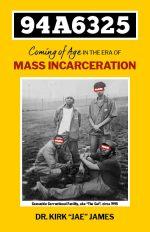
94A6325
USD $ 7.99 USD $ 25Price range: USD $ 7.99 through USD $ 25Select options This product has multiple variants. The options may be chosen on the product page
94A6325
USD $ 7.99 USD $ 25Price range: USD $ 7.99 through USD $ 2594A6325 is the compelling coming-of-age memoir of Dr. Kirk “Jae” James, a Black male, Jamaican immigrant, and father, chronicling his nearly decade-long experience (3,268 days) within the New York State carceral apparatus. The narrative is anchored by his arrest on April 13, 1994, when he was 18 years old, charged under the draconian Rockefeller Drug Laws and subsequently sentenced to life in prison. The story details his survival in infamous facilities such as Rikers Island, the maximum-security adolescent prison “The Cat” (Coxsackie), and Wyoming, where he fought to maintain his humanity while facing overwhelming fear and anxiety.
The book powerfully illustrates how legislative actions like the 13th Amendment, “tough on crime” rhetoric, the 1994 Crime Bill, and the 1996 Immigration laws acted as contemporary black codes and slave catchers, perpetually dehumanizing and criminalizing Black and brown populations. Jae endures three denials by the Parole Board while simultaneously fighting a six-year battle against a mandatory deportation order.
Drawing inspiration from mentors and comrades—including revolutionaries and activists like George Jackson and Pops—Jae transforms his time in prison into a quest for knowledge and self-actualization, culminating in earning an Associate Degree and winning his 212c waiver hearing against deportation in 2002.
More than just a survival story, 94A6325 serves as a vital first-person account and a call to embrace Abolition. The author, now a Clinical Assistant Professor at NYU, shares his journey as essential knowledge needed to confront the historical violence and systemic white supremacy woven into American democracy, urging readers to imagine a world without human cages, grounded in abundance and love. The story officially ends with his release on March 25, 2003.
This book is the first part in a series, with this one focusing on his incarceration from 1994 to 2003.
Dr Kirk “Jae James” talks about the book. The event centered on Dr. Kirk James’ memoir “94A6325: Coming of Age in the Era of Mass Incarceration,” which explores his nearly 9-year incarceration experience and its broader implications for systemic injustice. The panel discussion included Councilman Yusuf Salam, Dr. Michelle Munson, and Dr. Pierre Hargrove, who engaged in a conversation about the human impact of mass incarceration, the importance of community support during incarceration, and the ongoing challenges faced by formerly incarcerated individuals. The participants shared personal experiences and insights, highlighting the need for systemic change, the power of storytelling, and the resilience of those affected by the criminal justice system. The event aimed to foster reflection and dialogue on the structural harms of mass incarceration and the potential for collective healing and transformation. Watch the video here.
Published in collaboration with:
Select options This product has multiple variants. The options may be chosen on the product page -
 Select options This product has multiple variants. The options may be chosen on the product page
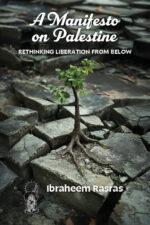
A Manifesto on Palestine
We are excited to share a summary of a truly transformative new work, A Manifesto on Palestine: Rethinking Liberation from Below, by Ibraheem Rasras. This manifesto offers a profound and challenging re-evaluation of the Palestinian struggle, urging us to look beyond conventional political and diplomatic frameworks to envision a radically different path to freedom and self-determination.
The Core Diagnosis: Beyond Material Occupation
Rasras argues that the Palestinian crisis is not merely a material one of occupation, dispossession, and statelessness, but also a deep “epistemological crisis”. The very structures intended for liberation, the manifesto asserts, have been “subverted, diverted, or rendered ineffective by the very forces they seek to fight”. This is evident in the recurrence of atrocities, reminiscent of past massacres, seen in Gaza from 2023 onwards. A central critique is leveled against the adoption of hierarchical, statist, and technocratic forms of liberation, which have come to tragically resemble the configuration of the oppressor, shedding their ethical and revolutionary essence. The Oslo Accords are cited as a prime example, transforming the language of liberation into one of “formalized managerial governance” and “conditional sovereignty”. This has contributed to a profound “void in the political contextualization and ethical framework of the political ruling”.The Problem of “Stylistic” Resistance and Internalized Colonialism
The manifesto identifies how Palestinian resistance has, over decades, shifted from revolutionary, bottom-up rhetoric to institutionalized and compromised modes, particularly after the Oslo Accords. It introduces the concept of “stylistic” liberation, where leaders impose their imagined schemes rather than adapting to the realities on the ground, leading to an “alienus” leadership that lacks genuine popular allegiance. This “stylistic” approach also manifests when liberation is pursued through “tools of trivialization” that are external to the collective’s specific needs, such as placing prolonged peace negotiations *before* achieving liberation. This externalization, mirroring the colonizing process itself, leads to a form of alienation, obstructing collective self-control and, in many cases, resulting in the unconscious participation of the colonized in their own subjugation. Distrust stemming from unfulfilled promises by factions like Hamas and Fatah has further deepened fragmentation and a sense of “strangeness” among Palestinians.A New Strategy: The Ethics of Resistance and Anarchic Programs
To counter this multifaceted crisis, the manifesto proposes a radical alternative: a “bottom-up resistance” grounded in a unified mode of ethics, a collective understanding of the cause, and consistent practices. This “ethics of resistance” is not a rigid dogma but an “emancipatory code” and a regulatory framework for all aspects of Palestinian daily life, directly confronting neoliberal values like profit-maximization. It is intertwined with the urgent need for a “cultural revolution” that aims to restructure social circumstances and foster a “revolutionary consciousness”. This cultural shift, implemented in successive waves, includes intensive education on human rights and rooting new “networking-elements” within Palestinian social and cultural life. The goal is to establish a “solid reference-point” that can unify Palestinians, whose power has been fragmented by internal divisions and external pressures.The manifesto champions “anarchic programs” as a strategic framework to dismantle subjugation. This involves collectively disengaging from oppressive laws and creating a vacuum for temporary self-management, thereby strengthening local grassroots power. It envisions an “anarchic rule” based on “organic units” and “free cooperation,” emphasizing self-management, direct worker control, and integrated agriculture and industry. This approach aims to organize Palestinians without the fear of division or surveillance that has plagued traditional political structures.
The Power of the Everyday
Crucially, the manifesto points to the already existing “affirmative, anarchic, and ethical politics” in fragments throughout Palestinian society. These are not found in the monopolies of NGOs or political parties, but in the “spontaneous and often-unrecognized social inventions of ordinary people”. Examples include mutual aid networks in Gaza during siege, informal community schooling, grassroots organizing, and the refusal to cooperate with surveillance. These acts of “everyday resistance”—like a student crossing a checkpoint or a mother going to work despite immense barriers—are seen as foundational for a new paradigm of collective ethics and political orientation.Toward a Horizon of Liberation
A Manifesto on Palestine is a bold call for “breakage,” arguing that “no gradual reform will bring freedom”. It is an “epistemological” task to unveil and amplify these lifeways and forms of knowledge, leading to an ethical reconstruction for a collective life that rejects domination in all forms. The manifesto asserts that the future of Palestine will not come from foreign beneficence or failed peace talks, but will be “constructed by the long disenfranchised of the political arithmetic: the dispossessed, the alienated, the uncredentialed, the everyday”. It invites all to engage in “a problem to be enjoyed more than an answer to be spewed back,” asserting that “freedom must be written by individuals who are living alternatively”.We encourage you to delve deeper into this profound manifesto and join the critical conversation about rethinking liberation from below.
Select options This product has multiple variants. The options may be chosen on the product page -

A Mutiny of Morning: Reclaiming the Black Body from Heart of Darkness
USD $ 5 USD $ 15Price range: USD $ 5 through USD $ 15Select options This product has multiple variants. The options may be chosen on the product page
A Mutiny of Morning: Reclaiming the Black Body from Heart of Darkness
USD $ 5 USD $ 15Price range: USD $ 5 through USD $ 15Nikesha Breeze has taken pages from Joseph Conrad’s Heart of Darkness, taken his words, and forced them to leave his colonized mind. She has made the words her own in poetic form. She illuminates the invisible Black voices inside, a radical, surgical, and unapologetic Black appropriation, at the same time as a careful birthing and spiritual road map. The resulting poems are sizzling purifications, violent restorations of integrity, pain, wound, bewilderment, rage, and, sometimes, luminous generosity. This is a work of Reclamation. The author, Nikesha Breeze, has slowly, page by page, reclaimed the text of the book Heart of Darkness by Joseph Conrad. This racist turn-of-the-19th-century book was pivotal in the continued dehumanization of Black people and in particular of African people, as it painted an image of bestiality on the Congo people and the continent. It is laced with racist imagery and language. The author has reappropriated the book, page by page, making “BlackOut” poetry for each page, isolating methodically the words to create new poems of power and black voice within the text —stealing the language and reappropriating the power.
Select options This product has multiple variants. The options may be chosen on the product page -
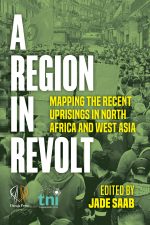
A region in revolt: Mapping the recent uprisings in North Africa and West Asia
USD $ 5 USD $ 15Price range: USD $ 5 through USD $ 15Select options This product has multiple variants. The options may be chosen on the product page
A region in revolt: Mapping the recent uprisings in North Africa and West Asia
USD $ 5 USD $ 15Price range: USD $ 5 through USD $ 15A wave of mass protest movements has spread across North Africa and West Asia, including Sudan, Algeria, Iraq, Lebanon and Iran. The mass protests have much in common, from opposing authoritarian regimes and worsening economic situations to demanding radical changes in social relations. Despite their similarities, each protest movement operates under different conditions that cannot be ignored. The specific historic, political and economic contexts of each country have determined who the key actors of the uprisings are and their location across old and new divides. This book elaborates on these similarities and differences to paint a clearer picture of these movements and draw out lessons to inform future struggles.
Select options This product has multiple variants. The options may be chosen on the product page -

A Zone of Nonbeing
USD $ 7.99 USD $ 20Price range: USD $ 7.99 through USD $ 20Select options This product has multiple variants. The options may be chosen on the product page
A Zone of Nonbeing
USD $ 7.99 USD $ 20Price range: USD $ 7.99 through USD $ 20While racism in Western Europe has been extensively documented, the experiences of racism in Eastern Europe remain underexplored, particularly from the perspective of Black individuals born and raised in the region. This book, written by a Polish author of African descent, sheds light on the racial struggles in Poland, situating them within a broader global context.
The first part of the book delves into the historical dynamics of racial relationships between Black individuals and white Poles. It highlights the lives of Black Polish citizens and residents from the 18th century to the fall of communism in 1989, including figures like Katarzyna Rohoczewska and August Agbola O’Browne. It also celebrates the contributions of two prominent Polish anti-racists: General Tadeusz Kościuszko and the poet Cyprian Kamil Norwid. This section further examines Poland’s colonial ambitions, from Maurycy Beniowski’s attempt to colonize Madagascar in the late 18th century to colonial expeditions in the 1930s. Additionally, it analyzes the paradoxical nature of anti-racism in the People’s Republic of Poland, exploring the government’s official stance alongside the attitudes of its white citizens.
The second part offers a deeply personal account of the author’s experiences as both a student and a teacher, revealing the pervasive racism within Poland’s education system. It critiques the anti-migrant rhetoric propagated by Polish and European Union politicians, exposing their hypocrisy during the EU refugee crisis. A central chapter focuses on the tragic murder of Maxwell Itoya in May 2010, framing it within the global context of police brutality against Black individuals.
The final part of the book examines the racist undertones in Polish culture, particularly in literature and mass media, with a critical analysis of Henryk Sienkiewicz’s In Desert and Wilderness. It also pays tribute to James Baldwin, the author’s literary hero, exploring how Baldwin’s essays have profoundly influenced the author’s own writing and worldview. The book concludes with a reflection on the absence of a cohesive movement among Black Poles and poses the urgent question: What is to be done?
Select options This product has multiple variants. The options may be chosen on the product page -
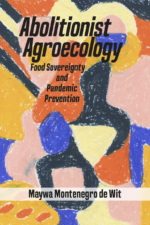
Abolitionist Agroecology, Food Sovereignty and Pandemic Prevention
USD $ 5 USD $ 15Price range: USD $ 5 through USD $ 15Select options This product has multiple variants. The options may be chosen on the product page
Abolitionist Agroecology, Food Sovereignty and Pandemic Prevention
USD $ 5 USD $ 15Price range: USD $ 5 through USD $ 15COVID-19 has exposed the racialized nature of food systems, but also potentially grants opportunities to build anew. Maywa Montenegro explores a series of breakdowns, from fractured supply chains to uncontrolled infection among essential food workers to Black, Brown, and Indigenous communities scythed through by the virus along old grooves of race-class oppression. She traces the likely origins of COVID-19 to spillover sites forged by agroindustrial expansion into forested regions where pathogens spring free and infect humans. Industrial animal agriculture drives these ecological changes that incubate future outbreaks. Pandemics have their roots in the violent separation of communities from their territories, seeds, knowledge and wealth. Racism enables such theft as fundamental to capitalist expansion.
To tackle pandemics and food injustices, Montenegro calls for an abolitionist agroecology. No anti-capitalist alternative can ignore the racism that is central to the transnational industrial food system. Scholars including Angela Davis, Ruth Wilson Gilmore, and Mariame Kaba have argued that although abolition is frequently seen as an oppositional strategy — to eradicate, for example, prisons and police — abolition is equally propositional. An abolitionist agroecology cracks open multiple possibilities that respond to the exigencies of a pandemic planet — there is no ‘normal’ to which we can safely return.
Select options This product has multiple variants. The options may be chosen on the product page -

Africa Matters
USD $ 5 USD $ 18Price range: USD $ 5 through USD $ 18Select options This product has multiple variants. The options may be chosen on the product page
Africa Matters
USD $ 5 USD $ 18Price range: USD $ 5 through USD $ 18Africa Matters: Cultural politics, political economies, & grammars of protest provides a sampling of insightful articles from the first five issues of Nokoko, journal of the Institute of African Studies, Carleton University, Ottawa, Canada. It brings together pieces that the journal’s editorial board felt were particularly perspicacious in their analysis and resonant in their crafting. Uniting them in this book permits a new dialogue to emerge around the key themes of cultural politics, political economies and grammars of protest. Their intersection here sheds light on important issues for Africans in the twenty-first century.
Select options This product has multiple variants. The options may be chosen on the product page -

Agroecología Abolicionista, Soberanía Alimentaria y Prevención de Pandemias
USD $ 5 USD $ 15Price range: USD $ 5 through USD $ 15Select options This product has multiple variants. The options may be chosen on the product page
Agroecología Abolicionista, Soberanía Alimentaria y Prevención de Pandemias
USD $ 5 USD $ 15Price range: USD $ 5 through USD $ 15La COVID-19 ha expuesto la naturaleza racializada de los sistemas alimentarios, pero también potencialmente otorga oportunidades para construir de nuevo. Maywa Montenegro explora una serie de defectos, desde las cadenas de suministro fracturadas hasta las infecciones no controladas entre los trabajadores de alimentos esenciales y comunidades negras, marrones e indígenas victimizadas por el virus a lo largo de viejos surcos de opresión racial. Ella rastrea los orígenes probables de la COVID-19 hasta los sitios de desborde forjados por la expansión agroindustrial en regiones boscosas donde los patógenos brotan libremente e infectan a los humanos. La agricultura animal de tipo industrial impulsa estos cambios ecológicos que incuban futuros brotes. Las pandemias tienen sus raíces en la separación violenta de las comunidades de sus territorios, semillas, conocimientos y riqueza. El racismo permite ese robo como elemento fundamental para la expansión capitalista.
Para hacer frente a las pandemias y las injusticias alimentarias, Montenegro invoca una agroecoecología abolicionista. Ninguna alternativa anticapitalista puede ignorar el racismo que es fundamental para el sistema alimentario industrial transnacional. Académicos como Angela Davis, Ruth Wilson Gilmore y Mariame Kaba han argumentado que, aunque la abolición se ve con frecuencia como una estrategia de oposición, para erradicar, por ejemplo, prisiones y policía: la abolición es igualmente propositiva. Una agroecología abolicionista abre múltiples posibilidades que responden a las exigencias de un planeta pandémico: no existe una “normalidad” a la que podamos regresar con seguridad.
Select options This product has multiple variants. The options may be chosen on the product page -

Ancestral Daughter
USD $ 15 USD $ 28Price range: USD $ 15 through USD $ 28Select options This product has multiple variants. The options may be chosen on the product page
Ancestral Daughter
USD $ 15 USD $ 28Price range: USD $ 15 through USD $ 28Ancestral Daughter is a poignant collection of free-verse poetry by Palestinian writer Zeina Jhaish, exploring themes of diaspora, identity, resistance, and love. Through vivid imagery and raw emotion, Jhaish navigates her dual existence as a Palestinian woman from Gaza living in the diaspora, weaving personal and collective histories into her verses. The book is divided into two parts: “Ancestral,” which delves into exile, land, and the trauma of occupation, and “Daughter,” which reflects on womanhood, heartbreak, and rebirth. Poems like “Haifa on 85th Avenue” and “Godforsaken Homes” juxtapose longing for homeland with the alienation of displacement, while “Being a Palestinian Woman: A Guide” celebrates resilience. Jhaish honors her heritage, mourns ongoing violence, and clings to hope, dedicating the work to Gaza and Palestinian martyrs. Blending English and Arabic, her poetry is a testament to ancestral love and the unyielding spirit of her people.
20% of the income from e-book orders will be donated to the Palestine Children’s Relief Fund.
If you are a bookstore, please get in touch with [email protected] for special offers.
Select options This product has multiple variants. The options may be chosen on the product page -
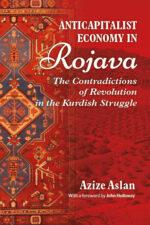
Anticapitalist Economy in Rojava: The Contradictions of Revolution in the Kurdish Struggles
USD $ 5 USD $ 22Price range: USD $ 5 through USD $ 22Select options This product has multiple variants. The options may be chosen on the product page
Anticapitalist Economy in Rojava: The Contradictions of Revolution in the Kurdish Struggles
USD $ 5 USD $ 22Price range: USD $ 5 through USD $ 22This book looks at the anti-capitalist economy and the organization of social relations in the context of the revolution and autonomy of Rojava (Kurdistan-Syria). It questions both the limitations and the historical problems of the phenomenon of revolution, and the conflicts and contradictions that emerge in this process. It also draws from the conflicts and contradictions the author has consistently felt as a “political subject” who wants to change the world, especially through her experience in the Kurdish struggle and the Kurdish Movement. For this reason, every question she raises and attempts to answer in this book—about the Kurds, Rojava, and the world in general, involves what she says is her own subjectivity.
The idea and dreams of revolution have existed since humans created systems of domination. Indeed, revolution, meaning the liberation from systems of domination, has undoubtedly been one of the most discussed subjects in history. There have been moments when the possibility of revolution has been clearer, and there have also been certain agreements on what it is and how to get there, but it has never been something completely definable. This continues to be true today. This book does not intend to define this great phenomenon, rather it looks at the revolutionary practices that create emancipating realities and embraces revolution as an undefined, contradictory and dynamic process. Although the rulers have traditionally written history, the history of social struggles has been and is still being created by many revolutionary and transformational processes. The future is being shaped based on desired revolutions and the struggles that, in turn, transform their actors, the people. Therefore, the desire and quest of the Kurdish people for liberation from the colonial rule of the nation-states of the Middle East—the subject of this book—has always been directly linked to the phenomenon of revolution.Select options This product has multiple variants. The options may be chosen on the product page -
 Select options This product has multiple variants. The options may be chosen on the product page
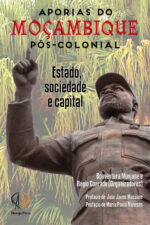
Aporias de Moçambique pós-colonial: Estado, Sociedade e Capital
USD $ 20Moçambique celebrou, em Junho de 2020, 45 anos de sua independência. Os ganhos e avanços que o país alcançou nesta quase meia década de independência são inegáveis, mas os desafios que subsistem são muitos. Este livro reflecte sobre Moçambique contemporâneo nos seus vários aspectos, destacando a formação e o papel do Estado, a democracia, a participação dos cidadãos, a política económica e social e o desenvolvimento. Como se pode ver, o livro não é temático e oferece diversas perspectivas de autores e autoras que se dedicam à investigação, ao jornalismo e ao activismo. O livro pretende exactamente oferecer uma leitura do país a partir dos olhos daqueles que não ocupam uma posição de poder mas que vivem, experienciam e lêem a realidade do país a partir de uma perspectiva crítica da sociedade.
O objectivo deste livro é dar uma melhor compreensão do que tem sido o processo de independência em Moçambique e porque é que o país pós-colonial ainda é ‘colonial’ na sua estrutura política e económica. Assim, são dados muitos exemplos para dar ao leitor a possibilidade de confrontar as perspectivas teóricas aqui utilizadas com os casos concretos.
Todos os estudos deste livro mostram que quarenta e cinco anos de independência não foram vividos da mesma forma pelas elites que governam o país e pelas populações que vivem sob o seu domínio. Por um lado, as elites no poder e os seus parentes beneficiaram, e ainda beneficiam, dos recursos do país, enquanto que uma grande parte da população continua à espera das promessas da independência. De um ponto de vista político e económico, os estudos que compõem o livro destacam como o “desenvolvimento” em Moçambique tem estado em contradição com as necessidades do país. Significa que o actual modelo de desenvolvimento responde muito mais ao capital internacional do que à transformação social de Moçambique.Select options This product has multiple variants. The options may be chosen on the product page -

Artificial Intelligence, Society and Religion
USD $ 10 USD $ 55Price range: USD $ 10 through USD $ 55Select options This product has multiple variants. The options may be chosen on the product page
Artificial Intelligence, Society and Religion
USD $ 10 USD $ 55Price range: USD $ 10 through USD $ 55The underlying objective of this book is to promote equality, global peace, harmony, transparency, inter-faith solidarity and broad-based awareness so that new technologies like AI can be developed, controlled and harnessed in the endeavor to tackle problems like hunger, poverty, disease, poor education, misinformation, pandemics, loss of biodiversity, environmental damage, authoritarianism, militarism, irresponsible consumerism, mental alienation and corporate domination that are facing the human race today.
This objective is pursued by adopting an interdisciplinary approach to explore the intriguing confluence of artificial intelligence, social structure and faith at many levels. Numerous illustrative examples from religion majority and other nations grace these pages. They elucidate the structure, uses, benefits, and productivity gains of AI as well as the flaws, abuses, biases, hype, hallucinations, and harms associated with AI systems. Secular and religious ethical codes for AI are examined. It is seen that despite theological concerns, religion―Hinduism, Buddhism, Christianity, Islam, or Secularism―is not a barrier to wide practical adoption of AI. AI in education, medical diagnosis, science research and industry, the impact of AI on mental health and the environment, the notion of artificial super intelligence, military uses of AI, especially in the genocidal war on Gaza, AI in the Global South and the views of late Pope Francis on AI garner central attention. This book makes the case that corporate driven AI operating in the profit-oriented neoliberal, imperial setting will harm human cognitive abilities and mental health, undermine education, foster bias and mediocrity, facilitate the spread of misinformation, exacerbate national and international inequality, support authoritarian rule, worsen climate change and make warfare deadlier. AI can benefit humanity only under an egalitarian, genuinely democratic, environmentally aware social order.
Based on a depth of research, Karim Hirji’s Artificial Intelligence, Society and Religion presents, in readable prose, a comprehensive portrait of the inter-relationship between an ancient human pre- occupation and a modern multi-faceted instrument that may presage a post-human future. Covering Hinduism, Buddhism, Christianity, Islam and Secularism, it explores how these traditions use AI tools and navigate the ethical challenges of AI. The perspectives of religious dignitaries like the late Pope Francis and the Dalai Lama on AI are compared. Providing a broad introduction to the attainments as well as limitations of AI systems, the book also discusses the potential for the emergence of super-intelligent AI systems. Unlike other books on AI, Hirji’s magnum opus contextualizes AI and religions within the global neoliberal system and discusses how AI systems enable violations of human rights and facilitate the commission of genocide. —Abdul Paliwala, Emeritus Professor of Law, University of Warwick
Using a broad range of sources with fascinating insight, Karim Hirji explores the ever-expanding world of Artificial Intelligence to inquire: Will AI benefit or endanger humanity? Using numerous country-level case studies, he explores multiple instances of the utility and harms of AI and argues that corporate-controlled AI will not only exacerbate inequality, but also cause more harm than good. Focusing on Hinduism, Buddhism, Christianity, Islam and secularism, he critically examines faith-based reactions to AI. Among other topics cogently covered are the ethics of AI, education and AI, military applications of AI and the possibility of a superintelligent AI. Addressing questions vital for our and the future generations from a progressive perspective, this book deserves attention from all concerned with where AI is driving our world. —Elizabeth Jones, MA, Teacher, Quaker, Former Co-editor of Christian Today, UK.
Karim Hirji’s Artificial Intelligence, Society and Religion: Crossroads of Algorithm, Neoliberalism and Faith is a path-breaking, inspiring and challenging book on AI that will help strengthen the social movements of resistance throughout the world. It delegitimizes the ideological obfuscations of imperialism—from the crimes of Eugenics to the fantasy of a happy AI future. It takes us on a fascinating and challenging journey, warns us of the grave dangers posed by corporate AI, and prepares us for the next stage of the lifetime battle for anti-imperialist and socialist humanity. —Eric Mann, Author and Co-Director, Labor/Community Strategy Center, South Central Los Angeles.
Select options This product has multiple variants. The options may be chosen on the product page -
![Aufbruch in Jackson [German edition of Jackson Rising: Black self-management and solidarity economy]](https://darajapress.com/wp-content/uploads/2023/12/174_Akuno_Jackson_web-150x225.jpg)
Aufbruch in Jackson [German edition of Jackson Rising: Black self-management and solidarity economy]
USD $ 24German translation of Jackson Rising: The Struggle for Economic Democracy and Black Self-Determination in Jackson, MississippiHow black activists are building liberation practically from below: Departure in Jackson documents the history of one of the most exciting revolutionary experiments in the USA Present.
Since the 1970s, black liberation movements in majority-black Mississippi have taken change into their own hands. The Deep South should become the center of their independence – “Free the Land!” In the 2010s, the election of Chokwe Lumumba as mayor in the capital Jackson took an important step towards implementing the vision of assembly democracy, solidarity economy and an end to racial inequality. Lumumba dies unexpectedly in 2014, but his son Antar and the Cooperation Jackson continue to move forward.
We learn about the pitfalls of radical local politics and struggles for housing and land, democratic economic models and ecology, internationalist solidarity and the parallels to the Rojava Revolution and the Zapatistas, about encouraging experiences in which different concerns go hand in hand.
-

Banana Girls, The
USD $ 5 USD $ 20Price range: USD $ 5 through USD $ 20Select options This product has multiple variants. The options may be chosen on the product page
Banana Girls, The
USD $ 5 USD $ 20Price range: USD $ 5 through USD $ 20The Banana Girls chronicles 2003 days in the lives of two bosom friends, Rehema and Fatuma, and millions of days in the existence of the banana, the fruit which, eaten either ripe or cooked, the girls at some point determine will be the only solid component of their daily diets. The banana becomes not only the symbol of ideal nutrition but also, by turns, of social engineering and neo-imperialist exploitation. …Rehema and Fatuma are Tanzanians by nationality and brainboxes by genetic coding, with an enduring monopoly of either the first or second position in any examination for which they sit. They excel in Mathematics, Chemistry and Physics particularly and are always the first two to solve any mathematical or scientific challenges that are presented to their successive year groups and, by extension, to readers of the book.
… As the days go by, Rehema and Fatuma abandon junk food forever, they also adopt wholesome tastes in what they watch and what they listen to, and they make a good friend, Alice, who, unlike them, is from a rich family but who is adequately informed to join them as committed activists in the BLF, the Banana Liberation Front. Their activism lands them in jail. All three girls see through the machinations of their own government to oppress their own people and of global capitalism to bring about régime change, the better to sustain a stranglehold over poorer economies and to prop up aptly named ‘banana republics’. One malevolent operator is pointed out by name: he is President Ronald Grump of the United States of America.
Select options This product has multiple variants. The options may be chosen on the product page -

Being Anti-Colonial
USD $ 5 USD $ 25Price range: USD $ 5 through USD $ 25Select options This product has multiple variants. The options may be chosen on the product page
Being Anti-Colonial
USD $ 5 USD $ 25Price range: USD $ 5 through USD $ 25Being Anti-Colonial by Jayan Nayar presents a profound critique of the contemporary engagements with ‘decolonial theory’ and the popular usage of ‘decolonisation’. This work argues that much of the current discourse within critical theory tends to overlook the intricate, essentially praxiological underpinnings of the anti-colonial struggle, thereby comfortably situating itself within the post-colonial status quo. Nayar’s book serves as a radical call to authentically re-engage with the anti-colonial ethos, emphasizing the necessity to confront the enduring architectures of coloniality that define our present. Distinctly divided into two parts, the book first elucidates the conceptual groundwork to reconceptualise ‘anti-colonial’ as a philosophical stance deeply entwined with the fabric of the global (post)colonial reality. Through meticulously argued philosophical foundations, Nayar underscores the (post)colonial present as a state of ‘resettlement’, where the architecture of post-colonial world-making loses sight of its colonial matrices. Being Anti-Colonial is both an invitation and a challenge to the academic community to critically revisit and re-energize the conversation about coloniality.
With his impressive scholarship, Jayan Nayar challenges critics of coloniality, himself included, to question their standpoints. Critical scholars are implicated in assuming the reality of a post-colonial world as ‘(b)ordered’ but requiring reform and justice. Through an incisive critique of coloniality, of the idea of ‘Europe’ of ‘Blacked Lives Matter’ of ‘Zionist-Israelism’, he demands engagement on the frontline of anti-colonial struggles of the violated, subjugated, impoverished ‘subjects’ of (post) colonial normality. — Abdul Paliwala, Professor of Law at School of Law, University of Warwick
Select options This product has multiple variants. The options may be chosen on the product page -

Being human after 1492
USD $ 5 USD $ 13Price range: USD $ 5 through USD $ 13Select options This product has multiple variants. The options may be chosen on the product page
Being human after 1492
USD $ 5 USD $ 13Price range: USD $ 5 through USD $ 13The pamphlet begins with two letters written by Paul the Apostle in which Christianity first acquires a universal address. The new religion came to exclude people who were not Christians from the count of the human. This became explicit around a thousand years later when Pope Urban II authorised the First Crusade.
In 1492 planetary history was split in to two. Muhammad XII of Granada conceded defeat to Isabella and Ferdinand, the Catholic monarchs of Portugal and Spain, who went on to expel the Jews from the territory under their control. Europe became a Christian project. In the same year Christopher Columbus arrived in the Caribbean and Europe also became an imperial project with a planetary reach.
The origins of the racial ideology can be seen in this period, in which ideas about religion came to be entangled with fantastical ideas about the imagined purity of blood. But it was in the English colony of Virginia in the seventeenth century that the legitimation for the exclusion from the count of the human began to move from claims made in the name of religion to claims made in the name of science. This is the point at which modern racism, rooted in the appearance of the body, began to cast its malignant shadow across the planet.
The author argues that the struggle to put an end to the epoch of world history that opened in 1492 will require new ideas, and new practices. It follows the Caribbean tradition that runs from Aimé Césaire to Frantz Fanon and Sylvia Wynter in affirming the need for a counter-humanism, a radical humanism, a humanism that, in Césaire’s famous phrases, is “made to the measure of the world”. There is a need for a shift in the ground of reason towards the lived experience and struggles of people rendered, in Wynter’s phrase, as ‘pariahs outside of the new order’.
Select options This product has multiple variants. The options may be chosen on the product page