
-
Every Country Gets the Fascism It Deserves
USD $ 5 USD $ 12Price range: USD $ 5 through USD $ 12Select options This product has multiple variants. The options may be chosen on the product page
Every Country Gets the Fascism It Deserves
USD $ 5 USD $ 12Price range: USD $ 5 through USD $ 12Every Country Gets the Fascism It Deserves documents the systematic construction of xenophobic violence as a political project in post-apartheid South Africa. Richard Pithouse traces how the state, media and organised political forces have cultivated hatred against migrants, transforming social pain into organised cruelty.
The book begins with the May 2008 pogroms that killed 62 people and displaced 100,000, showing how the mob followed the logic of a state that had already begun dehumanising migrants. It documents the rise of the All Truck Drivers Foundation, which murdered more than 200 drivers in organised attacks, and the subsequent emergence of Operation Dudula and March and March—well-funded astroturfed movements that normalised fascist language and violence.
Pithouse reveals the complicity of the police, media and major political parties—including the ANC, DA, MKP, ActionSA and Patriotic Alliance—in legitimating xenophobic violence. He shows how the mob and state have collaborated to drive more than 150,000 people across South Africa’s borders in a matter of weeks, with government infrastructure facilitating mass deportation.
Drawing on the work of Aijaz Ahmad, Alain Badiou and Richard Seymour, Pithouse argues that the erosion of democratic norms, the reactivation of ethnic mobilisation, and the normalisation of sadism constitute a fascist challenge to the constitutional order. The book insists that the answer to the far right is never to move rightward, but always to build a politics of universal solidarity rooted in the principle that a person is a person wherever they may find themselves.
With a foreword by Michael Neocosmos and an afterword by Abahlali baseMjondolo founder S’bu Zikode, this is an urgent account of a country’s descent into organised cruelty—and a powerful call for a politics of human dignity.
This essay was originally published on Richard Pithouse’s Substack: https://substack.com/profile/143275356-richard-pithouse
Select options This product has multiple variants. The options may be chosen on the product page -
 Select options This product has multiple variants. The options may be chosen on the product page
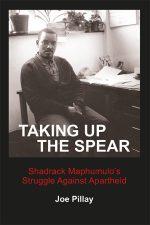
Taking up the Spear
Taking Up the Spear is the firsthand account of Shadrack Maphumulo, an ordinary South African who becomes a freedom fighter against apartheid. The narrative traces his life from a rural Zulu childhood, shaped by stories of the Bambatha Rebellion, to his early working years in Durban where he faces systemic racism, slave wages, and the humiliating pass laws. His entrepreneurial dreams—first a taxi, then a shop—are systematically crushed by a white supremacist government that reserves prosperity for whites, forcing him to realize that individual effort cannot overcome the oppressive system.
Radicalized, Maphumulo joins the trade union movement SACTU and later the banned ANC and its armed wing, Umkhonto we Sizwe (MK). He details his rudimentary training in sabotage and participates in several missions, including bombing an Afrikaner newspaper office and attacking municipal beer halls. Arrested in 1963, he endures brutal torture and solitary confinement before being sentenced to ten years on Robben Island. On the island, he details the horrific conditions, daily beatings, and hunger strikes, but also the political education and solidarity among prisoners. After his release in 1975, he resumes underground work, leading to another arrest, torture, and banning. The story ends with his escape into exile in Swaziland, where he continues the struggle. The epilogue reveals his assassination by South African security forces in 1986, cementing his legacy as a hero who sacrificed everything for a free South Africa.
Select options This product has multiple variants. The options may be chosen on the product page -
 Select options This product has multiple variants. The options may be chosen on the product page
We Are Still Not Counted As Human
S’bu Zikode’s reflections chronicle the profound struggle of Abahlali baseMjondolo (residents of the shacks), the largest popular movement to emerge in South Africa since apartheid. Founded in Durban in 2005, the movement now boasts over 180,000 members organised into more than 100 branches across four provinces (as of September 2025).
The movement arose from a deep disappointment following the initial promise of democracy, realizing that “freedom and the African National Congress (ANC) were two different things”. The poor were immediately excluded from public life and discussions about their own lives, often treated as “criminals” or “rubbish”. This systematic dehumanisation—where their very presence was deemed criminal—showed that democracy, in practice, referred primarily to the middle class and the rich.
At the heart of Abahlali baseMjondolo’s organizing is the non-negotiable demand for the recognition of their humanity and dignity. They built their foundation on the principles and values of ubuntu, viewing dignity as requiring respectful engagement and full participation in decision-making—not merely accepting ‘service delivery’. They insist on thinking and speaking for themselves, adopting the slogan ‘nothing for us, without us’.
AbM developed a unique ‘politics of the poor’ to create a space for the impoverished to think together, build power, and advance their interests outside of political parties or trade unions. The goal is establishing a democratic socialism built from below—a “living communism”—grounded in community praxis.
This struggle has been met with intense repression, including police violence, torture, criminalisation, and assassinations, with more than twenty lives lost. The state’s actions, intended to teach the poor to “know their place,” instead taught them that democracy was not for them, reinforcing the need to organize and be strong together. The movement continues to fight for the destruction of the capitalist system and the reconstruction of a new system centred on the humanity and dignity of all people.
STOP PRESS: Citation of Honour to S’bu Zikode.
29 October 2025
Human Rights Commission Presents a Citation of Honour to S’bu Zikode
Today the South African Human Rights Commission presented a Citation of Honour to S’bu Zikode.
Professor Tshepo Madlingozi, who presented the citation, specifically noted our movement’s work for land reparation, spatial justice and food sovereignty, and our commitment to oppose xenophobia and gender-based violence. He praised our movement as “true advocates of human rights, the restoration of dignity, and full liberation” and said that Zikode’s “legacy will forever guide and inspire future generations”.
In his acceptance speech Zikode accepted the Citation of Honour on behalf of the movement saying that “An award for me is also an award for the movement, Abahlali baseMjondolo, and for the determination and courage of all the people of South Africa — and all those who have kept our movement going for twenty years despite the challenges we continue to face.” He dedicated the award to the 25 comrades who have lost their lives in the course of our struggle.
Later, speaking to the leadership of the movement he said that “I am forever grateful to the red sea that has carried me over and over. I deeply appreciate you all.”
Our movement welcomes this award of a Citation of Honour to our president. It is an important recognition of the justice and power of our struggle, and the determination and courage of our members. In a time in which human rights are coming under sustained attack from right-wing forces, in and out of the ANC, we reaffirm our solidarity with the Commission, with the Socio-Economic Rights Institute and with all other human rights organisations under attack from the right.
The rights and dignity of every person must be respected – without exception – and we need to build a united front in support of this principle.
Contact:
Thapelo Mohapi 084 576 5117
Snenhlanhla Mcanyana 073 832 331
S’bu Zikode 083 547 0474Select options This product has multiple variants. The options may be chosen on the product page -
 Select options This product has multiple variants. The options may be chosen on the product page
Twenty Years of Courage and Struggle
Abahlali baseMjondolo (AbM) is the remarkable story of the South African shack dwellers movement, covering twenty years of courageous struggle. It is the largest movement to have emerged in South Africa after apartheid and one of the largest movements of the urban poor globally, boasting over 180,000 members across four provinces.
AbM emerged from the margins of South Africa’s cities, where residents faced life-threatening conditions, including shack fires, poverty, and systemic betrayal by the democratic state regarding land and housing. The movement is firmly committed to ethical principles, fighting not only for the right to the city but for the right to collectively occupy land and build occupations collectively. Abahlali insists on a humanist philosophy—”no one is illegal, everyone thinks and everyone must be counted and heard”—and works to build democracy and socialism from below.
Abahlali is abolition in action, seeking to interrupt capitalist logic by advocating for the total decommodification of land, recognizing it as a public good allocated based on human need. This commitment has led to significant victories, including securing land, providing services (like water and electricity), and winning a landmark Constitutional Court case against the unlawful Slums Act.
However, this quest for dignity has come at a tremendous cost, marked by severe repression, police violence, and the assassination of many activists by state forces and party thugs. Despite these challenges, AbM has persisted, developing occupations into working communes (such as eKhenana) that feature collective production, community halls, and political schools. Their story is a map for movements fighting inequality and authoritarianism globally. The movement continues to build collective power and struggle for a world where land, wealth, and power are shared on an equal basis.
“Your movement has shown the world that democracy extends beyond elections to a way of living together—through open assemblies and collective decision making. In doing so, you have advanced a vision grounded in humanity, solidarity, and courage. Your struggle has always been internationalist, and your solidarity with the people of Palestine, Swaziland, and the Congo, and the warm relations you have built with movements around the world, are exemplary.” Jeremy Corbyn in https://rajpatel.org/2025/10/13/4764/
The movement continues to grow, discovering that more and more settlements function better not when they function as an association of residents but as a commune. Agroecology is cropping up in more and more settlements thanks to exchanges with the MST. It’s a demonstration that when the wretched of the earth organize themselves without mediation, without NGO managers or academic gatekeepers, they can survive what would destroy any formation dependent on elite patronage. … This is the lesson Abahlali offers the world: genuine democracy is possible, but only when everyone thinks, everyone counts, everyone cares, and everyone acts. Raj Patel Everybody Thinks, Everybody Counts, Everybody Cares, Everybody Acts: Twenty Years of Abahlalism
Select options This product has multiple variants. The options may be chosen on the product page -
International Brigade Against Apartheid: Secrets of the People’s War That Liberated South Africa
USD $ 27Select options This product has multiple variants. The options may be chosen on the product page
International Brigade Against Apartheid: Secrets of the People’s War That Liberated South Africa
USD $ 27We hear for the first time from the internationalist secretly working for the ANC’s armed wing, Umkhonto we Sizwe (MK), in the struggle to liberate South Africa from apartheid rule. They acted as couriers, provided safe houses in neighbouring states and within South Africa, helped infiltrate combatants across borders, and smuggled tons of weapons into the country in the most creative ways. Driven by a spirit of international solidarity, they were prepared to take huge risks and face great danger. The internationalists reveal what motivated them as volunteers, not mercenaries: they gained nothing for their endeavours save for the self-esteem in serving a just cause. Against such clandestine involvement, the book includes contributions from key people in the international Anti-Apartheid Movement and its public mobilisation to isolate the apartheid regime. These include worldwide campaigns like Stop the Sports Tours, boycotting of South African products and black American solidarity. The Cuban, East German and Russian contributions outlined those countries’ support for the ANC and MK. The public, global Anti-Apartheid Movement campaigns provide the dimensions from which internationalists who secretly served MK emerged. Edited by Ronnie Kasrils. First published by Jacana Media (Pty) Ltd in 2021, ISBN: 978-1-4314-3202-8, this Daraja Press edition is available in North America and East Africa.
Select options This product has multiple variants. The options may be chosen on the product page