
-

Jahan Malek Khatun
USD $ 18Select options This product has multiple variants. The options may be chosen on the product page
Jahan Malek Khatun
USD $ 18This book presents the first extensive English study and translation of the poetry of Jahan Malek Khatun, a fourteenth-century Persian princess and one of the most important women in the history of Persian literature. Translator Sheema Kalbasi first introduced Jahan Malek Khatun to the general English-speaking audience in 2008 through her anthology Seven Valleys of Love: A Bilingual Anthology of Women Poets from Medieval Persia to Present Day Iran, which marked the earliest appearance of Jahan’s poetry in English translation. Her surviving divan, which contains more than a thousand ghazals along with qasidas and shorter lyric forms, offers an unparalleled window into the intellectual, emotional, and cultural world of a noblewoman who wrote with clarity, restraint, and philosophical depth during a period of profound political instability.
The volume introduces readers to the historical and literary contexts that shaped her life and work, and it situates her authorship within a long Iranian tradition in which women participated in governance, education, and artistic patronage from the ancient empires through the Islamic period. It recreates the refined yet precarious milieu of fourteenth-century Shiraz, where poetry functioned not only as an aesthetic practice but also as a medium of political expression and ethical contemplation.
Through close readings, the book explores the disciplined craft of Jahan Malek Khatun’s ghazals. Her poetry turns repeatedly to a stable constellation of images, such as wind, candle, threshold, and healer, that guide the reader through themes of longing, moral endurance, sovereignty, and judgment. Each couplet acts as a brief meditation, and the poems together form a sustained inquiry into the relationship between beauty, discipline, and survival.
The study also examines the transmission of her work, the role of women as readers and preservers of literary culture, and the challenges inherent in translating a voice shaped by both privilege and constraint. Through this analysis and the accompanying translations, Jahan Malek Khatun emerges as a major intellectual presence and an essential figure for understanding the richness and complexity of the Persian lyric tradition.
Select options This product has multiple variants. The options may be chosen on the product page -
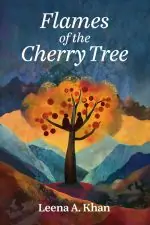
Flames of the Cherry Tree
USD $ 12 USD $ 22Price range: USD $ 12 through USD $ 22Select options This product has multiple variants. The options may be chosen on the product page
Flames of the Cherry Tree
USD $ 12 USD $ 22Price range: USD $ 12 through USD $ 22The year is 1940, and the winds of change stir in the valley of Kashmir. Aafreen Khan is a young girl that dreams to be a doctor like her beloved grandfather, defying the boundaries of convention as a Muslim and a woman in a country rigged against her. But as the partition of India looms closer, Kashmir reels under the weight of greed and power, and Aafreen is swept into the whirlwind of a story much larger than her own. When love, loss, and revolution reshape her entire world, Aafreen learns the terrible truth of what it means to survive.
Flames of the Cherry Tree is a sweeping, intimate portrait of a young woman’s coming-of-age against the backdrop of colonialism, rebellion, and the violent birth of today’s occupied Kashmir. At once tender and unflinching, it traces the story of one family through oppression and resistance, illuminating the forgotten histories that have shaped Kashmir and the hope that survives in its people.
Leena Khan speaks about her first novel ‘Flames of the Cherry Tree’
A lyrical, unflinching novel that rebuilds Kashmir from beneath the rubble of empire — a testament to the people who refused to disappear.
– Tariq Mehmood, author, The Second ComingLight and tender yet deeply haunting, this luminous tale of friendship and love unfolds in Kashmir against the gathering darkness of partition and local political churnings, bearing witness to both the radiant beauty of young love and the unspeakable horrors unleashed when hatred fractures a subcontinent along religious lines.
– Anuradha Bhasin, Managing Editor of the Kashmir TimesA hauntingly beautiful tale of loss and resilience where the author masterfully weaves history with humanity. Tender, brave, and unforgettable.
—Rumana Makhdoomi, author of Warriors and Falcons: Life Sketches of 100 Outstanding Kashmiri DoctorsSelect options This product has multiple variants. The options may be chosen on the product page -
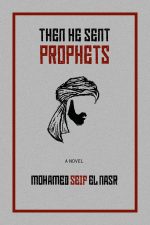
Then He Sent Prophets
USD $ 10 USD $ 20Price range: USD $ 10 through USD $ 20Select options This product has multiple variants. The options may be chosen on the product page
Then He Sent Prophets
USD $ 10 USD $ 20Price range: USD $ 10 through USD $ 20Morocco, 1359. The people of Fes are living in deprivation under the rule of an unjust sultan. Zakaria is a young Muslim scholar trying to sustain his family while committing to a rigid moral code. To provide for his sickly daughter, he sacrifices his principles and seeks a job at the palace, where he gradually becomes entangled in a web of intrigue, his conscience tormented by serving the sultan. In the hope of fleeing from the constraints of his world, he joins the quest of Muhammad ibn Yusuf, the exiled king of Granada, and his enchanting sister, Aisha, to reclaim their throne. Together, they set out to Andalusia on a journey that will call into question all of Zakaria’s beliefs and change the history of the Iberian Peninsula for decades to come.
Then He Sent Prophets is a story about the suffering of young idealists in a world of inevitable compromise. Throughout his journey, Zakaria faces internal struggles that are timeless and universal, strives to reconcile his faith with the world, doubts the motives behind his desire to live morally, and ends up wondering whether a life consisting of one compromise after another is one worth living.
Then He Sent Prophets is a novel for our moment. Set around the political struggles of fourteenth-century Granada, it is a deeply sympathetic and passionately human look at how one might make—or fail to make—moral, decent choices when living in a violent, indecent world.
— Marcia Lynx Qualey, founding editor of ArabLitCircumstances present Zakaria with a position at the palace. […] Can someone critical of the sultan and conscious of his corruption maintain integrity while serving at the palace? And what’s the line between complete innocence and partial complicity? These are the questions at the crux of his ethical dilemma. […] It’s easy to make connections between Zakaria’s inner dilemmas and those many of us grapple with today.
— Hafsa Lodi in The New ArabSelect options This product has multiple variants. The options may be chosen on the product page