
-
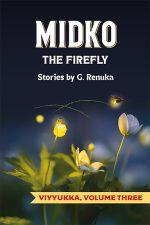
Midko The Firefly
USD $ 27Select options This product has multiple variants. The options may be chosen on the product page
Midko The Firefly
USD $ 27Midko the Firefly is the third volume in the Viyyukka Series, collecting 16 revolutionary short stories by Gumudavelli Renuka (Midko), translated from Telugu. The book portrays the lives of Maoist revolutionaries, Adivasi communities, and the brutal state repression they face in the forests of Dandakaranya, Telangana, and Andhra-Odisha border regions.
Through stories like “The Flow,” “Revolutionary Generation,” “Gangi,” and “Snatch the Guns!”, Renuka explores themes of sacrifice, love, separation, and political awakening. She centers women’s experiences—mothers who lose children, wives who outgrow husbands, young Adivasi girls who join armed squads, and ordinary women who defy superstition and state violence. The narratives depict police encounters, fake encounters, torture, rape, and the destruction of Adivasi villages through state-sponsored vigilante groups like Salwa Judum.
Renuka portrays the revolutionary movement not as idealized heroism but as a space of constant struggle—internally against patriarchal tendencies, externally against a ruthless state. Stories like “Teachers” and “Marching Forward” show how ordinary Adivasi villagers educate revolutionaries about their own mistakes. “The Closed Heart” tells of a wife who locks her husband out to his death, choosing the revolution over family loyalty.
The collection ends with a glossary and notes on translators, grounding the fiction in real political contexts, martyrs, and historical events like Operation Kagaar (2024-2026), which led to Renuka’s own torture and killing by police on March 31, 2025.
Select options This product has multiple variants. The options may be chosen on the product page -
![Viyyukka - The Morning Star [1]](https://darajapress.com/wp-content/uploads/2025/10/Viyyukka_lo-150x225.jpg)
Viyyukka – The Morning Star [1]
USD $ 10 USD $ 20Price range: USD $ 10 through USD $ 20Select options This product has multiple variants. The options may be chosen on the product page
Viyyukka – The Morning Star [1]
USD $ 10 USD $ 20Price range: USD $ 10 through USD $ 20Viyyukka: The Morning Star is a rare and compelling anthology of stories written in Telugu over four decades by nearly fifty Maoist women revolutionaries in India. The title, Viyyukka, is a Gondi word meaning morning star. This collection is unique because these narratives are not traditional fiction; they are “lived experiences written from within the movement” while the authors served as guerrilla soldiers, often under extreme duress.
The stories offer a vital glimpse into the human dimensions of armed struggle, highlighting the agency, resilience, and moral consciousness of the women participants. The authors, active in India’s ongoing revolutionary conflict, document everything from tactical and ideological engagements to intimate realities such as love, loss, and camaraderie within their squads.
At its core, the Morning Star series centers on the fierce struggle for survival: of people, forests, rivers, and a way of life. The narratives capture how local struggles against exploitation and dispossession evolved into a wider movement challenging the “Iron Heel of the Indian State” and global capital.
Geographically rooted in Central Indian regions like Dandakaranya, the book vividly portrays the Adivasi (indigenous) resistance for the defense of jal, jangal, and jameen (water, forest, and land). The resistance documented in these pages, particularly against corporate mining and state repression, shares a “common thread” with the struggles of indigenous communities across the globe, positioning this collective testimony as a crucial document of resistance against colonial and capitalist forces.
This is a powerful and timely book. Reading Viyyukka is to encounter history in its most urgent form: not as abstract doctrine, but as the lived, written, and too-often silenced testimony of women for whom the pen was as vital as the gun. This anthology does not simply add voices to a historical record; it fundamentally questions the record itself. By foregrounding the female guerrilla imaginary—with its profound complexities of comradeship, grief, motherhood, and even the critique of revolutionary justice—these stories exceed the boundaries of political propaganda to become essential documents of human endurance and creativity. In a time when their politics is declared defeated, the women of Viyyukka remind us that some struggles are not measured by victory alone, but by the indestructible insistence on bearing witness. — Sharmila Purkayastha, independent researcher, New Delhi
Select options This product has multiple variants. The options may be chosen on the product page -

Finding A Voice
USD $ 20First published in 1978, and winning the Martin Luther King Memorial Prize for that year, Finding a Voice established a new discourse on South Asian women’s lives and struggles in Britain. Through discussions, interviews and intimate one-to-one conversations with South Asian women, in Urdu, Hindi, Bengali and English, it explored family relationships, the violence of immigration policies, deeply colonial mental health services, militancy at work and also friendship and love. The seventies was a time of some iconic anti-racist and working-class struggles. They are presented here from the point of view of the women who participated in and led them.
This new edition includes a preface by Meena Kandasamy, some historic photographs, and a remarkable new chapter titled ‘In conversation with Finding a Voice: 40 years on’ in which younger South Asian women write about their own lives and struggles weaving them around those portrayed in the book.
-
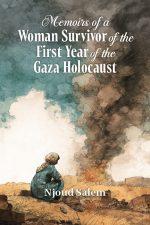
Memoirs of a Woman Survivor of the First Year of the Gaza Holocaust
USD $ 0.01 USD $ 15Price range: USD $ 0.01 through USD $ 15Select options This product has multiple variants. The options may be chosen on the product page
Memoirs of a Woman Survivor of the First Year of the Gaza Holocaust
USD $ 0.01 USD $ 15Price range: USD $ 0.01 through USD $ 15Stop press
We have just learned that this book has won a prize from the Eyelands Book Awards https://eyelandsawards.com/2025/12/30/2025-prize-grand-prize-winners/
Congratulatons Njoud Salem!!
These memoirs bear witness to the harrowing reality of survival during the devastating war on Gaza. Through vivid personal narratives, they capture the daily struggle for existence—the scarcity of food and water, the constant threat of bombardment, and the profound psychological trauma. Yet, they delve far deeper than mere physical survival, exploring the profound wounds of displacement: the heartbreak of leaving behind a home, a street, a neighborhood, and the irreplaceable fragments of a life forever shattered.
The pages reveal families huddled in schools-turned-shelters, sharing morsels of bread and whispering prayers for a safe dawn. This collection is both a testament and an act of resistance. It refuses to let the world reduce human beings to mere statistics, insisting instead on honoring every story, every face, and every name. It bears witness not only to the destruction but also to the unbroken spirit of a people determined to live, dream, and rise again.
While rooted in immense suffering, these narratives are also profound meditations on dignity, love, and an unshakable will to persevere. At once personal and collective, they amplify the voices of a generation too often silenced by conflict, posing urgent questions about justice, memory, and the future. They ensure these essential stories are never buried beneath rubble or lost to cold statistics.
In the midst of fire and fear, these words declare: “We are still here. We remember.” This act of testimony—to feel, to survive, and to hold onto love when the world offers none—becomes the most honest act of living. Through these pages, the reader is invited not only into a world of unimaginable hardship but also into the profound depths of human endurance, the richness of Arab culture, and the unwavering faith that guides a people forward.
Select options This product has multiple variants. The options may be chosen on the product page