
-
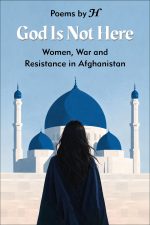
God Is Not Here
God Is Not Here is a collection of 50 poems written in response to the profound political, social, and human crisis in Afghanistan, particularly the systematic erasure of women from public life under an extremist and patriarchal regime. Through poetry, the collection records the experiences of women living under restrictions, fear, forced silence, and the loss of their fundamental freedoms.
At the heart of the collection is the belief that writing can be an act of resistance. When women are denied the right to speak, study, work, move freely, and participate in society, poetry becomes a way of reclaiming voice and presence. These poems transform personal pain, fear, anger, grief, and isolation into language, testimony, and resistance.
The collection moves between intimate and collective experiences. Kabul and Kandahar appear as landscapes marked by grief, memory, war, silence, and survival. Images of walls, abandoned cities, mosques, darkness, pomegranates, flowers, butterflies, and women’s bodies create a tension between confinement and freedom, death and life, silence and speech.
The poems also question the use of religion and morality as instruments of control, confronting the contradictions between religious rhetoric and the violence inflicted upon women in its name. At the same time, the collection insists that women remain capable of hope, dignity, awareness, and resistance even under extreme conditions.
The central argument is that the suffering of Afghan women must not disappear into silence or be forgotten by history. The poems seek to preserve the voices and experiences of women who have been pushed out of public space and to challenge the idea that silence means consent.
Ultimately, God Is Not Here is both a personal and collective act of resistance: an attempt to turn pain into art and confinement into voice, and a testament to the power of the pen and a hope for freedom and awareness.
-
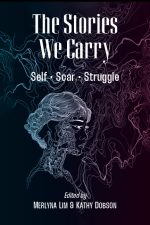
The Stories We Carry
USD $ 25Select options This product has multiple variants. The options may be chosen on the product page
The Stories We Carry
USD $ 25The Stories We Carry is a compelling collection of essays that explore identity, trauma, and resilience through deeply personal narratives. Edited by Merlyna Lim and Kathy Dobson, this volume brings together twenty-two contributors—academics, artists, journalists, and storytellers—who refuse to separate personal experience from scholarly inquiry.
The collection unfolds in three interconnected movements: Self, Scar, and Struggle, examining how identity is shaped through history, gender, embodiment, and migration; how trauma and exclusion leave lasting marks; and how survival requires ongoing negotiation with institutions, technology, and community. Each essay is accompanied by hand-drawn illustrations, making the personal visible and visceral.
The contributors challenge academic conventions that dismiss personal writing as less rigorous, arguing instead that the narrated self is a legitimate site of knowledge. Their stories address Islamophobia, poverty, colonialism, queerness, neurodivergence, immigration bureaucracy, and the politics of belonging. This is not a book seeking inclusion in broken institutions, but one that insists the table itself must be rebuilt. It asks readers to sit with complexity, contradiction, and the unfinished work of being human.
Select options This product has multiple variants. The options may be chosen on the product page -
Form as History
USD $ 12 USD $ 16Price range: USD $ 12 through USD $ 16Select options This product has multiple variants. The options may be chosen on the product page
Form as History
USD $ 12 USD $ 16Price range: USD $ 12 through USD $ 16Form as History: When History No Longer Requires Us offers a concise and penetrating critique of contemporary historical thought. It argues that while modern scholarship has made Muslim life increasingly legible as a site of ethics, resistance, and normativity, this achievement can obscure a more unsettling condition: that history itself has learned to proceed without requiring meaning, address, or human obligation.A rigorous and unsettling meditation on what it means to live in a world where history continues to function, but no longer feels compelled to answer to human life.The book turns on a central tension. On one side stands the European figure of the Muselmann, drawn from Holocaust testimony, who reveals history’s capacity to continue efficiently while no longer demanding anything from the humans it governs. This is not loss, but abandonment. On the other side stands the Muslim, rendered in modern discourse as a knowable and agentive subject of history. The book shows how an emphasis on this agency can function as a displacement, allowing the radical danger exposed by the Muselmann—history’s indifference to human address—to be misread as a cultural or religious condition.What becomes of history when it no longer requires struggle, meaning, or even us, yet continues efficiently all the same?Refusing nostalgia and moralizing alike, the book examines how forms of life, particularly within Muslim legal and commercial traditions, have sustained obligation and necessity even after political centrality receded. Its aim is diagnostic rather than prescriptive: to make visible the quiet threshold where life is managed rather than addressed, and to clarify how historical necessity depends not on power or visibility, but on the survival of forms that still compel the world to answer.
Select options This product has multiple variants. The options may be chosen on the product page