
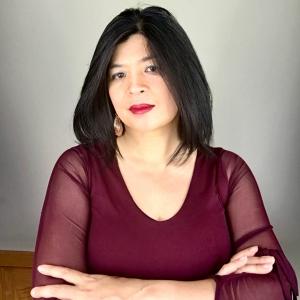
 Merlyna Lim is a Canada Research Professor in Digital Media and Global Network Society at Carleton University. Born and raised in Dayeuhkolot, an industrial slum in Bandung, Indonesia, she is now based in Ottawa and works internationally across research, creative practice, and public scholarship. She directs the ALiGN Media Lab, where she examines technology, power, and social justice through interdisciplinary and creative approaches. Her books include Social Media and Politics in Southeast Asia (2025), Hands: Medium and Massage (2020), and Online Collective Action (2014). An award-winning scholar, author, and artist, Lim was inducted into the Royal Society of Canada’s College of New Scholars, Artists, and Scientists in 2016, won the 2017 Jackson’s Art International Urban Sketching Contest, and received the 2025 Heritage Ottawa Gordon Cullingham Award.
Kathy Dobson is an award-winning journalist, author, and scholar based in Ottawa, Canada. Her work has appeared in the Globe and Mail, CBC, and numerous other national publications. She is the author of two memoirs, With a Closed Fist: Growing Up in Canada’s Toughest Neighbourhood and Kicking and Punching: Leaving Canada’s Toughest Neighbourhood (Véhicule Press), both of which have been taught in schools across Canada. Her writing is grounded in more than two decades of work with marginalized communities and a lifelong commitment to telling stories often left at the edges of public conversation. She holds a PhD in Communication and Media Studies and is currently Managing Editor of ALiGN, the digital media lab at Carleton University.
-
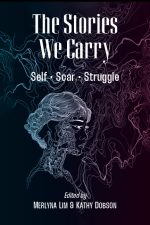
The Stories We Carry
USD $ 25Select options This product has multiple variants. The options may be chosen on the product page
The Stories We Carry
USD $ 25The Stories We Carry is a compelling collection of essays that explore identity, trauma, and resilience through deeply personal narratives. Edited by Merlyna Lim and Kathy Dobson, this volume brings together twenty-two contributors—academics, artists, journalists, and storytellers—who refuse to separate personal experience from scholarly inquiry.
The collection unfolds in three interconnected movements: Self, Scar, and Struggle, examining how identity is shaped through history, gender, embodiment, and migration; how trauma and exclusion leave lasting marks; and how survival requires ongoing negotiation with institutions, technology, and community. Each essay is accompanied by hand-drawn illustrations, making the personal visible and visceral.
The contributors challenge academic conventions that dismiss personal writing as less rigorous, arguing instead that the narrated self is a legitimate site of knowledge. Their stories address Islamophobia, poverty, colonialism, queerness, neurodivergence, immigration bureaucracy, and the politics of belonging. This is not a book seeking inclusion in broken institutions, but one that insists the table itself must be rebuilt. It asks readers to sit with complexity, contradiction, and the unfinished work of being human.
Select options This product has multiple variants. The options may be chosen on the product page