
-
The Stories We Carry
USD $ 25Select options This product has multiple variants. The options may be chosen on the product page
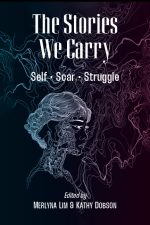
The Stories We Carry
USD $ 25The Stories We Carry is a compelling collection of essays that explore identity, trauma, and resilience through deeply personal narratives. Edited by Merlyna Lim and Kathy Dobson, this volume brings together twenty-two contributors—academics, artists, journalists, and storytellers—who refuse to separate personal experience from scholarly inquiry.
The collection unfolds in three interconnected movements: Self, Scar, and Struggle, examining how identity is shaped through history, gender, embodiment, and migration; how trauma and exclusion leave lasting marks; and how survival requires ongoing negotiation with institutions, technology, and community. Each essay is accompanied by hand-drawn illustrations, making the personal visible and visceral.
The contributors challenge academic conventions that dismiss personal writing as less rigorous, arguing instead that the narrated self is a legitimate site of knowledge. Their stories address Islamophobia, poverty, colonialism, queerness, neurodivergence, immigration bureaucracy, and the politics of belonging. This is not a book seeking inclusion in broken institutions, but one that insists the table itself must be rebuilt. It asks readers to sit with complexity, contradiction, and the unfinished work of being human.
Select options This product has multiple variants. The options may be chosen on the product page -
Faces of Horror
USD $ 6 USD $ 12Price range: USD $ 6 through USD $ 12Select options This product has multiple variants. The options may be chosen on the product page
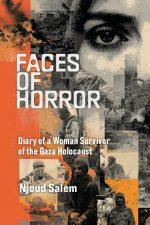
Faces of Horror
USD $ 6 USD $ 12Price range: USD $ 6 through USD $ 12Faces of Horror is the searing, first-hand testimony of Njoud Salem, a Palestinian woman and mother documenting the near-total annihilation of life in Gaza. This diary chronicles the daily fight for survival against a relentless Israeli military campaign, capturing the genocide with an intimacy that no news report can convey.
The narrative begins on October 7, 2023, with the first thunder of rockets, and unfolds as Njoud, her husband, and their three young sons are violently uprooted from their home. They are thrust into a desperate odyssey for refuge, fleeing from hospitals turned into battlefields to the squalid tent cities of the south. The journal is a stark record of the “second Nakba”—a landscape of relentless bombing, starvation, and the systematic dehumanization of a people. Through her account, we witness the destruction of her cherished home and all her material possessions, yet she clings fiercely to her faith and the love for her family.
More than a war diary, Face of Horror is a profound meditation on human endurance and the indomitable will to bear witness. It serves as a critical, primary source document from a survivor of a Holocaust, a challenge to the world’s conscience, and a testament to the spirit of Gaza that refuses to be erased, even as it is buried under the rubble of a world that has turned its back.
Select options This product has multiple variants. The options may be chosen on the product page -
I Survived by Mistake
USD $ 10 USD $ 20Price range: USD $ 10 through USD $ 20Select options This product has multiple variants. The options may be chosen on the product page
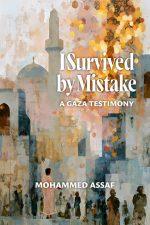
I Survived by Mistake
USD $ 10 USD $ 20Price range: USD $ 10 through USD $ 20This deeply personal and introspective work explores survival—not merely physical survival, but emotional and spiritual endurance through love, war, and loss. Written by a Palestinian author against the backdrop of the Gaza genocide, the book weaves together reflections on love, betrayal, killings, displacement, and the search for meaning in a world stripped of humanity.
The narrative oscillates between intimate romantic relationships and the brutal realities of life under bombardment. The author chronicles a turbulent love affair marked by passion, jealousy, betrayal, and eventual dissolution, examining how relationships fracture under the weight of pride, misunderstanding, and external pressures. Simultaneously, he documents the devastating experience of genocidal attacks by Israel in Gaza: displacement, hunger, the loss of loved ones, the daily struggle for survival, and the erosion of human dignity.
Central themes include the nature of survival—questioning whether mere existence constitutes living, and whether those who survive emerge intact or fundamentally altered. The author grapples with grief over the death of his grandmother, the loss of his beloved, and the collective trauma of a people under siege. He explores the tension between hope and despair, the betrayal of humanitarian aid systems, the corruption of values in times of crisis, and the profound loneliness of carrying unspoken pain.
Writing serves as both confession and catharsis—an attempt to staunch internal bleeding and make sense of chaos. The prose is poetic, fragmented, and emotionally raw, reflecting the author’s belief that true survivors do not write; they simply endure. Ultimately, the book is a testament to the impossibility of returning unchanged from love or genocidal attacks, and the quiet dignity of continuing despite everything.
Select options This product has multiple variants. The options may be chosen on the product page -

El Precio de la Dignidad
USD $ 21Select options This product has multiple variants. The options may be chosen on the product page
El Precio de la Dignidad
USD $ 21Este libro narra la conmovedora historia de Patrocinia Polanco Rivas, una campesina salvadoreña que personifica la lucha por la dignidad en medio de la adversidad. A través de su testimonio y el análisis del autor Andrés McKinley, la obra recorre su vida, desde una infancia marcada por la pobreza extrema y la opresión de la oligarquía cafetalera, hasta su participación en la guerra civil como operadora de radio del FMLN tras el asesinato de su mentor, el padre Rutilio Grande. La guerra le arrebata a su padre, pero forja en ella una resistencia inquebrantable.
Tras los Acuerdos de Paz de 1992, la esperanza de una vida digna se desvanece ante la persistente pobreza y las políticas neoliberales que mantienen a las familias campesinas en la miseria. Para sobrevivir, Patrocinia trabaja incansablemente cortando caña de azúcar, mientras la falta de oportunidades lleva a su esposo y, posteriormente, a sus seis hijos a emprender el peligroso viaje migratorio hacia Estados Unidos. El libro documenta los horrores de este periplo: el abandono, la extorsión, el secuestro y la constante amenaza de la muerte.
Una vez en el norte, los hijos de Patrocinia se enfrentan a la dura realidad de la vida indocumentada y a la maquinaria represiva del ICE, especialmente bajo la administración de Donald Trump. La autora establece un poderoso paralelismo entre la violencia de los escuadrones de la muerte en El Salvador y la persecución sistemática de los migrantes.
El Precio de la Dignidad es un testimonio de la resiliencia humana, mostrando que la dignidad no reside en el éxito de la lucha, sino en la propia lucha, un legado que Patrocinia heredó de su padre. El libro se erige como un recordatorio urgente de las consecuencias humanas de la guerra, de la injusticia económica y de las políticas migratorias despiadadas.
Select options This product has multiple variants. The options may be chosen on the product page -
Breaking the Chains of Silence
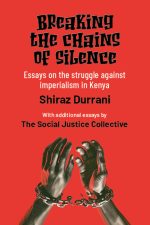
Breaking the Chains of Silence opens where any serious account of Kenya must begin: with silence. But this is not the quiet of peace or the calm of justice. It is a manufactured silence—forged by land theft, detention, exile, assassinations, police bullets, and media too intimidated to print the truth. It is the silence that follows the gun and precedes the next uprising.
This book bravely refuses that silence. It dismantles the comfortable myth that Kenya became free simply because a flag was raised in 1963. It rejects the official narrative that the struggle ended with independence, leaving citizens as spectators while a small elite inherited the state, the land, the police, and the economy. Instead, it insists that Kenya’s real history is not the story of presidents, but of working people—first fighting colonialism, then confronting the imperialism that survived under new flags and through local agents.
Crucially, the book refuses to imprison resistance in the past. It reads the present with urgency, seeing the courage of the Gen Z movement, the defiance of the RutoMustGo protests, and the young people who walked into streets patrolled by a contemptuous state. It sees their rejection of taxation, corruption, and police violence. Yet it refuses to flatter that moment into myth. It insists that spontaneous anger must evolve into organisation, protest into political education, and generational revolt must find its class foundation. The cry of the youth must meet the power of workers.
While the essays engage with current contradictions, they remain rooted in theory—one essential element for revolutionary change. The other is practice: putting ideas into action and facing the enemy where bullets and prisons are the reality. This combination of theory and practice lays the groundwork for a people’s revolution. It is for this reason the book includes Gathanga Ndung’u’s vital essay, From Mau Mau to Ruto Must Go: A Genealogy of Resistance, which connects historical struggle to today’s frontline.
-
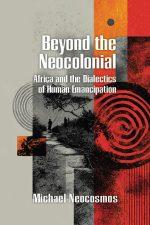
Beyond the Neocolonial
USD $ 7.99 USD $ 30Price range: USD $ 7.99 through USD $ 30Select options This product has multiple variants. The options may be chosen on the product page
Beyond the Neocolonial
USD $ 7.99 USD $ 30Price range: USD $ 7.99 through USD $ 30Humanity faces existential crises driven by the persistence of neocolonial capitalism and a state form that continues to de-humanise the majority. In Beyond the Neocolonial, Michael Neocosmos argues that the failure to enable, let alone to realise the popular desire for freedom in post-independence Africa lies in the continuity of the colonial state and the dominance of analytical, statist thought over the transformative power of the dialectic.
Tracing the genealogy of emancipatory politics from the ancient wisdom of Egypt’s Ma’at and Ionia’s isonomia to the revolutionary theories of Lenin, Mao, Fanon, and Cabral, Neocosmos asserts that politics must be understood as a collective thought-practice of universal equality. He challenges the “stasis” of the current world order by recovering silenced histories of African popular inventiveness: from the egalitarian society constructed by the Bossales in Haiti to the mass democratic experiments of the United Democratic Front in South Africa.
Critiquing the exhausted “party form” and the myth of the “heroic liberator,” the book highlights the emancipatory potential within African popular culture, arguing that proverbs and the Palaver contain latent prescriptions for resolving contradictions and healing community. This work is a call to abandon the “epistemology of ignorance” and revive a dialectics of becoming, locating the agency for a truly human future not in the state, but in the masses who make history.
Listen to Michael Neocosmos talking about his book.
Table of Contents
Three Poems by Bertolt Brecht, Okot p’Bitek, and Yannis Ritsos
Dedications and Acknowledgments
Prefatory Remark
In Lieu of a Foreword: some inspirational declarations and metaphors
Introduction: what is to be thought?
1. Politics as a Collective Thought-Practice and Human Emancipation as its Essence: thinking the common good
2. The Ancients and the Thought of Politics: arkhē and the dialectic of physis and nomos
3. Sourcing an Emancipatory Politics for Today: reviewing the classics
4. Thinking Emancipatory Politics through African Popular Culture
5. Resolving Contradictions among the People and the Dialectical Emancipatory Potential of Proverbial Metaphors
6. Haiti from Inventive Popular Sovereignty to Neocolonial State
7. Beyond the Party Form? An alternative political experiment and the figure of the heroic liberator
8. Democracy as Perverted Freedom: the anatomy of the African neocolonial state
Conclusion: silencing as analytical procedure in political theory and practice
References
Author bio
Select options This product has multiple variants. The options may be chosen on the product page -
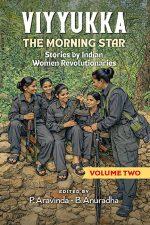
Viyyukka – The Morning Star (Vol 2)
USD $ 5 USD $ 26Price range: USD $ 5 through USD $ 26Select options This product has multiple variants. The options may be chosen on the product page
Viyyukka – The Morning Star (Vol 2)
USD $ 5 USD $ 26Price range: USD $ 5 through USD $ 26Edited by P. Aravinda and B. Anuradha
This second volume of Viyyukka continues the powerful anthology of stories written by women revolutionaries in India’s Maoist movement, translated from Telugu to English. The collection brings together narratives penned by guerrilla soldiers who document their lived experiences within the revolutionary struggle, offering rare insights into the intersection of armed resistance, gender politics, and Adivasi community life.
The stories span four decades of revolutionary movement history, capturing both tactical engagements and intimate human moments—love, loss, camaraderie, and daily existence in guerrilla squads. What distinguishes this volume is the inclusion of autobiographical sketches by Adivasi women, narrated in their own tongues, detailing the circumstances that led them to become guerrillas. These first-person accounts reveal how poverty, land dispossession, state repression, and patriarchal violence converge to shape revolutionary consciousness.
Set primarily in the Dandakaranya forest region spanning multiple Indian states, the narratives illuminate the movement’s efforts to build alternative structures of governance through Janatana Sarkars (people’s governments), which implemented collective farming, education, healthcare, and resistance to mining corporations. The stories confront the brutal reality of state counter-insurgency operations including Salwa Judum and Operation Green Hunt, while celebrating the resilience of women who constitute nearly half the guerrilla army.
The collection demonstrates how women revolutionaries perform multiple roles—soldiers, writers, historians, doctors, and teachers—documenting their own history while fighting for land, dignity, and self-determination. These are not conventional fictions but testimonies written under extreme duress, smuggled across regions and preserved against overwhelming odds, offering a window into one of India’s most significant contemporary resistance movements.
This is a powerful and timely book. Reading Viyyukka is to encounter history in its most urgent form: not as abstract doctrine, but as the lived, written, and too-often silenced testimony of women for whom the pen was as vital as the gun. This anthology does not simply add voices to a historical record; it fundamentally questions the record itself. By foregrounding the female guerrilla imaginary—with its profound complexities of comradeship, grief, motherhood, and even the critique of revolutionary justice—these stories exceed the boundaries of political propaganda to become essential documents of human endurance and creativity. In a time when their politics is declared defeated, the women of Viyyukka remind us that some struggles are not measured by victory alone, but by the indestructible insistence on bearing witness. — Sharmila Purkayastha, independent researcher, New Delhi
Select options This product has multiple variants. The options may be chosen on the product page -
![Viyyukka - The Morning Star [1]](https://darajapress.com/wp-content/uploads/2025/10/Viyyukka_lo-150x225.jpg)
Viyyukka – The Morning Star [1]
USD $ 10 USD $ 20Price range: USD $ 10 through USD $ 20Select options This product has multiple variants. The options may be chosen on the product page
Viyyukka – The Morning Star [1]
USD $ 10 USD $ 20Price range: USD $ 10 through USD $ 20Viyyukka: The Morning Star is a rare and compelling anthology of stories written in Telugu over four decades by nearly fifty Maoist women revolutionaries in India. The title, Viyyukka, is a Gondi word meaning morning star. This collection is unique because these narratives are not traditional fiction; they are “lived experiences written from within the movement” while the authors served as guerrilla soldiers, often under extreme duress.
The stories offer a vital glimpse into the human dimensions of armed struggle, highlighting the agency, resilience, and moral consciousness of the women participants. The authors, active in India’s ongoing revolutionary conflict, document everything from tactical and ideological engagements to intimate realities such as love, loss, and camaraderie within their squads.
At its core, the Morning Star series centers on the fierce struggle for survival: of people, forests, rivers, and a way of life. The narratives capture how local struggles against exploitation and dispossession evolved into a wider movement challenging the “Iron Heel of the Indian State” and global capital.
Geographically rooted in Central Indian regions like Dandakaranya, the book vividly portrays the Adivasi (indigenous) resistance for the defense of jal, jangal, and jameen (water, forest, and land). The resistance documented in these pages, particularly against corporate mining and state repression, shares a “common thread” with the struggles of indigenous communities across the globe, positioning this collective testimony as a crucial document of resistance against colonial and capitalist forces.
This is a powerful and timely book. Reading Viyyukka is to encounter history in its most urgent form: not as abstract doctrine, but as the lived, written, and too-often silenced testimony of women for whom the pen was as vital as the gun. This anthology does not simply add voices to a historical record; it fundamentally questions the record itself. By foregrounding the female guerrilla imaginary—with its profound complexities of comradeship, grief, motherhood, and even the critique of revolutionary justice—these stories exceed the boundaries of political propaganda to become essential documents of human endurance and creativity. In a time when their politics is declared defeated, the women of Viyyukka remind us that some struggles are not measured by victory alone, but by the indestructible insistence on bearing witness. — Sharmila Purkayastha, independent researcher, New Delhi
Select options This product has multiple variants. The options may be chosen on the product page -
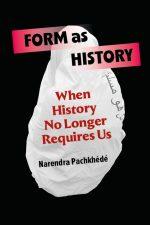
Form as History
USD $ 12 USD $ 16Price range: USD $ 12 through USD $ 16Select options This product has multiple variants. The options may be chosen on the product page
Form as History
USD $ 12 USD $ 16Price range: USD $ 12 through USD $ 16Form as History: When History No Longer Requires Us offers a concise and penetrating critique of contemporary historical thought. It argues that while modern scholarship has made Muslim life increasingly legible as a site of ethics, resistance, and normativity, this achievement can obscure a more unsettling condition: that history itself has learned to proceed without requiring meaning, address, or human obligation.A rigorous and unsettling meditation on what it means to live in a world where history continues to function, but no longer feels compelled to answer to human life.The book turns on a central tension. On one side stands the European figure of the Muselmann, drawn from Holocaust testimony, who reveals history’s capacity to continue efficiently while no longer demanding anything from the humans it governs. This is not loss, but abandonment. On the other side stands the Muslim, rendered in modern discourse as a knowable and agentive subject of history. The book shows how an emphasis on this agency can function as a displacement, allowing the radical danger exposed by the Muselmann—history’s indifference to human address—to be misread as a cultural or religious condition.What becomes of history when it no longer requires struggle, meaning, or even us, yet continues efficiently all the same?Refusing nostalgia and moralizing alike, the book examines how forms of life, particularly within Muslim legal and commercial traditions, have sustained obligation and necessity even after political centrality receded. Its aim is diagnostic rather than prescriptive: to make visible the quiet threshold where life is managed rather than addressed, and to clarify how historical necessity depends not on power or visibility, but on the survival of forms that still compel the world to answer.
Select options This product has multiple variants. The options may be chosen on the product page -

WItness to War
USD $ 10 USD $ 26Price range: USD $ 10 through USD $ 26Select options This product has multiple variants. The options may be chosen on the product page
WItness to War
USD $ 10 USD $ 26Price range: USD $ 10 through USD $ 26Witness to War: An American Doctor in El Salvador offers a personal account of Dr. Charles Clements’ year-long mission providing medical care behind rebel lines during El Salvador’s brutal civil war from 1981-1982. Clements, a former decorated U.S. Air Force pilot disillusioned by his Vietnam experiences, transformed into a Quaker doctor committed to non-violence and the principle of “bearing witness”—observing a situation firsthand and speaking truth about power.
The book chronicles his harrowing struggle, at times one of only two fully trained physicians, for approximately 10,000 people in a guerrilla-controlled zone, confronting “scenes of almost unbelievable horror” and an “anguished view of the low value on life”. With virtually no supplies, Clements improvised, performing amputations with a Swiss Army knife and suturing with dental floss, all while battling dysentery, malaria, and hunger himself. His narrative is extraordinarily restrained yet both disturbing and gripping.
Witness to War serves as a testimony from behind the lines, vividly portraying a conflict of constant aerial bombardments by U.S.-supplied aircraft. Clements’ commitment to medical neutrality, treating any patient regardless of their affiliation, is a central theme, challenging readers to confront uncomfortable truths about U.S. foreign policy and the immense human cost of conflict. This new edition, published decades later, underscores the enduring relevance of imperialism and militarism, urging new generations to reflect on their potential impact on the Global South.
First published in 1984, and again in 1985, the book has long been out of print. This is an expanded edition including materials previously absent in previous editions.
Select options This product has multiple variants. The options may be chosen on the product page -
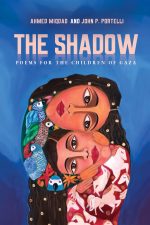
The Shadow
USD $ 0.01 USD $ 16Price range: USD $ 0.01 through USD $ 16Select options This product has multiple variants. The options may be chosen on the product page
The Shadow
USD $ 0.01 USD $ 16Price range: USD $ 0.01 through USD $ 16Discover The Shadow: Poems for the Children of Gaza, a poignant collection by Palestinian poet Ahmed Miqdad and Maltese-Canadian poet John P. Portelli. Written amidst the horrors of Gaza’s genocide and the personal battle with cancer, these 42 poems bear witness to the intersection of political violence and personal mortality. Through raw emotion and lyrical defiance, the poets forge solidarity across borders, offering a glimmer of hope in the face of erasure.
Featuring evocative art by Malak Mattar and a foreword by Professor Jamil Khader, this collection is a call to remember, resist, and reclaim humanity. A portion of proceeds will support Palestinian relief efforts.
Select options This product has multiple variants. The options may be chosen on the product page -

Being Anti-Colonial
USD $ 5 USD $ 25Price range: USD $ 5 through USD $ 25Select options This product has multiple variants. The options may be chosen on the product page
Being Anti-Colonial
USD $ 5 USD $ 25Price range: USD $ 5 through USD $ 25Being Anti-Colonial by Jayan Nayar presents a profound critique of the contemporary engagements with ‘decolonial theory’ and the popular usage of ‘decolonisation’. This work argues that much of the current discourse within critical theory tends to overlook the intricate, essentially praxiological underpinnings of the anti-colonial struggle, thereby comfortably situating itself within the post-colonial status quo. Nayar’s book serves as a radical call to authentically re-engage with the anti-colonial ethos, emphasizing the necessity to confront the enduring architectures of coloniality that define our present. Distinctly divided into two parts, the book first elucidates the conceptual groundwork to reconceptualise ‘anti-colonial’ as a philosophical stance deeply entwined with the fabric of the global (post)colonial reality. Through meticulously argued philosophical foundations, Nayar underscores the (post)colonial present as a state of ‘resettlement’, where the architecture of post-colonial world-making loses sight of its colonial matrices. Being Anti-Colonial is both an invitation and a challenge to the academic community to critically revisit and re-energize the conversation about coloniality.
With his impressive scholarship, Jayan Nayar challenges critics of coloniality, himself included, to question their standpoints. Critical scholars are implicated in assuming the reality of a post-colonial world as ‘(b)ordered’ but requiring reform and justice. Through an incisive critique of coloniality, of the idea of ‘Europe’ of ‘Blacked Lives Matter’ of ‘Zionist-Israelism’, he demands engagement on the frontline of anti-colonial struggles of the violated, subjugated, impoverished ‘subjects’ of (post) colonial normality. — Abdul Paliwala, Professor of Law at School of Law, University of Warwick
Select options This product has multiple variants. The options may be chosen on the product page -
 Select options This product has multiple variants. The options may be chosen on the product page
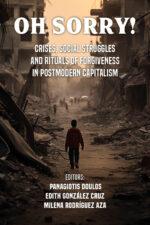
Oh, Sorry! Rituals of Forgiveness, Crises and Social Struggles in Postmodern Capitalism
USD $ 20As the world grapples with the legacy of crimes of enslavement, colonialism, genocide and mass killings, imprisonment and murder of children, attempts at eliminating cultures and history of Indigenous peoples, looting and other crimes against humanity, the performance of public atonement has become increasingly prevalent. Apologies from state actors and institutions are issued in solemn ceremonies, often acknowledging the collective guilt for historical atrocities. Despite the solemnity of these events, there is a growing scepticism surrounding the sincerity of these apologies, particularly when they are not accompanied by tangible reparations, healing, reconciliation or systemic change. This scepticism is rooted in a perception that these acts of contrition are sometimes less about making amends to the aggrieved and more about assuaging the guilt of the aggressors and maintaining the status quo, providing the illusion of progress without the substance.
In this compelling work, Oh, Sorry! Rituals of Forgiveness, Crises and Social Struggles in Postmodern Capitalism, the authors unveil the complex interplay between public apologies, social justice and popular mobilisations. The chapters are devoted primarily to the experiences of Latin America, particularly of Mexico, Guatemala, Chile, and Brazil. But there is also a chapter on the struggles for Palestine — so relevant in the face of the current genocidal invasion by the Zionist State of Israel into Gaza, the world’s largest and most densely populated concentration camp.Select options This product has multiple variants. The options may be chosen on the product page -
 Select options This product has multiple variants. The options may be chosen on the product page
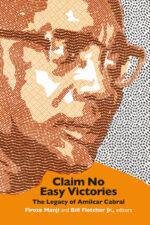
Claim No Easy Victories: The Legacy of Amilcar Cabral
USD $ 26“Never has it been more certain that our victory depends principally on our own actions. Tell no lies, claim no easy victories . . .” —Amílcar Cabral On the centennial of Amílcar Cabral’s birth, and fifty years after his passing, Claim No Easy Victories brings to life the resonance of his thought for today’s freedom movements. World-renowned revolutionary, poet, liberation philosopher, and leader of the anticolonial independence movement of Guinea Bissau and Cape Verde, Amílcar Cabral’s legacy stretches well beyond the shores of West Africa. His profound influence on the pan-Africanist movement and the Black liberation movement in the United States and the English-speaking world spans the ages—and is only growing in an era of renewed anti-imperialist internationalist struggle. In this unique collection of essays, radical thinkers from across Africa, the United States, and internationally commemorate Cabral’s life and legacy and his relevance to contemporary struggles for self-determination and emancipation. Claim No Easy Victories serves equally as an introduction or reintroduction to a figure and militant history that the rulers and beneficiaries of global racial capitalism would rather see forgotten. Understanding Cabral then and now sheds light on the necessity of grounding radical change in the creation of theory based on the actual conditions within which movements develop. The depth and dimension of Cabral’s theoretical ideas and revolutionary practice of building popular movements for liberation are assessed by each of the authors and critically reanimated for a new generation of freedom fighters. The book features contributions by: Kali Akuno, Samir Amin, David Austin, Jesse Benjamin, Angela Davis, Bill Fletcher Jr, Mireille Fanon-Mendès France, Lewis Gordon, Firoze Manji, Asha Rodney, Patricia Rodney, Olúfémi Táíwò—and others.
Select options This product has multiple variants. The options may be chosen on the product page -

I see the invisible
USD $ 5 USD $ 20Price range: USD $ 5 through USD $ 20Select options This product has multiple variants. The options may be chosen on the product page
I see the invisible
USD $ 5 USD $ 20Price range: USD $ 5 through USD $ 20Truth be told, I never thought I would write another volume of poetry after the last, I will not Dance to Your Beat (2011). The reason was that my previous volumes were reactive to the circumstances of the times. Patriots and Cockroaches (1992) was a reaction to the socio-political corruption that had engulfed Africa and dimmed the enthusiasm that had been built by the years of struggle for independence. Whereas we thought we were stepping into a post-colonial era, what we stepped into was a vicious neo-colonial times. The next collection, Poems on the Run (1995) was a reaction to military autocracy and the repression that followed. The volume was literally written underground. This was followed by Intercepted (1998) all written while detained at Kalakuta Republic of Alagbon Close. We Thought it was Oil But it was Blood (2002) responded to two things primarily – extractivism and the accompanying human and environmental rights abuses in the Niger Delta and elsewhere. The massive erosion of biodiversity and attacks on food sovereignty through the introduction of genetically modified organisms (GMOs) into our agricultural system inspired I Will not Dance to your Beat.
What you have in your hands, or on your screens, is a compilation that is largely more meditative than the previous collections. There are moments of reflection on the colonial and neoliberal foundations that permit a willful disconnection from nature and the resultant destructive extractivism.
Some of the poems came through conversations and poetry writing sessions with Peter Molnar, Maryam al-Khawaja — Rafto Human Rights laureates and Salil Tripathi, a member of the board of PEN International, in August 2017. The sessions held at a beautifully rustic location in Celleno, Italy, were documented on celluloid by the duo of Maria Galliana Dyrvik and Anita Jonsterhaug Vedå of SMAU, a multimedia firm in Norway. Poetic relationship with Maria and Anita has continued over the years and their work continues to inspire more and more poems.
Select options This product has multiple variants. The options may be chosen on the product page -
Rastafari Movement, The: A Beginners Guide
USD $ 5 USD $ 15Price range: USD $ 5 through USD $ 15Select options This product has multiple variants. The options may be chosen on the product page
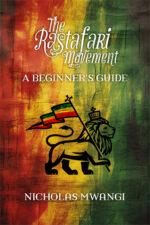
Rastafari Movement, The: A Beginners Guide
USD $ 5 USD $ 15Price range: USD $ 5 through USD $ 15Why is this book necessary today?
Rastafari: A Beginner’s Guide” holds immense relevance due to its unique approach to addressing the complex movement of Rastafarianism. It’s complex nature, encompassing elements of social movements, Pan-Africanism, Afrocentrism, philosophy, and religion, can be overwhelming for new readers. This book serves as an accessible introduction, providing a foundational understanding that caters to both Rastafarians and individuals with limited knowledge of the movement.
By delving into the essence of the Rastafari lifestyle beyond superficial attributes like dreadlocks and cannabis use, the book helps dispel misconceptions and offers a more accurate representation of the movement’s beliefs and principles. Further, this guide aids in shedding light on the depth and significance of Rastafarianism’s contributions to culture, spirituality, and social thought but also its philosophical challenges.
The book’s coverage of Rastafarianism’s historical trajectory and foundational values provides crucial context for understanding its development over time. By highlighting its evolution from its origins in Jamaican ghettoes to its expansion into a more inclusive and diverse community that includes professionals and the middle class, the book underscores the movement’s adaptability and relevance in changing societal landscapes.
Despite existing scholarly contributions, there remains a need for a concise, approachable guide that synthesizes the wealth of information available on Rastafarianism. This book fills that gap, providing readers with a comprehensive yet accessible overview that can serve as a starting point for further exploration.
Select options This product has multiple variants. The options may be chosen on the product page -
 Select options This product has multiple variants. The options may be chosen on the product page
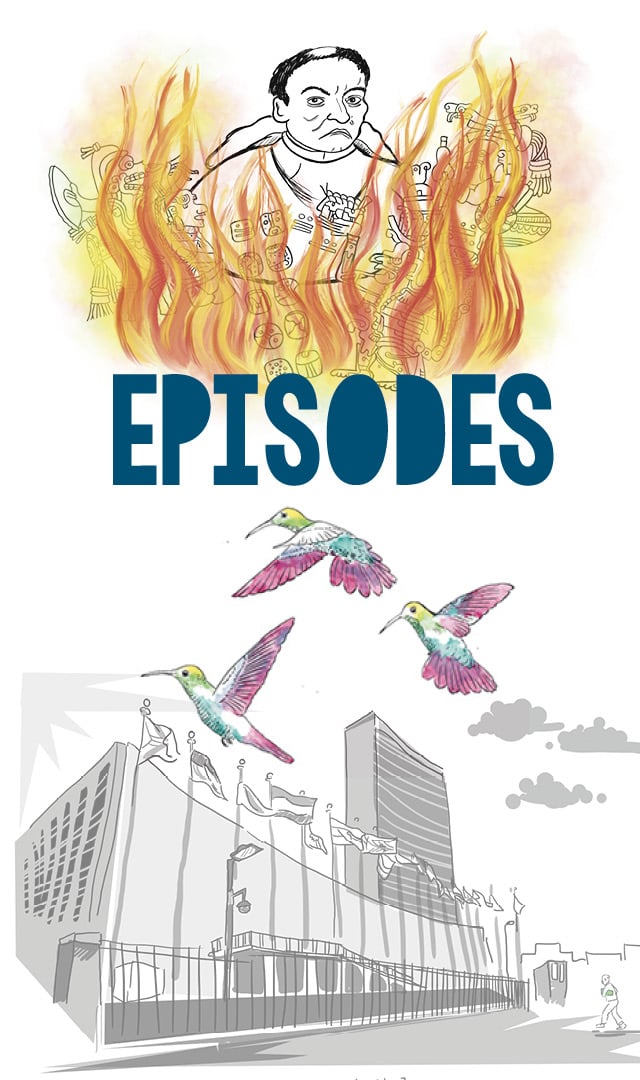
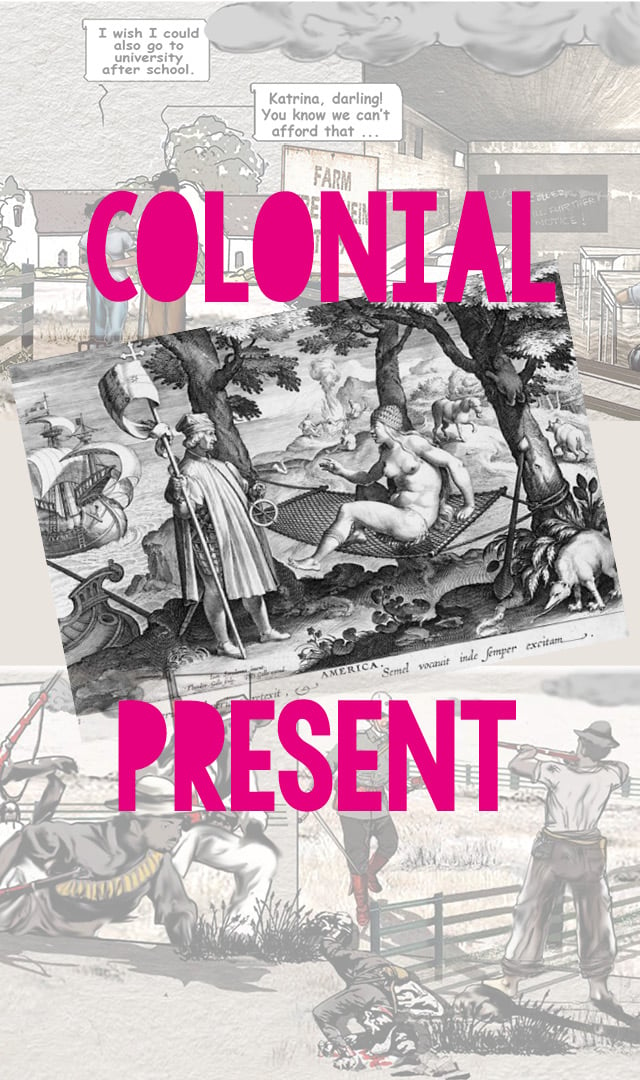
Episodes From a Colonial Present
Editors and Authors: Daniel Bendix, Chandra-Milena Danielzik, Franziska Müller, Lata Narayanaswamy, Juan Telleria, Miriam friz Trzeciak, Aram Ziai
Artists: Hangula Werner, Roshni Vyam, Michel Esselbrügge, Qi Zhou, RotmInas – Rotmi Enciso & Ina Riaskov, Maite Mentxaka Tena, Lena Ziyal
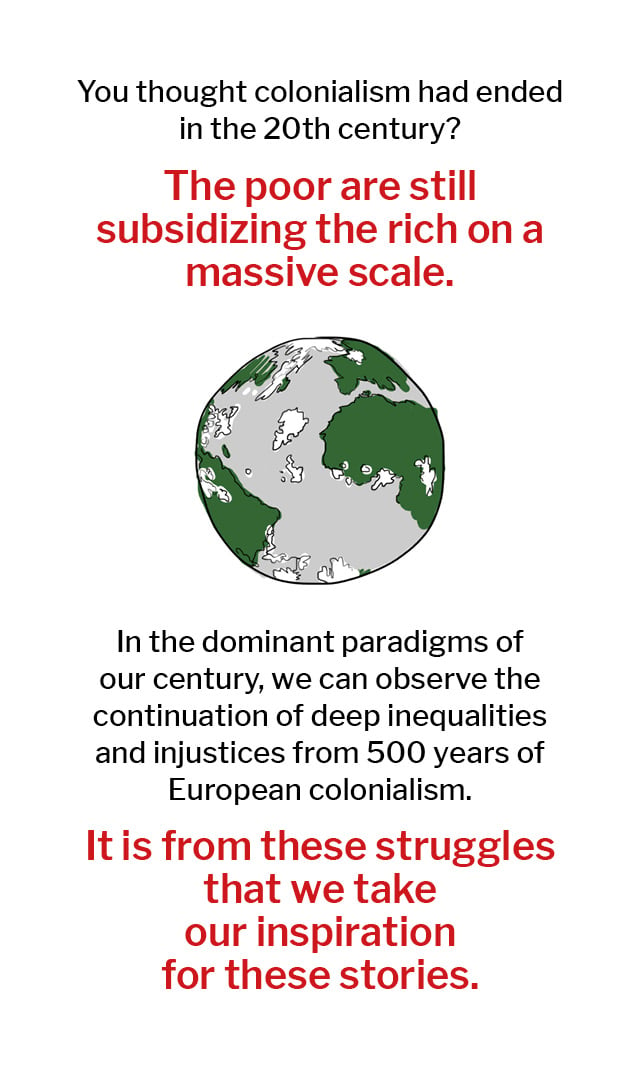
Postcolonial critique reveals the traces of the colonial past in every corner of our present lives and exposes the colonial violence inherent in global inequality. This collective comic project illuminates the coloniality of everyday life as well as the decolonising potential of everyday struggles in the spaces, discourses and practices of so-called global development.

Reviews
What an absolute impertinence! My lawyers are already involved. It’s just as well that I was able to use tax money for the purchase.
—Queen Elizabeth III love true crime books, but this one got a bit boring after a while. It could do with more bloodshed.
—Lothar von TrothaI added this book to my list to burn. Just saying.
—Diego de LandaA waste of time. So glad I didn’t buy it, but stole my copy.
—Christopher ColumbusI didn’t get it. Are they suggesting colonialism is not quite over?
—Harry S. TrumanSelect options This product has multiple variants. The options may be chosen on the product page -
Anticapitalist Economy in Rojava: The Contradictions of Revolution in the Kurdish Struggles
USD $ 5 USD $ 22Price range: USD $ 5 through USD $ 22Select options This product has multiple variants. The options may be chosen on the product page
Anticapitalist Economy in Rojava: The Contradictions of Revolution in the Kurdish Struggles
USD $ 5 USD $ 22Price range: USD $ 5 through USD $ 22This book looks at the anti-capitalist economy and the organization of social relations in the context of the revolution and autonomy of Rojava (Kurdistan-Syria). It questions both the limitations and the historical problems of the phenomenon of revolution, and the conflicts and contradictions that emerge in this process. It also draws from the conflicts and contradictions the author has consistently felt as a “political subject” who wants to change the world, especially through her experience in the Kurdish struggle and the Kurdish Movement. For this reason, every question she raises and attempts to answer in this book—about the Kurds, Rojava, and the world in general, involves what she says is her own subjectivity.
The idea and dreams of revolution have existed since humans created systems of domination. Indeed, revolution, meaning the liberation from systems of domination, has undoubtedly been one of the most discussed subjects in history. There have been moments when the possibility of revolution has been clearer, and there have also been certain agreements on what it is and how to get there, but it has never been something completely definable. This continues to be true today. This book does not intend to define this great phenomenon, rather it looks at the revolutionary practices that create emancipating realities and embraces revolution as an undefined, contradictory and dynamic process. Although the rulers have traditionally written history, the history of social struggles has been and is still being created by many revolutionary and transformational processes. The future is being shaped based on desired revolutions and the struggles that, in turn, transform their actors, the people. Therefore, the desire and quest of the Kurdish people for liberation from the colonial rule of the nation-states of the Middle East—the subject of this book—has always been directly linked to the phenomenon of revolution.Select options This product has multiple variants. The options may be chosen on the product page -
 Select options This product has multiple variants. The options may be chosen on the product page
Partitions of the Heart: Unmaking the Idea of India
USD $ 18In Partitions of the Heart: Unmaking the Idea of India, human rights and peace worker Harsh Mander takes stock of whether the republic has upheld the values it set out to achieve and offers painful, unsparing insight into the contours of hate violence. Through vivid stories from his own work, Mander shows that hate speech, communal propaganda and vigilante violence are mounting a fearsome climate of dread, that targeted crime is systematically fracturing our community, and that the damage to the country’s social fabric may be irreparable. At the same time, he argues that hate can indeed be fought, but only with solidarity, reconciliation and love, and when all of these are founded on fairness.
‘At last a book that turns a powerful searchlight on the evil tide of hatred and violence stalking our country, where our minorities live in fear, and Muslims among us are killed under a government that has declared war on Islam.’ —Nayantara Sahgal, journalist, author of Day of Reckoning: Stories (2015).
‘Harsh Mander’s is the voice of Kabir come alive in our violent times. We can hear it to our redemption, ignore it to our peril.’ —Gopalkrishna Gandhi, former administrator and diplomat, Governor of West Bengal 2004-2009
This book is absolutely mandatory reading. You owe it to the much-vaunted “motherland” which is being abused so shamelessly.’—Kiran Nagarkar, novelist, playwright, film critic and screenwriter.
Select options This product has multiple variants. The options may be chosen on the product page -

“Not Bad for a N—, No?” / «Pas mal pour un N—, n’est-ce pas? »
USD $ 5 USD $ 11Price range: USD $ 5 through USD $ 11Select options This product has multiple variants. The options may be chosen on the product page
“Not Bad for a N—, No?” / «Pas mal pour un N—, n’est-ce pas? »
USD $ 5 USD $ 11Price range: USD $ 5 through USD $ 11Written during the seventy-fifth anniversary celebrations of the publication of Frantz Fanon’s Peau noir, masques blancs (“Black Skin, White Masks”), “Not Bad for a N—, No?” offers reflections on the circumstances of the publication of this classic work with Fanon’s insights on what he called the attempted “murder of man” and the urgent need for humanity to become “actional.”
Écrit lors des célébrations du soixante-quinzième anniversaire de la publication de Frantz Fanon de Peau noir masques blancs, «Pas mal pour un N—, n’est-ce pas? » offre des réflexions sur les circonstances de la publication de cette œuvre classique avec les idées de Fanon sur ce qu’il a appelé la tentative de «meurtre de l’homme» et le besoin urgent que l’humanité devienne «actionnelle».
Select options This product has multiple variants. The options may be chosen on the product page