

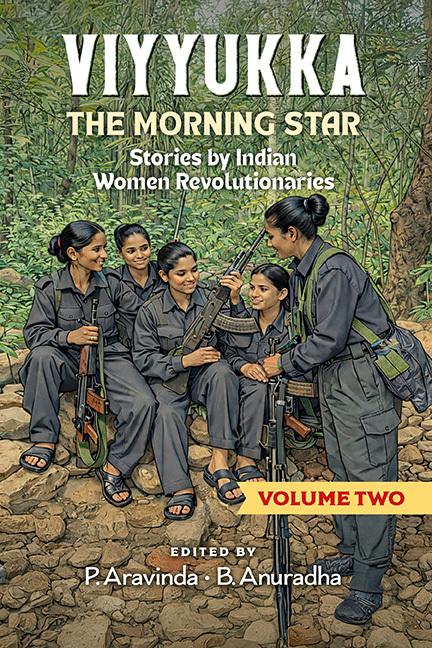
Viyyukka – The Morning Star (Vol 2)
Voices of India's Women Revolutionaries
Co-publisher:Revolutionary Writers Association
Categories: Asia, Biography, Colonialism, Feminism, India
Edited by P. Aravinda and B. Anuradha
This second volume of Viyyukka continues the powerful anthology of stories written by women revolutionaries in India’s Maoist movement, translated from Telugu to English. The collection brings together narratives penned by guerrilla soldiers who document their lived experiences within the revolutionary struggle, offering rare insights into the intersection of armed resistance, gender politics, and Adivasi community life.
The stories span four decades of revolutionary movement history, capturing both tactical engagements and intimate human moments—love, loss, camaraderie, and daily existence in guerrilla squads. What distinguishes this volume is the inclusion of autobiographical sketches by Adivasi women, narrated in their own tongues, detailing the circumstances that led them to become guerrillas. These first-person accounts reveal how poverty, land dispossession, state repression, and patriarchal violence converge to shape revolutionary consciousness.
Set primarily in the Dandakaranya forest region spanning multiple Indian states, the narratives illuminate the movement’s efforts to build alternative structures of governance through Janatana Sarkars (people’s governments), which implemented collective farming, education, healthcare, and resistance to mining corporations. The stories confront the brutal reality of state counter-insurgency operations including Salwa Judum and Operation Green Hunt, while celebrating the resilience of women who constitute nearly half the guerrilla army.
The collection demonstrates how women revolutionaries perform multiple roles—soldiers, writers, historians, doctors, and teachers—documenting their own history while fighting for land, dignity, and self-determination. These are not conventional fictions but testimonies written under extreme duress, smuggled across regions and preserved against overwhelming odds, offering a window into one of India’s most significant contemporary resistance movements.
This is a powerful and timely book. Reading Viyyukka is to encounter history in its most urgent form: not as abstract doctrine, but as the lived, written, and too-often silenced testimony of women for whom the pen was as vital as the gun. This anthology does not simply add voices to a historical record; it fundamentally questions the record itself. By foregrounding the female guerrilla imaginary—with its profound complexities of comradeship, grief, motherhood, and even the critique of revolutionary justice—these stories exceed the boundaries of political propaganda to become essential documents of human endurance and creativity. In a time when their politics is declared defeated, the women of Viyyukka remind us that some struggles are not measured by victory alone, but by the indestructible insistence on bearing witness. — Sharmila Purkayastha, independent researcher, New Delhi
ISBN Print: 9781997742272
Publication Date: March 2026
Page Count: 302
Binding Type: Soft cover
Trim Size: 6in x 9in
Language: English
USD $ 5 USD $ 26Price range: USD $ 5 through USD $ 26
| Book Format | Print Book, PDF |
|---|
Customer Reviews
There are no reviews yet.
Only logged in customers who have purchased this product may leave a review.
Related products
-

Class, gender, race and colonialism
USD $ 5 USD $ 11Price range: USD $ 5 through USD $ 11Select options This product has multiple variants. The options may be chosen on the product page
Class, gender, race and colonialism
USD $ 5 USD $ 11Price range: USD $ 5 through USD $ 11Description (1600 / 2500)
It is important to see both Marx’s brilliant generalisations about capitalist society and the very concrete ways in which he examined not only class, but also gender, race, and colonialism, and what today would be called the intersectionality of all of these. His underlying revolutionary humanism was the enemy of all forms of abstraction that denied the variety and multiplicity of human experience, especially as his vision extended outward from Western Europe. For these reasons, no thinker speaks to us today with such force and clarity.It is clear today that the emancipation of labour from capitalist alienation and exploitation is a task that still confronts us. Marx’s concept of the worker is not limited to European white males, but includes Irish and Black super-exploited and therefore doubly revolutionary workers, as well as women of all races and nations. But, his research and his concept of revolution go further, incorporating a wide range of agrarian non-capitalist societies of his time, from India to Russia and from Algeria to the Indigenous peoples of the Americas, often emphasising their gender relations. In his last, still partially unpublished writings, he turns his gaze Eastward and Southward. In these regions outside Western Europe, he finds important revolutionary possibilities among peasants and their ancient communistic social structures, even as these are being undermined by their formal subsumption under the rule of capital. In his last published text, he envisions an alliance between these non-working-class strata and the Western European working class.
Select options This product has multiple variants. The options may be chosen on the product page -
A Mutiny of Morning: Reclaiming the Black Body from Heart of Darkness
USD $ 5 USD $ 15Price range: USD $ 5 through USD $ 15Select options This product has multiple variants. The options may be chosen on the product page
A Mutiny of Morning: Reclaiming the Black Body from Heart of Darkness
USD $ 5 USD $ 15Price range: USD $ 5 through USD $ 15Nikesha Breeze has taken pages from Joseph Conrad’s Heart of Darkness, taken his words, and forced them to leave his colonized mind. She has made the words her own in poetic form. She illuminates the invisible Black voices inside, a radical, surgical, and unapologetic Black appropriation, at the same time as a careful birthing and spiritual road map. The resulting poems are sizzling purifications, violent restorations of integrity, pain, wound, bewilderment, rage, and, sometimes, luminous generosity. This is a work of Reclamation. The author, Nikesha Breeze, has slowly, page by page, reclaimed the text of the book Heart of Darkness by Joseph Conrad. This racist turn-of-the-19th-century book was pivotal in the continued dehumanization of Black people and in particular of African people, as it painted an image of bestiality on the Congo people and the continent. It is laced with racist imagery and language. The author has reappropriated the book, page by page, making “BlackOut” poetry for each page, isolating methodically the words to create new poems of power and black voice within the text —stealing the language and reappropriating the power.
Select options This product has multiple variants. The options may be chosen on the product page -
Midko The Firefly
USD $ 27Select options This product has multiple variants. The options may be chosen on the product page
Midko The Firefly
USD $ 27Midko the Firefly is the third volume in the Viyyukka Series, collecting 16 revolutionary short stories by Gumudavelli Renuka (Midko), translated from Telugu. The book portrays the lives of Maoist revolutionaries, Adivasi communities, and the brutal state repression they face in the forests of Dandakaranya, Telangana, and Andhra-Odisha border regions.
Through stories like “The Flow,” “Revolutionary Generation,” “Gangi,” and “Snatch the Guns!”, Renuka explores themes of sacrifice, love, separation, and political awakening. She centers women’s experiences—mothers who lose children, wives who outgrow husbands, young Adivasi girls who join armed squads, and ordinary women who defy superstition and state violence. The narratives depict police encounters, fake encounters, torture, rape, and the destruction of Adivasi villages through state-sponsored vigilante groups like Salwa Judum.
Renuka portrays the revolutionary movement not as idealized heroism but as a space of constant struggle—internally against patriarchal tendencies, externally against a ruthless state. Stories like “Teachers” and “Marching Forward” show how ordinary Adivasi villagers educate revolutionaries about their own mistakes. “The Closed Heart” tells of a wife who locks her husband out to his death, choosing the revolution over family loyalty.
The collection ends with a glossary and notes on translators, grounding the fiction in real political contexts, martyrs, and historical events like Operation Kagaar (2024-2026), which led to Renuka’s own torture and killing by police on March 31, 2025.
Select options This product has multiple variants. The options may be chosen on the product page -

The imperative of Utu / Ubuntu in Africana scholarship
USD $ 5 USD $ 15Price range: USD $ 5 through USD $ 15Select options This product has multiple variants. The options may be chosen on the product page
The imperative of Utu / Ubuntu in Africana scholarship
USD $ 5 USD $ 15Price range: USD $ 5 through USD $ 15Written in commemoration of the 50th anniversary of Africana Studies and Research Center, Cornell University, this publication celebrates the birth of Black studies as a liberated academic zone. Professor Mũgo reflects upon the significance of Africana studies, specifically within the context of America’s predominantly White universities, revisiting the hers/his/torical context that birthed Black studies as a field of knowledge. She reflects on the ownership of knowledge, its production, dissemination and custodianship while proposing utu/ubuntu as imperatives in defining transformative education. The hypothesis and heart of the argument is that knowledge and scholarship can either be colonizing, alienating and enslaving; or, alternatively, they can be conscientizing, humanizing and liberating, creating new human beings with the agency to transform life and the world, for the better. he dismisses the false myth of dominating, colonizing and imperialist cultures that claim to have a monopoly of knowledge and whose purpose is to justify the dehumanization of the conquered, the attempted erasure of their knowledges, heritages and ultimately, entire cultures.
Select options This product has multiple variants. The options may be chosen on the product page -

I see the invisible
USD $ 5 USD $ 20Price range: USD $ 5 through USD $ 20Select options This product has multiple variants. The options may be chosen on the product page
I see the invisible
USD $ 5 USD $ 20Price range: USD $ 5 through USD $ 20Truth be told, I never thought I would write another volume of poetry after the last, I will not Dance to Your Beat (2011). The reason was that my previous volumes were reactive to the circumstances of the times. Patriots and Cockroaches (1992) was a reaction to the socio-political corruption that had engulfed Africa and dimmed the enthusiasm that had been built by the years of struggle for independence. Whereas we thought we were stepping into a post-colonial era, what we stepped into was a vicious neo-colonial times. The next collection, Poems on the Run (1995) was a reaction to military autocracy and the repression that followed. The volume was literally written underground. This was followed by Intercepted (1998) all written while detained at Kalakuta Republic of Alagbon Close. We Thought it was Oil But it was Blood (2002) responded to two things primarily – extractivism and the accompanying human and environmental rights abuses in the Niger Delta and elsewhere. The massive erosion of biodiversity and attacks on food sovereignty through the introduction of genetically modified organisms (GMOs) into our agricultural system inspired I Will not Dance to your Beat.
What you have in your hands, or on your screens, is a compilation that is largely more meditative than the previous collections. There are moments of reflection on the colonial and neoliberal foundations that permit a willful disconnection from nature and the resultant destructive extractivism.
Some of the poems came through conversations and poetry writing sessions with Peter Molnar, Maryam al-Khawaja — Rafto Human Rights laureates and Salil Tripathi, a member of the board of PEN International, in August 2017. The sessions held at a beautifully rustic location in Celleno, Italy, were documented on celluloid by the duo of Maria Galliana Dyrvik and Anita Jonsterhaug Vedå of SMAU, a multimedia firm in Norway. Poetic relationship with Maria and Anita has continued over the years and their work continues to inspire more and more poems.
Select options This product has multiple variants. The options may be chosen on the product page -
Left Alone: On Solitude and Loneliness amid Collective Struggle
USD $ 5 USD $ 28Price range: USD $ 5 through USD $ 28Select options This product has multiple variants. The options may be chosen on the product page
Left Alone: On Solitude and Loneliness amid Collective Struggle
USD $ 5 USD $ 28Price range: USD $ 5 through USD $ 28Left Alone brings together 13 authors and 6 visual artists from Africa, Asia, Latin America, Europe and North America to individually and collectively reflect – in words and images – on an urgent psycho-political issue that has not yet been explicitly addressed through a left political lens, that is, Left Loneliness. Combining academic and more personal-political texts, including an interview, poetry, a Rap and a powerful short story, the book explores the contributors personally and/or vicariously lived experiences of Left Loneliness from a variety of genres and left political currents: Marxist, Feminist, Anti-/De-Colonial, Anti-Racist, Queer, Post-Soviet, Anti-Ableist and others. Says Feminist writer Sara Ahmed: “Loneliness might be what we are threatened with if we persist in being or doing what we are being or doing.” In this sense, Left Loneliness is neither a metaphor nor a secondary contradiction and definitely not a type of petty bourgeois “personalism”. Rather, it might be considered one of the rank and file psycho-affective elements shaping and at the same time resulting from our myriad, intersecting, unremitting, yet always fragile and potentially shattering political attempts to revolutionise our inner and outer worlds. Given its (growing?) existence in our everyday left subjectivities, the book argues that Left Loneliness and related states of solitude, isolation and alienation, among others, have both debilitating and productive (epistemic) dimensions, with very concrete psycho-somatic repercussions for Left Mental and Physical Health and hence our capacities to persist and build on “being or doing what we are being or doing”. Given that continuing and deepening our multiple ongoing struggles for liberation will depend on our constant ability to (re-)create, sustain and care for both our individual selves and the communities that we are a part of, the aim of Left Alone is to contribute to the strengthening of these personal collectivities in action in-against-and beyond capitalism, colonialism and heteropatriarchy by inviting the comrade-readers into what will ideally be a deeply stimulating and enabling personal-political engagement with the texts and images hailing from countries such as Argentina, Kenya, Kyrgyzstan, Guinea-Bissau/Portugal, Turkey/Kurdistan, Jamaica, Italy, the UK, Germany and the USA. As Lena Grace Anyuolo from Kenya puts it, “My sisters and brothers, Come, Let us gather, To lay the structures for a joyous existence.”
Select options This product has multiple variants. The options may be chosen on the product page -
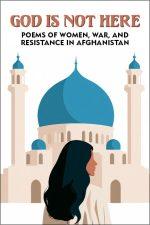
God Is Not Here
God Is Not Here is a collection of 50 poems written in response to the profound political, social, and human crisis in Afghanistan, particularly the systematic erasure of women from public life under an extremist and patriarchal regime. Through poetry, the collection records the experiences of women living under restrictions, fear, forced silence, and the loss of their fundamental freedoms.
At the heart of the collection is the belief that writing can be an act of resistance. When women are denied the right to speak, study, work, move freely, and participate in society, poetry becomes a way of reclaiming voice and presence. These poems transform personal pain, fear, anger, grief, and isolation into language, testimony, and resistance.
The collection moves between intimate and collective experiences. Kabul and Kandahar appear as landscapes marked by grief, memory, war, silence, and survival. Images of walls, abandoned cities, mosques, darkness, pomegranates, flowers, butterflies, and women’s bodies create a tension between confinement and freedom, death and life, silence and speech.
The poems also question the use of religion and morality as instruments of control, confronting the contradictions between religious rhetoric and the violence inflicted upon women in its name. At the same time, the collection insists that women remain capable of hope, dignity, awareness, and resistance even under extreme conditions.
The central argument is that the suffering of Afghan women must not disappear into silence or be forgotten by history. The poems seek to preserve the voices and experiences of women who have been pushed out of public space and to challenge the idea that silence means consent.
Ultimately, God Is Not Here is both a personal and collective act of resistance: an attempt to turn pain into art and confinement into voice, and a testament to the power of the pen and a hope for freedom and awareness.
-
 Select options This product has multiple variants. The options may be chosen on the product page
Episodes From a Colonial Present
Editors and Authors: Daniel Bendix, Chandra-Milena Danielzik, Franziska Müller, Lata Narayanaswamy, Juan Telleria, Miriam friz Trzeciak, Aram Ziai
Artists: Hangula Werner, Roshni Vyam, Michel Esselbrügge, Qi Zhou, RotmInas – Rotmi Enciso & Ina Riaskov, Maite Mentxaka Tena, Lena Ziyal
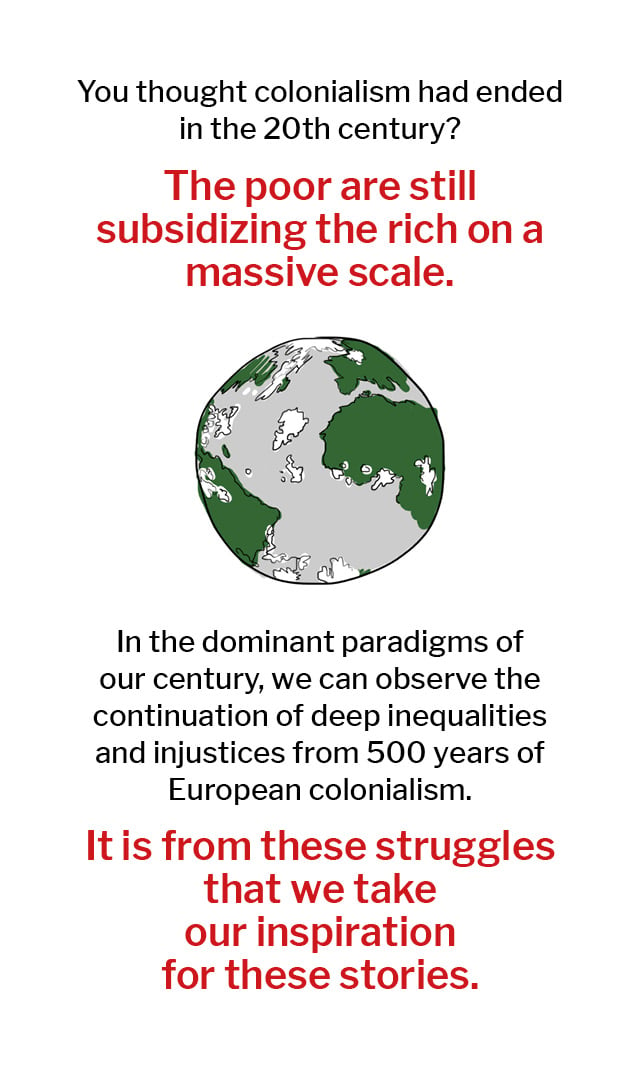
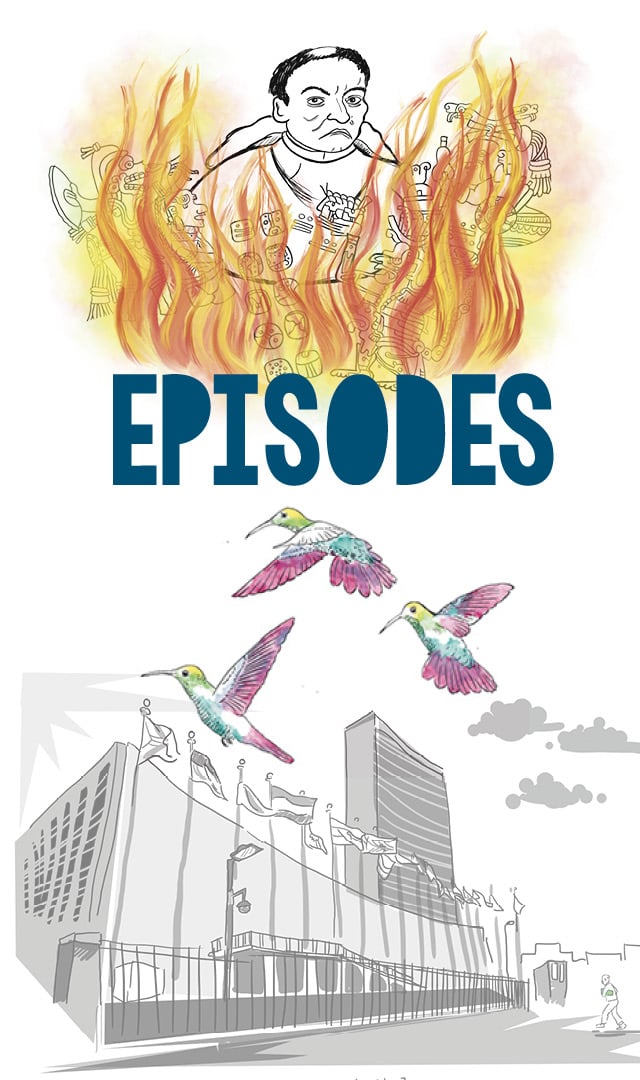
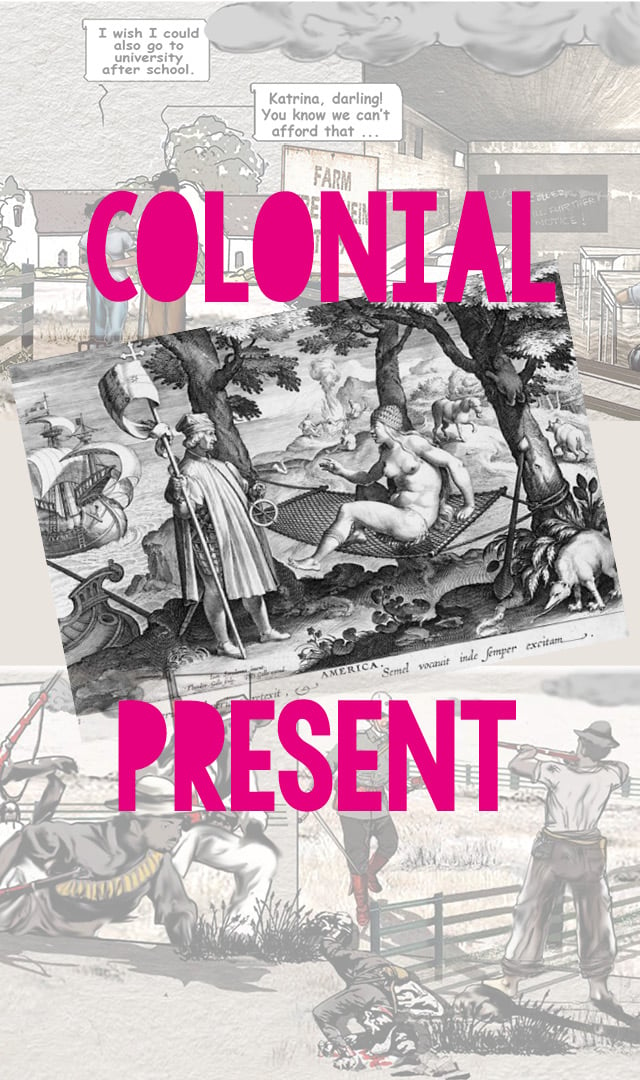
Postcolonial critique reveals the traces of the colonial past in every corner of our present lives and exposes the colonial violence inherent in global inequality. This collective comic project illuminates the coloniality of everyday life as well as the decolonising potential of everyday struggles in the spaces, discourses and practices of so-called global development.

Reviews
What an absolute impertinence! My lawyers are already involved. It’s just as well that I was able to use tax money for the purchase.
—Queen Elizabeth III love true crime books, but this one got a bit boring after a while. It could do with more bloodshed.
—Lothar von TrothaI added this book to my list to burn. Just saying.
—Diego de LandaA waste of time. So glad I didn’t buy it, but stole my copy.
—Christopher ColumbusI didn’t get it. Are they suggesting colonialism is not quite over?
—Harry S. TrumanSelect options This product has multiple variants. The options may be chosen on the product page