
-
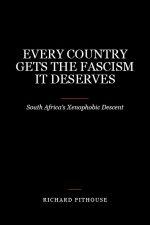
Every Country Gets the Fascism It Deserves
USD $ 5 USD $ 12Price range: USD $ 5 through USD $ 12Select options This product has multiple variants. The options may be chosen on the product page
Every Country Gets the Fascism It Deserves
USD $ 5 USD $ 12Price range: USD $ 5 through USD $ 12Every Country Gets the Fascism It Deserves documents the systematic construction of xenophobic violence as a political project in post-apartheid South Africa. Richard Pithouse traces how the state, media and organised political forces have cultivated hatred against migrants, transforming social pain into organised cruelty.
The book begins with the May 2008 pogroms that killed 62 people and displaced 100,000, showing how the mob followed the logic of a state that had already begun dehumanising migrants. It documents the rise of the All Truck Drivers Foundation, which murdered more than 200 drivers in organised attacks, and the subsequent emergence of Operation Dudula and March and March—well-funded astroturfed movements that normalised fascist language and violence.
Pithouse reveals the complicity of the police, media and major political parties—including the ANC, DA, MKP, ActionSA and Patriotic Alliance—in legitimating xenophobic violence. He shows how the mob and state have collaborated to drive more than 150,000 people across South Africa’s borders in a matter of weeks, with government infrastructure facilitating mass deportation.
Drawing on the work of Aijaz Ahmad, Alain Badiou and Richard Seymour, Pithouse argues that the erosion of democratic norms, the reactivation of ethnic mobilisation, and the normalisation of sadism constitute a fascist challenge to the constitutional order. The book insists that the answer to the far right is never to move rightward, but always to build a politics of universal solidarity rooted in the principle that a person is a person wherever they may find themselves.
With a foreword by Michael Neocosmos and an afterword by Abahlali baseMjondolo founder S’bu Zikode, this is an urgent account of a country’s descent into organised cruelty—and a powerful call for a politics of human dignity.
This essay was originally published on Richard Pithouse’s Substack: https://substack.com/profile/143275356-richard-pithouse
Select options This product has multiple variants. The options may be chosen on the product page -
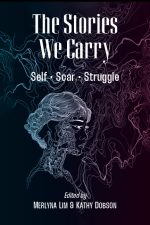
The Stories We Carry
USD $ 25Select options This product has multiple variants. The options may be chosen on the product page
The Stories We Carry
USD $ 25The Stories We Carry is a compelling collection of essays that explore identity, trauma, and resilience through deeply personal narratives. Edited by Merlyna Lim and Kathy Dobson, this volume brings together twenty-two contributors—academics, artists, journalists, and storytellers—who refuse to separate personal experience from scholarly inquiry.
The collection unfolds in three interconnected movements: Self, Scar, and Struggle, examining how identity is shaped through history, gender, embodiment, and migration; how trauma and exclusion leave lasting marks; and how survival requires ongoing negotiation with institutions, technology, and community. Each essay is accompanied by hand-drawn illustrations, making the personal visible and visceral.
The contributors challenge academic conventions that dismiss personal writing as less rigorous, arguing instead that the narrated self is a legitimate site of knowledge. Their stories address Islamophobia, poverty, colonialism, queerness, neurodivergence, immigration bureaucracy, and the politics of belonging. This is not a book seeking inclusion in broken institutions, but one that insists the table itself must be rebuilt. It asks readers to sit with complexity, contradiction, and the unfinished work of being human.
Select options This product has multiple variants. The options may be chosen on the product page -
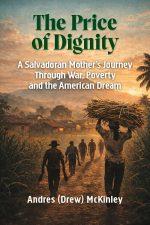
The Price of Dignity
USD $ 21.50Select options This product has multiple variants. The options may be chosen on the product page
The Price of Dignity
USD $ 21.50The Price of Dignity chronicles the extraordinary life of Patrocinia Polanco Rivas, a Salvadoran peasant woman whose personal story embodies the Central American struggle for survival and justice. The narrative follows her from a childhood of desperate poverty in the 1970s, through her family’s involvement in grassroots movements inspired by liberation theology and the murdered priest Rutilio Grande.
As civil war engulfs El Salvador, Patrocinia’s family is drawn into the conflict. She experiences the horror of scorched-earth tactics, lethal aerial bombardments, and the trauma of forced displacement (guindas). After losing her father to a bomb and suffering severe injuries herself, she leaves the war at her mother’s request. The postwar period, however, brings new struggles. Despite the hope of the 1992 Peace Accords, neoliberal policies and enduring poverty force Patrocinia’s family into a relentless battle for survival, cutting sugarcane for meager wages.
This economic desperation ultimately dismantles her family, as her husband and, one by one, her six children are forced to migrate illegally to the United States. The book’s second half becomes a searing indictment of U.S. immigration policy. It juxtaposes the dangerous journeys of her children—marked by cartel violence and exploitation—with the cruel, dehumanizing rhetoric of Donald Trump, who labels them “criminals” and “rapists.” Patrocinia is left alone in El Salvador, her utopian dream of dignity replaced by the anguish of a separated family, haunted by a past of war and a present of political disillusionment under Nayib Bukele. Her story is a powerful testament to the resilience of the human spirit and the ongoing price of dignity.
Select options This product has multiple variants. The options may be chosen on the product page -

Hand On The Sun: A passionate and powerful novel of race and class
USD $ 5 USD $ 18Price range: USD $ 5 through USD $ 18Select options This product has multiple variants. The options may be chosen on the product page
Hand On The Sun: A passionate and powerful novel of race and class
USD $ 5 USD $ 18Price range: USD $ 5 through USD $ 18This was Tariq Mehmood’s first novel, published by Penguin Books in 1983, charting the experience of the second generation migrants to the UK. Set in the declining textile industry of the North of England, it is a raw story of pain and anger at the relentlessness of British racism, from the street to the state – a story of an unquenchable desire for justice, and reclaiming human dignity. A dignity that is wrapped around new questions of Identity, a crossroad between religion, language, history and resistance. It is a little big story, that talks to the extremities of social, political and literary issues today? Can stories of a generation be appropriated? How important is religion in identity? If all you have is a story to tell, who should you tell it? Are the issues of today, just the issues of today or can we learn something from the past? In these stories, friendship is not defined by religion or colour, but by humanity. And racism is much more than skin deep. It is an exhilarating read that bears witness to the urgent 80’s battles against state and popular racism. As important now as then. In this new edition, Mehmood provides a Foreword that describes how the novel came to be written and the lives of real people on whom the characters were created. In the Afterword, Mehmood revisits some of the characters who are now 40-years older, and reflects on how the book would have been written today where the conditions of mass mobilizations no longer exist in neoliberal Britain.
Select options This product has multiple variants. The options may be chosen on the product page -

Settler Colonialism
USD $ 5 USD $ 10Price range: USD $ 5 through USD $ 10Select options This product has multiple variants. The options may be chosen on the product page
Settler Colonialism
USD $ 5 USD $ 10Price range: USD $ 5 through USD $ 10Settler Colonialism examines the genesis in the USA of the first full-fledged settler state in the world, which went beyond its predecessors in 1492 Iberia and British-colonized Ireland with an economy based on land sales and enslaved African labor, an implementation of the fiscal-military state. Both the liberal and the rightwing versions of the national narrative misrepresent the process of European colonization of North America. Both narratives serve the critical function of preserving the “official story” of a mostly benign and benevolent USA as an anticolonial movement that overthrew British colonialism. The pre-US independence settlers were colonial settlers just as they were in Africa and India or like the Spanish in Central and South America. The nation of immigrants myth erases the fact that the United States was founded as a settler state from its inception and spent the next hundred years at war against the Native Nations in conquering the continent. Buried beneath the tons of propaganda—from the landing of the English “pilgrims” (Protestant Christian evangelicals) to James Fenimore Cooper’s phenomenally popular The Last of the Mohicans claiming settlers’ “natural rights” not only to the Indigenous peoples’ territories but also to the territories claimed by other European powers—is the fact that the founding of the United States created a division of the Anglo empire, with the US becoming a parallel empire to Great Britain, ultimately overcoming it. From day one, as was specified in the Northwest Ordinance, which preceded the US Constitution, the new “republic for empire,” as Thomas Jefferson called the new United States, envisioned the future shape of what is now the forty-eight states of the continental US. The founders drew up rough maps, specifying the first territory to conquer as the “Northwest Territory.” That territory was the Ohio Valley and the Great Lakes region, which was already populated with Indigenous villages and farming communities thousands of years old. Even before independence, mostly Scots Irish settlers had seized Indigenous farmlands and hunting grounds in the Appalachians and are revered historically as first settlers and rebels, who in the mid-twentieth century began claiming indigeneity. Self-indigenizing by various groups of settlers is a recurrent theme in story of settler colonialism, white supremacy, and the history of erasure and exclusion about which I have written elsewhere.
Select options This product has multiple variants. The options may be chosen on the product page -

Dictators as Gatekeepers for Europe
USD $ 5 USD $ 20Price range: USD $ 5 through USD $ 20Select options This product has multiple variants. The options may be chosen on the product page
Dictators as Gatekeepers for Europe
USD $ 5 USD $ 20Price range: USD $ 5 through USD $ 20Dictators as Gatekeepers for Europe is a detailed journalistic account of how the EU is attempting to limit mobility within the African continent as a matter of the EU’s domestic policy agenda, hence the title hinting at the many agreements (with Turkey, Libya, Sudan) aimed at blocking migrants from approaching the European continent. The new “Berlin Wall” not only encircles Europe, but also generates a proliferation of militarised borders in Africa. …To summarise, the authors argue, Europe desires protected borders and open markets. The novelty is the amount of material that this book contains about African desires and strategies, both as a continent and as single states. This, in particular, makes the work a collection of extremely valuable directions of research. In fact, Africa, if one were to simplify the continent’s intentions, is depicted as aspiring to the exact opposite of Europe, namely open borders (with the African Union aspiring to free movement within the continent) and protected markets (protected from Western corporate predatory strategies). Moreover, contrary to the narrative of aid according to which the West “helps develop” Africa, the figures quoted by the authors suggest the opposite: while Sub-Saharan Africa receives $134 billion a year in development funding, $192 billions flow out of Africa, with $46 billion in profit for major corporations and another $35 billion vanishing in tax havens (218). https://www.law.ox.ac.uk/research-subject-groups/centre-criminology/centreborder-criminologies/blog/2022/02/double-book by Oana Pârvan.
Select options This product has multiple variants. The options may be chosen on the product page -
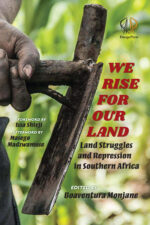
We Rise for Our Land: Land Struggles and Repression in Southern Africa
USD $ 5 USD $ 18Price range: USD $ 5 through USD $ 18Select options This product has multiple variants. The options may be chosen on the product page
We Rise for Our Land: Land Struggles and Repression in Southern Africa
USD $ 5 USD $ 18Price range: USD $ 5 through USD $ 18In recent years southern Africa has aroused the interest of domestic and foreign investors targeting several sectors. Agrarian and extractive capital has been penetrating the countryside, causing land conflicts, displacement of local peasant communities and in worse cases, deaths. Rural people in general have not, been passive—alone or in alliance with non-governmental organizations and activists, they have organized raised their voices. Resistance movements to capital are taking place throughout the region, even when faced with repression. The book provides critical assessments of the dynamics of agrarian and extractive capital in southern Africa: with contributions from DRC, Namibia, Zambia, Malawi, Zimbabwe, Swaziland, Mozambique, Mauritius and Madagascar.
Select options This product has multiple variants. The options may be chosen on the product page -

Finding a Voice: Asian Women in Britain (New and Expanded Edition)
USD $ 5 USD $ 20Price range: USD $ 5 through USD $ 20Select options This product has multiple variants. The options may be chosen on the product page
Finding a Voice: Asian Women in Britain (New and Expanded Edition)
USD $ 5 USD $ 20Price range: USD $ 5 through USD $ 20irst published in 1978, and winning the Martin Luther King Memorial Prize for that year, Finding a Voice established a new discourse on South Asian women’s lives and struggles in Britain. Through discussions, interviews and intimate one-to-one conversations with South Asian women, in Urdu, Hindi, Bengali and English, it explored family relationships, the violence of immigration policies, deeply colonial mental health services, militancy at work and also friendship and love. The seventies was a time of some iconic anti-racist and working-class struggles. They are presented here from the point of view of the women who participated in and led them.
This new edition includes a preface by Meena Kandasamy, some historic photographs, and a remarkable new chapter titled ‘In conversation with Finding a Voice: 40 years on’ in which younger South Asian women write about their own lives and struggles weaving them around those portrayed in the book.
Select options This product has multiple variants. The options may be chosen on the product page -

Stratégies familiales, diasporas et investissements
USD $ 5 USD $ 30Price range: USD $ 5 through USD $ 30Select options This product has multiple variants. The options may be chosen on the product page
Stratégies familiales, diasporas et investissements
USD $ 5 USD $ 30Price range: USD $ 5 through USD $ 30À rebours des thèses soutenant que la migration contribue au développement ou que l’in- vestissement dans le développement réduit la croissance de la migration « irrégulière », ce livre marque une rupture tonifiante avec les idées communes abondamment véhiculées dans la littérature sur les liens entre migration, mobilités et développement en Afrique. Il accorde un intérêt manifeste pour la plus grande part des mobilités africaines, lesquelles se situent à l’intérieur du continent, et à la formation des diasporas en dehors des fron- tières nationales et continentales. Cette considération conjointe des mobilités « Sud-Sud » et « Sud-Nord » permet de remettre en cause l’hypothèse selon laquelle il existe des diffé- rences fondamentales entre elles.
Cet ouvrage examine les fluctuations ordinaires des mouvements de populations – à travers l’Afrique, comme dans le reste du monde –, qui étendent les familles, génèrent de nouvelles relations, reconfigurent les connexions économiques et politiques, et sont intégrées dans l’expérience quotidienne des millions de personnes qui y prennent part.
The in-depth knowledge of the mostly African authors adds to the quality of a research field, which was for long far too Eurocentric. – Ilke ADAM, Vrije Universiteit Brussel (Belgium)
Il était temps de mettre en lumière ce que migration et mobilité représentent en Afrique. L’ouvrage offre une perspective originale et décoloniale sur le sujet. – Eric HAHONOU, Roskilde Universitet (Denmark)
Christian Bouquet, « Quelques éclairages nouveaux sur les migrations africaines », EspacesTemps.net [En ligne], Books, 2020 | Mis en ligne le 20 November 2020, consulté le 20.11.2020. URL : https://www.espacestemps.net/en/articles/quelques-eclairages-nouveaux-sur-les-migrations-africaines/ ; DOI : 10.26151/esapcestemps.net-jc2a-6b03
Avec la participation de John O. IGUE, Saydou KOUDOUGOU, Pierre-Joseph LAURENT, Bassirou MALAM SOULEY, Hamidou MANOU NABARA, Marème NIANG NDIAYE, Amadou SARR DIOP, Sadio SOUKOUNA , Eric Stève TAMO MBOUYOU et Astadjam YAOUBA.
Select options This product has multiple variants. The options may be chosen on the product page -

Mobilités, circulations et frontières
USD $ 5 USD $ 30Price range: USD $ 5 through USD $ 30Select options This product has multiple variants. The options may be chosen on the product page
Mobilités, circulations et frontières
USD $ 5 USD $ 30Price range: USD $ 5 through USD $ 30Ce livre est un apport précieux pour demander à changer de focale et de perspective au sujet des migrations à l’intérieur du continent africain. Celles-ci sont bien plus importantes quan- titativement, mais aussi économiquement et historiquement, que les migrations de l’Afrique vers l’Europe. Elles sont beaucoup plus silencieuses et infiniment moins étudiées que celles du Sud vers le Nord. Ces migrations sont vitales, tant pour les pays de départ que pour ceux d’arrivée. Ainsi, des millions de jeunes partent chaque année pour les pays de la côte, et cela sans susciter les mêmes résistances, fantasmes et peurs qu’en Europe.
Cet ouvrage a le grand mérite d’intégrer les migrations dans la perspective plus large des mobilités, puis d’en examiner les liens avec le développement. Il est rédigé par de jeunes chercheurs africains, qui produisent à partir de leurs terrains spécifiques des analyses à valeur générale sur les sociétés contemporaines. Ils contribuent ainsi au renouvellement des sciences sociales à partir des pays africains.
On peut en revanche souligner que l’ouvrage a relevé un défi important : celui d’éclairer à la fois les dynamiques de l’expérience migratoire, des trajectoires suivies par les migrants et des espaces migratoires à l’intérieur de l’Afrique. — Sylvie Ayimpam, « Mobilités, circulations et frontières. Migrations, mobilités et développement en Afrique », Anthropologie & développement [En ligne], 51 | 2020, mis en ligne le 01 décembre 2020, consulté le 23 février 2021. URL : http://journals.openedition.org/anthropodev/1068 ; DOI : https://doi.org/10.4000/anthropodev.1068
These companion volumes are refreshing because they introduce us to many less well- known instances which amply illustrate just how mobile African populations really are at the regional, intra-regional and global scales. – Paul NUGENT, University of Edinburgh (United Kingdom)
Un ouvrage d’une grande actualité qui aborde la question des migrations sous un angle radicalement nouveau et original : l’articulation dynamique entre la migration, la mobilité et le développement en Afrique de l’Ouest. Ces deux volumes bilingues renouvellent le débat sur les migrations : de quoi faire réfléchir ensemble l’Afrique et l’Europe. – Marie-Caroline SAGLIO-YATZIMIRSKY, INALCO, CESSMA Paris (France)
Christian Bouquet, « Quelques éclairages nouveaux sur les migrations africaines », EspacesTemps.net [En ligne], Books, 2020 | Mis en ligne le 20 November 2020, consulté le 20.11.2020. URL : https://www.espacestemps.net/en/articles/quelques-eclairages-nouveaux-sur-les-migrations-africaines/ ; DOI : 10.26151/esapcestemps.net-jc2a-6b03
Avec la participation de Naluwembe BINAISSA, Alimou DIALLO, Nyalo Barkissa DRABO, Sylvester KOHOL, A. Aziz MOSSI, Loppa NGASSOU, Lawrence Rafaih OKELLO, Mutiat Titilope OLADEJO, Zakaria SORÉ, Astadjam YAOUBA et Irissa ZIDNABA.
Select options This product has multiple variants. The options may be chosen on the product page