
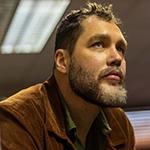
 Richard Pithouse is a Distinguished Research Fellow at the Global Centre for Advanced Studies, an International Research Scholar in the philosophy department at the University of Connecticut and Professor-at-Large at the University of the Western Cape.
-
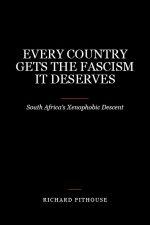
Every Country Gets the Fascism It Deserves
USD $ 5 USD $ 12Price range: USD $ 5 through USD $ 12Select options This product has multiple variants. The options may be chosen on the product page
Every Country Gets the Fascism It Deserves
USD $ 5 USD $ 12Price range: USD $ 5 through USD $ 12Every Country Gets the Fascism It Deserves documents the systematic construction of xenophobic violence as a political project in post-apartheid South Africa. Richard Pithouse traces how the state, media and organised political forces have cultivated hatred against migrants, transforming social pain into organised cruelty.
The book begins with the May 2008 pogroms that killed 62 people and displaced 100,000, showing how the mob followed the logic of a state that had already begun dehumanising migrants. It documents the rise of the All Truck Drivers Foundation, which murdered more than 200 drivers in organised attacks, and the subsequent emergence of Operation Dudula and March and March—well-funded astroturfed movements that normalised fascist language and violence.
Pithouse reveals the complicity of the police, media and major political parties—including the ANC, DA, MKP, ActionSA and Patriotic Alliance—in legitimating xenophobic violence. He shows how the mob and state have collaborated to drive more than 150,000 people across South Africa’s borders in a matter of weeks, with government infrastructure facilitating mass deportation.
Drawing on the work of Aijaz Ahmad, Alain Badiou and Richard Seymour, Pithouse argues that the erosion of democratic norms, the reactivation of ethnic mobilisation, and the normalisation of sadism constitute a fascist challenge to the constitutional order. The book insists that the answer to the far right is never to move rightward, but always to build a politics of universal solidarity rooted in the principle that a person is a person wherever they may find themselves.
With a foreword by Michael Neocosmos and an afterword by Abahlali baseMjondolo founder S’bu Zikode, this is an urgent account of a country’s descent into organised cruelty—and a powerful call for a politics of human dignity.
This essay was originally published on Richard Pithouse’s Substack: https://substack.com/profile/143275356-richard-pithouse
Select options This product has multiple variants. The options may be chosen on the product page -

Being human after 1492
USD $ 5 USD $ 13Price range: USD $ 5 through USD $ 13Select options This product has multiple variants. The options may be chosen on the product page
Being human after 1492
USD $ 5 USD $ 13Price range: USD $ 5 through USD $ 13The pamphlet begins with two letters written by Paul the Apostle in which Christianity first acquires a universal address. The new religion came to exclude people who were not Christians from the count of the human. This became explicit around a thousand years later when Pope Urban II authorised the First Crusade.
In 1492 planetary history was split in to two. Muhammad XII of Granada conceded defeat to Isabella and Ferdinand, the Catholic monarchs of Portugal and Spain, who went on to expel the Jews from the territory under their control. Europe became a Christian project. In the same year Christopher Columbus arrived in the Caribbean and Europe also became an imperial project with a planetary reach.
The origins of the racial ideology can be seen in this period, in which ideas about religion came to be entangled with fantastical ideas about the imagined purity of blood. But it was in the English colony of Virginia in the seventeenth century that the legitimation for the exclusion from the count of the human began to move from claims made in the name of religion to claims made in the name of science. This is the point at which modern racism, rooted in the appearance of the body, began to cast its malignant shadow across the planet.
The author argues that the struggle to put an end to the epoch of world history that opened in 1492 will require new ideas, and new practices. It follows the Caribbean tradition that runs from Aimé Césaire to Frantz Fanon and Sylvia Wynter in affirming the need for a counter-humanism, a radical humanism, a humanism that, in Césaire’s famous phrases, is “made to the measure of the world”. There is a need for a shift in the ground of reason towards the lived experience and struggles of people rendered, in Wynter’s phrase, as ‘pariahs outside of the new order’.
Select options This product has multiple variants. The options may be chosen on the product page