
-

The Revolutionary Meaning of the George Floyd Uprising
USD $ 5.00 USD $ 15.00Price range: USD $ 5.00 through USD $ 15.00Select options This product has multiple variants. The options may be chosen on the product page
The Revolutionary Meaning of the George Floyd Uprising
USD $ 5.00 USD $ 15.00Price range: USD $ 5.00 through USD $ 15.00There was nothing but darkness in the spring of 2020 as the Covid-19 pandemic raged and shut down the economy. But as right-wing protesters demanded an end to the lockdown, a much bigger social conflict was brewing under the surface. A rebellion exploded in Minneapolis in response to the brutal police murder of George Floyd in late May, during which a police station was overtaken and burned down. The uprising quickly spread across the United States as protesters looted downtown urban centers, set fire to cop cars, vandalized government buildings, and fought the police. The Black proletariat led the charge, but white, Latinx, Asian, and Indigenous proletarians also joined the fight, demonstrating new possibilities for building alliances. While anti-police rebellions continued throughout the summer and fall, the uprising receded with the start of the winter. But this conflict is far from over.
In an effort to think through the experience of the uprising and prepare for the great struggles that are coming, The Revolutionary Meaning of the George Floyd Uprising provides an in-depth analysis of what exactly happened during the 2020 uprising, its potentials, internal limits, and strategic implications.
Select options This product has multiple variants. The options may be chosen on the product page -

The Second Coming
USD $ 10.00 USD $ 22.00Price range: USD $ 10.00 through USD $ 22.00Select options This product has multiple variants. The options may be chosen on the product page
The Second Coming
USD $ 10.00 USD $ 22.00Price range: USD $ 10.00 through USD $ 22.00
In the remnants of a fractured UK, England is on the brink of collapse where far-right militias rise to power. As Islamophobia and English nationalism ignite brutal violence, 19-year-old Marah Sultana is thrust into a fight for survival. Hunted by forces seeking control, she carries a secret powerful enough to change the course of the war—and the future of the world. In a world in which America’s reign as a superpower has crumbled, its mercenaries now rule in its shadow,In The Second Coming, Tariq Mehmood delivers a searing, unflinching narrative that mirrors his own lifelong struggle for justice. This novel is not just fiction—it’s a reflection of real-world battles. Mehmood’s powerful storytelling compels readers to confront uncomfortable truths while offering a gripping, emotional journey of resistance and survival.
A dystopian desi mash-up of The Handmaid’s Tale, Clockwork Orange, and V for Vendetta. The Second Coming warns of the dangers of right-wing nationalism and white supremacy and imagines where such hate could take England if it is not, somehow, nipped in the bud. — Paul Cochrane, journalist, Middle East Eye
A must-read dystopian fantasy about race, religion, and love. Unmissable – Melvin Burgess, novelist, winner of the Carnegie Medal and the LA prize for Teenage Fiction
An unforgettable novel, both vivid and nightmarishly plausible. — Peter Kalu, novelist, storyteller, playwright and poet.
A story of resilience and hope told against the brutal realities of patriarchy and colonial violence.
— Amrit Wilson, activist, feminist, and author of Finding a Voice: Asian Women in Britain (Daraja Press)Select options This product has multiple variants. The options may be chosen on the product page -
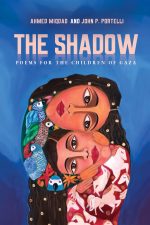
The Shadow
USD $ 0.01 USD $ 16.00Price range: USD $ 0.01 through USD $ 16.00Select options This product has multiple variants. The options may be chosen on the product page
The Shadow
USD $ 0.01 USD $ 16.00Price range: USD $ 0.01 through USD $ 16.00Discover The Shadow: Poems for the Children of Gaza, a poignant collection by Palestinian poet Ahmed Miqdad and Maltese-Canadian poet John P. Portelli. Written amidst the horrors of Gaza’s genocide and the personal battle with cancer, these 42 poems bear witness to the intersection of political violence and personal mortality. Through raw emotion and lyrical defiance, the poets forge solidarity across borders, offering a glimmer of hope in the face of erasure.
Featuring evocative art by Malak Mattar and a foreword by Professor Jamil Khader, this collection is a call to remember, resist, and reclaim humanity. A portion of proceeds will support Palestinian relief efforts.
Select options This product has multiple variants. The options may be chosen on the product page -
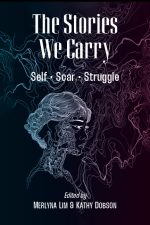
The Stories We Carry
USD $ 23.00Select options This product has multiple variants. The options may be chosen on the product page
The Stories We Carry
USD $ 23.00The Stories We Carry is a compelling collection of essays that explore identity, trauma, and resilience through deeply personal narratives. Edited by Merlyna Lim and Kathy Dobson, this volume brings together twenty-two contributors—academics, artists, journalists, and storytellers—who refuse to separate personal experience from scholarly inquiry.
The collection unfolds in three interconnected movements: Self, Scar, and Struggle, examining how identity is shaped through history, gender, embodiment, and migration; how trauma and exclusion leave lasting marks; and how survival requires ongoing negotiation with institutions, technology, and community. Each essay is accompanied by hand-drawn illustrations, making the personal visible and visceral.
The contributors challenge academic conventions that dismiss personal writing as less rigorous, arguing instead that the narrated self is a legitimate site of knowledge. Their stories address Islamophobia, poverty, colonialism, queerness, neurodivergence, immigration bureaucracy, and the politics of belonging. This is not a book seeking inclusion in broken institutions, but one that insists the table itself must be rebuilt. It asks readers to sit with complexity, contradiction, and the unfinished work of being human.
Select options This product has multiple variants. The options may be chosen on the product page -

The Stories We Could Tell
USD $ 10.00 USD $ 25.00Price range: USD $ 10.00 through USD $ 25.00Select options This product has multiple variants. The options may be chosen on the product page
The Stories We Could Tell
USD $ 10.00 USD $ 25.00Price range: USD $ 10.00 through USD $ 25.00This book is an effort to contribute to the preservation of El Salvador’s historical memory. It recounts the tragedy of a civil war that lasted nearly two decades and resulted in the loss of over 75,000 lives. It highlights the perspectives of significant figures from that era, a challenging endeavour for those unaccustomed to sharing their stories. The book also examines the Salvadoran people’s aspirations for a new nation and lasting peace.
The Stories We Could Tell is an attempt to push back against current strategies that distort and erase historical memory. It begins with the testimony of Rufina Amaya (to whom the book is dedicated), a poor peasant woman and the sole survivor of one of the worst civilian massacres in modern times, vilified, ridiculed, and discredited by both the Salvadoran and US governments in her desperate attempts to reveal the truth about the rape, torture, and slaughter of some 1,000 men, women, children, and the elderly in the village of El Mozote between December 11 and 12, 1981.
The book provides a concise overview of the war and its origins, highlighting how the United States contributed to the ongoing suffering and escalating costs for El Salvador and its citizens. It outlines the unwavering efforts of key figures striving for a peaceful resolution through a lengthy and challenging negotiation process. Inspiring and sometimes harrowing testimonies of bravery and hope from pivotal individuals in the fight for a fairer and more democratic nation showcase their dedication and resilience in a prolonged struggle.
Select options This product has multiple variants. The options may be chosen on the product page -

The Travails of a Tanzanian Teacher
USD $ 18.00Select options This product has multiple variants. The options may be chosen on the product page
The Travails of a Tanzanian Teacher
USD $ 18.00The Travails of a Tanzanian Teacher is a riveting account of the bumpy first decade of the work life of Karim F Hirji, a retired Professor of Medical Statistics. Filled with a distinctive variety of eye-opening episodes, it covers lecturing at the University of Dar es Salaam, the life of a political exile in a remote rural area and the challenges of setting up from scratch a one-of-a-kind educational institute in Africa. With a style that seamlessly combines the personal with the general, Hirji provides an illuminating description of different aspects of the Tanzanian political, educational, economic and rural landscape during the 1970s. Starting with a commentary on teacher training, he concludes with a critical comparison of modern university education in the nation with that of the earlier era.
Select options This product has multiple variants. The options may be chosen on the product page -
 Select options This product has multiple variants. The options may be chosen on the product page
The Unfinished Business of Liberation and Transformation: Revisiting The 1958 All-African People’s Conference
USD $ 47.00This book features essays, speeches, and reflections from the 60th-anniversary commemoration of the All-African People’s Conference (AAPC), an epochal event in the history of Africa’s fight for liberation. The four-day conference was a collaboration between the Institute of African Studies, the Trades Union Congress of Ghana, the Socialist Forum of Ghana, Lincoln University, and the Third World Network Africa. The stories, essays, speeches, and poems featured in this book are not simply a reflection of the past – they are a call to action for the present and future generations of Pan‑Africanists. May this book serve as a reminder that our liberation is intertwined with the liberation of others and that we must work together toward building a more just and equitable world. Let us continue to inspire the next generation of Pan-Africanists and keep the spirit of the All‑African People’s Conference alive. The book offers valuable perspectives on Africa’s current predicaments and what a truly liberated Africa can offer to the world.
The Unfinished Business of African Liberation is a path‐breaking collection of proceedings commemorating the 1958 landmark All African People’s Conference. The volume is essential reading for all those interested in pursuing African decolonization and liberation in the 21st century.
— Amina Mama, Professor, Gender, Sexuality & Women’s Studies, University of California, Davis, former Kwame Nkrumah Chair in African Studies at the University of GhanaIt is a must‐read for all who care about the contemporary plight of African people.
— Sylvia Tamale, Decolonial feminist & Professor of Law, School of Law, Makerere University, UgandaThis collection presents critical thinking by a wide spectrum of Pan‐African workers, youth, women, students, intellectuals, businesspeople, activists, academics, and politicians. — Adotey Bing-Pappoe, Senior Lecturer, Department of Economics and International Business, University of Greenwich
Select options This product has multiple variants. The options may be chosen on the product page -

Then He Sent Prophets
USD $ 10.00 USD $ 20.00Price range: USD $ 10.00 through USD $ 20.00Select options This product has multiple variants. The options may be chosen on the product page
Then He Sent Prophets
USD $ 10.00 USD $ 20.00Price range: USD $ 10.00 through USD $ 20.00Morocco, 1359. The people of Fes are living in deprivation under the rule of an unjust sultan. Zakaria is a young Muslim scholar trying to sustain his family while committing to a rigid moral code. To provide for his sickly daughter, he sacrifices his principles and seeks a job at the palace, where he gradually becomes entangled in a web of intrigue, his conscience tormented by serving the sultan. In the hope of fleeing from the constraints of his world, he joins the quest of Muhammad ibn Yusuf, the exiled king of Granada, and his enchanting sister, Aisha, to reclaim their throne. Together, they set out to Andalusia on a journey that will call into question all of Zakaria’s beliefs and change the history of the Iberian Peninsula for decades to come.
Then He Sent Prophets is a story about the suffering of young idealists in a world of inevitable compromise. Throughout his journey, Zakaria faces internal struggles that are timeless and universal, strives to reconcile his faith with the world, doubts the motives behind his desire to live morally, and ends up wondering whether a life consisting of one compromise after another is one worth living.
Then He Sent Prophets is a novel for our moment. Set around the political struggles of fourteenth-century Granada, it is a deeply sympathetic and passionately human look at how one might make—or fail to make—moral, decent choices when living in a violent, indecent world.
— Marcia Lynx Qualey, founding editor of ArabLitCircumstances present Zakaria with a position at the palace. […] Can someone critical of the sultan and conscious of his corruption maintain integrity while serving at the palace? And what’s the line between complete innocence and partial complicity? These are the questions at the crux of his ethical dilemma. […] It’s easy to make connections between Zakaria’s inner dilemmas and those many of us grapple with today.
— Hafsa Lodi in The New ArabSelect options This product has multiple variants. The options may be chosen on the product page -

Tishio La Ukombozi: Ubeberu na Mapinduzi Zanzibar
USD $ 5.00 USD $ 25.00Price range: USD $ 5.00 through USD $ 25.00Select options This product has multiple variants. The options may be chosen on the product page
Tishio La Ukombozi: Ubeberu na Mapinduzi Zanzibar
USD $ 5.00 USD $ 25.00Price range: USD $ 5.00 through USD $ 25.00Kitabu hiki kinaturudisha katika kipindi cha kusisimuwa cha miaka ya vita baridi, kipindi ambacho, sambamba na kipindi cha leo, madola ya kibeberu yamekuwa yakifanya njama za kubadilisha serikali zilizokuwepo na kuziweka madarakani zile zenye kufuata amri. Kwa kutumia kumbukumbu za picha za Johari, nyaraka za siri za Marekani na Uingereza, pamoja na mahojiano ya kina, kitabu kinatowa uchambuzi juu ya nafasi na satwa ya Chama cha Umma Party nchini Zanzibar na kiongozi wake mwenye upeo mkubwa wa mambo, Mwanamapinduzi mfuasi wa Itikadi ya Karl Marx, Abdulrahman Mohamed Babu. Kwa kuangalia kwa njia ya uwiano wa mifano inayokwenda sambamba ya wahka wa Marekani kuhusu Uchina ya Kikomunisti katika miaka ya 1960 na woga walionao hivi sasa kuhusu ushawishi wa Uchina, kitabu kinatafakari juu ya mivutano mipya iliyopo katika kupigania rasilmali za Afrika, kuundwa kwa kikosi cha AFRICOM, na jinsi Wanasiasa wa Afrika Mashariki wanavyoshiriki katika kuimarisha udhibiti wa Marekani katika nchi zao, na “Vita dhidi ya Ugaidi” katika ukanda wa Afrika Mashariki hivi sasa.
Now available from Mkuki Na Nyota Publishers, Tanzania: http://www.mkukinanyota.com
Select options This product has multiple variants. The options may be chosen on the product page -
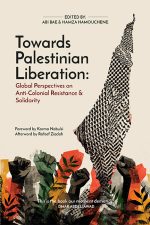
Towards Palestinian Liberation
USD $ 12.00 USD $ 35.00Price range: USD $ 12.00 through USD $ 35.00Select options This product has multiple variants. The options may be chosen on the product page
Towards Palestinian Liberation
USD $ 12.00 USD $ 35.00Price range: USD $ 12.00 through USD $ 35.00While awareness and global solidarity with Palestine have grown, mainstream frameworks often remain narrowly focused. Common approaches typically confine the issue to Israel, the West Bank, and Gaza, or reduce solidarity to a matter of human rights and international law violations.
Although engaging formal institutions to end Israel’s genocide, apartheid, and occupation is a necessary strategy, such a focus can inadvertently depoliticize the Palestinian struggle. It frequently overlooks the foundational settler-colonial nature of the Israeli state, the unwavering material and ideological support it receives from Western powers, and Palestine’s profound significance within broader historical and contemporary anti-colonial movements.
The ongoing Western-backed genocide has starkly revealed the political divergence between the West and the Global South. In contrast to institutional complicity and failure, the enduring legacy of anti-colonial solidarity across the Global South has resurfaced as a vital force. As liberal international systems prove ineffective, rebuilding and strengthening transnational solidarity networks has become an urgent imperative to halt the genocide and achieve a liberated Palestine.
A deeper understanding requires a framework that connects Palestine to wider regional dynamics, global power structures, and the long arc of anti-colonial resistance. Towards Palestinian Liberation is an edited volume that reaffirms the Palestinian struggle as an intersectional and transnational anti-colonial fight.
Bringing together diverse perspectives from scholars and activists worldwide, this collection moves beyond mainstream narratives. It explores the interconnectedness of global struggles, examines the role of economic and political interests, and critically assesses the opportunities and challenges facing international solidarity movements. This book is essential for anyone committed to understanding—and advancing—the cause of justice and liberation in Palestine.
Praise for Towards Palestinian Liberation
I can think of no other book that addresses the question of solidarity with Palestine and Palestinians as urgently and as eloquently as this collection – Laleh Khalili, author of Heroes and Martyrs of Palestine: The Politics of National Commemoration
A crucial intervention in these tumultuous times – Yara Hawari, co-director at Al-Shabaka: The Palestinian Policy Network
A book that proves once again that writing and recording is itself resistance – Anuradha Chenoy, Adjunct Professor, Jindal Global University, India; Associate, Transnational Institute
Wide-ranging yet coherent, intellectually ambitious yet grounded in praxis – Hossam El-Hamalawi, scholar specialising in the Egyptian military and policing
An astonishing book – an answer to despair … I can think of no more necessary or important book for those of us determined to revolutionise our world – Leo Zeilig, writer, novelist and author of A Revolutionary of Our Time: The Walter Rodney Story
It stands as both an ode to hope and a practical manual for liberation – Shahd Hammouri, Lecturer in International Law and Legal Theory, University of Kent
This book is a living archive of resistance – unfolding across geographies, histories, and generations … If there is one book to read in these times, this is it – Madhuresh Kumar, Resistance Studies Fellow, University of Massachusetts Amherst; former national convener of the National Alliance of People’s Movements, India.
The authors in this urgent collection demonstrate the world-historic character of the struggle for Palestinian liberation – Thea Riofrancos, author of Extraction: The Frontiers of Green Capitalism
This is the book our moment demands – Omar Abdeljawad, writer and Assistant Professor at Birzeit University, Palestine
This book is essential reading for anyone who wants to understand why Palestinian liberation cannot be separated from revolutionary and anti-colonial struggles across the world… [it] will play a vital role in educating a new generation of activists – Anne Alexander, author of Revolution is the Choice of People
This timely and generous collective effort by renowned scholars and activists is a must-read – Ndongo Samba Sylla, Head of Research and Policy for the Africa Region at International Development Economics Associates (IDEAs)
An indispensable book about one of our times’ most important political causes – Miriyam Aouragh, professor and author of Palestine Online
This book is a lesson in internationalism and the need to organise in order to practise it – Sabrina Fernandes, Brazilian economist, author and ecosocialist activist
This book is an indispensable resource for anyone committed to the belief that a better world is necessary and must be fought for – from many rivers to many seas – Salim Vally, Professor, Faculty of Education, University of Johannesburg
An indispensable intervention … Reading this book is an essential antidote to the darkness and despair that permeates this moment – Grieve Chelwa, Associate Professor of Political Economy, The Africa Institute, Global Studies University
This work stands as a guiding light for those committed to a liberated Palestine in a liberated world – ClaraMattei, author of Escape from Capitalism, founder of The Forum For Real Economic Emancipation (FREE)
What distinguishes this collection is its refusal to treat Palestine as an exception. It places Palestinian liberation where it belongs — at the centre of a global confrontation with empire, fossil capitalism, and the architectures of racial domination – Yanis Varoufakis, Greek economist and author of Technofeudalism: What Killed Capitalism
An essential read to keep hope alive and to remember Ghassan Kanafani’s words: ‘As long as we struggle, we are not defeated’ – Olfa Lamloum, political scientist, filmmaker and president of The Legal Agenda, Tunisia
Historically informed, strategically oriented … crucially important and timely – Gyekye Tanoh, Freedom and Justice for Palestine (Ghana) and member of Global Ecosocialist Network
A must-read for anyone interested in understanding the struggle for Palestine and beyond – Rima Majed, Associate Professor of Sociology at the American University of Beirut
Indispensable for an acquaintance with Palestinian resistance that goes beyond reading the headlines – Walden Bello, Filipino scholar-activist and Right Livelihood awardee 2003
This book could not be more timely. … A book from the movement and for the movement, it provides us with essential tools to continue and globalise the anti-imperialist struggle – Lucia Pradella, Reader in International Political Economy, King’s College London
Here, for the first time, we get a chance to see Palestine and its struggle through the eyes of the majority of humanity – the global South, that is … an invaluable resource – Andreas Malm, author of The Destruction of Palestine Is the Destruction of the Earth.
Shines a new and revealing light on decades of anti-colonial, anti-imperialist struggles … This book will be welcomed by both analysts and activists – Brid Brennan, Transnational Institute Fellow
The Palestinian struggle for liberation is inseparable from histories of anti-colonial resistance and internationalist solidarity … this volume reclaims that radical tradition – Omar Jabary Salamanca, Professor of Social Sciences, Université libre de Bruxelles.
A crucial collection for those of us trying to find a way forward in a world shaped by genocide, rising fascism, aggressive imperialism, and climate catastrophe. – Sai Englert, author of Settler Colonialism: An Introduction
For full versions of these endorsements, view the ‘Review’ tab below.
Select options This product has multiple variants. The options may be chosen on the product page -

Transforming ourselves, Transforming the World: An open conspiracy for social change – Second Edition
USD $ 5.00 USD $ 20.00Price range: USD $ 5.00 through USD $ 20.00Select options This product has multiple variants. The options may be chosen on the product page
Transforming ourselves, Transforming the World: An open conspiracy for social change – Second Edition
USD $ 5.00 USD $ 20.00Price range: USD $ 5.00 through USD $ 20.00This book is for all those—community workers, adult educators, social activists of every kind—who want to overcome pessimism and play a part in changing society in the direction of peace, justice and dignity for all human beings. As author Brian Murphy points out, many of us are pessimistic about our ability to change the world when confronted by the powerful forces of big corporations and big government. Murphy reveals the social and personal dilemmas which hold people back from social engagement, and argues that the various constraints we face can be overcome.
In this new edition, David Austin explains in his Introduction why this book, first published in 1999, is perhaps more relevant to our times than ever, offering insights from his own experiences of engaging critically with the book and with others. And in his Afterword, Brian Murphy reflects on the continued relevance of the original text, emphasizing how our humanity is being corroded and commodified. To reclaim our humanity, he argues, we must transform ourselves to transform the world.
Brian Murphy’s immensely inspiring book,Transforming Ourselves, Transforming the World, deeply challenges us to think and rethink everything we knew and thought we knew.—Nnimmo Bassey, Executive Director, Health of Mother Earth Foundation & Right Livelihood Award Laureate in 2010
We need more conversations like the one in this book, which are rooted in hope while honestly working through a foundational way of seeing and understanding ourselves in the bigger picture.— Christina Warner, Co-Executive Director and Director of Campaigns and Organising, Council of Canadians.
This is one of the coolest, enjoyable and important books I have read in recent years. Written from the heart as well as the head, it is a breathtakingly visionary, unique and insightful take on the life of the ultimate activist.—Hope Chigudu, Feminist activist
Select options This product has multiple variants. The options may be chosen on the product page -
 Select options This product has multiple variants. The options may be chosen on the product page
Twenty Years of Courage and Struggle
Abahlali baseMjondolo (AbM) is the remarkable story of the South African shack dwellers movement, covering twenty years of courageous struggle. It is the largest movement to have emerged in South Africa after apartheid and one of the largest movements of the urban poor globally, boasting over 180,000 members across four provinces.
AbM emerged from the margins of South Africa’s cities, where residents faced life-threatening conditions, including shack fires, poverty, and systemic betrayal by the democratic state regarding land and housing. The movement is firmly committed to ethical principles, fighting not only for the right to the city but for the right to collectively occupy land and build occupations collectively. Abahlali insists on a humanist philosophy—”no one is illegal, everyone thinks and everyone must be counted and heard”—and works to build democracy and socialism from below.
Abahlali is abolition in action, seeking to interrupt capitalist logic by advocating for the total decommodification of land, recognizing it as a public good allocated based on human need. This commitment has led to significant victories, including securing land, providing services (like water and electricity), and winning a landmark Constitutional Court case against the unlawful Slums Act.
However, this quest for dignity has come at a tremendous cost, marked by severe repression, police violence, and the assassination of many activists by state forces and party thugs. Despite these challenges, AbM has persisted, developing occupations into working communes (such as eKhenana) that feature collective production, community halls, and political schools. Their story is a map for movements fighting inequality and authoritarianism globally. The movement continues to build collective power and struggle for a world where land, wealth, and power are shared on an equal basis.
“Your movement has shown the world that democracy extends beyond elections to a way of living together—through open assemblies and collective decision making. In doing so, you have advanced a vision grounded in humanity, solidarity, and courage. Your struggle has always been internationalist, and your solidarity with the people of Palestine, Swaziland, and the Congo, and the warm relations you have built with movements around the world, are exemplary.” Jeremy Corbyn in https://rajpatel.org/2025/10/13/4764/
The movement continues to grow, discovering that more and more settlements function better not when they function as an association of residents but as a commune. Agroecology is cropping up in more and more settlements thanks to exchanges with the MST. It’s a demonstration that when the wretched of the earth organize themselves without mediation, without NGO managers or academic gatekeepers, they can survive what would destroy any formation dependent on elite patronage. … This is the lesson Abahlali offers the world: genuine democracy is possible, but only when everyone thinks, everyone counts, everyone cares, and everyone acts. Raj Patel Everybody Thinks, Everybody Counts, Everybody Cares, Everybody Acts: Twenty Years of Abahlalism
Select options This product has multiple variants. The options may be chosen on the product page -
 Select options This product has multiple variants. The options may be chosen on the product page
Una movilización por la justicia en salud
Desde su primera edición en 2005, el Observatorio Global de la Salud (GHW) -la publicación insignia del Movimiento por la Salud de los Pueblos (MSP)- ha venido informando críticamente sobre el estado de la salud en el mundo. Publicada cada tres o cuatro años, comenta la evolución de la salud mundial al tiempo que se centra en la continuidad con las luchas populares del pasado.
Al igual que en ediciones anteriores, el GHW7 cobra vida con las contribuciones de más de cien activistas de todo el mundo, que comparten experiencias y análisis sobre cuestiones que afectan a la salud de las personas en los contextos en los que viven y los esfuerzos por avanzar hacia una mayor justicia en salud. Este proceso fue dinamizado por la quinta Asamblea Mundial por la Salud de los Pueblos (ASP5), el encuentro mundial del MSP, que tuvo lugar en Argentina en abril de 2024 bajo el lema “Haciendo de la ‘Salud para Todos’ nuestra lucha por el ‘Buen Vivir’”.
Las contribuciones políticas de América Latina se manifiestan en la primera sección del GHW7, dedicada a “La arquitectura política y económica global”, donde a un análisis actualizado de las crisis de la salud actuales le siguen contribuciones que las enmarcan en una perspectiva ecofeminista, mostrando cómo las alternativas pueden arraigarse en las sabidurías ancestrales y en la práctica del ‘Buen Vivir’. La segunda sección aborda viejos y nuevos retos para los sistemas de salud públicos y globales a través de las lentes críticas de la justicia de género y la decolonialidad. La tercera sección, “Más allá de la atención en salud”, aborda los principales determinantes sociales y ambientales de la salud, mientras que la sección “Vigilancia” analiza críticamente el estado de la gobernanza mundial de la salud centrándose en varias instituciones clave. La última sección, “Resistencia, luchas y alternativas”, destaca las áreas de cambio transformador de los y las activistas de la salud en un contexto mundial de creciente represión. El libro termina con un capítulo sobre la ASP5, en el que se destaca cómo la acción colectiva es la medicina más poderosa contra la mala salud y la desigualdad de la salud a nivel humano y planetario.
Global Health Watch 7 incluye los siguientes capítulos:
Los resúmenes de los capítulos actualmente disponibles, junto con el PDF descargable correspondiente, pueden consultarse desplazándose hacia abajo y haciendo clic en la pestaña “Descripción”.
Todos los capítulos, excepto A2 y A3, han sido traducidos del inglés por Lila Esther Silgado Villadiego
Introducción: Una Movilización por la Justicia en Salud
A1. De la Economía Política de la Enfermedad a la Economía Política del Bienestar
A2. La Vida en el Centro: Ecofeminsmos y Feminismos Ecoterritoriales en la Disputa por la Vida
A3. Saberes Ancestrales y Populares para el Buen Vivir
B1. Privatización y Financierización de los Sistemas de Salud: Retos y Alternativas Públicas
B2. Inteligencia Artificial, Tecnologías Digitales y Salud
B3. Construyendo Sistemas de Salud Equitativos: Una Propuesta Transformadora Desde una Perspectiva Interseccional de Género
B4. La Medicina de la Abolición como Herramienta para la Justicia en Salud
B5. Descolonización de la Salud Mundial
C1. Guerra, Conflicto y Desplazamiento
C2. Personas en Movimiento
C3. Poniendo el Derecho a la Salud ¡A Trabajar!
C4. Justicia fiscal: El camino Hacia una Mejor Salud
C5. Determinación comercial/empresarial de la salud
D1. El papel de la Organización Mundial de la Salud en el liderazgo de la salud mundial, bajo amenaza
D2. Desembalaje de Nuestros Fracasos Pandémicos para la Prevención y Preparación ante futuras pandemias
D3. Financiación de la Recuperación, Prevención, Preparación y Respuesta ante una Pandemia
E1. Luchas Nacionales por el Derecho a la Salud
E2. Llevando a las Empresas Extractivas a los Tribunales
E3. Miedo y esperanza en “Decir la verdad al poder”: Luchas por la salud en tiempos de represión y reducción de espacios
E4. 5ª Asamblea Mundial por la Salud de los Pueblos: Avanzando en la lucha por la liberación y contra el capitalismoSelect options This product has multiple variants. The options may be chosen on the product page -
 Select options This product has multiple variants. The options may be chosen on the product page
Undaunted: Stories of Freedom in a Shackled Society
USD $ 15.00….to free oneself or assist in liberating others involves taking risks, being suspicious of the status quo, leaving the safety of the shore and launching out into the deep and the unknown. This is a very lonely calling too as one immerses oneself into the whole of reality with courage to confront and listen. Yet, the calling is not to be the liberator of the oppressed but to make a commitment to fight alongside them, as Paulo Freire wrote in Pedagogy of the Oppressed. — Fr Gabriel Dolan
From his work in Turkana, Kitale, Kapenguria and Mombasa, Father Gabriel reminds us that true transformative change comes from the people themselves, from the bottom up. This is a challenge that the social justice/human rights practitioners must internalize and the sooner the better. The idea of being the “voice of the voiceless” must transform to facilitating, encouraging and giving space to those who suffer the indignities of injustice, violence, poverty and repression. Indeed, one of the most significant tasks for the human rights community is to devolve away from Nairobi, in real, practical, and substantive ways.
It is not easy for a white man, with all the attendant privileges that brings, to become an integral part of the struggle for pro-poor transformative change in Kenya, and be subject to arrest, harassment, and repression. For those who read these memoirs, please circulate them to everyone you know. Translate them, read them in the mosques, churches and under trees so that Kenyans can get a sense of where we have come from, what we should avoid, and what it takes to make some gains that benefit the majority of our people. — Maina Kiai
Select options This product has multiple variants. The options may be chosen on the product page -
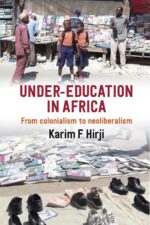
Under-Education in Africa
USD $ 22.00Select options This product has multiple variants. The options may be chosen on the product page
Under-Education in Africa
USD $ 22.00Under-Education in Africa: From Colonialism to Neoliberalism is a collection of essays on diverse aspects of educational systems that were written over a period of four and a half decades, written from the point of view of an activist educator.
With the focus on Tanzania, they cover education in the German colonial era, the days of Ujamaa socialism and the present neo-liberal times. Themes include the social function of education, the impact of external dependency on education, practical versus academic education, democracy and violence in schools, the role of computers in education, the effect of privatization on higher education, misrepresentation of educational history, good and bad teaching styles, book reading, the teaching of statistics to doctors and student activism in education.
Two essays provide a comparative view of the situation in Tanzania and the USA. Linking the state of the educational system with society as a whole, they explore the possibility of progressive transformation on both fronts. They are based on the author’s experience as a long-term educator, his original research, relevant books, newspaper reports and discussions with colleagues and students.
The author is a retired professor of medical statistics who has taught at colleges and universities in Tanzania and at universities in the USA and Norway.
Select options This product has multiple variants. The options may be chosen on the product page -
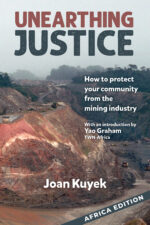
Unearthing justice: How to protect your community from the mining industry AFRICA EDITION
ONLY AVAILABLE IN EASTERN AND SOUTHERN AFRICA
We are pleased to announce that Daraja Press will soon be making Unearthing Justice, originally published by Between The Lines, available in Africa through our partners at Zand Graphics Ltd (throughout East Africa and the Horn) and Sherwood Books (South Africa, Namibia, Botswana, Lesotho, Mozambique and Swaziland).
Originally published in 2019, this new edition has an Introduction by Yao Graham, TWN-Africa. The author, Joan Kuyek, is a community-focused mining analyst and organizer living in Ottawa. She was the founding National Co-ordinator of MiningWatch Canada from 1999–2009 and continues to do work for MiningWatch and for a number of communities affected by mining.
The mining industry continues to be at the forefront of colonial dispossession around the world. It controls information about its intrinsic costs and benefits, propagates myths about its contribution to the economy, shapes government policy and regulation, and deals ruthlessly with its opponents.
Brimming with case studies, anecdotes, resources, and illustrations, Unearthing Justice exposes the mining process and its externalized impacts on the environment, Indigenous Peoples, communities, workers, and governments. But, most importantly, the book shows how people are fighting back. Whether it is to stop a mine before it starts, to get an abandoned mine cleaned up, to change laws and policy, or to mount a campaign to influence investors, Unearthing Justice is an essential handbook for anyone trying to protect the places and people they love.
-

Unsilenced
From: USD $ 10.00Select options This product has multiple variants. The options may be chosen on the product page
Unsilenced
From: USD $ 10.00Unsilenced: Poems for Palestine is a collection of poems that convey profound emotions and serious reflections on the ongoing situation in Gaza and Palestine since the Nakba. The anthology seeks to express the moral outrage felt by poets from around the world, highlighting the perceived double standards of the West regarding international law and the suffering of the Palestinian people. The poems examine the daily realities of life and philosophical perspectives on the human condition, using nature as a motif to articulate emotions and explore themes of homeland, childhood, exile, genocide, and war. All proceeds from the sale of the collection will be donated to Gaza, demonstrating the poets’ commitment to fostering positive change through their art. Contributors include diverse voices from various countries, each recognizing the urgency and necessity of addressing the inhumane actions perpetrated against Palestine.
Income from the sale of this title will be donated for Palestine.
Praise for Unsilenced
Haunting verses by poets fluent in the language of death and genocide. Each poem rings out as a piece of memory, a bridge and a dream. This elegy will stand as a testimonial, a witness, by brave voices exhausted by the deafening silence of a traumatized world. —Nnimmo Bassey, author of I See the Invisible (poems) and Laureate of the Right to Livelihood Award 2010
… the priceless value of an anthology of lyrics from yet another encircled, blitzed, strafed, and bombarded commune, ghetto, or kibbutz, is that it bears indelible witness to the unbreakable human spirit yearning for freedom, for peace, for bread and wine and water set amid an olive grove or a lemon orchard. That is what you will unfold in editor John P. Portelli’s Unsilenced: Poetry for Palestine. Poets—Jew and Arab, Muslim and Christian, Atheist and Surrealist—voice suffering, resilience, despair, and hope, speaking out of their fragile humanity to demand that vile atrocities cease. — George Elliott Clarke, author of Canticles I-III, 6 vols, MMXVI-MMXXIII (2016-2023)
Unsilenced shows how poetry is written to trigger and provoke, to bear witness, to look at the sky and shout, over and over, as loudly as necessary against injustice. Immanuel Mifsud, Associate Professor, University of Malta and winner of the European Union Prize for Literature (2011).
Contributing Authors
Poems by: Raed Anis Al-Jishi (Kingdom of Saudi Arabia), Ridvan Ardic (Türkiye), Lil Blume (Canada), Taghrid Bou Merhi (Lebanon and Brazil), Hasan Bozdaş (Türkiye), Norbert Bugeja (Malta), Tatev Chakhian (Armenia), Franca Colozzo (Italy), Lana Derkač (Croatia), Josie Di Sciascio-Andrews (Canada), Leanne Ellul (Malta), Marthese Fenech (Malta), Abigail George (South Africa), Joe Giampaolo (Canada), Elham Hamedi (Iran), Xanthi Handrou-Hill (Greece), Jennifer Hosein (Canada), Fady Joudah (USA), Sheema Kalbasi (Iran, Denmark, USA), Rula Kahil (Lebanon and Canada), Nibal Khalil (Palestine), Zeyneb Karaca (Türkiye), Yahia Lababidi (USA), Milica Jeftimijević Lilić (Serbia), Sonia Maddouri (Tunisia), Lisa Suhair Majaj (Palestine, U.S.A., and Cyprus), Marwan Makhoul (Palestine), Leila Marshy (Canada), Taghrid Bou Merhi (Lebanon and Brazil), Ahmed Miqdad (Palestine), Maria Miraglia (Italy), Walid Nabhan (Malta, Jordan, Palestine), Mirela Necula (Romania), Mansour Noorbakhsh (Canada), Joseph C. Ogbonna (Nigeria), Muhammed Huseyin Ozer (Türkiye), John P. Portelli (Malta and Canada), Niloy Rafiq (Bangladesh), Shirani Rajapakse (Sri Lanka), Giovanna Riccio (Canada), Omar Sabbagh (Lebanon), Paul Salvatori (Canada), Eray Saricam (Türkiye), Zulal Sema (Türkiye), Cao Shui (China), Kadir Tepe (Türkiye), Graciela Noemi Villaverde (Argentina), Mirela Leka Xhava (France, Albania), Klara Vassallo (Malta), Anna Yin (Canada), Ghassan Zaqtan (Palestine)Select options This product has multiple variants. The options may be chosen on the product page -
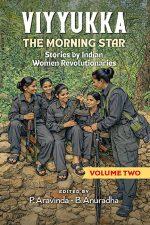
Viyyukka – The Morning Star (Vol 2)
USD $ 5.00 USD $ 26.00Price range: USD $ 5.00 through USD $ 26.00Select options This product has multiple variants. The options may be chosen on the product page
Viyyukka – The Morning Star (Vol 2)
USD $ 5.00 USD $ 26.00Price range: USD $ 5.00 through USD $ 26.00Edited by P. Aravinda and B. Anuradha
This second volume of Viyyukka continues the powerful anthology of stories written by women revolutionaries in India’s Maoist movement, translated from Telugu to English. The collection brings together narratives penned by guerrilla soldiers who document their lived experiences within the revolutionary struggle, offering rare insights into the intersection of armed resistance, gender politics, and Adivasi community life.
The stories span four decades of revolutionary movement history, capturing both tactical engagements and intimate human moments—love, loss, camaraderie, and daily existence in guerrilla squads. What distinguishes this volume is the inclusion of autobiographical sketches by Adivasi women, narrated in their own tongues, detailing the circumstances that led them to become guerrillas. These first-person accounts reveal how poverty, land dispossession, state repression, and patriarchal violence converge to shape revolutionary consciousness.
Set primarily in the Dandakaranya forest region spanning multiple Indian states, the narratives illuminate the movement’s efforts to build alternative structures of governance through Janatana Sarkars (people’s governments), which implemented collective farming, education, healthcare, and resistance to mining corporations. The stories confront the brutal reality of state counter-insurgency operations including Salwa Judum and Operation Green Hunt, while celebrating the resilience of women who constitute nearly half the guerrilla army.
The collection demonstrates how women revolutionaries perform multiple roles—soldiers, writers, historians, doctors, and teachers—documenting their own history while fighting for land, dignity, and self-determination. These are not conventional fictions but testimonies written under extreme duress, smuggled across regions and preserved against overwhelming odds, offering a window into one of India’s most significant contemporary resistance movements.
This is a powerful and timely book. Reading Viyyukka is to encounter history in its most urgent form: not as abstract doctrine, but as the lived, written, and too-often silenced testimony of women for whom the pen was as vital as the gun. This anthology does not simply add voices to a historical record; it fundamentally questions the record itself. By foregrounding the female guerrilla imaginary—with its profound complexities of comradeship, grief, motherhood, and even the critique of revolutionary justice—these stories exceed the boundaries of political propaganda to become essential documents of human endurance and creativity. In a time when their politics is declared defeated, the women of Viyyukka remind us that some struggles are not measured by victory alone, but by the indestructible insistence on bearing witness. — Sharmila Purkayastha, independent researcher, New Delhi
Select options This product has multiple variants. The options may be chosen on the product page -
![Viyyukka - The Morning Star [1]](https://darajapress.com/wp-content/uploads/2025/10/Viyyukka_lo-150x225.jpg)
Viyyukka – The Morning Star [1]
USD $ 10.00 USD $ 20.00Price range: USD $ 10.00 through USD $ 20.00Select options This product has multiple variants. The options may be chosen on the product page
Viyyukka – The Morning Star [1]
USD $ 10.00 USD $ 20.00Price range: USD $ 10.00 through USD $ 20.00Viyyukka: The Morning Star is a rare and compelling anthology of stories written in Telugu over four decades by nearly fifty Maoist women revolutionaries in India. The title, Viyyukka, is a Gondi word meaning morning star. This collection is unique because these narratives are not traditional fiction; they are “lived experiences written from within the movement” while the authors served as guerrilla soldiers, often under extreme duress.
The stories offer a vital glimpse into the human dimensions of armed struggle, highlighting the agency, resilience, and moral consciousness of the women participants. The authors, active in India’s ongoing revolutionary conflict, document everything from tactical and ideological engagements to intimate realities such as love, loss, and camaraderie within their squads.
At its core, the Morning Star series centers on the fierce struggle for survival: of people, forests, rivers, and a way of life. The narratives capture how local struggles against exploitation and dispossession evolved into a wider movement challenging the “Iron Heel of the Indian State” and global capital.
Geographically rooted in Central Indian regions like Dandakaranya, the book vividly portrays the Adivasi (indigenous) resistance for the defense of jal, jangal, and jameen (water, forest, and land). The resistance documented in these pages, particularly against corporate mining and state repression, shares a “common thread” with the struggles of indigenous communities across the globe, positioning this collective testimony as a crucial document of resistance against colonial and capitalist forces.
This is a powerful and timely book. Reading Viyyukka is to encounter history in its most urgent form: not as abstract doctrine, but as the lived, written, and too-often silenced testimony of women for whom the pen was as vital as the gun. This anthology does not simply add voices to a historical record; it fundamentally questions the record itself. By foregrounding the female guerrilla imaginary—with its profound complexities of comradeship, grief, motherhood, and even the critique of revolutionary justice—these stories exceed the boundaries of political propaganda to become essential documents of human endurance and creativity. In a time when their politics is declared defeated, the women of Viyyukka remind us that some struggles are not measured by victory alone, but by the indestructible insistence on bearing witness. — Sharmila Purkayastha, independent researcher, New Delhi
Select options This product has multiple variants. The options may be chosen on the product page -

We Are Still Here
USD $ 7.99 USD $ 27.00Price range: USD $ 7.99 through USD $ 27.00Select options This product has multiple variants. The options may be chosen on the product page
We Are Still Here
USD $ 7.99 USD $ 27.00Price range: USD $ 7.99 through USD $ 27.00Since the start of the unfolding genocide against Palestinians in Gaza, carried out through settler-colonial Israeli violence, higher education institutions have been systematically destroyed. Campuses lie in ruins, academics and students have been killed or forcibly displaced, and what was once a thriving, intellectually vibrant student population now lives under daily threat of bombardment, forced starvation, and death. For nearly two years, students have been cut off not only from their universities, but from their dreams, their futures, and even their most basic sense of safety.
Yet, despite this unimaginable trauma, many are still writing.
We Are Still Here is an anthology of these voices—raw, unfiltered, and courageous. It features short and long stories, poems, essays, and testimonies written by students from Gaza’s universities. These are not retrospective reflections or distant analyses; they are real-time words, emerging from the depths of genocide, displacement, and grief. These writings may be their last hopes to reach the world, a final act of resistance through expression.
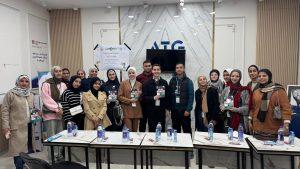
Listen to our podcast conversation
with the student contributors hereOr you can subscribe to Daraja Press podcasts wherever you get your podcasts.
All royalties from the sales of this book go to the student authors in Gaza.
Surviving at the darkest extremes of suffering, of destruction and displacement, famine and the constant threat of maiming or death, these young writers speak to us with piercing lucidity. Their resilience is their only form of optimism. Paradoxically, reading them lifts the heart.
– Ian McEwan, author of Atonement and Enduring LoveA moving, painful and yet hopeful collection of the younger generation of the people of Gaza. Sumud, resilience, was never so powerful and clear, as it appears in this must read and urgent collection. —Ilan Pappé, professor, University of Exeter’s College of Social Sciences and International Studies, author, A Very Short History of the Israel-Palestine Conflict
In the heart of suffering, words are born — and from beneath the rubble, creativity rises. This book is more than a collection of written pages; it is the echo of resilient souls and the cries of pens that spoke when voices were silenced. — Professor Dr. Omar Kh. Melad, President of Al-Azhar University– Gaza
We Are Still Here is not a book about war — it is a book about being alive after the world has decided you are already gone, written in rooms that may no longer stand. These pages are dispatches from the thin edge of the present: letters from hunger, fragments of interrupted lives, flashes of hope so unyielding it burns. Here, young people shape the record of their time on earth, knowing that their time may be short. You will not leave this book with the comfort of closure. It will stay with you long after the final page has turned. — Leila Sansour, filmmaker and founder of Open Bethlehem
These Gaza poignant reflections in prose and poetry from the midst of genocide are both heart-rending and full of life and promise. Israel may have physically killed many of their young authors, but will never kill their words, which live on in this powerful collection of their writings. — Ghada Karmi.
Death is not an ideation for these young writers, but an everyday reality. This collection is a testimony to the power of words. It reveals how love, creativity and hope can galvanise us against fear and inaction. — Selma Dabbagh, author of the novel Out of It and editor of the anthology We Wrote in Symbols; Love and Lust by Arab Women Writers.
Sara Alkhaldy, one of the contributors to We Are Still Here, a new Gazan anthology of student writing, says: ‘I wish I could bottle the scent of our home and take it with me as I left.’ Rula Elkhair writes of studying during displacement: ‘Even in places with no electricity, no water and no stable internet, I installed an eSIM on my phone and climbed to the rooftop under buzzing drones to download lectures. I took exams in cafés by the sea. I studied while hungry, while afraid, while grieving.’ — Selma Dabbagh in London Review of BooksKnowledge of the Relevant Facts
You can find the French language edition here: Nous Sommes Toujours Là
Select options This product has multiple variants. The options may be chosen on the product page