
-
Politics and Culture in African Emancipatory Thought
USD $ 5.00 USD $ 15.00Price range: USD $ 5.00 through USD $ 15.00Select options This product has multiple variants. The options may be chosen on the product page
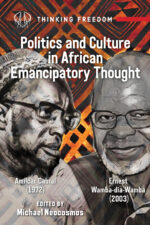
Politics and Culture in African Emancipatory Thought
USD $ 5.00 USD $ 15.00Price range: USD $ 5.00 through USD $ 15.00The current absence of any emancipatory vision for Africa lies at the heart of our political problems of racial capitalist and colonial oppression. Any attempt to rethink political emancipation on the African continent must be able to locate a universal conception of freedom within singular cultural experiences where people live. Irrespective of the specific manner in which such struggles for freedom were thought within different historical contexts, emancipatory politics always exhibited such a dialectic when it was based within popular traditions. Yet only some militant intellectual leaders understood the importance of this dialectic in thought.
The present volume outlines and discusses two particularly important views concerning the role and importance of popular culture in emancipatory politics in Africa. Each is the product of distinct forms of colonial capitalist exploitation: the former saw the light of day within a colonial context while the latter is directly confronted by the neocolonial state. All emancipatory politics are developed in confrontation with state power, and all begin with a process of discussion and debate whereby a collective subject begins to be formed. The formation of such a collective political subject has been fundamentally informed by popular cultures on the African continent.
The two authors whose essays are included here understood this and posit popular culture at the centre of their politics. The first, Amílcar Cabral, addresses the central role of popular culture in the independence struggle of Guinea Bissau in the 1970s; the second, Ernest Wamba-dia-Wamba, addresses the centrality of African popular culture in an emancipatory politics for the current Democratic Republic of Congo. Despite the distance in time that separates them, both Cabral and Wamba-dia-Wamba develop a dialectics at the core of their politics which activates the universals of culture in the present. It is this that makes their views of central importance to emancipatory thought today.Select options This product has multiple variants. The options may be chosen on the product page -
Politics of Turbulent Waters: Reflections on Ecological, Environmental and Climate Crises in Africa
USD $ 5.00 USD $ 20.00Price range: USD $ 5.00 through USD $ 20.00Select options This product has multiple variants. The options may be chosen on the product page
Politics of Turbulent Waters: Reflections on Ecological, Environmental and Climate Crises in Africa
USD $ 5.00 USD $ 20.00Price range: USD $ 5.00 through USD $ 20.00For the past 10 years, the Health of Mother Earth Foundation (HOMEF) has been on the front line of the struggle for environmental justice, climate justice and food sovereignty in Africa and the globe. It has been a decade of non-stop probing of the exploitation of resources, peoples and nations, which has given rise to numerous environmental and climate injustices. HOMEF has had a decade of witnessing and standing against the injustice, the powers and structures (industries and policies) suffocating the rights of the people to a healthy environment and standing with the neglected to take charge of their once self-managed food and agricultural systems. The struggle has necessitated the reawakening of communities’ consciousness to the injustices that besiege them and to their ‘people power’ – power to be utilized in seeking the desired change.mPolitics of Turbulent Waters is a compendium of selected articles in the 36 issues of the Eco-instigator published from 2013 to 2022. The Eco-instigator is yet another tool used by HOMEF to pull together thoughts and reports of activities that advance environmental justice and food sovereignty. Issue by issue, these thoughts and reports flow from within HOMEF and other environmental/climate justice and food sovereignty advocates from across Africa and the globe.They form this rich assemblage (Politics of turbulent waters) to commemorate HOMEF’s 10th anniversary. The title of the book is one of Nnimmo Bassey’s (the director of HOMEF) numerous articles that have graced some pages of the different issues of the Eco-instigator. The article cum title encapsulates the messages that the book intends to convey to you, the reader. It crystallizes the dire condition of Africa and its waters and the power imbalance together with the spatial disposition that plunged the continent into the calamitous environmental situation it faces. It speaks of the politics of economic development and market fundamentalism that avows to maintain the status quo in terms of destructive exploitation of Africa’s marine and other natural resources.
Select options This product has multiple variants. The options may be chosen on the product page -

Politics, Democratization and Academia in Uganda: The Case of Makerere University
USD $ 6.99 USD $ 20.00Price range: USD $ 6.99 through USD $ 20.00Select options This product has multiple variants. The options may be chosen on the product page
Politics, Democratization and Academia in Uganda: The Case of Makerere University
USD $ 6.99 USD $ 20.00Price range: USD $ 6.99 through USD $ 20.00As the oldest (and arguably best-known) university in Uganda and the wider eastern and central Africa region, Makerere University looms large in the history of higher education on the continent. Alma mater to presidents, public intellectuals and pundits of all disciplines, Makerere has attracted considerable scholarly and popular attention, both in respect of its prominence and achievements, and well as with regard to its failures and foibles. The proposed book focuses on a particularly understudied aspect of the place of higher education in the African context, i.e. the relationship between a public university of unique historical importance and the contestations over democratization that have taken place both within campus and outside of it. It is built around the late-1980s struggle by the Makerere University Academic Staff Association (MUASA) for improved living conditions against the backdrop of the early programs of structural adjustment and economic reform that the National Resistance Army/Movement (NRA/M) government adopted soon after taking power in 1986. Although seemingly introverted in focus, in many respects the MUASA action represented the earliest forms of political struggle against a regime of governance that promised a great deal, but disappointingly delivered considerably less.
The focus on MUASA provides a critical entry-point to a wider debate about the place of organized democratic action by academics in a post-conflict context where the traditional institutions of political and civil society, i.e. political parties and non-governmental organizations (NGOs) have either been severely compromised or discredited, or where they are too weak and inorganic to provide any form of significant counter-juxtaposition to the government in power. By organizing the first strike by academic staff in the sixty-seven (67) year history of the university, for a time MUASA became the focal-point for democratic organizing against a regime that was yet to fully expose its nefarious and anti-democratic colours. The book examines the broader issues concerning the relationship between organized academic action and democratization; the place of the Media in reviewing these struggles; the position of students as a critical component of academe; “big P” and “small p” politics affecting female academics, and finally, the paradoxical role of the School of Law in both aiding and inhibiting the struggle against dictatorship in a country which has enjoyed
Select options This product has multiple variants. The options may be chosen on the product page -

Politique et culture dans la pensée émancipatrice Africaine
USD $ 5.00 USD $ 9.00Price range: USD $ 5.00 through USD $ 9.00Select options This product has multiple variants. The options may be chosen on the product page
Politique et culture dans la pensée émancipatrice Africaine
USD $ 5.00 USD $ 9.00Price range: USD $ 5.00 through USD $ 9.00Au cœur de nos problèmes politiques issus d’un capitalisme racial et d’une oppression (néo)coloniale en Afrique aujourd’hui se trouve l’absence de toute vision émancipatrice véritable. Toute tentative de repenser une politique émancipatrice en Afrique doit pouvoir situer une vision universaliste de la liberté parmi les expériences culturelles singulières que les gens vivent. Les politiques émancipatrices quand elles existaient, bien que pensées dans les luttes pour la liberté ayant lieu dans des contextes historiques particuliers, mettaient toujours en vue une dialectique de ce genre quand elles étaient vraiment basées parmi les traditions populaires. Cependant, seulement une minorité de dirigeants intellectuels et militants comprenait l’importance d’une telle dialectique pour la pensée et l’action.
Ce petit livre trace le contour et discute de deux points de vue très importants sur le rôle de la culture populaire dans la politique émancipatrice en Afrique. Chacun d’entre eux émane de formes d’exploitation capitalistes coloniales distinctes : le premier a vu le jour dans un contexte colonial classique tandis que le second est directement issu d’un contexte étatique néocolonial. Toute politique émancipatrice est développée vis-à-vis le pouvoir d’état et toutes commencent avec un processus de discussion ou est formé un sujet collectif. Un tel sujet politique doit être fondamentalement informé par et conçu en relation avec les cultures populaires.
Les deux auteurs ci-inclus ont compris ce principe et mettent la culture populaire au centre de leur pensées politiques. Le premier, Amílcar Cabral se réfère au rôle principal de la culture dans la lutte contre le colonialisme au Guinée Bissau dans les années 1970 ; le second, Ernest Wamba-dia-Wamba insiste sur le rôle central de la culture populaire pour une politique émancipatrice dans la République Démocratique du Congo aujourd’hui. Malgré la distance temporelle qui les sépare, tous les deux développent au centre de leurs politiques distinctes, une pensée dialectique qui déclenche des pensées universalistes depuis la culture populaire dans le présent. C’est pour cela que leurs points de vue sont d’une importance capitale pour la pensée de la politique émancipatrice en Afrique aujourd’hui.
Select options This product has multiple variants. The options may be chosen on the product page -

Post Capitalist Philanthropy
USD $ 7.99 USD $ 49.00Price range: USD $ 7.99 through USD $ 49.00Select options This product has multiple variants. The options may be chosen on the product page
Post Capitalist Philanthropy
USD $ 7.99 USD $ 49.00Price range: USD $ 7.99 through USD $ 49.00“Post capitalist philanthropy is a paradox in terms. A paradox is the appropriate starting place for the complex, entangled, messy context we find ourselves in as a species.” This is how long-time activists, political strategists, and accidental philanthropy advisors Alnoor Ladha and Lynn Murphy start their treatise on Post Capitalist Philanthropy. This book is a result of decades of practice and research, including a hundred plus interviews with leading activists, philanthropists, philosophers, social scientists, cosmologists and wisdom keepers.
The authors take us on a journey from the history of wealth accumulation to the current logic of late-stage capitalism to the lived possibilities of other ways of knowing, sensing and being that can usher in life-centric models. This “ontological shift”, as they call it, is at the heart of the text – creating new-ancient-emerging realities is not simply about how we redistribute wealth or “fight power”, but rather, how we perceive and embody our actions in relationship to a dynamic, animistic world and cosmos.
This book is made available by Daraja Press on behalf of the Transition Resource Circle.
The Spanish version of this book is available at
Select options This product has multiple variants. The options may be chosen on the product page -
Racism, Capitalism, and COVID-19 Pandemic
USD $ 5.00 USD $ 15.00Price range: USD $ 5.00 through USD $ 15.00Select options This product has multiple variants. The options may be chosen on the product page
Racism, Capitalism, and COVID-19 Pandemic
USD $ 5.00 USD $ 15.00Price range: USD $ 5.00 through USD $ 15.00he COVID-19 pandemic has brought into sharp relief the deep structural problems affecting nonwhite racialized workers in the core and periphery. Yet, many social scientific analyses of the global political economy, at least in the pre-COVID era, are race neutral or willfully indifferent to the persistent racial pattern of global inequalities. This pamphlet explains how the unremitting super-exploitation of Black and other nonwhite racialized labor in the core and the periphery persisted throughout the COVID-19 crisis through the lens of Black radical scholarship on racism and capitalism.
Edwards not only captures how people of African descent have been disproportionately impacted by COVID, but also the historical, sociological and structural roots of the inequalities that affect vulnerable groups across the world, tied to what she has described as the architecture of the global economy linked to race and gender. She represents a refreshing voice in our time and part of a Caribbean radical tradition in the spirit of Claudia Jones, Eric Williams, Oliver C. Cox, and C.L.R. James, from her native Trinidad, as well as Guyana’s Walter Rodney and Andaiye.Select options This product has multiple variants. The options may be chosen on the product page -
Rastafari Movement, The: A Beginners Guide
USD $ 5.00 USD $ 15.00Price range: USD $ 5.00 through USD $ 15.00Select options This product has multiple variants. The options may be chosen on the product page
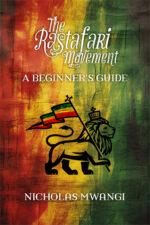
Rastafari Movement, The: A Beginners Guide
USD $ 5.00 USD $ 15.00Price range: USD $ 5.00 through USD $ 15.00Why is this book necessary today?
Rastafari: A Beginner’s Guide” holds immense relevance due to its unique approach to addressing the complex movement of Rastafarianism. It’s complex nature, encompassing elements of social movements, Pan-Africanism, Afrocentrism, philosophy, and religion, can be overwhelming for new readers. This book serves as an accessible introduction, providing a foundational understanding that caters to both Rastafarians and individuals with limited knowledge of the movement.
By delving into the essence of the Rastafari lifestyle beyond superficial attributes like dreadlocks and cannabis use, the book helps dispel misconceptions and offers a more accurate representation of the movement’s beliefs and principles. Further, this guide aids in shedding light on the depth and significance of Rastafarianism’s contributions to culture, spirituality, and social thought but also its philosophical challenges.
The book’s coverage of Rastafarianism’s historical trajectory and foundational values provides crucial context for understanding its development over time. By highlighting its evolution from its origins in Jamaican ghettoes to its expansion into a more inclusive and diverse community that includes professionals and the middle class, the book underscores the movement’s adaptability and relevance in changing societal landscapes.
Despite existing scholarly contributions, there remains a need for a concise, approachable guide that synthesizes the wealth of information available on Rastafarianism. This book fills that gap, providing readers with a comprehensive yet accessible overview that can serve as a starting point for further exploration.
Select options This product has multiple variants. The options may be chosen on the product page -

Recent Political Developments in West Africa
A compendium focused on political developments in West Africa from 2014 to early 2015. Popular uprisings, regime collapse, armed conflicts, epidemic, and economic emergencies in various States are reviewed. The questions of sovereignty and the future of social movements are central considerations.
-

Religion, Eugenics, Science and Mathematics
USD $ 5.00 USD $ 45.00Price range: USD $ 5.00 through USD $ 45.00Select options This product has multiple variants. The options may be chosen on the product page
Religion, Eugenics, Science and Mathematics
USD $ 5.00 USD $ 45.00Price range: USD $ 5.00 through USD $ 45.00Religion, Eugenics, Science and Mathematics by Karim F Hirji examines the dynamic relationship between religion, on the one hand, and science and mathematics, on the other, on historical and conceptual grounds. It focuses on Hinduism, Buddhism, Christianity, Islam, and various shades of secularism, including Marxism. Where relevant, other faiths are integrated into the analysis. The questions it addresses include: Are religion and science mutually exclusive, opposing entities? Do divine beings and divine realms exist? Are science and religion valid but different forms of truth? What are the societal roles of science and religion? Can science provide a tenable, exalted code of ethics? What are the futures of religion and science? Can religion and science cooperate in resolving the daunting, existential problems facing humanity today? All issues are explored in an interdisciplinary, historical manner. Examination of the religious dimension of the doctrine of eugenics, which culminated in the Nazi era extermination pogroms, forms a major case study in the book.
Among other things, the book peruses scriptures, explores practice, enjoins analysis with anecdotes, and contrasts the beliefs of scientists and religious luminaries. Though it is directed toward the general reader, its novel approach, broad consideration of social and economic factors, and the nature of the evidence it has marshalled makes it of interest to theologians and scientists as well.
Religion, Eugenics, Science and Mathematics builds on the foundation laid in Religion, Politics and Society by Karim Hirji. In addition to eugenics, by relating religion to mathematics, genetics, neurology, climate change and other issues, the book reveals that the relationship between religion and science is a complex, entangled knot, not reducible to a simplistic summary.
The ultimate message of the book is that science and religion can exist harmoniously on the moral plane and that the primary obstacle facing human progress today is neither religion nor science but the dominant neoliberal system that generates vast inequality, deep social divisions, including religious divisions and a callous disregard for the global biosphere.Select options This product has multiple variants. The options may be chosen on the product page -

Religion, Politics and Society: A progressive primer
USD $ 5.00 USD $ 55.00Price range: USD $ 5.00 through USD $ 55.00Select options This product has multiple variants. The options may be chosen on the product page
Religion, Politics and Society: A progressive primer
USD $ 5.00 USD $ 55.00Price range: USD $ 5.00 through USD $ 55.00Written by Karim F Hirji, a retired professor of Medical Statistics, Religion, Politics and Society focuses on the four major global religions—Hinduism, Buddhism, Christianity and Islam—together with minor religions like the Ahmadiyya, Confucianism, Sikhism, Seventh Day Adventism and Traditional African Religion as well as on Secularism, New Age beliefs and the ancient Paleolithic and Neolithic era belief systems to explore the origin, spiritual import and social function of religion in human society. Utilizing the canons, beliefs, practices, history, eminent personages, institutions of the diverse faiths, it tackles matters like: How did the social function of religion evolve over time? How does religion relate to the power structure of society? Does religion promote or hinder social harmony, justice and equality? Under what circumstances? Is religion necessary for morality? What are the roots of interfaith conflict? How do modern religions and neoliberalism interact with each other? Does religion have a future? Can religion and secularism be harnessed for resolving the globally vexing yet pivotal concerns of human society? If so, how?
These and related issues are tackled with the help of a variety of past and contemporary individual level and broader type of richly illustrated examples. The role of women in religion a topic of focus throughout the text. The varied functions of religion under slavery, feudalism, capitalism, colonialism, neo-colonialism, imperialism. socialism, and neoliberalism are also attended to.
The foundational premise of this book is that while spiritual beliefs differ, all humans are equal in dignity and have equal rights. No religion is more exalted than others; there are no chosen people. We all belong to the global human family. Our religious and cultural diversity is a cause for celebration, not conflict.
Respectful in style and targeted towards the general and knowledgeable readers, Religion, Politics and Society is the first of a two-book project. The second book, Religion, Science and the Pandemic, addresses the relationship between religion, science and mathematics. The key objective of these books is to help uplift the quality and tenor of the current discourse on religion and explore how faith can promote human dignity, equality, social justice and harmony. A genuine consensus and peaceful coexistence cannot emerge from diluting the truth.Select options This product has multiple variants. The options may be chosen on the product page -

Religion, Society and the Pandemic: A complex entanglement
USD $ 5.00 USD $ 50.00Price range: USD $ 5.00 through USD $ 50.00Select options This product has multiple variants. The options may be chosen on the product page
Religion, Society and the Pandemic: A complex entanglement
USD $ 5.00 USD $ 50.00Price range: USD $ 5.00 through USD $ 50.00In nearly three years, starting from early January 2020, the coronavirus directly and indirectly consumed the lives of nearly 20 million people worldwide. This book explores the interplay between the coronavirus pandemic and religion on the theological, institutional and societal dimensions. It focuses on Hinduism, Buddhism, Christianity, Islam and secularism, but some minor faith systems are also covered. Exploring the evolution of the pandemic in seventeen nations, it asks: Was religious belief an obstacle or a positive factor in understanding the scientific basis of the coronavirus pandemic? Did religious institutions, leaders and laity facilitate or block the implementation of the official pandemic control measures? Was the role played by religion in the coronavirus pandemic affected by historical, social, economic and political factors? How did secularism operate in the coronavirus pandemic? Did the coronavirus pandemic enhance or undermine religiosity? The basic aim is to draw lessons from this pandemic that will facilitate how humanity may deal with future pandemics in a just and egalitarian social order.
Select options This product has multiple variants. The options may be chosen on the product page -
Rethinking Development
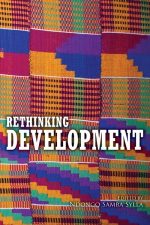
USD $ 22.00Beyond the critique of neo-liberalism, there is therefore a pressing need to reflect about alternatives that will help Africa back out of this dead-end and find its own path. This is the perspective adopted by this book edited by Ndongo Samba Sylla, which compiles contributions of experts on Africa’s development issues. Can democracy help to achieve the changes that Africans aspire to? If yes, under what conditions? Otherwise, what is the alternative?
-
 Select options This product has multiple variants. The options may be chosen on the product page
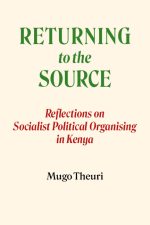
Returning to the Source
Returning to the Source offers a bold and critical examination of Kenya’s political evolution, tracing how colonial rule laid the groundwork for an exclusionary democracy that persists today. The book dissects the contradictions at the heart of the nation’s post-independence politics—from elite handshakes and voter cynicism to the repeated stalling of leftist organising. Moving beyond conventional histories, the author explores why socialist movements in Kenya have struggled to gain traction, examining internal rivalries, caution, and the lingering shadows of figures like Jaramogi Oginga Odinga and the banned Kenya People’s Union (KPU). The book also sheds light on the complex, contradictory unity among leaders such as Kenyatta, Mboya, and Odinga, and argues for a politics based on listening and moral authority rather than raw power. Crucially, Returning to the Source confronts the erasure of women from political memory and the patriarchal shackles that continue to limit liberation. It calls for localising heroism and recovering indigenous political intelligence as essential tools for rebuilding genuine socialist organising. By recovering erased histories and championing local heroes, the book offers both a critique and a path forward—urging a return to listening, collective action, and a more inclusive, transformative politics for Kenya and beyond.
The author is a Kenyan political thinker, organiser, and scholar whose work sits at the intersection of history, socialist theory, and grassroots mobilisation. Drawing on decades of engagement with social movements and a deep commitment to recovering suppressed narratives, they bring both academic rigour and lived political experience to the page. Having themselves been imprisoned and tortured for their political beliefs, the author writes not from abstract detachment but from the brutal reality of state repression. This personal history of surviving state violence infuses every chapter, lending the book an urgent moral weight and an unflinching honesty. Their writing challenges conventional hero worship and instead centres collective action, indigenous intelligence, and the often-overlooked roles of women and local figures in liberation struggles. Returning to the Source is the culmination of a lifelong commitment forged in resistance—understanding why progressive change in Kenya has repeatedly faltered, and how it might yet be revived through courage, listening, and solidarity.
1. How Colonialism Shaped an Exclusionary Democracy, 19
2, The Nationalist Inheritance and Its Blind Spots, 33
3, Democracy: Handshakes, Elite Pacts, Voter Cynicism, 44
4, Why Leftist Organising in Kenya Keeps Stalling, 69
5, Politics of Hesitation, Caution, and Internal Rivalry, 86
6, Lessons from Kenya’s Socialist Movements, 100
7, Challenges of Socialist Organising after Jaramogi’s KPU, 113
8, The Place of Indigenous Political Intelligence in Organising, 123
9, The Contradictory Unity: Kenyatta, Mboya and Odinga, 135
10, Leadership as Listening: Moral Authority Vs. Power, 146
11, The Erasure of Women from Political Memory, 158
12, Liberating Women from the Shackles of Patriarchy, 179
13, Localising Liberation Heroism to Rescue Erased Histories, 194
14, Local Heroes and the Struggle for Socialist Organising, 221
Bibliography, 240
About the Author, 251Select options This product has multiple variants. The options may be chosen on the product page -

Revolución Rinky-Dink: Yendo Más Allá del Capitalismo Negando Consentimiento, y Promoviendo Construcciones Creativas y Destrucciones Creativas
Suggested Price: USD $ 4.99Este panfleto aborda la pregunta: ¿cómo podemos pasar de A a B, del capitalismo al poscapitalismo? La revolución de Rinky-dink involucra acciones e inacciones que son fáciles, seguras, mundanas, sin glamour y factibles dentro de la vida de cada persona.
Howard Waitzkin presenta una intervención clara y directa para el cambio revolucionario en el sistema económico capitalista global. Cubre mucho terreno, con sofisticación, mientras mantiene la discusión en tierra. Su enfoque en las formas de facilitar un desafío al capital y construir una mayor transformación revolucionaria es crucial en esta coyuntura histórica. Esta discusión sobre construcciones creativas y destrucciones creativas es particularmente útil.
— Brett Clark, profesor de sociología de la Universidad de Utah y autor De El Robo De La Naturaleza: Capitalismo Y Grieta Ecológica, The Robbery of Nature: Capitalism and Ecological Rift en inglés.
El fin del capitalismo es posible. Waitzkin nos lleva un paso más allá en el proceso creativo para esta transformación. A través de ejemplos específicos de grupos organizados dentro de los Estados Unidos y en el extranjero, este trabajo constituye una guía práctica para todos. Waitzkin alienta nuestra creatividad para actos organizados y seguros además de omisiones para trascender el capitalismo.
— Nylca J. Munoz Sosa, abogada, líder de salud pública y activista centrada en la justicia sanitaria y la descolonización en Puerto Rico.
-

Revolutionary Hope vs Free-Market Fantasies Keeping the Southern Africa Liberation Struggle Alive: Theory, Practice, Context
USD $ 5.00 USD $ 20.00Price range: USD $ 5.00 through USD $ 20.00Select options This product has multiple variants. The options may be chosen on the product page
Revolutionary Hope vs Free-Market Fantasies Keeping the Southern Africa Liberation Struggle Alive: Theory, Practice, Context
USD $ 5.00 USD $ 20.00Price range: USD $ 5.00 through USD $ 20.00John S. Saul, born and first educated in Toronto, Canada, moved to Tanzania almost sixty years ago and, since then, has also taught in Mozambique and South Africa as well as back in Canada at York University. In Tanzania, he discovered the centrality of the war for freedom from white rule and global capitalist dictate then taking shape further south – in Mozambique, Angola, Zimbabwe, Namibia and South Africa. Both his scholarly interest and his activist bent drew him to support and to seek to better understand the struggles in these nations-in-the-making, a political choice that now culminates in a final trilogy of books under the general title, The Rethinking Southern African Liberation Trilogy. The first volume of this trilogy, On Building a Social Movement: The North American Campaign for Southern African Liberation Revisited, was published by Africa World Press / Fernwood Books (2017). The present book is the second in that trilogy, with a third volume entitled Class, Race and the Thirty Years War for Southern African Liberation – A History set to conclude his work to be published by Cambridge University Press in 2022.
Here, Saul’s extended first chapter lays out the broad premises of the thinking that has guided his endeavours, ideas that takes the core reality of economic production and exploitation centrally but that are alive to the tangible impact on outcomes of a wide range of other social realities, including class, race, gender, sexuality, nationalism, the environment, politics and the state. A second section covers the essential unity of theory and political practice that underpins Saul’s findings. And a third and final section paints illuminating pictures of some core aspects of the diverse regional contexts — sites of both recolonization and continuing struggle, and all contexts whose trajectories will be further explored in his forthcoming third volume.
Select options This product has multiple variants. The options may be chosen on the product page -
Rhymes of Blood and Jasmine (Hardback)
USD $ 34.00USD $ 44.00Select options This product has multiple variants. The options may be chosen on the product page
Rhymes of Blood and Jasmine (Hardback)
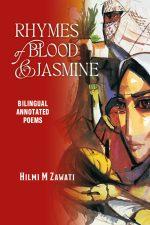
USD $ 34.00Rhymes of Blood and Jasmine is far more than a bilingual poetry collection; it is a poetic and cultural testimony that merges lyrical beauty with critical depth. Spanning over five decades of creative expression, Dr. Hilmi Zawati weaves verses charged with spiritual and romantic love, exile, memory, resistance, and identity. Symbols like jasmine, oranges, figs, and blood evoke a profound sense of homeland, sacrifice, and longing, forming an emotional tapestry firmly rooted in the Palestinian experience. This is poetry that does not simply describe a reality but embodies it, offering readers an intimate portal into a world shaped by history and sustained by hope.
What makes this collection truly singular is its self-translation—a rare act that unites author and translator into a single, cohesive poetic voice. Zawati transcends conventional translation by recreating the essence of his Arabic poems in English with unmatched emotional and stylistic fidelity. His bilingual artistry breathes life into both texts, allowing them to resonate authentically across languages and cultures, ensuring that the nuance and musicality of the original are never lost.
This work speaks to a broad audience of readers, scholars, poets, translators, and students of translation studies, comparative literature, Palestinian history, and Arab diaspora cultures. It asserts translation as a form of cultural sovereignty—rejecting distortion, simplification, and marginalisation—while affirming the enduring presence of Arab poetic tradition within global literature. Rhymes of Blood and Jasmine is not just to be read; it is to be lived. A poetic bridge between languages and worlds, it revives silenced memories and restores the voice of love and homeland with grace, dignity, and truth. This collection is an essential contribution to world literature, offering a poignant reminder of poetry’s power to heal, resist, and connect.
USD $ 44.00Select options This product has multiple variants. The options may be chosen on the product page -
Rhymes of Blood and Jasmine (Paperback)
USD $ 20.00USD $ 28.00Select options This product has multiple variants. The options may be chosen on the product page
Rhymes of Blood and Jasmine (Paperback)
USD $ 20.00Rhymes of Blood and Jasmine is far more than a bilingual poetry collection; it is a poetic and cultural testimony that merges lyrical beauty with critical depth. Spanning over five decades of creative expression, Dr. Hilmi Zawati weaves verses charged with spiritual and romantic love, exile, memory, resistance, and identity. Symbols like jasmine, oranges, figs, and blood evoke a profound sense of homeland, sacrifice, and longing, forming an emotional tapestry firmly rooted in the Palestinian experience. This is poetry that does not simply describe a reality but embodies it, offering readers an intimate portal into a world shaped by history and sustained by hope.
What makes this collection truly singular is its self-translation—a rare act that unites author and translator into a single, cohesive poetic voice. Zawati transcends conventional translation by recreating the essence of his Arabic poems in English with unmatched emotional and stylistic fidelity. His bilingual artistry breathes life into both texts, allowing them to resonate authentically across languages and cultures, ensuring that the nuance and musicality of the original are never lost.
This work speaks to a broad audience of readers, scholars, poets, translators, and students of translation studies, comparative literature, Palestinian history, and Arab diaspora cultures. It asserts translation as a form of cultural sovereignty—rejecting distortion, simplification, and marginalisation—while affirming the enduring presence of Arab poetic tradition within global literature. Rhymes of Blood and Jasmine is not just to be read; it is to be lived. A poetic bridge between languages and worlds, it revives silenced memories and restores the voice of love and homeland with grace, dignity, and truth. This collection is an essential contribution to world literature, offering a poignant reminder of poetry’s power to heal, resist, and connect.
USD $ 28.00Select options This product has multiple variants. The options may be chosen on the product page -

Rinky-Dink Revolution: Moving Beyond Capitalism
USD $ 5.00 USD $ 15.00Price range: USD $ 5.00 through USD $ 15.00Select options This product has multiple variants. The options may be chosen on the product page
Rinky-Dink Revolution: Moving Beyond Capitalism
USD $ 5.00 USD $ 15.00Price range: USD $ 5.00 through USD $ 15.00This pamphlet tackles the question: how do we get from A to B, capitalism to post-capitalism?
It is critical reading to understand why:
* Capitalist-oriented industrial agriculture and its destruction of habitat are the upstream causes that led to the COVID-19 pandemic as well as other past and future pandemics of devastating, emerging viral pathogens.
* COVID-19 may trigger a collapse of the global capitalist system but it is not the cause.
* Health-care and public-health systems organized around capitalist principles don’t do well in pandemics, compared to those not organized around capitalist principles.
* The current economic collapse, triggered by a pandemic, opens a door for revolutionary transformation.The pamphlet is also available in Spanish and Korean.
Select options This product has multiple variants. The options may be chosen on the product page -
Rooted in struggle
Edited by
Anne Harley and Jonathan LangdonWith
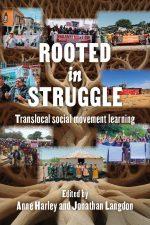
Edward Adeti, Coleman Agyeyomah, Sheena Cameron, Amanor Dzeagu, Leocadio Juracan Salome, Thapelo Mohapi, Zodwa Nsibande, Ro Paradela, Alhassan Shani, Wojciech Tokarz, & Nyeya YenThis book is the culmination of several years of partnership between social movements, social justice organizations and academics in Ghana, South Africa, Guatemala and Canada. Called the Translocal Learning Network, this partnership has generated a space for those facing the multiple and overlapping crises of our time to come together and share knowledge and mutually solidarize with each other’s struggles. This knowledge exchange and mutual solidarity has been non-hierarchical and collaborative in nature, and has taken the form of sharing and commenting on complex stories of these struggles through a participatory research methodology known as narrative restorying. As such, this book will focus on the stories each partner has shared, along with engagement with these stories by other members of the network. This interplay of knowledge sharing will provide a window into the social movement learning of network members.
The central argument of the book was best captured by Thapelo Mohapi from South Africa’s Abahlali baseMjondolo: “It is always assumed that when you are poor, when you are living in a shack, when you live in a rural area, when you are marginalized, that you cannot think for yourself, that you cannot be involved in development, because you are poor”; instead of this “People must make decisions and must be consulted, and they must have a voice to speak about their own development. It must be initiated and completed with the people.” This book is literally a space where those on the front line of struggles against land & livelihood dispossession, violent resource exploitation, climate-fueled emergencies, and the denigration of cultural and traditional indigenous knowledge share their experiences, learning, successes, and defeats, with those facing similar and related struggles but in different contexts.
In addition to the stories of these front-line voices, scholars working alongside these struggles also share some of their learnings and ideas that have emerged from the partnership in the book. Students supporting the partnership also share their learning in the book, as well as describing how their activism also provoked learning in the network. In other words, this book provides a window into a rich, ongoing dialogue of mutual learning and support that will speak to audiences in the activist and critical academic communities.
To that point, this translocal network uses the notion of translocality to push back on the capitalist, colonial, and neo-liberal agenda of a) maintaining divisions between people struggling against oppression in different parts of the world (through border controls, language divisions, and colonial racialized othering); and, b) maintaining a knowledge hierarchy that states, international institutions, intellectual institutions, and corporations are those best able to contend with the many crises we face, and even within activists, it is those movements and organizations with broad, multinational reach that can best speak for the affected. Translocality argues that it is those with local knowledge of crises and context that are best positioned to speak to what needs to change, and that local struggles meeting each other as equals, translocally, is the best way to learn from one another without imposing new forms of knowledge hierarchies. Everaldo Morales Baján, from Commité Campisino del Altiplano (CCDA) in Guatemala captures this sentiment well when he says: “This book captures the essence and importance of the different struggles that exist in various parts of the world, but which converge on always caring for the planet and human rights.”
Chapter Summaries
Introduction: Translocal social movement learning: building mutual solidarity and contesting development for social and environmental justice
Jonathan Langdon; Sheena Cameron; Rodrigo Paradela; Wojciech Tokarz
In an effort to encourage connection and mutual learning between local movements, the Translocal Learning Network (TLN) serves as an effective social justice framework that attempts to build and maintain local to local (i.e. translocal) non-hierarchical connections between movements. The overall goal of this research partnership is to catalyze and animate translocal learning as a means to build capacity among localized movements in their struggles for a climate just and anti-capitalist future, and in so doing trace the contours of a theory of translocal learning – learning based on local to local learning as opposed to top down learning that mimics the very problematic of global dominance these movements contest. Key to this process is an insistence that movements and groups rooted in local social change efforts are crucial authors and actors of a climate just and anti-capitalist future. The members of the TLN address ongoing and emergent injustices to claim rights, assert agency, and demand representation and the redistribution of resources for marginalized communities in South Africa, Ghana, Guatemala and Canada. Creating shared spaces for connection, support, and learning through the ongoing struggles of each social movement has provided continuous moments of solidarity and opportunities for reimagining being in the world. This book showcases the perspectives of our partners, providing rich accounts of their experiences that illuminate struggles, insights, and successes. It also includes academic reflections on intercultural exchanges and offers an in-depth analysis of the collaborative learning process.
‘Players change but the game remains the same’: current realities of the poor, particularly in KwaZulu Natal
Zodwa Nsibande, Church Land Programme
This phrase was used by one member of Abahlali baseMjondolo in a meeting where we were talking about elections and the impact it has on people on the ground, especially who are marginalized and yet they are still expected to participate in the upcoming elections. She cautions that we need to be mindful that even if we change the ruling party, the ‘game’, the electoral system, remains the same, producing elites. Apartheid system favored ‘white’ people. Now the current system favors the elite. The ones who are poor remain poor and left with hope that someday things will change; hope that is shattered yet renewed every five years.
While there is less intense focus on South Africa now that apartheid is over, the sociological legacies continue and the fundamental nature or rules of the game remain intact. It points to the idea that regardless of who is involved, the main objectives, strategies, and overall dynamics of the game do not change. It emphasizes the notion that although the participants may alter, the essence of the game remains unchanged.
CLP will discuss the current realities of the poor, particularly in KwaZulu Natal, under the ongoing oppressive systems in South Africa, that permeates to all aspects of life, including the electoral system that favors the elites, the failing electricity system with load-sharing, and the improper stormwater drainage systems in townships and shack settlements, flood-prone areas (compounded by climate change) that results in loss of homes, food, and lives when it rains.
The Talensi-Nabdam Gold Rush: Local Complicity, Resource Exploitation, and the Crisis of Dignity
Coleman Agyeyomah Venceremos & Alhanssan Shani
This discussion will delve into the profound impact of multi-national mining activities on the communities of the Upper East Region in Ghana, specifically focusing on the alarming stories of dispossession of ancestral lands. The region, rich in cultural heritage and agricultural livelihoods, faces a growing threat as multi-national mining companies seek to exploit its abundant gold resources in collusion with State Institutions.
Through an exploration of real-life stories, light will be shed on the multifaceted consequences of multinational mining-induced dispossession of community lands. From the loss of cultural identity to the disruption of traditional farming practices and land degradation, this narrative will highlight the social, economic, and environmental toll on the affected communities.
The discussion will also provide a comprehensive overview of the mechanisms employed by multinational mining companies to acquire land and the subsequent displacement of local populations. Additionally, throws light on the challenges and complicity faced by these communities in seeking justice and recognition of their rights in the face of powerful corporate interests.
Gold Slavery in Talensi
Edward Adeti & Yen Nyeya, Savannah Research and Advocacy Network
Talensi is a small community in the Upper East Region of Ghana. The Upper East is one of the smallest regions in the country in terms of land size. The people of Talensi are predominantly subsistence farmers who rely on livestock and crop cultivation for their livelihoods.
Mining is one of the commercial activities that require huge parcels of land. Lands earmarked for mining are often fenced and are not available for any other activity even grazing of animals is often not allowed.
The people of Talensi stand the risk of losing their livelihoods due to the influx of a number of mining companies taking up almost 70% of lands earmarked for farming activities
The Río Negro massacre: The abandonment and criminalization of communities in Resistance by the State of Guatemala
Leocadio Juracan Salome, Commité Campisino del Altiplano (CCDA)
The water resource in the highlands of Guatemala, especially in the Verapaces region, has been the scene of large massacres against Indigenous peoples for the implementation of Hydroelectric Plants.
In the 70’s, resistance communities in the banks of Río Negro began facing persecution, dispossession, and criminalization. Río Negro is one of the great rivers that supply the largest Hydroelectric Plant in Guatemala called Chixoy. There were massacres, many disappeared, others forcibly displaced, exiled from their territories where they were born and others who remained in resistance.
With the largest hydroelectric plant in the country 4 kilometers away and despite suffering dispossession and criminalization, more than 500 families from the departments of Quiché, Alta and Baja Verapaz live in conditions of abandonment, without electricity, without development programs for health, housing, education etc.
Despite all the violations against humanity committed in the Río Negro Massacre, many Q’eqch’i’ Mayan families are still waiting for compliance with the resolutions of the Inter-American Court of Human Rights -IACHR-, which mandates the recognition of the violations of Human Rights, the compensation to the families and the legalization of some 1,500 caballerías of territory in favor of the families by the State of Guatemala.
We are not opposed to the energy transition, but respect for the lives of families, their development, respect for the life cycle of Rivers and Mother Nature.
Nothing about us without us – Everybody Thinks!
Thapelo Mohapi, Abahlali baseMjondolo
The dignity of the poor can only be achieved if they are part of their own development, becoming stewards and active participants on their own terms and by their own design. This must be a process undertaken from below, democratically, with people being consulted and making decisions, having a voice to speak about their own development. It must be initiated and completed with the people. “Nothing about us, without us”, the slogan used by many movements to demand that the full and direct participation of members must be integral to decision-making, grounds the work of Abahlali baseMjondolo, a shack dwellers movement in South Africa, with more than 180,000 members that was formed in 2005 to fight for, promote and advance the interests of the poor and marginalized.This contribution grows out of a critique of development and is grounded in the understanding that development is neo-colonial and neo-imperial and that is something that is imposed and done to poor people in the formerly colonized countries, with the backing and financial support of Western governments, aid agencies, companies, and local governments. It is always assumed that when you are poor, when you are living in a shack, when you live in a rural area, when you are poor and marginalized, that you cannot think for yourself, that you cannot be involved in development, because you are poor. AbM demonstrates that people and movements are capable of determining what is best for themselves and to ensure the dignity and rights of the poor.
Ada Songor Lagoon; Our Heartbeat!
Amanor Dzeagu, Radio Ada
November 6, 2023 has become another taboo day for the local salt producers in Ada, just as the police confrontation with community members that led to the death of a pregnant woman in 1985. The Story of the Songor Lagoon: Who Killed Maggie?
Mr. John Korletey Agormedah, a 52 year old salt winner died of bullet wounds after he has been shot three times during an attempt to protect his salt winning business. His killing occurred when a joint taskforce and state police sent by Electrochem Ghana Limited, a private company awarded the entire Ada Songor Lagoon in a monopoly lease by the government and some local chiefs to destroy the community members salt winning equipment in the lagoon communities. Local chiefs fail to condemn the barbaric killing of their subject after three months, rather, they quickly reacted and condemn a political candidate for his comments which has been deemed, uncultured language in a viral video. He has been fined 30,000 Ghana cedis, 4 Rams, 4 foreign schnapps or face a ban in the elections. The police continue to arrest, detain and prosecuting community members including chiefs with the offence of inciting community members against the private company.
Translation, Care, and Political Commitment in the Translocal Learning Network
Ro Paradela; Wojciech Tokarz
This chapter examines translation within the Translocal Learning Network as political infrastructure that shapes collaborative knowledge production. Through translator Ro Paradela’s work – employing gender-inclusive Spanish, strategic domestication, and simultaneous interpretation – translation emerges as relational labor that negotiates power, affirms identities, and fosters belonging across linguistic boundaries, transforming communication into an act of care and solidarity.
Research Assistant Learning from Social Movements (Pending)
Sheena Cameron; Ro Paradela
Cameron and Paradela add another dimension of learning in their chapter, sharing their own learnings and reflections from their participation in this network as research assistants, in relation to the changing context and expressed learnings of other former research assistants over the last twelve years, while simultaneously engaged in their own studies – Paradela as an undergraduate honours student, and Cameron as a PhD student.
Learning from subaltern social movements
Anne Harley; Jonathan Langdon
As engaged scholars, with a long interest in social movements, we have been working with some of the social movements who form part of this group over a number of years. We have learned a great deal from our interaction with them, and have worked together to begin to theorize this learning. In this contribution, we discuss what we mean by the concept ‘subaltern social movement’, and why we feel that the learning from such social movements is critical in current times.
Concluding Chapter
Translocal Learning Network
This chapter emerges from the collective reflections of the network on the process of creating the book, and what we have learned along the way. It will respond to the emergent themes and interlinkages identified in the opening chapter, but also highlight the ways in which we have all responded to each other’s stories, comments and analyses.
Author Bios
Edward Adeti, is a Ghanaian-born investigative journalist widely known for his anti-corruption work and courageous journalism despite facing threats. He was named Ghana’s best journalist in 2024 and won the best investigative journalist award the same year. Some of his notable works include: exposing Ghana’s justice system, leading to a judge’s recusal and a minister’s resignation; the documentary “Cash for Justice”, which led to a senior state attorney’s dismissal; “Stealing from the Sick”, an investigative piece exposing medicine theft at a government hospital, leading to arrests and prosecution of some members of a syndicate; and “Blood Gold”, a series he co-authored with Eryk Bagshaw, an Australian investigative journalist, on human rights violations by mining companies in Ghana, winning multiple international awards in 2023. He is a member of SRAN.
Coleman Agyeyomah formerly of Venceremos Development Consult is currently the Director, of Innovation Development Alternatives (IDEAs), a devolvement and organizational change NGO. Agyeyomah has over 20 years in facilitating and the mobilizing of Community Based Organizations/leaders for social change in poor and vulnerable communities of northern Ghana. Above all, he also teaches and provides field-based experiential learning support for students from Universities of Trent and St. Francis Xavier Canada.
Sheena Cameron is a Lecturer at St. Francis Xavier University (Canada) as well as a Research Coordinator of the Translocal Learning Network. She brings decades of community work in West Africa, Guatemala and Canada and community radio and podcasting experience to the writing of her chapter. She holds a Masters in Communication and Social Justice and she is currently completing a PhD in Social Justice Education at the Ontario Institute for the Study of Education (OISE) at the University of Toronto.
Amanor Dzeagu is a community radio practitioner and development communicator working with Radio Ada, a community radio station in the Greater Accra Region of Ghana. He works closely with local communities to tell their stories, document their traditions, and advocate for inclusive development through radio and community engagement. With a deep respect for the Dangme culture and indigenous systems, Amanor uses the community radio as a bridge between tradition, development, and the voices of the people. He brings more than two decades of community broadcasting experience to the writing of this chapter.
Anne Harley is a senior lecturer in adult education at the University of KwaZulu-Natal (Pietermaritzburg) in South Africa. Working within the radical adult education tradition, she is particularly interested in informal adult education/learning in/through/with struggle, and her work focuses on counter-hegemonic learning and theorising, particularly in subaltern social movements, and is thus related to issues of emancipatory politics, the notion of civil society, and discourses of ‘development’ in South Africa and beyond.
Leocadio Juracan Salome is one of the leaders of the Comité Campasino del Altiplano (CCDA), a large movement of peasant farmers in Guatemala. Leocadio brings decades of political and community organizing experience to CCDA’s contribution to the book.
Jonathan Langdon is a Professor at St. Francis Xavier University (Canada) in Development Studies and Adult Education. Langdon has over 20 years of community engagement, activist organizing and facilitation work, as well as being the convener of the Translocal Learning Network for the last 3 years.
Thapelo Mohapi was born in Matatiele in the Eastern Cape and raised in Durban, KwaZulu Natal. He is the current elected General Secretary of Abahlali baseMjondolo Movement SA, the movement of informal settlements in South Africa, numbering over 180,000 members. Prior to that, he was the chairperson of the Briardene branch in Durban within the movement. He also served as the Provincial Secretary of KwaZulu Natal. AbM is a movement that fights for land, housing and the dignity of the poor in South Africa.
Zodwa Nsibande is a social justice advocate and community leader from Durban, South Africa. She served as General Secretary of the Abahlali baseMjondolo youth league in 2009, she spoke out against the harmful effects of the FIFA 2010 World Cup on shack settlements , leading to threats that forced her into hiding. In 2011, she joined the South African delegation to the Ecumenical Accompaniment Programme in Israel and Palestine (EAPPI), spending three months advocating for peace and human rights. Since 2013, Zodwa has served as a Programme Activist at the Church Land Programme, supporting marginalized communities in securing land rights and dignified living conditions in both rural and urban areas. Most recently, she was a visiting scholar at the University of Sheffield’s School of Law in the United Kingdom from June 24 to July 26, 2024.
Ro Paradela (they/she) is a transfeminist activist from Mexico City. They graduated St. Francis Xavier University with Honours in Sociology and a Subsidiary in Women’s and Gender Studies. They are currently organizing in the fight against the crisis of transfemicidal violence in Mexico.
Alhassan Shani is a development practitioner and works with IDEAs, Northern-Ghana. He has over nine (9) years of experience in development research, community mobilization, social accountability, monitoring and evaluation of projects and development planning process. Alhassan’s development orientation is firmly rooted in participatory development. Additionally, he is passionate about research that encourages community participation, learning and action.
Wojciech Tokarz is a scholar and administrator serving as Associate Professor of Spanish and Interim Dean of the Faculty of Arts at St. Francis Xavier University (Canada). His research examines post-dictatorship Argentine literature, Indigenous representation, and translation theory, in particular how translation facilitates negotiation of Indigenous and LGBTQ+ identities, fostering belonging and advancing decolonial ethics. More information: https://wojciechtokarz.academia.edu
Nyeya Yen is a lifelong social justice activist with over 50 years of advocacy in Ghana and Africa. Exiled in 1982 under the Rawlings regime, he lived in Togo and the UK while campaigning for political justice. Returning in 2014, he continues to fight marginalization in mining-affected communities in Ghana’s Upper East Region.
-

Settler Colonialism
USD $ 5.00 USD $ 10.00Price range: USD $ 5.00 through USD $ 10.00Select options This product has multiple variants. The options may be chosen on the product page
Settler Colonialism
USD $ 5.00 USD $ 10.00Price range: USD $ 5.00 through USD $ 10.00Settler Colonialism examines the genesis in the USA of the first full-fledged settler state in the world, which went beyond its predecessors in 1492 Iberia and British-colonized Ireland with an economy based on land sales and enslaved African labor, an implementation of the fiscal-military state. Both the liberal and the rightwing versions of the national narrative misrepresent the process of European colonization of North America. Both narratives serve the critical function of preserving the “official story” of a mostly benign and benevolent USA as an anticolonial movement that overthrew British colonialism. The pre-US independence settlers were colonial settlers just as they were in Africa and India or like the Spanish in Central and South America. The nation of immigrants myth erases the fact that the United States was founded as a settler state from its inception and spent the next hundred years at war against the Native Nations in conquering the continent. Buried beneath the tons of propaganda—from the landing of the English “pilgrims” (Protestant Christian evangelicals) to James Fenimore Cooper’s phenomenally popular The Last of the Mohicans claiming settlers’ “natural rights” not only to the Indigenous peoples’ territories but also to the territories claimed by other European powers—is the fact that the founding of the United States created a division of the Anglo empire, with the US becoming a parallel empire to Great Britain, ultimately overcoming it. From day one, as was specified in the Northwest Ordinance, which preceded the US Constitution, the new “republic for empire,” as Thomas Jefferson called the new United States, envisioned the future shape of what is now the forty-eight states of the continental US. The founders drew up rough maps, specifying the first territory to conquer as the “Northwest Territory.” That territory was the Ohio Valley and the Great Lakes region, which was already populated with Indigenous villages and farming communities thousands of years old. Even before independence, mostly Scots Irish settlers had seized Indigenous farmlands and hunting grounds in the Appalachians and are revered historically as first settlers and rebels, who in the mid-twentieth century began claiming indigeneity. Self-indigenizing by various groups of settlers is a recurrent theme in story of settler colonialism, white supremacy, and the history of erasure and exclusion about which I have written elsewhere.
Select options This product has multiple variants. The options may be chosen on the product page