
-

Rinky-Dink Revolution: Moving Beyond Capitalism
USD $ 5 USD $ 15Price range: USD $ 5 through USD $ 15Select options This product has multiple variants. The options may be chosen on the product page
Rinky-Dink Revolution: Moving Beyond Capitalism
USD $ 5 USD $ 15Price range: USD $ 5 through USD $ 15This pamphlet tackles the question: how do we get from A to B, capitalism to post-capitalism?
It is critical reading to understand why:
* Capitalist-oriented industrial agriculture and its destruction of habitat are the upstream causes that led to the COVID-19 pandemic as well as other past and future pandemics of devastating, emerging viral pathogens.
* COVID-19 may trigger a collapse of the global capitalist system but it is not the cause.
* Health-care and public-health systems organized around capitalist principles don’t do well in pandemics, compared to those not organized around capitalist principles.
* The current economic collapse, triggered by a pandemic, opens a door for revolutionary transformation.The pamphlet is also available in Spanish and Korean.
Select options This product has multiple variants. The options may be chosen on the product page -
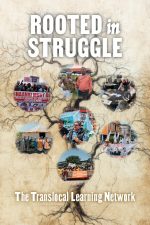
Rooted in struggle
Edited by
Anne Harley and Jonathan LangdonWith
Edward Adeti, Coleman Agyeyomah, Sheena Cameron, Amanor Dzeagu, Leocadio Juracan Salome, Thapelo Mohapi, Zodwa Nsibande, Ro Paradela, Alhassan Shani, Wojciech Tokarz, & Nyeya YenThis book is the culmination of several years of partnership between social movements, social justice organizations and academics in Ghana, South Africa, Guatemala and Canada. Called the Translocal Learning Network, this partnership has generated a space for those facing the multiple and overlapping crises of our time to come together and share knowledge and mutually solidarize with each other’s struggles. This knowledge exchange and mutual solidarity has been non-hierarchical and collaborative in nature, and has taken the form of sharing and commenting on complex stories of these struggles through a participatory research methodology known as narrative restorying. As such, this book will focus on the stories each partner has shared, along with engagement with these stories by other members of the network. This interplay of knowledge sharing will provide a window into the social movement learning of network members.
The central argument of the book was best captured by Thapelo Mohapi from South Africa’s Abahlali baseMjondolo: “It is always assumed that when you are poor, when you are living in a shack, when you live in a rural area, when you are marginalized, that you cannot think for yourself, that you cannot be involved in development, because you are poor”; instead of this “People must make decisions and must be consulted, and they must have a voice to speak about their own development. It must be initiated and completed with the people.” This book is literally a space where those on the front line of struggles against land & livelihood dispossession, violent resource exploitation, climate-fueled emergencies, and the denigration of cultural and traditional indigenous knowledge share their experiences, learning, successes, and defeats, with those facing similar and related struggles but in different contexts.
In addition to the stories of these front-line voices, scholars working alongside these struggles also share some of their learnings and ideas that have emerged from the partnership in the book. Students supporting the partnership also share their learning in the book, as well as describing how their activism also provoked learning in the network. In other words, this book provides a window into a rich, ongoing dialogue of mutual learning and support that will speak to audiences in the activist and critical academic communities.
To that point, this translocal network uses the notion of translocality to push back on the capitalist, colonial, and neo-liberal agenda of a) maintaining divisions between people struggling against oppression in different parts of the world (through border controls, language divisions, and colonial racialized othering); and, b) maintaining a knowledge hierarchy that states, international institutions, intellectual institutions, and corporations are those best able to contend with the many crises we face, and even within activists, it is those movements and organizations with broad, multinational reach that can best speak for the affected. Translocality argues that it is those with local knowledge of crises and context that are best positioned to speak to what needs to change, and that local struggles meeting each other as equals, translocally, is the best way to learn from one another without imposing new forms of knowledge hierarchies. Everaldo Morales Baján, from Commité Campisino del Altiplano (CCDA) in Guatemala captures this sentiment well when he says: “This book captures the essence and importance of the different struggles that exist in various parts of the world, but which converge on always caring for the planet and human rights.”
Chapter Summaries
Introduction: Translocal social movement learning: building mutual solidarity and contesting development for social and environmental justice
Jonathan Langdon; Sheena Cameron; Rodrigo Paradela; Wojciech Tokarz
In an effort to encourage connection and mutual learning between local movements, the Translocal Learning Network (TLN) serves as an effective social justice framework that attempts to build and maintain local to local (i.e. translocal) non-hierarchical connections between movements. The overall goal of this research partnership is to catalyze and animate translocal learning as a means to build capacity among localized movements in their struggles for a climate just and anti-capitalist future, and in so doing trace the contours of a theory of translocal learning – learning based on local to local learning as opposed to top down learning that mimics the very problematic of global dominance these movements contest. Key to this process is an insistence that movements and groups rooted in local social change efforts are crucial authors and actors of a climate just and anti-capitalist future. The members of the TLN address ongoing and emergent injustices to claim rights, assert agency, and demand representation and the redistribution of resources for marginalized communities in South Africa, Ghana, Guatemala and Canada. Creating shared spaces for connection, support, and learning through the ongoing struggles of each social movement has provided continuous moments of solidarity and opportunities for reimagining being in the world. This book showcases the perspectives of our partners, providing rich accounts of their experiences that illuminate struggles, insights, and successes. It also includes academic reflections on intercultural exchanges and offers an in-depth analysis of the collaborative learning process.
‘Players change but the game remains the same’: current realities of the poor, particularly in KwaZulu Natal
Zodwa Nsibande, Church Land Programme
This phrase was used by one member of Abahlali baseMjondolo in a meeting where we were talking about elections and the impact it has on people on the ground, especially who are marginalized and yet they are still expected to participate in the upcoming elections. She cautions that we need to be mindful that even if we change the ruling party, the ‘game’, the electoral system, remains the same, producing elites. Apartheid system favored ‘white’ people. Now the current system favors the elite. The ones who are poor remain poor and left with hope that someday things will change; hope that is shattered yet renewed every five years.
While there is less intense focus on South Africa now that apartheid is over, the sociological legacies continue and the fundamental nature or rules of the game remain intact. It points to the idea that regardless of who is involved, the main objectives, strategies, and overall dynamics of the game do not change. It emphasizes the notion that although the participants may alter, the essence of the game remains unchanged.
CLP will discuss the current realities of the poor, particularly in KwaZulu Natal, under the ongoing oppressive systems in South Africa, that permeates to all aspects of life, including the electoral system that favors the elites, the failing electricity system with load-sharing, and the improper stormwater drainage systems in townships and shack settlements, flood-prone areas (compounded by climate change) that results in loss of homes, food, and lives when it rains.
The Talensi-Nabdam Gold Rush: Local Complicity, Resource Exploitation, and the Crisis of Dignity
Coleman Agyeyomah Venceremos & Alhanssan Shani
This discussion will delve into the profound impact of multi-national mining activities on the communities of the Upper East Region in Ghana, specifically focusing on the alarming stories of dispossession of ancestral lands. The region, rich in cultural heritage and agricultural livelihoods, faces a growing threat as multi-national mining companies seek to exploit its abundant gold resources in collusion with State Institutions.
Through an exploration of real-life stories, light will be shed on the multifaceted consequences of multinational mining-induced dispossession of community lands. From the loss of cultural identity to the disruption of traditional farming practices and land degradation, this narrative will highlight the social, economic, and environmental toll on the affected communities.
The discussion will also provide a comprehensive overview of the mechanisms employed by multinational mining companies to acquire land and the subsequent displacement of local populations. Additionally, throws light on the challenges and complicity faced by these communities in seeking justice and recognition of their rights in the face of powerful corporate interests.
Gold Slavery in Talensi
Edward Adeti & Yen Nyeya, Savannah Research and Advocacy Network
Talensi is a small community in the Upper East Region of Ghana. The Upper East is one of the smallest regions in the country in terms of land size. The people of Talensi are predominantly subsistence farmers who rely on livestock and crop cultivation for their livelihoods.
Mining is one of the commercial activities that require huge parcels of land. Lands earmarked for mining are often fenced and are not available for any other activity even grazing of animals is often not allowed.
The people of Talensi stand the risk of losing their livelihoods due to the influx of a number of mining companies taking up almost 70% of lands earmarked for farming activities
The Río Negro massacre: The abandonment and criminalization of communities in Resistance by the State of Guatemala
Leocadio Juracan Salome, Commité Campisino del Altiplano (CCDA)
The water resource in the highlands of Guatemala, especially in the Verapaces region, has been the scene of large massacres against Indigenous peoples for the implementation of Hydroelectric Plants.
In the 70’s, resistance communities in the banks of Río Negro began facing persecution, dispossession, and criminalization. Río Negro is one of the great rivers that supply the largest Hydroelectric Plant in Guatemala called Chixoy. There were massacres, many disappeared, others forcibly displaced, exiled from their territories where they were born and others who remained in resistance.
With the largest hydroelectric plant in the country 4 kilometers away and despite suffering dispossession and criminalization, more than 500 families from the departments of Quiché, Alta and Baja Verapaz live in conditions of abandonment, without electricity, without development programs for health, housing, education etc.
Despite all the violations against humanity committed in the Río Negro Massacre, many Q’eqch’i’ Mayan families are still waiting for compliance with the resolutions of the Inter-American Court of Human Rights -IACHR-, which mandates the recognition of the violations of Human Rights, the compensation to the families and the legalization of some 1,500 caballerías of territory in favor of the families by the State of Guatemala.
We are not opposed to the energy transition, but respect for the lives of families, their development, respect for the life cycle of Rivers and Mother Nature.
Nothing about us without us – Everybody Thinks!
Thapelo Mohapi, Abahlali baseMjondolo
The dignity of the poor can only be achieved if they are part of their own development, becoming stewards and active participants on their own terms and by their own design. This must be a process undertaken from below, democratically, with people being consulted and making decisions, having a voice to speak about their own development. It must be initiated and completed with the people. “Nothing about us, without us”, the slogan used by many movements to demand that the full and direct participation of members must be integral to decision-making, grounds the work of Abahlali baseMjondolo, a shack dwellers movement in South Africa, with more than 180,000 members that was formed in 2005 to fight for, promote and advance the interests of the poor and marginalized.This contribution grows out of a critique of development and is grounded in the understanding that development is neo-colonial and neo-imperial and that is something that is imposed and done to poor people in the formerly colonized countries, with the backing and financial support of Western governments, aid agencies, companies, and local governments. It is always assumed that when you are poor, when you are living in a shack, when you live in a rural area, when you are poor and marginalized, that you cannot think for yourself, that you cannot be involved in development, because you are poor. AbM demonstrates that people and movements are capable of determining what is best for themselves and to ensure the dignity and rights of the poor.
Ada Songor Lagoon; Our Heartbeat!
Amanor Dzeagu, Radio Ada
November 6, 2023 has become another taboo day for the local salt producers in Ada, just as the police confrontation with community members that led to the death of a pregnant woman in 1985. The Story of the Songor Lagoon: Who Killed Maggie?
Mr. John Korletey Agormedah, a 52 year old salt winner died of bullet wounds after he has been shot three times during an attempt to protect his salt winning business. His killing occurred when a joint taskforce and state police sent by Electrochem Ghana Limited, a private company awarded the entire Ada Songor Lagoon in a monopoly lease by the government and some local chiefs to destroy the community members salt winning equipment in the lagoon communities. Local chiefs fail to condemn the barbaric killing of their subject after three months, rather, they quickly reacted and condemn a political candidate for his comments which has been deemed, uncultured language in a viral video. He has been fined 30,000 Ghana cedis, 4 Rams, 4 foreign schnapps or face a ban in the elections. The police continue to arrest, detain and prosecuting community members including chiefs with the offence of inciting community members against the private company.
Translation, Care, and Political Commitment in the Translocal Learning Network
Ro Paradela; Wojciech Tokarz
This chapter examines translation within the Translocal Learning Network as political infrastructure that shapes collaborative knowledge production. Through translator Ro Paradela’s work – employing gender-inclusive Spanish, strategic domestication, and simultaneous interpretation – translation emerges as relational labor that negotiates power, affirms identities, and fosters belonging across linguistic boundaries, transforming communication into an act of care and solidarity.
Research Assistant Learning from Social Movements (Pending)
Sheena Cameron; Ro Paradela
Cameron and Paradela add another dimension of learning in their chapter, sharing their own learnings and reflections from their participation in this network as research assistants, in relation to the changing context and expressed learnings of other former research assistants over the last twelve years, while simultaneously engaged in their own studies – Paradela as an undergraduate honours student, and Cameron as a PhD student.
Learning from subaltern social movements
Anne Harley; Jonathan Langdon
As engaged scholars, with a long interest in social movements, we have been working with some of the social movements who form part of this group over a number of years. We have learned a great deal from our interaction with them, and have worked together to begin to theorize this learning. In this contribution, we discuss what we mean by the concept ‘subaltern social movement’, and why we feel that the learning from such social movements is critical in current times.
Concluding Chapter
Translocal Learning Network
This chapter emerges from the collective reflections of the network on the process of creating the book, and what we have learned along the way. It will respond to the emergent themes and interlinkages identified in the opening chapter, but also highlight the ways in which we have all responded to each other’s stories, comments and analyses.
Author Bios
Edward Adeti, is a Ghanaian-born investigative journalist widely known for his anti-corruption work and courageous journalism despite facing threats. He was named Ghana’s best journalist in 2024 and won the best investigative journalist award the same year. Some of his notable works include: exposing Ghana’s justice system, leading to a judge’s recusal and a minister’s resignation; the documentary “Cash for Justice”, which led to a senior state attorney’s dismissal; “Stealing from the Sick”, an investigative piece exposing medicine theft at a government hospital, leading to arrests and prosecution of some members of a syndicate; and “Blood Gold”, a series he co-authored with Eryk Bagshaw, an Australian investigative journalist, on human rights violations by mining companies in Ghana, winning multiple international awards in 2023. He is a member of SRAN.
Coleman Agyeyomah formerly of Venceremos Development Consult is currently the Director, of Innovation Development Alternatives (IDEAs), a devolvement and organizational change NGO. Agyeyomah has over 20 years in facilitating and the mobilizing of Community Based Organizations/leaders for social change in poor and vulnerable communities of northern Ghana. Above all, he also teaches and provides field-based experiential learning support for students from Universities of Trent and St. Francis Xavier Canada.
Sheena Cameron is a Lecturer at St. Francis Xavier University (Canada) as well as a Research Coordinator of the Translocal Learning Network. She brings decades of community work in West Africa, Guatemala and Canada and community radio and podcasting experience to the writing of her chapter. She holds a Masters in Communication and Social Justice and she is currently completing a PhD in Social Justice Education at the Ontario Institute for the Study of Education (OISE) at the University of Toronto.
Amanor Dzeagu is a community radio practitioner and development communicator working with Radio Ada, a community radio station in the Greater Accra Region of Ghana. He works closely with local communities to tell their stories, document their traditions, and advocate for inclusive development through radio and community engagement. With a deep respect for the Dangme culture and indigenous systems, Amanor uses the community radio as a bridge between tradition, development, and the voices of the people. He brings more than two decades of community broadcasting experience to the writing of this chapter.
Anne Harley is a senior lecturer in adult education at the University of KwaZulu-Natal (Pietermaritzburg) in South Africa. Working within the radical adult education tradition, she is particularly interested in informal adult education/learning in/through/with struggle, and her work focuses on counter-hegemonic learning and theorising, particularly in subaltern social movements, and is thus related to issues of emancipatory politics, the notion of civil society, and discourses of ‘development’ in South Africa and beyond.
Leocadio Juracan Salome is one of the leaders of the Comité Campasino del Altiplano (CCDA), a large movement of peasant farmers in Guatemala. Leocadio brings decades of political and community organizing experience to CCDA’s contribution to the book.
Jonathan Langdon is a Professor at St. Francis Xavier University (Canada) in Development Studies and Adult Education. Langdon has over 20 years of community engagement, activist organizing and facilitation work, as well as being the convener of the Translocal Learning Network for the last 3 years.
Thapelo Mohapi was born in Matatiele in the Eastern Cape and raised in Durban, KwaZulu Natal. He is the current elected General Secretary of Abahlali baseMjondolo Movement SA, the movement of informal settlements in South Africa, numbering over 180,000 members. Prior to that, he was the chairperson of the Briardene branch in Durban within the movement. He also served as the Provincial Secretary of KwaZulu Natal. AbM is a movement that fights for land, housing and the dignity of the poor in South Africa.
Zodwa Nsibande is a social justice advocate and community leader from Durban, South Africa. She served as General Secretary of the Abahlali baseMjondolo youth league in 2009, she spoke out against the harmful effects of the FIFA 2010 World Cup on shack settlements , leading to threats that forced her into hiding. In 2011, she joined the South African delegation to the Ecumenical Accompaniment Programme in Israel and Palestine (EAPPI), spending three months advocating for peace and human rights. Since 2013, Zodwa has served as a Programme Activist at the Church Land Programme, supporting marginalized communities in securing land rights and dignified living conditions in both rural and urban areas. Most recently, she was a visiting scholar at the University of Sheffield’s School of Law in the United Kingdom from June 24 to July 26, 2024.
Ro Paradela (they/she) is a transfeminist activist from Mexico City. They graduated St. Francis Xavier University with Honours in Sociology and a Subsidiary in Women’s and Gender Studies. They are currently organizing in the fight against the crisis of transfemicidal violence in Mexico.
Alhassan Shani is a development practitioner and works with IDEAs, Northern-Ghana. He has over nine (9) years of experience in development research, community mobilization, social accountability, monitoring and evaluation of projects and development planning process. Alhassan’s development orientation is firmly rooted in participatory development. Additionally, he is passionate about research that encourages community participation, learning and action.
Wojciech Tokarz is a scholar and administrator serving as Associate Professor of Spanish and Interim Dean of the Faculty of Arts at St. Francis Xavier University (Canada). His research examines post-dictatorship Argentine literature, Indigenous representation, and translation theory, in particular how translation facilitates negotiation of Indigenous and LGBTQ+ identities, fostering belonging and advancing decolonial ethics. More information: https://wojciechtokarz.academia.edu
Nyeya Yen is a lifelong social justice activist with over 50 years of advocacy in Ghana and Africa. Exiled in 1982 under the Rawlings regime, he lived in Togo and the UK while campaigning for political justice. Returning in 2014, he continues to fight marginalization in mining-affected communities in Ghana’s Upper East Region.
-
Settler Colonialism
USD $ 5 USD $ 10Price range: USD $ 5 through USD $ 10Select options This product has multiple variants. The options may be chosen on the product page
Settler Colonialism
USD $ 5 USD $ 10Price range: USD $ 5 through USD $ 10Settler Colonialism examines the genesis in the USA of the first full-fledged settler state in the world, which went beyond its predecessors in 1492 Iberia and British-colonized Ireland with an economy based on land sales and enslaved African labor, an implementation of the fiscal-military state. Both the liberal and the rightwing versions of the national narrative misrepresent the process of European colonization of North America. Both narratives serve the critical function of preserving the “official story” of a mostly benign and benevolent USA as an anticolonial movement that overthrew British colonialism. The pre-US independence settlers were colonial settlers just as they were in Africa and India or like the Spanish in Central and South America. The nation of immigrants myth erases the fact that the United States was founded as a settler state from its inception and spent the next hundred years at war against the Native Nations in conquering the continent. Buried beneath the tons of propaganda—from the landing of the English “pilgrims” (Protestant Christian evangelicals) to James Fenimore Cooper’s phenomenally popular The Last of the Mohicans claiming settlers’ “natural rights” not only to the Indigenous peoples’ territories but also to the territories claimed by other European powers—is the fact that the founding of the United States created a division of the Anglo empire, with the US becoming a parallel empire to Great Britain, ultimately overcoming it. From day one, as was specified in the Northwest Ordinance, which preceded the US Constitution, the new “republic for empire,” as Thomas Jefferson called the new United States, envisioned the future shape of what is now the forty-eight states of the continental US. The founders drew up rough maps, specifying the first territory to conquer as the “Northwest Territory.” That territory was the Ohio Valley and the Great Lakes region, which was already populated with Indigenous villages and farming communities thousands of years old. Even before independence, mostly Scots Irish settlers had seized Indigenous farmlands and hunting grounds in the Appalachians and are revered historically as first settlers and rebels, who in the mid-twentieth century began claiming indigeneity. Self-indigenizing by various groups of settlers is a recurrent theme in story of settler colonialism, white supremacy, and the history of erasure and exclusion about which I have written elsewhere.
Select options This product has multiple variants. The options may be chosen on the product page -

Silence Would Be Treason
USD $ 10 USD $ 20Price range: USD $ 10 through USD $ 20Select options This product has multiple variants. The options may be chosen on the product page
Silence Would Be Treason
USD $ 10 USD $ 20Price range: USD $ 10 through USD $ 20These letters and poems are invaluable fragments of a living conversation that portrays the indomitable power in humans to stay alive in the face of certain death – to stay alive even in death.
Reading through the treasure trove of the letters and poems compiled here as The Last Writings of Ken Saro-Wiwa evokes intense memories of his resolute struggles against an oil behemoth and a deaf autocratic government. His crusade frames one of the most tumultuous periods of Nigeria’s history; his tragic story evokes anger and demands action to resolve the crises that first led the Ogoni people to demand that Shell clean up Ogoni lands or clear out of the territory.
Select options This product has multiple variants. The options may be chosen on the product page -
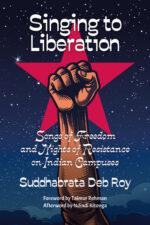
Singing to Liberation: Songs of Freedom and Nights of Resistance on Indian Campuses
USD $ 5 USD $ 16Price range: USD $ 5 through USD $ 16Select options This product has multiple variants. The options may be chosen on the product page
Singing to Liberation: Songs of Freedom and Nights of Resistance on Indian Campuses
USD $ 5 USD $ 16Price range: USD $ 5 through USD $ 16Student activism and cultural activism go hand in hand on Indian campuses. Over the last few years, especially after 2014, student movements in the country against social injustice have increased in numbers and tenacity. Cultural modes of expressing dissent have played a key role within this new wave of student movements that have gripped the nation. This book takes the reader through a journey into the ways cultural activists analyse cultural modes of protest, especially in the context of student movements in the Global South. The book delves into the political and ideological contours set by organisations such as the Indian Progressive Theatre Association (IPTA) and the Progressive Writers’ Association (PWA), and by figures such as Faiz Ahmed Faiz, Habib Jalib, Hemanga Biswas and Safdar Hashmi. The book locates them within the contemporary wave of cultural protests, analyses their continued relevance and argues for a revival of theoretical and practical engagement with the early progenitors of the progressive cultural movement in India.
Select options This product has multiple variants. The options may be chosen on the product page -

Slave King: Rebels against empire: A Novel
USD $ 5 USD $ 26Price range: USD $ 5 through USD $ 26Select options This product has multiple variants. The options may be chosen on the product page
Slave King: Rebels against empire: A Novel
USD $ 5 USD $ 26Price range: USD $ 5 through USD $ 26In thirty chapters, the narrative develops the incredible story of how a boy (Younis/Eunus/Euno) captured as a slave in Afamia, Syria challenges the Roman Empire in Sicily, circa 140-132 BCE. The chapters dramatize the circumstance of his capture, his experiences as a tutor, the growth of his prophetic and magical abilities, events that fomented the uprising (cruelties, rapes, crucifixions), the role of female characters, connections to other historical events (e.g., the destruction of Carthage), as well as scenes of an exorcism, an ancient marriage ceremony, a play performed outside a besieged city, and several battles against the Roman legions. An epilogue by an imagined contemporary narrator, who explains why she wrote the novel, ends the work. In the chapters and epilogue, while using ancient sources to some extent (sparse and biased as they are), the work departs from them to resolve contradictions, fill in gaps, and present an alternative narrative of historical and cultural issues. It’s intended to remedy the neglect of this story in both ancient and modern sources, reverse the demonization explicit and implicit in them, and remedy the imbalance in the dominant constructs. It promotes the event as significant, certainly just as important as (if not more than) the Spartacus rebellion seven decades afterwards, or others that are commonly recounted. A significant aspect of this revolt comes from the fact that Younis was able to forge a coalition of slaves, farmers and herders that defeated Roman armies and established an independent entity on more egalitarian principles. The novel also touches on a range of topics, such as prophecy, magic, languages, the construct of Western civilization, representation of regional cultures, customs, and mythologies. An idealized statue of this rebel stands today in Enna, Sicily, along with an inscription that seems designed to appeal to tourists, yet Younis’ rebellion contradicts the dominant notions promoted in Italy and throughout the West, especially the identification with imperial Rome. This novel is intended to remedy his legacy. A fictionalised account of a slave rebellion in Roman Sicilia more than sixty years before Spartacus, it tells the story of the slave Younis from Afamia (now in Syria), a mystic and seer who led a great uprising sustained much longer than Spartacus’.
Select options This product has multiple variants. The options may be chosen on the product page -
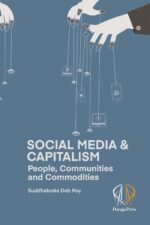
Social Media and Capitalism: People, Communities and Commodities
USD $ 5 USD $ 18Price range: USD $ 5 through USD $ 18Select options This product has multiple variants. The options may be chosen on the product page
Social Media and Capitalism: People, Communities and Commodities
USD $ 5 USD $ 18Price range: USD $ 5 through USD $ 18Technology is one of the central elements of contemporary human life. The world as one knows it today is a space increasingly mediated by technological interventions, be it in the field of contemporary cultural expressions or political, organizational forms. Social media has played an important role in this transformation. Gone are the days when social media was merely a conduit for conversations. Today, it is a diverse field of operations spanning advertising mechanisms, branding processes and even direct commercial exchanges between users: the prime focus of this particular book.
Direct user-to-user trading through social media within an institutional form is a relatively new dimension in the dynamic world of social media. Yet, just like every other form of innovation within the paradigm of market relations, social media commerce or social media trading has also created newer and diverse alterations in how individuals interact with the existing socio-political fabric within which they exist. This book analyses these alterations and critically investigates the role of Capital in creating them.
The book analyses real-world interactions, interviews and observations through the theoretical framework provided by Marxist political economy and social theory. It draws upon the theoretical scope provided by Marx’s dialectical methods of social analysis and uses it to unearth the effects that trading and commercial activities performed through virtual communities have on society and individuals.
Select options This product has multiple variants. The options may be chosen on the product page -
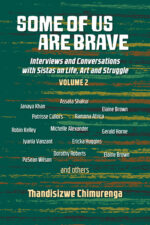
Some Of Us Are Brave (Vol 2): Interviews and Conversations with Sistas in Life and Struggle
USD $ 5 USD $ 23Price range: USD $ 5 through USD $ 23Select options This product has multiple variants. The options may be chosen on the product page
Some Of Us Are Brave (Vol 2): Interviews and Conversations with Sistas in Life and Struggle
USD $ 5 USD $ 23Price range: USD $ 5 through USD $ 23A society born of white supremacy and patriarchy must, by definition, ignore the voices of Black women. We know that unfortunately, such an attitude will also naturally seep into every stratum of that society
Part of the contribution to correct that was the centering and airing of Black women’s voices through Some of Us Are Brave: A Black Women’s Radio Program that aired on Pacifica’s Los Angeles radio station (KPFK) from 2003 until 2011.
The program covered a myriad of issues by amplifying the voices of a broad cross-section of Black women. Some of those voices have been preserved here in this volume. In addition to capturing various moments in time with a variety of women, this is also a means of taking the intellectual production of and about Black women out of the hands of institutions that are both fundamentally anti-Black and anti-woman.
Volume 1 contains interviews under the headings The Shoulders on Which We Stand and Black Lives Have Always Mattered.
Volume 2 covers Black Women’s Health, Bruthas on Sistas, and Sistas in Struggle.
Select options This product has multiple variants. The options may be chosen on the product page -
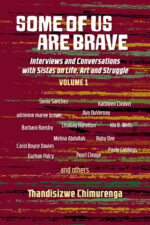
Some of Us Are Brave (Volume 1): Interviews and Conversations with Sistas in Life and Struggle
USD $ 5 USD $ 23Price range: USD $ 5 through USD $ 23Select options This product has multiple variants. The options may be chosen on the product page
Some of Us Are Brave (Volume 1): Interviews and Conversations with Sistas in Life and Struggle
USD $ 5 USD $ 23Price range: USD $ 5 through USD $ 23This is the literature of liberation! The truth. It waters the roots of a strong and timeless tree and bears the fruit of freedom. In the tradition of Ida B. Wells, Thandisizwe Chimurenga writes for the people because she is the people, and she loves the people. The interviews and conversations in Some Of Us Are Brave include Black women and Black men on Black women. This book will educate, inspire and strengthen the mind and spirit of Black women and those that love them. —Dr. Alice Nicholas, Africologist, Assistant Professor, Poet
Some of Us Are Brave is a courageous exploration of Black feminism within the Black left, offering invaluable insights and igniting much-needed conversations. It is a must-read for anyone seeking a deeper understanding of this vital aspect of our history and the transformative power of Black feminist thought. In a media landscape that often falls short when it comes to representing the voices of Black feminists, this series is a breath of fresh air. — Piper Carter, Detroit-based Arts & Culture Organizer
Host of “Beyond Breaking Barriers” podcast on Black Power MediaA society born of white supremacy and patriarchy must, by definition, ignore the voices of Black women. We know that unfortunately, such an attitude will also naturally seep into every stratum of that society
Part of the contribution to correct that was the centering and airing of Black women’s voices through Some of Us Are Brave: A Black Women’s Radio Program that aired on Pacifica’s Los Angeles radio station (KPFK) from 2003 until 2011.
The program covered a myriad of issues by amplifying the voices of a broad cross-section of Black women. Some of those voices have been preserved here in this volume. In addition to capturing various moments in time with a variety of women, this is also a means of taking the intellectual production of and about Black women out of the hands of institutions that are both fundamentally anti-Black and anti-woman.
Volume 1 contains interviews under the headings The Shoulders on Which We Stand and Black Lives Have Always Mattered.
Volume 2 covers Black Women’s Health, Bruthas on Sistas, and Sistas in Struggle.
Select options This product has multiple variants. The options may be chosen on the product page -
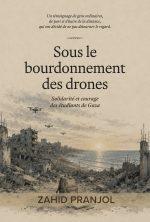
Sous le bourdonnement
USD $ 6.99 USD $ 28Price range: USD $ 6.99 through USD $ 28Select options This product has multiple variants. The options may be chosen on the product page
Sous le bourdonnement
USD $ 6.99 USD $ 28Price range: USD $ 6.99 through USD $ 28Le son est toujours là. Hmmm. Un bourdonnement continu, mécanique, qui ne s’arrête jamais—le bruit des drones qui survolent Gaza en permanence. Il est là depuis avant que les étudiants ne s’en souviennent. C’est le décor contre lequel ils ont refusé de cesser d’apprendre.
Sous le bourdonnement des drones raconte l’histoire des étudiants de Gaza à travers leurs propres mots et leurs peintures—et celle de la manière dont leurs voix ont atteint le monde.
Tout commence par une simple conversation autour d’un café en Angleterre. Un jeune universitaire gazoui a demandé : « Que pouvons-nous faire ? Ce qui a suivi, c’est un mouvement populaire que personne n’avait planifié. Soixante-dix professeurs d’anglais se sont portés volontaires pour enseigner via des notes vocales sur WhatsApp, enregistrées avec le bruit des drones en arrière-plan. Des universitaires ont diffusé des cours magistraux à des étudiants en médecine qui marchaient des kilomètres à travers les décombres pour capter un signal. Une communauté de Brighton a collecté des fonds pour les frais de scolarité et le matériel informatique. Une galerie a exposé gratuitement l’art des étudiants. Un éditeur a publié We Are Still Here, une anthologie de cinquante-huit étudiants de Gaza écrivant depuis des tentes de déplacés et des quartiers bombardés.
Hala a peint un homme tirant le monde entier de sa famille sur une charrette en bois, refusant de regarder en arrière vers les ruines. Sara a dessiné un olivier dont les feuilles sont devenues des linceuls, mais dont les racines restent fermement ancrées. Lama a croqué un enfant affamé d’après nature, refusant de le laisser disparaître sans témoin. De jeunes écrivains ont envoyé leurs mots les plus intimes à travers un écran de téléphone fissuré, confiants qu’ils seraient traités avec soin.
Nous sommes toujours là, ont-ils écrit. Et nous refusons de disparaître dans le silence.
Voici leur histoire. Un témoignage de courage, de dignité et d’une volonté inébranlable d’apprendre—même sous le bourdonnement des drones.</p>
Select options This product has multiple variants. The options may be chosen on the product page -

Spoon and Shrapnel: Verse and Wartime Recipes
USD $ 10 USD $ 12Price range: USD $ 10 through USD $ 12Select options This product has multiple variants. The options may be chosen on the product page
Spoon and Shrapnel: Verse and Wartime Recipes
USD $ 10 USD $ 12Price range: USD $ 10 through USD $ 12Spoon and Shrapnel uniquely combines poetry and recipes to explore the experience of surviving the Iran-Iraq War through a child’s eyes. As a survivor herself, Sheema Kalbasi brings forth raw memories of fear, loss, and resilience through verse, while accompanying these poignant moments with simple, nourishing recipes that sustained her family amidst scarcity and danger. Each poem is paired with a recipe, alternating between the emotional depth of poetry and the practical art of cooking traditions that offered hope during wartime. The poems deliver vivid, emotional insights into life during the conflict, while the recipes—crafted with scarce ingredients—represent moments of comfort and survival. Together, they form a narrative tapestry where food and poetry intertwine, reflecting how one family, and an entire culture, persevered.
Kalbasi’s work goes beyond her personal experience to present a universal story of resilience, illustrating how, even in the harshest conditions, humanity finds strength in the simple rituals of cooking, eating, and storytelling. Spoon and Shrapnel is a tribute to both physical and emotional survival, offering readers a rare glimpse into everyday life during war.Select options This product has multiple variants. The options may be chosen on the product page -
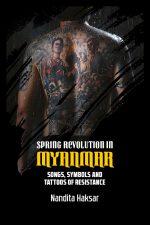
Spring Revolution in Myanmar
USD $ 0.01 USD $ 18Price range: USD $ 0.01 through USD $ 18Select options This product has multiple variants. The options may be chosen on the product page
Spring Revolution in Myanmar
USD $ 0.01 USD $ 18Price range: USD $ 0.01 through USD $ 18Myanmar is synonymous with ethnic conflicts, brutal military repression and insurgencies. The ongoing civil war against the junta has been described as the longest and one of the most violent conflicts in the world today with a growing humanitarian crisis.
This book celebrates the spirit of defiance, resilience and enormous courage of the Burmese people in the face of the military regime’s extreme violence. It is a window into the world of Burmese resistance and the myriad cultural expressions that it has taken ever since the February 2021 coup. Crowdfunded by the Burmese diaspora, but largely ignored by the international community, this is a resistance where every cultural form – poems, songs and even tattoos – has been explored as a weapon.
The regime has tried to ban these songs of resistance, and persecuted and even executed artists, musicians and poets. But as poet Khet Thi (1986-2021) said, before he was killed by the junta, “You try to bury us underground, because you don’t know that we are the seeds.”
Select options This product has multiple variants. The options may be chosen on the product page -

Stop the Continent Grab and the REDD-ification of Africa
So-called Reducing Emissions from Deforestation and Forest Degradation (REDD) is emerging as a new form of colonialism and economic subjugation. This book shows how these unjust mechanisms were designed to usher in a new phase of colonization through an invasion of genetically modified crops and trees which threatens to take over entire ecosystems.
-

Strategic litigation and the struggle for Lesbian, Gay and Bisexual equality in Africa
USD $ 5 USD $ 25Price range: USD $ 5 through USD $ 25Select options This product has multiple variants. The options may be chosen on the product page
Strategic litigation and the struggle for Lesbian, Gay and Bisexual equality in Africa
USD $ 5 USD $ 25Price range: USD $ 5 through USD $ 25There has been a rise in the use of strategic litigation related to seeking equality for lesbian, gay, and bisexual (LGB) persons. Such developments are taking place against the backdrop of active homophobia in Africa. The law and the general public should, argues the author, treat LGB persons in the same way that heterosexuals are treated. In the past two decades,30 strategic cases have been fi led by LGB activists in the Common Law African countries, namely in Botswana, Kenya, Nigeria, South Africa, and Uganda. While the majority of the cases have been successful, they have not resulted in significant social change in any of the countries. On the contrary, there have been active backlashes, counter-mobilisations, and violence against LGB persons, as well as the further criminalisation of same-sex relations and constitutional prohibitions on same-sex marriages in some of the jurisdictions. The author argues that activists in Common Law Africa have to design LGB strategic litigation in such a way as to fi t within the actual social and political conditions in their countries if strategic litigation is to spur social change.
Adrian Jjuuko is an exceptional scholar. A rare combination of intellectual brilliance, commitment and hard work. The book is born of this. It reflects his incisive analytical skills, anchored in solid knowledge of the law and jurisprudential developments in the field. His ventures into political theory, philosophy, and the social sciences give the analysis additional clarity and empirical grounding.
In Strategic Litigation, Adrian Jjuuko has hugely succeeded in bringing to light pertinent issues regarding LGB rights in the African context today. By making reference to various scholarly works and critical analyses, the author has cleverly driven home the message that progressive decriminalization of LGB relationships and constitutional protection of LGB persons in Common Law Africa should be deliberate steps towards demystifying the erstwhile taboo of LGB persons’ equality and social justice. Yet, Jjuuko throws in a word of caution; societal attitudes towards LGB persons still remain largely negative, as exemplified in pervasive disapproval (including religious) of their rights. This implies that a lot is still required from all stakeholders to demystify and accommodate the social position of the LGB community in Common Law Africa today. Kisito, J. M. (2022). Book Review: Strategic litigation and the struggle for lesbian, gay and bisexual equality in Africa by Adrian Jjuuko. Feminism & Psychology, 32(4), 584-587. https://doi-org.proxy.library.carleton.ca/10.1177/09593535221104876 (Original work published 2022)
Select options This product has multiple variants. The options may be chosen on the product page -

Stratégies familiales, diasporas et investissements
USD $ 5 USD $ 30Price range: USD $ 5 through USD $ 30Select options This product has multiple variants. The options may be chosen on the product page
Stratégies familiales, diasporas et investissements
USD $ 5 USD $ 30Price range: USD $ 5 through USD $ 30À rebours des thèses soutenant que la migration contribue au développement ou que l’in- vestissement dans le développement réduit la croissance de la migration « irrégulière », ce livre marque une rupture tonifiante avec les idées communes abondamment véhiculées dans la littérature sur les liens entre migration, mobilités et développement en Afrique. Il accorde un intérêt manifeste pour la plus grande part des mobilités africaines, lesquelles se situent à l’intérieur du continent, et à la formation des diasporas en dehors des fron- tières nationales et continentales. Cette considération conjointe des mobilités « Sud-Sud » et « Sud-Nord » permet de remettre en cause l’hypothèse selon laquelle il existe des diffé- rences fondamentales entre elles.
Cet ouvrage examine les fluctuations ordinaires des mouvements de populations – à travers l’Afrique, comme dans le reste du monde –, qui étendent les familles, génèrent de nouvelles relations, reconfigurent les connexions économiques et politiques, et sont intégrées dans l’expérience quotidienne des millions de personnes qui y prennent part.
The in-depth knowledge of the mostly African authors adds to the quality of a research field, which was for long far too Eurocentric. – Ilke ADAM, Vrije Universiteit Brussel (Belgium)
Il était temps de mettre en lumière ce que migration et mobilité représentent en Afrique. L’ouvrage offre une perspective originale et décoloniale sur le sujet. – Eric HAHONOU, Roskilde Universitet (Denmark)
Christian Bouquet, « Quelques éclairages nouveaux sur les migrations africaines », EspacesTemps.net [En ligne], Books, 2020 | Mis en ligne le 20 November 2020, consulté le 20.11.2020. URL : https://www.espacestemps.net/en/articles/quelques-eclairages-nouveaux-sur-les-migrations-africaines/ ; DOI : 10.26151/esapcestemps.net-jc2a-6b03
Avec la participation de John O. IGUE, Saydou KOUDOUGOU, Pierre-Joseph LAURENT, Bassirou MALAM SOULEY, Hamidou MANOU NABARA, Marème NIANG NDIAYE, Amadou SARR DIOP, Sadio SOUKOUNA , Eric Stève TAMO MBOUYOU et Astadjam YAOUBA.
Select options This product has multiple variants. The options may be chosen on the product page -

Struggling to be seen: The travails of Palestinian cinema
USD $ 5 USD $ 15Price range: USD $ 5 through USD $ 15Select options This product has multiple variants. The options may be chosen on the product page
Struggling to be seen: The travails of Palestinian cinema
USD $ 5 USD $ 15Price range: USD $ 5 through USD $ 15The book explores the challenges Palestinian filmmakers confront to develop a cinema that gives expression to the national narrative. The research is based on collaborative work to research and screen Palestinian films involving Film Lab Palestine, Sheffield Palestine Cultural Exchange and Sheffield Hallam University as part of the Creative Interruptions research project (https://creativeinterruptions.com/palestiniancinema/). We explored the political, economic and cultural factors that impact on Palestinian film production and some of the barriers encountered in profiling and screening Palestinian films in Britain.
Select options This product has multiple variants. The options may be chosen on the product page -
 Select options This product has multiple variants. The options may be chosen on the product page
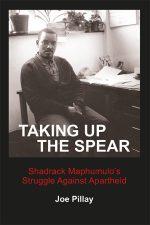
Taking up the Spear
Taking Up the Spear is the firsthand account of Shadrack Maphumulo, an ordinary South African who becomes a freedom fighter against apartheid. The narrative traces his life from a rural Zulu childhood, shaped by stories of the Bambatha Rebellion, to his early working years in Durban where he faces systemic racism, slave wages, and the humiliating pass laws. His entrepreneurial dreams—first a taxi, then a shop—are systematically crushed by a white supremacist government that reserves prosperity for whites, forcing him to realize that individual effort cannot overcome the oppressive system.
Radicalized, Maphumulo joins the trade union movement SACTU and later the banned ANC and its armed wing, Umkhonto we Sizwe (MK). He details his rudimentary training in sabotage and participates in several missions, including bombing an Afrikaner newspaper office and attacking municipal beer halls. Arrested in 1963, he endures brutal torture and solitary confinement before being sentenced to ten years on Robben Island. On the island, he details the horrific conditions, daily beatings, and hunger strikes, but also the political education and solidarity among prisoners. After his release in 1975, he resumes underground work, leading to another arrest, torture, and banning. The story ends with his escape into exile in Swaziland, where he continues the struggle. The epilogue reveals his assassination by South African security forces in 1986, cementing his legacy as a hero who sacrificed everything for a free South Africa.
Select options This product has multiple variants. The options may be chosen on the product page -
 Select options This product has multiple variants. The options may be chosen on the product page
The Enduring Relevance of Walter Rodney’s ‘How Europe Underdeveloped Africa’
USD $ 15Soon after its publication in 1972, Walter Rodney’s How Europe Underdeveloped Africa gained global popularity among students, scholars, activists and people concerned with African affairs. His innovative application of the method of political economy transformed the paradigm for rendition of the continent’s past. Because it stridently took the traditional historians and the prevailing neo-colonial order to task, it was also pilloried by the defenders of the status quo. And, in these neoliberal times, mainstream scholars and pundits proclaim that it is no longer relevant for Africa.
In Walter Rodney: An Enduring Legacy, Karim Hirji makes a systematic case that, on the contrary, Rodney’s seminal work retains its singular value for understanding where Africa has come from, where it is going, and charting the path towards genuine development for its people. After giving a broad picture of Rodney and his times, Hirji examines in detail the criticisms levelled against his work, and conducts a focused review of modern day textbooks on African history. It is seen that most of the claims against Rodney lack a sound basis and that direct representations of his ideas are replete with distortions, unfair selectivity and political bias. Yet, the long term influence of Rodney on African history is unmistakable.
Hirji’s succinct, coherent defence of an intellectual giant who lived and died for humanity is an essential read for anyone with an interest in Africa and related regions.
Select options This product has multiple variants. The options may be chosen on the product page -

The great climate robbery: How the food system drives climate change and what we can do about it
USD $ 25.99The industrial food system is a major driver of climate change. Food sovereignty is critical to any lasting and just solution. The Great Climate Robbery shows readers how the industrial food system causes climate change, how food and agribusiness corporations are getting away with it and what can be done to turn things around.
-

The imperative of Utu / Ubuntu in Africana scholarship
USD $ 5 USD $ 15Price range: USD $ 5 through USD $ 15Select options This product has multiple variants. The options may be chosen on the product page
The imperative of Utu / Ubuntu in Africana scholarship
USD $ 5 USD $ 15Price range: USD $ 5 through USD $ 15Written in commemoration of the 50th anniversary of Africana Studies and Research Center, Cornell University, this publication celebrates the birth of Black studies as a liberated academic zone. Professor Mũgo reflects upon the significance of Africana studies, specifically within the context of America’s predominantly White universities, revisiting the hers/his/torical context that birthed Black studies as a field of knowledge. She reflects on the ownership of knowledge, its production, dissemination and custodianship while proposing utu/ubuntu as imperatives in defining transformative education. The hypothesis and heart of the argument is that knowledge and scholarship can either be colonizing, alienating and enslaving; or, alternatively, they can be conscientizing, humanizing and liberating, creating new human beings with the agency to transform life and the world, for the better. he dismisses the false myth of dominating, colonizing and imperialist cultures that claim to have a monopoly of knowledge and whose purpose is to justify the dehumanization of the conquered, the attempted erasure of their knowledges, heritages and ultimately, entire cultures.
Select options This product has multiple variants. The options may be chosen on the product page