Depuis le début du génocide contre les Palestiniens à Gaza, mené par la violence coloniale israélienne, les établissements d’enseignement supérieur ont été systématiquement détruits. Les campus sont en ruines, les universitaires et les étudiants ont été tués ou déplacés de force, et ce qui était autrefois une population étudiante florissante et intellectuellement dynamique vit maintenant sous la menace quotidienne de bombardement, de famine forcée et de mort. Pendant près de deux ans, les étudiants ont été coupés non seulement de leurs universités, mais aussi de leurs rêves, de leur avenir et même de leur sentiment de sécurité le plus élémentaire.
Pourtant, malgré ce traumatisme inimaginable, beaucoup écrivent encore.
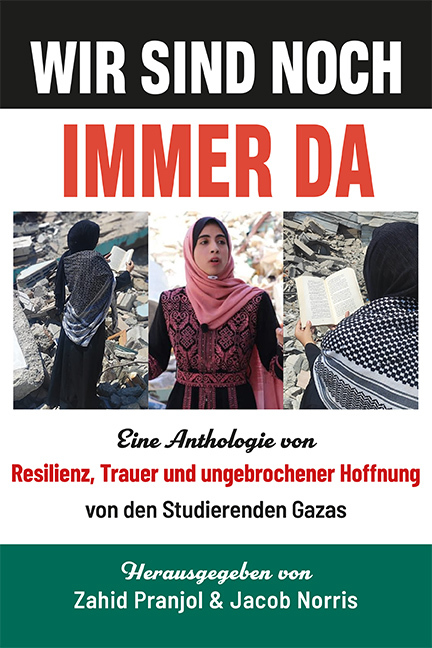
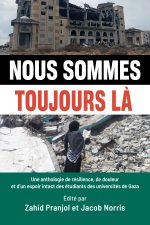
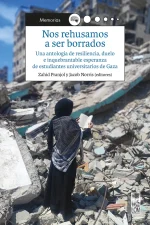
Nous sommes toujours là est une anthologie de ces voix – brutes, non filtrées et courageuses. Il présente des histoires courtes et longues, des poèmes, des essais et des témoignages écrits par des étudiants des universités de Gaza. Ce ne sont pas des réflexions rétrospectives ou des analyses à distance ; ce sont des mots en temps réel, émergeant des profondeurs du génocide, du déplacement et du deuil. Ces écrits peuvent être leurs derniers espoirs d’atteindre le monde, un dernier acte de résistance par l’expression.
Les droits d’auteur de la vente de ce livre sont intégralement reversés aux étudiants auteurs de Gaza.
Survivant aux extrêmes les plus sombres de la souffrance, de la destruction et du déplacement, de la famine et de la menace constante de mutilation ou de mort, ces jeunes écrivains nous parlent avec une lucidité perçante. Leur résilience est leur seule forme d’optimisme. Paradoxalement, les lire soulève le cœur.
– Ian McEwan, auteur d’Expiation et d’Amour Éternel
Un recueil bouleversant, douloureux et pourtant plein d’espoir, de la jeune génération du peuple de Gaza. Le Sumud, la résilience, n’a jamais été aussi puissant et clair qu’il ne l’apparaît dans cette collection incontournable et urgente. —Ilan Pappé, professeur au Collège des Sciences Sociales et des Études Internationales de l’Université d’Exeter, auteur de Une histoire très courte du conflit israélo-palestinien
Au cœur de la souffrance, les mots naissent — et sous les décombres, la créativité s’élève. Ce livre est plus qu’un recueil de pages écrites ; c’est l’écho d’âmes résilientes et le cri de plumes qui ont parlé lorsque les voix ont été réduites au silence. — Professeur Dr. Omar Kh. Melad, Président de l’Université Al-Azhar de Gaza
Nous Sommes Toujours Là n’est pas un livre sur la guerre — c’est un livre sur le fait d’être en vie après que le monde a décidé que vous avez déjà disparu, écrit dans des pièces qui ne tiennent peut-être plus debout. Ces pages sont des dépêches du fil étroit du présent : des lettres de la faim, des fragments de vies interrompues, des éclairs d’espoir si inflexibles qu’ils brûlent. Ici, des jeunes gens façonnent le témoignage de leur temps sur terre, sachant que leur temps peut être court. Vous ne quitterez pas ce livre avec le confort d’une conclusion. Il restera avec vous bien après que la dernière page aura été tournée. — Leila Sansour, réalisatrice et fondatrice d’Open Bethlehem
Ces réflexions poignantes de Gaza, en prose et en poésie, du milieu d’un génocide, sont à la fois déchirantes et pleines de vie et de promesse. Israël a peut-être physiquement tué nombre de leurs jeunes auteurs, mais il ne tuera jamais leurs mots, qui vivent dans ce puissant recueil de leurs écrits. — Ghada Karmi.
La mort n’est pas une idée pour ces jeunes écrivains, mais une réalité quotidienne. Ce recueil témoigne de la puissance des mots. Il révèle comment l’amour, la créativité et l’espoir peuvent nous galvaniser contre la peur et l’inaction. — Selma Dabbagh, auteure du roman Out of It et éditrice de l’anthologie We Wrote in Symbols; Love and Lust by Arab Women Writers.
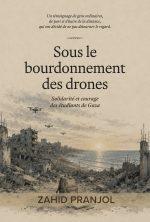
Sara Alkhaldy, l’une des contributrices de Nous Sommes Toujours Là, une nouvelle anthologie d’écrits d’étudiants de Gaza, déclare : “Je voudrais pouvoir mettre en bouteille l’odeur de notre maison et l’emporter avec moi en partant.” Rula Elkhair écrit à propos des études pendant le déplacement : “Même dans des endroits sans électricité, sans eau et sans internet stable, j’ai installé un eSIM sur mon téléphone et je suis montée sur le toit sous le bourdonnement des drones pour télécharger des cours. J’ai passé des examens dans des cafés au bord de la mer. J’ai étudié en ayant faim, en ayant peur, en étant en deuil.” — Selma Dabbagh dans la London Review of Books Connaissance des Faits Pertinents.
La version anglaise de ce livre est disponible ici : We Are Still Here