
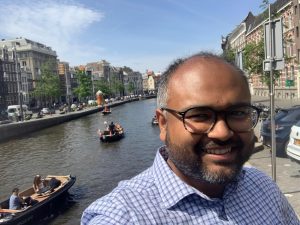
 Professor Zahid Pranjol is Professor in Biomedical Sciences at the University of Sussex. He is a leading voice in inclusive science education and curriculum reform, leading efforts to decolonise the biosciences curriculum by challenging Eurocentric biases and diversifying reading lists. Since April 2024 he has been supporting over 2,000 students across three major universities in Gaza by providing teaching materials, research mentorship, English language training and access to professional and mental health support.
-
Sous le bourdonnement
USD $ 6.99 USD $ 28Price range: USD $ 6.99 through USD $ 28Select options This product has multiple variants. The options may be chosen on the product page
Sous le bourdonnement
USD $ 6.99 USD $ 28Price range: USD $ 6.99 through USD $ 28Le son est toujours là. Hmmm. Un bourdonnement continu, mécanique, qui ne s’arrête jamais—le bruit des drones qui survolent Gaza en permanence. Il est là depuis avant que les étudiants ne s’en souviennent. C’est le décor contre lequel ils ont refusé de cesser d’apprendre.
Sous le bourdonnement des drones raconte l’histoire des étudiants de Gaza à travers leurs propres mots et leurs peintures—et celle de la manière dont leurs voix ont atteint le monde.
Tout commence par une simple conversation autour d’un café en Angleterre. Un jeune universitaire gazoui a demandé : « Que pouvons-nous faire ? Ce qui a suivi, c’est un mouvement populaire que personne n’avait planifié. Soixante-dix professeurs d’anglais se sont portés volontaires pour enseigner via des notes vocales sur WhatsApp, enregistrées avec le bruit des drones en arrière-plan. Des universitaires ont diffusé des cours magistraux à des étudiants en médecine qui marchaient des kilomètres à travers les décombres pour capter un signal. Une communauté de Brighton a collecté des fonds pour les frais de scolarité et le matériel informatique. Une galerie a exposé gratuitement l’art des étudiants. Un éditeur a publié We Are Still Here, une anthologie de cinquante-huit étudiants de Gaza écrivant depuis des tentes de déplacés et des quartiers bombardés.
Hala a peint un homme tirant le monde entier de sa famille sur une charrette en bois, refusant de regarder en arrière vers les ruines. Sara a dessiné un olivier dont les feuilles sont devenues des linceuls, mais dont les racines restent fermement ancrées. Lama a croqué un enfant affamé d’après nature, refusant de le laisser disparaître sans témoin. De jeunes écrivains ont envoyé leurs mots les plus intimes à travers un écran de téléphone fissuré, confiants qu’ils seraient traités avec soin.
Nous sommes toujours là, ont-ils écrit. Et nous refusons de disparaître dans le silence.
Voici leur histoire. Un témoignage de courage, de dignité et d’une volonté inébranlable d’apprendre—même sous le bourdonnement des drones.</p>
Select options This product has multiple variants. The options may be chosen on the product page -
Beneath the Hum of Drones
USD $ 6.99 USD $ 25Price range: USD $ 6.99 through USD $ 25Select options This product has multiple variants. The options may be chosen on the product page
Beneath the Hum of Drones
USD $ 6.99 USD $ 25Price range: USD $ 6.99 through USD $ 25Royalties from this book go to the students in Gaza.
The Gazan students who refused to stop learning
Beneath the Hum of Drones: On Solidarity and the Courage of Gaza’s Students, a new book by Professor Zahid Pranjol, tells the story of how students in Gaza continued to learn through war, displacement and siege, and how an extraordinary network of volunteers from the UK came together to support them, drawing on first-hand testimony from Gaza, stories from inside the atrocities and personal reflection.
The new book follows students who continued to study, write, paint and organise while their universities and homes were being destroyed around them. Alongside their stories, it traces a grassroots movement that connected academics, teachers and communities across the UK with students in Gaza, providing teaching, financial support and opportunities for the students’ artwork and poetry to be seen and heard outside of the walls of Gaza and for their voices to be carried to the world. This book is about the author’s journey with a community of students in Gaza built together, across an impossible distance and in the middle of a genocide.
“This is not a book I set out to write. It began as a question asked over coffee by a scholarship student from Gaza who wanted to know what the two of us, in a university in the south of England, could actually do in the face of annihilation of the people of Palestine.” Professor Pranjol writes.
What followed was an extraordinary international effort. University academics, more than 70 volunteer English teachers, artists, healthcare professionals and hundreds of ordinary people came together, united by the belief that they could not stand by while Gaza’s students were denied their education. Together, they built a network of solidarity with members centred around the University of Sussex and communities across East Sussex, UK. Among those involved were English teachers, doctors, artists and university lecturers from across the UK who volunteered hundreds of hours to teach students in Gaza remotely.
Since early 2024, the initiative has grown into a wide-ranging programme of educational, creative and psychological support for students in Gaza. Its work includes English language teaching delivered by volunteer teachers, art therapy for children, specialist psycho-trauma therapy delivered remotely through Zoom and WhatsApp, and medical and psycho-trauma training for healthcare professionals working in Gaza. The wider initiative documented in the book has supported an estimated 4,000 to 5,000 students through educational programmes, financial assistance and wellbeing support.
The initiative has been shaped by listening to students in Gaza themselves to understand what their needs are. Organisers asked them to identify their most urgent priorities, time and again, they told of their immediate need for access to emergency medical training and mental health training, alongside financial support.
This new book tells their story. Rather than focusing on governments or institutions, Beneath the Hum of Drones centres the experiences of Gaza’s students themselves. Through essays, paintings, poems and personal testimony, the book presents young people determined to continue learning despite extraordinary circumstances.
Professor Pranjol says the students of Gaza became his teachers.
“I was not the teacher in this story. I was the student. The young people of Gaza, studying under bombardment, writing from the side of the road, painting the sea from rooftops beneath the drones, were the ones with something to teach, and this book is mostly a record of what they taught me.”
Since October 2023, universities across Gaza have been devastated, every school has been damaged or destroyed, and hundreds of thousands of students have seen their education disrupted. Palestinian academics have described the destruction of the higher education system as ‘scholasticide’, the systematic destruction of educational institutions and knowledge itself.
While much has been written about the destruction of Gaza, few books tell the story through the eyes of its students, or document the international community that emerged to support them. Beneath the Hum of Drones documents not only that destruction, but also the determination of students and educators to continue learning, and the communities around the world that chose to stand beside them.
“I have tried to write this book without looking away, and without reducing anyone person to a number or a symbol. The people in these chapters have names, and tastes, and ambitions. They argue and they make jokes. They are still hoping. They are, against years of siege and horror, still here.” Professor Pranjol remarks.
All author royalties from Beneath the Hum of Drones will go directly to supporting students in Gaza. By purchasing the book, readers are helping to fund educational opportunities and ensure that young people can continue learning despite the ongoing destruction of Gaza’s education system.
Professor Zahid Pranjol is Professor of Biomedical Sciences at the University of Sussex and a leading voice in inclusive science education and curriculum reform. He is also the co-author, with Dr Jacob Norris, of We Are Still Here, the 2025 anthology bringing together the voices of 58 university students writing from Gaza during the destruction of their universities and homes. Beneath the Hum of Drones tells the story behind that project and the wider movement it inspired.
Endorsements
“An extraordinary and inspiring story of the effort by global solidarity activists to keep Gaza’s students learning against near-impossible odds.” — Norman Finkelstein and Deborah Maccoby
“Testifies to the resilience of Gaza’s younger generation, whose determination should humble us all.” — Ilan Pappé
“A fellowship of endeavour proving that the truest bonds of humanity acknowledge neither distance nor siege.” — Vusi Madonsela
“An inspiring story of what happens when individuals decide to make a difference.” — Caroline Lucas
“Heart wrenching and inspiring, a model of what humanity can do in the rubble of the inhuman.” — Lila Abu-Lughod
“A remarkable testament to the enduring power of education, compassion, and courage.” — Professor Dr. Omar Kh. Melad
“In the face of scholasticide, Palestinian students give us hope.” — Neve Gordon
Closing
The genocide continues. Yet so does the extraordinary courage of Gaza’s students, and the growing network of solidarity that stands beside them. They are still teaching. They are still writing. They are still painting. They are still dreaming of a future. They are still here.
“The people of Gaza were never waiting to be saved. They were already doing the work. They asked only that the rest of us not leave them to do it alone.”
Select options This product has multiple variants. The options may be chosen on the product page -
Nos rehusamos a ser borrados
USD $ 16Select options This product has multiple variants. The options may be chosen on the product page
Nos rehusamos a ser borrados
USD $ 16Con desgarro, con dolor, pero sobre todo con enorme dignidad, porfía y convicción, un grupo de estudiantes de Gaza nos hace sentir y escuchar su voz urgente y afirmativa en una frase valiente e inquebrantable: Nos rehusamos a ser borrados.
Con la universidad en ruinas, con la ciudad y el país transformado en escombros, con sus familias diezmadas por el éxodo incierto y un genocidio llevado adelante por el Estado de Israel, un conjunto de estudiantes gazatíes levanta un testimonio coral que documenta con un pulso literario desgarrador la ruptura absoluta de la cotidianidad civil a partir de octubre de 2023.
Con un tono profundamente descriptivo y despojado de eufemismos, los narradores exponen la caída de los hospitales, la precarización en claustrofóbicas tiendas de campaña y la instauración de una hambruna fabricada como táctica bélica, donde el intento de conseguir un simple saco de harina se convierte en un acto de inmolación.
Al documentar el asedio, los textos evidencian cómo el resguardo de la identidad y la educación emergen también como formas de resistencia. Estudiantes que buscan captar señal de internet en los tejados bajo el constante zumbido de los drones demuestran que mantener viva la necesidad de comunicar es el único antídoto contra la aniquilación sistemática.
La sección poética sublima el trauma físico, ofreciendo una exploración visceral sobre la pérdida, la orfandad cíclica y la culpa del sobreviviente. Más que un recuento de atrocidades, este libro es un imperativo ético contra el silencio del mundo.
Select options This product has multiple variants. The options may be chosen on the product page -

We Are Still Here
USD $ 7.99 USD $ 27Price range: USD $ 7.99 through USD $ 27Select options This product has multiple variants. The options may be chosen on the product page
We Are Still Here
USD $ 7.99 USD $ 27Price range: USD $ 7.99 through USD $ 27Since the start of the unfolding genocide against Palestinians in Gaza, carried out through settler-colonial Israeli violence, higher education institutions have been systematically destroyed. Campuses lie in ruins, academics and students have been killed or forcibly displaced, and what was once a thriving, intellectually vibrant student population now lives under daily threat of bombardment, forced starvation, and death. For nearly two years, students have been cut off not only from their universities, but from their dreams, their futures, and even their most basic sense of safety.
Yet, despite this unimaginable trauma, many are still writing.
We Are Still Here is an anthology of these voices—raw, unfiltered, and courageous. It features short and long stories, poems, essays, and testimonies written by students from Gaza’s universities. These are not retrospective reflections or distant analyses; they are real-time words, emerging from the depths of genocide, displacement, and grief. These writings may be their last hopes to reach the world, a final act of resistance through expression.
Listen to our podcast conversation
with the student contributors hereOr you can subscribe to Daraja Press podcasts wherever you get your podcasts.
All royalties from the sales of this book go to the student authors in Gaza.
Surviving at the darkest extremes of suffering, of destruction and displacement, famine and the constant threat of maiming or death, these young writers speak to us with piercing lucidity. Their resilience is their only form of optimism. Paradoxically, reading them lifts the heart.
– Ian McEwan, author of Atonement and Enduring LoveA moving, painful and yet hopeful collection of the younger generation of the people of Gaza. Sumud, resilience, was never so powerful and clear, as it appears in this must read and urgent collection. —Ilan Pappé, professor, University of Exeter’s College of Social Sciences and International Studies, author, A Very Short History of the Israel-Palestine Conflict
In the heart of suffering, words are born — and from beneath the rubble, creativity rises. This book is more than a collection of written pages; it is the echo of resilient souls and the cries of pens that spoke when voices were silenced. — Professor Dr. Omar Kh. Melad, President of Al-Azhar University– Gaza
We Are Still Here is not a book about war — it is a book about being alive after the world has decided you are already gone, written in rooms that may no longer stand. These pages are dispatches from the thin edge of the present: letters from hunger, fragments of interrupted lives, flashes of hope so unyielding it burns. Here, young people shape the record of their time on earth, knowing that their time may be short. You will not leave this book with the comfort of closure. It will stay with you long after the final page has turned. — Leila Sansour, filmmaker and founder of Open Bethlehem
These Gaza poignant reflections in prose and poetry from the midst of genocide are both heart-rending and full of life and promise. Israel may have physically killed many of their young authors, but will never kill their words, which live on in this powerful collection of their writings. — Ghada Karmi.
Death is not an ideation for these young writers, but an everyday reality. This collection is a testimony to the power of words. It reveals how love, creativity and hope can galvanise us against fear and inaction. — Selma Dabbagh, author of the novel Out of It and editor of the anthology We Wrote in Symbols; Love and Lust by Arab Women Writers.
Sara Alkhaldy, one of the contributors to We Are Still Here, a new Gazan anthology of student writing, says: ‘I wish I could bottle the scent of our home and take it with me as I left.’ Rula Elkhair writes of studying during displacement: ‘Even in places with no electricity, no water and no stable internet, I installed an eSIM on my phone and climbed to the rooftop under buzzing drones to download lectures. I took exams in cafés by the sea. I studied while hungry, while afraid, while grieving.’ — Selma Dabbagh in London Review of BooksKnowledge of the Relevant Facts
You can find the French language edition here: Nous Sommes Toujours Là
Select options This product has multiple variants. The options may be chosen on the product page -

Wir sind noch immer da
USD $ 12 USD $ 27Price range: USD $ 12 through USD $ 27Select options This product has multiple variants. The options may be chosen on the product page
Wir sind noch immer da
USD $ 12 USD $ 27Price range: USD $ 12 through USD $ 27Professor Zahid Pranjol ist Professor für Biomedizinische Wissenschaften an der University of Sussex. Er ist eine führende Stimme in der inklusiven Wissenschaftsbildung und Lehrplanreform und leitet Bestrebungen zur Dekolonisierung des Lehrplans der Biowissenschaften, indem er eurozentrische Vorurteile hinterfragt und Leselisten diversifiziert. Seit April 2024 unterstützt er über 2.000 Studierende an drei großen Universitäten in Gaza, indem er Lehrmaterialien, Forschungsmentorate, Englischsprachtraining sowie Zugang zu professioneller und psychologischer Unterstützung bereitstellt.
Jacob Norris ist außerordentlicher Professor für Geschichte des Nahen Ostens an der University of Sussex. Er hat umfassend zur palästinensischen Geschichte im 19. und 20. Jahrhundert publiziert und arbeitet derzeit zur Geschichte der palästinensischen Solidarität in Lateinamerika.
Select options This product has multiple variants. The options may be chosen on the product page -
Nous sommes toujours là
USD $ 18Select options This product has multiple variants. The options may be chosen on the product page
Nous sommes toujours là
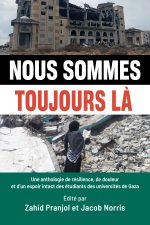
USD $ 18Depuis le début du génocide contre les Palestiniens à Gaza, mené par la violence coloniale israélienne, les établissements d’enseignement supérieur ont été systématiquement détruits. Les campus sont en ruines, les universitaires et les étudiants ont été tués ou déplacés de force, et ce qui était autrefois une population étudiante florissante et intellectuellement dynamique vit maintenant sous la menace quotidienne de bombardement, de famine forcée et de mort. Pendant près de deux ans, les étudiants ont été coupés non seulement de leurs universités, mais aussi de leurs rêves, de leur avenir et même de leur sentiment de sécurité le plus élémentaire.
Pourtant, malgré ce traumatisme inimaginable, beaucoup écrivent encore.
Nous sommes toujours là est une anthologie de ces voix – brutes, non filtrées et courageuses. Il présente des histoires courtes et longues, des poèmes, des essais et des témoignages écrits par des étudiants des universités de Gaza. Ce ne sont pas des réflexions rétrospectives ou des analyses à distance ; ce sont des mots en temps réel, émergeant des profondeurs du génocide, du déplacement et du deuil. Ces écrits peuvent être leurs derniers espoirs d’atteindre le monde, un dernier acte de résistance par l’expression.
Les droits d’auteur de la vente de ce livre sont intégralement reversés aux étudiants auteurs de Gaza.
Survivant aux extrêmes les plus sombres de la souffrance, de la destruction et du déplacement, de la famine et de la menace constante de mutilation ou de mort, ces jeunes écrivains nous parlent avec une lucidité perçante. Leur résilience est leur seule forme d’optimisme. Paradoxalement, les lire soulève le cœur.
– Ian McEwan, auteur d’Expiation et d’Amour ÉternelUn recueil bouleversant, douloureux et pourtant plein d’espoir, de la jeune génération du peuple de Gaza. Le Sumud, la résilience, n’a jamais été aussi puissant et clair qu’il ne l’apparaît dans cette collection incontournable et urgente. —Ilan Pappé, professeur au Collège des Sciences Sociales et des Études Internationales de l’Université d’Exeter, auteur de Une histoire très courte du conflit israélo-palestinien
Au cœur de la souffrance, les mots naissent — et sous les décombres, la créativité s’élève. Ce livre est plus qu’un recueil de pages écrites ; c’est l’écho d’âmes résilientes et le cri de plumes qui ont parlé lorsque les voix ont été réduites au silence. — Professeur Dr. Omar Kh. Melad, Président de l’Université Al-Azhar de Gaza
Nous Sommes Toujours Là n’est pas un livre sur la guerre — c’est un livre sur le fait d’être en vie après que le monde a décidé que vous avez déjà disparu, écrit dans des pièces qui ne tiennent peut-être plus debout. Ces pages sont des dépêches du fil étroit du présent : des lettres de la faim, des fragments de vies interrompues, des éclairs d’espoir si inflexibles qu’ils brûlent. Ici, des jeunes gens façonnent le témoignage de leur temps sur terre, sachant que leur temps peut être court. Vous ne quitterez pas ce livre avec le confort d’une conclusion. Il restera avec vous bien après que la dernière page aura été tournée. — Leila Sansour, réalisatrice et fondatrice d’Open Bethlehem
Ces réflexions poignantes de Gaza, en prose et en poésie, du milieu d’un génocide, sont à la fois déchirantes et pleines de vie et de promesse. Israël a peut-être physiquement tué nombre de leurs jeunes auteurs, mais il ne tuera jamais leurs mots, qui vivent dans ce puissant recueil de leurs écrits. — Ghada Karmi.
La mort n’est pas une idée pour ces jeunes écrivains, mais une réalité quotidienne. Ce recueil témoigne de la puissance des mots. Il révèle comment l’amour, la créativité et l’espoir peuvent nous galvaniser contre la peur et l’inaction. — Selma Dabbagh, auteure du roman Out of It et éditrice de l’anthologie We Wrote in Symbols; Love and Lust by Arab Women Writers.
Sara Alkhaldy, l’une des contributrices de Nous Sommes Toujours Là, une nouvelle anthologie d’écrits d’étudiants de Gaza, déclare : “Je voudrais pouvoir mettre en bouteille l’odeur de notre maison et l’emporter avec moi en partant.” Rula Elkhair écrit à propos des études pendant le déplacement : “Même dans des endroits sans électricité, sans eau et sans internet stable, j’ai installé un eSIM sur mon téléphone et je suis montée sur le toit sous le bourdonnement des drones pour télécharger des cours. J’ai passé des examens dans des cafés au bord de la mer. J’ai étudié en ayant faim, en ayant peur, en étant en deuil.” — Selma Dabbagh dans la London Review of Books Connaissance des Faits Pertinents.
Écoutez notre conversation en podcast
avec les étudiants contributeursLa version anglaise de ce livre est disponible ici : We Are Still Here
Select options This product has multiple variants. The options may be chosen on the product page