
-
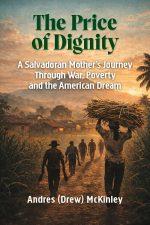
The Price of Dignity
USD $ 21.50Select options This product has multiple variants. The options may be chosen on the product page
The Price of Dignity
USD $ 21.50The Price of Dignity chronicles the extraordinary life of Patrocinia Polanco Rivas, a Salvadoran peasant woman whose personal story embodies the Central American struggle for survival and justice. The narrative follows her from a childhood of desperate poverty in the 1970s, through her family’s involvement in grassroots movements inspired by liberation theology and the murdered priest Rutilio Grande.
As civil war engulfs El Salvador, Patrocinia’s family is drawn into the conflict. She experiences the horror of scorched-earth tactics, lethal aerial bombardments, and the trauma of forced displacement (guindas). After losing her father to a bomb and suffering severe injuries herself, she leaves the war at her mother’s request. The postwar period, however, brings new struggles. Despite the hope of the 1992 Peace Accords, neoliberal policies and enduring poverty force Patrocinia’s family into a relentless battle for survival, cutting sugarcane for meager wages.
This economic desperation ultimately dismantles her family, as her husband and, one by one, her six children are forced to migrate illegally to the United States. The book’s second half becomes a searing indictment of U.S. immigration policy. It juxtaposes the dangerous journeys of her children—marked by cartel violence and exploitation—with the cruel, dehumanizing rhetoric of Donald Trump, who labels them “criminals” and “rapists.” Patrocinia is left alone in El Salvador, her utopian dream of dignity replaced by the anguish of a separated family, haunted by a past of war and a present of political disillusionment under Nayib Bukele. Her story is a powerful testament to the resilience of the human spirit and the ongoing price of dignity.
Select options This product has multiple variants. The options may be chosen on the product page -
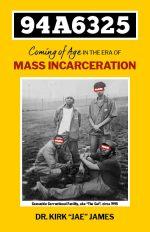
94A6325
USD $ 7.99 USD $ 25Price range: USD $ 7.99 through USD $ 25Select options This product has multiple variants. The options may be chosen on the product page
94A6325
USD $ 7.99 USD $ 25Price range: USD $ 7.99 through USD $ 2594A6325 is the compelling coming-of-age memoir of Dr. Kirk “Jae” James, a Black male, Jamaican immigrant, and father, chronicling his nearly decade-long experience (3,268 days) within the New York State carceral apparatus. The narrative is anchored by his arrest on April 13, 1994, when he was 18 years old, charged under the draconian Rockefeller Drug Laws and subsequently sentenced to life in prison. The story details his survival in infamous facilities such as Rikers Island, the maximum-security adolescent prison “The Cat” (Coxsackie), and Wyoming, where he fought to maintain his humanity while facing overwhelming fear and anxiety.
The book powerfully illustrates how legislative actions like the 13th Amendment, “tough on crime” rhetoric, the 1994 Crime Bill, and the 1996 Immigration laws acted as contemporary black codes and slave catchers, perpetually dehumanizing and criminalizing Black and brown populations. Jae endures three denials by the Parole Board while simultaneously fighting a six-year battle against a mandatory deportation order.
Drawing inspiration from mentors and comrades—including revolutionaries and activists like George Jackson and Pops—Jae transforms his time in prison into a quest for knowledge and self-actualization, culminating in earning an Associate Degree and winning his 212c waiver hearing against deportation in 2002.
More than just a survival story, 94A6325 serves as a vital first-person account and a call to embrace Abolition. The author, now a Clinical Assistant Professor at NYU, shares his journey as essential knowledge needed to confront the historical violence and systemic white supremacy woven into American democracy, urging readers to imagine a world without human cages, grounded in abundance and love. The story officially ends with his release on March 25, 2003.
This book is the first part in a series, with this one focusing on his incarceration from 1994 to 2003.
Dr Kirk “Jae James” talks about the book. The event centered on Dr. Kirk James’ memoir “94A6325: Coming of Age in the Era of Mass Incarceration,” which explores his nearly 9-year incarceration experience and its broader implications for systemic injustice. The panel discussion included Councilman Yusuf Salam, Dr. Michelle Munson, and Dr. Pierre Hargrove, who engaged in a conversation about the human impact of mass incarceration, the importance of community support during incarceration, and the ongoing challenges faced by formerly incarcerated individuals. The participants shared personal experiences and insights, highlighting the need for systemic change, the power of storytelling, and the resilience of those affected by the criminal justice system. The event aimed to foster reflection and dialogue on the structural harms of mass incarceration and the potential for collective healing and transformation. Watch the video here.
Published in collaboration with:
Select options This product has multiple variants. The options may be chosen on the product page -
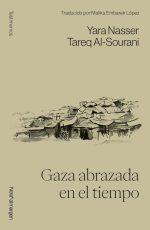
Gaza abrazada en el tiempo
USD $ 22.38Select options This product has multiple variants. The options may be chosen on the product page
Gaza abrazada en el tiempo
USD $ 22.38The Spanish translation of original English edition of Gaza Held in Time is now available, published by Nota al margen in Spain. Copies of this publication are available here: https://www.notalmargen.com/libros/gaza-abrazada-en-el-tiempo/
«Sigo sin saber por qué amamos a Gaza. Tal vez porque nadie más lo hará. O porque dejar de amarla significaría renunciar a nosotros mismos. Ta vez nunca entienda el por qué, o bien sea algo que no necesito explicar. Quizá el amor es lo que queda cuando no queda nada. O quizá, solo quizá, no sea amor en absoluto, sino dolor. Una negativa a dejar de preocuparse, incluso cuando está en llamas. Esto no es una respuesta. Es lo que descubrí cuando empecé a preguntar. Sentir amor por Gaza no es lógico»
Le solía contar cuentos a mi hermana pequeña antes de dormir. Inventaba ciudades con árboles mágicos y bicicletas voladoras, donde la gente no se escondía bajo el hueco de la escalera ni revisaba el depósito de agua a diario, donde nadie se moría ni se suspendían las clases porque la escuela había sido bombardeada.Ella se reía y me preguntaba:
—¿De verdad, eso existe?
—Todavía no —le respondía.
Ese era el truco en Gaza. Decíamos «todavía no», en lugar de «nunca».
Porque la esperanza era lo único que no podían bombardear.
El cielo gritaba fuerte. Y sigue haciéndolo.
Ahora, en lo más hondo de mí, espero el día en que todo se quede en silencio.
Y cuando eso ocurra, alzaré la mirada, no con miedo, sino en paz.
Ese día no ha llegado.
Pero seguimos soñando.
Y seguimos viviendo.«Busco por todas partes un cielo del que esté ausente la muerte. Estoy segura de que está ahí, cuando compruebo los callejones y las avenidas. Se dice que existe justicia bajo ese cielo. Justicia es lo que siempre he anhelado y buscado».
«¿Seguiremos durmiendo en tiendas de campaña durante años? ¿Crecerán los niños entre paredes de nailon, aprendiendo a dibujar con cenizas? ¿Qué ocurrirá cuando el mundo siga adelante —de nuevo— y los únicos que queden para recordar este horror sean quienes no pudieron huir de él?».
«si dejo de escribir, / el silencio escribirá en mi lugar. / Y temo lo que pueda contar».
Select options This product has multiple variants. The options may be chosen on the product page -
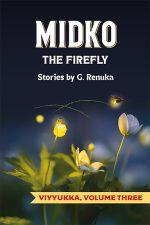
Midko The Firefly
USD $ 27Select options This product has multiple variants. The options may be chosen on the product page
Midko The Firefly
USD $ 27Midko the Firefly is the third volume in the Viyyukka Series, collecting 16 revolutionary short stories by Gumudavelli Renuka (Midko), translated from Telugu. The book portrays the lives of Maoist revolutionaries, Adivasi communities, and the brutal state repression they face in the forests of Dandakaranya, Telangana, and Andhra-Odisha border regions.
Through stories like “The Flow,” “Revolutionary Generation,” “Gangi,” and “Snatch the Guns!”, Renuka explores themes of sacrifice, love, separation, and political awakening. She centers women’s experiences—mothers who lose children, wives who outgrow husbands, young Adivasi girls who join armed squads, and ordinary women who defy superstition and state violence. The narratives depict police encounters, fake encounters, torture, rape, and the destruction of Adivasi villages through state-sponsored vigilante groups like Salwa Judum.
Renuka portrays the revolutionary movement not as idealized heroism but as a space of constant struggle—internally against patriarchal tendencies, externally against a ruthless state. Stories like “Teachers” and “Marching Forward” show how ordinary Adivasi villagers educate revolutionaries about their own mistakes. “The Closed Heart” tells of a wife who locks her husband out to his death, choosing the revolution over family loyalty.
The collection ends with a glossary and notes on translators, grounding the fiction in real political contexts, martyrs, and historical events like Operation Kagaar (2024-2026), which led to Renuka’s own torture and killing by police on March 31, 2025.
Select options This product has multiple variants. The options may be chosen on the product page -
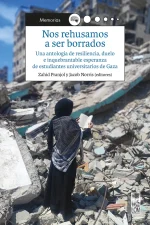
Nos rehusamos a ser borrados
USD $ 16Select options This product has multiple variants. The options may be chosen on the product page
Nos rehusamos a ser borrados
USD $ 16Con desgarro, con dolor, pero sobre todo con enorme dignidad, porfía y convicción, un grupo de estudiantes de Gaza nos hace sentir y escuchar su voz urgente y afirmativa en una frase valiente e inquebrantable: Nos rehusamos a ser borrados.
Con la universidad en ruinas, con la ciudad y el país transformado en escombros, con sus familias diezmadas por el éxodo incierto y un genocidio llevado adelante por el Estado de Israel, un conjunto de estudiantes gazatíes levanta un testimonio coral que documenta con un pulso literario desgarrador la ruptura absoluta de la cotidianidad civil a partir de octubre de 2023.
Con un tono profundamente descriptivo y despojado de eufemismos, los narradores exponen la caída de los hospitales, la precarización en claustrofóbicas tiendas de campaña y la instauración de una hambruna fabricada como táctica bélica, donde el intento de conseguir un simple saco de harina se convierte en un acto de inmolación.
Al documentar el asedio, los textos evidencian cómo el resguardo de la identidad y la educación emergen también como formas de resistencia. Estudiantes que buscan captar señal de internet en los tejados bajo el constante zumbido de los drones demuestran que mantener viva la necesidad de comunicar es el único antídoto contra la aniquilación sistemática.
La sección poética sublima el trauma físico, ofreciendo una exploración visceral sobre la pérdida, la orfandad cíclica y la culpa del sobreviviente. Más que un recuento de atrocidades, este libro es un imperativo ético contra el silencio del mundo.
Select options This product has multiple variants. The options may be chosen on the product page -
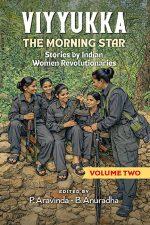
Viyyukka – The Morning Star (Vol 2)
USD $ 5 USD $ 26Price range: USD $ 5 through USD $ 26Select options This product has multiple variants. The options may be chosen on the product page
Viyyukka – The Morning Star (Vol 2)
USD $ 5 USD $ 26Price range: USD $ 5 through USD $ 26Edited by P. Aravinda and B. Anuradha
This second volume of Viyyukka continues the powerful anthology of stories written by women revolutionaries in India’s Maoist movement, translated from Telugu to English. The collection brings together narratives penned by guerrilla soldiers who document their lived experiences within the revolutionary struggle, offering rare insights into the intersection of armed resistance, gender politics, and Adivasi community life.
The stories span four decades of revolutionary movement history, capturing both tactical engagements and intimate human moments—love, loss, camaraderie, and daily existence in guerrilla squads. What distinguishes this volume is the inclusion of autobiographical sketches by Adivasi women, narrated in their own tongues, detailing the circumstances that led them to become guerrillas. These first-person accounts reveal how poverty, land dispossession, state repression, and patriarchal violence converge to shape revolutionary consciousness.
Set primarily in the Dandakaranya forest region spanning multiple Indian states, the narratives illuminate the movement’s efforts to build alternative structures of governance through Janatana Sarkars (people’s governments), which implemented collective farming, education, healthcare, and resistance to mining corporations. The stories confront the brutal reality of state counter-insurgency operations including Salwa Judum and Operation Green Hunt, while celebrating the resilience of women who constitute nearly half the guerrilla army.
The collection demonstrates how women revolutionaries perform multiple roles—soldiers, writers, historians, doctors, and teachers—documenting their own history while fighting for land, dignity, and self-determination. These are not conventional fictions but testimonies written under extreme duress, smuggled across regions and preserved against overwhelming odds, offering a window into one of India’s most significant contemporary resistance movements.
This is a powerful and timely book. Reading Viyyukka is to encounter history in its most urgent form: not as abstract doctrine, but as the lived, written, and too-often silenced testimony of women for whom the pen was as vital as the gun. This anthology does not simply add voices to a historical record; it fundamentally questions the record itself. By foregrounding the female guerrilla imaginary—with its profound complexities of comradeship, grief, motherhood, and even the critique of revolutionary justice—these stories exceed the boundaries of political propaganda to become essential documents of human endurance and creativity. In a time when their politics is declared defeated, the women of Viyyukka remind us that some struggles are not measured by victory alone, but by the indestructible insistence on bearing witness. — Sharmila Purkayastha, independent researcher, New Delhi
Select options This product has multiple variants. The options may be chosen on the product page -
![Viyyukka - The Morning Star [1]](https://darajapress.com/wp-content/uploads/2025/10/Viyyukka_lo-150x225.jpg)
Viyyukka – The Morning Star [1]
USD $ 10 USD $ 20Price range: USD $ 10 through USD $ 20Select options This product has multiple variants. The options may be chosen on the product page
Viyyukka – The Morning Star [1]
USD $ 10 USD $ 20Price range: USD $ 10 through USD $ 20Viyyukka: The Morning Star is a rare and compelling anthology of stories written in Telugu over four decades by nearly fifty Maoist women revolutionaries in India. The title, Viyyukka, is a Gondi word meaning morning star. This collection is unique because these narratives are not traditional fiction; they are “lived experiences written from within the movement” while the authors served as guerrilla soldiers, often under extreme duress.
The stories offer a vital glimpse into the human dimensions of armed struggle, highlighting the agency, resilience, and moral consciousness of the women participants. The authors, active in India’s ongoing revolutionary conflict, document everything from tactical and ideological engagements to intimate realities such as love, loss, and camaraderie within their squads.
At its core, the Morning Star series centers on the fierce struggle for survival: of people, forests, rivers, and a way of life. The narratives capture how local struggles against exploitation and dispossession evolved into a wider movement challenging the “Iron Heel of the Indian State” and global capital.
Geographically rooted in Central Indian regions like Dandakaranya, the book vividly portrays the Adivasi (indigenous) resistance for the defense of jal, jangal, and jameen (water, forest, and land). The resistance documented in these pages, particularly against corporate mining and state repression, shares a “common thread” with the struggles of indigenous communities across the globe, positioning this collective testimony as a crucial document of resistance against colonial and capitalist forces.
This is a powerful and timely book. Reading Viyyukka is to encounter history in its most urgent form: not as abstract doctrine, but as the lived, written, and too-often silenced testimony of women for whom the pen was as vital as the gun. This anthology does not simply add voices to a historical record; it fundamentally questions the record itself. By foregrounding the female guerrilla imaginary—with its profound complexities of comradeship, grief, motherhood, and even the critique of revolutionary justice—these stories exceed the boundaries of political propaganda to become essential documents of human endurance and creativity. In a time when their politics is declared defeated, the women of Viyyukka remind us that some struggles are not measured by victory alone, but by the indestructible insistence on bearing witness. — Sharmila Purkayastha, independent researcher, New Delhi
Select options This product has multiple variants. The options may be chosen on the product page -
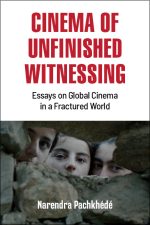
Cinema of Unfinished Witnessing
USD $ 15 USD $ 34.95Price range: USD $ 15 through USD $ 34.95Select options This product has multiple variants. The options may be chosen on the product page
Cinema of Unfinished Witnessing
USD $ 15 USD $ 34.95Price range: USD $ 15 through USD $ 34.95This is not a book about films in the conventional sense. It is a book about the conditions under which films become legible, forgettable, weaponised, or necessary.
Across essays that move between review and reportage, festival and platform, myth and documentary, Narendra Pachkhédé reads global cinema as a moral technology of the present. He follows the contemporary attention regime, the coercions of watchability, the choreography of awards and public virtue, and the quiet ways propaganda teaches a society what to feel plausible. The question is not only what we watch, but how we have been conditioned to watch: how viewing is trained by ideological settings, how sensibility is numbed by repetition and spectacle, how attention is corralled into habits that feel like choice.
This is a book about the world of cinema and its assemblages. It attends to cinema’s extended life in media ecologies: streaming interfaces and festival circuits, platform logics and institutional gatekeeping, the politics of narrative and the global circulation of stories. It returns repeatedly to the politics of reception, where a work is domesticated or rejected, where controversy polices a field, where filmmakers bond, quarrel, protect, and betray, and where institutions decide what counts as witness. Cinema, here, is not only an art form but a system of mediation that defines the political terms under which stories are consumed.
The book crosses geographies and film worlds, tracing how nations dream through genre and how history is refashioned into culture, suspended between memory and forgetting. From the seductions of nostalgia to the endurance of Béla Tarr, from Korean modernity’s neutralised ruptures to Palestinian cinema’s custody under pressure, these essays insist that cinema is never only an image. It is an argument about reality, and a rehearsal for what a public can bear to know.
The Cinema of Unfinished Witnessing asks a simpler, harsher question: why do some stories become global vigils while others vanish into the feed? It is a book about how we come to believe what we believe, and what cinema has to do with that failure. It is also a wager that, by looking closely and naming the terms of looking, one can still be a form of care.
Standing firmly astride continents, Narendra Pachkhédé is perfectly positioned to evaluate the political aesthetics of global cinema. His clear and forceful writing disperses the fog of complaisance that collects around so many “important” films, and celebrates those that invite audiences to stay alert to injustice and alive to feeling. — Dr. Laura U. Marks, philosopher and scholar of new media and film; Grant Strate University Professor, School for the Contemporary Arts, Simon Fraser University, Vancouver
“Myth and memory are never separate in political life,” says Pachkhédé somewhere near the beginning of this book. What follows is an astute and wide-ranging examination of the relationship between ethics, aesthetics and the political in cinema — drawing on Bollywood spy thrillers such as Dhurandhar, not to mention Western examinations of genocide such as Vanderbilt’s Nuremberg and Glazer’s Zone of Interest. You can feel Pachkhédé’s moral drive at every turn in this book — as he ranges over Charlie Kirk’s killing, the far-right gatherings in the UK (“Unite the Kingdom”) and the protest movements in Nepal, the aesthetic question of the political and its representation is at the heart of this timely, detailed book. — Dr. Ian Almond, Professor of World Literatures, School of Foreign Service, Georgetown University, Qatar
Perhaps it’s the first book on film criticism of its kind. The Cinema of Unfinished Witnessing doesn’t confine itself to the temporal-spatial analysis or the social and political climate a film is made in and speaks to, but it incorporates the noise outside the screen, the “buzz” — festival premiere, awards, reviews, public debate and controversy — that create the conditions in which spectators experience the weather within the film. Narendra Pachkhédé stays long and ploughs deep. He moves from the Oscars’ ceasefire pins to a Bollywood blockbuster’s use of genre grammar to craft propaganda; from Béla Tarr’s durée as an ethical method to the algorithmic afterlife of a political assassination; from a Tajik child’s search for a mythical fairy to bring back her absent father to a year-long Indian farmers’ protest filmed not as spectacle but as “a society-in-miniature,” built from kitchens, stages, and the unglamorous labour of staying. He reads festivals and awards as legitimacy machines, and asks what a viral clip or a release date does to a film’s meaning. Pachkhédé doesn’t let cinema off the hook — and he doesn’t let the algorithm off either.— Nishtha Jain, International Award-winning Indian filmmaker and member of the Academy of Motion Picture Arts and Sciences
Narendra Pachkhédé offers a lucid account of cinema’s reception under the platform economy of attention, caught between the reel, the portable clip, and the long take, reclaimed by filmmakers as a counter-technique that restores duration, agency, and ethical looking — une rééducation du regard. Astute and tightly argued, his analysis names the ideological apparatus shaping what we watch, how we watch, and what spectatorship can still demand, renewing, with urgency, the political question of cinema’s reception today. — Jean Gagnon, PhD, independent curator and art critic; former Curator of Media Arts at the National Gallery of Canada and former Director of Preservation and Access to Collections at the Cinémathèque québécoise
Select options This product has multiple variants. The options may be chosen on the product page -
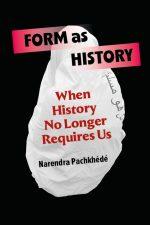
Form as History
USD $ 12 USD $ 16Price range: USD $ 12 through USD $ 16Select options This product has multiple variants. The options may be chosen on the product page
Form as History
USD $ 12 USD $ 16Price range: USD $ 12 through USD $ 16Form as History: When History No Longer Requires Us offers a concise and penetrating critique of contemporary historical thought. It argues that while modern scholarship has made Muslim life increasingly legible as a site of ethics, resistance, and normativity, this achievement can obscure a more unsettling condition: that history itself has learned to proceed without requiring meaning, address, or human obligation.A rigorous and unsettling meditation on what it means to live in a world where history continues to function, but no longer feels compelled to answer to human life.The book turns on a central tension. On one side stands the European figure of the Muselmann, drawn from Holocaust testimony, who reveals history’s capacity to continue efficiently while no longer demanding anything from the humans it governs. This is not loss, but abandonment. On the other side stands the Muslim, rendered in modern discourse as a knowable and agentive subject of history. The book shows how an emphasis on this agency can function as a displacement, allowing the radical danger exposed by the Muselmann—history’s indifference to human address—to be misread as a cultural or religious condition.What becomes of history when it no longer requires struggle, meaning, or even us, yet continues efficiently all the same?Refusing nostalgia and moralizing alike, the book examines how forms of life, particularly within Muslim legal and commercial traditions, have sustained obligation and necessity even after political centrality receded. Its aim is diagnostic rather than prescriptive: to make visible the quiet threshold where life is managed rather than addressed, and to clarify how historical necessity depends not on power or visibility, but on the survival of forms that still compel the world to answer.
Select options This product has multiple variants. The options may be chosen on the product page -

We Are Still Here
USD $ 7.99 USD $ 27Price range: USD $ 7.99 through USD $ 27Select options This product has multiple variants. The options may be chosen on the product page
We Are Still Here
USD $ 7.99 USD $ 27Price range: USD $ 7.99 through USD $ 27Since the start of the unfolding genocide against Palestinians in Gaza, carried out through settler-colonial Israeli violence, higher education institutions have been systematically destroyed. Campuses lie in ruins, academics and students have been killed or forcibly displaced, and what was once a thriving, intellectually vibrant student population now lives under daily threat of bombardment, forced starvation, and death. For nearly two years, students have been cut off not only from their universities, but from their dreams, their futures, and even their most basic sense of safety.
Yet, despite this unimaginable trauma, many are still writing.
We Are Still Here is an anthology of these voices—raw, unfiltered, and courageous. It features short and long stories, poems, essays, and testimonies written by students from Gaza’s universities. These are not retrospective reflections or distant analyses; they are real-time words, emerging from the depths of genocide, displacement, and grief. These writings may be their last hopes to reach the world, a final act of resistance through expression.
Listen to our podcast conversation
with the student contributors hereOr you can subscribe to Daraja Press podcasts wherever you get your podcasts.
All royalties from the sales of this book go to the student authors in Gaza.
Surviving at the darkest extremes of suffering, of destruction and displacement, famine and the constant threat of maiming or death, these young writers speak to us with piercing lucidity. Their resilience is their only form of optimism. Paradoxically, reading them lifts the heart.
– Ian McEwan, author of Atonement and Enduring LoveA moving, painful and yet hopeful collection of the younger generation of the people of Gaza. Sumud, resilience, was never so powerful and clear, as it appears in this must read and urgent collection. —Ilan Pappé, professor, University of Exeter’s College of Social Sciences and International Studies, author, A Very Short History of the Israel-Palestine Conflict
In the heart of suffering, words are born — and from beneath the rubble, creativity rises. This book is more than a collection of written pages; it is the echo of resilient souls and the cries of pens that spoke when voices were silenced. — Professor Dr. Omar Kh. Melad, President of Al-Azhar University– Gaza
We Are Still Here is not a book about war — it is a book about being alive after the world has decided you are already gone, written in rooms that may no longer stand. These pages are dispatches from the thin edge of the present: letters from hunger, fragments of interrupted lives, flashes of hope so unyielding it burns. Here, young people shape the record of their time on earth, knowing that their time may be short. You will not leave this book with the comfort of closure. It will stay with you long after the final page has turned. — Leila Sansour, filmmaker and founder of Open Bethlehem
These Gaza poignant reflections in prose and poetry from the midst of genocide are both heart-rending and full of life and promise. Israel may have physically killed many of their young authors, but will never kill their words, which live on in this powerful collection of their writings. — Ghada Karmi.
Death is not an ideation for these young writers, but an everyday reality. This collection is a testimony to the power of words. It reveals how love, creativity and hope can galvanise us against fear and inaction. — Selma Dabbagh, author of the novel Out of It and editor of the anthology We Wrote in Symbols; Love and Lust by Arab Women Writers.
Sara Alkhaldy, one of the contributors to We Are Still Here, a new Gazan anthology of student writing, says: ‘I wish I could bottle the scent of our home and take it with me as I left.’ Rula Elkhair writes of studying during displacement: ‘Even in places with no electricity, no water and no stable internet, I installed an eSIM on my phone and climbed to the rooftop under buzzing drones to download lectures. I took exams in cafés by the sea. I studied while hungry, while afraid, while grieving.’ — Selma Dabbagh in London Review of BooksKnowledge of the Relevant Facts
You can find the French language edition here: Nous Sommes Toujours Là
Select options This product has multiple variants. The options may be chosen on the product page -
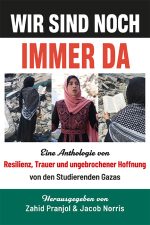
Wir sind noch immer da
USD $ 12 USD $ 27Price range: USD $ 12 through USD $ 27Select options This product has multiple variants. The options may be chosen on the product page
Wir sind noch immer da
USD $ 12 USD $ 27Price range: USD $ 12 through USD $ 27Professor Zahid Pranjol ist Professor für Biomedizinische Wissenschaften an der University of Sussex. Er ist eine führende Stimme in der inklusiven Wissenschaftsbildung und Lehrplanreform und leitet Bestrebungen zur Dekolonisierung des Lehrplans der Biowissenschaften, indem er eurozentrische Vorurteile hinterfragt und Leselisten diversifiziert. Seit April 2024 unterstützt er über 2.000 Studierende an drei großen Universitäten in Gaza, indem er Lehrmaterialien, Forschungsmentorate, Englischsprachtraining sowie Zugang zu professioneller und psychologischer Unterstützung bereitstellt.
Jacob Norris ist außerordentlicher Professor für Geschichte des Nahen Ostens an der University of Sussex. Er hat umfassend zur palästinensischen Geschichte im 19. und 20. Jahrhundert publiziert und arbeitet derzeit zur Geschichte der palästinensischen Solidarität in Lateinamerika.
Select options This product has multiple variants. The options may be chosen on the product page -

Jahan Malek Khatun
USD $ 18Select options This product has multiple variants. The options may be chosen on the product page
Jahan Malek Khatun
USD $ 18This book presents the first extensive English study and translation of the poetry of Jahan Malek Khatun, a fourteenth-century Persian princess and one of the most important women in the history of Persian literature. Translator Sheema Kalbasi first introduced Jahan Malek Khatun to the general English-speaking audience in 2008 through her anthology Seven Valleys of Love: A Bilingual Anthology of Women Poets from Medieval Persia to Present Day Iran, which marked the earliest appearance of Jahan’s poetry in English translation. Her surviving divan, which contains more than a thousand ghazals along with qasidas and shorter lyric forms, offers an unparalleled window into the intellectual, emotional, and cultural world of a noblewoman who wrote with clarity, restraint, and philosophical depth during a period of profound political instability.
The volume introduces readers to the historical and literary contexts that shaped her life and work, and it situates her authorship within a long Iranian tradition in which women participated in governance, education, and artistic patronage from the ancient empires through the Islamic period. It recreates the refined yet precarious milieu of fourteenth-century Shiraz, where poetry functioned not only as an aesthetic practice but also as a medium of political expression and ethical contemplation.
Through close readings, the book explores the disciplined craft of Jahan Malek Khatun’s ghazals. Her poetry turns repeatedly to a stable constellation of images, such as wind, candle, threshold, and healer, that guide the reader through themes of longing, moral endurance, sovereignty, and judgment. Each couplet acts as a brief meditation, and the poems together form a sustained inquiry into the relationship between beauty, discipline, and survival.
The study also examines the transmission of her work, the role of women as readers and preservers of literary culture, and the challenges inherent in translating a voice shaped by both privilege and constraint. Through this analysis and the accompanying translations, Jahan Malek Khatun emerges as a major intellectual presence and an essential figure for understanding the richness and complexity of the Persian lyric tradition.
Select options This product has multiple variants. The options may be chosen on the product page -
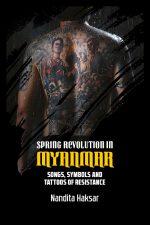
Spring Revolution in Myanmar
USD $ 0.01 USD $ 18Price range: USD $ 0.01 through USD $ 18Select options This product has multiple variants. The options may be chosen on the product page
Spring Revolution in Myanmar
USD $ 0.01 USD $ 18Price range: USD $ 0.01 through USD $ 18Myanmar is synonymous with ethnic conflicts, brutal military repression and insurgencies. The ongoing civil war against the junta has been described as the longest and one of the most violent conflicts in the world today with a growing humanitarian crisis.
This book celebrates the spirit of defiance, resilience and enormous courage of the Burmese people in the face of the military regime’s extreme violence. It is a window into the world of Burmese resistance and the myriad cultural expressions that it has taken ever since the February 2021 coup. Crowdfunded by the Burmese diaspora, but largely ignored by the international community, this is a resistance where every cultural form – poems, songs and even tattoos – has been explored as a weapon.
The regime has tried to ban these songs of resistance, and persecuted and even executed artists, musicians and poets. But as poet Khet Thi (1986-2021) said, before he was killed by the junta, “You try to bury us underground, because you don’t know that we are the seeds.”
Select options This product has multiple variants. The options may be chosen on the product page -
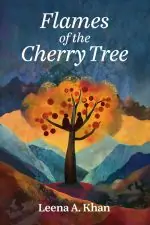
Flames of the Cherry Tree
USD $ 12 USD $ 22Price range: USD $ 12 through USD $ 22Select options This product has multiple variants. The options may be chosen on the product page
Flames of the Cherry Tree
USD $ 12 USD $ 22Price range: USD $ 12 through USD $ 22The year is 1940, and the winds of change stir in the valley of Kashmir. Aafreen Khan is a young girl that dreams to be a doctor like her beloved grandfather, defying the boundaries of convention as a Muslim and a woman in a country rigged against her. But as the partition of India looms closer, Kashmir reels under the weight of greed and power, and Aafreen is swept into the whirlwind of a story much larger than her own. When love, loss, and revolution reshape her entire world, Aafreen learns the terrible truth of what it means to survive.
Flames of the Cherry Tree is a sweeping, intimate portrait of a young woman’s coming-of-age against the backdrop of colonialism, rebellion, and the violent birth of today’s occupied Kashmir. At once tender and unflinching, it traces the story of one family through oppression and resistance, illuminating the forgotten histories that have shaped Kashmir and the hope that survives in its people.
Leena Khan speaks about her first novel ‘Flames of the Cherry Tree’
A lyrical, unflinching novel that rebuilds Kashmir from beneath the rubble of empire — a testament to the people who refused to disappear.
– Tariq Mehmood, author, The Second ComingLight and tender yet deeply haunting, this luminous tale of friendship and love unfolds in Kashmir against the gathering darkness of partition and local political churnings, bearing witness to both the radiant beauty of young love and the unspeakable horrors unleashed when hatred fractures a subcontinent along religious lines.
– Anuradha Bhasin, Managing Editor of the Kashmir TimesA hauntingly beautiful tale of loss and resilience where the author masterfully weaves history with humanity. Tender, brave, and unforgettable.
—Rumana Makhdoomi, author of Warriors and Falcons: Life Sketches of 100 Outstanding Kashmiri DoctorsSelect options This product has multiple variants. The options may be chosen on the product page -
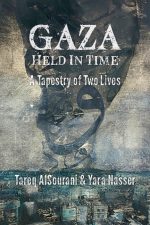
Gaza Held in Time
USD $ 6.99 USD $ 16Price range: USD $ 6.99 through USD $ 16Select options This product has multiple variants. The options may be chosen on the product page
Gaza Held in Time
USD $ 6.99 USD $ 16Price range: USD $ 6.99 through USD $ 16Gaza Held in Time
“A jewel of pain and memory.” —Patrizia Cecconi
Two Voices. One Shattered Homeland. A Story the World Can’t Ignore.
About the Book
Gaza Held in Time: A Tapestry of Two Lives is a groundbreaking memoir written by Tareq AlSourani and Yara Nasser, two Palestinian teenagers whose lives were torn apart by the 2023–2025 genocide. One fled to Egypt, carrying the guilt of escape. The other stayed, documenting Gaza’s descent into famine, mass graves, and the quiet rebellion of dreams.
Their alternating narratives—raw, poetic, and unflinchingly honest—weave together moments of piercing beauty (the scent of jasmine in Gaza’s streets, the taste of warm knafeh from Abu Al-Soud) with the horror of drone strikes, forced displacement, and the systematic erasure of their home.
This is not just a book about war. It’s about what it means to love a place the world is trying to destroy.
Why This Book Matters
- A Firsthand Account of Genocide: Written in real time from inside and outside Gaza, it shatters statistics with intimate, devastating testimony.
- A Testament to Resilience: From cooking over open fires to smuggling words past censorship, their creativity defies annihilation.
- A Call to Remember: “We wrote so Gaza would not fade into headlines.” This book is a lifeline to stories the world must not forget.
Praise for Gaza Held in Time
“Devastating… These could be our children. A brave and necessary book.”
—Yahia Lababidi, Palestinian poet“Their words should haunt us forever.”
—Lynne Segal, Birkbeck, University of London“A door left open for memory, for return, for rebuilding.”
—Aref Husseini, author of Half-AshkenaziExcerpt: The Day Everything Changed
“October 7, 2023. I woke to the sky screaming. By noon, the internet was gone. We played cards in silence, waiting for the ceiling to collapse. When it didn’t, we realized: this was the new normal. Gaza was being unmade in front of us.” —Yara Nasser
Order Now
Available in softcover and eBook.
Join the Conversation
- #GazaHeldInTime – Share quotes, reviews, and solidarity.
- Amplify Gaza’s Voices – Tag @DarajaPress & demand media coverage.
#GazaHeldInTime #ReadPalestine #GazaGenocide #Memoir #ResistanceLiterature #FreePalestine
“The story is not over because the sea still calls our names.”
Order. Read. Remember.Select options This product has multiple variants. The options may be chosen on the product page -

Palestine Wail: Poems
USD $ 18Select options This product has multiple variants. The options may be chosen on the product page
Palestine Wail: Poems
USD $ 18Lababidi’s Palestine Wail calls for the simplest, barest humanity, and it reminds us that loss of life, occupation, and genocide take an impossible toll on everyone. Finally, it holds us all accountable to address injustice, to dispel oppression and to work toward collaborative and restorative justice. In our interview, we focused on what he saw as our responsibility to humanity. — How Hope Outlasts Despair: An Interview with Yahia Lababidi — https://www.clereviewofbooks.com/writing/how-hope-outlasts-despair-an-interview-with-yahia-lababidi
…a poignant message of compassion and hope, the kind beautifully expressed by Yahia Lababidi in his #book #Palestine Wail,
@DarajaPress.
“Since purchasing the book, I have read the poem every day—it tends to feed my imagination.” https://boundlessphilanthropy.com/writings/tending-the-imagination-the-practice-of-creativity-care-challenge-compassion #poetry #GazaRenowned aphorist Yahia Lababidi’s Palestine Wail writes alongside a catastrophe beyond words, trying to shelter in words what remains of our humanity. To be a Minister of Loneliness and Lightkeeper, tending to the light. — Philip Metres, author of Fugitive/Refuge
Palestine is personal for writer, Yahia Lababidi. His Palestinian grandmother, Rabiha Dajani — educator, activist & social worker — was forced to flee her ancestral home in Jerusalem, at gunpoint, some eighty years ago.
As an Arab-American, Lababidi feels deeply betrayed by the USA’s blind support of Israel’s genocide of Palestinians.
In Palestine Wail, he reminds us that religion is not politics, Judaism is not Zionism, and to criticize the immoral, illegal actions of Israel is not antisemitism — especially since, as an Arab, Lababidi is a Semite, himself.
Using both poetry and prose, Lababidi reflects on how we are neither our corrupt governments, nor our compromised media. Rather, we are partners in humanity, members of one human family. Not in Our Name will the unholy massacres of innocent Palestinians be committed (two-thirds of whom are women and children) nor in the false name of ‘self-defense’.
In turn, Lababidi reminds us that starvation as a weapon of war is both cruel and criminal, as is collective punishment.
Palestine Wail invites us to bear witness to this historical humanitarian crisis, unfolding in real-time, while not allowing ourselves to be deceived, intimidated or silenced. We are made aware of the basic human truths that no lasting peace can be founded upon profound injustice and that the jailor is never Free…
Yahia Lababidi, an Arab-American writer of Palestinian background, has crafted a poignant collection which serves as a heartfelt tribute to the Palestinian people, their struggles, and their resilience in the face of an ongoing genocide and ethnic cleansing.
The collection, described as a love letter to Gaza, draws inspiration from the rich literary tradition of Palestinian resistance literature. Lababidi, known for his critically-acclaimed books of aphorisms, essays, and poetry, brings his unique voice to this personal, political and spiritual work.
Palestine Wail addresses us in a variety of voices: outrage, lamentation and pity, in attempting to honor the pain of the oppressed Palestinian people, while also celebrating their enduring spirit.
Lababidi’s Wail, ultimately, is a prayerful work seeking peace, healing and reconciliation—a testament to the transformative power of literature to keep hope alive in the face of seemingly insurmountable odds.
These are necessary and truthful poems. Yahia Lababidi powerfully illuminates this heartbreaking time and terrible season in the history of our world. This book, like a lantern in darkness, brings to light the truth of lives we must learn to honor and remember. — James Crews, author of Unlocking the Heart: Writing for Mindfulness, Creativity, and Self-Compassion
Yahia Lababidi’s stunning and resonant collection, Palestine Wail, addresses the outrage felt by many of the oppressed Palestinian supporters and more. He also speaks of the lamentations of his people and the show of pity, compassion, and empathy from many members of the human family from all around the world. — The Indefatigable Longing For Peace And Rapprochement In Yahia Lababidi’s Palestine Wail By Michael Parker.
Select options This product has multiple variants. The options may be chosen on the product page -
 Select options This product has multiple variants. The options may be chosen on the product page
We Are Still Not Counted As Human
S’bu Zikode’s reflections chronicle the profound struggle of Abahlali baseMjondolo (residents of the shacks), the largest popular movement to emerge in South Africa since apartheid. Founded in Durban in 2005, the movement now boasts over 180,000 members organised into more than 100 branches across four provinces (as of September 2025).
The movement arose from a deep disappointment following the initial promise of democracy, realizing that “freedom and the African National Congress (ANC) were two different things”. The poor were immediately excluded from public life and discussions about their own lives, often treated as “criminals” or “rubbish”. This systematic dehumanisation—where their very presence was deemed criminal—showed that democracy, in practice, referred primarily to the middle class and the rich.
At the heart of Abahlali baseMjondolo’s organizing is the non-negotiable demand for the recognition of their humanity and dignity. They built their foundation on the principles and values of ubuntu, viewing dignity as requiring respectful engagement and full participation in decision-making—not merely accepting ‘service delivery’. They insist on thinking and speaking for themselves, adopting the slogan ‘nothing for us, without us’.
AbM developed a unique ‘politics of the poor’ to create a space for the impoverished to think together, build power, and advance their interests outside of political parties or trade unions. The goal is establishing a democratic socialism built from below—a “living communism”—grounded in community praxis.
This struggle has been met with intense repression, including police violence, torture, criminalisation, and assassinations, with more than twenty lives lost. The state’s actions, intended to teach the poor to “know their place,” instead taught them that democracy was not for them, reinforcing the need to organize and be strong together. The movement continues to fight for the destruction of the capitalist system and the reconstruction of a new system centred on the humanity and dignity of all people.
STOP PRESS: Citation of Honour to S’bu Zikode.
29 October 2025
Human Rights Commission Presents a Citation of Honour to S’bu Zikode
Today the South African Human Rights Commission presented a Citation of Honour to S’bu Zikode.
Professor Tshepo Madlingozi, who presented the citation, specifically noted our movement’s work for land reparation, spatial justice and food sovereignty, and our commitment to oppose xenophobia and gender-based violence. He praised our movement as “true advocates of human rights, the restoration of dignity, and full liberation” and said that Zikode’s “legacy will forever guide and inspire future generations”.
In his acceptance speech Zikode accepted the Citation of Honour on behalf of the movement saying that “An award for me is also an award for the movement, Abahlali baseMjondolo, and for the determination and courage of all the people of South Africa — and all those who have kept our movement going for twenty years despite the challenges we continue to face.” He dedicated the award to the 25 comrades who have lost their lives in the course of our struggle.
Later, speaking to the leadership of the movement he said that “I am forever grateful to the red sea that has carried me over and over. I deeply appreciate you all.”
Our movement welcomes this award of a Citation of Honour to our president. It is an important recognition of the justice and power of our struggle, and the determination and courage of our members. In a time in which human rights are coming under sustained attack from right-wing forces, in and out of the ANC, we reaffirm our solidarity with the Commission, with the Socio-Economic Rights Institute and with all other human rights organisations under attack from the right.
The rights and dignity of every person must be respected – without exception – and we need to build a united front in support of this principle.
Contact:
Thapelo Mohapi 084 576 5117
Snenhlanhla Mcanyana 073 832 331
S’bu Zikode 083 547 0474Select options This product has multiple variants. The options may be chosen on the product page -
 Select options This product has multiple variants. The options may be chosen on the product page
Twenty Years of Courage and Struggle
Abahlali baseMjondolo (AbM) is the remarkable story of the South African shack dwellers movement, covering twenty years of courageous struggle. It is the largest movement to have emerged in South Africa after apartheid and one of the largest movements of the urban poor globally, boasting over 180,000 members across four provinces.
AbM emerged from the margins of South Africa’s cities, where residents faced life-threatening conditions, including shack fires, poverty, and systemic betrayal by the democratic state regarding land and housing. The movement is firmly committed to ethical principles, fighting not only for the right to the city but for the right to collectively occupy land and build occupations collectively. Abahlali insists on a humanist philosophy—”no one is illegal, everyone thinks and everyone must be counted and heard”—and works to build democracy and socialism from below.
Abahlali is abolition in action, seeking to interrupt capitalist logic by advocating for the total decommodification of land, recognizing it as a public good allocated based on human need. This commitment has led to significant victories, including securing land, providing services (like water and electricity), and winning a landmark Constitutional Court case against the unlawful Slums Act.
However, this quest for dignity has come at a tremendous cost, marked by severe repression, police violence, and the assassination of many activists by state forces and party thugs. Despite these challenges, AbM has persisted, developing occupations into working communes (such as eKhenana) that feature collective production, community halls, and political schools. Their story is a map for movements fighting inequality and authoritarianism globally. The movement continues to build collective power and struggle for a world where land, wealth, and power are shared on an equal basis.
“Your movement has shown the world that democracy extends beyond elections to a way of living together—through open assemblies and collective decision making. In doing so, you have advanced a vision grounded in humanity, solidarity, and courage. Your struggle has always been internationalist, and your solidarity with the people of Palestine, Swaziland, and the Congo, and the warm relations you have built with movements around the world, are exemplary.” Jeremy Corbyn in https://rajpatel.org/2025/10/13/4764/
The movement continues to grow, discovering that more and more settlements function better not when they function as an association of residents but as a commune. Agroecology is cropping up in more and more settlements thanks to exchanges with the MST. It’s a demonstration that when the wretched of the earth organize themselves without mediation, without NGO managers or academic gatekeepers, they can survive what would destroy any formation dependent on elite patronage. … This is the lesson Abahlali offers the world: genuine democracy is possible, but only when everyone thinks, everyone counts, everyone cares, and everyone acts. Raj Patel Everybody Thinks, Everybody Counts, Everybody Cares, Everybody Acts: Twenty Years of Abahlalism
Select options This product has multiple variants. The options may be chosen on the product page -

Unsilenced
From: USD $ 10Select options This product has multiple variants. The options may be chosen on the product page
Unsilenced
From: USD $ 10Unsilenced: Poems for Palestine is a collection of poems that convey profound emotions and serious reflections on the ongoing situation in Gaza and Palestine since the Nakba. The anthology seeks to express the moral outrage felt by poets from around the world, highlighting the perceived double standards of the West regarding international law and the suffering of the Palestinian people. The poems examine the daily realities of life and philosophical perspectives on the human condition, using nature as a motif to articulate emotions and explore themes of homeland, childhood, exile, genocide, and war. All proceeds from the sale of the collection will be donated to Gaza, demonstrating the poets’ commitment to fostering positive change through their art. Contributors include diverse voices from various countries, each recognizing the urgency and necessity of addressing the inhumane actions perpetrated against Palestine.
Income from the sale of this title will be donated for Palestine.
Praise for Unsilenced
Haunting verses by poets fluent in the language of death and genocide. Each poem rings out as a piece of memory, a bridge and a dream. This elegy will stand as a testimonial, a witness, by brave voices exhausted by the deafening silence of a traumatized world. —Nnimmo Bassey, author of I See the Invisible (poems) and Laureate of the Right to Livelihood Award 2010
… the priceless value of an anthology of lyrics from yet another encircled, blitzed, strafed, and bombarded commune, ghetto, or kibbutz, is that it bears indelible witness to the unbreakable human spirit yearning for freedom, for peace, for bread and wine and water set amid an olive grove or a lemon orchard. That is what you will unfold in editor John P. Portelli’s Unsilenced: Poetry for Palestine. Poets—Jew and Arab, Muslim and Christian, Atheist and Surrealist—voice suffering, resilience, despair, and hope, speaking out of their fragile humanity to demand that vile atrocities cease. — George Elliott Clarke, author of Canticles I-III, 6 vols, MMXVI-MMXXIII (2016-2023)
Unsilenced shows how poetry is written to trigger and provoke, to bear witness, to look at the sky and shout, over and over, as loudly as necessary against injustice. Immanuel Mifsud, Associate Professor, University of Malta and winner of the European Union Prize for Literature (2011).
Contributing Authors
Poems by: Raed Anis Al-Jishi (Kingdom of Saudi Arabia), Ridvan Ardic (Türkiye), Lil Blume (Canada), Taghrid Bou Merhi (Lebanon and Brazil), Hasan Bozdaş (Türkiye), Norbert Bugeja (Malta), Tatev Chakhian (Armenia), Franca Colozzo (Italy), Lana Derkač (Croatia), Josie Di Sciascio-Andrews (Canada), Leanne Ellul (Malta), Marthese Fenech (Malta), Abigail George (South Africa), Joe Giampaolo (Canada), Elham Hamedi (Iran), Xanthi Handrou-Hill (Greece), Jennifer Hosein (Canada), Fady Joudah (USA), Sheema Kalbasi (Iran, Denmark, USA), Rula Kahil (Lebanon and Canada), Nibal Khalil (Palestine), Zeyneb Karaca (Türkiye), Yahia Lababidi (USA), Milica Jeftimijević Lilić (Serbia), Sonia Maddouri (Tunisia), Lisa Suhair Majaj (Palestine, U.S.A., and Cyprus), Marwan Makhoul (Palestine), Leila Marshy (Canada), Taghrid Bou Merhi (Lebanon and Brazil), Ahmed Miqdad (Palestine), Maria Miraglia (Italy), Walid Nabhan (Malta, Jordan, Palestine), Mirela Necula (Romania), Mansour Noorbakhsh (Canada), Joseph C. Ogbonna (Nigeria), Muhammed Huseyin Ozer (Türkiye), John P. Portelli (Malta and Canada), Niloy Rafiq (Bangladesh), Shirani Rajapakse (Sri Lanka), Giovanna Riccio (Canada), Omar Sabbagh (Lebanon), Paul Salvatori (Canada), Eray Saricam (Türkiye), Zulal Sema (Türkiye), Cao Shui (China), Kadir Tepe (Türkiye), Graciela Noemi Villaverde (Argentina), Mirela Leka Xhava (France, Albania), Klara Vassallo (Malta), Anna Yin (Canada), Ghassan Zaqtan (Palestine)Select options This product has multiple variants. The options may be chosen on the product page -

Ancestral Daughter
USD $ 15 USD $ 28Price range: USD $ 15 through USD $ 28Select options This product has multiple variants. The options may be chosen on the product page
Ancestral Daughter
USD $ 15 USD $ 28Price range: USD $ 15 through USD $ 28Ancestral Daughter is a poignant collection of free-verse poetry by Palestinian writer Zeina Jhaish, exploring themes of diaspora, identity, resistance, and love. Through vivid imagery and raw emotion, Jhaish navigates her dual existence as a Palestinian woman from Gaza living in the diaspora, weaving personal and collective histories into her verses. The book is divided into two parts: “Ancestral,” which delves into exile, land, and the trauma of occupation, and “Daughter,” which reflects on womanhood, heartbreak, and rebirth. Poems like “Haifa on 85th Avenue” and “Godforsaken Homes” juxtapose longing for homeland with the alienation of displacement, while “Being a Palestinian Woman: A Guide” celebrates resilience. Jhaish honors her heritage, mourns ongoing violence, and clings to hope, dedicating the work to Gaza and Palestinian martyrs. Blending English and Arabic, her poetry is a testament to ancestral love and the unyielding spirit of her people.
20% of the income from e-book orders will be donated to the Palestine Children’s Relief Fund.
If you are a bookstore, please get in touch with [email protected] for special offers.
Select options This product has multiple variants. The options may be chosen on the product page