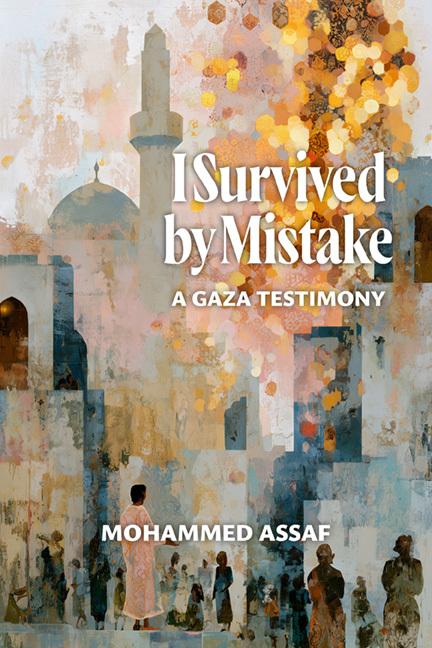
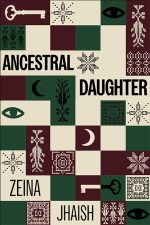
I Survived by Mistake
This deeply personal and introspective work explores survival—not merely physical survival, but emotional and spiritual endurance through love, war, and loss. Written by a Palestinian author against the backdrop of the Gaza conflict, the book weaves together reflections on love, betrayal, war, displacement, and the search for meaning in a world stripped of stability.
The narrative oscillates between intimate romantic relationships and the brutal realities of life under bombardment. The author chronicles a turbulent love affair marked by passion, jealousy, betrayal, and eventual dissolution, examining how relationships fracture under the weight of pride, misunderstanding, and external pressures. Simultaneously, he documents the devastating experience of war in Gaza: displacement, hunger, the loss of loved ones, the daily struggle for survival, and the erosion of human dignity.
Central themes include the nature of survival—questioning whether mere existence constitutes living, and whether those who survive emerge intact or fundamentally altered. The author grapples with grief over the death of his grandmother, the loss of his beloved, and the collective trauma of a people under siege. He explores the tension between hope and despair, the betrayal of humanitarian aid systems, the corruption of values in times of crisis, and the profound loneliness of carrying unspoken pain.
Writing serves as both confession and catharsis—an attempt to staunch internal bleeding and make sense of chaos. The prose is poetic, fragmented, and emotionally raw, reflecting the author’s belief that true survivors do not write; they simply endure. Ultimately, the book is a testament to the impossibility of returning unchanged from love or war, and the quiet dignity of continuing despite everything.
| Categories: | Biography, Colonialism, Forthcoming, Gaza, Palestine, West Asia / Middle East |
|---|
Related products
-
Breaking the Chains of Silence
Breaking the Chains of Silence opens where any serious account of Kenya must begin: with silence. But this is not the quiet of peace or the calm of justice. It is a manufactured silence—forged by land theft, detention, exile, assassinations, police bullets, and media too intimidated to print the truth. It is the silence that follows the gun and precedes the next uprising.
This book bravely refuses that silence. It dismantles the comfortable myth that Kenya became free simply because a flag was raised in 1963. It rejects the official narrative that the struggle ended with independence, leaving citizens as spectators while a small elite inherited the state, the land, the police, and the economy. Instead, it insists that Kenya’s real history is not the story of presidents, but of working people—first fighting colonialism, then confronting the imperialism that survived under new flags and through local agents.
Crucially, the book refuses to imprison resistance in the past. It reads the present with urgency, seeing the courage of the Gen Z movement, the defiance of the RutoMustGo protests, and the young people who walked into streets patrolled by a contemptuous state. It sees their rejection of taxation, corruption, and police violence. Yet it refuses to flatter that moment into myth. It insists that spontaneous anger must evolve into organisation, protest into political education, and generational revolt must find its class foundation. The cry of the youth must meet the power of workers.
While the essays engage with current contradictions, they remain rooted in theory—one essential element for revolutionary change. The other is practice: putting ideas into action and facing the enemy where bullets and prisons are the reality. This combination of theory and practice lays the groundwork for a people’s revolution. It is for this reason the book includes Gathanga Ndung’u’s vital essay, From Mau Mau to Ruto Must Go: A Genealogy of Resistance, which connects historical struggle to today’s frontline.
-
Select options This product has multiple variants. The options may be chosen on the product page
The Shadow
USD $ 23.00Discover The Shadow: Poems for the Children of Gaza, a poignant collection by Palestinian poet Ahmed Miqdad and Maltese-Canadian poet John P. Portelli. Written amidst the horrors of Gaza’s genocide and the personal battle with cancer, these 42 poems bear witness to the intersection of political violence and personal mortality. Through raw emotion and lyrical defiance, the poets forge solidarity across borders, offering a glimmer of hope in the face of erasure.
Featuring evocative art by Malak Mattar and a foreword by Professor Jamil Khader, this collection is a call to remember, resist, and reclaim humanity. A portion of proceeds will support Palestinian relief efforts.
Select options This product has multiple variants. The options may be chosen on the product page -
Select options This product has multiple variants. The options may be chosen on the product page
Night Settles Upon The City
USD $ 22.00 – USD $ 23.00Price range: USD $ 22.00 through USD $ 23.00Written with urgency out of a war-time Beirut, this poetry collection registers the griefs and the heroism of the Lebanese, under siege yet again. Sabbagh lends his lyrical voice here, to give a voice to the voiceless, trying to find some harmonic sense out of catastrophe. This book will compel readers, both Lebanese and those with any kind of human heart. While much of the work was written swiftly, on impulse, and almost like, as one of the poem’s title’s has it, a ‘War Diary,’ in verse, this work aims nonetheless to last in its significance and resonance at a time when the world as a whole (let alone Lebanon herself) has become so unpredictable, so fickle and so perilous. Night Settles Upon The City aims to be a worthwhile addition to the contemporary literature of war and, more specifically, to the literary representations of the modern Lebanese reality and experience.
Omar Sabbagh is a poet who is privileged to write about war and destruction from the relative safety of his study. But this double-edged illusion is insidious — mental and emotional inwardly, and physical for those who are directly under attack. It is visceral, political, heart-wrenching — yet the poet seeks out light and hope through the act of writing, for the sake of ownership and sharing. He may say that “I cannot read minds and nor / will I ever wish to”, but he writes for the importance of record-keeping, seeking solace, both private and public — as the Night Settles Upon The City of Beirut.
— Sudeep Sen, Winner of the Rabindranath Tagore Literary PrizeOmar Sabbagh has long brought us a world in which personal experience stitches a hyphen between the eastern Mediterranean and the northerly British archipelago. Now he makes the tension inherent within that richness explicit, in a love-letter to his family and home city of Beirut. Written while the ‘night’ of war ‘settles upon the city’, his introductory ‘Thoughts’ show us how unthinkable war remains, even when it arrives on the doorstep. This is a book of witness to what cannot happen, and yet does.
– Fiona Sampson, Professor Fiona Sampson MBE FRSL.Two-Way Mirror: The Life of Elizabeth Barrett Browning WW Norton 2022 – Washington Post Book of the Year, New York Times Editors’ Choice, finalist Plutarch Prize, finalist PEN Jacqueline Bograd Award, Sunday Times Paperback of the year.The poet Omar Sabbagh lives in Beirut. His voice is playful, almost surreal at times. He talks of ‘the hairbrained monocle of war’ and suggests that if you live long enough in a place like Beirut ‘laughter becomes a lover’s distance-giving kiss’. Night Settles Upon the City offers us a poetry that is neither ideological nor partisan, not of the frontline but of a deeply threatened warzone. Its terms are easy-going, sorrowful, humane, formally intelligent and tinged with apprehension. It is humanity being human. Reading it is relief and hope.’
— George Szirtes FRSL, Eliot Prize winner.Night Settles Upon the City by Omar Sabbagh is a profoundly reflective and evocative collection that blends personal experience with the brutal realities of life in a war-torn Beirut. Through a tapestry of poems, essays, and prose, Sabbagh explores the intersections of love, grief, intellectual contemplation, and the relentless backdrop of violence. The writing oscillates between moments of tender introspection and stark depictions of societal collapse, embodying a kind of philosophical meditation on suffering and survival. Sabbagh’s voice is distinctively lyrical, capturing both the intimacy of individual loss and the broader existential weight of conflict. His reflections on war and its aftermath are imbued with a sense of historical consciousness, yet deeply grounded in the immediacy of personal anguish and resilience. The collection is not just about bearing witness to destruction, but also about finding fragments of humanity amidst the ruins. A haunting and powerful work that invites readers into the fragile space between beauty and despair.—Dr. Pamela Chrabieh, Kulturnest Co-founder & Managing Director
The Arabic term for poet means the one who feels, unlike the Greek origin of poetry, which describes the craft itself. Omar Sabbagh is the quintessential poet in the Arabic sense. In this collection, he vibrates with Beirut, where he now lives, at a time when the city’s famous cultural vibrations are overwhelmed by murderous quakes caused by the Israeli war machine.
—Gilbert Achcar, Professor of Development Studies and International Relations at SOAS University of London.Beirut’s Omar Sabbagh, lover of beauty, poet of lush lyrical power, addresses the spirit of the great Dr. Edward W. Said in one poem, saying these troubled seasons make him “restless now in (his) resting place.” I’m captivated by a further description of Said, “living paper, breathing ink of one whose thoughts still seem to think.” There is healing in such sensitive recognition. Wise voices we always needed are suddenly needed desperately. Sabbagh invokes his love for a precious home frequently under siege and his care for all the people who made and surround him. Gratitude for the wisdom, kindness and rich affections of Night Settles Upon the City.—Naomi Shihab Nye, recipient Lifetime Achievement in Poetry Award, the Wallace Stevens prizeIn Night Settles on the City, Omar Sabbagh gives voice to the bewilderment, fear, rage, and despair so many of us in the Middle East are currently feeling. His eloquent, tender poems grapple with the impossibility—yet absolute necessity—of language at a moment when words otherwise fail. Like all the best poems, Sabbagh’s challenge, soothe, haunt, and rehumanize us, ultimately arousing our better selves.
—Mai Al-Nakib, author of An Unlasting Home and The Hidden Light of ObjectsBoth erudite and demotic, felt through the body and ‘guided by ear’ Omar Sabbagh’s voice powers through the remote attacks on Beirut – the city in which he currently lives – the hourly atrocities and unspeakable suffering to reach us and to speak for us. ‘What’s to understand?’ he asks ‘That murder can be finessed?’ In his seminal new collection, Night Settles Upon the City, night becomes a ‘dark and violent animal’ with its ‘panther’s pelt’ of terror ‘slowly curving round us’ through which we hear the voice of the aggressor reflecting that ‘…each murderous attack/ I order seems to drain this world of innocence.’ Yet Sabbagh’s own voice remains measured, balanced, especially in the portraits he paints of his beloved father…‘It gets worse each day watching him/ ageing’ (‘The Old Man and his Walking Stick’). This poem ends with the lines ‘an old man and his son, fighting a war/ in a warzone we all must visit’. Alongside unimaginable horror we are shown the ordinary griefs and losses that we all suffer – of ageing, of failing, of being human; and it’s the humanity and compassion with which Sabbagh bears witness that will secure this book’s future among the handful of classics that will come to define our era.
— Jenny Lewis, MA Oxon., MPhil., PhD, Tutor for Poetry, Oxford UniversitySelect options This product has multiple variants. The options may be chosen on the product page -
Struggling to be seen: The travails of Palestinian cinema
USD $ 8.00 – USD $ 22.00Price range: USD $ 8.00 through USD $ 22.00Select options This product has multiple variants. The options may be chosen on the product pageStruggling to be seen: The travails of Palestinian cinema
USD $ 8.00 – USD $ 22.00Price range: USD $ 8.00 through USD $ 22.00The book explores the challenges Palestinian filmmakers confront to develop a cinema that gives expression to the national narrative. The research is based on collaborative work to research and screen Palestinian films involving Film Lab Palestine, Sheffield Palestine Cultural Exchange and Sheffield Hallam University as part of the Creative Interruptions research project (https://creativeinterruptions.com/palestiniancinema/). We explored the political, economic and cultural factors that impact on Palestinian film production and some of the barriers encountered in profiling and screening Palestinian films in Britain.
Select options This product has multiple variants. The options may be chosen on the product page -
El Precio de la Dignidad
Este libro narra la conmovedora historia de Patrocinia Polanco Rivas, una campesina salvadoreña que personifica la lucha por la dignidad en medio de la adversidad. A través de su testimonio y el análisis del autor Andrés McKinley, la obra recorre su vida, desde una infancia marcada por la pobreza extrema y la opresión de la oligarquía cafetalera, hasta su participación en la guerra civil como operadora de radio del FMLN tras el asesinato de su mentor, el padre Rutilio Grande. La guerra le arrebata a su padre, pero forja en ella una resistencia inquebrantable.
Tras los Acuerdos de Paz de 1992, la esperanza de una vida digna se desvanece ante la persistente pobreza y las políticas neoliberales que mantienen a las familias campesinas en la miseria. Para sobrevivir, Patrocinia trabaja incansablemente cortando caña de azúcar, mientras la falta de oportunidades lleva a su esposo y, posteriormente, a sus seis hijos a emprender el peligroso viaje migratorio hacia Estados Unidos. El libro documenta los horrores de este periplo: el abandono, la extorsión, el secuestro y la constante amenaza de la muerte.
Una vez en el norte, los hijos de Patrocinia se enfrentan a la dura realidad de la vida indocumentada y a la maquinaria represiva del ICE, especialmente bajo la administración de Donald Trump. La autora establece un poderoso paralelismo entre la violencia de los escuadrones de la muerte en El Salvador y la persecución sistemática de los migrantes.
El Precio de la Dignidad es un testimonio de la resiliencia humana, mostrando que la dignidad no reside en el éxito de la lucha, sino en la propia lucha, un legado que Patrocinia heredó de su padre. El libro se erige como un recordatorio urgente de las consecuencias humanas de la guerra, de la injusticia económica y de las políticas migratorias despiadadas.
-
Memoirs of a Woman Survivor of the First Year of the Gaza Holocaust
USD $ 12.00 – USD $ 22.00Price range: USD $ 12.00 through USD $ 22.00Select options This product has multiple variants. The options may be chosen on the product pageMemoirs of a Woman Survivor of the First Year of the Gaza Holocaust
USD $ 12.00 – USD $ 22.00Price range: USD $ 12.00 through USD $ 22.00Stop press
We have just learned that this book has won a prize from the Eyelands Book Awards https://eyelandsawards.com/2025/12/30/2025-prize-grand-prize-winners/
Congratulatons Njoud Salem!!
These memoirs bear witness to the harrowing reality of survival during the devastating war on Gaza. Through vivid personal narratives, they capture the daily struggle for existence—the scarcity of food and water, the constant threat of bombardment, and the profound psychological trauma. Yet, they delve far deeper than mere physical survival, exploring the profound wounds of displacement: the heartbreak of leaving behind a home, a street, a neighborhood, and the irreplaceable fragments of a life forever shattered.
The pages reveal families huddled in schools-turned-shelters, sharing morsels of bread and whispering prayers for a safe dawn. This collection is both a testament and an act of resistance. It refuses to let the world reduce human beings to mere statistics, insisting instead on honoring every story, every face, and every name. It bears witness not only to the destruction but also to the unbroken spirit of a people determined to live, dream, and rise again.
While rooted in immense suffering, these narratives are also profound meditations on dignity, love, and an unshakable will to persevere. At once personal and collective, they amplify the voices of a generation too often silenced by conflict, posing urgent questions about justice, memory, and the future. They ensure these essential stories are never buried beneath rubble or lost to cold statistics.
In the midst of fire and fear, these words declare: “We are still here. We remember.” This act of testimony—to feel, to survive, and to hold onto love when the world offers none—becomes the most honest act of living. Through these pages, the reader is invited not only into a world of unimaginable hardship but also into the profound depths of human endurance, the richness of Arab culture, and the unwavering faith that guides a people forward.
Select options This product has multiple variants. The options may be chosen on the product page -
Select options This product has multiple variants. The options may be chosen on the product page
Nos rehusamos a ser borrados
USD $ 23.00Con desgarro, con dolor, pero sobre todo con enorme dignidad, porfía y convicción, un grupo de estudiantes de Gaza nos hace sentir y escuchar su voz urgente y afirmativa en una frase valiente e inquebrantable: Nos rehusamos a ser borrados.
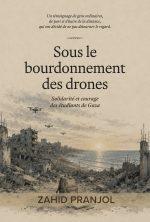
Con la universidad en ruinas, con la ciudad y el país transformado en escombros, con sus familias diezmadas por el éxodo incierto y un genocidio llevado adelante por el Estado de Israel, un conjunto de estudiantes gazatíes levanta un testimonio coral que documenta con un pulso literario desgarrador la ruptura absoluta de la cotidianidad civil a partir de octubre de 2023.
Con un tono profundamente descriptivo y despojado de eufemismos, los narradores exponen la caída de los hospitales, la precarización en claustrofóbicas tiendas de campaña y la instauración de una hambruna fabricada como táctica bélica, donde el intento de conseguir un simple saco de harina se convierte en un acto de inmolación.
Al documentar el asedio, los textos evidencian cómo el resguardo de la identidad y la educación emergen también como formas de resistencia. Estudiantes que buscan captar señal de internet en los tejados bajo el constante zumbido de los drones demuestran que mantener viva la necesidad de comunicar es el único antídoto contra la aniquilación sistemática.
La sección poética sublima el trauma físico, ofreciendo una exploración visceral sobre la pérdida, la orfandad cíclica y la culpa del sobreviviente. Más que un recuento de atrocidades, este libro es un imperativo ético contra el silencio del mundo.
Select options This product has multiple variants. The options may be chosen on the product page -
Politics and Culture in African Emancipatory Thought
USD $ 8.00 – USD $ 22.00Price range: USD $ 8.00 through USD $ 22.00Select options This product has multiple variants. The options may be chosen on the product pagePolitics and Culture in African Emancipatory Thought
USD $ 8.00 – USD $ 22.00Price range: USD $ 8.00 through USD $ 22.00The current absence of any emancipatory vision for Africa lies at the heart of our political problems of racial capitalist and colonial oppression. Any attempt to rethink political emancipation on the African continent must be able to locate a universal conception of freedom within singular cultural experiences where people live. Irrespective of the specific manner in which such struggles for freedom were thought within different historical contexts, emancipatory politics always exhibited such a dialectic when it was based within popular traditions. Yet only some militant intellectual leaders understood the importance of this dialectic in thought.
The present volume outlines and discusses two particularly important views concerning the role and importance of popular culture in emancipatory politics in Africa. Each is the product of distinct forms of colonial capitalist exploitation: the former saw the light of day within a colonial context while the latter is directly confronted by the neocolonial state. All emancipatory politics are developed in confrontation with state power, and all begin with a process of discussion and debate whereby a collective subject begins to be formed. The formation of such a collective political subject has been fundamentally informed by popular cultures on the African continent.
The two authors whose essays are included here understood this and posit popular culture at the centre of their politics. The first, Amílcar Cabral, addresses the central role of popular culture in the independence struggle of Guinea Bissau in the 1970s; the second, Ernest Wamba-dia-Wamba, addresses the centrality of African popular culture in an emancipatory politics for the current Democratic Republic of Congo. Despite the distance in time that separates them, both Cabral and Wamba-dia-Wamba develop a dialectics at the core of their politics which activates the universals of culture in the present. It is this that makes their views of central importance to emancipatory thought today.Select options This product has multiple variants. The options may be chosen on the product page