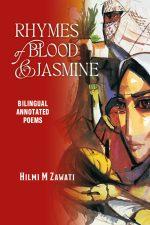
Rhymes of Blood and Jasmine is far more than a bilingual poetry collection; it is a poetic and cultural testimony that merges lyrical beauty with critical depth. Spanning over five decades of creative expression, Dr. Hilmi Zawati weaves verses charged with spiritual and romantic love, exile, memory, resistance, and identity. Symbols like jasmine, oranges, figs, and blood evoke a profound sense of homeland, sacrifice, and longing, forming an emotional tapestry firmly rooted in the Palestinian experience. This is poetry that does not simply describe a reality but embodies it, offering readers an intimate portal into a world shaped by history and sustained by hope.
KEY WORDS
Palestinian resistance poetry, alienation and exile, comparative world literature, translation studies, global resistance literature, Palestinian literature in the diaspora, modern Arabic poetry.
What makes this collection truly singular is its self-translation—a rare act that unites author and translator into a single, cohesive poetic voice. Zawati transcends conventional translation by recreating the essence of his Arabic poems in English with unmatched emotional and stylistic fidelity. His bilingual artistry breathes life into both texts, allowing them to resonate authentically across languages and cultures, ensuring that the nuance and musicality of the original are never lost.
This work speaks to a broad audience of readers, scholars, poets, translators, and students of translation studies, comparative literature, Palestinian history, and Arab diaspora cultures. It asserts translation as a form of cultural sovereignty—rejecting distortion, simplification, and marginalisation—while affirming the enduring presence of Arab poetic tradition within global literature. Rhymes of Blood and Jasmine is not just to be read; it is to be lived. A poetic bridge between languages and worlds, it revives silenced memories and restores the voice of love and homeland with grace, dignity, and truth. This collection is an essential contribution to world literature, offering a poignant reminder of poetry’s power to heal, resist, and connect.
Reviews
“This exquisite poetry collection interweaves Palestinian resistance, exile, love, and universal humanism into a moving tapestry of memory and justice. The spirit of the jurist-poet infuses each verse, where poetry transcends the limits of law to restore moral balance through beauty. With refined free verse, incantatory rhythms, and vivid imagery, Hilmi Zawati’s landmark book transforms stifled revolt into art—a luminous contribution to Palestinian, Arabic, and world literature.” —Daniela Rodica Firanescu, Associate Professor (Retired) of Arabic Studies, Dalhousie University, and poet.
“In this unique bilingual collection of Palestinian resistance poetry, Zawati offers a self-curated, self-translated selection from his poetic works. Rooted in Palestinian themes—love, exile, memory, and longing—his poems blend the personal and universal, linking the Palestinian experience with the broader human condition. The side-by-side presentation of Arabic and English makes this collection valuable for scholars and students of modern Arabic literature, universal comparative literature, and translation studies.” —Ines Aščerić-Todd, PhD, Senior Lecturer in Arabic &Middle Eastern Cultures, School of Literatures, Languages and Cultures, University of Edinburgh.
“‘History,’ said Byron, ‘is the devil’s scripture.’ This dismal fact’s inked in scarlet blood—especially in conflict annals, wherein saints get deemed sadists, while the slain get labelled suicides. Thus, Hilmi M. Zawati pens, for Palestine, plaidoiries—pleadings—because, ‘I returned to you, and you became the graveyard….’ He echoes Wilfred Owen: ‘The Poetry is in the pity.’ His poetry warns, where Justice is not, neither flourishes Freedom nor Love.” —George Elliott Clarke, E.J. Pratt Professor of Canadian Literature, University of Toronto
“A member of the Palestinian Diaspora and a prolific poet, Hilmi M. Zawati’s Rhymes of Blood and Jasmine present an emblematic story of heartbreak and displacement. His inspired verses evoke his peoples suffering coupled with a passionate devotion to ‘the beloved,’ as a free Palestine yet to be realized. This self-translated, dual language collection offers poems teeming with powerful, evocative imagery and lyric language that unflaggingly ‘look forward to freedom’.” —Giovanna Riccio, prize-winning poet, author of Plastic’s Republic.
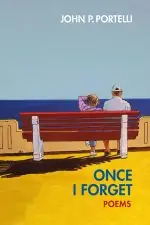
“Powerful lyrical poems of one of the best poets of the Palestinian resistance. It provides a double witness of the act of creation: the original poems and the translations. With bubbling emotions and perceptive reflections, it offers a bridge between the past and the present, the painful reality and the metaphor of a country raped by colonialists, and forced exiting and the desire to return. Because of his love, he still hopes!” —John P. Portelli, Professor Emeritus, University of Toronto, poet and fiction writer.
“Though dedicated to Palestine, Zawati’s poems embody a universal story of dispossession, love, and longing. They speak from the heart to the heart, confronting belligerence and clinging to a distantbeloved—Palestine. For him, forgetting is a second death, the cruellest exile. Thus, he endures, steadfast, with nothing but his pen, while the only bullet he is willing to fire is its ink.” —Mireille Rebeiz, PhD, SJD, Chair of Middle East Studies & Associate Professor, Dickinson College
“Resistance in Zawati’s poetry extends beyond its immediate political dimension and manifests in various forms, including resistance to oblivion, marginalization, oppression, tyranny, and cultural or linguistic distortion, particularly within the context of poetry translation. Zawati’s engagement in translating his own works introduces an additional creative dimension, reflecting a deep critical awareness of the complexities inherent in conveying poetry and underscoring that translation constitutes a re-creation of the text in another language rather than a literal rendering”. —CAlī cAbd al-Fattāḥ, The Algerian Cultural Journal (August 2026)
“Zawati rejected ‘rigid literalism’ and instead used a methodology based on ‘symbolic precision’ and ‘emotional resonance.’ This approach highlights his dual role as author and translator, granting him a unique ‘interpretative authority’ to bridge Arabic poetic traditions and English-speaking audiences without resorting to ‘Orientalist simplification.’ His self-translation is described as ‘narrative justice’ and ‘moral diplomacy,’ as it resists the ‘westernisation’ of Arabic texts and challenges dominant representational politics that marginalise diverse Palestinian voices”. —Al-Qabas Newspaper (August 23, 2026)
“Rhymes of Blood and Jasmine is more than a translated selection of poetry—it is a poetic proclamation, a critical stance, and a vivid testament to the power of creativity to transcend linguistic, geographical, and symbolic borders. Through his meticulous self-translation, Dr. Hilmi Zawati not only conveys the beauty of his poetry but also takes a firm stand against reductive representation, engaging the political and cultural frameworks that have shaped how Palestinian poetry is received globally. This collection affirms the ability of resistant Palestinian verse to cross boundaries—linguistic, political, and emotional—enriching the global literary scene with a bilingual Arabic voice that remains true to its singular soul”. —Nada Chaddad, PhD., Addustour Newspaper (September 4th, 2026)\





Ana Bradley
‘Dear Diary,’ writes Exeter alumnus Omar Sabbagh (1999, PPE) in the final stanza of his new poem, ‘War Diary’ (which can be read below). He goes on to ask his diary, or perhaps the reader, to ‘listen…log and gauge…be a refuge…be a place made sure’. Writing from Beirut, Sabbagh’s ‘War Diary’ is his way of documenting Israel’s attacks on Lebanon, ‘to make objective what is subjective and thereby control it and ease and quiet the anxiety that way’. The poem is part of his latest collection, Night Settles Upon the City, which acts, according to Fiona Sampson MBE FRSL, as a ‘book of witness to what cannot happen, and yet does’. …—Ana Bradley, Exeter College, Oxford University, https://www.exeter.ox.ac.uk/alumnus-omar-sabbagh-publishes-night-settles-upon-the-city/
RUTH AYLETT
In his collection Night Settles Upon the City, Omar Sabbagh tackles [the] question: how does a poet respond when war comes to his city? A British Lebanese poet, he now lives in Beirut, and his collection, published very quickly, begins with a Diary of the War, his real-time responses. This section includes some powerful pieces: Besieged begins: “It is morning again, but they have killed/ the morning. The book of life is blood-smattered/ and death is all we read.” In Noises of War: “Sirens wail their way across the streets below,/ and once again, the distance between life/ and death intoxicates the air.”