
-

Sous le bourdonnement
USD $ 6.99 USD $ 28Price range: USD $ 6.99 through USD $ 28Select options This product has multiple variants. The options may be chosen on the product page
Sous le bourdonnement
USD $ 6.99 USD $ 28Price range: USD $ 6.99 through USD $ 28Le son est toujours là. Hmmm. Un bourdonnement continu, mécanique, qui ne s’arrête jamais—le bruit des drones qui survolent Gaza en permanence. Il est là depuis avant que les étudiants ne s’en souviennent. C’est le décor contre lequel ils ont refusé de cesser d’apprendre.
Sous le bourdonnement des drones raconte l’histoire des étudiants de Gaza à travers leurs propres mots et leurs peintures—et celle de la manière dont leurs voix ont atteint le monde.
Tout commence par une simple conversation autour d’un café en Angleterre. Un jeune universitaire gazoui a demandé : « Que pouvons-nous faire ? Ce qui a suivi, c’est un mouvement populaire que personne n’avait planifié. Soixante-dix professeurs d’anglais se sont portés volontaires pour enseigner via des notes vocales sur WhatsApp, enregistrées avec le bruit des drones en arrière-plan. Des universitaires ont diffusé des cours magistraux à des étudiants en médecine qui marchaient des kilomètres à travers les décombres pour capter un signal. Une communauté de Brighton a collecté des fonds pour les frais de scolarité et le matériel informatique. Une galerie a exposé gratuitement l’art des étudiants. Un éditeur a publié We Are Still Here, une anthologie de cinquante-huit étudiants de Gaza écrivant depuis des tentes de déplacés et des quartiers bombardés.
Hala a peint un homme tirant le monde entier de sa famille sur une charrette en bois, refusant de regarder en arrière vers les ruines. Sara a dessiné un olivier dont les feuilles sont devenues des linceuls, mais dont les racines restent fermement ancrées. Lama a croqué un enfant affamé d’après nature, refusant de le laisser disparaître sans témoin. De jeunes écrivains ont envoyé leurs mots les plus intimes à travers un écran de téléphone fissuré, confiants qu’ils seraient traités avec soin.
Nous sommes toujours là, ont-ils écrit. Et nous refusons de disparaître dans le silence.
Voici leur histoire. Un témoignage de courage, de dignité et d’une volonté inébranlable d’apprendre—même sous le bourdonnement des drones.</p>
Select options This product has multiple variants. The options may be chosen on the product page -

Breaking Frontiers
USD $ 15 USD $ 40Price range: USD $ 15 through USD $ 40Select options This product has multiple variants. The options may be chosen on the product page
Breaking Frontiers
USD $ 15 USD $ 40Price range: USD $ 15 through USD $ 40Breaking Frontiers: Debates in Marxist Theory Today brings together twenty-four groundbreaking essays from leading critical-Marxist thinkers across the globe, offering a panoramic view of the most urgent debates in contemporary Marxist theory. Edited by John Holloway and Sun Liang, this collection emerges from a cross-cultural dialogue that bridges Western and Chinese Marxist traditions, challenging readers to rethink the very possibilities of anti-capitalist struggle in an era of deepening crisis.
The book spans a remarkable range of themes: from artificial intelligence and cognitive capitalism to the crisis of social reproduction, from the critique of the state and world market to the politics of time, urban commons, and the rise of posthuman fascism. Contributors include Silvia Federici, Franco Berardi, Ariel Salleh, Michael Neocosmos, Werner Bonefeld, and many others, each offering distinctive perspectives on how Marxism can speak to the catastrophes of our present.
At its core, the collection wrestles with a defining question: does Marxism today merely theorise catastrophe, or can it still think revolution? The chapters engage with the fragmentation of the working class, the transformation of labor under AI, the centrality of reproductive work, the nature of state power, and the temporalities of rebellion. The book closes with a dialogue between the editors, debating the role of the Party, the state, and subjective agency in social transformation.
Breaking Frontiers does not offer easy answers. It invites readers into a turmoil of thinking, affirming that another world is not only possible but more urgently necessary than ever. Essential reading for scholars, activists, and anyone seeking to understand capitalism’s destructiveness and the possibilities of resistance.
Select options This product has multiple variants. The options may be chosen on the product page -

Form as History
USD $ 12 USD $ 16Price range: USD $ 12 through USD $ 16Select options This product has multiple variants. The options may be chosen on the product page
Form as History
USD $ 12 USD $ 16Price range: USD $ 12 through USD $ 16Form as History: When History No Longer Requires Us offers a concise and penetrating critique of contemporary historical thought. It argues that while modern scholarship has made Muslim life increasingly legible as a site of ethics, resistance, and normativity, this achievement can obscure a more unsettling condition: that history itself has learned to proceed without requiring meaning, address, or human obligation.A rigorous and unsettling meditation on what it means to live in a world where history continues to function, but no longer feels compelled to answer to human life.The book turns on a central tension. On one side stands the European figure of the Muselmann, drawn from Holocaust testimony, who reveals history’s capacity to continue efficiently while no longer demanding anything from the humans it governs. This is not loss, but abandonment. On the other side stands the Muslim, rendered in modern discourse as a knowable and agentive subject of history. The book shows how an emphasis on this agency can function as a displacement, allowing the radical danger exposed by the Muselmann—history’s indifference to human address—to be misread as a cultural or religious condition.What becomes of history when it no longer requires struggle, meaning, or even us, yet continues efficiently all the same?Refusing nostalgia and moralizing alike, the book examines how forms of life, particularly within Muslim legal and commercial traditions, have sustained obligation and necessity even after political centrality receded. Its aim is diagnostic rather than prescriptive: to make visible the quiet threshold where life is managed rather than addressed, and to clarify how historical necessity depends not on power or visibility, but on the survival of forms that still compel the world to answer.
Select options This product has multiple variants. The options may be chosen on the product page -

Decolonization and Afro-Feminism
USD $ 12 USD $ 32Price range: USD $ 12 through USD $ 32Select options This product has multiple variants. The options may be chosen on the product page
Decolonization and Afro-Feminism
USD $ 12 USD $ 32Price range: USD $ 12 through USD $ 32In Decolonization and Afro-Feminism, Sylvia Tamale presents a powerful and urgent call for Africa’s intellectual, cultural, and political liberation through an Afro-feminist lens. The book critically examines how colonialism has deeply entrenched systems of oppression—based on race, gender, sexuality, class, and knowledge production—and argues that true decolonization requires more than political independence; it demands a radical rethinking of African identities, histories, and futures.
Tamale challenges Eurocentric and patriarchal frameworks that continue to dominate African societies, institutions, and academia. She explores themes such as:
-
The coloniality of gender and sexuality, using case studies like Caster Semenya to expose how Western norms pathologize African bodies.
-
The importance of intersectionality in understanding overlapping systems of oppression.
-
The role of Afro-ecofeminism in reconnecting African ecological wisdom with social justice.
-
The need to decolonize African academia, law, and family structures to recenter Indigenous knowledge and epistemologies.
-
The potential of Ubuntu as a framework for justice, community, and relationality.
The book is both a scholarly critique and a visionary roadmap, emphasizing that decolonization must be a feminist, inclusive, and holistic project—one that reclaims Africa’s dignity, autonomy, and intellectual sovereignty.
Written with clarity and passion, Decolonization and Afro-Feminism is essential reading for students, activists, scholars, and anyone committed to understanding and advancing Africa’s liberation in the 21st century.
Select options This product has multiple variants. The options may be chosen on the product page -
-
 Select options This product has multiple variants. The options may be chosen on the product page
Oh, Sorry! Rituals of Forgiveness, Crises and Social Struggles in Postmodern Capitalism
USD $ 20As the world grapples with the legacy of crimes of enslavement, colonialism, genocide and mass killings, imprisonment and murder of children, attempts at eliminating cultures and history of Indigenous peoples, looting and other crimes against humanity, the performance of public atonement has become increasingly prevalent. Apologies from state actors and institutions are issued in solemn ceremonies, often acknowledging the collective guilt for historical atrocities. Despite the solemnity of these events, there is a growing scepticism surrounding the sincerity of these apologies, particularly when they are not accompanied by tangible reparations, healing, reconciliation or systemic change. This scepticism is rooted in a perception that these acts of contrition are sometimes less about making amends to the aggrieved and more about assuaging the guilt of the aggressors and maintaining the status quo, providing the illusion of progress without the substance.
In this compelling work, Oh, Sorry! Rituals of Forgiveness, Crises and Social Struggles in Postmodern Capitalism, the authors unveil the complex interplay between public apologies, social justice and popular mobilisations. The chapters are devoted primarily to the experiences of Latin America, particularly of Mexico, Guatemala, Chile, and Brazil. But there is also a chapter on the struggles for Palestine — so relevant in the face of the current genocidal invasion by the Zionist State of Israel into Gaza, the world’s largest and most densely populated concentration camp.Select options This product has multiple variants. The options may be chosen on the product page -

Lessons from Audre Lorde’s The Uses of Anger: UCONN Women’s, Gender, and Sexuality Studies at 50
USD $ 15Select options This product has multiple variants. The options may be chosen on the product page
Lessons from Audre Lorde’s The Uses of Anger: UCONN Women’s, Gender, and Sexuality Studies at 50
USD $ 15In recent years, we have witnessed renewed calls for women to embrace anger as a source of power. These voices have Lorde’s “The Uses of Anger”, first delivered at the University of Connecticut (UCONN), Storrs, in 1981, to thank for charting an innovative scholarly and poetic terrain that theorizes anger as much more empowering and liberating than conventional discussions of the term typically allow.
Lorde’s essay redefined anger productively, approaching it as an epistemological tool igniting a desire for self and collective liberation. The result was a remarkable critical reflection that laid the groundwork for deconstructing broader systems of oppression, particularly, heteronormativity, heteropatriarchy, institutionalized racial poverty, racial capitalism, and white privilege. Lorde’s essay moved with precision, centering Black women’s struggles in a world built around the use – and abuse – of racialized people subjected to systematic dehumanization.
In their introduction, Jane Anna Gordon, Elva Orozco Mendoza, and Sherry Zane reflect on the inheritance, lessons, and responsibilities that Women’s, Gender, and Sexuality Studies must grapple with if it is to deepen and fulfill its radical mission.
Guided by the imperative to look backward to understand the present and forge a future, the book closes with a sankofic interview with M. Jacqui Alexander and Beverly Guy-Sheftall, conducted by Briona Simone Jones.
Select options This product has multiple variants. The options may be chosen on the product page -
 Select options This product has multiple variants. The options may be chosen on the product page
Claim No Easy Victories: The Legacy of Amilcar Cabral
USD $ 26“Never has it been more certain that our victory depends principally on our own actions. Tell no lies, claim no easy victories . . .” —Amílcar Cabral On the centennial of Amílcar Cabral’s birth, and fifty years after his passing, Claim No Easy Victories brings to life the resonance of his thought for today’s freedom movements. World-renowned revolutionary, poet, liberation philosopher, and leader of the anticolonial independence movement of Guinea Bissau and Cape Verde, Amílcar Cabral’s legacy stretches well beyond the shores of West Africa. His profound influence on the pan-Africanist movement and the Black liberation movement in the United States and the English-speaking world spans the ages—and is only growing in an era of renewed anti-imperialist internationalist struggle. In this unique collection of essays, radical thinkers from across Africa, the United States, and internationally commemorate Cabral’s life and legacy and his relevance to contemporary struggles for self-determination and emancipation. Claim No Easy Victories serves equally as an introduction or reintroduction to a figure and militant history that the rulers and beneficiaries of global racial capitalism would rather see forgotten. Understanding Cabral then and now sheds light on the necessity of grounding radical change in the creation of theory based on the actual conditions within which movements develop. The depth and dimension of Cabral’s theoretical ideas and revolutionary practice of building popular movements for liberation are assessed by each of the authors and critically reanimated for a new generation of freedom fighters. The book features contributions by: Kali Akuno, Samir Amin, David Austin, Jesse Benjamin, Angela Davis, Bill Fletcher Jr, Mireille Fanon-Mendès France, Lewis Gordon, Firoze Manji, Asha Rodney, Patricia Rodney, Olúfémi Táíwò—and others.
Select options This product has multiple variants. The options may be chosen on the product page -

Insurgent Feminisms: Writing War
USD $ 5 USD $ 35Price range: USD $ 5 through USD $ 35Select options This product has multiple variants. The options may be chosen on the product page
Insurgent Feminisms: Writing War
USD $ 5 USD $ 35Price range: USD $ 5 through USD $ 35War is never just the war itself, it’s not the event or the epoch. War is the impossible and unending afterlife, the struggle to breathe after being bludgeoned, and the re-situating of one’s self and of one’s place after displacement and fragmentation.
Insurgent Feminisms: Writing War advances a new paradigm of war writing by focusing on gender. War is always fought upon the backs of women, often under the pretense of saving them. Yet, along the way, the brutalities unleashed on women during wartime remain relentless. In this collection, insurgency emerges in the raw and meticulous language of witnessing, and in the desire to render the space of conflict in radically different ways. These feminist and queer perspectives on war come out of regions and positions that disobey the rules of war writing. Comprising reportage, fiction, memoir, poetry, and conversations from over sixty writers, the collection includes contributions by Chika Unigwe, Nathalie Handal, Ubah Cristina Ali Farah, Suchitra Vijayan, Bélen Fernández, Uzma Falak, Otoniya Juliane Okot Bitek, Sarah Ladipo Manyika, Lara Pawson, Gaiutra Bahadur, Robtel Neajai Pailey, Sumana Roy and Lina Mounzer, among several others.
Bhakti Shringarpure co-founded Warscapes magazine in November 2011 and it has now transitioned into the Radical Books Collective.
Veruska Cantelli is a writer, translator, editor, and Associate Professor of Interdisciplinary Studies at Champlain College in Vermont, USA.
Select options This product has multiple variants. The options may be chosen on the product page -

Rastafari Movement, The: A Beginners Guide
USD $ 5 USD $ 15Price range: USD $ 5 through USD $ 15Select options This product has multiple variants. The options may be chosen on the product page
Rastafari Movement, The: A Beginners Guide
USD $ 5 USD $ 15Price range: USD $ 5 through USD $ 15Why is this book necessary today?
Rastafari: A Beginner’s Guide” holds immense relevance due to its unique approach to addressing the complex movement of Rastafarianism. It’s complex nature, encompassing elements of social movements, Pan-Africanism, Afrocentrism, philosophy, and religion, can be overwhelming for new readers. This book serves as an accessible introduction, providing a foundational understanding that caters to both Rastafarians and individuals with limited knowledge of the movement.
By delving into the essence of the Rastafari lifestyle beyond superficial attributes like dreadlocks and cannabis use, the book helps dispel misconceptions and offers a more accurate representation of the movement’s beliefs and principles. Further, this guide aids in shedding light on the depth and significance of Rastafarianism’s contributions to culture, spirituality, and social thought but also its philosophical challenges.
The book’s coverage of Rastafarianism’s historical trajectory and foundational values provides crucial context for understanding its development over time. By highlighting its evolution from its origins in Jamaican ghettoes to its expansion into a more inclusive and diverse community that includes professionals and the middle class, the book underscores the movement’s adaptability and relevance in changing societal landscapes.
Despite existing scholarly contributions, there remains a need for a concise, approachable guide that synthesizes the wealth of information available on Rastafarianism. This book fills that gap, providing readers with a comprehensive yet accessible overview that can serve as a starting point for further exploration.
Select options This product has multiple variants. The options may be chosen on the product page -
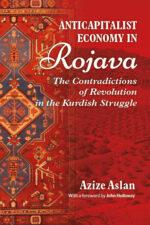
Anticapitalist Economy in Rojava: The Contradictions of Revolution in the Kurdish Struggles
USD $ 5 USD $ 22Price range: USD $ 5 through USD $ 22Select options This product has multiple variants. The options may be chosen on the product page
Anticapitalist Economy in Rojava: The Contradictions of Revolution in the Kurdish Struggles
USD $ 5 USD $ 22Price range: USD $ 5 through USD $ 22This book looks at the anti-capitalist economy and the organization of social relations in the context of the revolution and autonomy of Rojava (Kurdistan-Syria). It questions both the limitations and the historical problems of the phenomenon of revolution, and the conflicts and contradictions that emerge in this process. It also draws from the conflicts and contradictions the author has consistently felt as a “political subject” who wants to change the world, especially through her experience in the Kurdish struggle and the Kurdish Movement. For this reason, every question she raises and attempts to answer in this book—about the Kurds, Rojava, and the world in general, involves what she says is her own subjectivity.
The idea and dreams of revolution have existed since humans created systems of domination. Indeed, revolution, meaning the liberation from systems of domination, has undoubtedly been one of the most discussed subjects in history. There have been moments when the possibility of revolution has been clearer, and there have also been certain agreements on what it is and how to get there, but it has never been something completely definable. This continues to be true today. This book does not intend to define this great phenomenon, rather it looks at the revolutionary practices that create emancipating realities and embraces revolution as an undefined, contradictory and dynamic process. Although the rulers have traditionally written history, the history of social struggles has been and is still being created by many revolutionary and transformational processes. The future is being shaped based on desired revolutions and the struggles that, in turn, transform their actors, the people. Therefore, the desire and quest of the Kurdish people for liberation from the colonial rule of the nation-states of the Middle East—the subject of this book—has always been directly linked to the phenomenon of revolution.Select options This product has multiple variants. The options may be chosen on the product page -
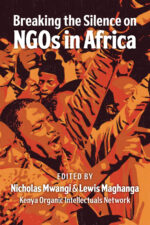
Breaking the Silence on NGOs in Africa
USD $ 5 USD $ 14Price range: USD $ 5 through USD $ 14Select options This product has multiple variants. The options may be chosen on the product page
Breaking the Silence on NGOs in Africa
USD $ 5 USD $ 14Price range: USD $ 5 through USD $ 14Members of the Organic Intellectuals Network are active organizers in the struggle to achieve social justice. They have experienced the contradictions of the NGO discourse and, just like others before them, have found themselves in the struggle versus survival dilemma. To get a clear picture of our contemporary struggles and the despair of NGOs operating in the proletarian movement, comrades decided to reflect, study, and analyze Prof. Issa Shivji’s book Silences in NGO Discourse: The Role and Future of NGOs in Africa. For the authors, these analyses and reflections are based on personal experiences in their day-to-day organizing. In summarizing the authors’ observations regarding the impacts of NGOs in organizing, this book calls into question the fundamental question, ‘why do NGOs exist?’ To answer this question, the authors provide a historical chronology of the resistance in Kenya, Zimbabwe and the rest of Africa, relating those to the subjective factors in existence at every period. Through this, a scientific relationship can be drawn between social movements and NGOs in our current epoch. From their experiences with NGOs, the authors, representing grassroots social movements, highlight the dangers associated with donor funding. Often, donor funding ends abruptly after making people dependent on them, creating severe strain on grassroots organizations. The more one engages with NGOs, the softer one becomes to critique NGOs, particularly in highlighting their relationship to imperialism. Further, NGOs usually help in driving reforms. However, they play no part in revolutionary work. As a result, they merely preserve the present order and help exacerbate the frustrations arising from massive inequality in our society. In the long run, NGOs play a critical role in stifling the development and independence of grassroots social movements. This publication also includes two previously published essays by Prof Issa G Shivji, Silences in NGO Discourse: The Role and Future of NGOs in Africa, &, Reflections on NGOs in Tanzania: What We Are, What We Are Not and What We Ought To Be.
Select options This product has multiple variants. The options may be chosen on the product page -
 Select options This product has multiple variants. The options may be chosen on the product page
The Unfinished Business of Liberation and Transformation: Revisiting The 1958 All-African People’s Conference
USD $ 47This book features essays, speeches, and reflections from the 60th-anniversary commemoration of the All-African People’s Conference (AAPC), an epochal event in the history of Africa’s fight for liberation. The four-day conference was a collaboration between the Institute of African Studies, the Trades Union Congress of Ghana, the Socialist Forum of Ghana, Lincoln University, and the Third World Network Africa. The stories, essays, speeches, and poems featured in this book are not simply a reflection of the past – they are a call to action for the present and future generations of Pan‑Africanists. May this book serve as a reminder that our liberation is intertwined with the liberation of others and that we must work together toward building a more just and equitable world. Let us continue to inspire the next generation of Pan-Africanists and keep the spirit of the All‑African People’s Conference alive. The book offers valuable perspectives on Africa’s current predicaments and what a truly liberated Africa can offer to the world.
The Unfinished Business of African Liberation is a path‐breaking collection of proceedings commemorating the 1958 landmark All African People’s Conference. The volume is essential reading for all those interested in pursuing African decolonization and liberation in the 21st century.
— Amina Mama, Professor, Gender, Sexuality & Women’s Studies, University of California, Davis, former Kwame Nkrumah Chair in African Studies at the University of GhanaIt is a must‐read for all who care about the contemporary plight of African people.
— Sylvia Tamale, Decolonial feminist & Professor of Law, School of Law, Makerere University, UgandaThis collection presents critical thinking by a wide spectrum of Pan‐African workers, youth, women, students, intellectuals, businesspeople, activists, academics, and politicians. — Adotey Bing-Pappoe, Senior Lecturer, Department of Economics and International Business, University of Greenwich
Select options This product has multiple variants. The options may be chosen on the product page -

Some Of Us Are Brave (Vol 2): Interviews and Conversations with Sistas in Life and Struggle
USD $ 5 USD $ 23Price range: USD $ 5 through USD $ 23Select options This product has multiple variants. The options may be chosen on the product page
Some Of Us Are Brave (Vol 2): Interviews and Conversations with Sistas in Life and Struggle
USD $ 5 USD $ 23Price range: USD $ 5 through USD $ 23A society born of white supremacy and patriarchy must, by definition, ignore the voices of Black women. We know that unfortunately, such an attitude will also naturally seep into every stratum of that society
Part of the contribution to correct that was the centering and airing of Black women’s voices through Some of Us Are Brave: A Black Women’s Radio Program that aired on Pacifica’s Los Angeles radio station (KPFK) from 2003 until 2011.
The program covered a myriad of issues by amplifying the voices of a broad cross-section of Black women. Some of those voices have been preserved here in this volume. In addition to capturing various moments in time with a variety of women, this is also a means of taking the intellectual production of and about Black women out of the hands of institutions that are both fundamentally anti-Black and anti-woman.
Volume 1 contains interviews under the headings The Shoulders on Which We Stand and Black Lives Have Always Mattered.
Volume 2 covers Black Women’s Health, Bruthas on Sistas, and Sistas in Struggle.
Select options This product has multiple variants. The options may be chosen on the product page -
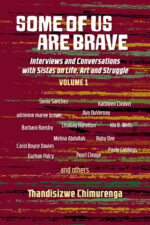
Some of Us Are Brave (Volume 1): Interviews and Conversations with Sistas in Life and Struggle
USD $ 5 USD $ 23Price range: USD $ 5 through USD $ 23Select options This product has multiple variants. The options may be chosen on the product page
Some of Us Are Brave (Volume 1): Interviews and Conversations with Sistas in Life and Struggle
USD $ 5 USD $ 23Price range: USD $ 5 through USD $ 23This is the literature of liberation! The truth. It waters the roots of a strong and timeless tree and bears the fruit of freedom. In the tradition of Ida B. Wells, Thandisizwe Chimurenga writes for the people because she is the people, and she loves the people. The interviews and conversations in Some Of Us Are Brave include Black women and Black men on Black women. This book will educate, inspire and strengthen the mind and spirit of Black women and those that love them. —Dr. Alice Nicholas, Africologist, Assistant Professor, Poet
Some of Us Are Brave is a courageous exploration of Black feminism within the Black left, offering invaluable insights and igniting much-needed conversations. It is a must-read for anyone seeking a deeper understanding of this vital aspect of our history and the transformative power of Black feminist thought. In a media landscape that often falls short when it comes to representing the voices of Black feminists, this series is a breath of fresh air. — Piper Carter, Detroit-based Arts & Culture Organizer
Host of “Beyond Breaking Barriers” podcast on Black Power MediaA society born of white supremacy and patriarchy must, by definition, ignore the voices of Black women. We know that unfortunately, such an attitude will also naturally seep into every stratum of that society
Part of the contribution to correct that was the centering and airing of Black women’s voices through Some of Us Are Brave: A Black Women’s Radio Program that aired on Pacifica’s Los Angeles radio station (KPFK) from 2003 until 2011.
The program covered a myriad of issues by amplifying the voices of a broad cross-section of Black women. Some of those voices have been preserved here in this volume. In addition to capturing various moments in time with a variety of women, this is also a means of taking the intellectual production of and about Black women out of the hands of institutions that are both fundamentally anti-Black and anti-woman.
Volume 1 contains interviews under the headings The Shoulders on Which We Stand and Black Lives Have Always Mattered.
Volume 2 covers Black Women’s Health, Bruthas on Sistas, and Sistas in Struggle.
Select options This product has multiple variants. The options may be chosen on the product page -
 Select options This product has multiple variants. The options may be chosen on the product page
Partitions of the Heart: Unmaking the Idea of India
USD $ 18In Partitions of the Heart: Unmaking the Idea of India, human rights and peace worker Harsh Mander takes stock of whether the republic has upheld the values it set out to achieve and offers painful, unsparing insight into the contours of hate violence. Through vivid stories from his own work, Mander shows that hate speech, communal propaganda and vigilante violence are mounting a fearsome climate of dread, that targeted crime is systematically fracturing our community, and that the damage to the country’s social fabric may be irreparable. At the same time, he argues that hate can indeed be fought, but only with solidarity, reconciliation and love, and when all of these are founded on fairness.
‘At last a book that turns a powerful searchlight on the evil tide of hatred and violence stalking our country, where our minorities live in fear, and Muslims among us are killed under a government that has declared war on Islam.’ —Nayantara Sahgal, journalist, author of Day of Reckoning: Stories (2015).
‘Harsh Mander’s is the voice of Kabir come alive in our violent times. We can hear it to our redemption, ignore it to our peril.’ —Gopalkrishna Gandhi, former administrator and diplomat, Governor of West Bengal 2004-2009
This book is absolutely mandatory reading. You owe it to the much-vaunted “motherland” which is being abused so shamelessly.’—Kiran Nagarkar, novelist, playwright, film critic and screenwriter.
Select options This product has multiple variants. The options may be chosen on the product page -

“Nada mal para um N—, Não?” “No está mal para un N—, ¿no?”
USD $ 5 USD $ 15Price range: USD $ 5 through USD $ 15Select options This product has multiple variants. The options may be chosen on the product page
“Nada mal para um N—, Não?” “No está mal para un N—, ¿no?”
USD $ 5 USD $ 15Price range: USD $ 5 through USD $ 15Escrito durante as comemorações do septuagésimo quinto aniversário da publicação de Black Skin, White Masks (“Pele Negra, Máscaras Brancas”), de Frantz Fanon, “Not Bad for a N—, No?” oferece reflexões sobre as circunstâncias da publicação desta obra clássica com os insights de Fanon sobre o que ele chamou de tentativa de “assassinato do homem” e a necessidade urgente de a humanidade se tornar “acional”.
Escrito durante las celebraciones del septuagésimo quinto aniversario de la publicación de Black Skin, White Masks (“Piel negra, máscaras blancas”) de Frantz Fanon, “Not Bad for a N—, No?” ofrece reflexiones sobre las circunstancias de la publicación de esta obra clásica con las ideas de Fanon sobre lo que llamó el intento de “asesinato del hombre” y la urgente necesidad de que la humanidad se vuelva “acción”.
Select options This product has multiple variants. The options may be chosen on the product page -

Dark PR: How Corporate Disinformation Undermines Our Health and the Environment
USD $ 6.99 USD $ 21Price range: USD $ 6.99 through USD $ 21Select options This product has multiple variants. The options may be chosen on the product page
Dark PR: How Corporate Disinformation Undermines Our Health and the Environment
USD $ 6.99 USD $ 21Price range: USD $ 6.99 through USD $ 21If you’re interested in how powerful forces of marketing & manipulation make the positive change we badly need MUCH harder, read @grantennis.bsky.social’ great book “Dark PR.” – Brent Toderian, Bluesky
“Think global, act local!” “Be the change you want to see in the world!” “Every little bit counts!” We can all get on board with such sentiments, right? That, of course, is exactly what corporate spin-masters across the world are banking on. By weaponizing such seemingly innocuous yet powerful narratives, change becomes a matter of personal choice, something each of us must slave away at day by day: switching off lightbulbs to save the environment or exercising to shed the weight we’ve gained from consuming junk food. All the while, the corporate welfare tap continues to flow, with over $6 trillion worth of annual subsidies dished out to industries that directly contribute to the deaths of over 5.5 million people each year through diabetes, road deaths, global warming, and other crises. But such framing is just the tip of the iceberg when it comes to the corporate disinformation playbook. This playbook is the dark matter of activist work: the unseeable element shaping harmful spin across all issues. It has never been reverse engineered – until now.
In Dark PR, Grant Ennis – drawing on his decades of experience working in the environmental, philanthropy, and public health sectors – reveals exactly how multinationals go about hoodwinking and manipulating us. In doing so, he lifts the lid on the nine devious frames contained within the cross-industry corporate disinformation playbook: through denialism, normalization, victim-blaming, multifactorialism, and a variety of other tried-and-tested tactics, corporations divert citizens’ attention away from the real causes of global problems, leading them into counter-productive blind-alley “solutions” like ethical consumerism and divestment. Sadly, though, buying Fair Trade chocolate has not and never will save the world. Only by collectively organizing to lobby our governments can we break this destructive cycle of lies and deadly incentives and reclaim control of our lives.
Dark PR: How Corporate Disinformation Harms Our Health and the Environment referenced in the UK House of Lords.
“I’m really interested in a piece of work that’s written by a guy named Grant Ennis, and I would advise you to have a look at his book on subsidy. So actually the Government provide an awful lot of subsidy to unhealthy food producers. Actually we could reduce the subsidy that is provided for that food and use the money in a different way to do different things. He is the expert in that”
– Alice Wiseman, Director of Public Health for Gateshead, EnglandLink: https://lnkd.in/e6AnKssm Minute 11:34:24
Select options This product has multiple variants. The options may be chosen on the product page -
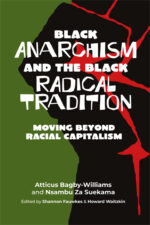
Black Anarchism and the Black Radical Tradition: Moving Beyond Racial Capitalism
USD $ 5 USD $ 18Price range: USD $ 5 through USD $ 18Select options This product has multiple variants. The options may be chosen on the product page
Black Anarchism and the Black Radical Tradition: Moving Beyond Racial Capitalism
USD $ 5 USD $ 18Price range: USD $ 5 through USD $ 18This work is an important achievement in clarifying the history and current importance of Black anarchism. The information that the book presents will be new to many readers. For instance, one important component involves the explanations of how hierarchical principles within the Black Panther Party and Black Liberation Army helped generate the emergence of Black anarchism among key party members who later developed their ideas and strategies while in prison. Likewise, the book breaks new ground in demonstrating that Black anarchism has emerged not from the European/ North American anarchist traditions but rather from roots in Pan-Africanism, the Black radical tradition focusing on racial capitalism and the work of Cedric Robinson, and grassroots struggles partly in the U.S. South. An in-depth analysis of the somewhat different but complementary focuses within the two generations of Black anarchism also is very helpful. Finally, the book highlights concrete, contemporary implications for revolutionary strategy, including a perceptive analysis of the compatibilities between socialist and Black anarchist approaches to current transformative struggles. This publication will become widely known and used because it brings enlightening new ways to understand and act on the intertwined structures of racial capitalism and the capitalist state.
Select options This product has multiple variants. The options may be chosen on the product page -

“Not Bad for a N—, No?” / «Pas mal pour un N—, n’est-ce pas? »
USD $ 5 USD $ 11Price range: USD $ 5 through USD $ 11Select options This product has multiple variants. The options may be chosen on the product page
“Not Bad for a N—, No?” / «Pas mal pour un N—, n’est-ce pas? »
USD $ 5 USD $ 11Price range: USD $ 5 through USD $ 11Written during the seventy-fifth anniversary celebrations of the publication of Frantz Fanon’s Peau noir, masques blancs (“Black Skin, White Masks”), “Not Bad for a N—, No?” offers reflections on the circumstances of the publication of this classic work with Fanon’s insights on what he called the attempted “murder of man” and the urgent need for humanity to become “actional.”
Écrit lors des célébrations du soixante-quinzième anniversaire de la publication de Frantz Fanon de Peau noir masques blancs, «Pas mal pour un N—, n’est-ce pas? » offre des réflexions sur les circonstances de la publication de cette œuvre classique avec les idées de Fanon sur ce qu’il a appelé la tentative de «meurtre de l’homme» et le besoin urgent que l’humanité devienne «actionnelle».
Select options This product has multiple variants. The options may be chosen on the product page -

The revolutionary ecological legacy of Herbert Marcuse – 2nd Edition
USD $ 5 USD $ 25Price range: USD $ 5 through USD $ 25Select options This product has multiple variants. The options may be chosen on the product page
The revolutionary ecological legacy of Herbert Marcuse – 2nd Edition
USD $ 5 USD $ 25Price range: USD $ 5 through USD $ 25Description (2188 / 2500)
The author appeals to the energies of those engaged in a wide range of contemporary social justice struggles such as ecosocialism, antiracism, the women’s movement, LGBTQ rights, and antiwar forces. As the dialectical counterpart of Marcuse’s Great Refusal, the book, which culminates with the ‘EarthCommonWealth Project’ is keyed to what we are struggling for, not just what we are struggling against. The author argues that regressive political forces must be countered today, and this is best accomplished through radical collaboration around an agenda recognizing the basic economic and political needs of diverse subaltern communities. System negation must become a new general interest. The author discusses core ethical insights from African philosophical sources, indigenous American philosophy, and radical feminist philosophy. Humanity’s first teachings on ethics are to be found in ancient African proverbs. These subsequently served also as a critique of colonialism and neocolonialism. Long-suppressed indigenous American sources supply a philosophical and political critique of Euro-centric economic and cultural values. They also offer an understanding of humanity’s place in nature and the leadership of women and attest to modes of cooperative and egalitarian forms of community. Feminist anthropology furnishes an historical context for understanding the origins of patriarchy and how to move beyond dominator power to new forms of partnership power.The book envisions the displacement and transcendence of capitalist oligarchy as such, not simply its most bestial and destructive components. This is a green economic alternative because its ecological vision sees all living things and their non-living earthly surroundings as a global community capable of a dignified, deliberate coexistence. It is searching for a new system of ecological production, egalitarian distribution, shared ownership, and democratized governance, having its foundation in the ethics of partnership productivity with an ecosocialist and humanist commitment to living our lives on the planet consistent with the most honorable and aesthetic forms of human social and political fulfillment.
Select options This product has multiple variants. The options may be chosen on the product page