
-

Every Country Gets the Fascism It Deserves
USD $ 5.00 USD $ 12.00Price range: USD $ 5.00 through USD $ 12.00Select options This product has multiple variants. The options may be chosen on the product page
Every Country Gets the Fascism It Deserves
USD $ 5.00 USD $ 12.00Price range: USD $ 5.00 through USD $ 12.00Every Country Gets the Fascism It Deserves documents the systematic construction of xenophobic violence as a political project in post-apartheid South Africa. Richard Pithouse traces how the state, media and organised political forces have cultivated hatred against migrants, transforming social pain into organised cruelty.
The book begins with the May 2008 pogroms that killed 62 people and displaced 100,000, showing how the mob followed the logic of a state that had already begun dehumanising migrants. It documents the rise of the All Truck Drivers Foundation, which murdered more than 200 drivers in organised attacks, and the subsequent emergence of Operation Dudula and March and March—well-funded astroturfed movements that normalised fascist language and violence.
Pithouse reveals the complicity of the police, media and major political parties—including the ANC, DA, MKP, ActionSA and Patriotic Alliance—in legitimating xenophobic violence. He shows how the mob and state have collaborated to drive more than 150,000 people across South Africa’s borders in a matter of weeks, with government infrastructure facilitating mass deportation.
Drawing on the work of Aijaz Ahmad, Alain Badiou and Richard Seymour, Pithouse argues that the erosion of democratic norms, the reactivation of ethnic mobilisation, and the normalisation of sadism constitute a fascist challenge to the constitutional order. The book insists that the answer to the far right is never to move rightward, but always to build a politics of universal solidarity rooted in the principle that a person is a person wherever they may find themselves.
With a foreword by Michael Neocosmos and an afterword by Abahlali baseMjondolo founder S’bu Zikode, this is an urgent account of a country’s descent into organised cruelty—and a powerful call for a politics of human dignity.
This essay was originally published on Richard Pithouse’s Substack: https://substack.com/profile/143275356-richard-pithouse
Select options This product has multiple variants. The options may be chosen on the product page -
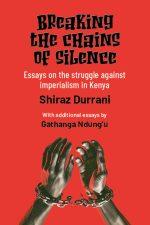
Breaking the Chains of Silence
Breaking the Chains of Silence opens where any serious account of Kenya must begin: with silence. But this is not the quiet of peace or the calm of justice. It is a manufactured silence—forged by land theft, detention, exile, assassinations, police bullets, and media too intimidated to print the truth. It is the silence that follows the gun and precedes the next uprising.
This book bravely refuses that silence. It dismantles the comfortable myth that Kenya became free simply because a flag was raised in 1963. It rejects the official narrative that the struggle ended with independence, leaving citizens as spectators while a small elite inherited the state, the land, the police, and the economy. Instead, it insists that Kenya’s real history is not the story of presidents, but of working people—first fighting colonialism, then confronting the imperialism that survived under new flags and through local agents.
Crucially, the book refuses to imprison resistance in the past. It reads the present with urgency, seeing the courage of the Gen Z movement, the defiance of the RutoMustGo protests, and the young people who walked into streets patrolled by a contemptuous state. It sees their rejection of taxation, corruption, and police violence. Yet it refuses to flatter that moment into myth. It insists that spontaneous anger must evolve into organisation, protest into political education, and generational revolt must find its class foundation. The cry of the youth must meet the power of workers.
While the essays engage with current contradictions, they remain rooted in theory—one essential element for revolutionary change. The other is practice: putting ideas into action and facing the enemy where bullets and prisons are the reality. This combination of theory and practice lays the groundwork for a people’s revolution. It is for this reason the book includes Gathanga Ndung’u’s vital essay, From Mau Mau to Ruto Must Go: A Genealogy of Resistance, which connects historical struggle to today’s frontline.
-
 Select options This product has multiple variants. The options may be chosen on the product page
Twenty Years of Courage and Struggle
Abahlali baseMjondolo (AbM) is the remarkable story of the South African shack dwellers movement, covering twenty years of courageous struggle. It is the largest movement to have emerged in South Africa after apartheid and one of the largest movements of the urban poor globally, boasting over 180,000 members across four provinces.
AbM emerged from the margins of South Africa’s cities, where residents faced life-threatening conditions, including shack fires, poverty, and systemic betrayal by the democratic state regarding land and housing. The movement is firmly committed to ethical principles, fighting not only for the right to the city but for the right to collectively occupy land and build occupations collectively. Abahlali insists on a humanist philosophy—”no one is illegal, everyone thinks and everyone must be counted and heard”—and works to build democracy and socialism from below.
Abahlali is abolition in action, seeking to interrupt capitalist logic by advocating for the total decommodification of land, recognizing it as a public good allocated based on human need. This commitment has led to significant victories, including securing land, providing services (like water and electricity), and winning a landmark Constitutional Court case against the unlawful Slums Act.
However, this quest for dignity has come at a tremendous cost, marked by severe repression, police violence, and the assassination of many activists by state forces and party thugs. Despite these challenges, AbM has persisted, developing occupations into working communes (such as eKhenana) that feature collective production, community halls, and political schools. Their story is a map for movements fighting inequality and authoritarianism globally. The movement continues to build collective power and struggle for a world where land, wealth, and power are shared on an equal basis.
“Your movement has shown the world that democracy extends beyond elections to a way of living together—through open assemblies and collective decision making. In doing so, you have advanced a vision grounded in humanity, solidarity, and courage. Your struggle has always been internationalist, and your solidarity with the people of Palestine, Swaziland, and the Congo, and the warm relations you have built with movements around the world, are exemplary.” Jeremy Corbyn in https://rajpatel.org/2025/10/13/4764/
The movement continues to grow, discovering that more and more settlements function better not when they function as an association of residents but as a commune. Agroecology is cropping up in more and more settlements thanks to exchanges with the MST. It’s a demonstration that when the wretched of the earth organize themselves without mediation, without NGO managers or academic gatekeepers, they can survive what would destroy any formation dependent on elite patronage. … This is the lesson Abahlali offers the world: genuine democracy is possible, but only when everyone thinks, everyone counts, everyone cares, and everyone acts. Raj Patel Everybody Thinks, Everybody Counts, Everybody Cares, Everybody Acts: Twenty Years of Abahlalism
Select options This product has multiple variants. The options may be chosen on the product page -

Religion, Eugenics, Science and Mathematics
USD $ 5.00 USD $ 45.00Price range: USD $ 5.00 through USD $ 45.00Select options This product has multiple variants. The options may be chosen on the product page
Religion, Eugenics, Science and Mathematics
USD $ 5.00 USD $ 45.00Price range: USD $ 5.00 through USD $ 45.00Religion, Eugenics, Science and Mathematics by Karim F Hirji examines the dynamic relationship between religion, on the one hand, and science and mathematics, on the other, on historical and conceptual grounds. It focuses on Hinduism, Buddhism, Christianity, Islam, and various shades of secularism, including Marxism. Where relevant, other faiths are integrated into the analysis. The questions it addresses include: Are religion and science mutually exclusive, opposing entities? Do divine beings and divine realms exist? Are science and religion valid but different forms of truth? What are the societal roles of science and religion? Can science provide a tenable, exalted code of ethics? What are the futures of religion and science? Can religion and science cooperate in resolving the daunting, existential problems facing humanity today? All issues are explored in an interdisciplinary, historical manner. Examination of the religious dimension of the doctrine of eugenics, which culminated in the Nazi era extermination pogroms, forms a major case study in the book.
Among other things, the book peruses scriptures, explores practice, enjoins analysis with anecdotes, and contrasts the beliefs of scientists and religious luminaries. Though it is directed toward the general reader, its novel approach, broad consideration of social and economic factors, and the nature of the evidence it has marshalled makes it of interest to theologians and scientists as well.
Religion, Eugenics, Science and Mathematics builds on the foundation laid in Religion, Politics and Society by Karim Hirji. In addition to eugenics, by relating religion to mathematics, genetics, neurology, climate change and other issues, the book reveals that the relationship between religion and science is a complex, entangled knot, not reducible to a simplistic summary.
The ultimate message of the book is that science and religion can exist harmoniously on the moral plane and that the primary obstacle facing human progress today is neither religion nor science but the dominant neoliberal system that generates vast inequality, deep social divisions, including religious divisions and a callous disregard for the global biosphere.Select options This product has multiple variants. The options may be chosen on the product page -

Religion, Politics and Society: A progressive primer
USD $ 5.00 USD $ 55.00Price range: USD $ 5.00 through USD $ 55.00Select options This product has multiple variants. The options may be chosen on the product page
Religion, Politics and Society: A progressive primer
USD $ 5.00 USD $ 55.00Price range: USD $ 5.00 through USD $ 55.00Written by Karim F Hirji, a retired professor of Medical Statistics, Religion, Politics and Society focuses on the four major global religions—Hinduism, Buddhism, Christianity and Islam—together with minor religions like the Ahmadiyya, Confucianism, Sikhism, Seventh Day Adventism and Traditional African Religion as well as on Secularism, New Age beliefs and the ancient Paleolithic and Neolithic era belief systems to explore the origin, spiritual import and social function of religion in human society. Utilizing the canons, beliefs, practices, history, eminent personages, institutions of the diverse faiths, it tackles matters like: How did the social function of religion evolve over time? How does religion relate to the power structure of society? Does religion promote or hinder social harmony, justice and equality? Under what circumstances? Is religion necessary for morality? What are the roots of interfaith conflict? How do modern religions and neoliberalism interact with each other? Does religion have a future? Can religion and secularism be harnessed for resolving the globally vexing yet pivotal concerns of human society? If so, how?
These and related issues are tackled with the help of a variety of past and contemporary individual level and broader type of richly illustrated examples. The role of women in religion a topic of focus throughout the text. The varied functions of religion under slavery, feudalism, capitalism, colonialism, neo-colonialism, imperialism. socialism, and neoliberalism are also attended to.
The foundational premise of this book is that while spiritual beliefs differ, all humans are equal in dignity and have equal rights. No religion is more exalted than others; there are no chosen people. We all belong to the global human family. Our religious and cultural diversity is a cause for celebration, not conflict.
Respectful in style and targeted towards the general and knowledgeable readers, Religion, Politics and Society is the first of a two-book project. The second book, Religion, Science and the Pandemic, addresses the relationship between religion, science and mathematics. The key objective of these books is to help uplift the quality and tenor of the current discourse on religion and explore how faith can promote human dignity, equality, social justice and harmony. A genuine consensus and peaceful coexistence cannot emerge from diluting the truth.Select options This product has multiple variants. The options may be chosen on the product page -
 Select options This product has multiple variants. The options may be chosen on the product page
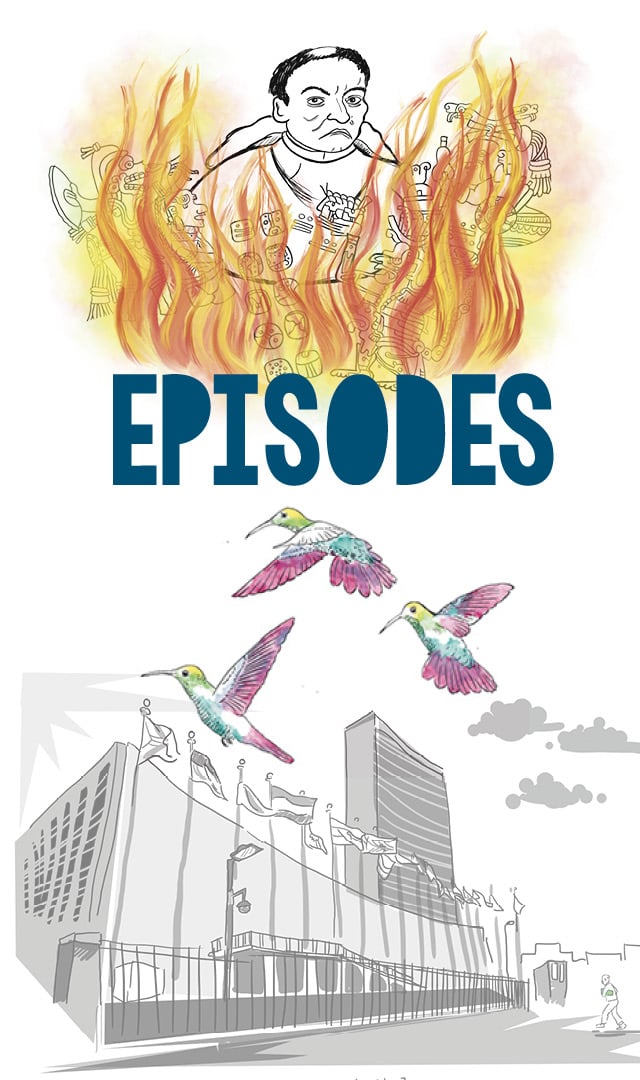
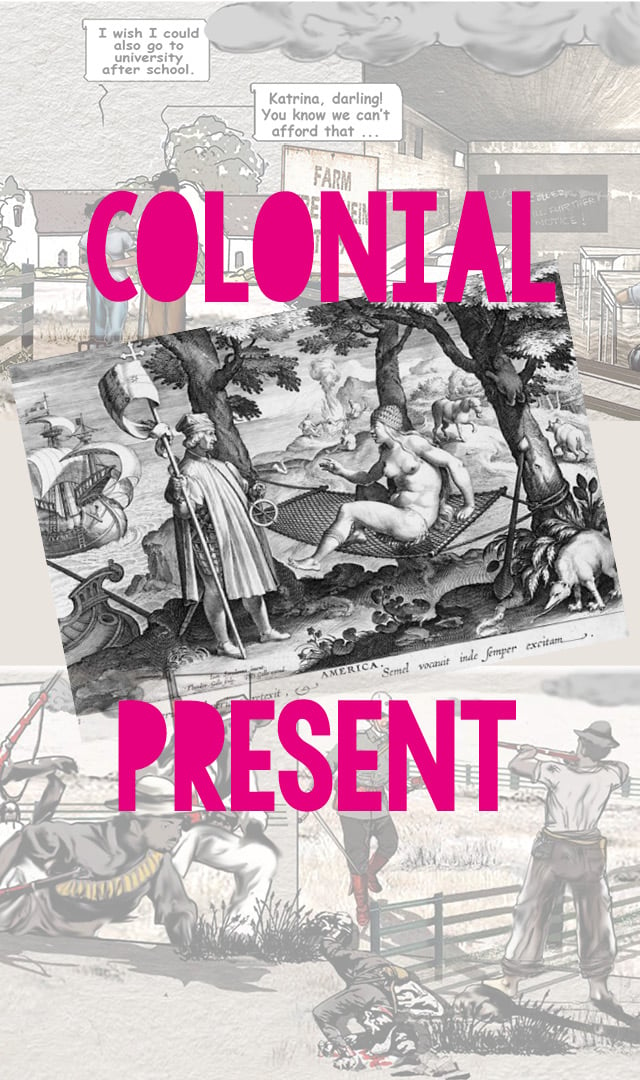
Episodes From a Colonial Present
Editors and Authors: Daniel Bendix, Chandra-Milena Danielzik, Franziska Müller, Lata Narayanaswamy, Juan Telleria, Miriam friz Trzeciak, Aram Ziai
Artists: Hangula Werner, Roshni Vyam, Michel Esselbrügge, Qi Zhou, RotmInas – Rotmi Enciso & Ina Riaskov, Maite Mentxaka Tena, Lena Ziyal
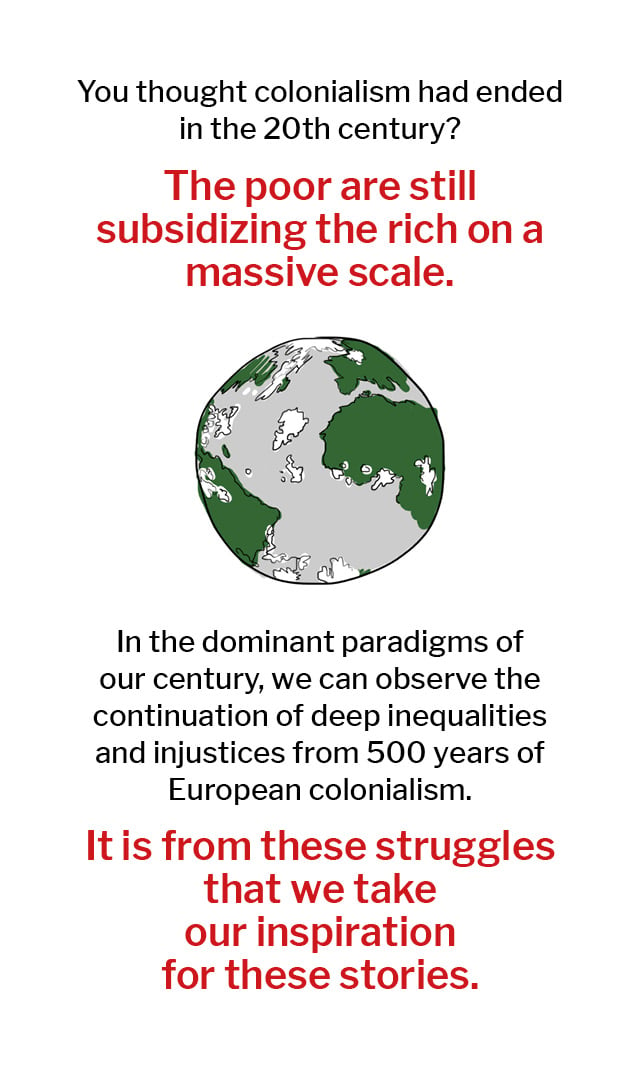
Postcolonial critique reveals the traces of the colonial past in every corner of our present lives and exposes the colonial violence inherent in global inequality. This collective comic project illuminates the coloniality of everyday life as well as the decolonising potential of everyday struggles in the spaces, discourses and practices of so-called global development.

Reviews
What an absolute impertinence! My lawyers are already involved. It’s just as well that I was able to use tax money for the purchase.
—Queen Elizabeth III love true crime books, but this one got a bit boring after a while. It could do with more bloodshed.
—Lothar von TrothaI added this book to my list to burn. Just saying.
—Diego de LandaA waste of time. So glad I didn’t buy it, but stole my copy.
—Christopher ColumbusI didn’t get it. Are they suggesting colonialism is not quite over?
—Harry S. TrumanSelect options This product has multiple variants. The options may be chosen on the product page -

Heroes of the African Revolution Volume 2
USD $ 11.50We made this coloring book in order to expose African children to their authentic history. Malcolm X told us decades ago that we had to take responsibility for our children’s education because he understood that our people had been intentionally robbed of their true history. We can no longer rely on institutions to educate our children and must take it upon ourselves to equip our children with the truth so that they can bring a positive contribution to our people’s struggle for justice and freedom.
In Volume 2 of the coloring book, new African revolutionaries are introduced. Some well-known figures, such as Patrice Lumumba and Amilcar Cabral, but we’ve also brought to light lesser-known freedom fighters, such as Fatima Ahmed Ibrahim of Sudan and Elma Francois of Trinidad and Tobago.We have also introduced some games, such as a word search and a maze, both with a Pan-Afican theme. Finally, we included a glossary (with Swahili translations ) highlighting the kind of vocabulary we wish to instill in our youth -

Heroes of the African Revolution: Colouring Book: Volume 1
USD $ 11.50We made this coloring book in order to expose African children to their authentic history. Malcolm X told us decades ago that we had to take responsibility for our children’s education because he understood that our people had been intentionally robbed of their true history. We can no longer rely on institutions to educate our children and must take it upon ourselves to equip our children with the truth so that they can bring a positive contribution to our people’s struggle for justice and freedom. This book highlights some of the key figures within the struggle to achieve Pan-Africanism which is the total liberation and unification of Africa. All of the brave women and men featured in this book were Pan-Africanists. They understood that people of African descent throughout the world faced the same issues and therefore had to unite in order to overcome those issues. We hope this book can inspire the next generation of African children to become Pan-Africanists and to join the struggle to liberate and unite Africa.
-

Les héros de la révolution africaine Tome 1
USD $ 11.50United African Diaspora est une organisation panafricaine basée à Calgary, au Canada. Nous nous engageons à construire une communauté africaine forte et autonome capable de répondre aux besoins de son peuple et de contribuer à la lutte mondiale pour réaliser le panafricanisme : la libération et l’unification de l’Afrique.
Nous avons réalisé ce livre de coloriage afin d’exposer les enfants africains à leur histoire authentique. Malcolm X nous a dit il y a plusieurs décennies que nous devrons être responsable de l’éducation de nos enfants. Il avait compris que notre peuple est intentionnellement dépossédé de sa véritable histoire. Nous ne pouvons plus compter sur les institutions pour éduquer nos enfants et nous devrons prendre sur nous la responsabilité de leur transmettre la vérité afin qu’ils puissent apporter une contribution positive à la lutte de notre peuple pour la justice et la liberté. Ce livre met en lumière quelques-unes des figures clés de la lutte pour le panafricanisme, c’est-à-dire la libération et l’unification totales de l’Afrique. Toutes les femmes et tous les hommes courageux présents dans ce livre étaient des panafricanistes. Ils ont compris que les personnes descendantes africaines du monde entier étaient confrontées aux mêmes problèmes et qu’elles devaient donc s’unir pour les surmonter. Nous espérons que ce livre inspirera la prochaine génération d’enfants africains à devenir des panafricanistes et à se joindre à la lutte pour la libération et l’unification de l’Afrique.
-

Les héros de la révolution africaine Tome 2
USD $ 11.50United African Diaspora est une organisation panafricaine basée à Calgary, au Canada. Nous nous engageons à construire une communauté africaine forte et autonome capable de répondre aux besoins de son peuple et de contribuer à la lutte mondiale pour réaliser le panafricanisme : la libération et l’unification de l’Afrique.
Nous avons réalisé ce livre de coloriage afin d’exposer les enfants africains à leur histoire authentique. Malcolm X nous a dit il y a plusieurs décennies que nous devrons être responsable de l’éducation de nos enfants. Il avait compris que notre peuple est intentionnellement dépossédé de sa véritable histoire. Nous ne pouvons plus compter sur les institutions pour éduquer nos enfants et nous devrons prendre sur nous la responsabilité de leur transmettre la vérité afin qu’ils puissent apporter une contribution positive à la lutte de notre peuple pour la justice et la liberté. Ce livre met en lumière quelques-unes des figures clés de la lutte pour le panafricanisme, c’est-à-dire la libération et l’unification totales de l’Afrique. Toutes les femmes et tous les hommes courageux présents dans ce livre étaient des panafricanistes. Ils ont compris que les personnes descendantes africaines du monde entier étaient confrontées aux mêmes problèmes et qu’elles devaient donc s’unir pour les surmonter. Nous espérons que ce livre inspirera la prochaine génération d’enfants africains à devenir des panafricanistes et à se joindre à la lutte pour la libération et l’unification de l’Afrique.
-
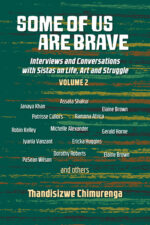
Some Of Us Are Brave (Vol 2): Interviews and Conversations with Sistas in Life and Struggle
USD $ 5.00 USD $ 23.00Price range: USD $ 5.00 through USD $ 23.00Select options This product has multiple variants. The options may be chosen on the product page
Some Of Us Are Brave (Vol 2): Interviews and Conversations with Sistas in Life and Struggle
USD $ 5.00 USD $ 23.00Price range: USD $ 5.00 through USD $ 23.00A society born of white supremacy and patriarchy must, by definition, ignore the voices of Black women. We know that unfortunately, such an attitude will also naturally seep into every stratum of that society
Part of the contribution to correct that was the centering and airing of Black women’s voices through Some of Us Are Brave: A Black Women’s Radio Program that aired on Pacifica’s Los Angeles radio station (KPFK) from 2003 until 2011.
The program covered a myriad of issues by amplifying the voices of a broad cross-section of Black women. Some of those voices have been preserved here in this volume. In addition to capturing various moments in time with a variety of women, this is also a means of taking the intellectual production of and about Black women out of the hands of institutions that are both fundamentally anti-Black and anti-woman.
Volume 1 contains interviews under the headings The Shoulders on Which We Stand and Black Lives Have Always Mattered.
Volume 2 covers Black Women’s Health, Bruthas on Sistas, and Sistas in Struggle.
Select options This product has multiple variants. The options may be chosen on the product page -
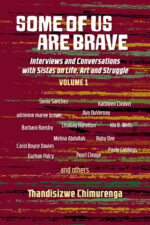
Some of Us Are Brave (Volume 1): Interviews and Conversations with Sistas in Life and Struggle
USD $ 5.00 USD $ 23.00Price range: USD $ 5.00 through USD $ 23.00Select options This product has multiple variants. The options may be chosen on the product page
Some of Us Are Brave (Volume 1): Interviews and Conversations with Sistas in Life and Struggle
USD $ 5.00 USD $ 23.00Price range: USD $ 5.00 through USD $ 23.00This is the literature of liberation! The truth. It waters the roots of a strong and timeless tree and bears the fruit of freedom. In the tradition of Ida B. Wells, Thandisizwe Chimurenga writes for the people because she is the people, and she loves the people. The interviews and conversations in Some Of Us Are Brave include Black women and Black men on Black women. This book will educate, inspire and strengthen the mind and spirit of Black women and those that love them. —Dr. Alice Nicholas, Africologist, Assistant Professor, Poet
Some of Us Are Brave is a courageous exploration of Black feminism within the Black left, offering invaluable insights and igniting much-needed conversations. It is a must-read for anyone seeking a deeper understanding of this vital aspect of our history and the transformative power of Black feminist thought. In a media landscape that often falls short when it comes to representing the voices of Black feminists, this series is a breath of fresh air. — Piper Carter, Detroit-based Arts & Culture Organizer
Host of “Beyond Breaking Barriers” podcast on Black Power MediaA society born of white supremacy and patriarchy must, by definition, ignore the voices of Black women. We know that unfortunately, such an attitude will also naturally seep into every stratum of that society
Part of the contribution to correct that was the centering and airing of Black women’s voices through Some of Us Are Brave: A Black Women’s Radio Program that aired on Pacifica’s Los Angeles radio station (KPFK) from 2003 until 2011.
The program covered a myriad of issues by amplifying the voices of a broad cross-section of Black women. Some of those voices have been preserved here in this volume. In addition to capturing various moments in time with a variety of women, this is also a means of taking the intellectual production of and about Black women out of the hands of institutions that are both fundamentally anti-Black and anti-woman.
Volume 1 contains interviews under the headings The Shoulders on Which We Stand and Black Lives Have Always Mattered.
Volume 2 covers Black Women’s Health, Bruthas on Sistas, and Sistas in Struggle.
Select options This product has multiple variants. The options may be chosen on the product page -

Singing to Liberation: Songs of Freedom and Nights of Resistance on Indian Campuses
USD $ 5.00 USD $ 16.00Price range: USD $ 5.00 through USD $ 16.00Select options This product has multiple variants. The options may be chosen on the product page
Singing to Liberation: Songs of Freedom and Nights of Resistance on Indian Campuses
USD $ 5.00 USD $ 16.00Price range: USD $ 5.00 through USD $ 16.00Student activism and cultural activism go hand in hand on Indian campuses. Over the last few years, especially after 2014, student movements in the country against social injustice have increased in numbers and tenacity. Cultural modes of expressing dissent have played a key role within this new wave of student movements that have gripped the nation. This book takes the reader through a journey into the ways cultural activists analyse cultural modes of protest, especially in the context of student movements in the Global South. The book delves into the political and ideological contours set by organisations such as the Indian Progressive Theatre Association (IPTA) and the Progressive Writers’ Association (PWA), and by figures such as Faiz Ahmed Faiz, Habib Jalib, Hemanga Biswas and Safdar Hashmi. The book locates them within the contemporary wave of cultural protests, analyses their continued relevance and argues for a revival of theoretical and practical engagement with the early progenitors of the progressive cultural movement in India.
Select options This product has multiple variants. The options may be chosen on the product page -

Dark PR: How Corporate Disinformation Undermines Our Health and the Environment
USD $ 6.99 USD $ 21.00Price range: USD $ 6.99 through USD $ 21.00Select options This product has multiple variants. The options may be chosen on the product page
Dark PR: How Corporate Disinformation Undermines Our Health and the Environment
USD $ 6.99 USD $ 21.00Price range: USD $ 6.99 through USD $ 21.00If you’re interested in how powerful forces of marketing & manipulation make the positive change we badly need MUCH harder, read @grantennis.bsky.social’ great book “Dark PR.” – Brent Toderian, Bluesky
“Think global, act local!” “Be the change you want to see in the world!” “Every little bit counts!” We can all get on board with such sentiments, right? That, of course, is exactly what corporate spin-masters across the world are banking on. By weaponizing such seemingly innocuous yet powerful narratives, change becomes a matter of personal choice, something each of us must slave away at day by day: switching off lightbulbs to save the environment or exercising to shed the weight we’ve gained from consuming junk food. All the while, the corporate welfare tap continues to flow, with over $6 trillion worth of annual subsidies dished out to industries that directly contribute to the deaths of over 5.5 million people each year through diabetes, road deaths, global warming, and other crises. But such framing is just the tip of the iceberg when it comes to the corporate disinformation playbook. This playbook is the dark matter of activist work: the unseeable element shaping harmful spin across all issues. It has never been reverse engineered – until now.
In Dark PR, Grant Ennis – drawing on his decades of experience working in the environmental, philanthropy, and public health sectors – reveals exactly how multinationals go about hoodwinking and manipulating us. In doing so, he lifts the lid on the nine devious frames contained within the cross-industry corporate disinformation playbook: through denialism, normalization, victim-blaming, multifactorialism, and a variety of other tried-and-tested tactics, corporations divert citizens’ attention away from the real causes of global problems, leading them into counter-productive blind-alley “solutions” like ethical consumerism and divestment. Sadly, though, buying Fair Trade chocolate has not and never will save the world. Only by collectively organizing to lobby our governments can we break this destructive cycle of lies and deadly incentives and reclaim control of our lives.
Dark PR: How Corporate Disinformation Harms Our Health and the Environment referenced in the UK House of Lords.
“I’m really interested in a piece of work that’s written by a guy named Grant Ennis, and I would advise you to have a look at his book on subsidy. So actually the Government provide an awful lot of subsidy to unhealthy food producers. Actually we could reduce the subsidy that is provided for that food and use the money in a different way to do different things. He is the expert in that”
– Alice Wiseman, Director of Public Health for Gateshead, EnglandLink: https://lnkd.in/e6AnKssm Minute 11:34:24
Select options This product has multiple variants. The options may be chosen on the product page -
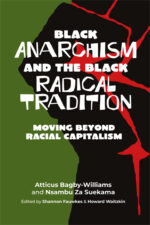
Black Anarchism and the Black Radical Tradition: Moving Beyond Racial Capitalism
USD $ 5.00 USD $ 18.00Price range: USD $ 5.00 through USD $ 18.00Select options This product has multiple variants. The options may be chosen on the product page
Black Anarchism and the Black Radical Tradition: Moving Beyond Racial Capitalism
USD $ 5.00 USD $ 18.00Price range: USD $ 5.00 through USD $ 18.00This work is an important achievement in clarifying the history and current importance of Black anarchism. The information that the book presents will be new to many readers. For instance, one important component involves the explanations of how hierarchical principles within the Black Panther Party and Black Liberation Army helped generate the emergence of Black anarchism among key party members who later developed their ideas and strategies while in prison. Likewise, the book breaks new ground in demonstrating that Black anarchism has emerged not from the European/ North American anarchist traditions but rather from roots in Pan-Africanism, the Black radical tradition focusing on racial capitalism and the work of Cedric Robinson, and grassroots struggles partly in the U.S. South. An in-depth analysis of the somewhat different but complementary focuses within the two generations of Black anarchism also is very helpful. Finally, the book highlights concrete, contemporary implications for revolutionary strategy, including a perceptive analysis of the compatibilities between socialist and Black anarchist approaches to current transformative struggles. This publication will become widely known and used because it brings enlightening new ways to understand and act on the intertwined structures of racial capitalism and the capitalist state.
Select options This product has multiple variants. The options may be chosen on the product page -

“Not Bad for a N—, No?” / «Pas mal pour un N—, n’est-ce pas? »
USD $ 5.00 USD $ 11.00Price range: USD $ 5.00 through USD $ 11.00Select options This product has multiple variants. The options may be chosen on the product page
“Not Bad for a N—, No?” / «Pas mal pour un N—, n’est-ce pas? »
USD $ 5.00 USD $ 11.00Price range: USD $ 5.00 through USD $ 11.00Written during the seventy-fifth anniversary celebrations of the publication of Frantz Fanon’s Peau noir, masques blancs (“Black Skin, White Masks”), “Not Bad for a N—, No?” offers reflections on the circumstances of the publication of this classic work with Fanon’s insights on what he called the attempted “murder of man” and the urgent need for humanity to become “actional.”
Écrit lors des célébrations du soixante-quinzième anniversaire de la publication de Frantz Fanon de Peau noir masques blancs, «Pas mal pour un N—, n’est-ce pas? » offre des réflexions sur les circonstances de la publication de cette œuvre classique avec les idées de Fanon sur ce qu’il a appelé la tentative de «meurtre de l’homme» et le besoin urgent que l’humanité devienne «actionnelle».
Select options This product has multiple variants. The options may be chosen on the product page -

Banana Girls, The
USD $ 5.00 USD $ 20.00Price range: USD $ 5.00 through USD $ 20.00Select options This product has multiple variants. The options may be chosen on the product page
Banana Girls, The
USD $ 5.00 USD $ 20.00Price range: USD $ 5.00 through USD $ 20.00The Banana Girls chronicles 2003 days in the lives of two bosom friends, Rehema and Fatuma, and millions of days in the existence of the banana, the fruit which, eaten either ripe or cooked, the girls at some point determine will be the only solid component of their daily diets. The banana becomes not only the symbol of ideal nutrition but also, by turns, of social engineering and neo-imperialist exploitation. …Rehema and Fatuma are Tanzanians by nationality and brainboxes by genetic coding, with an enduring monopoly of either the first or second position in any examination for which they sit. They excel in Mathematics, Chemistry and Physics particularly and are always the first two to solve any mathematical or scientific challenges that are presented to their successive year groups and, by extension, to readers of the book.
… As the days go by, Rehema and Fatuma abandon junk food forever, they also adopt wholesome tastes in what they watch and what they listen to, and they make a good friend, Alice, who, unlike them, is from a rich family but who is adequately informed to join them as committed activists in the BLF, the Banana Liberation Front. Their activism lands them in jail. All three girls see through the machinations of their own government to oppress their own people and of global capitalism to bring about régime change, the better to sustain a stranglehold over poorer economies and to prop up aptly named ‘banana republics’. One malevolent operator is pointed out by name: he is President Ronald Grump of the United States of America.
Select options This product has multiple variants. The options may be chosen on the product page -

Domains of politics and modes of rule/ Sphères politiques et contrôle étatique (en/fr)
USD $ 5.00 USD $ 10.00Price range: USD $ 5.00 through USD $ 10.00Select options This product has multiple variants. The options may be chosen on the product page
Domains of politics and modes of rule/ Sphères politiques et contrôle étatique (en/fr)
USD $ 5.00 USD $ 10.00Price range: USD $ 5.00 through USD $ 10.00This work consists of a brief attempt to orient the study of the neocolonial state in Africa through an assessment of the manner in which it rules its people. It is argued that the state produces different modes of rule by deploying different politics over different parts of the population. In this manner, it can combine a genuinely democratic rule in the image of the West over some while subjecting the majority to colonial forms of domination. Imported political subjectivities from the West and its obsession with human rights discourse are reserved largely for a sphere of civil society in which the right to have rights is conferred upon citizens. In the domains of uncivil society and traditional society, the right to rights is not observed by the state so that different subjectivities, regularly including violence, govern the manner political problems and solutions are addressed both by the state and by people. In consequence, distinct political subjectivities prevail in the conceptualization of popular resistance in all three domains, and it becomes difficult to rally such different concerns and conceptions within an overall anti-neocolonial struggle.
Il s’agit d’une brève tentative d’orienter l’étude de l’État néocolonial en Afrique à travers une évaluation de la manière dont il gouverne son peuple. On soutient que l’État produit différents modes de contrôle étatique en déployant différentes politiques sur différentes parties de la population. De cette manière, il peut combiner une règle véritablement démocratique à l’image de l’Occident sur certains tout en soumettant la majorité à des formes coloniales de domination. Les subjectivités politiques importées de l’Occident et son obsession du discours sur les droits de l’homme sont largement réservées à une sphère de la société civile dans laquelle le droit d’avoir des droits est conféré aux citoyens. Dans les domaines de la société incivile et de la société « traditionnelle », le droit aux droits n’est pas respecté par l’État, de sorte que différentes subjectivités, y compris régulièrement la violence, régissent la manière dont les problèmes politiques et leurs solutions sont abordés à la fois par l’État et par le peuple. En conséquence, des subjectivités politiques distinctes prévalent dans la conceptualisation de la résistance populaire dans chacun des trois domaines, et il devient difficile de rallier des préoccupations et des conceptions aussi différentes au sein d’une lutte anticoloniale nationSelect options This product has multiple variants. The options may be chosen on the product page -

Homestead, Homeland, Home
USD $ 5.00 USD $ 19.00Price range: USD $ 5.00 through USD $ 19.00Select options This product has multiple variants. The options may be chosen on the product page
Homestead, Homeland, Home
USD $ 5.00 USD $ 19.00Price range: USD $ 5.00 through USD $ 19.00This is a collection of observations and meditations by Professor Emeritus (York University, Toronto) and philosopher Ato Sekyi-Otu on events, issues, people and ideas culled from recent history and the world, from the US and Canada to Ghana. If there is a persistent thread in these entries, it is this: Virtually all of them testify to the ironic truth of the saying that there is no place like home, no place, that is to say, which looks like the lodestar called home or comes close to approximating its promise of being a just space of human flourishing. Most of the entries are, therefore, harsh, particularly those on the USA. That is because that nation, in his view, has, in recent history, made a major contribution to rendering the world and every homestead we inhabit unhomely and sabotaging attempts to better it. But no one or place is spared, certainly not the author’s native land, Ghana. Canada appears intermittently in these pages in rather fragmentary and contrastive observations. That paucity of comments may be taken to be the complement the author pays to Canada as a place of relative civility and glimmers of decency in a mad and cruel world. It is a short work of predominantly gloomy pictures. But there are a few countervailing images and invocations of hope here and there. There are 166 entries of unequal lengths arranged around 14 headings. These epigrams are contrapuntal variations on the philosopher’s searing imprecation and visionary invocation: unfinished ode, resounding with intermittent fury, to the dawn of human existence set free from all tyrannizing enclosures.
Select options This product has multiple variants. The options may be chosen on the product page -

Domains of politics and modes of rule : Political structures of the neocolonial state in Africa
USD $ 5.00 USD $ 10.00Price range: USD $ 5.00 through USD $ 10.00Select options This product has multiple variants. The options may be chosen on the product page
Domains of politics and modes of rule : Political structures of the neocolonial state in Africa
USD $ 5.00 USD $ 10.00Price range: USD $ 5.00 through USD $ 10.00“A concise, dense and illuminating dissection of the workings of the post-independence African state that also charts a path towards imagining and working for a true politics of liberation.” — Ndongo Samba Sylla, Senior Researcher, Rosa Luxemburg Foundation.
This is a brief attempt to orient the study of the neocolonial state in Africa through an assessment of the manner in which it rules its people. It is argued that the state produces different modes of rule by deploying different politics over different parts of the population. In this manner, it can combine a genuinely democratic rule in the image of the West over some while subjecting the majority to colonial forms of domination. Imported political subjectivities from the West and its obsession with human rights discourse are reserved largely for a sphere of civil society in which the right to have rights is conferred upon citizens. In the domains of uncivil society and ‘traditional’ society, the right to rights is not observed by the state so different subjectivities, regularly including violence, govern the manner political problems and solutions are addressed both by the state and by people. In consequence, distinct political subjectivities prevail in the conceptualization of popular resistance in all three domains, and it becomes difficult to rally such different concerns and conceptions within an overall anti-neocolonial struggle.∴Select options This product has multiple variants. The options may be chosen on the product page