
-
Revolutionary Hope vs Free-Market Fantasies Keeping the Southern Africa Liberation Struggle Alive: Theory, Practice, Context
USD $ 5 USD $ 20Price range: USD $ 5 through USD $ 20Select options This product has multiple variants. The options may be chosen on the product page
Revolutionary Hope vs Free-Market Fantasies Keeping the Southern Africa Liberation Struggle Alive: Theory, Practice, Context
USD $ 5 USD $ 20Price range: USD $ 5 through USD $ 20John S. Saul, born and first educated in Toronto, Canada, moved to Tanzania almost sixty years ago and, since then, has also taught in Mozambique and South Africa as well as back in Canada at York University. In Tanzania, he discovered the centrality of the war for freedom from white rule and global capitalist dictate then taking shape further south – in Mozambique, Angola, Zimbabwe, Namibia and South Africa. Both his scholarly interest and his activist bent drew him to support and to seek to better understand the struggles in these nations-in-the-making, a political choice that now culminates in a final trilogy of books under the general title, The Rethinking Southern African Liberation Trilogy. The first volume of this trilogy, On Building a Social Movement: The North American Campaign for Southern African Liberation Revisited, was published by Africa World Press / Fernwood Books (2017). The present book is the second in that trilogy, with a third volume entitled Class, Race and the Thirty Years War for Southern African Liberation – A History set to conclude his work to be published by Cambridge University Press in 2022.
Here, Saul’s extended first chapter lays out the broad premises of the thinking that has guided his endeavours, ideas that takes the core reality of economic production and exploitation centrally but that are alive to the tangible impact on outcomes of a wide range of other social realities, including class, race, gender, sexuality, nationalism, the environment, politics and the state. A second section covers the essential unity of theory and political practice that underpins Saul’s findings. And a third and final section paints illuminating pictures of some core aspects of the diverse regional contexts — sites of both recolonization and continuing struggle, and all contexts whose trajectories will be further explored in his forthcoming third volume.
Select options This product has multiple variants. The options may be chosen on the product page -
Moving Beyond Capitalist Agriculture: Could Agroecology Prevent Further Pandemics?
USD $ 5 USD $ 15Price range: USD $ 5 through USD $ 15Select options This product has multiple variants. The options may be chosen on the product page
Moving Beyond Capitalist Agriculture: Could Agroecology Prevent Further Pandemics?
USD $ 5 USD $ 15Price range: USD $ 5 through USD $ 15Pathogens repeatedly are emerging from a global agrifood system rooted in inequality, labor exploitation, and unfettered extractivism by which communities are robbed of their natural and social resources. A crisis-prone economic system that prioritizes production for profit over meeting human needs and ecological preservation is organized around intense monocultural production that, along the way, allows the deadliest of diseases to emerge. The PReP Agroecologies working group focuses on how agriculture might be reimagined as the kind of community-wide intervention that could stop coronaviruses and other pathogens from emerging in the first place. We address how mainstream science supports the same political and economic systems that helped produce the pandemic. Then we introduce agroecology, an environmentalism of the peasantry, the poor, and indigenous, long in practice, that treats agriculture as a part of the ecology out of which humanity grows its food. Agroecology—a science, movement, and practice—combines ecological science, indigenous and peasant knowledges, and social movements for food and territorial sovereignty to achieve environmentally just food systems.
Peasant- and indigenous-led agroecology is uniquely positioned to limit the spread of zoonotic viruses: Post-capitalist agroecology champions the indigenous and smallholders who protect agricultural biodiversity. A diverse agroecological matrix of farm plots, agroforestry, and grazing lands all embedded within a forest can conserve animal biodiversity in the landscape. Agricultural biodiversity can make it more difficult for zoonotic diseases to prevail. Such a mode of conservation also takes into account the economic and social conditions of people currently tending the land, rather than a conservation that uproots people to foster the private accumulation of capital.
Select options This product has multiple variants. The options may be chosen on the product page -
Abolitionist Agroecology, Food Sovereignty and Pandemic Prevention
USD $ 5 USD $ 15Price range: USD $ 5 through USD $ 15Select options This product has multiple variants. The options may be chosen on the product page
Abolitionist Agroecology, Food Sovereignty and Pandemic Prevention
USD $ 5 USD $ 15Price range: USD $ 5 through USD $ 15COVID-19 has exposed the racialized nature of food systems, but also potentially grants opportunities to build anew. Maywa Montenegro explores a series of breakdowns, from fractured supply chains to uncontrolled infection among essential food workers to Black, Brown, and Indigenous communities scythed through by the virus along old grooves of race-class oppression. She traces the likely origins of COVID-19 to spillover sites forged by agroindustrial expansion into forested regions where pathogens spring free and infect humans. Industrial animal agriculture drives these ecological changes that incubate future outbreaks. Pandemics have their roots in the violent separation of communities from their territories, seeds, knowledge and wealth. Racism enables such theft as fundamental to capitalist expansion.
To tackle pandemics and food injustices, Montenegro calls for an abolitionist agroecology. No anti-capitalist alternative can ignore the racism that is central to the transnational industrial food system. Scholars including Angela Davis, Ruth Wilson Gilmore, and Mariame Kaba have argued that although abolition is frequently seen as an oppositional strategy — to eradicate, for example, prisons and police — abolition is equally propositional. An abolitionist agroecology cracks open multiple possibilities that respond to the exigencies of a pandemic planet — there is no ‘normal’ to which we can safely return.
Select options This product has multiple variants. The options may be chosen on the product page -
 Select options This product has multiple variants. The options may be chosen on the product page
Aporias de Moçambique pós-colonial: Estado, Sociedade e Capital
USD $ 20Moçambique celebrou, em Junho de 2020, 45 anos de sua independência. Os ganhos e avanços que o país alcançou nesta quase meia década de independência são inegáveis, mas os desafios que subsistem são muitos. Este livro reflecte sobre Moçambique contemporâneo nos seus vários aspectos, destacando a formação e o papel do Estado, a democracia, a participação dos cidadãos, a política económica e social e o desenvolvimento. Como se pode ver, o livro não é temático e oferece diversas perspectivas de autores e autoras que se dedicam à investigação, ao jornalismo e ao activismo. O livro pretende exactamente oferecer uma leitura do país a partir dos olhos daqueles que não ocupam uma posição de poder mas que vivem, experienciam e lêem a realidade do país a partir de uma perspectiva crítica da sociedade.
O objectivo deste livro é dar uma melhor compreensão do que tem sido o processo de independência em Moçambique e porque é que o país pós-colonial ainda é ‘colonial’ na sua estrutura política e económica. Assim, são dados muitos exemplos para dar ao leitor a possibilidade de confrontar as perspectivas teóricas aqui utilizadas com os casos concretos.
Todos os estudos deste livro mostram que quarenta e cinco anos de independência não foram vividos da mesma forma pelas elites que governam o país e pelas populações que vivem sob o seu domínio. Por um lado, as elites no poder e os seus parentes beneficiaram, e ainda beneficiam, dos recursos do país, enquanto que uma grande parte da população continua à espera das promessas da independência. De um ponto de vista político e económico, os estudos que compõem o livro destacam como o “desenvolvimento” em Moçambique tem estado em contradição com as necessidades do país. Significa que o actual modelo de desenvolvimento responde muito mais ao capital internacional do que à transformação social de Moçambique.Select options This product has multiple variants. The options may be chosen on the product page -

The Revolutionary Meaning of the George Floyd Uprising
USD $ 5 USD $ 15Price range: USD $ 5 through USD $ 15Select options This product has multiple variants. The options may be chosen on the product page
The Revolutionary Meaning of the George Floyd Uprising
USD $ 5 USD $ 15Price range: USD $ 5 through USD $ 15There was nothing but darkness in the spring of 2020 as the Covid-19 pandemic raged and shut down the economy. But as right-wing protesters demanded an end to the lockdown, a much bigger social conflict was brewing under the surface. A rebellion exploded in Minneapolis in response to the brutal police murder of George Floyd in late May, during which a police station was overtaken and burned down. The uprising quickly spread across the United States as protesters looted downtown urban centers, set fire to cop cars, vandalized government buildings, and fought the police. The Black proletariat led the charge, but white, Latinx, Asian, and Indigenous proletarians also joined the fight, demonstrating new possibilities for building alliances. While anti-police rebellions continued throughout the summer and fall, the uprising receded with the start of the winter. But this conflict is far from over.
In an effort to think through the experience of the uprising and prepare for the great struggles that are coming, The Revolutionary Meaning of the George Floyd Uprising provides an in-depth analysis of what exactly happened during the 2020 uprising, its potentials, internal limits, and strategic implications.
Select options This product has multiple variants. The options may be chosen on the product page -
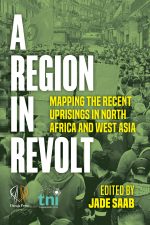
A region in revolt: Mapping the recent uprisings in North Africa and West Asia
USD $ 5 USD $ 15Price range: USD $ 5 through USD $ 15Select options This product has multiple variants. The options may be chosen on the product page
A region in revolt: Mapping the recent uprisings in North Africa and West Asia
USD $ 5 USD $ 15Price range: USD $ 5 through USD $ 15A wave of mass protest movements has spread across North Africa and West Asia, including Sudan, Algeria, Iraq, Lebanon and Iran. The mass protests have much in common, from opposing authoritarian regimes and worsening economic situations to demanding radical changes in social relations. Despite their similarities, each protest movement operates under different conditions that cannot be ignored. The specific historic, political and economic contexts of each country have determined who the key actors of the uprisings are and their location across old and new divides. This book elaborates on these similarities and differences to paint a clearer picture of these movements and draw out lessons to inform future struggles.
Select options This product has multiple variants. The options may be chosen on the product page -

Love after Babel and other poems
USD $ 5 USD $ 15.30Price range: USD $ 5 through USD $ 15.30Select options This product has multiple variants. The options may be chosen on the product page
Love after Babel and other poems
USD $ 5 USD $ 15.30Price range: USD $ 5 through USD $ 15.30Love after Babel is a collection of poems that deal with themes such as caste, the resistance of Dalit people, Dalit literature, islamophobia and other political themes, with almost one hundred poems divided into three sections (Call Me Ishmail Tonight; Name Me a Word; Love after Babel). The introduction is by Suraj Yengde (award-winning scholar and activist from India, author of the bestseller Caste Matters, inaugural postdoctoral fellow at the Initiative for Institutional Anti-racism and Accountability, Shorenstein Center on Media, Politics and Public Policy at the Harvard Kennedy School).
Chandramohan’s poems are dialogues of the ‘ self’ with the ‘other’. He brings to life a world that subverts myths, literary canons, gender and caste stereotypes by pooling in sparklingly new metaphors with sensitivity and care. He draws his images from contemporary incidents as well as myths and legends of yore, and delves deep into the politicized realm, thus ‘rupturing the hymen of demarcations’ of identity, resistance, repression and love.
Select options This product has multiple variants. The options may be chosen on the product page -

Mau Mau From Within: The Story of the Kenya Land and Freedom Army
USD $ 12 USD $ 30Price range: USD $ 12 through USD $ 30Select options This product has multiple variants. The options may be chosen on the product page
Mau Mau From Within: The Story of the Kenya Land and Freedom Army
USD $ 12 USD $ 30Price range: USD $ 12 through USD $ 30The inside story of the struggles of the Kenya Land and Freedom Army, referred to by British colonialism as the ‘Mau Mau rebellion’, is little known today. The autobiographical material written by Karari Njama (a senior leader in the Mau Mau hierarchy) and compiled by Donald L. Barnett was first published by Monthly Review Press in 1966 as Mau Mau From Within: An Analysis of Kenya’s Peasant Revolt. It was reprinted in 1970; it has remained out of print for many years. As the late Basil Davidson put it in his review of the first edition: “Njama writes of the forest leaders’ efforts to overcome dissension, to evolve effective tactics, to keep discipline, mete out justice … and to teach men how to survive in those merciless forests. His narrative is crowded with excitement. Those who know much of Africa and those who know little will alike find it compulsive reading. Some 10,000 Africans died fighting in those years . Here, in the harsh detail of everyday experience, are the reasons why.”
The book is an extraordinary story of courage, passion, heroism, combined with recounting of colonial terror, brutality and betrayal. It is a story of how the very idea of being ‘Kenyan’ was intimately linked to the idea of freedom, a connection that was destroyed not only by the firepower of the British, but also by those who collaborated and established themselves as the beneficiaries of neocolonial rule. Disconnecting notions of freedom from identity left only a caricature that rapidly descended into tribalism and ethnicity.
This momentous story of the struggle for freedom described here is relevant not only for a new generation of Kenyans but also for all those engaged in emancipatory struggles internationally. For so long as the experiences arising from the struggles described in this book are perceived as merely ‘African’ or ‘Kenyan’, it is not possible to fully grasp the contributions they have made to the struggle for a universalist humanity.
What is recounted in this publication is more than an ‘analysis of a peasant revolt’. It is, above all, a history of the Kenya Land and Freedom Army. As Ngūgī wa Thiong’o points out in his Preface to this new edition, ‘we don’t have to use the vocabulary of the colonial to describe our struggles.’ We were tempted to rename the book ‘Kenya Land and Freedom Army from Within.’ But because the original title has wide recognition, and one of the characteristics of movements of the oppressed is to appropriate derogatory terms
Select options This product has multiple variants. The options may be chosen on the product page -
 Select options This product has multiple variants. The options may be chosen on the product page
The In-Between World of Kenya’s Media: South Asian Journalism, 1900-1992
USD $ 35This book, originally published by AwaaZ in Kenya, provides insights into journalists of Indian origin who wrote about the struggles of Kenyan people.
Select options This product has multiple variants. The options may be chosen on the product page -

Transforming ourselves, Transforming the World: An open conspiracy for social change – Second Edition
USD $ 5 USD $ 20Price range: USD $ 5 through USD $ 20Select options This product has multiple variants. The options may be chosen on the product page
Transforming ourselves, Transforming the World: An open conspiracy for social change – Second Edition
USD $ 5 USD $ 20Price range: USD $ 5 through USD $ 20This book is for all those—community workers, adult educators, social activists of every kind—who want to overcome pessimism and play a part in changing society in the direction of peace, justice and dignity for all human beings. As author Brian Murphy points out, many of us are pessimistic about our ability to change the world when confronted by the powerful forces of big corporations and big government. Murphy reveals the social and personal dilemmas which hold people back from social engagement, and argues that the various constraints we face can be overcome.
In this new edition, David Austin explains in his Introduction why this book, first published in 1999, is perhaps more relevant to our times than ever, offering insights from his own experiences of engaging critically with the book and with others. And in his Afterword, Brian Murphy reflects on the continued relevance of the original text, emphasizing how our humanity is being corroded and commodified. To reclaim our humanity, he argues, we must transform ourselves to transform the world.
Brian Murphy’s immensely inspiring book,Transforming Ourselves, Transforming the World, deeply challenges us to think and rethink everything we knew and thought we knew.—Nnimmo Bassey, Executive Director, Health of Mother Earth Foundation & Right Livelihood Award Laureate in 2010
We need more conversations like the one in this book, which are rooted in hope while honestly working through a foundational way of seeing and understanding ourselves in the bigger picture.— Christina Warner, Co-Executive Director and Director of Campaigns and Organising, Council of Canadians.
This is one of the coolest, enjoyable and important books I have read in recent years. Written from the heart as well as the head, it is a breathtakingly visionary, unique and insightful take on the life of the ultimate activist.—Hope Chigudu, Feminist activist
Select options This product has multiple variants. The options may be chosen on the product page -

You’re Not Here
USD $ 5 USD $ 20Price range: USD $ 5 through USD $ 20Select options This product has multiple variants. The options may be chosen on the product page
You’re Not Here
USD $ 5 USD $ 20Price range: USD $ 5 through USD $ 20One brother goes missing in action in Afghanistan, the other falls in love with an Afghan girl in England.
Bitter divisions engulf an English town where young Muslims oppose the British army’s presence in Afghanistan, whilst white youth condemn the Muslims as traitors.
To the disgust of his white friends, 17-year-old Jake Marlesden, whose brother is missing in action in Afghanistan, is in love with Leila Khan, an Afghan. When Jake tries to find out what happened to his brother, neighbour turns against neighbour and lover against lover.
Leila joins young Muslims protesting against the returning bodies of dead British soldiers, and Jake stands with the families of the soldiers. The lovers fall apart.
But far off events, and sinister forces at home, bring the lovers together again in a journey in which they will not only discover themselves, but also heal the wounds of their families and friends.
This is the sequel to You’re Not Proper.
Select options This product has multiple variants. The options may be chosen on the product page -
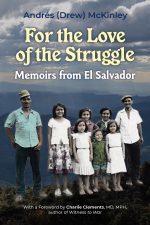
For the love of the struggle: Memoirs from El Salvador
USD $ 5 USD $ 18Price range: USD $ 5 through USD $ 18Select options This product has multiple variants. The options may be chosen on the product page
For the love of the struggle: Memoirs from El Salvador
USD $ 5 USD $ 18Price range: USD $ 5 through USD $ 18From his home in El Salvador, the author shares an intimate personal and political memoir that follows his remarkable journey from the comfort and security of a picturesque New England town to a stirring and heroic engagement in common cause with the struggle for peace and justice in El Salvador. After four years as a Peace Corp worker in northern Liberia beginning in the late 1960’s, followed by a stretch back in the United States as a street worker in the ghettos of North Philadelphia, McKinley finds himself in Central America as an aid worker in 1978. He quickly becomes engulfed by the political violence of the region and engaged with the people and their struggles against five decades of military dictatorship, centuries of poverty and exploitation. The story is marked by terror, adventure and courage, by trials and tragedy redeemed by the beauty and transcendence of people in struggle. Originally based in Guatemala heading up a Catholic relief agency, his commitment to the struggles for change in the country attracts the attention of the military, and his own government, forcing him to leave the country in late 1980. He moves to El Salvador where he begins a gradual incursion into the revolutionary struggle of this country, in a commitment that will last the rest of his life. Interwoven with this personal journey, is the story of Teresa Rivas, her husband Antonio, and their five children, a peasant family It also describes their life after the war, with resettlement in the lowlands of Guazapa where many ex-combatants were building a new life. It explains in detail the gradual emergence of the objective and subjective conditions for revolution in El Salvador, including the difficult choice for the use of violence as the only available option for transformative change in the country. The book also details the challenges of reconstruction after the Peace Accords that end the war in 1992, and the tragedy of opportunities lost during the immediate post-war period in the face of the ongoing resistance of traditional opponents to reform. As the memoir closes, the author reflects on his choice to be in El Salvador over the past 43 years, and the country as he finds it in these changing times; on the family with whom he has shared love and life there; on his continuing relationship with Antonio Rivas and his surviving family; and his gradual reconciliation, from a distance, with the country of his birth.
Select options This product has multiple variants. The options may be chosen on the product page -

Being human after 1492
USD $ 5 USD $ 13Price range: USD $ 5 through USD $ 13Select options This product has multiple variants. The options may be chosen on the product page
Being human after 1492
USD $ 5 USD $ 13Price range: USD $ 5 through USD $ 13The pamphlet begins with two letters written by Paul the Apostle in which Christianity first acquires a universal address. The new religion came to exclude people who were not Christians from the count of the human. This became explicit around a thousand years later when Pope Urban II authorised the First Crusade.
In 1492 planetary history was split in to two. Muhammad XII of Granada conceded defeat to Isabella and Ferdinand, the Catholic monarchs of Portugal and Spain, who went on to expel the Jews from the territory under their control. Europe became a Christian project. In the same year Christopher Columbus arrived in the Caribbean and Europe also became an imperial project with a planetary reach.
The origins of the racial ideology can be seen in this period, in which ideas about religion came to be entangled with fantastical ideas about the imagined purity of blood. But it was in the English colony of Virginia in the seventeenth century that the legitimation for the exclusion from the count of the human began to move from claims made in the name of religion to claims made in the name of science. This is the point at which modern racism, rooted in the appearance of the body, began to cast its malignant shadow across the planet.
The author argues that the struggle to put an end to the epoch of world history that opened in 1492 will require new ideas, and new practices. It follows the Caribbean tradition that runs from Aimé Césaire to Frantz Fanon and Sylvia Wynter in affirming the need for a counter-humanism, a radical humanism, a humanism that, in Césaire’s famous phrases, is “made to the measure of the world”. There is a need for a shift in the ground of reason towards the lived experience and struggles of people rendered, in Wynter’s phrase, as ‘pariahs outside of the new order’.
Select options This product has multiple variants. The options may be chosen on the product page -

Lenin150 (Samizdat): 2nd expanded edition
USD $ 5 USD $ 30Price range: USD $ 5 through USD $ 30Select options This product has multiple variants. The options may be chosen on the product page
Lenin150 (Samizdat): 2nd expanded edition
USD $ 5 USD $ 30Price range: USD $ 5 through USD $ 30Lenin150 (Samizdat) aims to contribute to the re-kindling of the communist attractor by engaging, in the spirit of critical solidarity, with Vladimir Ilyich Ulyanov in the year of his 150th anniversary. Conceived out of the former Soviet republic of Kyrgyzstan, the book brings together contributions from all continents, ranging in style from the academic to the lyrical. As such, these compelling, and in some cases absolutely urgent, appropriations of (the spectre of) Lenin aspire to be of considerable use-value for the struggles ahead.
Select options This product has multiple variants. The options may be chosen on the product page -

Struggling to be seen: The travails of Palestinian cinema
USD $ 5 USD $ 15Price range: USD $ 5 through USD $ 15Select options This product has multiple variants. The options may be chosen on the product page
Struggling to be seen: The travails of Palestinian cinema
USD $ 5 USD $ 15Price range: USD $ 5 through USD $ 15The book explores the challenges Palestinian filmmakers confront to develop a cinema that gives expression to the national narrative. The research is based on collaborative work to research and screen Palestinian films involving Film Lab Palestine, Sheffield Palestine Cultural Exchange and Sheffield Hallam University as part of the Creative Interruptions research project (https://creativeinterruptions.com/palestiniancinema/). We explored the political, economic and cultural factors that impact on Palestinian film production and some of the barriers encountered in profiling and screening Palestinian films in Britain.
Select options This product has multiple variants. The options may be chosen on the product page -
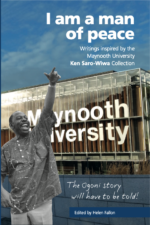
I am a man of peace: Writings inspired by the Maynooth University Ken Saro-Wiwa Collection
USD $ 5 USD $ 20Price range: USD $ 5 through USD $ 20Select options This product has multiple variants. The options may be chosen on the product page
I am a man of peace: Writings inspired by the Maynooth University Ken Saro-Wiwa Collection
USD $ 5 USD $ 20Price range: USD $ 5 through USD $ 20This book marks the 25th anniversary of the execution of Nigerian activist and written Ken Saro-Wiwa. The 21 essays, by international contributors, and 42 poems by new and established poets, are inspired by his ideals and activism.
The volume includes contributions by people intimately connected with Saro-Wiwa. His brother Dr Owens Wiwa recounts how his older brother awakened and nurtured his awareness of the tremendous damage Royal Dutch Shell was doing to their homeland, in collaboration with the then Nigerian military government. His firsthand account of the brutality of the military government and its impact; his unsuccessful efforts to save the life of his brother; his time in hiding and subsequent escape, with his family, from Nigeria and his efforts to retrieve the remains of his brother for burial, makes for very moving reading. Likewise, Noo Saro-Wiwa shares her story of growing up in England with strong links to family in Nigeria, and the trauma of hearing of her father’s execution while at University.
Maynooth University, where the editor works as Deputy Librarian, holds the death row correspondence from Ken Saro-Wiwa to Sister Majella McCarron. McCarron provides two personal essays. One, a reflection on the events that shaped her work with Saro-Wiwa in Nigeria and her subsequent efforts to save the lives of the Ogoni 9: the second essay explores her experience as a table observer of the Shell to Sea campaign, which strove to have gas, discovered off the west coast of Ireland, refined at sea rather than inland.
The damage that Shell has caused in Ogoni and the issue of redress are topics addressed in essays by experts including Mark Dummett, of Amnesty International, who investigated how Shell and other oil companies have caused or contributed to human rights abuses through their operations in the Niger Delta. Daniel Leader, a barrister and partner at Leigh Day’s international law department, the firm who have led a number of ground breaking human rights cases, including a series of cases against Shell on behalf of Nigerian communities, explores the issue of legal redress. Architect, environmental activist, author and poet Nnimmo Bassesy’s wide ranging essay presents Saro-Wiwa as activist and writer and creator of the Ogoni Bill of Rights, against the backdrop of the UNEP report of the Environmental Assessment of Ogoniland, which recorded that drinking water in Ogoni had benzene, a carcinogen, at over 900 times the level permitted
Select options This product has multiple variants. The options may be chosen on the product page -
 Select options This product has multiple variants. The options may be chosen on the product page
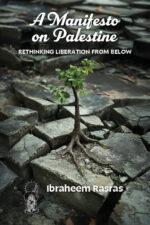
A Manifesto on Palestine
We are excited to share a summary of a truly transformative new work, A Manifesto on Palestine: Rethinking Liberation from Below, by Ibraheem Rasras. This manifesto offers a profound and challenging re-evaluation of the Palestinian struggle, urging us to look beyond conventional political and diplomatic frameworks to envision a radically different path to freedom and self-determination.
The Core Diagnosis: Beyond Material Occupation
Rasras argues that the Palestinian crisis is not merely a material one of occupation, dispossession, and statelessness, but also a deep “epistemological crisis”. The very structures intended for liberation, the manifesto asserts, have been “subverted, diverted, or rendered ineffective by the very forces they seek to fight”. This is evident in the recurrence of atrocities, reminiscent of past massacres, seen in Gaza from 2023 onwards. A central critique is leveled against the adoption of hierarchical, statist, and technocratic forms of liberation, which have come to tragically resemble the configuration of the oppressor, shedding their ethical and revolutionary essence. The Oslo Accords are cited as a prime example, transforming the language of liberation into one of “formalized managerial governance” and “conditional sovereignty”. This has contributed to a profound “void in the political contextualization and ethical framework of the political ruling”.The Problem of “Stylistic” Resistance and Internalized Colonialism
The manifesto identifies how Palestinian resistance has, over decades, shifted from revolutionary, bottom-up rhetoric to institutionalized and compromised modes, particularly after the Oslo Accords. It introduces the concept of “stylistic” liberation, where leaders impose their imagined schemes rather than adapting to the realities on the ground, leading to an “alienus” leadership that lacks genuine popular allegiance. This “stylistic” approach also manifests when liberation is pursued through “tools of trivialization” that are external to the collective’s specific needs, such as placing prolonged peace negotiations *before* achieving liberation. This externalization, mirroring the colonizing process itself, leads to a form of alienation, obstructing collective self-control and, in many cases, resulting in the unconscious participation of the colonized in their own subjugation. Distrust stemming from unfulfilled promises by factions like Hamas and Fatah has further deepened fragmentation and a sense of “strangeness” among Palestinians.A New Strategy: The Ethics of Resistance and Anarchic Programs
To counter this multifaceted crisis, the manifesto proposes a radical alternative: a “bottom-up resistance” grounded in a unified mode of ethics, a collective understanding of the cause, and consistent practices. This “ethics of resistance” is not a rigid dogma but an “emancipatory code” and a regulatory framework for all aspects of Palestinian daily life, directly confronting neoliberal values like profit-maximization. It is intertwined with the urgent need for a “cultural revolution” that aims to restructure social circumstances and foster a “revolutionary consciousness”. This cultural shift, implemented in successive waves, includes intensive education on human rights and rooting new “networking-elements” within Palestinian social and cultural life. The goal is to establish a “solid reference-point” that can unify Palestinians, whose power has been fragmented by internal divisions and external pressures.The manifesto champions “anarchic programs” as a strategic framework to dismantle subjugation. This involves collectively disengaging from oppressive laws and creating a vacuum for temporary self-management, thereby strengthening local grassroots power. It envisions an “anarchic rule” based on “organic units” and “free cooperation,” emphasizing self-management, direct worker control, and integrated agriculture and industry. This approach aims to organize Palestinians without the fear of division or surveillance that has plagued traditional political structures.
The Power of the Everyday
Crucially, the manifesto points to the already existing “affirmative, anarchic, and ethical politics” in fragments throughout Palestinian society. These are not found in the monopolies of NGOs or political parties, but in the “spontaneous and often-unrecognized social inventions of ordinary people”. Examples include mutual aid networks in Gaza during siege, informal community schooling, grassroots organizing, and the refusal to cooperate with surveillance. These acts of “everyday resistance”—like a student crossing a checkpoint or a mother going to work despite immense barriers—are seen as foundational for a new paradigm of collective ethics and political orientation.Toward a Horizon of Liberation
A Manifesto on Palestine is a bold call for “breakage,” arguing that “no gradual reform will bring freedom”. It is an “epistemological” task to unveil and amplify these lifeways and forms of knowledge, leading to an ethical reconstruction for a collective life that rejects domination in all forms. The manifesto asserts that the future of Palestine will not come from foreign beneficence or failed peace talks, but will be “constructed by the long disenfranchised of the political arithmetic: the dispossessed, the alienated, the uncredentialed, the everyday”. It invites all to engage in “a problem to be enjoyed more than an answer to be spewed back,” asserting that “freedom must be written by individuals who are living alternatively”.We encourage you to delve deeper into this profound manifesto and join the critical conversation about rethinking liberation from below.
Select options This product has multiple variants. The options may be chosen on the product page -
Dialectics of revolution : Hegel, Marxism, and its critics through a lens of race, class, gender, and colonialism
USD $ 5 USD $ 18Price range: USD $ 5 through USD $ 18Select options This product has multiple variants. The options may be chosen on the product page
Dialectics of revolution : Hegel, Marxism, and its critics through a lens of race, class, gender, and colonialism
USD $ 5 USD $ 18Price range: USD $ 5 through USD $ 18This book collects four decades of writings on dialectics, a number of them published here for the first time, by Kevin B. Anderson, a well-known scholar-activist in the Marxist-Humanist tradition. The essays cover the dialectics of revolution in a variety of settings, from Hegel and the French Revolution to dialectics today and its poststructuralist and pragmatist critics. In these essays, particular attention is given to Lenin’s encounter with Hegel and its impact on the critique of imperialism, the rejection of crude materialism, and more generally, on world revolutionary developments. Major but neglected works on Hegel and dialectics written under the impact of the struggle against fascism like Lukács’s The Young Hegel and Marcuse’s Reason and Revolution are given full critical treatment. Dunayevskaya’s intersectional revolutionary dialectics is also treated extensively, especially its focus on a dialectics of revolution that avoids class reductionism, placing gender, race, and colonialism at the center alongside class. In addition, key critics of Hegel and dialectics like Jacques Derrida, Michel Foucault, Antonio Negri, Pierre Bourdieu, and Richard Rorty, are themselves analysed and critiqued from a twenty-first century dialectical perspective. The book also takes up the dialectic in global, intersectional settings via a reconsideration of the themes of Anderson’s Marx at the Margins, where nationalism, race, and colonialism were theorized alongside capital and class as key elements in Marxist dialectical thought. As a whole, the book offers a discussion of major themes in the dialectics of revolution that still speak to us today at a time of radical transformation in all spheres of society and of everyday life.
Select options This product has multiple variants. The options may be chosen on the product page -

Fanon and the rationality of revolt
USD $ 5 USD $ 12Price range: USD $ 5 through USD $ 12Select options This product has multiple variants. The options may be chosen on the product page
Fanon and the rationality of revolt
USD $ 5 USD $ 12Price range: USD $ 5 through USD $ 12We inhabit extraordinary times: times in which we are acutely aware of the intensity of what revolutionary thinker Frantz Fanon called “the glare of history’s floodlights.” The velocity and scale at which the revolt against police murder that began in Minnesota after the death of George Floyd on May 25th and moved throughout the US, and then other parts of the world, was astonishing. It was impossible to predict, but then, in retrospect, it is George Floyd’s death becomes a nodal point: calling for action as well as rethinking and self-clarification. Thinking about this moment with the world revolutionary Frantz Fanon, we need to be aware of continuities and discontinuities — or, as he puts it, opacities — between the ages, his and ours. Fanon is always speaking to us, but often in ways we cannot hear. We have to work to listen to him and to understand the new contexts and meanings in relative opacity. It is this constant dialogue that helps illuminate the present and enable ongoing fidelity to Fanon’s call in the conclusion of The Wretched of the Earth the necessity to work out new concepts to confront one of Fanon’s greatest concerns, the betrayal of the revolutionary movement. In this pamphlet we consider how Fanon’s idea of liberation is connected with “the rationality of revolt.” The practice of engaging Fanon not only with revolt but with the reason or rationality of revolt connects with Fanon’s idea of how this liberated humanity is a product of a new consciousness of collectivity open to rethink everything.
Select options This product has multiple variants. The options may be chosen on the product page -

Finding A Voice
USD $ 20First published in 1978, and winning the Martin Luther King Memorial Prize for that year, Finding a Voice established a new discourse on South Asian women’s lives and struggles in Britain. Through discussions, interviews and intimate one-to-one conversations with South Asian women, in Urdu, Hindi, Bengali and English, it explored family relationships, the violence of immigration policies, deeply colonial mental health services, militancy at work and also friendship and love. The seventies was a time of some iconic anti-racist and working-class struggles. They are presented here from the point of view of the women who participated in and led them.
This new edition includes a preface by Meena Kandasamy, some historic photographs, and a remarkable new chapter titled ‘In conversation with Finding a Voice: 40 years on’ in which younger South Asian women write about their own lives and struggles weaving them around those portrayed in the book.