
-

“Nada mal para um N—, Não?” “No está mal para un N—, ¿no?”
USD $ 5.00 USD $ 15.00Price range: USD $ 5.00 through USD $ 15.00Select options This product has multiple variants. The options may be chosen on the product page
“Nada mal para um N—, Não?” “No está mal para un N—, ¿no?”
USD $ 5.00 USD $ 15.00Price range: USD $ 5.00 through USD $ 15.00Escrito durante as comemorações do septuagésimo quinto aniversário da publicação de Black Skin, White Masks (“Pele Negra, Máscaras Brancas”), de Frantz Fanon, “Not Bad for a N—, No?” oferece reflexões sobre as circunstâncias da publicação desta obra clássica com os insights de Fanon sobre o que ele chamou de tentativa de “assassinato do homem” e a necessidade urgente de a humanidade se tornar “acional”.
Escrito durante las celebraciones del septuagésimo quinto aniversario de la publicación de Black Skin, White Masks (“Piel negra, máscaras blancas”) de Frantz Fanon, “Not Bad for a N—, No?” ofrece reflexiones sobre las circunstancias de la publicación de esta obra clásica con las ideas de Fanon sobre lo que llamó el intento de “asesinato del hombre” y la urgente necesidad de que la humanidad se vuelva “acción”.
Select options This product has multiple variants. The options may be chosen on the product page -

Dark PR: How Corporate Disinformation Undermines Our Health and the Environment
USD $ 6.99 USD $ 21.00Price range: USD $ 6.99 through USD $ 21.00Select options This product has multiple variants. The options may be chosen on the product page
Dark PR: How Corporate Disinformation Undermines Our Health and the Environment
USD $ 6.99 USD $ 21.00Price range: USD $ 6.99 through USD $ 21.00If you’re interested in how powerful forces of marketing & manipulation make the positive change we badly need MUCH harder, read @grantennis.bsky.social’ great book “Dark PR.” – Brent Toderian, Bluesky
“Think global, act local!” “Be the change you want to see in the world!” “Every little bit counts!” We can all get on board with such sentiments, right? That, of course, is exactly what corporate spin-masters across the world are banking on. By weaponizing such seemingly innocuous yet powerful narratives, change becomes a matter of personal choice, something each of us must slave away at day by day: switching off lightbulbs to save the environment or exercising to shed the weight we’ve gained from consuming junk food. All the while, the corporate welfare tap continues to flow, with over $6 trillion worth of annual subsidies dished out to industries that directly contribute to the deaths of over 5.5 million people each year through diabetes, road deaths, global warming, and other crises. But such framing is just the tip of the iceberg when it comes to the corporate disinformation playbook. This playbook is the dark matter of activist work: the unseeable element shaping harmful spin across all issues. It has never been reverse engineered – until now.
In Dark PR, Grant Ennis – drawing on his decades of experience working in the environmental, philanthropy, and public health sectors – reveals exactly how multinationals go about hoodwinking and manipulating us. In doing so, he lifts the lid on the nine devious frames contained within the cross-industry corporate disinformation playbook: through denialism, normalization, victim-blaming, multifactorialism, and a variety of other tried-and-tested tactics, corporations divert citizens’ attention away from the real causes of global problems, leading them into counter-productive blind-alley “solutions” like ethical consumerism and divestment. Sadly, though, buying Fair Trade chocolate has not and never will save the world. Only by collectively organizing to lobby our governments can we break this destructive cycle of lies and deadly incentives and reclaim control of our lives.
Dark PR: How Corporate Disinformation Harms Our Health and the Environment referenced in the UK House of Lords.
“I’m really interested in a piece of work that’s written by a guy named Grant Ennis, and I would advise you to have a look at his book on subsidy. So actually the Government provide an awful lot of subsidy to unhealthy food producers. Actually we could reduce the subsidy that is provided for that food and use the money in a different way to do different things. He is the expert in that”
– Alice Wiseman, Director of Public Health for Gateshead, EnglandLink: https://lnkd.in/e6AnKssm Minute 11:34:24
Select options This product has multiple variants. The options may be chosen on the product page -
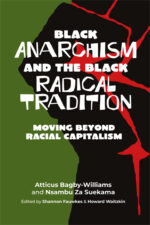
Black Anarchism and the Black Radical Tradition: Moving Beyond Racial Capitalism
USD $ 5.00 USD $ 18.00Price range: USD $ 5.00 through USD $ 18.00Select options This product has multiple variants. The options may be chosen on the product page
Black Anarchism and the Black Radical Tradition: Moving Beyond Racial Capitalism
USD $ 5.00 USD $ 18.00Price range: USD $ 5.00 through USD $ 18.00This work is an important achievement in clarifying the history and current importance of Black anarchism. The information that the book presents will be new to many readers. For instance, one important component involves the explanations of how hierarchical principles within the Black Panther Party and Black Liberation Army helped generate the emergence of Black anarchism among key party members who later developed their ideas and strategies while in prison. Likewise, the book breaks new ground in demonstrating that Black anarchism has emerged not from the European/ North American anarchist traditions but rather from roots in Pan-Africanism, the Black radical tradition focusing on racial capitalism and the work of Cedric Robinson, and grassroots struggles partly in the U.S. South. An in-depth analysis of the somewhat different but complementary focuses within the two generations of Black anarchism also is very helpful. Finally, the book highlights concrete, contemporary implications for revolutionary strategy, including a perceptive analysis of the compatibilities between socialist and Black anarchist approaches to current transformative struggles. This publication will become widely known and used because it brings enlightening new ways to understand and act on the intertwined structures of racial capitalism and the capitalist state.
Select options This product has multiple variants. The options may be chosen on the product page -

“Not Bad for a N—, No?” / «Pas mal pour un N—, n’est-ce pas? »
USD $ 5.00 USD $ 11.00Price range: USD $ 5.00 through USD $ 11.00Select options This product has multiple variants. The options may be chosen on the product page
“Not Bad for a N—, No?” / «Pas mal pour un N—, n’est-ce pas? »
USD $ 5.00 USD $ 11.00Price range: USD $ 5.00 through USD $ 11.00Written during the seventy-fifth anniversary celebrations of the publication of Frantz Fanon’s Peau noir, masques blancs (“Black Skin, White Masks”), “Not Bad for a N—, No?” offers reflections on the circumstances of the publication of this classic work with Fanon’s insights on what he called the attempted “murder of man” and the urgent need for humanity to become “actional.”
Écrit lors des célébrations du soixante-quinzième anniversaire de la publication de Frantz Fanon de Peau noir masques blancs, «Pas mal pour un N—, n’est-ce pas? » offre des réflexions sur les circonstances de la publication de cette œuvre classique avec les idées de Fanon sur ce qu’il a appelé la tentative de «meurtre de l’homme» et le besoin urgent que l’humanité devienne «actionnelle».
Select options This product has multiple variants. The options may be chosen on the product page -

Banana Girls, The
USD $ 5.00 USD $ 20.00Price range: USD $ 5.00 through USD $ 20.00Select options This product has multiple variants. The options may be chosen on the product page
Banana Girls, The
USD $ 5.00 USD $ 20.00Price range: USD $ 5.00 through USD $ 20.00The Banana Girls chronicles 2003 days in the lives of two bosom friends, Rehema and Fatuma, and millions of days in the existence of the banana, the fruit which, eaten either ripe or cooked, the girls at some point determine will be the only solid component of their daily diets. The banana becomes not only the symbol of ideal nutrition but also, by turns, of social engineering and neo-imperialist exploitation. …Rehema and Fatuma are Tanzanians by nationality and brainboxes by genetic coding, with an enduring monopoly of either the first or second position in any examination for which they sit. They excel in Mathematics, Chemistry and Physics particularly and are always the first two to solve any mathematical or scientific challenges that are presented to their successive year groups and, by extension, to readers of the book.
… As the days go by, Rehema and Fatuma abandon junk food forever, they also adopt wholesome tastes in what they watch and what they listen to, and they make a good friend, Alice, who, unlike them, is from a rich family but who is adequately informed to join them as committed activists in the BLF, the Banana Liberation Front. Their activism lands them in jail. All three girls see through the machinations of their own government to oppress their own people and of global capitalism to bring about régime change, the better to sustain a stranglehold over poorer economies and to prop up aptly named ‘banana republics’. One malevolent operator is pointed out by name: he is President Ronald Grump of the United States of America.
Select options This product has multiple variants. The options may be chosen on the product page -

The revolutionary ecological legacy of Herbert Marcuse – 2nd Edition
USD $ 5.00 USD $ 25.00Price range: USD $ 5.00 through USD $ 25.00Select options This product has multiple variants. The options may be chosen on the product page
The revolutionary ecological legacy of Herbert Marcuse – 2nd Edition
USD $ 5.00 USD $ 25.00Price range: USD $ 5.00 through USD $ 25.00Description (2188 / 2500)
The author appeals to the energies of those engaged in a wide range of contemporary social justice struggles such as ecosocialism, antiracism, the women’s movement, LGBTQ rights, and antiwar forces. As the dialectical counterpart of Marcuse’s Great Refusal, the book, which culminates with the ‘EarthCommonWealth Project’ is keyed to what we are struggling for, not just what we are struggling against. The author argues that regressive political forces must be countered today, and this is best accomplished through radical collaboration around an agenda recognizing the basic economic and political needs of diverse subaltern communities. System negation must become a new general interest. The author discusses core ethical insights from African philosophical sources, indigenous American philosophy, and radical feminist philosophy. Humanity’s first teachings on ethics are to be found in ancient African proverbs. These subsequently served also as a critique of colonialism and neocolonialism. Long-suppressed indigenous American sources supply a philosophical and political critique of Euro-centric economic and cultural values. They also offer an understanding of humanity’s place in nature and the leadership of women and attest to modes of cooperative and egalitarian forms of community. Feminist anthropology furnishes an historical context for understanding the origins of patriarchy and how to move beyond dominator power to new forms of partnership power.The book envisions the displacement and transcendence of capitalist oligarchy as such, not simply its most bestial and destructive components. This is a green economic alternative because its ecological vision sees all living things and their non-living earthly surroundings as a global community capable of a dignified, deliberate coexistence. It is searching for a new system of ecological production, egalitarian distribution, shared ownership, and democratized governance, having its foundation in the ethics of partnership productivity with an ecosocialist and humanist commitment to living our lives on the planet consistent with the most honorable and aesthetic forms of human social and political fulfillment.
Select options This product has multiple variants. The options may be chosen on the product page -

Domains of politics and modes of rule/ Sphères politiques et contrôle étatique (en/fr)
USD $ 5.00 USD $ 10.00Price range: USD $ 5.00 through USD $ 10.00Select options This product has multiple variants. The options may be chosen on the product page
Domains of politics and modes of rule/ Sphères politiques et contrôle étatique (en/fr)
USD $ 5.00 USD $ 10.00Price range: USD $ 5.00 through USD $ 10.00This work consists of a brief attempt to orient the study of the neocolonial state in Africa through an assessment of the manner in which it rules its people. It is argued that the state produces different modes of rule by deploying different politics over different parts of the population. In this manner, it can combine a genuinely democratic rule in the image of the West over some while subjecting the majority to colonial forms of domination. Imported political subjectivities from the West and its obsession with human rights discourse are reserved largely for a sphere of civil society in which the right to have rights is conferred upon citizens. In the domains of uncivil society and traditional society, the right to rights is not observed by the state so that different subjectivities, regularly including violence, govern the manner political problems and solutions are addressed both by the state and by people. In consequence, distinct political subjectivities prevail in the conceptualization of popular resistance in all three domains, and it becomes difficult to rally such different concerns and conceptions within an overall anti-neocolonial struggle.
Il s’agit d’une brève tentative d’orienter l’étude de l’État néocolonial en Afrique à travers une évaluation de la manière dont il gouverne son peuple. On soutient que l’État produit différents modes de contrôle étatique en déployant différentes politiques sur différentes parties de la population. De cette manière, il peut combiner une règle véritablement démocratique à l’image de l’Occident sur certains tout en soumettant la majorité à des formes coloniales de domination. Les subjectivités politiques importées de l’Occident et son obsession du discours sur les droits de l’homme sont largement réservées à une sphère de la société civile dans laquelle le droit d’avoir des droits est conféré aux citoyens. Dans les domaines de la société incivile et de la société « traditionnelle », le droit aux droits n’est pas respecté par l’État, de sorte que différentes subjectivités, y compris régulièrement la violence, régissent la manière dont les problèmes politiques et leurs solutions sont abordés à la fois par l’État et par le peuple. En conséquence, des subjectivités politiques distinctes prévalent dans la conceptualisation de la résistance populaire dans chacun des trois domaines, et il devient difficile de rallier des préoccupations et des conceptions aussi différentes au sein d’une lutte anticoloniale nationSelect options This product has multiple variants. The options may be chosen on the product page -

Homestead, Homeland, Home
USD $ 5.00 USD $ 19.00Price range: USD $ 5.00 through USD $ 19.00Select options This product has multiple variants. The options may be chosen on the product page
Homestead, Homeland, Home
USD $ 5.00 USD $ 19.00Price range: USD $ 5.00 through USD $ 19.00This is a collection of observations and meditations by Professor Emeritus (York University, Toronto) and philosopher Ato Sekyi-Otu on events, issues, people and ideas culled from recent history and the world, from the US and Canada to Ghana. If there is a persistent thread in these entries, it is this: Virtually all of them testify to the ironic truth of the saying that there is no place like home, no place, that is to say, which looks like the lodestar called home or comes close to approximating its promise of being a just space of human flourishing. Most of the entries are, therefore, harsh, particularly those on the USA. That is because that nation, in his view, has, in recent history, made a major contribution to rendering the world and every homestead we inhabit unhomely and sabotaging attempts to better it. But no one or place is spared, certainly not the author’s native land, Ghana. Canada appears intermittently in these pages in rather fragmentary and contrastive observations. That paucity of comments may be taken to be the complement the author pays to Canada as a place of relative civility and glimmers of decency in a mad and cruel world. It is a short work of predominantly gloomy pictures. But there are a few countervailing images and invocations of hope here and there. There are 166 entries of unequal lengths arranged around 14 headings. These epigrams are contrapuntal variations on the philosopher’s searing imprecation and visionary invocation: unfinished ode, resounding with intermittent fury, to the dawn of human existence set free from all tyrannizing enclosures.
Select options This product has multiple variants. The options may be chosen on the product page -

Mudarse Màs Allá de la Agricultura Capitalista
USD $ 5.00 USD $ 15.00Price range: USD $ 5.00 through USD $ 15.00Select options This product has multiple variants. The options may be chosen on the product page
Mudarse Màs Allá de la Agricultura Capitalista
USD $ 5.00 USD $ 15.00Price range: USD $ 5.00 through USD $ 15.00Los agentes patógenos surgen una y otra vez de un sistema agroalimentario global arraigado en la desigualdad, la explotación laboral y el extractivismo sin límites por el que se despoja a las comunidades de sus recursos naturales y sociales. Un sistema económico propenso a la crisis que prioriza la producción para obtener beneficios por encima de la satisfacción de las necesidades humanas y la preservación ecológica se organiza en torno a una intensa producción monocultural que, por el camino, permite la aparición de las enfermedades más mortíferas.
La Investigación sobre la Pandemia para el Pueblo (PReP) se centra en cómo la agricultura podría ser reimaginada por el tipo de intervención a nivel de la comunidad que podría detener la aparición del coronavirus y otros patógenos en primer lugar. Abordamos cómo la ciencia convencional apoya los mismos sistemas políticos y económicos que ayudaron a producir la aparición del coronavirus y otros patógenos en primer lugar.
Introducimos la agroecología, un ecologismo de los campesinos, los pobres y los indígenas, que existe desde hace mucho tiempo, y que trata la agricultura como una parte de la ecología de la que la humanidad cultiva sus alimentos. La agroecología -una ciencia, un movimiento y práctica- combina la ciencia ecológica, los conocimientos indígenas y campesinos y los movimientos sociales por la soberanía alimentaria y territorial para lograr sistemas alimentarios ambientalmente justos.
Select options This product has multiple variants. The options may be chosen on the product page -

Domains of politics and modes of rule : Political structures of the neocolonial state in Africa
USD $ 5.00 USD $ 10.00Price range: USD $ 5.00 through USD $ 10.00Select options This product has multiple variants. The options may be chosen on the product page
Domains of politics and modes of rule : Political structures of the neocolonial state in Africa
USD $ 5.00 USD $ 10.00Price range: USD $ 5.00 through USD $ 10.00“A concise, dense and illuminating dissection of the workings of the post-independence African state that also charts a path towards imagining and working for a true politics of liberation.” — Ndongo Samba Sylla, Senior Researcher, Rosa Luxemburg Foundation.
This is a brief attempt to orient the study of the neocolonial state in Africa through an assessment of the manner in which it rules its people. It is argued that the state produces different modes of rule by deploying different politics over different parts of the population. In this manner, it can combine a genuinely democratic rule in the image of the West over some while subjecting the majority to colonial forms of domination. Imported political subjectivities from the West and its obsession with human rights discourse are reserved largely for a sphere of civil society in which the right to have rights is conferred upon citizens. In the domains of uncivil society and ‘traditional’ society, the right to rights is not observed by the state so different subjectivities, regularly including violence, govern the manner political problems and solutions are addressed both by the state and by people. In consequence, distinct political subjectivities prevail in the conceptualization of popular resistance in all three domains, and it becomes difficult to rally such different concerns and conceptions within an overall anti-neocolonial struggle.∴Select options This product has multiple variants. The options may be chosen on the product page -

Hand On The Sun: A passionate and powerful novel of race and class
USD $ 5.00 USD $ 18.00Price range: USD $ 5.00 through USD $ 18.00Select options This product has multiple variants. The options may be chosen on the product page
Hand On The Sun: A passionate and powerful novel of race and class
USD $ 5.00 USD $ 18.00Price range: USD $ 5.00 through USD $ 18.00This was Tariq Mehmood’s first novel, published by Penguin Books in 1983, charting the experience of the second generation migrants to the UK. Set in the declining textile industry of the North of England, it is a raw story of pain and anger at the relentlessness of British racism, from the street to the state – a story of an unquenchable desire for justice, and reclaiming human dignity. A dignity that is wrapped around new questions of Identity, a crossroad between religion, language, history and resistance. It is a little big story, that talks to the extremities of social, political and literary issues today? Can stories of a generation be appropriated? How important is religion in identity? If all you have is a story to tell, who should you tell it? Are the issues of today, just the issues of today or can we learn something from the past? In these stories, friendship is not defined by religion or colour, but by humanity. And racism is much more than skin deep. It is an exhilarating read that bears witness to the urgent 80’s battles against state and popular racism. As important now as then. In this new edition, Mehmood provides a Foreword that describes how the novel came to be written and the lives of real people on whom the characters were created. In the Afterword, Mehmood revisits some of the characters who are now 40-years older, and reflects on how the book would have been written today where the conditions of mass mobilizations no longer exist in neoliberal Britain.
Select options This product has multiple variants. The options may be chosen on the product page -

Left Alone: On Solitude and Loneliness amid Collective Struggle
USD $ 5.00 USD $ 28.00Price range: USD $ 5.00 through USD $ 28.00Select options This product has multiple variants. The options may be chosen on the product page
Left Alone: On Solitude and Loneliness amid Collective Struggle
USD $ 5.00 USD $ 28.00Price range: USD $ 5.00 through USD $ 28.00Left Alone brings together 13 authors and 6 visual artists from Africa, Asia, Latin America, Europe and North America to individually and collectively reflect – in words and images – on an urgent psycho-political issue that has not yet been explicitly addressed through a left political lens, that is, Left Loneliness. Combining academic and more personal-political texts, including an interview, poetry, a Rap and a powerful short story, the book explores the contributors personally and/or vicariously lived experiences of Left Loneliness from a variety of genres and left political currents: Marxist, Feminist, Anti-/De-Colonial, Anti-Racist, Queer, Post-Soviet, Anti-Ableist and others. Says Feminist writer Sara Ahmed: “Loneliness might be what we are threatened with if we persist in being or doing what we are being or doing.” In this sense, Left Loneliness is neither a metaphor nor a secondary contradiction and definitely not a type of petty bourgeois “personalism”. Rather, it might be considered one of the rank and file psycho-affective elements shaping and at the same time resulting from our myriad, intersecting, unremitting, yet always fragile and potentially shattering political attempts to revolutionise our inner and outer worlds. Given its (growing?) existence in our everyday left subjectivities, the book argues that Left Loneliness and related states of solitude, isolation and alienation, among others, have both debilitating and productive (epistemic) dimensions, with very concrete psycho-somatic repercussions for Left Mental and Physical Health and hence our capacities to persist and build on “being or doing what we are being or doing”. Given that continuing and deepening our multiple ongoing struggles for liberation will depend on our constant ability to (re-)create, sustain and care for both our individual selves and the communities that we are a part of, the aim of Left Alone is to contribute to the strengthening of these personal collectivities in action in-against-and beyond capitalism, colonialism and heteropatriarchy by inviting the comrade-readers into what will ideally be a deeply stimulating and enabling personal-political engagement with the texts and images hailing from countries such as Argentina, Kenya, Kyrgyzstan, Guinea-Bissau/Portugal, Turkey/Kurdistan, Jamaica, Italy, the UK, Germany and the USA. As Lena Grace Anyuolo from Kenya puts it, “My sisters and brothers, Come, Let us gather, To lay the structures for a joyous existence.”
Select options This product has multiple variants. The options may be chosen on the product page -
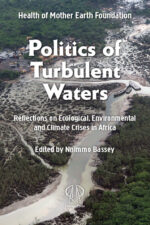
Politics of Turbulent Waters: Reflections on Ecological, Environmental and Climate Crises in Africa
USD $ 5.00 USD $ 20.00Price range: USD $ 5.00 through USD $ 20.00Select options This product has multiple variants. The options may be chosen on the product page
Politics of Turbulent Waters: Reflections on Ecological, Environmental and Climate Crises in Africa
USD $ 5.00 USD $ 20.00Price range: USD $ 5.00 through USD $ 20.00For the past 10 years, the Health of Mother Earth Foundation (HOMEF) has been on the front line of the struggle for environmental justice, climate justice and food sovereignty in Africa and the globe. It has been a decade of non-stop probing of the exploitation of resources, peoples and nations, which has given rise to numerous environmental and climate injustices. HOMEF has had a decade of witnessing and standing against the injustice, the powers and structures (industries and policies) suffocating the rights of the people to a healthy environment and standing with the neglected to take charge of their once self-managed food and agricultural systems. The struggle has necessitated the reawakening of communities’ consciousness to the injustices that besiege them and to their ‘people power’ – power to be utilized in seeking the desired change.mPolitics of Turbulent Waters is a compendium of selected articles in the 36 issues of the Eco-instigator published from 2013 to 2022. The Eco-instigator is yet another tool used by HOMEF to pull together thoughts and reports of activities that advance environmental justice and food sovereignty. Issue by issue, these thoughts and reports flow from within HOMEF and other environmental/climate justice and food sovereignty advocates from across Africa and the globe.They form this rich assemblage (Politics of turbulent waters) to commemorate HOMEF’s 10th anniversary. The title of the book is one of Nnimmo Bassey’s (the director of HOMEF) numerous articles that have graced some pages of the different issues of the Eco-instigator. The article cum title encapsulates the messages that the book intends to convey to you, the reader. It crystallizes the dire condition of Africa and its waters and the power imbalance together with the spatial disposition that plunged the continent into the calamitous environmental situation it faces. It speaks of the politics of economic development and market fundamentalism that avows to maintain the status quo in terms of destructive exploitation of Africa’s marine and other natural resources.
Select options This product has multiple variants. The options may be chosen on the product page -
 Select options This product has multiple variants. The options may be chosen on the product page
(Arabic edition) الهندوتفا وعلاقتها بالصهيونية
هندوتفا
وارتباطها بالصهيونيةأمريت ويلسون
سلسلة محاضرات عن إسرائيل
المساهمة: لاهور ألباست، مؤسسة الدراسات الفلسطينية، الولايات المتحدة الأمريكية
المشرف: الدكتور فيريندر سينغ كالرا
المحرر: طارق محمود، الجامعة الأميركية في بيروتكتب هذا النص في كانون الأول/ديسمبر 2022، وهو مقتبس من محاضرة ألقيت بدعوة من مؤسسة الدراسات الفلسطينية. ومنذ ذلك الحين، تعمقت العلاقات بين إسرائيل والهند وتصاعدت الفظائع في كلا البلدين. في 5 إبريل 2023، اقتحمت قوات الاحتلال الإسرائيلي باحات المسجد الأقصى في القدس الشرقية المحتلة، واعتدت على المصلين بداخله. وفي الوقت نفسه، تواجه إسرائيل اضطرابات داخلية في الصراع بين مجموعة متنوعة، بما في ذلك أولئك الذين يعتقدون أن المستعمرة الاستيطانية الحالية هي دولة ديمقراطية ويريدون أن تبقى الأمور على ما هي عليه، وكذلك أولئك الذين يقفون على اليمين. والأهم من ذلك أن الحزب الحاكم في الهند، حزب بهاراتيا جاناتا، يدعم الخيار الأخير. يدور الكتاب حول هندوتفا، الأيديولوجية التي تحرك حكومة رئيس الوزراء ناريندرا مودي، حزب بهاراتيا جاناتا الذي يهيمن عليه الهندوس، والصهيونية، أيديولوجية دولة الفصل العنصري الإسرائيلية. وفي هذا العصر الذي يتسم بالفاشية الناشئة، تشكل هاتان الأيديولوجيتان المتشابهتان إلى حد لافت للنظر أهمية بالغة في تعزيز التحالفات الاقتصادية والعسكرية بين اثنتين من أكثر الدول اليمينية قمعية في العالم ـ وفي الوقت نفسه إضفاء الشرعية عليها في الساحات الثقافية. إن إسرائيل بلا شك دولة استعمارية استيطانية، لكنها أيضًا دولة فاشية، مثل الهند، ليس فقط بسبب “الأحزاب المتطرفة التي تشكل جزءًا من الحكومة” ولكن أيضًا “على حد تعبير مسؤوليها – نتنياهو ومروان بشارة”. نتنياهو هو “الأب الروحي للفاشية الإسرائيلية الحديثة”.
Written in December 2022, this text is based on a lecture given earlier at the invitation of the Institute of Palestine Studies. Since then, the relationship between Israel and India has deepened further and atrocities have skyrocketed in both countries. On 5 April 2023, Israeli forces stormed Al Aqsa Mosque compound in occupied East Jerusalem and attacked worshippers inside. At the same time, Israel is facing internal turmoil in a battle between a diverse group, including those who think the current settler colony is a democratic nation and want things to remain as they are, and those who stand even further to the right. Significantly, the BJP, India’s ruling party, supports the latter. This book is about Hindutva, the ideology which drives the Hindu-supremacist Bharatiya Janata Party (BJP) regime of Prime Minister Narendra Modi, and Zionism, the ideology of the Israeli apartheid state. In this era of rising fascism, these two remarkably similar ideologies are crucially important in cementing the economic and military alliance between two of the world’s most repressive right-wing states – while helping to legitimize them in cultural arenas. Israel is, of course, a settler colonial state, but it is also, like India, a fascist state, not only because of ‘the extremist parties that [are] part of the government’ but also because of ‘their enablers – Netanyahu and his chauvinistic Likud party which long strove for a Jewish state dominating both sides of the Jordan River.’ In the words of Marwan Bishara, Netanyahu is ‘the godfather of modern Israeli fascism.’
Select options This product has multiple variants. The options may be chosen on the product page -

(Bengali edition) হিন্দুত্ববাদ ও ইহুদী জাতীয়তাবাদ : একটি ক্রমবর্ধমান সম্পর্ক)
USD $ 5.00 USD $ 10.00Price range: USD $ 5.00 through USD $ 10.00Select options This product has multiple variants. The options may be chosen on the product page
(Bengali edition) হিন্দুত্ববাদ ও ইহুদী জাতীয়তাবাদ : একটি ক্রমবর্ধমান সম্পর্ক)
USD $ 5.00 USD $ 10.00Price range: USD $ 5.00 through USD $ 10.00This is a Bengali translation of Hindutva and its relationship with Zionism, by Amrit Wilson: ISBN 978-1-990263-76-7. Written in December 2022, this text is based on a lecture given earlier at the invitation of the Institute of Palestine Studies. Since then, the relationship between Israel and India has deepened further and atrocities have skyrocketed in both countries. On 5 April 2023, Israeli forces stormed Al Aqsa Mosque compound in occupied East Jerusalem and attacked worshippers inside. At the same time, Israel is facing internal turmoil in a battle between a diverse group, including those who think the current settler colony is a democratic nation and want things to remain as they are, and those who stand even further to the right. Significantly, the BJP, India’s ruling party, supports the latter. This book is about Hindutva, the ideology which drives the Hindu-supremacist Bharatiya Janata Party (BJP) regime of Prime Minister Narendra Modi, and Zionism, the ideology of the Israeli apartheid state. In this era of rising fascism, these two remarkably similar ideologies are crucially important in cementing the economic and military alliance between two of the world’s most repressive right-wing states – while helping to legitimize them in cultural arenas. Israel is, of course, a settler colonial state, but it is also, like India, a fascist state, not only because of ‘the extremist parties that [are] part of the government’ but also because of ‘their enablers – Netanyahu and his chauvinistic Likud party which long strove for a Jewish state dominating both sides of the Jordan River.’ In the words of Marwan Bishara, Netanyahu is ‘the godfather of modern Israeli fascism.’ This essay focuses primarily on Hindutva, discussing Zionism mainly to highlight its similarities, links and increasing alliances with Hindutva.
Select options This product has multiple variants. The options may be chosen on the product page -

Hindutva and its relationship with Zionism
USD $ 5.00 USD $ 11.00Price range: USD $ 5.00 through USD $ 11.00Select options This product has multiple variants. The options may be chosen on the product page
Hindutva and its relationship with Zionism
USD $ 5.00 USD $ 11.00Price range: USD $ 5.00 through USD $ 11.00Written in December 2022, this text is based on a lecture given earlier at the invitation of the Institute of Palestine Studies. Since then, the relationship between Israel and India has deepened further and atrocities have skyrocketed in both countries. On 5 April 2023, Israeli forces stormed Al Aqsa Mosque compound in occupied East Jerusalem and attacked worshippers inside. At the same time, Israel is facing internal turmoil in a battle between a diverse group, including those who think the current settler colony is a democratic nation and want things to remain as they are, and those who stand even further to the right. Significantly, the BJP, India’s ruling party, supports the latter. This book is about Hindutva, the ideology which drives the Hindu-supremacist Bharatiya Janata Party (BJP) regime of Prime Minister Narendra Modi, and Zionism, the ideology of the Israeli apartheid state. In this era of rising fascism, these two remarkably similar ideologies are crucially important in cementing the economic and military alliance between two of the world’s most repressive right-wing states – while helping to legitimize them in cultural arenas. Israel is, of course, a settler colonial state, but it is also, like India, a fascist state, not only because of ‘the extremist parties that [are] part of the government’ but also because of ‘their enablers – Netanyahu and his chauvinistic Likud party which long strove for a Jewish state dominating both sides of the Jordan River.’ In the words of Marwan Bishara, Netanyahu is ‘the godfather of modern Israeli fascism.’
This essay focuses primarily on Hindutva, discussing Zionism mainly to highlight its similarities, links and increasing alliances with Hindutva.Select options This product has multiple variants. The options may be chosen on the product page -

Política e cultura no pensamento emancipatório africano
USD $ 5.00 USD $ 9.00Price range: USD $ 5.00 through USD $ 9.00Select options This product has multiple variants. The options may be chosen on the product page
Política e cultura no pensamento emancipatório africano
USD $ 5.00 USD $ 9.00Price range: USD $ 5.00 through USD $ 9.00Description (2132 / 2500)
A atual ausência de uma visão emancipatória para a África está no centro dos nossos problemas políticos relacionados à opressão racial capitalista e colonial. Qualquer tentativa de repensar a emancipação política no continente africano deve ser capaz de localizar uma concepção universal de liberdade no interior das experiências culturais singulares que as pessoas vivem. Quando esteve baseada nas tradições populares, a política emancipatória exibiu tais traços dialéticos, independentemente da maneira específica na qual cada luta pela liberdade foi pensada em diferentes contextos históricos. No entanto, apenas alguns intelectuais militantes compreenderam a importância dessa dialética no pensamento.O presente volume esboça e discute dois pontos de vista particularmente importantes sobre o papel e a relevância da cultura popular na política emancipatória em África. Cada um deles resulta de formas distintas de exploração capitalista e colonialista: o primeiro viu a luz do dia em um contexto colonial, enquanto o segundo é diretamente confrontado pelo estado neocolonial. Todas as políticas emancipatórias são desenvolvidas em confronto com o poder estatal, e todas começam com um processo de discussão e debate através do qual um sujeito coletivo começa a se formar. No continente africano, a construção de tal sujeito político coletivo tem sido informada, de maneira fundamental, pelas culturas populares.
Os dois autores cujos ensaios estão aqui incluídos entenderam isso e colocaram a cultura popular no centro de suas políticas. O primeiro, Amílcar Cabral, aborda o papel central da cultura popular na luta pela independência da Guiné-Bissau nos anos 1970; o segundo, Ernest Wamba-dia-Wamba, aborda a centralidade da cultura popular africana para uma política emancipatória endereçada à atual República Democrática do Congo. Apesar das décadas que os separam, tanto Cabral como Wamba-dia-Wamba desenvolvem, no centro de sua política, uma dialética que ativa os universais da cultura no presente. É essa característica que confere às suas visões uma importância central para o pensamento emancipatório contemporâneo.
Select options This product has multiple variants. The options may be chosen on the product page -
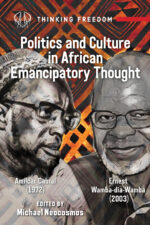
Politics and Culture in African Emancipatory Thought
USD $ 5.00 USD $ 15.00Price range: USD $ 5.00 through USD $ 15.00Select options This product has multiple variants. The options may be chosen on the product page
Politics and Culture in African Emancipatory Thought
USD $ 5.00 USD $ 15.00Price range: USD $ 5.00 through USD $ 15.00The current absence of any emancipatory vision for Africa lies at the heart of our political problems of racial capitalist and colonial oppression. Any attempt to rethink political emancipation on the African continent must be able to locate a universal conception of freedom within singular cultural experiences where people live. Irrespective of the specific manner in which such struggles for freedom were thought within different historical contexts, emancipatory politics always exhibited such a dialectic when it was based within popular traditions. Yet only some militant intellectual leaders understood the importance of this dialectic in thought.
The present volume outlines and discusses two particularly important views concerning the role and importance of popular culture in emancipatory politics in Africa. Each is the product of distinct forms of colonial capitalist exploitation: the former saw the light of day within a colonial context while the latter is directly confronted by the neocolonial state. All emancipatory politics are developed in confrontation with state power, and all begin with a process of discussion and debate whereby a collective subject begins to be formed. The formation of such a collective political subject has been fundamentally informed by popular cultures on the African continent.
The two authors whose essays are included here understood this and posit popular culture at the centre of their politics. The first, Amílcar Cabral, addresses the central role of popular culture in the independence struggle of Guinea Bissau in the 1970s; the second, Ernest Wamba-dia-Wamba, addresses the centrality of African popular culture in an emancipatory politics for the current Democratic Republic of Congo. Despite the distance in time that separates them, both Cabral and Wamba-dia-Wamba develop a dialectics at the core of their politics which activates the universals of culture in the present. It is this that makes their views of central importance to emancipatory thought today.Select options This product has multiple variants. The options may be chosen on the product page -

Politique et culture dans la pensée émancipatrice Africaine
USD $ 5.00 USD $ 9.00Price range: USD $ 5.00 through USD $ 9.00Select options This product has multiple variants. The options may be chosen on the product page
Politique et culture dans la pensée émancipatrice Africaine
USD $ 5.00 USD $ 9.00Price range: USD $ 5.00 through USD $ 9.00Au cœur de nos problèmes politiques issus d’un capitalisme racial et d’une oppression (néo)coloniale en Afrique aujourd’hui se trouve l’absence de toute vision émancipatrice véritable. Toute tentative de repenser une politique émancipatrice en Afrique doit pouvoir situer une vision universaliste de la liberté parmi les expériences culturelles singulières que les gens vivent. Les politiques émancipatrices quand elles existaient, bien que pensées dans les luttes pour la liberté ayant lieu dans des contextes historiques particuliers, mettaient toujours en vue une dialectique de ce genre quand elles étaient vraiment basées parmi les traditions populaires. Cependant, seulement une minorité de dirigeants intellectuels et militants comprenait l’importance d’une telle dialectique pour la pensée et l’action.
Ce petit livre trace le contour et discute de deux points de vue très importants sur le rôle de la culture populaire dans la politique émancipatrice en Afrique. Chacun d’entre eux émane de formes d’exploitation capitalistes coloniales distinctes : le premier a vu le jour dans un contexte colonial classique tandis que le second est directement issu d’un contexte étatique néocolonial. Toute politique émancipatrice est développée vis-à-vis le pouvoir d’état et toutes commencent avec un processus de discussion ou est formé un sujet collectif. Un tel sujet politique doit être fondamentalement informé par et conçu en relation avec les cultures populaires.
Les deux auteurs ci-inclus ont compris ce principe et mettent la culture populaire au centre de leur pensées politiques. Le premier, Amílcar Cabral se réfère au rôle principal de la culture dans la lutte contre le colonialisme au Guinée Bissau dans les années 1970 ; le second, Ernest Wamba-dia-Wamba insiste sur le rôle central de la culture populaire pour une politique émancipatrice dans la République Démocratique du Congo aujourd’hui. Malgré la distance temporelle qui les sépare, tous les deux développent au centre de leurs politiques distinctes, une pensée dialectique qui déclenche des pensées universalistes depuis la culture populaire dans le présent. C’est pour cela que leurs points de vue sont d’une importance capitale pour la pensée de la politique émancipatrice en Afrique aujourd’hui.
Select options This product has multiple variants. The options may be chosen on the product page -

White Saviorism in International Development: Theories, Practices and Lived Experiences
USD $ 5.00 USD $ 22.00Price range: USD $ 5.00 through USD $ 22.00Select options This product has multiple variants. The options may be chosen on the product page
White Saviorism in International Development: Theories, Practices and Lived Experiences
USD $ 5.00 USD $ 22.00Price range: USD $ 5.00 through USD $ 22.00Given the growing interest in understanding the meaning, manifestations, analyses and implications of racism in North/South relations, White Saviorism in International Development seeks to remedy the shortcomings of the development studies literature on the prevalence of White Saviorism in Western development initiatives in the Global South. The volume comprises theoretical chapters, testimonies, stories and lived experiences from 19 contributors from across the Global South. With sensitivity and intelligence, these practitioners and academics create a tapestry that unveils the implicit and explicit forms of White Saviorism in international development.
Select options This product has multiple variants. The options may be chosen on the product page