
-

JACKSON EN REVUELTA
Suggested Price: USD $ 10.00[Spanish edition of Jackson Rising]
Mississipi; el estado más pobre de los EEUU, el que tiene el porcen- taje más alto de población Negra y con una historia dramática de terror racial y de resistencia Negra. Este es el contexto de la resistencia presentada en este recopilatorio de escritos.
Sin desanimarse por la incertidumbre, el miedo y la an- siedad causadas por el constante deterioro del orden ne- oliberal, la respuesta de las activistas Negras de Jackson ha sido organizarse. Inspiradas por la rica historia de lucha y resistencia en Mississipi y comprometidas con la Estra- tegia Jackson-Kush, construyen instituciones arreladas en el poder comunitario, que combinan política y desarrollo económico y que satisfacen necesidades reales de la gente para crear un model social alternativo.
Las experiencias y análisis recogidas reflejan el poder creativo que se genera cuando la lucha política se basa en una visión del mundo liberada de las contradicciones y li- mitaciones inherentes al liberalismo. Esta es, en definitiva, una historia sobre un porceso decolonial y socialista, orga- nizado y dirigido por personas Negras.
-

Jackson Rising
USD $ 5.00 USD $ 20.00Price range: USD $ 5.00 through USD $ 20.00Select options This product has multiple variants. The options may be chosen on the product page
Jackson Rising
USD $ 5.00 USD $ 20.00Price range: USD $ 5.00 through USD $ 20.00Mississippi is the poorest state in the U.S. with the highest percentage of Black people and a history of vicious racial terror. The concurrent Black resistance is the backdrop and context for the drama captured in the collection of essays that is Jackson Rising: The Struggle for Economic Democracy and Black Self-Determination in Jackson, Mississippi. The long-awaited release of this seminal anthology will unveil the strategies and methods being pursued by this ongoing movement for Black community control and people-centered economic development.
“Jackson Rising is an exploration of our experiment in radical social transformation and governance that is directly challenging the imperatives of neoliberalism and the logic and structures of the capitalist system in Jackson and beyond.”
—Kali Akuno of Cooperation JacksonUndeterred by the uncertainty, anxiety and fear brought about by the steady deterioration of the neoliberal order over the last few years, the response from radical activists in Jackson, Mississippi has been to concentrate on building a radical anti-capitalist alternative from the ground up. Inspired by the rich history of struggle and resistance in Mississippi and committed to the vision of the Jackson-Kush Plan, these activists are building institutions rooted in community power that combine politics and economic development into an alternative model for change, while addressing real, immediate needs of the people.
The experiences and analyses in this compelling collection reflect the creative power that is unleashed when political struggle is grounded by a worldview freed from the inherent contradictions and limitations of reform liberalism. As such, Jackson Rising is ultimately a story about a process that is organized and controlled by Black working people who are openly declaring that their political project is committed to economic democracy and radical participatory governance.
“Jackson is rising and emerging as a model for resistance and visioning beyond the challenges of the present. It stands as the dynamic counter to economic redundancy, political marginalization, and systematic state violence.”
Select options This product has multiple variants. The options may be chosen on the product page -

Jahan Malek Khatun
USD $ 18.00Select options This product has multiple variants. The options may be chosen on the product page
Jahan Malek Khatun
USD $ 18.00This book presents the first extensive English study and translation of the poetry of Jahan Malek Khatun, a fourteenth-century Persian princess and one of the most important women in the history of Persian literature. Translator Sheema Kalbasi first introduced Jahan Malek Khatun to the general English-speaking audience in 2008 through her anthology Seven Valleys of Love: A Bilingual Anthology of Women Poets from Medieval Persia to Present Day Iran, which marked the earliest appearance of Jahan’s poetry in English translation. Her surviving divan, which contains more than a thousand ghazals along with qasidas and shorter lyric forms, offers an unparalleled window into the intellectual, emotional, and cultural world of a noblewoman who wrote with clarity, restraint, and philosophical depth during a period of profound political instability.
The volume introduces readers to the historical and literary contexts that shaped her life and work, and it situates her authorship within a long Iranian tradition in which women participated in governance, education, and artistic patronage from the ancient empires through the Islamic period. It recreates the refined yet precarious milieu of fourteenth-century Shiraz, where poetry functioned not only as an aesthetic practice but also as a medium of political expression and ethical contemplation.
Through close readings, the book explores the disciplined craft of Jahan Malek Khatun’s ghazals. Her poetry turns repeatedly to a stable constellation of images, such as wind, candle, threshold, and healer, that guide the reader through themes of longing, moral endurance, sovereignty, and judgment. Each couplet acts as a brief meditation, and the poems together form a sustained inquiry into the relationship between beauty, discipline, and survival.
The study also examines the transmission of her work, the role of women as readers and preservers of literary culture, and the challenges inherent in translating a voice shaped by both privilege and constraint. Through this analysis and the accompanying translations, Jahan Malek Khatun emerges as a major intellectual presence and an essential figure for understanding the richness and complexity of the Persian lyric tradition.
Select options This product has multiple variants. The options may be chosen on the product page -
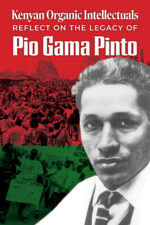
Kenyan Organic Intellectuals Reflect on the Legacy of Pio Gama Pinto
USD $ 5.00 USD $ 11.00Price range: USD $ 5.00 through USD $ 11.00Select options This product has multiple variants. The options may be chosen on the product page
Kenyan Organic Intellectuals Reflect on the Legacy of Pio Gama Pinto
USD $ 5.00 USD $ 11.00Price range: USD $ 5.00 through USD $ 11.00This booklet on Pio Gama Pinto has been produced in the tradition of ‘looking back, in order to move forward’ to not only salvage history but also to use it as a mirror to reflect on the current political, economic and social conditions in Kenya. The essays, dubbed reflections, that appear in the booklet are a product of the efforts and dedication of young women and men under the banner of the ‘Organic Intellectuals Network’ in Kenya. We use the concept of ‘organic intellecutal’ as developed by Antonio Gramsci.
Members of the Organic Intellectual Network selected the book Pio Gama Pinto: Kenya’s Unsung Martyr 1927-1965 by Shiraz Durrani (Vita Books, 2018) as a basis for discussion for celebrating and remembering the life of Pio Gama Pinto, Kenya first Martyr, a dedicated and selfless individual in the struggle for freedom in Kenya.Select options This product has multiple variants. The options may be chosen on the product page -
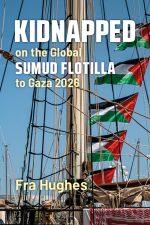
Kidnapped on the Global Sumud Flotilla to Gaza 2026
USD $ 5.00 USD $ 18.00Price range: USD $ 5.00 through USD $ 18.00Select options This product has multiple variants. The options may be chosen on the product page
Kidnapped on the Global Sumud Flotilla to Gaza 2026
USD $ 5.00 USD $ 18.00Price range: USD $ 5.00 through USD $ 18.00Kidnapped on the Global Sumud Lifeline to Gaza 2026 is the first-person account of Fra Hughes, a Belfast activist who sailed with the Global Sumud Flotilla in April 2026 on a humanitarian mission to break Israel’s siege of Gaza. Carrying food, medicine, and an unshakeable conviction that another world is possible, Hughes and his comrades were intercepted in international waters by Israeli commandos. What followed were three days of kidnapping, imprisonment, and deliberate degradation—from a metal shipping container in the Mediterranean to the high-security Ketziot Prison in the Negev desert.Told with unflinching honesty and dark Irish humour, this memoir spans three decades of activism. Hughes traces his journey from the streets of Belfast during the Troubles—where solidarity with Palestine was forged in the shadow of British occupation—through fifteen years of campaigns, convoys, and protests in Brussels, Barcelona, Cairo, and beyond. He documents the first Gaza convoys of 2010, the slow-burning solidarity movement that kept faith through years of failure, and the 2026 flotilla aboard the Alma: the preparations, the dangers, the extraordinary community of international activists who risked everything together on the water.The book weaves together multiple voices, including Tadhg Hickey’s account of a separate vessel in the same flotilla, and bears witness to atrocities—beatings, sexual assaults, mass arrests—documented in Istanbul medical centres and activist testimony. Against the normalisation of Gaza’s genocide, Hughes insists on naming what he saw.Returning to a hero’s welcome in Dublin and Belfast, his message is unambiguous: international solidarity is not charity but resistance. Kidnapped on the Global Sumud Lifeline to Gaza 2026 is a testament to sumud—steadfast endurance—and a call to action for everyone who refuses to look away.Select options This product has multiple variants. The options may be chosen on the product page -
Left Alone: On Solitude and Loneliness amid Collective Struggle
USD $ 5.00 USD $ 28.00Price range: USD $ 5.00 through USD $ 28.00Select options This product has multiple variants. The options may be chosen on the product page
Left Alone: On Solitude and Loneliness amid Collective Struggle
USD $ 5.00 USD $ 28.00Price range: USD $ 5.00 through USD $ 28.00Left Alone brings together 13 authors and 6 visual artists from Africa, Asia, Latin America, Europe and North America to individually and collectively reflect – in words and images – on an urgent psycho-political issue that has not yet been explicitly addressed through a left political lens, that is, Left Loneliness. Combining academic and more personal-political texts, including an interview, poetry, a Rap and a powerful short story, the book explores the contributors personally and/or vicariously lived experiences of Left Loneliness from a variety of genres and left political currents: Marxist, Feminist, Anti-/De-Colonial, Anti-Racist, Queer, Post-Soviet, Anti-Ableist and others. Says Feminist writer Sara Ahmed: “Loneliness might be what we are threatened with if we persist in being or doing what we are being or doing.” In this sense, Left Loneliness is neither a metaphor nor a secondary contradiction and definitely not a type of petty bourgeois “personalism”. Rather, it might be considered one of the rank and file psycho-affective elements shaping and at the same time resulting from our myriad, intersecting, unremitting, yet always fragile and potentially shattering political attempts to revolutionise our inner and outer worlds. Given its (growing?) existence in our everyday left subjectivities, the book argues that Left Loneliness and related states of solitude, isolation and alienation, among others, have both debilitating and productive (epistemic) dimensions, with very concrete psycho-somatic repercussions for Left Mental and Physical Health and hence our capacities to persist and build on “being or doing what we are being or doing”. Given that continuing and deepening our multiple ongoing struggles for liberation will depend on our constant ability to (re-)create, sustain and care for both our individual selves and the communities that we are a part of, the aim of Left Alone is to contribute to the strengthening of these personal collectivities in action in-against-and beyond capitalism, colonialism and heteropatriarchy by inviting the comrade-readers into what will ideally be a deeply stimulating and enabling personal-political engagement with the texts and images hailing from countries such as Argentina, Kenya, Kyrgyzstan, Guinea-Bissau/Portugal, Turkey/Kurdistan, Jamaica, Italy, the UK, Germany and the USA. As Lena Grace Anyuolo from Kenya puts it, “My sisters and brothers, Come, Let us gather, To lay the structures for a joyous existence.”
Select options This product has multiple variants. The options may be chosen on the product page -

LENIN: The Heritage We (Don’t) Renounce
USD $ 5.00 USD $ 37.00Price range: USD $ 5.00 through USD $ 37.00Select options This product has multiple variants. The options may be chosen on the product page
LENIN: The Heritage We (Don’t) Renounce
USD $ 5.00 USD $ 37.00Price range: USD $ 5.00 through USD $ 37.00These 100 tributes, from every continent, are like building blocks, in word and image creating not a mausoleum, but paths to a new future… It’s about thinking with and through Lenin, and the proof is here. — Isabelle Garo, author of Communism and Strategy.
The organic intellectuals in this book have woven a thread of what is to be done in the heart of fascism today, a tool for reclaiming our humanity. — Gacheke Gachihi, member of the Kenya Organic Intellectuals Network.
A left that rejects Lenin’s legacy in times of catastrophic capitalism and imperialist war can neither be truly left-wing nor have a decisive influence on world history. —Michael Brie, author of Rediscovering Lenin.
Lenin: The Heritage We (Don’t) Renounce brings together 100+ authors and visual artists from 50+ countries across the world – from Afghanistan to Zimbabwe – in order to critically commemorate the hundredth anniversary of the death of Vladimir Ilyich Ulyanov, aka Lenin, on 21 January 1924.
Combining academic, journalistic and more personal-political texts, including poetry, theatrical skits and fictional writing, the books’ contributors aim to identify and constructively engage with the living legacy of Lenin’s life and work before, during and after the October Revolution. Concretely, the 100+ texts deal with a great variety of “old [Leninist] truths that are ever new” (Lenin), both historically and in today’s times: Imperialism, the National Question and the Right to Self-Determination, the Vanguard Party, Trans Liberation, Ecological Leninism, Dialectics, Artificial Intelligence, Military Marxisms, Black Liberation, Communist Feminism as well as Revolutionary Dreaming and Organising, among many others.Also, Lenin is put into dialogue with a number of revolutionary comrades-in-arms, among them Amílcar Cabral, Mao Zedong, Julius Nyerere, José Carlos Mariátegui, Julio Antonio Mella, G.F.W. Hegel, Antonio Gramsci, Qu Quibai, Alexandra Kollontai and Rosa Luxemburg.
In sum, the book aspires to help liberate the old Ilyich from the musty, petrifying solitude of his mausoleum and to invite him back into the “real movement, which abolishes the state of things” (Marx & Engels) in the here and now, i.e. our multiple, intersecting struggles against all types of capitalist-colonial-heteropatriarchal-ableist oppression and for the rekindling and strengthening of the new Communist horizon.
While many on the contemporary Left continue to openly disavow any association with Tovarish Lenin, Lenin: The Heritage We (Don’t) Renounce affirms the opposite – that there will be no revolution without Vladimir Ilyich among our rank-and-file comrade-ancestors. Or in the words of one of the book’s authors, Himani Bannerji, “We neglect Lenin’s voice at our own peril.”
To work, everybody, to work,
the cause of the world socialist revolution
must and will triumph.
(Lenin)Select options This product has multiple variants. The options may be chosen on the product page -

Lenin150 (Samizdat): 2nd expanded edition
USD $ 5.00 USD $ 30.00Price range: USD $ 5.00 through USD $ 30.00Select options This product has multiple variants. The options may be chosen on the product page
Lenin150 (Samizdat): 2nd expanded edition
USD $ 5.00 USD $ 30.00Price range: USD $ 5.00 through USD $ 30.00Lenin150 (Samizdat) aims to contribute to the re-kindling of the communist attractor by engaging, in the spirit of critical solidarity, with Vladimir Ilyich Ulyanov in the year of his 150th anniversary. Conceived out of the former Soviet republic of Kyrgyzstan, the book brings together contributions from all continents, ranging in style from the academic to the lyrical. As such, these compelling, and in some cases absolutely urgent, appropriations of (the spectre of) Lenin aspire to be of considerable use-value for the struggles ahead.
Select options This product has multiple variants. The options may be chosen on the product page -

Les héros de la révolution africaine Tome 1
USD $ 11.50United African Diaspora est une organisation panafricaine basée à Calgary, au Canada. Nous nous engageons à construire une communauté africaine forte et autonome capable de répondre aux besoins de son peuple et de contribuer à la lutte mondiale pour réaliser le panafricanisme : la libération et l’unification de l’Afrique.
Nous avons réalisé ce livre de coloriage afin d’exposer les enfants africains à leur histoire authentique. Malcolm X nous a dit il y a plusieurs décennies que nous devrons être responsable de l’éducation de nos enfants. Il avait compris que notre peuple est intentionnellement dépossédé de sa véritable histoire. Nous ne pouvons plus compter sur les institutions pour éduquer nos enfants et nous devrons prendre sur nous la responsabilité de leur transmettre la vérité afin qu’ils puissent apporter une contribution positive à la lutte de notre peuple pour la justice et la liberté. Ce livre met en lumière quelques-unes des figures clés de la lutte pour le panafricanisme, c’est-à-dire la libération et l’unification totales de l’Afrique. Toutes les femmes et tous les hommes courageux présents dans ce livre étaient des panafricanistes. Ils ont compris que les personnes descendantes africaines du monde entier étaient confrontées aux mêmes problèmes et qu’elles devaient donc s’unir pour les surmonter. Nous espérons que ce livre inspirera la prochaine génération d’enfants africains à devenir des panafricanistes et à se joindre à la lutte pour la libération et l’unification de l’Afrique.
-

Les héros de la révolution africaine Tome 2
USD $ 11.50United African Diaspora est une organisation panafricaine basée à Calgary, au Canada. Nous nous engageons à construire une communauté africaine forte et autonome capable de répondre aux besoins de son peuple et de contribuer à la lutte mondiale pour réaliser le panafricanisme : la libération et l’unification de l’Afrique.
Nous avons réalisé ce livre de coloriage afin d’exposer les enfants africains à leur histoire authentique. Malcolm X nous a dit il y a plusieurs décennies que nous devrons être responsable de l’éducation de nos enfants. Il avait compris que notre peuple est intentionnellement dépossédé de sa véritable histoire. Nous ne pouvons plus compter sur les institutions pour éduquer nos enfants et nous devrons prendre sur nous la responsabilité de leur transmettre la vérité afin qu’ils puissent apporter une contribution positive à la lutte de notre peuple pour la justice et la liberté. Ce livre met en lumière quelques-unes des figures clés de la lutte pour le panafricanisme, c’est-à-dire la libération et l’unification totales de l’Afrique. Toutes les femmes et tous les hommes courageux présents dans ce livre étaient des panafricanistes. Ils ont compris que les personnes descendantes africaines du monde entier étaient confrontées aux mêmes problèmes et qu’elles devaient donc s’unir pour les surmonter. Nous espérons que ce livre inspirera la prochaine génération d’enfants africains à devenir des panafricanistes et à se joindre à la lutte pour la libération et l’unification de l’Afrique.
-
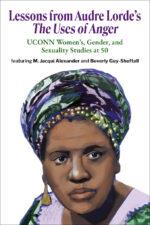
Lessons from Audre Lorde’s The Uses of Anger: UCONN Women’s, Gender, and Sexuality Studies at 50
USD $ 15.00Select options This product has multiple variants. The options may be chosen on the product page
Lessons from Audre Lorde’s The Uses of Anger: UCONN Women’s, Gender, and Sexuality Studies at 50
USD $ 15.00In recent years, we have witnessed renewed calls for women to embrace anger as a source of power. These voices have Lorde’s “The Uses of Anger”, first delivered at the University of Connecticut (UCONN), Storrs, in 1981, to thank for charting an innovative scholarly and poetic terrain that theorizes anger as much more empowering and liberating than conventional discussions of the term typically allow.
Lorde’s essay redefined anger productively, approaching it as an epistemological tool igniting a desire for self and collective liberation. The result was a remarkable critical reflection that laid the groundwork for deconstructing broader systems of oppression, particularly, heteronormativity, heteropatriarchy, institutionalized racial poverty, racial capitalism, and white privilege. Lorde’s essay moved with precision, centering Black women’s struggles in a world built around the use – and abuse – of racialized people subjected to systematic dehumanization.
In their introduction, Jane Anna Gordon, Elva Orozco Mendoza, and Sherry Zane reflect on the inheritance, lessons, and responsibilities that Women’s, Gender, and Sexuality Studies must grapple with if it is to deepen and fulfill its radical mission.
Guided by the imperative to look backward to understand the present and forge a future, the book closes with a sankofic interview with M. Jacqui Alexander and Beverly Guy-Sheftall, conducted by Briona Simone Jones.
Select options This product has multiple variants. The options may be chosen on the product page -

Liberalism and its discontents: Social movements in West Africa
USD $ 25.99The engaging and wide-ranging discussions published here explore contemporary political realities in Africa through a ‘social movement’ lens.
Detailing the nuances of social movement politics in 12 West African countries during the 2010-2013 period, they present a chronicle of the socio-political struggles that have taken place in the region. In so doing, this volume answers key questions related to these movements. What logic drives them? What forms do they take? What has been their political impact? Can we speak of a resurgence of social movements? If so, are these a response to the crisis of ‘representative democracy’? Did they give rise to new forms of expression and democratic participation? What challenges do they bring?
Discontent vis-à-vis liberalism in its political and economic dimensions seems to be the trigger of the numerous popular uprisings and protests that occur in the region. In spite of their ambiguities and limitations, these struggles currently seek to remove a double disconnect: that between citizens and the ‘representatives’ and that between the economy and society, between what capital wants and what the people aspire to.
Ndongo Samba Sylla, the editor of this volume, is a Senegalese economist, programme and research manager at the West Africa Office of the Rosa Luxemburg Foundation. Author of The Fair Trade Scandal. Marketing poverty to benefit the Rich (translated from French by Pluto Press 2014), he is the editor of “Rethinking Development” (Rosa Luxemburg Foundation 2014). His recent research work deals with the history of the word ‘democracy’.
-
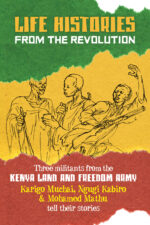
Life Histories from the Revolution: Three militants from the Kenya Land and Freedom Army tell their stories
USD $ 5.00 USD $ 18.00Price range: USD $ 5.00 through USD $ 18.00Select options This product has multiple variants. The options may be chosen on the product page
Life Histories from the Revolution: Three militants from the Kenya Land and Freedom Army tell their stories
USD $ 5.00 USD $ 18.00Price range: USD $ 5.00 through USD $ 18.00In the early 1970s, Donald Barnett — who worked with Karari Njama to produce Mau Mau From Within (published by Daraja Press) — also worked with three militants of the Kenya Land and Freedom Army to enable them to tell the story of their experience in fighting for freedom and against British colonialism. These rarely acknowledged militants were Karigo Muchai, Ngugi Kabiro and Mohamed Mathu. Their stories were published in 1973 by LSM Information Center (Richmond, British Columbia, Canada) as part of a series entitled Life Histories of the Revolution, as The Hardcore: The Story of Karigo Muchai; The Man in the Middle by Ngugi Kabiro; and The Urban Guerrilla by Mohamed Mathu.
As part of its mission of Nurturing reflection, sheltering hope and inspiring audacity, Daraja Press is please to republish the three booklets as a book that will help a new generation of activists — Kenyan and international — reflect on a history that might inspire audacious struggles to continue the struggle for freedom that was the goal of the Kenya Land and Freedom Army.
Donald Barnett’s introduction to each booklet contained the following text:
The life histories in this series have been recorded and prepared as historical documents from the revolutionary struggles of our time. The techniques and methods employed at each stage of the process, from initial contact to final editing, have therefore been chosen or fashioned with the purpose of guaranteeing the authenticity and integrity of the life history concerned. These stories, then, to the best of our ability to make them so, constitute a body of data and testimony as revealed by a few of those history-makers normally condemned to silence while others speak on their behalf.Select options This product has multiple variants. The options may be chosen on the product page -
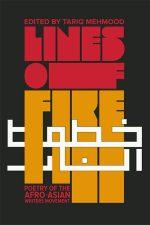
Lines of Fire (2nd Edition)
USD $ 60.00Lines of Fire: Recovering the Lost Arsenal of Anti-Colonial Poetry
Born in Tashkent , forged in clandestine presses, and echoing in today’s streets—this is the recovered front line of a global poetic resistance.
In 1958, at the Afro-Asian Writers’ Conference in Tashkent, a 90-year-old W.E.B. Du Bois stood before the decolonizing world and declared: “I am an American—I am an African.” It was a moment of radical, transnational self-definition.
From that conference emerged a literary movement and its journal, The Call—a direct line for poets from Algiers to Hanoi, Cairo to Beijing, to speak to one another, bypassing the languages and borders of their colonial masters. Though the movement later fractured under Cold War pressures, its two wings—The Call and the Soviet-backed Lotus—remained united in their stand against Zionism, racism, and empire.
Their poetry, often crafted under threat of torture, exile, and surveillance, became a clandestine weapon. Some of it was passed hand to hand, read aloud in underground meetings, and chanted at mass gatherings from Delhi to Ramallah, Cape Town to Gaza.
Now, for the first time, this vital corpus is restored. Lines of Fire, edited by Tariq Mehmood—former leading defendant in the landmark Bradford 12 case and now professor at the American University of Beirut—gathers these living weapons into a single, incendiary anthology. In an age of resurgent fascism and genocide, these voices speak with renewed, unyielding force: their anguish, rage, love, and hope are as urgent now as the day they were penned.
Why This Book Is Essential:
- A Lost Canon, Recovered: Features seminal, often inaccessible work by giants like Mahmoud Darwish, Faiz Ahmed Faiz, Leopold Senghor, Adunis, , Ousmane Sembène, and dozens more from across Africa and Asia.
- Drawn from Rare Sources: Poems curated from scarce issues of The Call and Lotus, long out of print and hidden in archives.
- A Groundbreaking Scholarly Frame: Includes a major introduction tracing the movement’s history, its surveillance by the CIA, the impact of the Sino-Soviet split, and a radical re-examination of solidarity.
- Built to Last & Teach: Published in archival-quality hardcover for libraries, scholars, and lifelong activists. An indispensable text for courses in Decolonial Studies, Global South Literatures, Cold War History, and Postcolonial Poetry.
A Call to Arms for a New Generation.
Edited by Tariq Mehmood, this collection includes poems by:
Salah Abdel Sabour (1931-1981, Ali Ahmad Said Esber, also known as Adunis (1930- ), Mulk Raj Anand (1905-2004), Anar Rasul oghlu Rzayef (1938- ), Nobuo Ayukawa (1920-1986), Fadhil al-Azzawi (1940- ), Abd Al-Wahhab al-Bayati (1926-1999), Mahim Bora (1917- ), Bernard Binlin Dadié (1916- ), Mahmoud Darwish (1942-2008), Osamu Dazai (1909-1948), Mário Pinto de Andrade (1928-1990), D.B. Dhanapala (1905-1971), Mohammed Dib (1920-2003), Gevorg Emin (1918-1998), Sengiin Erdene (1929-2000), Faiz Ahmed Faiz (1911-1984), Rasul Gamzatov (1923-2003), Daniil Granin (1919- ), Colette Anna Gregoire, better known as Anna Greki (1931-1966), Malek Haddad (1927-1978), Pham Ba Ngoan, better known by his pen name Thanh Hai (1930-1980), Buland al-Haidari (1926-1996), Suheil Idris (1925-2008), Yusuf Idris (1927-1991), Fazil Iskander (1929- ), Zulfiya Isroilova (1915-1996), Ali Sardar Jafri (1913-2000), Ghassan Kanafani (1936-1972), Edward al-Kharrat (1926- 2015), Hajime Kijima (1928-2004), Mazisi Kunene (1930-2006), Alex La Guma (1925-1985), U Gtun Kyi, better known by his pen name Minn Latt Yekhaun (1925-1985), Abdul Hayee better known by his pen name Sahir Lundhianvi (1921-1980), Zaki Naguib Mahmoud (1905-1993), Nazik Al-Malaika (1923-2007), Mouloud Mammeri (1917-1989), Yuri Nagibin (1920-1994), Sergey Narovchatov (1919-1981), Dashdorjiin Natsagdorj (1906-1937), Hiroshi Noma (1915-1991), Gabriel jibaba Okara (1921- ), Amrita Pritam (1919-2005), Jean-Joseph Rabearivelo (1901-1937), Richard Rive (1931-1989), Rady Saddouk (1938-2010), Badr Shakir al-Sayyab (1926-1964), Ousmane Sembene (1923- 2007), Leopold Sedar Senghor (1906-2001), Yusuf al-Sibai (1917-1978), Fadwa Tuqan (1917-2003), Sonomyn Udval (1921-1991), Ramses Younan (1913-1966), and Tawfiq Ziad (1929-1994).
Listen to our conversation with Tariq Mehmood here:
#AfroAsianWritersMovement #Lotusjournal #TheCalljournal #NonAlignedMovement #BandungConference #Tashkent1958 #ColdWarculturalhistory #SinoSovietsplit #antiimperialism #anticolonialpoetry #resistanceliterature #resistancepoetry #revolutionarysolidarity #antiracism #antiZionism #settlercolonialism #racialviolence #genocide #GlobalSouthliterature #Africanpoetry #Asianpoetry #Arabpoetry #Palestinianliterature #SouthAsianliterature #AfricanLiterature #Arabpoets #Africanwriters #AfroAsiansolidarity #WEBDuBois #politicalpoetry #20thcenturypoetry
-
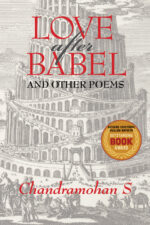
Love after Babel and other poems
USD $ 5.00 USD $ 15.30Price range: USD $ 5.00 through USD $ 15.30Select options This product has multiple variants. The options may be chosen on the product page
Love after Babel and other poems
USD $ 5.00 USD $ 15.30Price range: USD $ 5.00 through USD $ 15.30Love after Babel is a collection of poems that deal with themes such as caste, the resistance of Dalit people, Dalit literature, islamophobia and other political themes, with almost one hundred poems divided into three sections (Call Me Ishmail Tonight; Name Me a Word; Love after Babel). The introduction is by Suraj Yengde (award-winning scholar and activist from India, author of the bestseller Caste Matters, inaugural postdoctoral fellow at the Initiative for Institutional Anti-racism and Accountability, Shorenstein Center on Media, Politics and Public Policy at the Harvard Kennedy School).
Chandramohan’s poems are dialogues of the ‘ self’ with the ‘other’. He brings to life a world that subverts myths, literary canons, gender and caste stereotypes by pooling in sparklingly new metaphors with sensitivity and care. He draws his images from contemporary incidents as well as myths and legends of yore, and delves deep into the politicized realm, thus ‘rupturing the hymen of demarcations’ of identity, resistance, repression and love.
Select options This product has multiple variants. The options may be chosen on the product page -

Love Pandemic: Poems
USD $ 5.99 USD $ 10.00Price range: USD $ 5.99 through USD $ 10.00Select options This product has multiple variants. The options may be chosen on the product page
Love Pandemic: Poems
USD $ 5.99 USD $ 10.00Price range: USD $ 5.99 through USD $ 10.00The poems here were written during the first wave of the COVID-19 pandemic. Most were circulated through What’s App voice notes, an intimate way of keeping distance while reaching out to touch. The poems speak to experiences and occurrences during the first wave in different parts of the world and the pressing need to make love as global and infectious as the novel corona virus. This collection is a prelude to “29 leads to love”, a collection that explores more fully the grand notion of love which began coming to the fore in the beginning of the COVID-19 pandemic, and has largely re-submerged.
Select options This product has multiple variants. The options may be chosen on the product page -
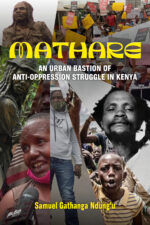
MATHARE: An Urban Bastion of Anti-Oppression Struggle in Kenya.
USD $ 5.00 USD $ 15.00Price range: USD $ 5.00 through USD $ 15.00Select options This product has multiple variants. The options may be chosen on the product page
MATHARE: An Urban Bastion of Anti-Oppression Struggle in Kenya.
USD $ 5.00 USD $ 15.00Price range: USD $ 5.00 through USD $ 15.00History is written by the victors of any war. But what happens when the victors forget to write down their history or omit the cog of the struggle? This is the untold story of Mathare Slum that has never been told to the world: of the role it played in anti-colonial struggle and the planning ground for the Mau Mau struggle which culminated with the fall of the British Colonial Empire in Kenya in the midnight of December 12th 1963. Mathare has also played a critical role in anti-oppression struggle against the four regimes that we’ve had since independence and continues to do so up to date. This history has not been documented and has only been done piecemeal. This has overtime eroded the rich history of Mathare and led to a distorted history of once a planning ground and a bulwark of Kenya Land and Freedom Army (KFLA). The current generation are not cognizant with the critical role Mathare played in the independence of our country. Presently, Mathare is majorly known for all the negative reasons and its proximity to Mathari Mental Hospital has contorted its image to the outside world. My story tries to re-tell the history of Mathare from an informed insider perspective by threading the struggles from the colonial era to the present day and the role it has played in agitating for social justice. My story brings to view the past history of this informal settlement in the heart of Nairobi, the present struggle and the promising future through community organizing.
Select options This product has multiple variants. The options may be chosen on the product page -

Mau Mau From Within: The Story of the Kenya Land and Freedom Army
USD $ 12.00 USD $ 30.00Price range: USD $ 12.00 through USD $ 30.00Select options This product has multiple variants. The options may be chosen on the product page
Mau Mau From Within: The Story of the Kenya Land and Freedom Army
USD $ 12.00 USD $ 30.00Price range: USD $ 12.00 through USD $ 30.00The inside story of the struggles of the Kenya Land and Freedom Army, referred to by British colonialism as the ‘Mau Mau rebellion’, is little known today. The autobiographical material written by Karari Njama (a senior leader in the Mau Mau hierarchy) and compiled by Donald L. Barnett was first published by Monthly Review Press in 1966 as Mau Mau From Within: An Analysis of Kenya’s Peasant Revolt. It was reprinted in 1970; it has remained out of print for many years. As the late Basil Davidson put it in his review of the first edition: “Njama writes of the forest leaders’ efforts to overcome dissension, to evolve effective tactics, to keep discipline, mete out justice … and to teach men how to survive in those merciless forests. His narrative is crowded with excitement. Those who know much of Africa and those who know little will alike find it compulsive reading. Some 10,000 Africans died fighting in those years . Here, in the harsh detail of everyday experience, are the reasons why.”
The book is an extraordinary story of courage, passion, heroism, combined with recounting of colonial terror, brutality and betrayal. It is a story of how the very idea of being ‘Kenyan’ was intimately linked to the idea of freedom, a connection that was destroyed not only by the firepower of the British, but also by those who collaborated and established themselves as the beneficiaries of neocolonial rule. Disconnecting notions of freedom from identity left only a caricature that rapidly descended into tribalism and ethnicity.
This momentous story of the struggle for freedom described here is relevant not only for a new generation of Kenyans but also for all those engaged in emancipatory struggles internationally. For so long as the experiences arising from the struggles described in this book are perceived as merely ‘African’ or ‘Kenyan’, it is not possible to fully grasp the contributions they have made to the struggle for a universalist humanity.
What is recounted in this publication is more than an ‘analysis of a peasant revolt’. It is, above all, a history of the Kenya Land and Freedom Army. As Ngūgī wa Thiong’o points out in his Preface to this new edition, ‘we don’t have to use the vocabulary of the colonial to describe our struggles.’ We were tempted to rename the book ‘Kenya Land and Freedom Army from Within.’ But because the original title has wide recognition, and one of the characteristics of movements of the oppressed is to appropriate derogatory terms
Select options This product has multiple variants. The options may be chosen on the product page -
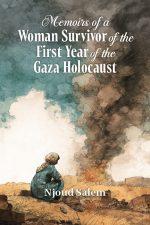
Memoirs of a Woman Survivor of the First Year of the Gaza Holocaust
USD $ 0.01 USD $ 15.00Price range: USD $ 0.01 through USD $ 15.00Select options This product has multiple variants. The options may be chosen on the product page
Memoirs of a Woman Survivor of the First Year of the Gaza Holocaust
USD $ 0.01 USD $ 15.00Price range: USD $ 0.01 through USD $ 15.00Stop press
We have just learned that this book has won a prize from the Eyelands Book Awards https://eyelandsawards.com/2025/12/30/2025-prize-grand-prize-winners/
Congratulatons Njoud Salem!!
These memoirs bear witness to the harrowing reality of survival during the devastating war on Gaza. Through vivid personal narratives, they capture the daily struggle for existence—the scarcity of food and water, the constant threat of bombardment, and the profound psychological trauma. Yet, they delve far deeper than mere physical survival, exploring the profound wounds of displacement: the heartbreak of leaving behind a home, a street, a neighborhood, and the irreplaceable fragments of a life forever shattered.
The pages reveal families huddled in schools-turned-shelters, sharing morsels of bread and whispering prayers for a safe dawn. This collection is both a testament and an act of resistance. It refuses to let the world reduce human beings to mere statistics, insisting instead on honoring every story, every face, and every name. It bears witness not only to the destruction but also to the unbroken spirit of a people determined to live, dream, and rise again.
While rooted in immense suffering, these narratives are also profound meditations on dignity, love, and an unshakable will to persevere. At once personal and collective, they amplify the voices of a generation too often silenced by conflict, posing urgent questions about justice, memory, and the future. They ensure these essential stories are never buried beneath rubble or lost to cold statistics.
In the midst of fire and fear, these words declare: “We are still here. We remember.” This act of testimony—to feel, to survive, and to hold onto love when the world offers none—becomes the most honest act of living. Through these pages, the reader is invited not only into a world of unimaginable hardship but also into the profound depths of human endurance, the richness of Arab culture, and the unwavering faith that guides a people forward.
Select options This product has multiple variants. The options may be chosen on the product page -

Mental Health and Human Rights in Palestine
From: USD $ 5.00Select options This product has multiple variants. The options may be chosen on the product page
Mental Health and Human Rights in Palestine
From: USD $ 5.00This is a biography of the life of Dr Eyad El Sarraj, Gaza’s pioneering psychiatrist and founder of the Gaza Community Mental Healthcare Programme, written by his son, Wasseem El Sarraj. It is also a history of Palestine with a focus on Gaza. Eyad’s life was intimately intertwined with Palestine’s struggles so his choices and reactions reflected many of the major historical moments of the last 70 years. The book is an effort to provide a perspective on how the forces around him impacted his life, and how he took control of what he could achieve in an intractable situation. The book is interspersed with Wasseem’s own reflections as a mixed-race Palestinian, and as someone who has lived under occupation in Gaza.
Select options This product has multiple variants. The options may be chosen on the product page