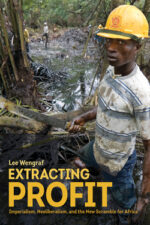
“Lee Wengraf’s Extracting Profit – Imperialism, Neoliberalism and The New Scramble for Africa is at once historical and contemporary. It unpacks ongoing resource crimes by analytically exposing its historical roots and pointing to ways by which the oppressed can cut off the bonds that lock in their subjugation.” —Nnimmo Bassey, Director, Health of Mother Earth Foundation
“Lee Wengraf provides an important reminder that Africa’s position within the world economy is heavily determined by its unequal insertion into the global capitalist system and ongoing manifestations of imperialism.” –James Chamberlain, Sheffield Political Economy Research Institute
“Lee Wengraf’s Extracting Profit provides a breathtakingly detailed account and analysis of some of the major socioeconomic ills that have been plaguing Africa for centuries. Amongst the host of issues she tackles, arguably the most consequential are mass poverty in African societies, their indefensible economic inequalities and the steady plundering of the continent’s resources, starting from the slave-trade era up till the present-day.” –Remi Adekoya, Review of African Political Economy
“Extracting Profit offers several narratives of grassroots organizing and protest, pointing to the potential for resistance to global capital and fundamental change, in Africa and beyond.” –Developing Economics
“Evidently, this book is well-researched and it contributes to the expansion of the frontiers of Marxist scholarship on Africa’s development dilemma within the global capitalist order. This book lends credence to the pioneering works of such notable radical scholars as Andre Gunder Frank, Walter Rodney, and Samir Amin among several others. It should be read by students and teachers of political economy, development studies, Marxism and philosophy.” –Marx & Philosophy Review of Books
“Extracting Profit provides a great arch of scutiny from the earliest carve-up of the African continent, through colonialism, war, imperialism, to the recent neoliberal takeover. The book demonstrates the continued importance of Marxist analysis on the continent, asserting the centrality of class analysis and a project of revolutionary change. Wengraf provides us with a major contribution, that highlights contemporary developments and the role of China on the African continent that has perplexed and baffled scholars. An indispensable volume.” —Leo Zeilig, author of Frantz Fanon: The Militant Philosopher of Third World Revolution
“The history of resource frontiers everywhere is always one of lethal violence, militarism, empire amidst the forcing house of capital accumulation. Lee Wengraf in Extracting Profit powerfully reveals the contours of Africa’s 21st century version of this history. The scramble for resources, markets, and investments have congealed into a frightening militarization across the continent, creating and fueling the conditions for further political instability. Wengraf documents how expanded American, but also Chinese, presence coupled with the War on Terror, point to both the enduring rivalry among global superpowers across the continent and a perfect storm of resource exploitation. Wengraf offers up a magisterial synopsis of the challenges confronting contemporary Africa.” —Michael Watts, University of California, Berkeley
“One of the most well-known stylized facts of Africa’s recent growth experience is that it has been inequality-inducing in ways that previous growth spurts were not. Lee Wengraf, in her new book Extracting Profit , expertly utilises the machinery of Marxian class analysis in making sense of this stylized fact. Along the way we learn much about Africa’s historical relationship with imperialism and its contemporary manifestations. This book should be required reading for all those who care about Africa and its future.” —Grieve Chelwa, Contributing Editor, Africa Is A Country
“In recent years countries in the African continent have experienced an economic boom—but not all have benefited equally. Extracting Profit is a brilliant and timely analysis that explodes the myth of “Africa Rising,” showing how neoliberal reforms have made the rich richer, while leaving tens of millions of poor and working class people behind. Lee Wengraf tells this story within the context of an imperial rivalry between the United States and China, two global superpowers that have expanded their economic and military presence across the continent. Extracting Profit is incisive, powerful, and necessary: If you read one book about the modern scramble for Africa, and what it means for all of us, make it this one.” —Anand Gopal, author, No Good Men Among the Living: America, the Taliban, and the War Through Afghan Eyes
“Thorough and thoughtful, Wengraf’s book has a radical depth that underscores its significance. It’s definitely a must-read for anyone who cherishes an advanced knowledge on the exploitation of Africa as well as the politics that undermines Africa’s class freedom.” —Kunle Wizeman Ajayi, Convener, Youths Against Austerity and General Secretary of the United Action for Democracy, Nigeria
“Extracting Profit is a very important book for understanding why the immense majority of the African population remain pauperised, despite impressive growth rates of mineral-rich countries on the continent. It continues the project of Walter Rodney’s How Europe Underdeveloped Africa. And in several ways, it also goes beyond it, capturing the changing dynamics of global capitalism 45 years after Rodney’s magnus opus.
In this book, Lee Wengraf debunks the myth of “Africa Rising” and the supposed expansion of an entrepreneurial middle-class, revealing “reforms” imposed by international financial institutions as mechanisms for fostering imperialism in an era of sharpening contradictions of the global capitalist economy. The adverse social, economic, political and environmental impact of these are elaborated on as a systemic whole, through the book’s examination of the sinews of capital’s expansion in the region: the extractive industries.
But, Wengraf does not stop at interrogating the underdevelopment of Africa. Her book identifies a major reason for the failures of national liberation projects: while the working masses were mobilised to fight against colonial domination, the leadership of these movements lay in the hands of aspiring capitalists, and intellectuals. The urgency of the need for a strategy for workers’ power internationally, she stresses correctly, cannot be overemphasized.
Reading Extracting Profit would be exceedingly beneficial for any change-seeking activist in the labour movement within and beyond Africa.” —Baba Aye, editor, Socialist Worker (Nigeria)





Kate McDonnell
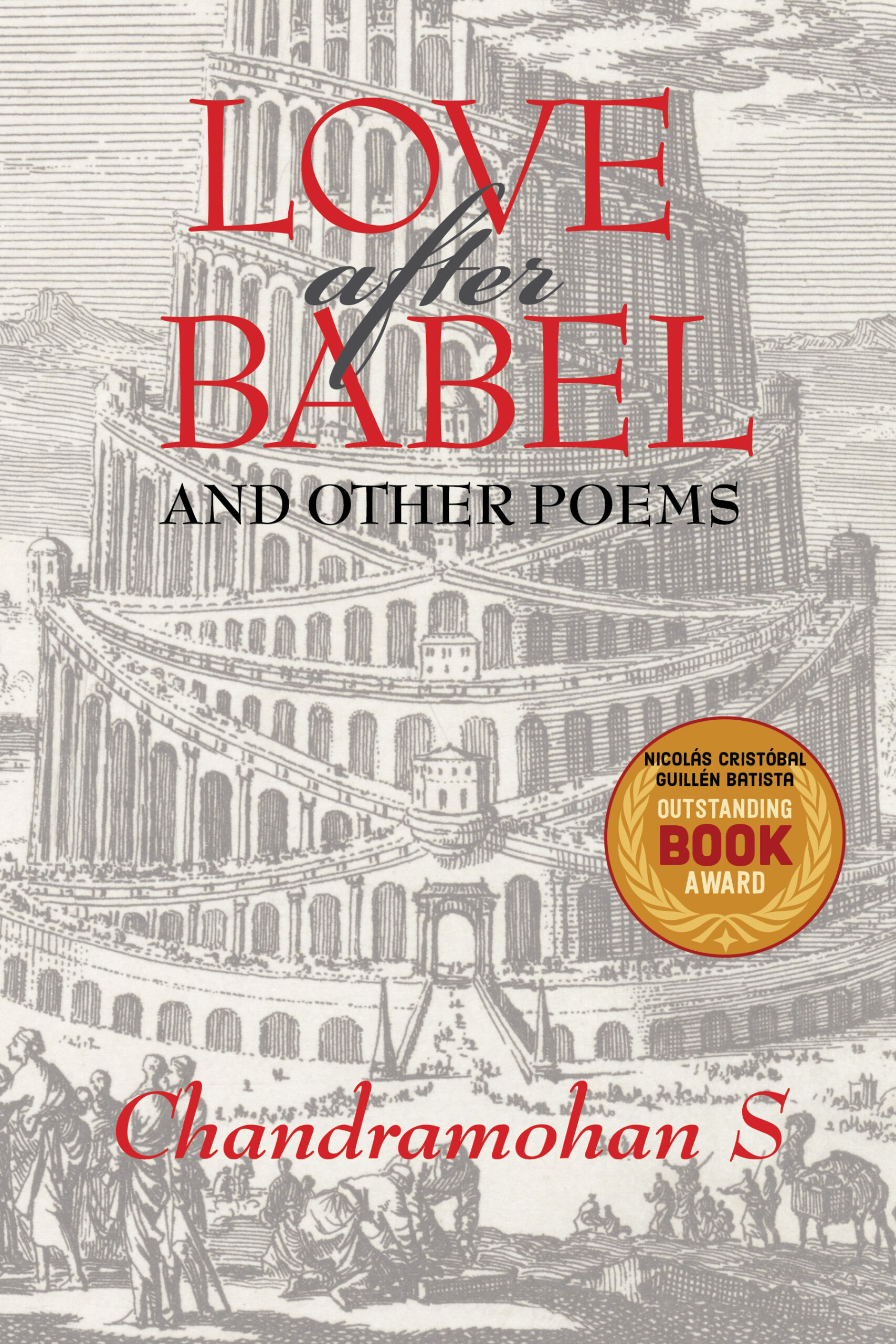
Chandramohan’s poetry is an extraordinary combination of a strong individual voice, crying out against a deeply felt sense of personal abuse, and a sophisticated understanding of the long history and mythology of such abuse, in India but also in the
world at large. Mythological figures like Shambuka and Urmila illluminate, and are illuminated by, modern atrocities. The poems are by turns shocking, moving, and exhilarating.
– Wendy Doniger, Mircea Eliade Distinguished Service Professor Emerita of the History of Religions; also in the Department of South Asian Languages and Civilizations, the Committee on Social Thought
Kate McDonnell
[Chandramohan S]’s poems reflect the socio-political struggles of the marginalized, the working class and the nomadic outcasts of the world who are victimized and then forgotten as nations clash and wage relentless war. His work has been profiled in New Asia Writing and Mascara Literary Review. Poet Chandramohan S defines a Dalit as “someone who is politically disenfranchised, culturally interiorised and economically impoverished,” but he also firmly believes that “being a Dalit poet endows one with a tremendous potential to turn one’s own experiences and unique perspectives on history into poetry. From Edex Live