
-
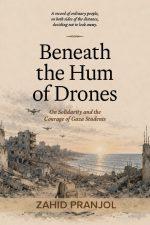
Beneath the Hum of Drones
USD $ 6.99 USD $ 25Price range: USD $ 6.99 through USD $ 25Select options This product has multiple variants. The options may be chosen on the product page
Beneath the Hum of Drones
USD $ 6.99 USD $ 25Price range: USD $ 6.99 through USD $ 25Royalties from this book go to the students in Gaza.
The Gazan students who refused to stop learning
Beneath the Hum of Drones: On Solidarity and the Courage of Gaza’s Students, a new book by Professor Zahid Pranjol, tells the story of how students in Gaza continued to learn through war, displacement and siege, and how an extraordinary network of volunteers from the UK came together to support them, drawing on first-hand testimony from Gaza, stories from inside the atrocities and personal reflection.
The new book follows students who continued to study, write, paint and organise while their universities and homes were being destroyed around them. Alongside their stories, it traces a grassroots movement that connected academics, teachers and communities across the UK with students in Gaza, providing teaching, financial support and opportunities for the students’ artwork and poetry to be seen and heard outside of the walls of Gaza and for their voices to be carried to the world. This book is about the author’s journey with a community of students in Gaza built together, across an impossible distance and in the middle of a genocide.
“This is not a book I set out to write. It began as a question asked over coffee by a scholarship student from Gaza who wanted to know what the two of us, in a university in the south of England, could actually do in the face of annihilation of the people of Palestine.” Professor Pranjol writes.
What followed was an extraordinary international effort. University academics, more than 70 volunteer English teachers, artists, healthcare professionals and hundreds of ordinary people came together, united by the belief that they could not stand by while Gaza’s students were denied their education. Together, they built a network of solidarity with members centred around the University of Sussex and communities across East Sussex, UK. Among those involved were English teachers, doctors, artists and university lecturers from across the UK who volunteered hundreds of hours to teach students in Gaza remotely.
Since early 2024, the initiative has grown into a wide-ranging programme of educational, creative and psychological support for students in Gaza. Its work includes English language teaching delivered by volunteer teachers, art therapy for children, specialist psycho-trauma therapy delivered remotely through Zoom and WhatsApp, and medical and psycho-trauma training for healthcare professionals working in Gaza. The wider initiative documented in the book has supported an estimated 4,000 to 5,000 students through educational programmes, financial assistance and wellbeing support.
The initiative has been shaped by listening to students in Gaza themselves to understand what their needs are. Organisers asked them to identify their most urgent priorities, time and again, they told of their immediate need for access to emergency medical training and mental health training, alongside financial support.
This new book tells their story. Rather than focusing on governments or institutions, Beneath the Hum of Drones centres the experiences of Gaza’s students themselves. Through essays, paintings, poems and personal testimony, the book presents young people determined to continue learning despite extraordinary circumstances.
Professor Pranjol says the students of Gaza became his teachers.
“I was not the teacher in this story. I was the student. The young people of Gaza, studying under bombardment, writing from the side of the road, painting the sea from rooftops beneath the drones, were the ones with something to teach, and this book is mostly a record of what they taught me.”
Since October 2023, universities across Gaza have been devastated, every school has been damaged or destroyed, and hundreds of thousands of students have seen their education disrupted. Palestinian academics have described the destruction of the higher education system as ‘scholasticide’, the systematic destruction of educational institutions and knowledge itself.
While much has been written about the destruction of Gaza, few books tell the story through the eyes of its students, or document the international community that emerged to support them. Beneath the Hum of Drones documents not only that destruction, but also the determination of students and educators to continue learning, and the communities around the world that chose to stand beside them.
“I have tried to write this book without looking away, and without reducing anyone person to a number or a symbol. The people in these chapters have names, and tastes, and ambitions. They argue and they make jokes. They are still hoping. They are, against years of siege and horror, still here.” Professor Pranjol remarks.
All author royalties from Beneath the Hum of Drones will go directly to supporting students in Gaza. By purchasing the book, readers are helping to fund educational opportunities and ensure that young people can continue learning despite the ongoing destruction of Gaza’s education system.
Professor Zahid Pranjol is Professor of Biomedical Sciences at the University of Sussex and a leading voice in inclusive science education and curriculum reform. He is also the co-author, with Dr Jacob Norris, of We Are Still Here, the 2025 anthology bringing together the voices of 58 university students writing from Gaza during the destruction of their universities and homes. Beneath the Hum of Drones tells the story behind that project and the wider movement it inspired.
Endorsements
“An extraordinary and inspiring story of the effort by global solidarity activists to keep Gaza’s students learning against near-impossible odds.” — Norman Finkelstein and Deborah Maccoby
“Testifies to the resilience of Gaza’s younger generation, whose determination should humble us all.” — Ilan Pappé
“A fellowship of endeavour proving that the truest bonds of humanity acknowledge neither distance nor siege.” — Vusi Madonsela
“An inspiring story of what happens when individuals decide to make a difference.” — Caroline Lucas
“Heart wrenching and inspiring, a model of what humanity can do in the rubble of the inhuman.” — Lila Abu-Lughod
“A remarkable testament to the enduring power of education, compassion, and courage.” — Professor Dr. Omar Kh. Melad
“In the face of scholasticide, Palestinian students give us hope.” — Neve Gordon
Closing
The genocide continues. Yet so does the extraordinary courage of Gaza’s students, and the growing network of solidarity that stands beside them. They are still teaching. They are still writing. They are still painting. They are still dreaming of a future. They are still here.
“The people of Gaza were never waiting to be saved. They were already doing the work. They asked only that the rest of us not leave them to do it alone.”
Select options This product has multiple variants. The options may be chosen on the product page