
-

Politique et culture dans la pensée émancipatrice Africaine
USD $ 5 USD $ 9Price range: USD $ 5 through USD $ 9Select options This product has multiple variants. The options may be chosen on the product page
Politique et culture dans la pensée émancipatrice Africaine
USD $ 5 USD $ 9Price range: USD $ 5 through USD $ 9Au cœur de nos problèmes politiques issus d’un capitalisme racial et d’une oppression (néo)coloniale en Afrique aujourd’hui se trouve l’absence de toute vision émancipatrice véritable. Toute tentative de repenser une politique émancipatrice en Afrique doit pouvoir situer une vision universaliste de la liberté parmi les expériences culturelles singulières que les gens vivent. Les politiques émancipatrices quand elles existaient, bien que pensées dans les luttes pour la liberté ayant lieu dans des contextes historiques particuliers, mettaient toujours en vue une dialectique de ce genre quand elles étaient vraiment basées parmi les traditions populaires. Cependant, seulement une minorité de dirigeants intellectuels et militants comprenait l’importance d’une telle dialectique pour la pensée et l’action.
Ce petit livre trace le contour et discute de deux points de vue très importants sur le rôle de la culture populaire dans la politique émancipatrice en Afrique. Chacun d’entre eux émane de formes d’exploitation capitalistes coloniales distinctes : le premier a vu le jour dans un contexte colonial classique tandis que le second est directement issu d’un contexte étatique néocolonial. Toute politique émancipatrice est développée vis-à-vis le pouvoir d’état et toutes commencent avec un processus de discussion ou est formé un sujet collectif. Un tel sujet politique doit être fondamentalement informé par et conçu en relation avec les cultures populaires.
Les deux auteurs ci-inclus ont compris ce principe et mettent la culture populaire au centre de leur pensées politiques. Le premier, Amílcar Cabral se réfère au rôle principal de la culture dans la lutte contre le colonialisme au Guinée Bissau dans les années 1970 ; le second, Ernest Wamba-dia-Wamba insiste sur le rôle central de la culture populaire pour une politique émancipatrice dans la République Démocratique du Congo aujourd’hui. Malgré la distance temporelle qui les sépare, tous les deux développent au centre de leurs politiques distinctes, une pensée dialectique qui déclenche des pensées universalistes depuis la culture populaire dans le présent. C’est pour cela que leurs points de vue sont d’une importance capitale pour la pensée de la politique émancipatrice en Afrique aujourd’hui.
Select options This product has multiple variants. The options may be chosen on the product page -

Domains of politics and modes of rule/ Sphères politiques et contrôle étatique (en/fr)
USD $ 5 USD $ 10Price range: USD $ 5 through USD $ 10Select options This product has multiple variants. The options may be chosen on the product page
Domains of politics and modes of rule/ Sphères politiques et contrôle étatique (en/fr)
USD $ 5 USD $ 10Price range: USD $ 5 through USD $ 10This work consists of a brief attempt to orient the study of the neocolonial state in Africa through an assessment of the manner in which it rules its people. It is argued that the state produces different modes of rule by deploying different politics over different parts of the population. In this manner, it can combine a genuinely democratic rule in the image of the West over some while subjecting the majority to colonial forms of domination. Imported political subjectivities from the West and its obsession with human rights discourse are reserved largely for a sphere of civil society in which the right to have rights is conferred upon citizens. In the domains of uncivil society and traditional society, the right to rights is not observed by the state so that different subjectivities, regularly including violence, govern the manner political problems and solutions are addressed both by the state and by people. In consequence, distinct political subjectivities prevail in the conceptualization of popular resistance in all three domains, and it becomes difficult to rally such different concerns and conceptions within an overall anti-neocolonial struggle.
Il s’agit d’une brève tentative d’orienter l’étude de l’État néocolonial en Afrique à travers une évaluation de la manière dont il gouverne son peuple. On soutient que l’État produit différents modes de contrôle étatique en déployant différentes politiques sur différentes parties de la population. De cette manière, il peut combiner une règle véritablement démocratique à l’image de l’Occident sur certains tout en soumettant la majorité à des formes coloniales de domination. Les subjectivités politiques importées de l’Occident et son obsession du discours sur les droits de l’homme sont largement réservées à une sphère de la société civile dans laquelle le droit d’avoir des droits est conféré aux citoyens. Dans les domaines de la société incivile et de la société « traditionnelle », le droit aux droits n’est pas respecté par l’État, de sorte que différentes subjectivités, y compris régulièrement la violence, régissent la manière dont les problèmes politiques et leurs solutions sont abordés à la fois par l’État et par le peuple. En conséquence, des subjectivités politiques distinctes prévalent dans la conceptualisation de la résistance populaire dans chacun des trois domaines, et il devient difficile de rallier des préoccupations et des conceptions aussi différentes au sein d’une lutte anticoloniale nationSelect options This product has multiple variants. The options may be chosen on the product page -
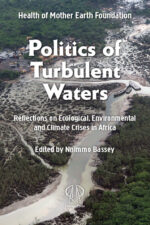
Politics of Turbulent Waters: Reflections on Ecological, Environmental and Climate Crises in Africa
USD $ 5 USD $ 20Price range: USD $ 5 through USD $ 20Select options This product has multiple variants. The options may be chosen on the product page
Politics of Turbulent Waters: Reflections on Ecological, Environmental and Climate Crises in Africa
USD $ 5 USD $ 20Price range: USD $ 5 through USD $ 20For the past 10 years, the Health of Mother Earth Foundation (HOMEF) has been on the front line of the struggle for environmental justice, climate justice and food sovereignty in Africa and the globe. It has been a decade of non-stop probing of the exploitation of resources, peoples and nations, which has given rise to numerous environmental and climate injustices. HOMEF has had a decade of witnessing and standing against the injustice, the powers and structures (industries and policies) suffocating the rights of the people to a healthy environment and standing with the neglected to take charge of their once self-managed food and agricultural systems. The struggle has necessitated the reawakening of communities’ consciousness to the injustices that besiege them and to their ‘people power’ – power to be utilized in seeking the desired change.mPolitics of Turbulent Waters is a compendium of selected articles in the 36 issues of the Eco-instigator published from 2013 to 2022. The Eco-instigator is yet another tool used by HOMEF to pull together thoughts and reports of activities that advance environmental justice and food sovereignty. Issue by issue, these thoughts and reports flow from within HOMEF and other environmental/climate justice and food sovereignty advocates from across Africa and the globe.They form this rich assemblage (Politics of turbulent waters) to commemorate HOMEF’s 10th anniversary. The title of the book is one of Nnimmo Bassey’s (the director of HOMEF) numerous articles that have graced some pages of the different issues of the Eco-instigator. The article cum title encapsulates the messages that the book intends to convey to you, the reader. It crystallizes the dire condition of Africa and its waters and the power imbalance together with the spatial disposition that plunged the continent into the calamitous environmental situation it faces. It speaks of the politics of economic development and market fundamentalism that avows to maintain the status quo in terms of destructive exploitation of Africa’s marine and other natural resources.
Select options This product has multiple variants. The options may be chosen on the product page -

Domains of politics and modes of rule : Political structures of the neocolonial state in Africa
USD $ 5 USD $ 10Price range: USD $ 5 through USD $ 10Select options This product has multiple variants. The options may be chosen on the product page
Domains of politics and modes of rule : Political structures of the neocolonial state in Africa
USD $ 5 USD $ 10Price range: USD $ 5 through USD $ 10“A concise, dense and illuminating dissection of the workings of the post-independence African state that also charts a path towards imagining and working for a true politics of liberation.” — Ndongo Samba Sylla, Senior Researcher, Rosa Luxemburg Foundation.
This is a brief attempt to orient the study of the neocolonial state in Africa through an assessment of the manner in which it rules its people. It is argued that the state produces different modes of rule by deploying different politics over different parts of the population. In this manner, it can combine a genuinely democratic rule in the image of the West over some while subjecting the majority to colonial forms of domination. Imported political subjectivities from the West and its obsession with human rights discourse are reserved largely for a sphere of civil society in which the right to have rights is conferred upon citizens. In the domains of uncivil society and ‘traditional’ society, the right to rights is not observed by the state so different subjectivities, regularly including violence, govern the manner political problems and solutions are addressed both by the state and by people. In consequence, distinct political subjectivities prevail in the conceptualization of popular resistance in all three domains, and it becomes difficult to rally such different concerns and conceptions within an overall anti-neocolonial struggle.∴Select options This product has multiple variants. The options may be chosen on the product page -
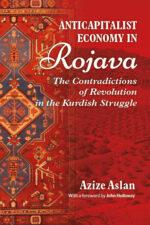
Anticapitalist Economy in Rojava: The Contradictions of Revolution in the Kurdish Struggles
USD $ 5 USD $ 22Price range: USD $ 5 through USD $ 22Select options This product has multiple variants. The options may be chosen on the product page
Anticapitalist Economy in Rojava: The Contradictions of Revolution in the Kurdish Struggles
USD $ 5 USD $ 22Price range: USD $ 5 through USD $ 22This book looks at the anti-capitalist economy and the organization of social relations in the context of the revolution and autonomy of Rojava (Kurdistan-Syria). It questions both the limitations and the historical problems of the phenomenon of revolution, and the conflicts and contradictions that emerge in this process. It also draws from the conflicts and contradictions the author has consistently felt as a “political subject” who wants to change the world, especially through her experience in the Kurdish struggle and the Kurdish Movement. For this reason, every question she raises and attempts to answer in this book—about the Kurds, Rojava, and the world in general, involves what she says is her own subjectivity.
The idea and dreams of revolution have existed since humans created systems of domination. Indeed, revolution, meaning the liberation from systems of domination, has undoubtedly been one of the most discussed subjects in history. There have been moments when the possibility of revolution has been clearer, and there have also been certain agreements on what it is and how to get there, but it has never been something completely definable. This continues to be true today. This book does not intend to define this great phenomenon, rather it looks at the revolutionary practices that create emancipating realities and embraces revolution as an undefined, contradictory and dynamic process. Although the rulers have traditionally written history, the history of social struggles has been and is still being created by many revolutionary and transformational processes. The future is being shaped based on desired revolutions and the struggles that, in turn, transform their actors, the people. Therefore, the desire and quest of the Kurdish people for liberation from the colonial rule of the nation-states of the Middle East—the subject of this book—has always been directly linked to the phenomenon of revolution.Select options This product has multiple variants. The options may be chosen on the product page -
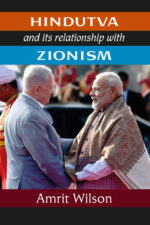
Hindutva and its relationship with Zionism
USD $ 5 USD $ 11Price range: USD $ 5 through USD $ 11Select options This product has multiple variants. The options may be chosen on the product page
Hindutva and its relationship with Zionism
USD $ 5 USD $ 11Price range: USD $ 5 through USD $ 11Written in December 2022, this text is based on a lecture given earlier at the invitation of the Institute of Palestine Studies. Since then, the relationship between Israel and India has deepened further and atrocities have skyrocketed in both countries. On 5 April 2023, Israeli forces stormed Al Aqsa Mosque compound in occupied East Jerusalem and attacked worshippers inside. At the same time, Israel is facing internal turmoil in a battle between a diverse group, including those who think the current settler colony is a democratic nation and want things to remain as they are, and those who stand even further to the right. Significantly, the BJP, India’s ruling party, supports the latter. This book is about Hindutva, the ideology which drives the Hindu-supremacist Bharatiya Janata Party (BJP) regime of Prime Minister Narendra Modi, and Zionism, the ideology of the Israeli apartheid state. In this era of rising fascism, these two remarkably similar ideologies are crucially important in cementing the economic and military alliance between two of the world’s most repressive right-wing states – while helping to legitimize them in cultural arenas. Israel is, of course, a settler colonial state, but it is also, like India, a fascist state, not only because of ‘the extremist parties that [are] part of the government’ but also because of ‘their enablers – Netanyahu and his chauvinistic Likud party which long strove for a Jewish state dominating both sides of the Jordan River.’ In the words of Marwan Bishara, Netanyahu is ‘the godfather of modern Israeli fascism.’
This essay focuses primarily on Hindutva, discussing Zionism mainly to highlight its similarities, links and increasing alliances with Hindutva.Select options This product has multiple variants. The options may be chosen on the product page -

Dark PR: How Corporate Disinformation Undermines Our Health and the Environment
USD $ 6.99 USD $ 21Price range: USD $ 6.99 through USD $ 21Select options This product has multiple variants. The options may be chosen on the product page
Dark PR: How Corporate Disinformation Undermines Our Health and the Environment
USD $ 6.99 USD $ 21Price range: USD $ 6.99 through USD $ 21If you’re interested in how powerful forces of marketing & manipulation make the positive change we badly need MUCH harder, read @grantennis.bsky.social’ great book “Dark PR.” – Brent Toderian, Bluesky
“Think global, act local!” “Be the change you want to see in the world!” “Every little bit counts!” We can all get on board with such sentiments, right? That, of course, is exactly what corporate spin-masters across the world are banking on. By weaponizing such seemingly innocuous yet powerful narratives, change becomes a matter of personal choice, something each of us must slave away at day by day: switching off lightbulbs to save the environment or exercising to shed the weight we’ve gained from consuming junk food. All the while, the corporate welfare tap continues to flow, with over $6 trillion worth of annual subsidies dished out to industries that directly contribute to the deaths of over 5.5 million people each year through diabetes, road deaths, global warming, and other crises. But such framing is just the tip of the iceberg when it comes to the corporate disinformation playbook. This playbook is the dark matter of activist work: the unseeable element shaping harmful spin across all issues. It has never been reverse engineered – until now.
In Dark PR, Grant Ennis – drawing on his decades of experience working in the environmental, philanthropy, and public health sectors – reveals exactly how multinationals go about hoodwinking and manipulating us. In doing so, he lifts the lid on the nine devious frames contained within the cross-industry corporate disinformation playbook: through denialism, normalization, victim-blaming, multifactorialism, and a variety of other tried-and-tested tactics, corporations divert citizens’ attention away from the real causes of global problems, leading them into counter-productive blind-alley “solutions” like ethical consumerism and divestment. Sadly, though, buying Fair Trade chocolate has not and never will save the world. Only by collectively organizing to lobby our governments can we break this destructive cycle of lies and deadly incentives and reclaim control of our lives.
Dark PR: How Corporate Disinformation Harms Our Health and the Environment referenced in the UK House of Lords.
“I’m really interested in a piece of work that’s written by a guy named Grant Ennis, and I would advise you to have a look at his book on subsidy. So actually the Government provide an awful lot of subsidy to unhealthy food producers. Actually we could reduce the subsidy that is provided for that food and use the money in a different way to do different things. He is the expert in that”
– Alice Wiseman, Director of Public Health for Gateshead, EnglandLink: https://lnkd.in/e6AnKssm Minute 11:34:24
Select options This product has multiple variants. The options may be chosen on the product page -
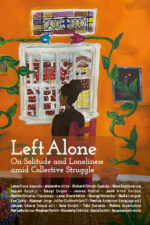
Left Alone: On Solitude and Loneliness amid Collective Struggle
USD $ 5 USD $ 28Price range: USD $ 5 through USD $ 28Select options This product has multiple variants. The options may be chosen on the product page
Left Alone: On Solitude and Loneliness amid Collective Struggle
USD $ 5 USD $ 28Price range: USD $ 5 through USD $ 28Left Alone brings together 13 authors and 6 visual artists from Africa, Asia, Latin America, Europe and North America to individually and collectively reflect – in words and images – on an urgent psycho-political issue that has not yet been explicitly addressed through a left political lens, that is, Left Loneliness. Combining academic and more personal-political texts, including an interview, poetry, a Rap and a powerful short story, the book explores the contributors personally and/or vicariously lived experiences of Left Loneliness from a variety of genres and left political currents: Marxist, Feminist, Anti-/De-Colonial, Anti-Racist, Queer, Post-Soviet, Anti-Ableist and others. Says Feminist writer Sara Ahmed: “Loneliness might be what we are threatened with if we persist in being or doing what we are being or doing.” In this sense, Left Loneliness is neither a metaphor nor a secondary contradiction and definitely not a type of petty bourgeois “personalism”. Rather, it might be considered one of the rank and file psycho-affective elements shaping and at the same time resulting from our myriad, intersecting, unremitting, yet always fragile and potentially shattering political attempts to revolutionise our inner and outer worlds. Given its (growing?) existence in our everyday left subjectivities, the book argues that Left Loneliness and related states of solitude, isolation and alienation, among others, have both debilitating and productive (epistemic) dimensions, with very concrete psycho-somatic repercussions for Left Mental and Physical Health and hence our capacities to persist and build on “being or doing what we are being or doing”. Given that continuing and deepening our multiple ongoing struggles for liberation will depend on our constant ability to (re-)create, sustain and care for both our individual selves and the communities that we are a part of, the aim of Left Alone is to contribute to the strengthening of these personal collectivities in action in-against-and beyond capitalism, colonialism and heteropatriarchy by inviting the comrade-readers into what will ideally be a deeply stimulating and enabling personal-political engagement with the texts and images hailing from countries such as Argentina, Kenya, Kyrgyzstan, Guinea-Bissau/Portugal, Turkey/Kurdistan, Jamaica, Italy, the UK, Germany and the USA. As Lena Grace Anyuolo from Kenya puts it, “My sisters and brothers, Come, Let us gather, To lay the structures for a joyous existence.”
Select options This product has multiple variants. The options may be chosen on the product page -
Breaking the Silence on NGOs in Africa
USD $ 5 USD $ 14Price range: USD $ 5 through USD $ 14Select options This product has multiple variants. The options may be chosen on the product page
Breaking the Silence on NGOs in Africa
USD $ 5 USD $ 14Price range: USD $ 5 through USD $ 14Members of the Organic Intellectuals Network are active organizers in the struggle to achieve social justice. They have experienced the contradictions of the NGO discourse and, just like others before them, have found themselves in the struggle versus survival dilemma. To get a clear picture of our contemporary struggles and the despair of NGOs operating in the proletarian movement, comrades decided to reflect, study, and analyze Prof. Issa Shivji’s book Silences in NGO Discourse: The Role and Future of NGOs in Africa. For the authors, these analyses and reflections are based on personal experiences in their day-to-day organizing. In summarizing the authors’ observations regarding the impacts of NGOs in organizing, this book calls into question the fundamental question, ‘why do NGOs exist?’ To answer this question, the authors provide a historical chronology of the resistance in Kenya, Zimbabwe and the rest of Africa, relating those to the subjective factors in existence at every period. Through this, a scientific relationship can be drawn between social movements and NGOs in our current epoch. From their experiences with NGOs, the authors, representing grassroots social movements, highlight the dangers associated with donor funding. Often, donor funding ends abruptly after making people dependent on them, creating severe strain on grassroots organizations. The more one engages with NGOs, the softer one becomes to critique NGOs, particularly in highlighting their relationship to imperialism. Further, NGOs usually help in driving reforms. However, they play no part in revolutionary work. As a result, they merely preserve the present order and help exacerbate the frustrations arising from massive inequality in our society. In the long run, NGOs play a critical role in stifling the development and independence of grassroots social movements. This publication also includes two previously published essays by Prof Issa G Shivji, Silences in NGO Discourse: The Role and Future of NGOs in Africa, &, Reflections on NGOs in Tanzania: What We Are, What We Are Not and What We Ought To Be.
Select options This product has multiple variants. The options may be chosen on the product page -

White Saviorism in International Development: Theories, Practices and Lived Experiences
USD $ 5 USD $ 22Price range: USD $ 5 through USD $ 22Select options This product has multiple variants. The options may be chosen on the product page
White Saviorism in International Development: Theories, Practices and Lived Experiences
USD $ 5 USD $ 22Price range: USD $ 5 through USD $ 22Given the growing interest in understanding the meaning, manifestations, analyses and implications of racism in North/South relations, White Saviorism in International Development seeks to remedy the shortcomings of the development studies literature on the prevalence of White Saviorism in Western development initiatives in the Global South. The volume comprises theoretical chapters, testimonies, stories and lived experiences from 19 contributors from across the Global South. With sensitivity and intelligence, these practitioners and academics create a tapestry that unveils the implicit and explicit forms of White Saviorism in international development.
Select options This product has multiple variants. The options may be chosen on the product page -
Black Anarchism and the Black Radical Tradition: Moving Beyond Racial Capitalism
USD $ 5 USD $ 18Price range: USD $ 5 through USD $ 18Select options This product has multiple variants. The options may be chosen on the product page
Black Anarchism and the Black Radical Tradition: Moving Beyond Racial Capitalism
USD $ 5 USD $ 18Price range: USD $ 5 through USD $ 18This work is an important achievement in clarifying the history and current importance of Black anarchism. The information that the book presents will be new to many readers. For instance, one important component involves the explanations of how hierarchical principles within the Black Panther Party and Black Liberation Army helped generate the emergence of Black anarchism among key party members who later developed their ideas and strategies while in prison. Likewise, the book breaks new ground in demonstrating that Black anarchism has emerged not from the European/ North American anarchist traditions but rather from roots in Pan-Africanism, the Black radical tradition focusing on racial capitalism and the work of Cedric Robinson, and grassroots struggles partly in the U.S. South. An in-depth analysis of the somewhat different but complementary focuses within the two generations of Black anarchism also is very helpful. Finally, the book highlights concrete, contemporary implications for revolutionary strategy, including a perceptive analysis of the compatibilities between socialist and Black anarchist approaches to current transformative struggles. This publication will become widely known and used because it brings enlightening new ways to understand and act on the intertwined structures of racial capitalism and the capitalist state.
Select options This product has multiple variants. The options may be chosen on the product page -

Slave King: Rebels against empire: A Novel
USD $ 5 USD $ 26Price range: USD $ 5 through USD $ 26Select options This product has multiple variants. The options may be chosen on the product page
Slave King: Rebels against empire: A Novel
USD $ 5 USD $ 26Price range: USD $ 5 through USD $ 26In thirty chapters, the narrative develops the incredible story of how a boy (Younis/Eunus/Euno) captured as a slave in Afamia, Syria challenges the Roman Empire in Sicily, circa 140-132 BCE. The chapters dramatize the circumstance of his capture, his experiences as a tutor, the growth of his prophetic and magical abilities, events that fomented the uprising (cruelties, rapes, crucifixions), the role of female characters, connections to other historical events (e.g., the destruction of Carthage), as well as scenes of an exorcism, an ancient marriage ceremony, a play performed outside a besieged city, and several battles against the Roman legions. An epilogue by an imagined contemporary narrator, who explains why she wrote the novel, ends the work. In the chapters and epilogue, while using ancient sources to some extent (sparse and biased as they are), the work departs from them to resolve contradictions, fill in gaps, and present an alternative narrative of historical and cultural issues. It’s intended to remedy the neglect of this story in both ancient and modern sources, reverse the demonization explicit and implicit in them, and remedy the imbalance in the dominant constructs. It promotes the event as significant, certainly just as important as (if not more than) the Spartacus rebellion seven decades afterwards, or others that are commonly recounted. A significant aspect of this revolt comes from the fact that Younis was able to forge a coalition of slaves, farmers and herders that defeated Roman armies and established an independent entity on more egalitarian principles. The novel also touches on a range of topics, such as prophecy, magic, languages, the construct of Western civilization, representation of regional cultures, customs, and mythologies. An idealized statue of this rebel stands today in Enna, Sicily, along with an inscription that seems designed to appeal to tourists, yet Younis’ rebellion contradicts the dominant notions promoted in Italy and throughout the West, especially the identification with imperial Rome. This novel is intended to remedy his legacy. A fictionalised account of a slave rebellion in Roman Sicilia more than sixty years before Spartacus, it tells the story of the slave Younis from Afamia (now in Syria), a mystic and seer who led a great uprising sustained much longer than Spartacus’.
Select options This product has multiple variants. The options may be chosen on the product page -
 Select options This product has multiple variants. The options may be chosen on the product page
Filantropia Poscapitalista
«La filantropía poscapitalista es una paradoja en sí misma. Una paradoja es el punto de partida adecuado para el complejo contexto enredado y caótico en el que nos encontramos como especie.» Así es como Alnoor Ladha y Lynn Murphy comienzan este tratado llamado Filantropía poscapitalista. Ambos son activistas veteranos, estrategas políticos y asesores filantrópicos por accidente, y este libro es el resultado de décadas de práctica e investigación que abarcan más de un centenar de entrevistas con guardianes de la sabiduría y con figuras relevantes del activismo, la filantropía, las ciencias sociales y la cosmogonía.
Los autores nos guían en un viaje que recorre la historia de la acumulación de la riqueza, la lógica actual del capitalismo tardío y las posibilidades vividas que pueden abrir paso a otras formas de conocer, sentir y ser en sistemas orientados hacia la vida. Este «giro ontológico», tal y como lo denominan, es la clave del texto. Crear realidades neo-antiguas-emergentes no es solo una cuestión de redistribuir la riqueza o «luchar contra los poderosos», sino de cómo percibimos y somos coherentes con nuestras acciones en nuestra relación con un mundo y un universo dinámicos y animistas.
Véase también la edición en inglés: https://darajapress.com/publication/post-capitalist-philanthropy
Select options This product has multiple variants. The options may be chosen on the product page -

Post Capitalist Philanthropy
USD $ 7.99 USD $ 49Price range: USD $ 7.99 through USD $ 49Select options This product has multiple variants. The options may be chosen on the product page
Post Capitalist Philanthropy
USD $ 7.99 USD $ 49Price range: USD $ 7.99 through USD $ 49“Post capitalist philanthropy is a paradox in terms. A paradox is the appropriate starting place for the complex, entangled, messy context we find ourselves in as a species.” This is how long-time activists, political strategists, and accidental philanthropy advisors Alnoor Ladha and Lynn Murphy start their treatise on Post Capitalist Philanthropy. This book is a result of decades of practice and research, including a hundred plus interviews with leading activists, philanthropists, philosophers, social scientists, cosmologists and wisdom keepers.
The authors take us on a journey from the history of wealth accumulation to the current logic of late-stage capitalism to the lived possibilities of other ways of knowing, sensing and being that can usher in life-centric models. This “ontological shift”, as they call it, is at the heart of the text – creating new-ancient-emerging realities is not simply about how we redistribute wealth or “fight power”, but rather, how we perceive and embody our actions in relationship to a dynamic, animistic world and cosmos.
This book is made available by Daraja Press on behalf of the Transition Resource Circle.
The Spanish version of this book is available at
Select options This product has multiple variants. The options may be chosen on the product page -
 Select options This product has multiple variants. The options may be chosen on the product page
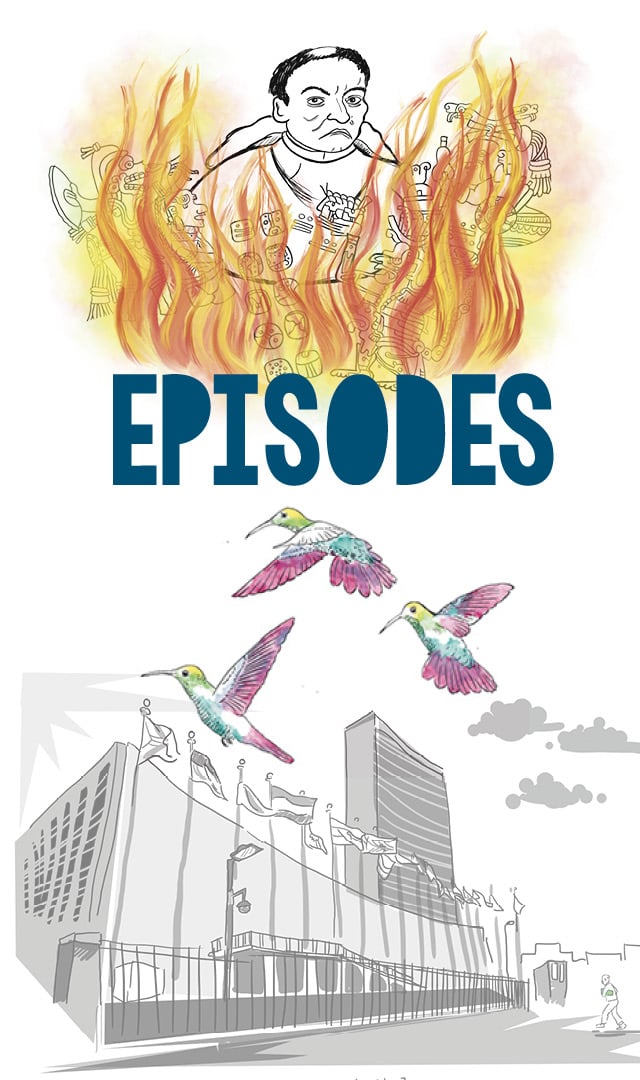
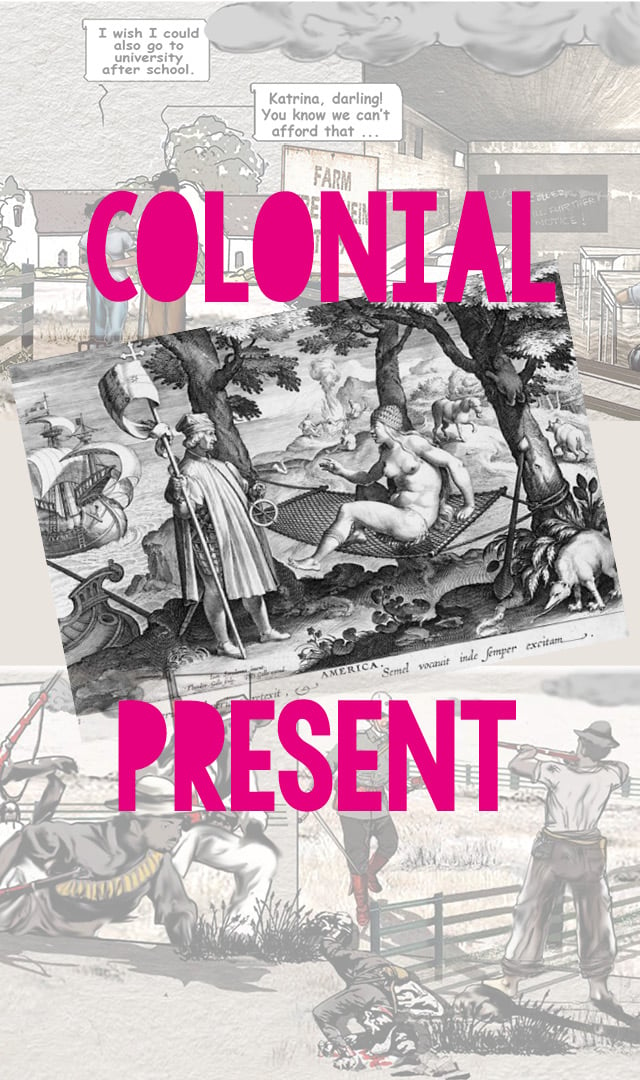
Episodes From a Colonial Present
Editors and Authors: Daniel Bendix, Chandra-Milena Danielzik, Franziska Müller, Lata Narayanaswamy, Juan Telleria, Miriam friz Trzeciak, Aram Ziai
Artists: Hangula Werner, Roshni Vyam, Michel Esselbrügge, Qi Zhou, RotmInas – Rotmi Enciso & Ina Riaskov, Maite Mentxaka Tena, Lena Ziyal
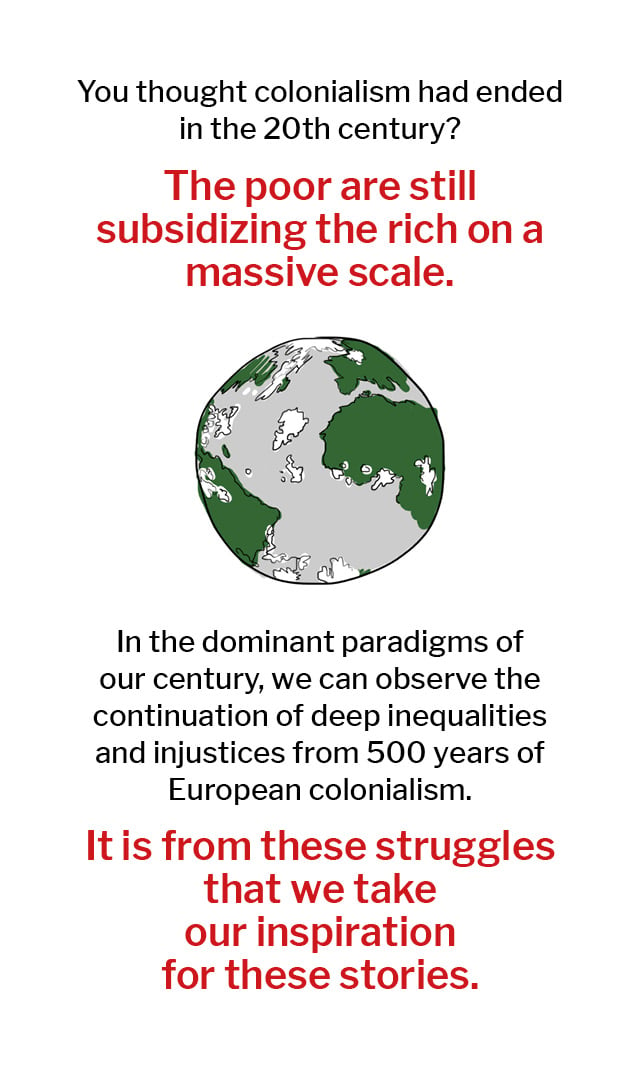
Postcolonial critique reveals the traces of the colonial past in every corner of our present lives and exposes the colonial violence inherent in global inequality. This collective comic project illuminates the coloniality of everyday life as well as the decolonising potential of everyday struggles in the spaces, discourses and practices of so-called global development.

Reviews
What an absolute impertinence! My lawyers are already involved. It’s just as well that I was able to use tax money for the purchase.
—Queen Elizabeth III love true crime books, but this one got a bit boring after a while. It could do with more bloodshed.
—Lothar von TrothaI added this book to my list to burn. Just saying.
—Diego de LandaA waste of time. So glad I didn’t buy it, but stole my copy.
—Christopher ColumbusI didn’t get it. Are they suggesting colonialism is not quite over?
—Harry S. TrumanSelect options This product has multiple variants. The options may be chosen on the product page -

Homestead, Homeland, Home
USD $ 5 USD $ 19Price range: USD $ 5 through USD $ 19Select options This product has multiple variants. The options may be chosen on the product page
Homestead, Homeland, Home
USD $ 5 USD $ 19Price range: USD $ 5 through USD $ 19This is a collection of observations and meditations by Professor Emeritus (York University, Toronto) and philosopher Ato Sekyi-Otu on events, issues, people and ideas culled from recent history and the world, from the US and Canada to Ghana. If there is a persistent thread in these entries, it is this: Virtually all of them testify to the ironic truth of the saying that there is no place like home, no place, that is to say, which looks like the lodestar called home or comes close to approximating its promise of being a just space of human flourishing. Most of the entries are, therefore, harsh, particularly those on the USA. That is because that nation, in his view, has, in recent history, made a major contribution to rendering the world and every homestead we inhabit unhomely and sabotaging attempts to better it. But no one or place is spared, certainly not the author’s native land, Ghana. Canada appears intermittently in these pages in rather fragmentary and contrastive observations. That paucity of comments may be taken to be the complement the author pays to Canada as a place of relative civility and glimmers of decency in a mad and cruel world. It is a short work of predominantly gloomy pictures. But there are a few countervailing images and invocations of hope here and there. There are 166 entries of unequal lengths arranged around 14 headings. These epigrams are contrapuntal variations on the philosopher’s searing imprecation and visionary invocation: unfinished ode, resounding with intermittent fury, to the dawn of human existence set free from all tyrannizing enclosures.
Select options This product has multiple variants. The options may be chosen on the product page -

Love Pandemic: Poems
USD $ 5.99 USD $ 10Price range: USD $ 5.99 through USD $ 10Select options This product has multiple variants. The options may be chosen on the product page
Love Pandemic: Poems
USD $ 5.99 USD $ 10Price range: USD $ 5.99 through USD $ 10The poems here were written during the first wave of the COVID-19 pandemic. Most were circulated through What’s App voice notes, an intimate way of keeping distance while reaching out to touch. The poems speak to experiences and occurrences during the first wave in different parts of the world and the pressing need to make love as global and infectious as the novel corona virus. This collection is a prelude to “29 leads to love”, a collection that explores more fully the grand notion of love which began coming to the fore in the beginning of the COVID-19 pandemic, and has largely re-submerged.
Select options This product has multiple variants. The options may be chosen on the product page -
 Select options This product has multiple variants. The options may be chosen on the product page
From Citizen to Refugee: Uganda Asians Come to Britain
USD $ 15.50In his introduction to this new edition of From Citizen to Refugee: Uganda Asians Come to Britain, Mahmood Mamdani reminds us that long before 1972, most Ugandan ‘Asians’ had already been disenfranchised by law, both Ugandan and British. Despite a global industry that insists otherwise, Uganda Asians are a poor fit as victims: there was no large-scale loss of life during the expulsion, nor were there massacres of Asians, only of ‘indigenous’ peoples. Asians in Uganda, as in East or Southern Africa, he argues, were immigrants, not settlers: immigrants are prepared to be a part of the political community, whereas settlers ‘create their own political community, a colony, more precisely, settler colonialism.’ Mamdani insists that there is no single Asian legacy. there are several and they are contradictory. The Asian question in Uganda remains, but it is no longer the original Asian question. But it does allow us to think more broadly. Just as US law recognizes African Americans as Americans of African descent, so too must those of Asian origin in Africa consider themselves, and be considered, Asian Africans. It is in his bittersweet and touching book on the Asian expulsion from Uganda that one can trace the beginnings of author and intellectual Mahmood Mamdani’s world-view.. … In From Citizen to Refugee: Uganda Asians Come to Britain Mamdani offers portraits of people reduced to a vegetative existence in refugee camps, feeling the burden of not being fluent in English and struggling with the uncomfortably cold weather. Not surprisingly, these few months played a pivotal role in shaping Mamdani’s theoretical and political leanings, and it is here that one can locate his preoccupation with the formation of racial, ethnic and class identities during the colonial era and his overarching concern with issues of citizenship.
Select options This product has multiple variants. The options may be chosen on the product page -

Settler Colonialism
USD $ 5 USD $ 10Price range: USD $ 5 through USD $ 10Select options This product has multiple variants. The options may be chosen on the product page
Settler Colonialism
USD $ 5 USD $ 10Price range: USD $ 5 through USD $ 10Settler Colonialism examines the genesis in the USA of the first full-fledged settler state in the world, which went beyond its predecessors in 1492 Iberia and British-colonized Ireland with an economy based on land sales and enslaved African labor, an implementation of the fiscal-military state. Both the liberal and the rightwing versions of the national narrative misrepresent the process of European colonization of North America. Both narratives serve the critical function of preserving the “official story” of a mostly benign and benevolent USA as an anticolonial movement that overthrew British colonialism. The pre-US independence settlers were colonial settlers just as they were in Africa and India or like the Spanish in Central and South America. The nation of immigrants myth erases the fact that the United States was founded as a settler state from its inception and spent the next hundred years at war against the Native Nations in conquering the continent. Buried beneath the tons of propaganda—from the landing of the English “pilgrims” (Protestant Christian evangelicals) to James Fenimore Cooper’s phenomenally popular The Last of the Mohicans claiming settlers’ “natural rights” not only to the Indigenous peoples’ territories but also to the territories claimed by other European powers—is the fact that the founding of the United States created a division of the Anglo empire, with the US becoming a parallel empire to Great Britain, ultimately overcoming it. From day one, as was specified in the Northwest Ordinance, which preceded the US Constitution, the new “republic for empire,” as Thomas Jefferson called the new United States, envisioned the future shape of what is now the forty-eight states of the continental US. The founders drew up rough maps, specifying the first territory to conquer as the “Northwest Territory.” That territory was the Ohio Valley and the Great Lakes region, which was already populated with Indigenous villages and farming communities thousands of years old. Even before independence, mostly Scots Irish settlers had seized Indigenous farmlands and hunting grounds in the Appalachians and are revered historically as first settlers and rebels, who in the mid-twentieth century began claiming indigeneity. Self-indigenizing by various groups of settlers is a recurrent theme in story of settler colonialism, white supremacy, and the history of erasure and exclusion about which I have written elsewhere.
Select options This product has multiple variants. The options may be chosen on the product page -

Hand On The Sun: A passionate and powerful novel of race and class
USD $ 5 USD $ 18Price range: USD $ 5 through USD $ 18Select options This product has multiple variants. The options may be chosen on the product page
Hand On The Sun: A passionate and powerful novel of race and class
USD $ 5 USD $ 18Price range: USD $ 5 through USD $ 18This was Tariq Mehmood’s first novel, published by Penguin Books in 1983, charting the experience of the second generation migrants to the UK. Set in the declining textile industry of the North of England, it is a raw story of pain and anger at the relentlessness of British racism, from the street to the state – a story of an unquenchable desire for justice, and reclaiming human dignity. A dignity that is wrapped around new questions of Identity, a crossroad between religion, language, history and resistance. It is a little big story, that talks to the extremities of social, political and literary issues today? Can stories of a generation be appropriated? How important is religion in identity? If all you have is a story to tell, who should you tell it? Are the issues of today, just the issues of today or can we learn something from the past? In these stories, friendship is not defined by religion or colour, but by humanity. And racism is much more than skin deep. It is an exhilarating read that bears witness to the urgent 80’s battles against state and popular racism. As important now as then. In this new edition, Mehmood provides a Foreword that describes how the novel came to be written and the lives of real people on whom the characters were created. In the Afterword, Mehmood revisits some of the characters who are now 40-years older, and reflects on how the book would have been written today where the conditions of mass mobilizations no longer exist in neoliberal Britain.
Select options This product has multiple variants. The options may be chosen on the product page