
-
 Select options This product has multiple variants. The options may be chosen on the product page
Una movilización por la justicia en salud
Desde su primera edición en 2005, el Observatorio Global de la Salud (GHW) -la publicación insignia del Movimiento por la Salud de los Pueblos (MSP)- ha venido informando críticamente sobre el estado de la salud en el mundo. Publicada cada tres o cuatro años, comenta la evolución de la salud mundial al tiempo que se centra en la continuidad con las luchas populares del pasado.
Al igual que en ediciones anteriores, el GHW7 cobra vida con las contribuciones de más de cien activistas de todo el mundo, que comparten experiencias y análisis sobre cuestiones que afectan a la salud de las personas en los contextos en los que viven y los esfuerzos por avanzar hacia una mayor justicia en salud. Este proceso fue dinamizado por la quinta Asamblea Mundial por la Salud de los Pueblos (ASP5), el encuentro mundial del MSP, que tuvo lugar en Argentina en abril de 2024 bajo el lema “Haciendo de la ‘Salud para Todos’ nuestra lucha por el ‘Buen Vivir’”.
Las contribuciones políticas de América Latina se manifiestan en la primera sección del GHW7, dedicada a “La arquitectura política y económica global”, donde a un análisis actualizado de las crisis de la salud actuales le siguen contribuciones que las enmarcan en una perspectiva ecofeminista, mostrando cómo las alternativas pueden arraigarse en las sabidurías ancestrales y en la práctica del ‘Buen Vivir’. La segunda sección aborda viejos y nuevos retos para los sistemas de salud públicos y globales a través de las lentes críticas de la justicia de género y la decolonialidad. La tercera sección, “Más allá de la atención en salud”, aborda los principales determinantes sociales y ambientales de la salud, mientras que la sección “Vigilancia” analiza críticamente el estado de la gobernanza mundial de la salud centrándose en varias instituciones clave. La última sección, “Resistencia, luchas y alternativas”, destaca las áreas de cambio transformador de los y las activistas de la salud en un contexto mundial de creciente represión. El libro termina con un capítulo sobre la ASP5, en el que se destaca cómo la acción colectiva es la medicina más poderosa contra la mala salud y la desigualdad de la salud a nivel humano y planetario.
Global Health Watch 7 incluye los siguientes capítulos:
Los resúmenes de los capítulos actualmente disponibles, junto con el PDF descargable correspondiente, pueden consultarse desplazándose hacia abajo y haciendo clic en la pestaña “Descripción”.
Todos los capítulos, excepto A2 y A3, han sido traducidos del inglés por Lila Esther Silgado Villadiego
Introducción: Una Movilización por la Justicia en Salud
A1. De la Economía Política de la Enfermedad a la Economía Política del Bienestar
A2. La Vida en el Centro: Ecofeminsmos y Feminismos Ecoterritoriales en la Disputa por la Vida
A3. Saberes Ancestrales y Populares para el Buen Vivir
B1. Privatización y Financierización de los Sistemas de Salud: Retos y Alternativas Públicas
B2. Inteligencia Artificial, Tecnologías Digitales y Salud
B3. Construyendo Sistemas de Salud Equitativos: Una Propuesta Transformadora Desde una Perspectiva Interseccional de Género
B4. La Medicina de la Abolición como Herramienta para la Justicia en Salud
B5. Descolonización de la Salud Mundial
C1. Guerra, Conflicto y Desplazamiento
C2. Personas en Movimiento
C3. Poniendo el Derecho a la Salud ¡A Trabajar!
C4. Justicia fiscal: El camino Hacia una Mejor Salud
C5. Determinación comercial/empresarial de la salud
D1. El papel de la Organización Mundial de la Salud en el liderazgo de la salud mundial, bajo amenaza
D2. Desembalaje de Nuestros Fracasos Pandémicos para la Prevención y Preparación ante futuras pandemias
D3. Financiación de la Recuperación, Prevención, Preparación y Respuesta ante una Pandemia
E1. Luchas Nacionales por el Derecho a la Salud
E2. Llevando a las Empresas Extractivas a los Tribunales
E3. Miedo y esperanza en “Decir la verdad al poder”: Luchas por la salud en tiempos de represión y reducción de espacios
E4. 5ª Asamblea Mundial por la Salud de los Pueblos: Avanzando en la lucha por la liberación y contra el capitalismoSelect options This product has multiple variants. The options may be chosen on the product page -
 Select options This product has multiple variants. The options may be chosen on the product page
Twenty Years of Courage and Struggle
Abahlali baseMjondolo (AbM) is the remarkable story of the South African shack dwellers movement, covering twenty years of courageous struggle. It is the largest movement to have emerged in South Africa after apartheid and one of the largest movements of the urban poor globally, boasting over 180,000 members across four provinces.
AbM emerged from the margins of South Africa’s cities, where residents faced life-threatening conditions, including shack fires, poverty, and systemic betrayal by the democratic state regarding land and housing. The movement is firmly committed to ethical principles, fighting not only for the right to the city but for the right to collectively occupy land and build occupations collectively. Abahlali insists on a humanist philosophy—”no one is illegal, everyone thinks and everyone must be counted and heard”—and works to build democracy and socialism from below.
Abahlali is abolition in action, seeking to interrupt capitalist logic by advocating for the total decommodification of land, recognizing it as a public good allocated based on human need. This commitment has led to significant victories, including securing land, providing services (like water and electricity), and winning a landmark Constitutional Court case against the unlawful Slums Act.
However, this quest for dignity has come at a tremendous cost, marked by severe repression, police violence, and the assassination of many activists by state forces and party thugs. Despite these challenges, AbM has persisted, developing occupations into working communes (such as eKhenana) that feature collective production, community halls, and political schools. Their story is a map for movements fighting inequality and authoritarianism globally. The movement continues to build collective power and struggle for a world where land, wealth, and power are shared on an equal basis.
“Your movement has shown the world that democracy extends beyond elections to a way of living together—through open assemblies and collective decision making. In doing so, you have advanced a vision grounded in humanity, solidarity, and courage. Your struggle has always been internationalist, and your solidarity with the people of Palestine, Swaziland, and the Congo, and the warm relations you have built with movements around the world, are exemplary.” Jeremy Corbyn in https://rajpatel.org/2025/10/13/4764/
The movement continues to grow, discovering that more and more settlements function better not when they function as an association of residents but as a commune. Agroecology is cropping up in more and more settlements thanks to exchanges with the MST. It’s a demonstration that when the wretched of the earth organize themselves without mediation, without NGO managers or academic gatekeepers, they can survive what would destroy any formation dependent on elite patronage. … This is the lesson Abahlali offers the world: genuine democracy is possible, but only when everyone thinks, everyone counts, everyone cares, and everyone acts. Raj Patel Everybody Thinks, Everybody Counts, Everybody Cares, Everybody Acts: Twenty Years of Abahlalism
Select options This product has multiple variants. The options may be chosen on the product page -

WItness to War
USD $ 10 USD $ 26Price range: USD $ 10 through USD $ 26Select options This product has multiple variants. The options may be chosen on the product page
WItness to War
USD $ 10 USD $ 26Price range: USD $ 10 through USD $ 26Witness to War: An American Doctor in El Salvador offers a personal account of Dr. Charles Clements’ year-long mission providing medical care behind rebel lines during El Salvador’s brutal civil war from 1981-1982. Clements, a former decorated U.S. Air Force pilot disillusioned by his Vietnam experiences, transformed into a Quaker doctor committed to non-violence and the principle of “bearing witness”—observing a situation firsthand and speaking truth about power.
The book chronicles his harrowing struggle, at times one of only two fully trained physicians, for approximately 10,000 people in a guerrilla-controlled zone, confronting “scenes of almost unbelievable horror” and an “anguished view of the low value on life”. With virtually no supplies, Clements improvised, performing amputations with a Swiss Army knife and suturing with dental floss, all while battling dysentery, malaria, and hunger himself. His narrative is extraordinarily restrained yet both disturbing and gripping.
Witness to War serves as a testimony from behind the lines, vividly portraying a conflict of constant aerial bombardments by U.S.-supplied aircraft. Clements’ commitment to medical neutrality, treating any patient regardless of their affiliation, is a central theme, challenging readers to confront uncomfortable truths about U.S. foreign policy and the immense human cost of conflict. This new edition, published decades later, underscores the enduring relevance of imperialism and militarism, urging new generations to reflect on their potential impact on the Global South.
First published in 1984, and again in 1985, the book has long been out of print. This is an expanded edition including materials previously absent in previous editions.
Select options This product has multiple variants. The options may be chosen on the product page -

Artificial Intelligence, Society and Religion
USD $ 10 USD $ 55Price range: USD $ 10 through USD $ 55Select options This product has multiple variants. The options may be chosen on the product page
Artificial Intelligence, Society and Religion
USD $ 10 USD $ 55Price range: USD $ 10 through USD $ 55The underlying objective of this book is to promote equality, global peace, harmony, transparency, inter-faith solidarity and broad-based awareness so that new technologies like AI can be developed, controlled and harnessed in the endeavor to tackle problems like hunger, poverty, disease, poor education, misinformation, pandemics, loss of biodiversity, environmental damage, authoritarianism, militarism, irresponsible consumerism, mental alienation and corporate domination that are facing the human race today.
This objective is pursued by adopting an interdisciplinary approach to explore the intriguing confluence of artificial intelligence, social structure and faith at many levels. Numerous illustrative examples from religion majority and other nations grace these pages. They elucidate the structure, uses, benefits, and productivity gains of AI as well as the flaws, abuses, biases, hype, hallucinations, and harms associated with AI systems. Secular and religious ethical codes for AI are examined. It is seen that despite theological concerns, religion―Hinduism, Buddhism, Christianity, Islam, or Secularism―is not a barrier to wide practical adoption of AI. AI in education, medical diagnosis, science research and industry, the impact of AI on mental health and the environment, the notion of artificial super intelligence, military uses of AI, especially in the genocidal war on Gaza, AI in the Global South and the views of late Pope Francis on AI garner central attention. This book makes the case that corporate driven AI operating in the profit-oriented neoliberal, imperial setting will harm human cognitive abilities and mental health, undermine education, foster bias and mediocrity, facilitate the spread of misinformation, exacerbate national and international inequality, support authoritarian rule, worsen climate change and make warfare deadlier. AI can benefit humanity only under an egalitarian, genuinely democratic, environmentally aware social order.
Based on a depth of research, Karim Hirji’s Artificial Intelligence, Society and Religion presents, in readable prose, a comprehensive portrait of the inter-relationship between an ancient human pre- occupation and a modern multi-faceted instrument that may presage a post-human future. Covering Hinduism, Buddhism, Christianity, Islam and Secularism, it explores how these traditions use AI tools and navigate the ethical challenges of AI. The perspectives of religious dignitaries like the late Pope Francis and the Dalai Lama on AI are compared. Providing a broad introduction to the attainments as well as limitations of AI systems, the book also discusses the potential for the emergence of super-intelligent AI systems. Unlike other books on AI, Hirji’s magnum opus contextualizes AI and religions within the global neoliberal system and discusses how AI systems enable violations of human rights and facilitate the commission of genocide. —Abdul Paliwala, Emeritus Professor of Law, University of Warwick
Using a broad range of sources with fascinating insight, Karim Hirji explores the ever-expanding world of Artificial Intelligence to inquire: Will AI benefit or endanger humanity? Using numerous country-level case studies, he explores multiple instances of the utility and harms of AI and argues that corporate-controlled AI will not only exacerbate inequality, but also cause more harm than good. Focusing on Hinduism, Buddhism, Christianity, Islam and secularism, he critically examines faith-based reactions to AI. Among other topics cogently covered are the ethics of AI, education and AI, military applications of AI and the possibility of a superintelligent AI. Addressing questions vital for our and the future generations from a progressive perspective, this book deserves attention from all concerned with where AI is driving our world. —Elizabeth Jones, MA, Teacher, Quaker, Former Co-editor of Christian Today, UK.
Karim Hirji’s Artificial Intelligence, Society and Religion: Crossroads of Algorithm, Neoliberalism and Faith is a path-breaking, inspiring and challenging book on AI that will help strengthen the social movements of resistance throughout the world. It delegitimizes the ideological obfuscations of imperialism—from the crimes of Eugenics to the fantasy of a happy AI future. It takes us on a fascinating and challenging journey, warns us of the grave dangers posed by corporate AI, and prepares us for the next stage of the lifetime battle for anti-imperialist and socialist humanity. —Eric Mann, Author and Co-Director, Labor/Community Strategy Center, South Central Los Angeles.
Select options This product has multiple variants. The options may be chosen on the product page -
 Select options This product has multiple variants. The options may be chosen on the product page
Mobilizing for Health Justice
Since its first edition in 2005, Global Health Watch (GHW) – the flagship publication of the People’s Health Movement (PHM) – has been critically reporting on the state of the world’s health. Published every three or four years, it comments on developments in global health while focusing on continuities with past popular struggles.
As with previous editions, GHW7 comes to life with contributions from over one hundred activists around the world, sharing experiences and analysis on issues affecting people’s health in the contexts they live in and efforts to progress towards greater health justice. This process was energized by the fifth People’s Health Assembly (PHA5), the global gathering of PHM, that took place in Argentina in April 2024 under the motto “Making ‘Health for All’ our struggle for ‘Buen Vivir”.
Political contributions from Latin America are manifest in the first GHW7 section, dedicated to “The global political and economic architecture”, where an up-to-date analysis of current health crises is followed by contributions that frame them in an eco-feminist perspective, showing how alternatives can be rooted in ancestral wisdoms and the practice of ‘Buen Vivir’. The second section addresses old and new challenges for public and global health systems through the critical lenses of gender justice and decoloniality. The third section, “Beyond Healthcare,” addresses key social and environmental determinants of health, while the “Watching” section critically apprises the state of global governance for health with a focus on several key institutions. The final section, “Resistance, struggles and alternatives,” highlights areas of transformative change by health activists in a global context of increasing repression. The book ends with a chapter on PHA5, highlighting how collective action is the most powerful medicine against ill health and health inequality at the human and planetary levels.
Global Health Watch 7 will include the following chapters
Chapters A2 and A3 have been translated from Spanish by Lila Esther Silgado Villadiego.
Summaries of the chapters that are currently available can be viewed by scrolling down and clicking on the “Description” tab. You can also download the chapters highlighted below.
Introduction: Mobilizing for Health Justice
A1. From a Political Economy of Disease to a Political Economy for Wellbeing
A2. Life at the Center: Ecofeminisms and Ecoterritorial Feminisms in the Struggle for Life
A3. Ancestral and Popular Knowledge for Buen Vivir
B1. Privatization and Financialization of Health Systems: Challenges and Public Alternatives
B2. Artificial Intelligence, Digital Technologies, and Health
B3. Building Equitable Health Systems: A Transformative Proposal from an Intersectional Gender Perspective
B4. Abolition Medicine as a Tool for Health Justice
B5. Decolonizing Global Health
C1. War, Conflict and Displacement
C2. People on the Move
C3. Putting the Right to Health to Work
C4. Tax Justice: A Pathway to Better Health
C5. Commercial/Corporate Determination of Health
D1. WHO’s Compromised Role in Global Health Leadership
D2. Unpacking Our Pandemic Failures for Future Pandemic Prevention, Preparedness, and Response
D3. Financing Pandemic Recovery, Prevention, Preparedness and Response
E1. National Struggles for the Right to Health
E2. Taking Extractives to Court
E3. Fear and Hope in ‘Speaking Truth to Power’: Struggles for Health in Times of Repression and Shrinking Spaces
E4. 5th People’s Health Assembly: Advancing in the Struggle for Liberation and Against CapitalismSelect options This product has multiple variants. The options may be chosen on the product page -
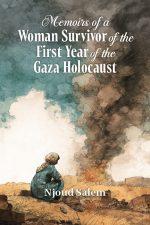
Memoirs of a Woman Survivor of the First Year of the Gaza Holocaust
USD $ 0.01 USD $ 15Price range: USD $ 0.01 through USD $ 15Select options This product has multiple variants. The options may be chosen on the product page
Memoirs of a Woman Survivor of the First Year of the Gaza Holocaust
USD $ 0.01 USD $ 15Price range: USD $ 0.01 through USD $ 15Stop press
We have just learned that this book has won a prize from the Eyelands Book Awards https://eyelandsawards.com/2025/12/30/2025-prize-grand-prize-winners/
Congratulatons Njoud Salem!!
These memoirs bear witness to the harrowing reality of survival during the devastating war on Gaza. Through vivid personal narratives, they capture the daily struggle for existence—the scarcity of food and water, the constant threat of bombardment, and the profound psychological trauma. Yet, they delve far deeper than mere physical survival, exploring the profound wounds of displacement: the heartbreak of leaving behind a home, a street, a neighborhood, and the irreplaceable fragments of a life forever shattered.
The pages reveal families huddled in schools-turned-shelters, sharing morsels of bread and whispering prayers for a safe dawn. This collection is both a testament and an act of resistance. It refuses to let the world reduce human beings to mere statistics, insisting instead on honoring every story, every face, and every name. It bears witness not only to the destruction but also to the unbroken spirit of a people determined to live, dream, and rise again.
While rooted in immense suffering, these narratives are also profound meditations on dignity, love, and an unshakable will to persevere. At once personal and collective, they amplify the voices of a generation too often silenced by conflict, posing urgent questions about justice, memory, and the future. They ensure these essential stories are never buried beneath rubble or lost to cold statistics.
In the midst of fire and fear, these words declare: “We are still here. We remember.” This act of testimony—to feel, to survive, and to hold onto love when the world offers none—becomes the most honest act of living. Through these pages, the reader is invited not only into a world of unimaginable hardship but also into the profound depths of human endurance, the richness of Arab culture, and the unwavering faith that guides a people forward.
Select options This product has multiple variants. The options may be chosen on the product page -
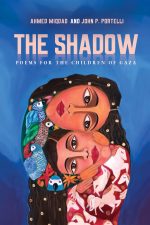
The Shadow
USD $ 0.01 USD $ 16Price range: USD $ 0.01 through USD $ 16Select options This product has multiple variants. The options may be chosen on the product page
The Shadow
USD $ 0.01 USD $ 16Price range: USD $ 0.01 through USD $ 16Discover The Shadow: Poems for the Children of Gaza, a poignant collection by Palestinian poet Ahmed Miqdad and Maltese-Canadian poet John P. Portelli. Written amidst the horrors of Gaza’s genocide and the personal battle with cancer, these 42 poems bear witness to the intersection of political violence and personal mortality. Through raw emotion and lyrical defiance, the poets forge solidarity across borders, offering a glimmer of hope in the face of erasure.
Featuring evocative art by Malak Mattar and a foreword by Professor Jamil Khader, this collection is a call to remember, resist, and reclaim humanity. A portion of proceeds will support Palestinian relief efforts.
Select options This product has multiple variants. The options may be chosen on the product page -
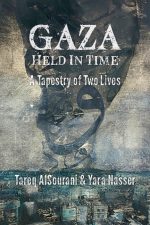
Gaza Held in Time
USD $ 6.99 USD $ 16Price range: USD $ 6.99 through USD $ 16Select options This product has multiple variants. The options may be chosen on the product page
Gaza Held in Time
USD $ 6.99 USD $ 16Price range: USD $ 6.99 through USD $ 16Gaza Held in Time
“A jewel of pain and memory.” —Patrizia Cecconi
Two Voices. One Shattered Homeland. A Story the World Can’t Ignore.
About the Book
Gaza Held in Time: A Tapestry of Two Lives is a groundbreaking memoir written by Tareq AlSourani and Yara Nasser, two Palestinian teenagers whose lives were torn apart by the 2023–2025 genocide. One fled to Egypt, carrying the guilt of escape. The other stayed, documenting Gaza’s descent into famine, mass graves, and the quiet rebellion of dreams.
Their alternating narratives—raw, poetic, and unflinchingly honest—weave together moments of piercing beauty (the scent of jasmine in Gaza’s streets, the taste of warm knafeh from Abu Al-Soud) with the horror of drone strikes, forced displacement, and the systematic erasure of their home.
This is not just a book about war. It’s about what it means to love a place the world is trying to destroy.
Why This Book Matters
- A Firsthand Account of Genocide: Written in real time from inside and outside Gaza, it shatters statistics with intimate, devastating testimony.
- A Testament to Resilience: From cooking over open fires to smuggling words past censorship, their creativity defies annihilation.
- A Call to Remember: “We wrote so Gaza would not fade into headlines.” This book is a lifeline to stories the world must not forget.
Praise for Gaza Held in Time
“Devastating… These could be our children. A brave and necessary book.”
—Yahia Lababidi, Palestinian poet“Their words should haunt us forever.”
—Lynne Segal, Birkbeck, University of London“A door left open for memory, for return, for rebuilding.”
—Aref Husseini, author of Half-AshkenaziExcerpt: The Day Everything Changed
“October 7, 2023. I woke to the sky screaming. By noon, the internet was gone. We played cards in silence, waiting for the ceiling to collapse. When it didn’t, we realized: this was the new normal. Gaza was being unmade in front of us.” —Yara Nasser
Order Now
Available in softcover and eBook.
Join the Conversation
- #GazaHeldInTime – Share quotes, reviews, and solidarity.
- Amplify Gaza’s Voices – Tag @DarajaPress & demand media coverage.
#GazaHeldInTime #ReadPalestine #GazaGenocide #Memoir #ResistanceLiterature #FreePalestine
“The story is not over because the sea still calls our names.”
Order. Read. Remember.Select options This product has multiple variants. The options may be chosen on the product page -

Finding A Voice
USD $ 20First published in 1978, and winning the Martin Luther King Memorial Prize for that year, Finding a Voice established a new discourse on South Asian women’s lives and struggles in Britain. Through discussions, interviews and intimate one-to-one conversations with South Asian women, in Urdu, Hindi, Bengali and English, it explored family relationships, the violence of immigration policies, deeply colonial mental health services, militancy at work and also friendship and love. The seventies was a time of some iconic anti-racist and working-class struggles. They are presented here from the point of view of the women who participated in and led them.
This new edition includes a preface by Meena Kandasamy, some historic photographs, and a remarkable new chapter titled ‘In conversation with Finding a Voice: 40 years on’ in which younger South Asian women write about their own lives and struggles weaving them around those portrayed in the book.
-
 Select options This product has multiple variants. The options may be chosen on the product page
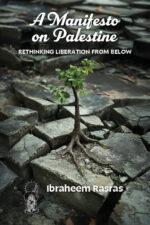
A Manifesto on Palestine
We are excited to share a summary of a truly transformative new work, A Manifesto on Palestine: Rethinking Liberation from Below, by Ibraheem Rasras. This manifesto offers a profound and challenging re-evaluation of the Palestinian struggle, urging us to look beyond conventional political and diplomatic frameworks to envision a radically different path to freedom and self-determination.
The Core Diagnosis: Beyond Material Occupation
Rasras argues that the Palestinian crisis is not merely a material one of occupation, dispossession, and statelessness, but also a deep “epistemological crisis”. The very structures intended for liberation, the manifesto asserts, have been “subverted, diverted, or rendered ineffective by the very forces they seek to fight”. This is evident in the recurrence of atrocities, reminiscent of past massacres, seen in Gaza from 2023 onwards. A central critique is leveled against the adoption of hierarchical, statist, and technocratic forms of liberation, which have come to tragically resemble the configuration of the oppressor, shedding their ethical and revolutionary essence. The Oslo Accords are cited as a prime example, transforming the language of liberation into one of “formalized managerial governance” and “conditional sovereignty”. This has contributed to a profound “void in the political contextualization and ethical framework of the political ruling”.The Problem of “Stylistic” Resistance and Internalized Colonialism
The manifesto identifies how Palestinian resistance has, over decades, shifted from revolutionary, bottom-up rhetoric to institutionalized and compromised modes, particularly after the Oslo Accords. It introduces the concept of “stylistic” liberation, where leaders impose their imagined schemes rather than adapting to the realities on the ground, leading to an “alienus” leadership that lacks genuine popular allegiance. This “stylistic” approach also manifests when liberation is pursued through “tools of trivialization” that are external to the collective’s specific needs, such as placing prolonged peace negotiations *before* achieving liberation. This externalization, mirroring the colonizing process itself, leads to a form of alienation, obstructing collective self-control and, in many cases, resulting in the unconscious participation of the colonized in their own subjugation. Distrust stemming from unfulfilled promises by factions like Hamas and Fatah has further deepened fragmentation and a sense of “strangeness” among Palestinians.A New Strategy: The Ethics of Resistance and Anarchic Programs
To counter this multifaceted crisis, the manifesto proposes a radical alternative: a “bottom-up resistance” grounded in a unified mode of ethics, a collective understanding of the cause, and consistent practices. This “ethics of resistance” is not a rigid dogma but an “emancipatory code” and a regulatory framework for all aspects of Palestinian daily life, directly confronting neoliberal values like profit-maximization. It is intertwined with the urgent need for a “cultural revolution” that aims to restructure social circumstances and foster a “revolutionary consciousness”. This cultural shift, implemented in successive waves, includes intensive education on human rights and rooting new “networking-elements” within Palestinian social and cultural life. The goal is to establish a “solid reference-point” that can unify Palestinians, whose power has been fragmented by internal divisions and external pressures.The manifesto champions “anarchic programs” as a strategic framework to dismantle subjugation. This involves collectively disengaging from oppressive laws and creating a vacuum for temporary self-management, thereby strengthening local grassroots power. It envisions an “anarchic rule” based on “organic units” and “free cooperation,” emphasizing self-management, direct worker control, and integrated agriculture and industry. This approach aims to organize Palestinians without the fear of division or surveillance that has plagued traditional political structures.
The Power of the Everyday
Crucially, the manifesto points to the already existing “affirmative, anarchic, and ethical politics” in fragments throughout Palestinian society. These are not found in the monopolies of NGOs or political parties, but in the “spontaneous and often-unrecognized social inventions of ordinary people”. Examples include mutual aid networks in Gaza during siege, informal community schooling, grassroots organizing, and the refusal to cooperate with surveillance. These acts of “everyday resistance”—like a student crossing a checkpoint or a mother going to work despite immense barriers—are seen as foundational for a new paradigm of collective ethics and political orientation.Toward a Horizon of Liberation
A Manifesto on Palestine is a bold call for “breakage,” arguing that “no gradual reform will bring freedom”. It is an “epistemological” task to unveil and amplify these lifeways and forms of knowledge, leading to an ethical reconstruction for a collective life that rejects domination in all forms. The manifesto asserts that the future of Palestine will not come from foreign beneficence or failed peace talks, but will be “constructed by the long disenfranchised of the political arithmetic: the dispossessed, the alienated, the uncredentialed, the everyday”. It invites all to engage in “a problem to be enjoyed more than an answer to be spewed back,” asserting that “freedom must be written by individuals who are living alternatively”.We encourage you to delve deeper into this profound manifesto and join the critical conversation about rethinking liberation from below.
Select options This product has multiple variants. The options may be chosen on the product page -

Unsilenced
From: USD $ 10Select options This product has multiple variants. The options may be chosen on the product page
Unsilenced
From: USD $ 10Unsilenced: Poems for Palestine is a collection of poems that convey profound emotions and serious reflections on the ongoing situation in Gaza and Palestine since the Nakba. The anthology seeks to express the moral outrage felt by poets from around the world, highlighting the perceived double standards of the West regarding international law and the suffering of the Palestinian people. The poems examine the daily realities of life and philosophical perspectives on the human condition, using nature as a motif to articulate emotions and explore themes of homeland, childhood, exile, genocide, and war. All proceeds from the sale of the collection will be donated to Gaza, demonstrating the poets’ commitment to fostering positive change through their art. Contributors include diverse voices from various countries, each recognizing the urgency and necessity of addressing the inhumane actions perpetrated against Palestine.
Income from the sale of this title will be donated for Palestine.
Praise for Unsilenced
Haunting verses by poets fluent in the language of death and genocide. Each poem rings out as a piece of memory, a bridge and a dream. This elegy will stand as a testimonial, a witness, by brave voices exhausted by the deafening silence of a traumatized world. —Nnimmo Bassey, author of I See the Invisible (poems) and Laureate of the Right to Livelihood Award 2010
… the priceless value of an anthology of lyrics from yet another encircled, blitzed, strafed, and bombarded commune, ghetto, or kibbutz, is that it bears indelible witness to the unbreakable human spirit yearning for freedom, for peace, for bread and wine and water set amid an olive grove or a lemon orchard. That is what you will unfold in editor John P. Portelli’s Unsilenced: Poetry for Palestine. Poets—Jew and Arab, Muslim and Christian, Atheist and Surrealist—voice suffering, resilience, despair, and hope, speaking out of their fragile humanity to demand that vile atrocities cease. — George Elliott Clarke, author of Canticles I-III, 6 vols, MMXVI-MMXXIII (2016-2023)
Unsilenced shows how poetry is written to trigger and provoke, to bear witness, to look at the sky and shout, over and over, as loudly as necessary against injustice. Immanuel Mifsud, Associate Professor, University of Malta and winner of the European Union Prize for Literature (2011).
Contributing Authors
Poems by: Raed Anis Al-Jishi (Kingdom of Saudi Arabia), Ridvan Ardic (Türkiye), Lil Blume (Canada), Taghrid Bou Merhi (Lebanon and Brazil), Hasan Bozdaş (Türkiye), Norbert Bugeja (Malta), Tatev Chakhian (Armenia), Franca Colozzo (Italy), Lana Derkač (Croatia), Josie Di Sciascio-Andrews (Canada), Leanne Ellul (Malta), Marthese Fenech (Malta), Abigail George (South Africa), Joe Giampaolo (Canada), Elham Hamedi (Iran), Xanthi Handrou-Hill (Greece), Jennifer Hosein (Canada), Fady Joudah (USA), Sheema Kalbasi (Iran, Denmark, USA), Rula Kahil (Lebanon and Canada), Nibal Khalil (Palestine), Zeyneb Karaca (Türkiye), Yahia Lababidi (USA), Milica Jeftimijević Lilić (Serbia), Sonia Maddouri (Tunisia), Lisa Suhair Majaj (Palestine, U.S.A., and Cyprus), Marwan Makhoul (Palestine), Leila Marshy (Canada), Taghrid Bou Merhi (Lebanon and Brazil), Ahmed Miqdad (Palestine), Maria Miraglia (Italy), Walid Nabhan (Malta, Jordan, Palestine), Mirela Necula (Romania), Mansour Noorbakhsh (Canada), Joseph C. Ogbonna (Nigeria), Muhammed Huseyin Ozer (Türkiye), John P. Portelli (Malta and Canada), Niloy Rafiq (Bangladesh), Shirani Rajapakse (Sri Lanka), Giovanna Riccio (Canada), Omar Sabbagh (Lebanon), Paul Salvatori (Canada), Eray Saricam (Türkiye), Zulal Sema (Türkiye), Cao Shui (China), Kadir Tepe (Türkiye), Graciela Noemi Villaverde (Argentina), Mirela Leka Xhava (France, Albania), Klara Vassallo (Malta), Anna Yin (Canada), Ghassan Zaqtan (Palestine)Select options This product has multiple variants. The options may be chosen on the product page -

Les héros de la révolution africaine Tome 2
USD $ 11.50United African Diaspora est une organisation panafricaine basée à Calgary, au Canada. Nous nous engageons à construire une communauté africaine forte et autonome capable de répondre aux besoins de son peuple et de contribuer à la lutte mondiale pour réaliser le panafricanisme : la libération et l’unification de l’Afrique.
Nous avons réalisé ce livre de coloriage afin d’exposer les enfants africains à leur histoire authentique. Malcolm X nous a dit il y a plusieurs décennies que nous devrons être responsable de l’éducation de nos enfants. Il avait compris que notre peuple est intentionnellement dépossédé de sa véritable histoire. Nous ne pouvons plus compter sur les institutions pour éduquer nos enfants et nous devrons prendre sur nous la responsabilité de leur transmettre la vérité afin qu’ils puissent apporter une contribution positive à la lutte de notre peuple pour la justice et la liberté. Ce livre met en lumière quelques-unes des figures clés de la lutte pour le panafricanisme, c’est-à-dire la libération et l’unification totales de l’Afrique. Toutes les femmes et tous les hommes courageux présents dans ce livre étaient des panafricanistes. Ils ont compris que les personnes descendantes africaines du monde entier étaient confrontées aux mêmes problèmes et qu’elles devaient donc s’unir pour les surmonter. Nous espérons que ce livre inspirera la prochaine génération d’enfants africains à devenir des panafricanistes et à se joindre à la lutte pour la libération et l’unification de l’Afrique.
-

Les héros de la révolution africaine Tome 1
USD $ 11.50United African Diaspora est une organisation panafricaine basée à Calgary, au Canada. Nous nous engageons à construire une communauté africaine forte et autonome capable de répondre aux besoins de son peuple et de contribuer à la lutte mondiale pour réaliser le panafricanisme : la libération et l’unification de l’Afrique.
Nous avons réalisé ce livre de coloriage afin d’exposer les enfants africains à leur histoire authentique. Malcolm X nous a dit il y a plusieurs décennies que nous devrons être responsable de l’éducation de nos enfants. Il avait compris que notre peuple est intentionnellement dépossédé de sa véritable histoire. Nous ne pouvons plus compter sur les institutions pour éduquer nos enfants et nous devrons prendre sur nous la responsabilité de leur transmettre la vérité afin qu’ils puissent apporter une contribution positive à la lutte de notre peuple pour la justice et la liberté. Ce livre met en lumière quelques-unes des figures clés de la lutte pour le panafricanisme, c’est-à-dire la libération et l’unification totales de l’Afrique. Toutes les femmes et tous les hommes courageux présents dans ce livre étaient des panafricanistes. Ils ont compris que les personnes descendantes africaines du monde entier étaient confrontées aux mêmes problèmes et qu’elles devaient donc s’unir pour les surmonter. Nous espérons que ce livre inspirera la prochaine génération d’enfants africains à devenir des panafricanistes et à se joindre à la lutte pour la libération et l’unification de l’Afrique.
-

Heroes of the African Revolution Volume 2
USD $ 11.50We made this coloring book in order to expose African children to their authentic history. Malcolm X told us decades ago that we had to take responsibility for our children’s education because he understood that our people had been intentionally robbed of their true history. We can no longer rely on institutions to educate our children and must take it upon ourselves to equip our children with the truth so that they can bring a positive contribution to our people’s struggle for justice and freedom.
In Volume 2 of the coloring book, new African revolutionaries are introduced. Some well-known figures, such as Patrice Lumumba and Amilcar Cabral, but we’ve also brought to light lesser-known freedom fighters, such as Fatima Ahmed Ibrahim of Sudan and Elma Francois of Trinidad and Tobago.We have also introduced some games, such as a word search and a maze, both with a Pan-Afican theme. Finally, we included a glossary (with Swahili translations ) highlighting the kind of vocabulary we wish to instill in our youth -
 Select options This product has multiple variants. The options may be chosen on the product page
Welfare for a Humane Future
Welfare for a Humane Future by David Matthews and Howard Waitzkin critiques the capitalist welfare state, emphasizing its role in sustaining racial capitalism’s exploitative structures. The authors argue that welfare under capitalism reinforces racial and class divisions, as seen in historical policies like the New Deal, which excluded Black workers. They envision a post-capitalist welfare system rooted in communal values—love, solidarity, and participatory democracy—drawing inspiration from global examples like Rojava’s democratic confederalism, Venezuela’s communes, and Cooperation Jackson’s solidarity economy. Key components include cooperative housing, community-controlled healthcare, and universal basic income, all managed through local assemblies. The book highlights mutual aid and grassroots organizing as pathways to transformative change, urging readers to build alternative institutions within capitalist societies. By prioritizing collective well-being over profit, the authors advocate for a welfare system that empowers communities and fosters equity.
Select options This product has multiple variants. The options may be chosen on the product page -

A Zone of Nonbeing
USD $ 7.99 USD $ 20Price range: USD $ 7.99 through USD $ 20Select options This product has multiple variants. The options may be chosen on the product page
A Zone of Nonbeing
USD $ 7.99 USD $ 20Price range: USD $ 7.99 through USD $ 20While racism in Western Europe has been extensively documented, the experiences of racism in Eastern Europe remain underexplored, particularly from the perspective of Black individuals born and raised in the region. This book, written by a Polish author of African descent, sheds light on the racial struggles in Poland, situating them within a broader global context.
The first part of the book delves into the historical dynamics of racial relationships between Black individuals and white Poles. It highlights the lives of Black Polish citizens and residents from the 18th century to the fall of communism in 1989, including figures like Katarzyna Rohoczewska and August Agbola O’Browne. It also celebrates the contributions of two prominent Polish anti-racists: General Tadeusz Kościuszko and the poet Cyprian Kamil Norwid. This section further examines Poland’s colonial ambitions, from Maurycy Beniowski’s attempt to colonize Madagascar in the late 18th century to colonial expeditions in the 1930s. Additionally, it analyzes the paradoxical nature of anti-racism in the People’s Republic of Poland, exploring the government’s official stance alongside the attitudes of its white citizens.
The second part offers a deeply personal account of the author’s experiences as both a student and a teacher, revealing the pervasive racism within Poland’s education system. It critiques the anti-migrant rhetoric propagated by Polish and European Union politicians, exposing their hypocrisy during the EU refugee crisis. A central chapter focuses on the tragic murder of Maxwell Itoya in May 2010, framing it within the global context of police brutality against Black individuals.
The final part of the book examines the racist undertones in Polish culture, particularly in literature and mass media, with a critical analysis of Henryk Sienkiewicz’s In Desert and Wilderness. It also pays tribute to James Baldwin, the author’s literary hero, exploring how Baldwin’s essays have profoundly influenced the author’s own writing and worldview. The book concludes with a reflection on the absence of a cohesive movement among Black Poles and poses the urgent question: What is to be done?
Select options This product has multiple variants. The options may be chosen on the product page -

The Stories We Could Tell
USD $ 10 USD $ 25Price range: USD $ 10 through USD $ 25Select options This product has multiple variants. The options may be chosen on the product page
The Stories We Could Tell
USD $ 10 USD $ 25Price range: USD $ 10 through USD $ 25This book is an effort to contribute to the preservation of El Salvador’s historical memory. It recounts the tragedy of a civil war that lasted nearly two decades and resulted in the loss of over 75,000 lives. It highlights the perspectives of significant figures from that era, a challenging endeavour for those unaccustomed to sharing their stories. The book also examines the Salvadoran people’s aspirations for a new nation and lasting peace.
The Stories We Could Tell is an attempt to push back against current strategies that distort and erase historical memory. It begins with the testimony of Rufina Amaya (to whom the book is dedicated), a poor peasant woman and the sole survivor of one of the worst civilian massacres in modern times, vilified, ridiculed, and discredited by both the Salvadoran and US governments in her desperate attempts to reveal the truth about the rape, torture, and slaughter of some 1,000 men, women, children, and the elderly in the village of El Mozote between December 11 and 12, 1981.
The book provides a concise overview of the war and its origins, highlighting how the United States contributed to the ongoing suffering and escalating costs for El Salvador and its citizens. It outlines the unwavering efforts of key figures striving for a peaceful resolution through a lengthy and challenging negotiation process. Inspiring and sometimes harrowing testimonies of bravery and hope from pivotal individuals in the fight for a fairer and more democratic nation showcase their dedication and resilience in a prolonged struggle.
Select options This product has multiple variants. The options may be chosen on the product page -

Spoon and Shrapnel: Verse and Wartime Recipes
USD $ 10 USD $ 12Price range: USD $ 10 through USD $ 12Select options This product has multiple variants. The options may be chosen on the product page
Spoon and Shrapnel: Verse and Wartime Recipes
USD $ 10 USD $ 12Price range: USD $ 10 through USD $ 12Spoon and Shrapnel uniquely combines poetry and recipes to explore the experience of surviving the Iran-Iraq War through a child’s eyes. As a survivor herself, Sheema Kalbasi brings forth raw memories of fear, loss, and resilience through verse, while accompanying these poignant moments with simple, nourishing recipes that sustained her family amidst scarcity and danger. Each poem is paired with a recipe, alternating between the emotional depth of poetry and the practical art of cooking traditions that offered hope during wartime. The poems deliver vivid, emotional insights into life during the conflict, while the recipes—crafted with scarce ingredients—represent moments of comfort and survival. Together, they form a narrative tapestry where food and poetry intertwine, reflecting how one family, and an entire culture, persevered.
Kalbasi’s work goes beyond her personal experience to present a universal story of resilience, illustrating how, even in the harshest conditions, humanity finds strength in the simple rituals of cooking, eating, and storytelling. Spoon and Shrapnel is a tribute to both physical and emotional survival, offering readers a rare glimpse into everyday life during war.Select options This product has multiple variants. The options may be chosen on the product page -

Bongoman vs Mother-In-Law
USD $ 13Select options This product has multiple variants. The options may be chosen on the product page
Bongoman vs Mother-In-Law
USD $ 13Bongoman’s ill-tempered mother-in-law arrives for a visit. Bongoman is far from thrilled as he doesn’t see eye-to-eye with the old lady. She never has a kind word for him, calling him a good-for-nothing bum. The tranquillity of the Bongoman household is turned upside down as the old lady imposes her uncompromising will, harassing Bongoman at every given opportunity, especially his evening forays to the neighbourhood pub. With no peace of mind, Bongoman pushes back and devises a series of tricks to force her out of his house. None of the tricks works out, and Bongoman finds life unbearable in his own house. He reports an assault against him by his mother-in-law to the police but finds himself in jail as the perpetrator of the assault Bongoman storms out of his house in protest after a brief interlude in jail, taking up residence in the local park, where he has to contend with some unsavoury night-time characters for rights to the more comfortable sleeping spaces and has to fight to assert his position in the pecking order. How will Bongoman rid himself of this terrible relative? Does he have any more tricks up his sleeve?
Select options This product has multiple variants. The options may be chosen on the product page -

Bongoman Strikes Gold
USD $ 14Select options This product has multiple variants. The options may be chosen on the product page
Bongoman Strikes Gold
USD $ 14Bongoman bumps into his perpetually broke friend, Rastafasta, driving a flashy car. Rastafasta discloses the secret to his new-found wealth; he is involved in the gold trade. There is a thriving gold business in the mines of Ikolomani, a bustling little town about 350 km from the city. Bongoman embarks on an epic journey to this Eldorado, with dreams of making big money. Halfway through the journey, the bus breaks down and impatient to get to his destination, he disembarks and continues the journey on foot. He jogs through hills and valleys, hour after hour and finally, thirsty and exhausted he finds himself in a dingy bar where he ingests a potent alcoholic brew unknowingly. Shaken but unfazed he continues his journey which is cut short after a gang of robbers posing as passengers hijack the passenger van he is travelling in. After a decisive reckoning with Bongoman, the robbers find themselves behind bars as Bongoman walks away with a hefty bounty derived from their capture. This windfall quickly evaporates after the crafty van driver spikes his drink. He finally arrives at the gold mines of Ikolomani and to his utter dismay, finds that all is not a bed of roses…
Select options This product has multiple variants. The options may be chosen on the product page