
-

Decolonization and Afro-Feminism
Price range: USD $ 10.00 through USD $ 30.00Select options This product has multiple variants. The options may be chosen on the product page
Decolonization and Afro-Feminism
Price range: USD $ 10.00 through USD $ 30.00In Decolonization and Afro-Feminism, Sylvia Tamale presents a powerful and urgent call for Africa’s intellectual, cultural, and political liberation through an Afro-feminist lens. The book critically examines how colonialism has deeply entrenched systems of oppression—based on race, gender, sexuality, class, and knowledge production—and argues that true decolonization requires more than political independence; it demands a radical rethinking of African identities, histories, and futures.
Tamale challenges Eurocentric and patriarchal frameworks that continue to dominate African societies, institutions, and academia. She explores themes such as:
-
The coloniality of gender and sexuality, using case studies like Caster Semenya to expose how Western norms pathologize African bodies.
-
The importance of intersectionality in understanding overlapping systems of oppression.
-
The role of Afro-ecofeminism in reconnecting African ecological wisdom with social justice.
-
The need to decolonize African academia, law, and family structures to recenter Indigenous knowledge and epistemologies.
-
The potential of Ubuntu as a framework for justice, community, and relationality.
The book is both a scholarly critique and a visionary roadmap, emphasizing that decolonization must be a feminist, inclusive, and holistic project—one that reclaims Africa’s dignity, autonomy, and intellectual sovereignty.
Written with clarity and passion, Decolonization and Afro-Feminism is essential reading for students, activists, scholars, and anyone committed to understanding and advancing Africa’s liberation in the 21st century.
Select options This product has multiple variants. The options may be chosen on the product page -
-

Rastafari Movement, The: A Beginners Guide
Price range: USD $ 5.00 through USD $ 15.00Select options This product has multiple variants. The options may be chosen on the product page
Rastafari Movement, The: A Beginners Guide
Price range: USD $ 5.00 through USD $ 15.00Why is this book necessary today?
Rastafari: A Beginner’s Guide” holds immense relevance due to its unique approach to addressing the complex movement of Rastafarianism. It’s complex nature, encompassing elements of social movements, Pan-Africanism, Afrocentrism, philosophy, and religion, can be overwhelming for new readers. This book serves as an accessible introduction, providing a foundational understanding that caters to both Rastafarians and individuals with limited knowledge of the movement.
By delving into the essence of the Rastafari lifestyle beyond superficial attributes like dreadlocks and cannabis use, the book helps dispel misconceptions and offers a more accurate representation of the movement’s beliefs and principles. Further, this guide aids in shedding light on the depth and significance of Rastafarianism’s contributions to culture, spirituality, and social thought but also its philosophical challenges.
The book’s coverage of Rastafarianism’s historical trajectory and foundational values provides crucial context for understanding its development over time. By highlighting its evolution from its origins in Jamaican ghettoes to its expansion into a more inclusive and diverse community that includes professionals and the middle class, the book underscores the movement’s adaptability and relevance in changing societal landscapes.
Despite existing scholarly contributions, there remains a need for a concise, approachable guide that synthesizes the wealth of information available on Rastafarianism. This book fills that gap, providing readers with a comprehensive yet accessible overview that can serve as a starting point for further exploration.
Select options This product has multiple variants. The options may be chosen on the product page -

Anticapitalist Economy in Rojava: The Contradictions of Revolution in the Kurdish Struggles
Price range: USD $ 5.00 through USD $ 22.00Select options This product has multiple variants. The options may be chosen on the product page
Anticapitalist Economy in Rojava: The Contradictions of Revolution in the Kurdish Struggles
Price range: USD $ 5.00 through USD $ 22.00This book looks at the anti-capitalist economy and the organization of social relations in the context of the revolution and autonomy of Rojava (Kurdistan-Syria). It questions both the limitations and the historical problems of the phenomenon of revolution, and the conflicts and contradictions that emerge in this process. It also draws from the conflicts and contradictions the author has consistently felt as a “political subject” who wants to change the world, especially through her experience in the Kurdish struggle and the Kurdish Movement. For this reason, every question she raises and attempts to answer in this book—about the Kurds, Rojava, and the world in general, involves what she says is her own subjectivity.
The idea and dreams of revolution have existed since humans created systems of domination. Indeed, revolution, meaning the liberation from systems of domination, has undoubtedly been one of the most discussed subjects in history. There have been moments when the possibility of revolution has been clearer, and there have also been certain agreements on what it is and how to get there, but it has never been something completely definable. This continues to be true today. This book does not intend to define this great phenomenon, rather it looks at the revolutionary practices that create emancipating realities and embraces revolution as an undefined, contradictory and dynamic process. Although the rulers have traditionally written history, the history of social struggles has been and is still being created by many revolutionary and transformational processes. The future is being shaped based on desired revolutions and the struggles that, in turn, transform their actors, the people. Therefore, the desire and quest of the Kurdish people for liberation from the colonial rule of the nation-states of the Middle East—the subject of this book—has always been directly linked to the phenomenon of revolution.Select options This product has multiple variants. The options may be chosen on the product page -

Breaking the Silence on NGOs in Africa
Price range: USD $ 5.00 through USD $ 14.00Select options This product has multiple variants. The options may be chosen on the product page
Breaking the Silence on NGOs in Africa
Price range: USD $ 5.00 through USD $ 14.00Members of the Organic Intellectuals Network are active organizers in the struggle to achieve social justice. They have experienced the contradictions of the NGO discourse and, just like others before them, have found themselves in the struggle versus survival dilemma. To get a clear picture of our contemporary struggles and the despair of NGOs operating in the proletarian movement, comrades decided to reflect, study, and analyze Prof. Issa Shivji’s book Silences in NGO Discourse: The Role and Future of NGOs in Africa. For the authors, these analyses and reflections are based on personal experiences in their day-to-day organizing. In summarizing the authors’ observations regarding the impacts of NGOs in organizing, this book calls into question the fundamental question, ‘why do NGOs exist?’ To answer this question, the authors provide a historical chronology of the resistance in Kenya, Zimbabwe and the rest of Africa, relating those to the subjective factors in existence at every period. Through this, a scientific relationship can be drawn between social movements and NGOs in our current epoch. From their experiences with NGOs, the authors, representing grassroots social movements, highlight the dangers associated with donor funding. Often, donor funding ends abruptly after making people dependent on them, creating severe strain on grassroots organizations. The more one engages with NGOs, the softer one becomes to critique NGOs, particularly in highlighting their relationship to imperialism. Further, NGOs usually help in driving reforms. However, they play no part in revolutionary work. As a result, they merely preserve the present order and help exacerbate the frustrations arising from massive inequality in our society. In the long run, NGOs play a critical role in stifling the development and independence of grassroots social movements. This publication also includes two previously published essays by Prof Issa G Shivji, Silences in NGO Discourse: The Role and Future of NGOs in Africa, &, Reflections on NGOs in Tanzania: What We Are, What We Are Not and What We Ought To Be.
Select options This product has multiple variants. The options may be chosen on the product page -

Heroes of the African Revolution Volume 2
USD $ 11.50We made this coloring book in order to expose African children to their authentic history. Malcolm X told us decades ago that we had to take responsibility for our children’s education because he understood that our people had been intentionally robbed of their true history. We can no longer rely on institutions to educate our children and must take it upon ourselves to equip our children with the truth so that they can bring a positive contribution to our people’s struggle for justice and freedom.
In Volume 2 of the coloring book, new African revolutionaries are introduced. Some well-known figures, such as Patrice Lumumba and Amilcar Cabral, but we’ve also brought to light lesser-known freedom fighters, such as Fatima Ahmed Ibrahim of Sudan and Elma Francois of Trinidad and Tobago.We have also introduced some games, such as a word search and a maze, both with a Pan-Afican theme. Finally, we included a glossary (with Swahili translations ) highlighting the kind of vocabulary we wish to instill in our youth -

Heroes of the African Revolution: Colouring Book: Volume 1
USD $ 11.50We made this coloring book in order to expose African children to their authentic history. Malcolm X told us decades ago that we had to take responsibility for our children’s education because he understood that our people had been intentionally robbed of their true history. We can no longer rely on institutions to educate our children and must take it upon ourselves to equip our children with the truth so that they can bring a positive contribution to our people’s struggle for justice and freedom. This book highlights some of the key figures within the struggle to achieve Pan-Africanism which is the total liberation and unification of Africa. All of the brave women and men featured in this book were Pan-Africanists. They understood that people of African descent throughout the world faced the same issues and therefore had to unite in order to overcome those issues. We hope this book can inspire the next generation of African children to become Pan-Africanists and to join the struggle to liberate and unite Africa.
-

Some Of Us Are Brave (Vol 2): Interviews and Conversations with Sistas in Life and Struggle
Price range: USD $ 5.00 through USD $ 23.00Select options This product has multiple variants. The options may be chosen on the product page
Some Of Us Are Brave (Vol 2): Interviews and Conversations with Sistas in Life and Struggle
Price range: USD $ 5.00 through USD $ 23.00A society born of white supremacy and patriarchy must, by definition, ignore the voices of Black women. We know that unfortunately, such an attitude will also naturally seep into every stratum of that society
Part of the contribution to correct that was the centering and airing of Black women’s voices through Some of Us Are Brave: A Black Women’s Radio Program that aired on Pacifica’s Los Angeles radio station (KPFK) from 2003 until 2011.
The program covered a myriad of issues by amplifying the voices of a broad cross-section of Black women. Some of those voices have been preserved here in this volume. In addition to capturing various moments in time with a variety of women, this is also a means of taking the intellectual production of and about Black women out of the hands of institutions that are both fundamentally anti-Black and anti-woman.
Volume 1 contains interviews under the headings The Shoulders on Which We Stand and Black Lives Have Always Mattered.
Volume 2 covers Black Women’s Health, Bruthas on Sistas, and Sistas in Struggle.
Select options This product has multiple variants. The options may be chosen on the product page -
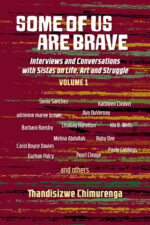
Some of Us Are Brave (Volume 1): Interviews and Conversations with Sistas in Life and Struggle
Price range: USD $ 5.00 through USD $ 23.00Select options This product has multiple variants. The options may be chosen on the product page
Some of Us Are Brave (Volume 1): Interviews and Conversations with Sistas in Life and Struggle
Price range: USD $ 5.00 through USD $ 23.00This is the literature of liberation! The truth. It waters the roots of a strong and timeless tree and bears the fruit of freedom. In the tradition of Ida B. Wells, Thandisizwe Chimurenga writes for the people because she is the people, and she loves the people. The interviews and conversations in Some Of Us Are Brave include Black women and Black men on Black women. This book will educate, inspire and strengthen the mind and spirit of Black women and those that love them. —Dr. Alice Nicholas, Africologist, Assistant Professor, Poet
Some of Us Are Brave is a courageous exploration of Black feminism within the Black left, offering invaluable insights and igniting much-needed conversations. It is a must-read for anyone seeking a deeper understanding of this vital aspect of our history and the transformative power of Black feminist thought. In a media landscape that often falls short when it comes to representing the voices of Black feminists, this series is a breath of fresh air. — Piper Carter, Detroit-based Arts & Culture Organizer
Host of “Beyond Breaking Barriers” podcast on Black Power MediaA society born of white supremacy and patriarchy must, by definition, ignore the voices of Black women. We know that unfortunately, such an attitude will also naturally seep into every stratum of that society
Part of the contribution to correct that was the centering and airing of Black women’s voices through Some of Us Are Brave: A Black Women’s Radio Program that aired on Pacifica’s Los Angeles radio station (KPFK) from 2003 until 2011.
The program covered a myriad of issues by amplifying the voices of a broad cross-section of Black women. Some of those voices have been preserved here in this volume. In addition to capturing various moments in time with a variety of women, this is also a means of taking the intellectual production of and about Black women out of the hands of institutions that are both fundamentally anti-Black and anti-woman.
Volume 1 contains interviews under the headings The Shoulders on Which We Stand and Black Lives Have Always Mattered.
Volume 2 covers Black Women’s Health, Bruthas on Sistas, and Sistas in Struggle.
Select options This product has multiple variants. The options may be chosen on the product page -

Singing to Liberation: Songs of Freedom and Nights of Resistance on Indian Campuses
Price range: USD $ 5.00 through USD $ 16.00Select options This product has multiple variants. The options may be chosen on the product page
Singing to Liberation: Songs of Freedom and Nights of Resistance on Indian Campuses
Price range: USD $ 5.00 through USD $ 16.00Student activism and cultural activism go hand in hand on Indian campuses. Over the last few years, especially after 2014, student movements in the country against social injustice have increased in numbers and tenacity. Cultural modes of expressing dissent have played a key role within this new wave of student movements that have gripped the nation. This book takes the reader through a journey into the ways cultural activists analyse cultural modes of protest, especially in the context of student movements in the Global South. The book delves into the political and ideological contours set by organisations such as the Indian Progressive Theatre Association (IPTA) and the Progressive Writers’ Association (PWA), and by figures such as Faiz Ahmed Faiz, Habib Jalib, Hemanga Biswas and Safdar Hashmi. The book locates them within the contemporary wave of cultural protests, analyses their continued relevance and argues for a revival of theoretical and practical engagement with the early progenitors of the progressive cultural movement in India.
Select options This product has multiple variants. The options may be chosen on the product page -
 Select options This product has multiple variants. The options may be chosen on the product page
Partitions of the Heart: Unmaking the Idea of India
USD $ 18.00In Partitions of the Heart: Unmaking the Idea of India, human rights and peace worker Harsh Mander takes stock of whether the republic has upheld the values it set out to achieve and offers painful, unsparing insight into the contours of hate violence. Through vivid stories from his own work, Mander shows that hate speech, communal propaganda and vigilante violence are mounting a fearsome climate of dread, that targeted crime is systematically fracturing our community, and that the damage to the country’s social fabric may be irreparable. At the same time, he argues that hate can indeed be fought, but only with solidarity, reconciliation and love, and when all of these are founded on fairness.
‘At last a book that turns a powerful searchlight on the evil tide of hatred and violence stalking our country, where our minorities live in fear, and Muslims among us are killed under a government that has declared war on Islam.’ —Nayantara Sahgal, journalist, author of Day of Reckoning: Stories (2015).
‘Harsh Mander’s is the voice of Kabir come alive in our violent times. We can hear it to our redemption, ignore it to our peril.’ —Gopalkrishna Gandhi, former administrator and diplomat, Governor of West Bengal 2004-2009
This book is absolutely mandatory reading. You owe it to the much-vaunted “motherland” which is being abused so shamelessly.’—Kiran Nagarkar, novelist, playwright, film critic and screenwriter.
Select options This product has multiple variants. The options may be chosen on the product page -

Dark PR: How Corporate Disinformation Undermines Our Health and the Environment
Price range: USD $ 6.99 through USD $ 21.00Select options This product has multiple variants. The options may be chosen on the product page
Dark PR: How Corporate Disinformation Undermines Our Health and the Environment
Price range: USD $ 6.99 through USD $ 21.00If you’re interested in how powerful forces of marketing & manipulation make the positive change we badly need MUCH harder, read @grantennis.bsky.social’ great book “Dark PR.” – Brent Toderian, Bluesky
“Think global, act local!” “Be the change you want to see in the world!” “Every little bit counts!” We can all get on board with such sentiments, right? That, of course, is exactly what corporate spin-masters across the world are banking on. By weaponizing such seemingly innocuous yet powerful narratives, change becomes a matter of personal choice, something each of us must slave away at day by day: switching off lightbulbs to save the environment or exercising to shed the weight we’ve gained from consuming junk food. All the while, the corporate welfare tap continues to flow, with over $6 trillion worth of annual subsidies dished out to industries that directly contribute to the deaths of over 5.5 million people each year through diabetes, road deaths, global warming, and other crises. But such framing is just the tip of the iceberg when it comes to the corporate disinformation playbook. This playbook is the dark matter of activist work: the unseeable element shaping harmful spin across all issues. It has never been reverse engineered – until now.
In Dark PR, Grant Ennis – drawing on his decades of experience working in the environmental, philanthropy, and public health sectors – reveals exactly how multinationals go about hoodwinking and manipulating us. In doing so, he lifts the lid on the nine devious frames contained within the cross-industry corporate disinformation playbook: through denialism, normalization, victim-blaming, multifactorialism, and a variety of other tried-and-tested tactics, corporations divert citizens’ attention away from the real causes of global problems, leading them into counter-productive blind-alley “solutions” like ethical consumerism and divestment. Sadly, though, buying Fair Trade chocolate has not and never will save the world. Only by collectively organizing to lobby our governments can we break this destructive cycle of lies and deadly incentives and reclaim control of our lives.
Dark PR: How Corporate Disinformation Harms Our Health and the Environment referenced in the UK House of Lords.
“I’m really interested in a piece of work that’s written by a guy named Grant Ennis, and I would advise you to have a look at his book on subsidy. So actually the Government provide an awful lot of subsidy to unhealthy food producers. Actually we could reduce the subsidy that is provided for that food and use the money in a different way to do different things. He is the expert in that”
– Alice Wiseman, Director of Public Health for Gateshead, EnglandLink: https://lnkd.in/e6AnKssm Minute 11:34:24
Select options This product has multiple variants. The options may be chosen on the product page -

Banana Girls, The
Price range: USD $ 5.00 through USD $ 20.00Select options This product has multiple variants. The options may be chosen on the product page
Banana Girls, The
Price range: USD $ 5.00 through USD $ 20.00The Banana Girls chronicles 2003 days in the lives of two bosom friends, Rehema and Fatuma, and millions of days in the existence of the banana, the fruit which, eaten either ripe or cooked, the girls at some point determine will be the only solid component of their daily diets. The banana becomes not only the symbol of ideal nutrition but also, by turns, of social engineering and neo-imperialist exploitation. …Rehema and Fatuma are Tanzanians by nationality and brainboxes by genetic coding, with an enduring monopoly of either the first or second position in any examination for which they sit. They excel in Mathematics, Chemistry and Physics particularly and are always the first two to solve any mathematical or scientific challenges that are presented to their successive year groups and, by extension, to readers of the book.
… As the days go by, Rehema and Fatuma abandon junk food forever, they also adopt wholesome tastes in what they watch and what they listen to, and they make a good friend, Alice, who, unlike them, is from a rich family but who is adequately informed to join them as committed activists in the BLF, the Banana Liberation Front. Their activism lands them in jail. All three girls see through the machinations of their own government to oppress their own people and of global capitalism to bring about régime change, the better to sustain a stranglehold over poorer economies and to prop up aptly named ‘banana republics’. One malevolent operator is pointed out by name: he is President Ronald Grump of the United States of America.
Select options This product has multiple variants. The options may be chosen on the product page -

The revolutionary ecological legacy of Herbert Marcuse – 2nd Edition
Price range: USD $ 5.00 through USD $ 25.00Select options This product has multiple variants. The options may be chosen on the product page
The revolutionary ecological legacy of Herbert Marcuse – 2nd Edition
Price range: USD $ 5.00 through USD $ 25.00Description (2188 / 2500)
The author appeals to the energies of those engaged in a wide range of contemporary social justice struggles such as ecosocialism, antiracism, the women’s movement, LGBTQ rights, and antiwar forces. As the dialectical counterpart of Marcuse’s Great Refusal, the book, which culminates with the ‘EarthCommonWealth Project’ is keyed to what we are struggling for, not just what we are struggling against. The author argues that regressive political forces must be countered today, and this is best accomplished through radical collaboration around an agenda recognizing the basic economic and political needs of diverse subaltern communities. System negation must become a new general interest. The author discusses core ethical insights from African philosophical sources, indigenous American philosophy, and radical feminist philosophy. Humanity’s first teachings on ethics are to be found in ancient African proverbs. These subsequently served also as a critique of colonialism and neocolonialism. Long-suppressed indigenous American sources supply a philosophical and political critique of Euro-centric economic and cultural values. They also offer an understanding of humanity’s place in nature and the leadership of women and attest to modes of cooperative and egalitarian forms of community. Feminist anthropology furnishes an historical context for understanding the origins of patriarchy and how to move beyond dominator power to new forms of partnership power.The book envisions the displacement and transcendence of capitalist oligarchy as such, not simply its most bestial and destructive components. This is a green economic alternative because its ecological vision sees all living things and their non-living earthly surroundings as a global community capable of a dignified, deliberate coexistence. It is searching for a new system of ecological production, egalitarian distribution, shared ownership, and democratized governance, having its foundation in the ethics of partnership productivity with an ecosocialist and humanist commitment to living our lives on the planet consistent with the most honorable and aesthetic forms of human social and political fulfillment.
Select options This product has multiple variants. The options may be chosen on the product page -

Homestead, Homeland, Home
Price range: USD $ 5.00 through USD $ 19.00Select options This product has multiple variants. The options may be chosen on the product page
Homestead, Homeland, Home
Price range: USD $ 5.00 through USD $ 19.00This is a collection of observations and meditations by Professor Emeritus (York University, Toronto) and philosopher Ato Sekyi-Otu on events, issues, people and ideas culled from recent history and the world, from the US and Canada to Ghana. If there is a persistent thread in these entries, it is this: Virtually all of them testify to the ironic truth of the saying that there is no place like home, no place, that is to say, which looks like the lodestar called home or comes close to approximating its promise of being a just space of human flourishing. Most of the entries are, therefore, harsh, particularly those on the USA. That is because that nation, in his view, has, in recent history, made a major contribution to rendering the world and every homestead we inhabit unhomely and sabotaging attempts to better it. But no one or place is spared, certainly not the author’s native land, Ghana. Canada appears intermittently in these pages in rather fragmentary and contrastive observations. That paucity of comments may be taken to be the complement the author pays to Canada as a place of relative civility and glimmers of decency in a mad and cruel world. It is a short work of predominantly gloomy pictures. But there are a few countervailing images and invocations of hope here and there. There are 166 entries of unequal lengths arranged around 14 headings. These epigrams are contrapuntal variations on the philosopher’s searing imprecation and visionary invocation: unfinished ode, resounding with intermittent fury, to the dawn of human existence set free from all tyrannizing enclosures.
Select options This product has multiple variants. The options may be chosen on the product page -

Hand On The Sun: A passionate and powerful novel of race and class
Price range: USD $ 5.00 through USD $ 18.00Select options This product has multiple variants. The options may be chosen on the product page
Hand On The Sun: A passionate and powerful novel of race and class
Price range: USD $ 5.00 through USD $ 18.00This was Tariq Mehmood’s first novel, published by Penguin Books in 1983, charting the experience of the second generation migrants to the UK. Set in the declining textile industry of the North of England, it is a raw story of pain and anger at the relentlessness of British racism, from the street to the state – a story of an unquenchable desire for justice, and reclaiming human dignity. A dignity that is wrapped around new questions of Identity, a crossroad between religion, language, history and resistance. It is a little big story, that talks to the extremities of social, political and literary issues today? Can stories of a generation be appropriated? How important is religion in identity? If all you have is a story to tell, who should you tell it? Are the issues of today, just the issues of today or can we learn something from the past? In these stories, friendship is not defined by religion or colour, but by humanity. And racism is much more than skin deep. It is an exhilarating read that bears witness to the urgent 80’s battles against state and popular racism. As important now as then. In this new edition, Mehmood provides a Foreword that describes how the novel came to be written and the lives of real people on whom the characters were created. In the Afterword, Mehmood revisits some of the characters who are now 40-years older, and reflects on how the book would have been written today where the conditions of mass mobilizations no longer exist in neoliberal Britain.
Select options This product has multiple variants. The options may be chosen on the product page -

Left Alone: On Solitude and Loneliness amid Collective Struggle
Price range: USD $ 5.00 through USD $ 28.00Select options This product has multiple variants. The options may be chosen on the product page
Left Alone: On Solitude and Loneliness amid Collective Struggle
Price range: USD $ 5.00 through USD $ 28.00Left Alone brings together 13 authors and 6 visual artists from Africa, Asia, Latin America, Europe and North America to individually and collectively reflect – in words and images – on an urgent psycho-political issue that has not yet been explicitly addressed through a left political lens, that is, Left Loneliness. Combining academic and more personal-political texts, including an interview, poetry, a Rap and a powerful short story, the book explores the contributors personally and/or vicariously lived experiences of Left Loneliness from a variety of genres and left political currents: Marxist, Feminist, Anti-/De-Colonial, Anti-Racist, Queer, Post-Soviet, Anti-Ableist and others. Says Feminist writer Sara Ahmed: “Loneliness might be what we are threatened with if we persist in being or doing what we are being or doing.” In this sense, Left Loneliness is neither a metaphor nor a secondary contradiction and definitely not a type of petty bourgeois “personalism”. Rather, it might be considered one of the rank and file psycho-affective elements shaping and at the same time resulting from our myriad, intersecting, unremitting, yet always fragile and potentially shattering political attempts to revolutionise our inner and outer worlds. Given its (growing?) existence in our everyday left subjectivities, the book argues that Left Loneliness and related states of solitude, isolation and alienation, among others, have both debilitating and productive (epistemic) dimensions, with very concrete psycho-somatic repercussions for Left Mental and Physical Health and hence our capacities to persist and build on “being or doing what we are being or doing”. Given that continuing and deepening our multiple ongoing struggles for liberation will depend on our constant ability to (re-)create, sustain and care for both our individual selves and the communities that we are a part of, the aim of Left Alone is to contribute to the strengthening of these personal collectivities in action in-against-and beyond capitalism, colonialism and heteropatriarchy by inviting the comrade-readers into what will ideally be a deeply stimulating and enabling personal-political engagement with the texts and images hailing from countries such as Argentina, Kenya, Kyrgyzstan, Guinea-Bissau/Portugal, Turkey/Kurdistan, Jamaica, Italy, the UK, Germany and the USA. As Lena Grace Anyuolo from Kenya puts it, “My sisters and brothers, Come, Let us gather, To lay the structures for a joyous existence.”
Select options This product has multiple variants. The options may be chosen on the product page -

Politics of Turbulent Waters: Reflections on Ecological, Environmental and Climate Crises in Africa
Price range: USD $ 5.00 through USD $ 20.00Select options This product has multiple variants. The options may be chosen on the product page
Politics of Turbulent Waters: Reflections on Ecological, Environmental and Climate Crises in Africa
Price range: USD $ 5.00 through USD $ 20.00For the past 10 years, the Health of Mother Earth Foundation (HOMEF) has been on the front line of the struggle for environmental justice, climate justice and food sovereignty in Africa and the globe. It has been a decade of non-stop probing of the exploitation of resources, peoples and nations, which has given rise to numerous environmental and climate injustices. HOMEF has had a decade of witnessing and standing against the injustice, the powers and structures (industries and policies) suffocating the rights of the people to a healthy environment and standing with the neglected to take charge of their once self-managed food and agricultural systems. The struggle has necessitated the reawakening of communities’ consciousness to the injustices that besiege them and to their ‘people power’ – power to be utilized in seeking the desired change.mPolitics of Turbulent Waters is a compendium of selected articles in the 36 issues of the Eco-instigator published from 2013 to 2022. The Eco-instigator is yet another tool used by HOMEF to pull together thoughts and reports of activities that advance environmental justice and food sovereignty. Issue by issue, these thoughts and reports flow from within HOMEF and other environmental/climate justice and food sovereignty advocates from across Africa and the globe.They form this rich assemblage (Politics of turbulent waters) to commemorate HOMEF’s 10th anniversary. The title of the book is one of Nnimmo Bassey’s (the director of HOMEF) numerous articles that have graced some pages of the different issues of the Eco-instigator. The article cum title encapsulates the messages that the book intends to convey to you, the reader. It crystallizes the dire condition of Africa and its waters and the power imbalance together with the spatial disposition that plunged the continent into the calamitous environmental situation it faces. It speaks of the politics of economic development and market fundamentalism that avows to maintain the status quo in terms of destructive exploitation of Africa’s marine and other natural resources.
Select options This product has multiple variants. The options may be chosen on the product page -

White Saviorism in International Development: Theories, Practices and Lived Experiences
Price range: USD $ 5.00 through USD $ 22.00Select options This product has multiple variants. The options may be chosen on the product page
White Saviorism in International Development: Theories, Practices and Lived Experiences
Price range: USD $ 5.00 through USD $ 22.00Given the growing interest in understanding the meaning, manifestations, analyses and implications of racism in North/South relations, White Saviorism in International Development seeks to remedy the shortcomings of the development studies literature on the prevalence of White Saviorism in Western development initiatives in the Global South. The volume comprises theoretical chapters, testimonies, stories and lived experiences from 19 contributors from across the Global South. With sensitivity and intelligence, these practitioners and academics create a tapestry that unveils the implicit and explicit forms of White Saviorism in international development.
Select options This product has multiple variants. The options may be chosen on the product page -
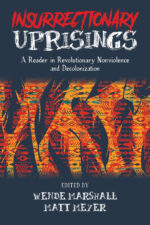
Insurrectionary Uprisings: A Reader in Revolutionary Nonviolence and Decolonization
Price range: USD $ 10.00 through USD $ 25.00Select options This product has multiple variants. The options may be chosen on the product page
Insurrectionary Uprisings: A Reader in Revolutionary Nonviolence and Decolonization
Price range: USD $ 10.00 through USD $ 25.00The volume includes two sections exploring nonviolence in the long Black freedom struggle within the US. From Ella Baker to Martin Luther King, Jr. and Fannie Lou Hamer, from Vincent Harding and Grace Lee Boggs to Colin Kaepernick, the two sections on the Black liberation movement highlight the theory of nonviolence in direct and indirect ways and foreground the relevance of these historic texts for the present moment of political uprisings on both the left and the right. Black strategies for survival and power are analyzed in terms of the ongoing US economic and epidemiological crises as well as the global climate crisis and ecological collapse. A section on revolutionary nonviolence in Africa presents a previously unpublished piece on the role of armed struggle by Franz Fanon, as well as essays by Amilcar Cabral, Barbara Deming, Graca Machel, Kenneth Kaunda, and Nozizwe Madlala-Routledge This section clearly contextualizes the continent’s anti-colonial struggles with the practical thinking about military and unarmed tactics which those movements faced over the course of a half-century.
The section on nonviolence and feminist struggle highlight the work of Grace Paley, Audre Lorde, and Arundhati Roy, along with a little-read piece by Johnnie Tilmon, a leader of the 1960s welfare rights movement. The section on resistance against empire tilts toward Latin American scholars/activists with essays by Maria Lugones, Anibla Quijano and Berta Caceres. This section includes pieces that draw from current debates about the role of state power in building towards radical change and the push to build holistic perspectives on what liberation means for all peoples. The final section on social change in the 21st Century reflects on specific aspects of organizing that are facing campaigns and movements of today and tomorrow. Our goal is to provide challenges and insights for building effectively against all forms of oppression! Though primarily compiling key texts not often seen or contextualized together, the book also provides new strategic commentaries from key leaders including Ela Gandhi, Ruby Sales, ecofeminist Ynestra King, Africa World Press’ Kassahun Checole, and Palestinian Quaker Joyce Ajlouney, Hakim Williams, and Mireille Fanon Mèndes-France.Select options This product has multiple variants. The options may be chosen on the product page -

Social Media and Capitalism: People, Communities and Commodities
Price range: USD $ 5.00 through USD $ 18.00Select options This product has multiple variants. The options may be chosen on the product page
Social Media and Capitalism: People, Communities and Commodities
Price range: USD $ 5.00 through USD $ 18.00Technology is one of the central elements of contemporary human life. The world as one knows it today is a space increasingly mediated by technological interventions, be it in the field of contemporary cultural expressions or political, organizational forms. Social media has played an important role in this transformation. Gone are the days when social media was merely a conduit for conversations. Today, it is a diverse field of operations spanning advertising mechanisms, branding processes and even direct commercial exchanges between users: the prime focus of this particular book.
Direct user-to-user trading through social media within an institutional form is a relatively new dimension in the dynamic world of social media. Yet, just like every other form of innovation within the paradigm of market relations, social media commerce or social media trading has also created newer and diverse alterations in how individuals interact with the existing socio-political fabric within which they exist. This book analyses these alterations and critically investigates the role of Capital in creating them.
The book analyses real-world interactions, interviews and observations through the theoretical framework provided by Marxist political economy and social theory. It draws upon the theoretical scope provided by Marx’s dialectical methods of social analysis and uses it to unearth the effects that trading and commercial activities performed through virtual communities have on society and individuals.
Select options This product has multiple variants. The options may be chosen on the product page
