
-
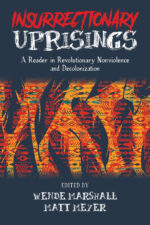
Insurrectionary Uprisings: A Reader in Revolutionary Nonviolence and Decolonization
USD $ 10.00 USD $ 25.00Price range: USD $ 10.00 through USD $ 25.00Select options This product has multiple variants. The options may be chosen on the product page
Insurrectionary Uprisings: A Reader in Revolutionary Nonviolence and Decolonization
USD $ 10.00 USD $ 25.00Price range: USD $ 10.00 through USD $ 25.00The volume includes two sections exploring nonviolence in the long Black freedom struggle within the US. From Ella Baker to Martin Luther King, Jr. and Fannie Lou Hamer, from Vincent Harding and Grace Lee Boggs to Colin Kaepernick, the two sections on the Black liberation movement highlight the theory of nonviolence in direct and indirect ways and foreground the relevance of these historic texts for the present moment of political uprisings on both the left and the right. Black strategies for survival and power are analyzed in terms of the ongoing US economic and epidemiological crises as well as the global climate crisis and ecological collapse. A section on revolutionary nonviolence in Africa presents a previously unpublished piece on the role of armed struggle by Franz Fanon, as well as essays by Amilcar Cabral, Barbara Deming, Graca Machel, Kenneth Kaunda, and Nozizwe Madlala-Routledge This section clearly contextualizes the continent’s anti-colonial struggles with the practical thinking about military and unarmed tactics which those movements faced over the course of a half-century.
The section on nonviolence and feminist struggle highlight the work of Grace Paley, Audre Lorde, and Arundhati Roy, along with a little-read piece by Johnnie Tilmon, a leader of the 1960s welfare rights movement. The section on resistance against empire tilts toward Latin American scholars/activists with essays by Maria Lugones, Anibla Quijano and Berta Caceres. This section includes pieces that draw from current debates about the role of state power in building towards radical change and the push to build holistic perspectives on what liberation means for all peoples. The final section on social change in the 21st Century reflects on specific aspects of organizing that are facing campaigns and movements of today and tomorrow. Our goal is to provide challenges and insights for building effectively against all forms of oppression! Though primarily compiling key texts not often seen or contextualized together, the book also provides new strategic commentaries from key leaders including Ela Gandhi, Ruby Sales, ecofeminist Ynestra King, Africa World Press’ Kassahun Checole, and Palestinian Quaker Joyce Ajlouney, Hakim Williams, and Mireille Fanon Mèndes-France.Select options This product has multiple variants. The options may be chosen on the product page -
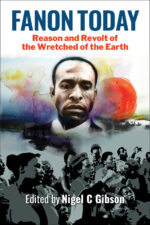
Fanon Today: Reason and Revolt of the Wretched of the Earth
USD $ 10.00 USD $ 30.00Price range: USD $ 10.00 through USD $ 30.00Select options This product has multiple variants. The options may be chosen on the product page
Fanon Today: Reason and Revolt of the Wretched of the Earth
USD $ 10.00 USD $ 30.00Price range: USD $ 10.00 through USD $ 30.00Fanon Today: Reason and Revolt of the Wretched of the Earth is about how new generations are discovering their mission of humanizing the world by claiming Fanon as a thinker for our times. Why Fanon, why now? For the wretched of the earth, conditions have not improved since Fanon’s time and in some cases they have worsened. Reason and revolt are inescapable, quite simply because, as Fanon wrote, it has become ‘impossible for them to breathe, in more than one sense of the word’. To mark the sixtieth anniversary of Fanon’s death (in 1961), the contributors to this book address the resonances of Fanon’s thinking on movements of resistance and mass revolutionary uprisings occurring in response to repression or state violence in Algeria, Brazil, Ghana, Ireland, Kenya, Pakistan, Palestine, Portugal, South Africa, Syria, Trinidad, USA and beyond. The driving force of each chapter of this unique collection of writings is Fanonian praxis, engaging with Fanon the thinker and Fanon the revolutionary.
Select options This product has multiple variants. The options may be chosen on the product page -
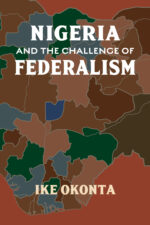
Nigeria and the Challenge of Federalism
USD $ 5.00 USD $ 14.00Price range: USD $ 5.00 through USD $ 14.00Select options This product has multiple variants. The options may be chosen on the product page
Nigeria and the Challenge of Federalism
USD $ 5.00 USD $ 14.00Price range: USD $ 5.00 through USD $ 14.00The book identifies three key moments in Nigeria’s experience with federalism and makes the argument that a complex and socially-diverse country like Nigeria can only be successfully governed by a truly federal arrangement, and not the present unitary contraption that has only delivered poverty, social unrest and the powerful centrifugal forces that are now threatening the very existence of the country itself. The time has come, write Ike Okonta, to convene a conference with sovereign powers to design a federal constitution for the country. The current process of amending the 1999 Constitution by the National Assembly will not suffice. The document is so hopelessly flawed that only its discarding and a fresh effort at constitution-making will suffice.
Select options This product has multiple variants. The options may be chosen on the product page -

Dictators as Gatekeepers for Europe
USD $ 5.00 USD $ 20.00Price range: USD $ 5.00 through USD $ 20.00Select options This product has multiple variants. The options may be chosen on the product page
Dictators as Gatekeepers for Europe
USD $ 5.00 USD $ 20.00Price range: USD $ 5.00 through USD $ 20.00Dictators as Gatekeepers for Europe is a detailed journalistic account of how the EU is attempting to limit mobility within the African continent as a matter of the EU’s domestic policy agenda, hence the title hinting at the many agreements (with Turkey, Libya, Sudan) aimed at blocking migrants from approaching the European continent. The new “Berlin Wall” not only encircles Europe, but also generates a proliferation of militarised borders in Africa. …To summarise, the authors argue, Europe desires protected borders and open markets. The novelty is the amount of material that this book contains about African desires and strategies, both as a continent and as single states. This, in particular, makes the work a collection of extremely valuable directions of research. In fact, Africa, if one were to simplify the continent’s intentions, is depicted as aspiring to the exact opposite of Europe, namely open borders (with the African Union aspiring to free movement within the continent) and protected markets (protected from Western corporate predatory strategies). Moreover, contrary to the narrative of aid according to which the West “helps develop” Africa, the figures quoted by the authors suggest the opposite: while Sub-Saharan Africa receives $134 billion a year in development funding, $192 billions flow out of Africa, with $46 billion in profit for major corporations and another $35 billion vanishing in tax havens (218). https://www.law.ox.ac.uk/research-subject-groups/centre-criminology/centreborder-criminologies/blog/2022/02/double-book by Oana Pârvan.
Select options This product has multiple variants. The options may be chosen on the product page -

JACKSON EN REVUELTA
Suggested Price: USD $ 10.00[Spanish edition of Jackson Rising]
Mississipi; el estado más pobre de los EEUU, el que tiene el porcen- taje más alto de población Negra y con una historia dramática de terror racial y de resistencia Negra. Este es el contexto de la resistencia presentada en este recopilatorio de escritos.
Sin desanimarse por la incertidumbre, el miedo y la an- siedad causadas por el constante deterioro del orden ne- oliberal, la respuesta de las activistas Negras de Jackson ha sido organizarse. Inspiradas por la rica historia de lucha y resistencia en Mississipi y comprometidas con la Estra- tegia Jackson-Kush, construyen instituciones arreladas en el poder comunitario, que combinan política y desarrollo económico y que satisfacen necesidades reales de la gente para crear un model social alternativo.
Las experiencias y análisis recogidas reflejan el poder creativo que se genera cuando la lucha política se basa en una visión del mundo liberada de las contradicciones y li- mitaciones inherentes al liberalismo. Esta es, en definitiva, una historia sobre un porceso decolonial y socialista, orga- nizado y dirigido por personas Negras.
-

Partisan Universalism: Essays in Honour of Ato Sekyi-Otu
USD $ 5.00 USD $ 18.00Price range: USD $ 5.00 through USD $ 18.00Select options This product has multiple variants. The options may be chosen on the product page
Partisan Universalism: Essays in Honour of Ato Sekyi-Otu
USD $ 5.00 USD $ 18.00Price range: USD $ 5.00 through USD $ 18.00The collection of essays in Partisan Universalism celebrates the work of Ato Sekyi-Otu, a scholar, teacher and friend, marking his extraordinary contribution to the philosophy, politics and praxis of liberation. As Ato Sekyi-Otu has argued in his recent book, Left Universalism, Africacentric Essays (Routlege 2019), universalism is an ‘inescapable presupposition of ethical judgment in general and critique in particular, especially indispensable for radical criticism of conditions of existence in postcolonial society and for vindicating visions of social regeneration’. Universalism must and can only be partisan.
“Responding to the invitation ‘to re-member severed but shareable things’, these lovers of truth, freedom, and dignity celebrate the searing intellect, generosity, wit, and compassion of the person and the scholar Ato Sekyi-Otu. … this is a precious contribution. Not to be missed!” —Jane Anna Gordon, author of Statelessness and Contemporary Enslavement and co-editor (with Drucilla Cornell) of Creolizing Rosa Luxemburg. /
“Critically engaging Ato Sekyi-Otu’s notion of partisan universalism, this timely volume of essays speaks directly to the onto-metaphysical issues that will give Africana thought the new foundations that will enable it to move beyond the linguistic turn, brush aside the ashes of Afro-pessimism. … A must read for all concerned with the future of Africana theory and praxis.” —Paget Henry, author of Caliban’s Reason/
“Ato Sekyi-Otu’s thought is one of the most important and exciting in Africa today. The texts compiled in this volume celebrate and engage with the work of Sekyi-Otu … They bear eloquent witness to Sekyi-Otu’s stature as a thinker and to his consistent commitment to the universalization of humanity in both theory and practice.” — Michael Neocosmos, Emeritus Professor in the Humanities, Rhodes University, South Africa.Select options This product has multiple variants. The options may be chosen on the product page -

Agroecología Abolicionista, Soberanía Alimentaria y Prevención de Pandemias
USD $ 5.00 USD $ 15.00Price range: USD $ 5.00 through USD $ 15.00Select options This product has multiple variants. The options may be chosen on the product page
Agroecología Abolicionista, Soberanía Alimentaria y Prevención de Pandemias
USD $ 5.00 USD $ 15.00Price range: USD $ 5.00 through USD $ 15.00La COVID-19 ha expuesto la naturaleza racializada de los sistemas alimentarios, pero también potencialmente otorga oportunidades para construir de nuevo. Maywa Montenegro explora una serie de defectos, desde las cadenas de suministro fracturadas hasta las infecciones no controladas entre los trabajadores de alimentos esenciales y comunidades negras, marrones e indígenas victimizadas por el virus a lo largo de viejos surcos de opresión racial. Ella rastrea los orígenes probables de la COVID-19 hasta los sitios de desborde forjados por la expansión agroindustrial en regiones boscosas donde los patógenos brotan libremente e infectan a los humanos. La agricultura animal de tipo industrial impulsa estos cambios ecológicos que incuban futuros brotes. Las pandemias tienen sus raíces en la separación violenta de las comunidades de sus territorios, semillas, conocimientos y riqueza. El racismo permite ese robo como elemento fundamental para la expansión capitalista.
Para hacer frente a las pandemias y las injusticias alimentarias, Montenegro invoca una agroecoecología abolicionista. Ninguna alternativa anticapitalista puede ignorar el racismo que es fundamental para el sistema alimentario industrial transnacional. Académicos como Angela Davis, Ruth Wilson Gilmore y Mariame Kaba han argumentado que, aunque la abolición se ve con frecuencia como una estrategia de oposición, para erradicar, por ejemplo, prisiones y policía: la abolición es igualmente propositiva. Una agroecología abolicionista abre múltiples posibilidades que responden a las exigencias de un planeta pandémico: no existe una “normalidad” a la que podamos regresar con seguridad.
Select options This product has multiple variants. The options may be chosen on the product page -
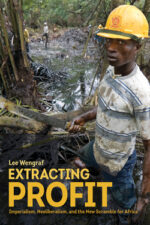
Extracting Profit: Imperialism, Neoliberalism and the New Scramble for Africa
A piercing historical explanation of poverty and inequality in African societies today and the social impact of resource-driven growth, Extracting Profit explains why Africa, in the first decade and a half of the twenty-first century, has undergone an economic boom. Rising global prices in oil and minerals have produced a scramble for Africa’s natural resources, led by investment from U.S., European and Chinese companies, and joined by emerging economies from around the globe. African economies have reached new heights, even outpacing rates of growth seen in much of the rest of the world. Examined through the lens of case studies of the oil fields of the Niger River Delta, the Chad-Cameroon Pipeline and the East African infrastructure boom, this period of “Africa rising” did not lead to the creation of jobs, but has instead fueled the extraction of natural resources, profits accruing to global capital, and an increasingly wealthy African ruling class.
Extracting Profit argues that the roots of today’s social and economic conditions lie in the historical legacies of colonialism and the imposition of so-called “reforms” by global financial institutions such as the World Bank and International Monetary Fund. The chokehold of debt and austerity of the late twentieth century paved the way for severe assaults on African working classes through neoliberal privatization and deregulation. And while the scramble for Africa’s resources has heightened the pace of ecological devastation, examples from Somalia and the West African Ebola outbreak reveal a frightening surge of militarization on the part of China and the U.S.
Yet this “new scramble” has not gone unchallenged. With accounts of platinum workers’ struggles in South Africa, Nigerian labor organizing and pro-democracy upheavals in Uganda and Burkina Faso, Extracting Profit offers several narratives of grassroots organizing and protest, pointing to the potential for resistance to global capital and fundamental change, in Africa and beyond.
And in an updated Preface, the author analyses the implications of the Covid-19 pandemic and escalating climate emergency, as both the crises and resistance to extraction accelerate across the continent.
Reviews-
“Lee Wengraf’s Extracting Profit – Imperialism, Neoliberalism and The New Scramble for Africa is at once historical and contemporary. It unpacks ongoing resource crimes by analytically exposing its historical roots and pointing to ways by which the oppressed can cut off the bonds that lock in their subjugation.” —Nnimmo Bassey, Director, Health of Mother Earth Foundation
“Lee Wengraf provides an important reminder that Africa’s position within the world economy is heavily determined by its unequal insertion into the global capitalist system and ongoing manifestations of imperialism.” –James Chamberlain, Sheffield Political Economy Research Institute
“Lee Wengraf’s Extracting Profit provides a breathtakingly detailed account and analysis of some of the major socioeconomic ills that have been plaguing Africa for centuries. Amongst the host of issues she tackles, arguably the most consequential are mass poverty in African societies, their indefensible economic inequalities and the steady plundering of the continent’s resources, starting from the slave-trade era up till the present-day.” –Remi Adekoya, Review of African Political Economy
“Extracting Profit offers several narratives of grassroots organizing and protest, pointing to the potential for resistance to global capital and fundamental change, in Africa and beyond.” –Developing Economics
“Evidently, this book is well-researched and it contributes to the expansion of the frontiers of Marxist scholarship on Africa’s development dilemma within the global capitalist order. This book lends credence to the pioneering works of such notable radical scholars as Andre Gunder Frank, Walter Rodney, and Samir Amin among several others. It should be read by students and teachers of political economy, development studies, Marxism and philosophy.” –Marx & Philosophy Review of Books
“Extracting Profit provides a great arch of scutiny from the earliest carve-up of the African continent, through colonialism, war, imperialism, to the recent neoliberal takeover. The book demonstrates the continued importance of Marxist analysis on the continent, asserting the centrality of class analysis and a project of revolutionary change. Wengraf provides us with a major contribution, that highlights contemporary developments and the role of China on the African continent that has perplexed and baffled scholars. An indispensable volume.” —Leo Zeilig, author of Frantz Fanon: The Militant Philosopher of Third World Revolution
“The history of resource frontiers everywhere is always one of lethal violence, militarism, empire amidst the forcing house of capital accumulation. Lee Wengraf in Extracting Profit powerfully reveals the contours of Africa’s 21st century version of this history. The scramble for resources, markets, and investments have congealed into a frightening militarization across the continent, creating and fueling the conditions for further political instability. Wengraf documents how expanded American, but also Chinese, presence coupled with the War on Terror, point to both the enduring rivalry among global superpowers across the continent and a perfect storm of resource exploitation. Wengraf offers up a magisterial synopsis of the challenges confronting contemporary Africa.” —Michael Watts, University of California, Berkeley
“One of the most well-known stylized facts of Africa’s recent growth experience is that it has been inequality-inducing in ways that previous growth spurts were not. Lee Wengraf, in her new book Extracting Profit , expertly utilises the machinery of Marxian class analysis in making sense of this stylized fact. Along the way we learn much about Africa’s historical relationship with imperialism and its contemporary manifestations. This book should be required reading for all those who care about Africa and its future.” —Grieve Chelwa, Contributing Editor, Africa Is A Country
“In recent years countries in the African continent have experienced an economic boom—but not all have benefited equally. Extracting Profit is a brilliant and timely analysis that explodes the myth of “Africa Rising,” showing how neoliberal reforms have made the rich richer, while leaving tens of millions of poor and working class people behind. Lee Wengraf tells this story within the context of an imperial rivalry between the United States and China, two global superpowers that have expanded their economic and military presence across the continent. Extracting Profit is incisive, powerful, and necessary: If you read one book about the modern scramble for Africa, and what it means for all of us, make it this one.” —Anand Gopal, author, No Good Men Among the Living: America, the Taliban, and the War Through Afghan Eyes
“Thorough and thoughtful, Wengraf’s book has a radical depth that underscores its significance. It’s definitely a must-read for anyone who cherishes an advanced knowledge on the exploitation of Africa as well as the politics that undermines Africa’s class freedom.” —Kunle Wizeman Ajayi, Convener, Youths Against Austerity and General Secretary of the United Action for Democracy, Nigeria
“Extracting Profit is a very important book for understanding why the immense majority of the African population remain pauperised, despite impressive growth rates of mineral-rich countries on the continent. It continues the project of Walter Rodney’s How Europe Underdeveloped Africa. And in several ways, it also goes beyond it, capturing the changing dynamics of global capitalism 45 years after Rodney’s magnus opus.
In this book, Lee Wengraf debunks the myth of “Africa Rising” and the supposed expansion of an entrepreneurial middle-class, revealing “reforms” imposed by international financial institutions as mechanisms for fostering imperialism in an era of sharpening contradictions of the global capitalist economy. The adverse social, economic, political and environmental impact of these are elaborated on as a systemic whole, through the book’s examination of the sinews of capital’s expansion in the region: the extractive industries.
But, Wengraf does not stop at interrogating the underdevelopment of Africa. Her book identifies a major reason for the failures of national liberation projects: while the working masses were mobilised to fight against colonial domination, the leadership of these movements lay in the hands of aspiring capitalists, and intellectuals. The urgency of the need for a strategy for workers’ power internationally, she stresses correctly, cannot be overemphasized.
Reading Extracting Profit would be exceedingly beneficial for any change-seeking activist in the labour movement within and beyond Africa.” —Baba Aye, editor, Socialist Worker (Nigeria)
-
-

Politics, Democratization and Academia in Uganda: The Case of Makerere University
USD $ 6.99 USD $ 20.00Price range: USD $ 6.99 through USD $ 20.00Select options This product has multiple variants. The options may be chosen on the product page
Politics, Democratization and Academia in Uganda: The Case of Makerere University
USD $ 6.99 USD $ 20.00Price range: USD $ 6.99 through USD $ 20.00As the oldest (and arguably best-known) university in Uganda and the wider eastern and central Africa region, Makerere University looms large in the history of higher education on the continent. Alma mater to presidents, public intellectuals and pundits of all disciplines, Makerere has attracted considerable scholarly and popular attention, both in respect of its prominence and achievements, and well as with regard to its failures and foibles. The proposed book focuses on a particularly understudied aspect of the place of higher education in the African context, i.e. the relationship between a public university of unique historical importance and the contestations over democratization that have taken place both within campus and outside of it. It is built around the late-1980s struggle by the Makerere University Academic Staff Association (MUASA) for improved living conditions against the backdrop of the early programs of structural adjustment and economic reform that the National Resistance Army/Movement (NRA/M) government adopted soon after taking power in 1986. Although seemingly introverted in focus, in many respects the MUASA action represented the earliest forms of political struggle against a regime of governance that promised a great deal, but disappointingly delivered considerably less.
The focus on MUASA provides a critical entry-point to a wider debate about the place of organized democratic action by academics in a post-conflict context where the traditional institutions of political and civil society, i.e. political parties and non-governmental organizations (NGOs) have either been severely compromised or discredited, or where they are too weak and inorganic to provide any form of significant counter-juxtaposition to the government in power. By organizing the first strike by academic staff in the sixty-seven (67) year history of the university, for a time MUASA became the focal-point for democratic organizing against a regime that was yet to fully expose its nefarious and anti-democratic colours. The book examines the broader issues concerning the relationship between organized academic action and democratization; the place of the Media in reviewing these struggles; the position of students as a critical component of academe; “big P” and “small p” politics affecting female academics, and finally, the paradoxical role of the School of Law in both aiding and inhibiting the struggle against dictatorship in a country which has enjoyed
Select options This product has multiple variants. The options may be chosen on the product page -

The imperative of Utu / Ubuntu in Africana scholarship
USD $ 5.00 USD $ 15.00Price range: USD $ 5.00 through USD $ 15.00Select options This product has multiple variants. The options may be chosen on the product page
The imperative of Utu / Ubuntu in Africana scholarship
USD $ 5.00 USD $ 15.00Price range: USD $ 5.00 through USD $ 15.00Written in commemoration of the 50th anniversary of Africana Studies and Research Center, Cornell University, this publication celebrates the birth of Black studies as a liberated academic zone. Professor Mũgo reflects upon the significance of Africana studies, specifically within the context of America’s predominantly White universities, revisiting the hers/his/torical context that birthed Black studies as a field of knowledge. She reflects on the ownership of knowledge, its production, dissemination and custodianship while proposing utu/ubuntu as imperatives in defining transformative education. The hypothesis and heart of the argument is that knowledge and scholarship can either be colonizing, alienating and enslaving; or, alternatively, they can be conscientizing, humanizing and liberating, creating new human beings with the agency to transform life and the world, for the better. he dismisses the false myth of dominating, colonizing and imperialist cultures that claim to have a monopoly of knowledge and whose purpose is to justify the dehumanization of the conquered, the attempted erasure of their knowledges, heritages and ultimately, entire cultures.
Select options This product has multiple variants. The options may be chosen on the product page -
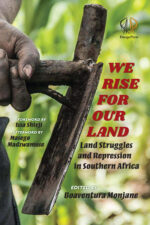
We Rise for Our Land: Land Struggles and Repression in Southern Africa
USD $ 5.00 USD $ 18.00Price range: USD $ 5.00 through USD $ 18.00Select options This product has multiple variants. The options may be chosen on the product page
We Rise for Our Land: Land Struggles and Repression in Southern Africa
USD $ 5.00 USD $ 18.00Price range: USD $ 5.00 through USD $ 18.00In recent years southern Africa has aroused the interest of domestic and foreign investors targeting several sectors. Agrarian and extractive capital has been penetrating the countryside, causing land conflicts, displacement of local peasant communities and in worse cases, deaths. Rural people in general have not, been passive—alone or in alliance with non-governmental organizations and activists, they have organized raised their voices. Resistance movements to capital are taking place throughout the region, even when faced with repression. The book provides critical assessments of the dynamics of agrarian and extractive capital in southern Africa: with contributions from DRC, Namibia, Zambia, Malawi, Zimbabwe, Swaziland, Mozambique, Mauritius and Madagascar.
Select options This product has multiple variants. The options may be chosen on the product page -
Revolutionary Hope vs Free-Market Fantasies Keeping the Southern Africa Liberation Struggle Alive: Theory, Practice, Context
USD $ 5.00 USD $ 20.00Price range: USD $ 5.00 through USD $ 20.00Select options This product has multiple variants. The options may be chosen on the product page
Revolutionary Hope vs Free-Market Fantasies Keeping the Southern Africa Liberation Struggle Alive: Theory, Practice, Context
USD $ 5.00 USD $ 20.00Price range: USD $ 5.00 through USD $ 20.00John S. Saul, born and first educated in Toronto, Canada, moved to Tanzania almost sixty years ago and, since then, has also taught in Mozambique and South Africa as well as back in Canada at York University. In Tanzania, he discovered the centrality of the war for freedom from white rule and global capitalist dictate then taking shape further south – in Mozambique, Angola, Zimbabwe, Namibia and South Africa. Both his scholarly interest and his activist bent drew him to support and to seek to better understand the struggles in these nations-in-the-making, a political choice that now culminates in a final trilogy of books under the general title, The Rethinking Southern African Liberation Trilogy. The first volume of this trilogy, On Building a Social Movement: The North American Campaign for Southern African Liberation Revisited, was published by Africa World Press / Fernwood Books (2017). The present book is the second in that trilogy, with a third volume entitled Class, Race and the Thirty Years War for Southern African Liberation – A History set to conclude his work to be published by Cambridge University Press in 2022.
Here, Saul’s extended first chapter lays out the broad premises of the thinking that has guided his endeavours, ideas that takes the core reality of economic production and exploitation centrally but that are alive to the tangible impact on outcomes of a wide range of other social realities, including class, race, gender, sexuality, nationalism, the environment, politics and the state. A second section covers the essential unity of theory and political practice that underpins Saul’s findings. And a third and final section paints illuminating pictures of some core aspects of the diverse regional contexts — sites of both recolonization and continuing struggle, and all contexts whose trajectories will be further explored in his forthcoming third volume.
Select options This product has multiple variants. The options may be chosen on the product page -
Moving Beyond Capitalist Agriculture: Could Agroecology Prevent Further Pandemics?
USD $ 5.00 USD $ 15.00Price range: USD $ 5.00 through USD $ 15.00Select options This product has multiple variants. The options may be chosen on the product page
Moving Beyond Capitalist Agriculture: Could Agroecology Prevent Further Pandemics?
USD $ 5.00 USD $ 15.00Price range: USD $ 5.00 through USD $ 15.00Pathogens repeatedly are emerging from a global agrifood system rooted in inequality, labor exploitation, and unfettered extractivism by which communities are robbed of their natural and social resources. A crisis-prone economic system that prioritizes production for profit over meeting human needs and ecological preservation is organized around intense monocultural production that, along the way, allows the deadliest of diseases to emerge. The PReP Agroecologies working group focuses on how agriculture might be reimagined as the kind of community-wide intervention that could stop coronaviruses and other pathogens from emerging in the first place. We address how mainstream science supports the same political and economic systems that helped produce the pandemic. Then we introduce agroecology, an environmentalism of the peasantry, the poor, and indigenous, long in practice, that treats agriculture as a part of the ecology out of which humanity grows its food. Agroecology—a science, movement, and practice—combines ecological science, indigenous and peasant knowledges, and social movements for food and territorial sovereignty to achieve environmentally just food systems.
Peasant- and indigenous-led agroecology is uniquely positioned to limit the spread of zoonotic viruses: Post-capitalist agroecology champions the indigenous and smallholders who protect agricultural biodiversity. A diverse agroecological matrix of farm plots, agroforestry, and grazing lands all embedded within a forest can conserve animal biodiversity in the landscape. Agricultural biodiversity can make it more difficult for zoonotic diseases to prevail. Such a mode of conservation also takes into account the economic and social conditions of people currently tending the land, rather than a conservation that uproots people to foster the private accumulation of capital.
Select options This product has multiple variants. The options may be chosen on the product page -
Abolitionist Agroecology, Food Sovereignty and Pandemic Prevention
USD $ 5.00 USD $ 15.00Price range: USD $ 5.00 through USD $ 15.00Select options This product has multiple variants. The options may be chosen on the product page
Abolitionist Agroecology, Food Sovereignty and Pandemic Prevention
USD $ 5.00 USD $ 15.00Price range: USD $ 5.00 through USD $ 15.00COVID-19 has exposed the racialized nature of food systems, but also potentially grants opportunities to build anew. Maywa Montenegro explores a series of breakdowns, from fractured supply chains to uncontrolled infection among essential food workers to Black, Brown, and Indigenous communities scythed through by the virus along old grooves of race-class oppression. She traces the likely origins of COVID-19 to spillover sites forged by agroindustrial expansion into forested regions where pathogens spring free and infect humans. Industrial animal agriculture drives these ecological changes that incubate future outbreaks. Pandemics have their roots in the violent separation of communities from their territories, seeds, knowledge and wealth. Racism enables such theft as fundamental to capitalist expansion.
To tackle pandemics and food injustices, Montenegro calls for an abolitionist agroecology. No anti-capitalist alternative can ignore the racism that is central to the transnational industrial food system. Scholars including Angela Davis, Ruth Wilson Gilmore, and Mariame Kaba have argued that although abolition is frequently seen as an oppositional strategy — to eradicate, for example, prisons and police — abolition is equally propositional. An abolitionist agroecology cracks open multiple possibilities that respond to the exigencies of a pandemic planet — there is no ‘normal’ to which we can safely return.
Select options This product has multiple variants. The options may be chosen on the product page -
 Select options This product has multiple variants. The options may be chosen on the product page
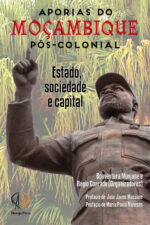
Aporias de Moçambique pós-colonial: Estado, Sociedade e Capital
USD $ 20.00Moçambique celebrou, em Junho de 2020, 45 anos de sua independência. Os ganhos e avanços que o país alcançou nesta quase meia década de independência são inegáveis, mas os desafios que subsistem são muitos. Este livro reflecte sobre Moçambique contemporâneo nos seus vários aspectos, destacando a formação e o papel do Estado, a democracia, a participação dos cidadãos, a política económica e social e o desenvolvimento. Como se pode ver, o livro não é temático e oferece diversas perspectivas de autores e autoras que se dedicam à investigação, ao jornalismo e ao activismo. O livro pretende exactamente oferecer uma leitura do país a partir dos olhos daqueles que não ocupam uma posição de poder mas que vivem, experienciam e lêem a realidade do país a partir de uma perspectiva crítica da sociedade.
O objectivo deste livro é dar uma melhor compreensão do que tem sido o processo de independência em Moçambique e porque é que o país pós-colonial ainda é ‘colonial’ na sua estrutura política e económica. Assim, são dados muitos exemplos para dar ao leitor a possibilidade de confrontar as perspectivas teóricas aqui utilizadas com os casos concretos.
Todos os estudos deste livro mostram que quarenta e cinco anos de independência não foram vividos da mesma forma pelas elites que governam o país e pelas populações que vivem sob o seu domínio. Por um lado, as elites no poder e os seus parentes beneficiaram, e ainda beneficiam, dos recursos do país, enquanto que uma grande parte da população continua à espera das promessas da independência. De um ponto de vista político e económico, os estudos que compõem o livro destacam como o “desenvolvimento” em Moçambique tem estado em contradição com as necessidades do país. Significa que o actual modelo de desenvolvimento responde muito mais ao capital internacional do que à transformação social de Moçambique.Select options This product has multiple variants. The options may be chosen on the product page -

Transforming ourselves, Transforming the World: An open conspiracy for social change – Second Edition
USD $ 5.00 USD $ 20.00Price range: USD $ 5.00 through USD $ 20.00Select options This product has multiple variants. The options may be chosen on the product page
Transforming ourselves, Transforming the World: An open conspiracy for social change – Second Edition
USD $ 5.00 USD $ 20.00Price range: USD $ 5.00 through USD $ 20.00This book is for all those—community workers, adult educators, social activists of every kind—who want to overcome pessimism and play a part in changing society in the direction of peace, justice and dignity for all human beings. As author Brian Murphy points out, many of us are pessimistic about our ability to change the world when confronted by the powerful forces of big corporations and big government. Murphy reveals the social and personal dilemmas which hold people back from social engagement, and argues that the various constraints we face can be overcome.
In this new edition, David Austin explains in his Introduction why this book, first published in 1999, is perhaps more relevant to our times than ever, offering insights from his own experiences of engaging critically with the book and with others. And in his Afterword, Brian Murphy reflects on the continued relevance of the original text, emphasizing how our humanity is being corroded and commodified. To reclaim our humanity, he argues, we must transform ourselves to transform the world.
Brian Murphy’s immensely inspiring book,Transforming Ourselves, Transforming the World, deeply challenges us to think and rethink everything we knew and thought we knew.—Nnimmo Bassey, Executive Director, Health of Mother Earth Foundation & Right Livelihood Award Laureate in 2010
We need more conversations like the one in this book, which are rooted in hope while honestly working through a foundational way of seeing and understanding ourselves in the bigger picture.— Christina Warner, Co-Executive Director and Director of Campaigns and Organising, Council of Canadians.
This is one of the coolest, enjoyable and important books I have read in recent years. Written from the heart as well as the head, it is a breathtakingly visionary, unique and insightful take on the life of the ultimate activist.—Hope Chigudu, Feminist activist
Select options This product has multiple variants. The options may be chosen on the product page -

For the love of the struggle: Memoirs from El Salvador
USD $ 5.00 USD $ 18.00Price range: USD $ 5.00 through USD $ 18.00Select options This product has multiple variants. The options may be chosen on the product page
For the love of the struggle: Memoirs from El Salvador
USD $ 5.00 USD $ 18.00Price range: USD $ 5.00 through USD $ 18.00From his home in El Salvador, the author shares an intimate personal and political memoir that follows his remarkable journey from the comfort and security of a picturesque New England town to a stirring and heroic engagement in common cause with the struggle for peace and justice in El Salvador. After four years as a Peace Corp worker in northern Liberia beginning in the late 1960’s, followed by a stretch back in the United States as a street worker in the ghettos of North Philadelphia, McKinley finds himself in Central America as an aid worker in 1978. He quickly becomes engulfed by the political violence of the region and engaged with the people and their struggles against five decades of military dictatorship, centuries of poverty and exploitation. The story is marked by terror, adventure and courage, by trials and tragedy redeemed by the beauty and transcendence of people in struggle. Originally based in Guatemala heading up a Catholic relief agency, his commitment to the struggles for change in the country attracts the attention of the military, and his own government, forcing him to leave the country in late 1980. He moves to El Salvador where he begins a gradual incursion into the revolutionary struggle of this country, in a commitment that will last the rest of his life. Interwoven with this personal journey, is the story of Teresa Rivas, her husband Antonio, and their five children, a peasant family It also describes their life after the war, with resettlement in the lowlands of Guazapa where many ex-combatants were building a new life. It explains in detail the gradual emergence of the objective and subjective conditions for revolution in El Salvador, including the difficult choice for the use of violence as the only available option for transformative change in the country. The book also details the challenges of reconstruction after the Peace Accords that end the war in 1992, and the tragedy of opportunities lost during the immediate post-war period in the face of the ongoing resistance of traditional opponents to reform. As the memoir closes, the author reflects on his choice to be in El Salvador over the past 43 years, and the country as he finds it in these changing times; on the family with whom he has shared love and life there; on his continuing relationship with Antonio Rivas and his surviving family; and his gradual reconciliation, from a distance, with the country of his birth.
Select options This product has multiple variants. The options may be chosen on the product page -
I am a man of peace: Writings inspired by the Maynooth University Ken Saro-Wiwa Collection
USD $ 5.00 USD $ 20.00Price range: USD $ 5.00 through USD $ 20.00Select options This product has multiple variants. The options may be chosen on the product page
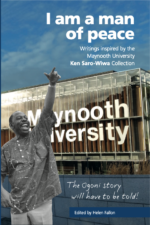
I am a man of peace: Writings inspired by the Maynooth University Ken Saro-Wiwa Collection
USD $ 5.00 USD $ 20.00Price range: USD $ 5.00 through USD $ 20.00This book marks the 25th anniversary of the execution of Nigerian activist and written Ken Saro-Wiwa. The 21 essays, by international contributors, and 42 poems by new and established poets, are inspired by his ideals and activism.
The volume includes contributions by people intimately connected with Saro-Wiwa. His brother Dr Owens Wiwa recounts how his older brother awakened and nurtured his awareness of the tremendous damage Royal Dutch Shell was doing to their homeland, in collaboration with the then Nigerian military government. His firsthand account of the brutality of the military government and its impact; his unsuccessful efforts to save the life of his brother; his time in hiding and subsequent escape, with his family, from Nigeria and his efforts to retrieve the remains of his brother for burial, makes for very moving reading. Likewise, Noo Saro-Wiwa shares her story of growing up in England with strong links to family in Nigeria, and the trauma of hearing of her father’s execution while at University.
Maynooth University, where the editor works as Deputy Librarian, holds the death row correspondence from Ken Saro-Wiwa to Sister Majella McCarron. McCarron provides two personal essays. One, a reflection on the events that shaped her work with Saro-Wiwa in Nigeria and her subsequent efforts to save the lives of the Ogoni 9: the second essay explores her experience as a table observer of the Shell to Sea campaign, which strove to have gas, discovered off the west coast of Ireland, refined at sea rather than inland.
The damage that Shell has caused in Ogoni and the issue of redress are topics addressed in essays by experts including Mark Dummett, of Amnesty International, who investigated how Shell and other oil companies have caused or contributed to human rights abuses through their operations in the Niger Delta. Daniel Leader, a barrister and partner at Leigh Day’s international law department, the firm who have led a number of ground breaking human rights cases, including a series of cases against Shell on behalf of Nigerian communities, explores the issue of legal redress. Architect, environmental activist, author and poet Nnimmo Bassesy’s wide ranging essay presents Saro-Wiwa as activist and writer and creator of the Ogoni Bill of Rights, against the backdrop of the UNEP report of the Environmental Assessment of Ogoniland, which recorded that drinking water in Ogoni had benzene, a carcinogen, at over 900 times the level permitted
Select options This product has multiple variants. The options may be chosen on the product page -

in, against, beyond, corona
USD $ 5.00 USD $ 12.00Price range: USD $ 5.00 through USD $ 12.00Select options This product has multiple variants. The options may be chosen on the product page
in, against, beyond, corona
USD $ 5.00 USD $ 12.00Price range: USD $ 5.00 through USD $ 12.00Description (1711 / 2500)
Part of what is revealed is what is wrong and toxic – in ourselves, in our relations with others, and in our relation with the rest of non-human nature. But it’s also terribly important to listen for and to seek out what is revealed that is good and life-affirming. Both are vital. Our current situation is deeply structured by capitalism and as such has made all of our lives, livelihoods, relations and goods tied up with, and dependent on, reproducing that system. It is clear that the real catastrophe is the inevitable and accelerating spiral of death that flows from that logic of capital and of money. But new (and old too) forms of experimenting in radically different ways of doing/being/relating that flow from it are also revealed – the ways of thinking and doing that reject the logic of power-over, of competition or profit, of exploitation and humiliation. Can these be sustained beyond the immediate corona crisis?; shouldn’t we be encouraging people to identify these areas and think/act them as a present future, planning and imagining how to extend them forward in time?; and expanding them to growing spheres of life? At the level of values and principles, we do wonder whether kindness, social solidarity, and an appropriate scale of time, aren’t perhaps the most important of these?We are much more likely to actually change the world when we listen and tap into all the many ways in which people’s own questions and thinking, their ways of relating and acting, refuse the logic of toxic power and monetised exchange for profit. Here, we will discover already-existing breaks and practices that, instead, embody and embrace the values and principles for a better way of reproducing life.
Select options This product has multiple variants. The options may be chosen on the product page -

Poems for the Penniless
USD $ 5.00 USD $ 18.00Price range: USD $ 5.00 through USD $ 18.00Select options This product has multiple variants. The options may be chosen on the product page
Poems for the Penniless
USD $ 5.00 USD $ 18.00Price range: USD $ 5.00 through USD $ 18.00These poems by Issa Shivji, lawyer, activist and Tanzanian public intellectual, were written at different times in different circumstances. They give vent to personal anguish and political anger. Mostly originally written in Kiswahili, here accompanied by English translations, and they are intensely personal and political.
Poems are clustered under several headings to provide a context. The first combines personal agony at the loss of comrades and friends with poems about love and affection for living ones. The second is about robberies of freedom, resources, and dignity and the loss of justice under neoliberalism. The third section, entitled Hopes and Fears, comprises short poems tweeted over the last five years expressing despair, fear and hope in the human capacity for freedom.
The last section are poems, concerned with Shivji’s period in South Africa in 2018, reflect on the emergence of neo-apartheid with its wanton and shameless exploitation of the majority.
Wonderfully translated by Ida Hadjivayanis.
Select options This product has multiple variants. The options may be chosen on the product page