
-
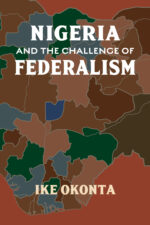
Nigeria and the Challenge of Federalism
Price range: USD $ 5.00 through USD $ 14.00Select options This product has multiple variants. The options may be chosen on the product page
Nigeria and the Challenge of Federalism
Price range: USD $ 5.00 through USD $ 14.00The book identifies three key moments in Nigeria’s experience with federalism and makes the argument that a complex and socially-diverse country like Nigeria can only be successfully governed by a truly federal arrangement, and not the present unitary contraption that has only delivered poverty, social unrest and the powerful centrifugal forces that are now threatening the very existence of the country itself. The time has come, write Ike Okonta, to convene a conference with sovereign powers to design a federal constitution for the country. The current process of amending the 1999 Constitution by the National Assembly will not suffice. The document is so hopelessly flawed that only its discarding and a fresh effort at constitution-making will suffice.
Select options This product has multiple variants. The options may be chosen on the product page -
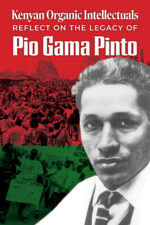
Kenyan Organic Intellectuals Reflect on the Legacy of Pio Gama Pinto
Price range: USD $ 5.00 through USD $ 11.00Select options This product has multiple variants. The options may be chosen on the product page
Kenyan Organic Intellectuals Reflect on the Legacy of Pio Gama Pinto
Price range: USD $ 5.00 through USD $ 11.00This booklet on Pio Gama Pinto has been produced in the tradition of ‘looking back, in order to move forward’ to not only salvage history but also to use it as a mirror to reflect on the current political, economic and social conditions in Kenya. The essays, dubbed reflections, that appear in the booklet are a product of the efforts and dedication of young women and men under the banner of the ‘Organic Intellectuals Network’ in Kenya. We use the concept of ‘organic intellecutal’ as developed by Antonio Gramsci.
Members of the Organic Intellectual Network selected the book Pio Gama Pinto: Kenya’s Unsung Martyr 1927-1965 by Shiraz Durrani (Vita Books, 2018) as a basis for discussion for celebrating and remembering the life of Pio Gama Pinto, Kenya first Martyr, a dedicated and selfless individual in the struggle for freedom in Kenya.Select options This product has multiple variants. The options may be chosen on the product page -

Partisan Universalism: Essays in Honour of Ato Sekyi-Otu
Price range: USD $ 5.00 through USD $ 18.00Select options This product has multiple variants. The options may be chosen on the product page
Partisan Universalism: Essays in Honour of Ato Sekyi-Otu
Price range: USD $ 5.00 through USD $ 18.00The collection of essays in Partisan Universalism celebrates the work of Ato Sekyi-Otu, a scholar, teacher and friend, marking his extraordinary contribution to the philosophy, politics and praxis of liberation. As Ato Sekyi-Otu has argued in his recent book, Left Universalism, Africacentric Essays (Routlege 2019), universalism is an ‘inescapable presupposition of ethical judgment in general and critique in particular, especially indispensable for radical criticism of conditions of existence in postcolonial society and for vindicating visions of social regeneration’. Universalism must and can only be partisan.
“Responding to the invitation ‘to re-member severed but shareable things’, these lovers of truth, freedom, and dignity celebrate the searing intellect, generosity, wit, and compassion of the person and the scholar Ato Sekyi-Otu. … this is a precious contribution. Not to be missed!” —Jane Anna Gordon, author of Statelessness and Contemporary Enslavement and co-editor (with Drucilla Cornell) of Creolizing Rosa Luxemburg. /
“Critically engaging Ato Sekyi-Otu’s notion of partisan universalism, this timely volume of essays speaks directly to the onto-metaphysical issues that will give Africana thought the new foundations that will enable it to move beyond the linguistic turn, brush aside the ashes of Afro-pessimism. … A must read for all concerned with the future of Africana theory and praxis.” —Paget Henry, author of Caliban’s Reason/
“Ato Sekyi-Otu’s thought is one of the most important and exciting in Africa today. The texts compiled in this volume celebrate and engage with the work of Sekyi-Otu … They bear eloquent witness to Sekyi-Otu’s stature as a thinker and to his consistent commitment to the universalization of humanity in both theory and practice.” — Michael Neocosmos, Emeritus Professor in the Humanities, Rhodes University, South Africa.Select options This product has multiple variants. The options may be chosen on the product page -
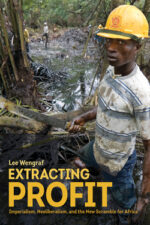
Extracting Profit: Imperialism, Neoliberalism and the New Scramble for Africa
A piercing historical explanation of poverty and inequality in African societies today and the social impact of resource-driven growth, Extracting Profit explains why Africa, in the first decade and a half of the twenty-first century, has undergone an economic boom. Rising global prices in oil and minerals have produced a scramble for Africa’s natural resources, led by investment from U.S., European and Chinese companies, and joined by emerging economies from around the globe. African economies have reached new heights, even outpacing rates of growth seen in much of the rest of the world. Examined through the lens of case studies of the oil fields of the Niger River Delta, the Chad-Cameroon Pipeline and the East African infrastructure boom, this period of “Africa rising” did not lead to the creation of jobs, but has instead fueled the extraction of natural resources, profits accruing to global capital, and an increasingly wealthy African ruling class.
Extracting Profit argues that the roots of today’s social and economic conditions lie in the historical legacies of colonialism and the imposition of so-called “reforms” by global financial institutions such as the World Bank and International Monetary Fund. The chokehold of debt and austerity of the late twentieth century paved the way for severe assaults on African working classes through neoliberal privatization and deregulation. And while the scramble for Africa’s resources has heightened the pace of ecological devastation, examples from Somalia and the West African Ebola outbreak reveal a frightening surge of militarization on the part of China and the U.S.
Yet this “new scramble” has not gone unchallenged. With accounts of platinum workers’ struggles in South Africa, Nigerian labor organizing and pro-democracy upheavals in Uganda and Burkina Faso, Extracting Profit offers several narratives of grassroots organizing and protest, pointing to the potential for resistance to global capital and fundamental change, in Africa and beyond.
And in an updated Preface, the author analyses the implications of the Covid-19 pandemic and escalating climate emergency, as both the crises and resistance to extraction accelerate across the continent.
Reviews-
“Lee Wengraf’s Extracting Profit – Imperialism, Neoliberalism and The New Scramble for Africa is at once historical and contemporary. It unpacks ongoing resource crimes by analytically exposing its historical roots and pointing to ways by which the oppressed can cut off the bonds that lock in their subjugation.” —Nnimmo Bassey, Director, Health of Mother Earth Foundation
“Lee Wengraf provides an important reminder that Africa’s position within the world economy is heavily determined by its unequal insertion into the global capitalist system and ongoing manifestations of imperialism.” –James Chamberlain, Sheffield Political Economy Research Institute
“Lee Wengraf’s Extracting Profit provides a breathtakingly detailed account and analysis of some of the major socioeconomic ills that have been plaguing Africa for centuries. Amongst the host of issues she tackles, arguably the most consequential are mass poverty in African societies, their indefensible economic inequalities and the steady plundering of the continent’s resources, starting from the slave-trade era up till the present-day.” –Remi Adekoya, Review of African Political Economy
“Extracting Profit offers several narratives of grassroots organizing and protest, pointing to the potential for resistance to global capital and fundamental change, in Africa and beyond.” –Developing Economics
“Evidently, this book is well-researched and it contributes to the expansion of the frontiers of Marxist scholarship on Africa’s development dilemma within the global capitalist order. This book lends credence to the pioneering works of such notable radical scholars as Andre Gunder Frank, Walter Rodney, and Samir Amin among several others. It should be read by students and teachers of political economy, development studies, Marxism and philosophy.” –Marx & Philosophy Review of Books
“Extracting Profit provides a great arch of scutiny from the earliest carve-up of the African continent, through colonialism, war, imperialism, to the recent neoliberal takeover. The book demonstrates the continued importance of Marxist analysis on the continent, asserting the centrality of class analysis and a project of revolutionary change. Wengraf provides us with a major contribution, that highlights contemporary developments and the role of China on the African continent that has perplexed and baffled scholars. An indispensable volume.” —Leo Zeilig, author of Frantz Fanon: The Militant Philosopher of Third World Revolution
“The history of resource frontiers everywhere is always one of lethal violence, militarism, empire amidst the forcing house of capital accumulation. Lee Wengraf in Extracting Profit powerfully reveals the contours of Africa’s 21st century version of this history. The scramble for resources, markets, and investments have congealed into a frightening militarization across the continent, creating and fueling the conditions for further political instability. Wengraf documents how expanded American, but also Chinese, presence coupled with the War on Terror, point to both the enduring rivalry among global superpowers across the continent and a perfect storm of resource exploitation. Wengraf offers up a magisterial synopsis of the challenges confronting contemporary Africa.” —Michael Watts, University of California, Berkeley
“One of the most well-known stylized facts of Africa’s recent growth experience is that it has been inequality-inducing in ways that previous growth spurts were not. Lee Wengraf, in her new book Extracting Profit , expertly utilises the machinery of Marxian class analysis in making sense of this stylized fact. Along the way we learn much about Africa’s historical relationship with imperialism and its contemporary manifestations. This book should be required reading for all those who care about Africa and its future.” —Grieve Chelwa, Contributing Editor, Africa Is A Country
“In recent years countries in the African continent have experienced an economic boom—but not all have benefited equally. Extracting Profit is a brilliant and timely analysis that explodes the myth of “Africa Rising,” showing how neoliberal reforms have made the rich richer, while leaving tens of millions of poor and working class people behind. Lee Wengraf tells this story within the context of an imperial rivalry between the United States and China, two global superpowers that have expanded their economic and military presence across the continent. Extracting Profit is incisive, powerful, and necessary: If you read one book about the modern scramble for Africa, and what it means for all of us, make it this one.” —Anand Gopal, author, No Good Men Among the Living: America, the Taliban, and the War Through Afghan Eyes
“Thorough and thoughtful, Wengraf’s book has a radical depth that underscores its significance. It’s definitely a must-read for anyone who cherishes an advanced knowledge on the exploitation of Africa as well as the politics that undermines Africa’s class freedom.” —Kunle Wizeman Ajayi, Convener, Youths Against Austerity and General Secretary of the United Action for Democracy, Nigeria
“Extracting Profit is a very important book for understanding why the immense majority of the African population remain pauperised, despite impressive growth rates of mineral-rich countries on the continent. It continues the project of Walter Rodney’s How Europe Underdeveloped Africa. And in several ways, it also goes beyond it, capturing the changing dynamics of global capitalism 45 years after Rodney’s magnus opus.
In this book, Lee Wengraf debunks the myth of “Africa Rising” and the supposed expansion of an entrepreneurial middle-class, revealing “reforms” imposed by international financial institutions as mechanisms for fostering imperialism in an era of sharpening contradictions of the global capitalist economy. The adverse social, economic, political and environmental impact of these are elaborated on as a systemic whole, through the book’s examination of the sinews of capital’s expansion in the region: the extractive industries.
But, Wengraf does not stop at interrogating the underdevelopment of Africa. Her book identifies a major reason for the failures of national liberation projects: while the working masses were mobilised to fight against colonial domination, the leadership of these movements lay in the hands of aspiring capitalists, and intellectuals. The urgency of the need for a strategy for workers’ power internationally, she stresses correctly, cannot be overemphasized.
Reading Extracting Profit would be exceedingly beneficial for any change-seeking activist in the labour movement within and beyond Africa.” —Baba Aye, editor, Socialist Worker (Nigeria)
-
-

The imperative of Utu / Ubuntu in Africana scholarship
Price range: USD $ 5.00 through USD $ 15.00Select options This product has multiple variants. The options may be chosen on the product page
The imperative of Utu / Ubuntu in Africana scholarship
Price range: USD $ 5.00 through USD $ 15.00Written in commemoration of the 50th anniversary of Africana Studies and Research Center, Cornell University, this publication celebrates the birth of Black studies as a liberated academic zone. Professor Mũgo reflects upon the significance of Africana studies, specifically within the context of America’s predominantly White universities, revisiting the hers/his/torical context that birthed Black studies as a field of knowledge. She reflects on the ownership of knowledge, its production, dissemination and custodianship while proposing utu/ubuntu as imperatives in defining transformative education. The hypothesis and heart of the argument is that knowledge and scholarship can either be colonizing, alienating and enslaving; or, alternatively, they can be conscientizing, humanizing and liberating, creating new human beings with the agency to transform life and the world, for the better. he dismisses the false myth of dominating, colonizing and imperialist cultures that claim to have a monopoly of knowledge and whose purpose is to justify the dehumanization of the conquered, the attempted erasure of their knowledges, heritages and ultimately, entire cultures.
Select options This product has multiple variants. The options may be chosen on the product page -
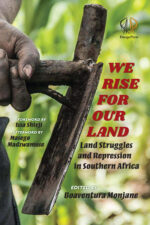
We Rise for Our Land: Land Struggles and Repression in Southern Africa
Price range: USD $ 5.00 through USD $ 18.00Select options This product has multiple variants. The options may be chosen on the product page
We Rise for Our Land: Land Struggles and Repression in Southern Africa
Price range: USD $ 5.00 through USD $ 18.00In recent years southern Africa has aroused the interest of domestic and foreign investors targeting several sectors. Agrarian and extractive capital has been penetrating the countryside, causing land conflicts, displacement of local peasant communities and in worse cases, deaths. Rural people in general have not, been passive—alone or in alliance with non-governmental organizations and activists, they have organized raised their voices. Resistance movements to capital are taking place throughout the region, even when faced with repression. The book provides critical assessments of the dynamics of agrarian and extractive capital in southern Africa: with contributions from DRC, Namibia, Zambia, Malawi, Zimbabwe, Swaziland, Mozambique, Mauritius and Madagascar.
Select options This product has multiple variants. The options may be chosen on the product page -

Revolutionary Hope vs Free-Market Fantasies Keeping the Southern Africa Liberation Struggle Alive: Theory, Practice, Context
Price range: USD $ 5.00 through USD $ 20.00Select options This product has multiple variants. The options may be chosen on the product page
Revolutionary Hope vs Free-Market Fantasies Keeping the Southern Africa Liberation Struggle Alive: Theory, Practice, Context
Price range: USD $ 5.00 through USD $ 20.00John S. Saul, born and first educated in Toronto, Canada, moved to Tanzania almost sixty years ago and, since then, has also taught in Mozambique and South Africa as well as back in Canada at York University. In Tanzania, he discovered the centrality of the war for freedom from white rule and global capitalist dictate then taking shape further south – in Mozambique, Angola, Zimbabwe, Namibia and South Africa. Both his scholarly interest and his activist bent drew him to support and to seek to better understand the struggles in these nations-in-the-making, a political choice that now culminates in a final trilogy of books under the general title, The Rethinking Southern African Liberation Trilogy. The first volume of this trilogy, On Building a Social Movement: The North American Campaign for Southern African Liberation Revisited, was published by Africa World Press / Fernwood Books (2017). The present book is the second in that trilogy, with a third volume entitled Class, Race and the Thirty Years War for Southern African Liberation – A History set to conclude his work to be published by Cambridge University Press in 2022.
Here, Saul’s extended first chapter lays out the broad premises of the thinking that has guided his endeavours, ideas that takes the core reality of economic production and exploitation centrally but that are alive to the tangible impact on outcomes of a wide range of other social realities, including class, race, gender, sexuality, nationalism, the environment, politics and the state. A second section covers the essential unity of theory and political practice that underpins Saul’s findings. And a third and final section paints illuminating pictures of some core aspects of the diverse regional contexts — sites of both recolonization and continuing struggle, and all contexts whose trajectories will be further explored in his forthcoming third volume.
Select options This product has multiple variants. The options may be chosen on the product page -
 Select options This product has multiple variants. The options may be chosen on the product page
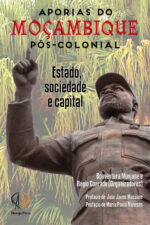
Aporias de Moçambique pós-colonial: Estado, Sociedade e Capital
USD $ 20.00Moçambique celebrou, em Junho de 2020, 45 anos de sua independência. Os ganhos e avanços que o país alcançou nesta quase meia década de independência são inegáveis, mas os desafios que subsistem são muitos. Este livro reflecte sobre Moçambique contemporâneo nos seus vários aspectos, destacando a formação e o papel do Estado, a democracia, a participação dos cidadãos, a política económica e social e o desenvolvimento. Como se pode ver, o livro não é temático e oferece diversas perspectivas de autores e autoras que se dedicam à investigação, ao jornalismo e ao activismo. O livro pretende exactamente oferecer uma leitura do país a partir dos olhos daqueles que não ocupam uma posição de poder mas que vivem, experienciam e lêem a realidade do país a partir de uma perspectiva crítica da sociedade.
O objectivo deste livro é dar uma melhor compreensão do que tem sido o processo de independência em Moçambique e porque é que o país pós-colonial ainda é ‘colonial’ na sua estrutura política e económica. Assim, são dados muitos exemplos para dar ao leitor a possibilidade de confrontar as perspectivas teóricas aqui utilizadas com os casos concretos.
Todos os estudos deste livro mostram que quarenta e cinco anos de independência não foram vividos da mesma forma pelas elites que governam o país e pelas populações que vivem sob o seu domínio. Por um lado, as elites no poder e os seus parentes beneficiaram, e ainda beneficiam, dos recursos do país, enquanto que uma grande parte da população continua à espera das promessas da independência. De um ponto de vista político e económico, os estudos que compõem o livro destacam como o “desenvolvimento” em Moçambique tem estado em contradição com as necessidades do país. Significa que o actual modelo de desenvolvimento responde muito mais ao capital internacional do que à transformação social de Moçambique.Select options This product has multiple variants. The options may be chosen on the product page -
A region in revolt: Mapping the recent uprisings in North Africa and West Asia
Price range: USD $ 5.00 through USD $ 15.00Select options This product has multiple variants. The options may be chosen on the product page
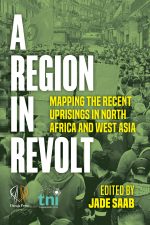
A region in revolt: Mapping the recent uprisings in North Africa and West Asia
Price range: USD $ 5.00 through USD $ 15.00A wave of mass protest movements has spread across North Africa and West Asia, including Sudan, Algeria, Iraq, Lebanon and Iran. The mass protests have much in common, from opposing authoritarian regimes and worsening economic situations to demanding radical changes in social relations. Despite their similarities, each protest movement operates under different conditions that cannot be ignored. The specific historic, political and economic contexts of each country have determined who the key actors of the uprisings are and their location across old and new divides. This book elaborates on these similarities and differences to paint a clearer picture of these movements and draw out lessons to inform future struggles.
Select options This product has multiple variants. The options may be chosen on the product page -

Mau Mau From Within: The Story of the Kenya Land and Freedom Army
Price range: USD $ 12.00 through USD $ 30.00Select options This product has multiple variants. The options may be chosen on the product page
Mau Mau From Within: The Story of the Kenya Land and Freedom Army
Price range: USD $ 12.00 through USD $ 30.00The inside story of the struggles of the Kenya Land and Freedom Army, referred to by British colonialism as the ‘Mau Mau rebellion’, is little known today. The autobiographical material written by Karari Njama (a senior leader in the Mau Mau hierarchy) and compiled by Donald L. Barnett was first published by Monthly Review Press in 1966 as Mau Mau From Within: An Analysis of Kenya’s Peasant Revolt. It was reprinted in 1970; it has remained out of print for many years. As the late Basil Davidson put it in his review of the first edition: “Njama writes of the forest leaders’ efforts to overcome dissension, to evolve effective tactics, to keep discipline, mete out justice … and to teach men how to survive in those merciless forests. His narrative is crowded with excitement. Those who know much of Africa and those who know little will alike find it compulsive reading. Some 10,000 Africans died fighting in those years . Here, in the harsh detail of everyday experience, are the reasons why.”
The book is an extraordinary story of courage, passion, heroism, combined with recounting of colonial terror, brutality and betrayal. It is a story of how the very idea of being ‘Kenyan’ was intimately linked to the idea of freedom, a connection that was destroyed not only by the firepower of the British, but also by those who collaborated and established themselves as the beneficiaries of neocolonial rule. Disconnecting notions of freedom from identity left only a caricature that rapidly descended into tribalism and ethnicity.
This momentous story of the struggle for freedom described here is relevant not only for a new generation of Kenyans but also for all those engaged in emancipatory struggles internationally. For so long as the experiences arising from the struggles described in this book are perceived as merely ‘African’ or ‘Kenyan’, it is not possible to fully grasp the contributions they have made to the struggle for a universalist humanity.
What is recounted in this publication is more than an ‘analysis of a peasant revolt’. It is, above all, a history of the Kenya Land and Freedom Army. As Ngūgī wa Thiong’o points out in his Preface to this new edition, ‘we don’t have to use the vocabulary of the colonial to describe our struggles.’ We were tempted to rename the book ‘Kenya Land and Freedom Army from Within.’ But because the original title has wide recognition, and one of the characteristics of movements of the oppressed is to appropriate derogatory terms
Select options This product has multiple variants. The options may be chosen on the product page -
For the love of the struggle: Memoirs from El Salvador
Price range: USD $ 5.00 through USD $ 18.00Select options This product has multiple variants. The options may be chosen on the product page
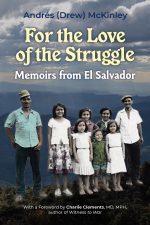
For the love of the struggle: Memoirs from El Salvador
Price range: USD $ 5.00 through USD $ 18.00From his home in El Salvador, the author shares an intimate personal and political memoir that follows his remarkable journey from the comfort and security of a picturesque New England town to a stirring and heroic engagement in common cause with the struggle for peace and justice in El Salvador. After four years as a Peace Corp worker in northern Liberia beginning in the late 1960’s, followed by a stretch back in the United States as a street worker in the ghettos of North Philadelphia, McKinley finds himself in Central America as an aid worker in 1978. He quickly becomes engulfed by the political violence of the region and engaged with the people and their struggles against five decades of military dictatorship, centuries of poverty and exploitation. The story is marked by terror, adventure and courage, by trials and tragedy redeemed by the beauty and transcendence of people in struggle. Originally based in Guatemala heading up a Catholic relief agency, his commitment to the struggles for change in the country attracts the attention of the military, and his own government, forcing him to leave the country in late 1980. He moves to El Salvador where he begins a gradual incursion into the revolutionary struggle of this country, in a commitment that will last the rest of his life. Interwoven with this personal journey, is the story of Teresa Rivas, her husband Antonio, and their five children, a peasant family It also describes their life after the war, with resettlement in the lowlands of Guazapa where many ex-combatants were building a new life. It explains in detail the gradual emergence of the objective and subjective conditions for revolution in El Salvador, including the difficult choice for the use of violence as the only available option for transformative change in the country. The book also details the challenges of reconstruction after the Peace Accords that end the war in 1992, and the tragedy of opportunities lost during the immediate post-war period in the face of the ongoing resistance of traditional opponents to reform. As the memoir closes, the author reflects on his choice to be in El Salvador over the past 43 years, and the country as he finds it in these changing times; on the family with whom he has shared love and life there; on his continuing relationship with Antonio Rivas and his surviving family; and his gradual reconciliation, from a distance, with the country of his birth.
Select options This product has multiple variants. The options may be chosen on the product page -

Being human after 1492
Price range: USD $ 5.00 through USD $ 13.00Select options This product has multiple variants. The options may be chosen on the product page
Being human after 1492
Price range: USD $ 5.00 through USD $ 13.00The pamphlet begins with two letters written by Paul the Apostle in which Christianity first acquires a universal address. The new religion came to exclude people who were not Christians from the count of the human. This became explicit around a thousand years later when Pope Urban II authorised the First Crusade.
In 1492 planetary history was split in to two. Muhammad XII of Granada conceded defeat to Isabella and Ferdinand, the Catholic monarchs of Portugal and Spain, who went on to expel the Jews from the territory under their control. Europe became a Christian project. In the same year Christopher Columbus arrived in the Caribbean and Europe also became an imperial project with a planetary reach.
The origins of the racial ideology can be seen in this period, in which ideas about religion came to be entangled with fantastical ideas about the imagined purity of blood. But it was in the English colony of Virginia in the seventeenth century that the legitimation for the exclusion from the count of the human began to move from claims made in the name of religion to claims made in the name of science. This is the point at which modern racism, rooted in the appearance of the body, began to cast its malignant shadow across the planet.
The author argues that the struggle to put an end to the epoch of world history that opened in 1492 will require new ideas, and new practices. It follows the Caribbean tradition that runs from Aimé Césaire to Frantz Fanon and Sylvia Wynter in affirming the need for a counter-humanism, a radical humanism, a humanism that, in Césaire’s famous phrases, is “made to the measure of the world”. There is a need for a shift in the ground of reason towards the lived experience and struggles of people rendered, in Wynter’s phrase, as ‘pariahs outside of the new order’.
Select options This product has multiple variants. The options may be chosen on the product page -

Lenin150 (Samizdat): 2nd expanded edition
Price range: USD $ 5.00 through USD $ 30.00Select options This product has multiple variants. The options may be chosen on the product page
Lenin150 (Samizdat): 2nd expanded edition
Price range: USD $ 5.00 through USD $ 30.00Lenin150 (Samizdat) aims to contribute to the re-kindling of the communist attractor by engaging, in the spirit of critical solidarity, with Vladimir Ilyich Ulyanov in the year of his 150th anniversary. Conceived out of the former Soviet republic of Kyrgyzstan, the book brings together contributions from all continents, ranging in style from the academic to the lyrical. As such, these compelling, and in some cases absolutely urgent, appropriations of (the spectre of) Lenin aspire to be of considerable use-value for the struggles ahead.
Select options This product has multiple variants. The options may be chosen on the product page -
I am a man of peace: Writings inspired by the Maynooth University Ken Saro-Wiwa Collection
Price range: USD $ 5.00 through USD $ 20.00Select options This product has multiple variants. The options may be chosen on the product page
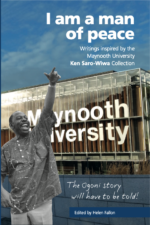
I am a man of peace: Writings inspired by the Maynooth University Ken Saro-Wiwa Collection
Price range: USD $ 5.00 through USD $ 20.00This book marks the 25th anniversary of the execution of Nigerian activist and written Ken Saro-Wiwa. The 21 essays, by international contributors, and 42 poems by new and established poets, are inspired by his ideals and activism.
The volume includes contributions by people intimately connected with Saro-Wiwa. His brother Dr Owens Wiwa recounts how his older brother awakened and nurtured his awareness of the tremendous damage Royal Dutch Shell was doing to their homeland, in collaboration with the then Nigerian military government. His firsthand account of the brutality of the military government and its impact; his unsuccessful efforts to save the life of his brother; his time in hiding and subsequent escape, with his family, from Nigeria and his efforts to retrieve the remains of his brother for burial, makes for very moving reading. Likewise, Noo Saro-Wiwa shares her story of growing up in England with strong links to family in Nigeria, and the trauma of hearing of her father’s execution while at University.
Maynooth University, where the editor works as Deputy Librarian, holds the death row correspondence from Ken Saro-Wiwa to Sister Majella McCarron. McCarron provides two personal essays. One, a reflection on the events that shaped her work with Saro-Wiwa in Nigeria and her subsequent efforts to save the lives of the Ogoni 9: the second essay explores her experience as a table observer of the Shell to Sea campaign, which strove to have gas, discovered off the west coast of Ireland, refined at sea rather than inland.
The damage that Shell has caused in Ogoni and the issue of redress are topics addressed in essays by experts including Mark Dummett, of Amnesty International, who investigated how Shell and other oil companies have caused or contributed to human rights abuses through their operations in the Niger Delta. Daniel Leader, a barrister and partner at Leigh Day’s international law department, the firm who have led a number of ground breaking human rights cases, including a series of cases against Shell on behalf of Nigerian communities, explores the issue of legal redress. Architect, environmental activist, author and poet Nnimmo Bassesy’s wide ranging essay presents Saro-Wiwa as activist and writer and creator of the Ogoni Bill of Rights, against the backdrop of the UNEP report of the Environmental Assessment of Ogoniland, which recorded that drinking water in Ogoni had benzene, a carcinogen, at over 900 times the level permitted
Select options This product has multiple variants. The options may be chosen on the product page -
 Select options This product has multiple variants. The options may be chosen on the product page
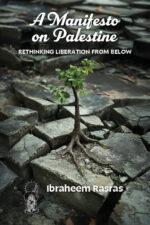
A Manifesto on Palestine
We are excited to share a summary of a truly transformative new work, A Manifesto on Palestine: Rethinking Liberation from Below, by Ibraheem Rasras. This manifesto offers a profound and challenging re-evaluation of the Palestinian struggle, urging us to look beyond conventional political and diplomatic frameworks to envision a radically different path to freedom and self-determination.
The Core Diagnosis: Beyond Material Occupation
Rasras argues that the Palestinian crisis is not merely a material one of occupation, dispossession, and statelessness, but also a deep “epistemological crisis”. The very structures intended for liberation, the manifesto asserts, have been “subverted, diverted, or rendered ineffective by the very forces they seek to fight”. This is evident in the recurrence of atrocities, reminiscent of past massacres, seen in Gaza from 2023 onwards. A central critique is leveled against the adoption of hierarchical, statist, and technocratic forms of liberation, which have come to tragically resemble the configuration of the oppressor, shedding their ethical and revolutionary essence. The Oslo Accords are cited as a prime example, transforming the language of liberation into one of “formalized managerial governance” and “conditional sovereignty”. This has contributed to a profound “void in the political contextualization and ethical framework of the political ruling”.The Problem of “Stylistic” Resistance and Internalized Colonialism
The manifesto identifies how Palestinian resistance has, over decades, shifted from revolutionary, bottom-up rhetoric to institutionalized and compromised modes, particularly after the Oslo Accords. It introduces the concept of “stylistic” liberation, where leaders impose their imagined schemes rather than adapting to the realities on the ground, leading to an “alienus” leadership that lacks genuine popular allegiance. This “stylistic” approach also manifests when liberation is pursued through “tools of trivialization” that are external to the collective’s specific needs, such as placing prolonged peace negotiations *before* achieving liberation. This externalization, mirroring the colonizing process itself, leads to a form of alienation, obstructing collective self-control and, in many cases, resulting in the unconscious participation of the colonized in their own subjugation. Distrust stemming from unfulfilled promises by factions like Hamas and Fatah has further deepened fragmentation and a sense of “strangeness” among Palestinians.A New Strategy: The Ethics of Resistance and Anarchic Programs
To counter this multifaceted crisis, the manifesto proposes a radical alternative: a “bottom-up resistance” grounded in a unified mode of ethics, a collective understanding of the cause, and consistent practices. This “ethics of resistance” is not a rigid dogma but an “emancipatory code” and a regulatory framework for all aspects of Palestinian daily life, directly confronting neoliberal values like profit-maximization. It is intertwined with the urgent need for a “cultural revolution” that aims to restructure social circumstances and foster a “revolutionary consciousness”. This cultural shift, implemented in successive waves, includes intensive education on human rights and rooting new “networking-elements” within Palestinian social and cultural life. The goal is to establish a “solid reference-point” that can unify Palestinians, whose power has been fragmented by internal divisions and external pressures.The manifesto champions “anarchic programs” as a strategic framework to dismantle subjugation. This involves collectively disengaging from oppressive laws and creating a vacuum for temporary self-management, thereby strengthening local grassroots power. It envisions an “anarchic rule” based on “organic units” and “free cooperation,” emphasizing self-management, direct worker control, and integrated agriculture and industry. This approach aims to organize Palestinians without the fear of division or surveillance that has plagued traditional political structures.
The Power of the Everyday
Crucially, the manifesto points to the already existing “affirmative, anarchic, and ethical politics” in fragments throughout Palestinian society. These are not found in the monopolies of NGOs or political parties, but in the “spontaneous and often-unrecognized social inventions of ordinary people”. Examples include mutual aid networks in Gaza during siege, informal community schooling, grassroots organizing, and the refusal to cooperate with surveillance. These acts of “everyday resistance”—like a student crossing a checkpoint or a mother going to work despite immense barriers—are seen as foundational for a new paradigm of collective ethics and political orientation.Toward a Horizon of Liberation
A Manifesto on Palestine is a bold call for “breakage,” arguing that “no gradual reform will bring freedom”. It is an “epistemological” task to unveil and amplify these lifeways and forms of knowledge, leading to an ethical reconstruction for a collective life that rejects domination in all forms. The manifesto asserts that the future of Palestine will not come from foreign beneficence or failed peace talks, but will be “constructed by the long disenfranchised of the political arithmetic: the dispossessed, the alienated, the uncredentialed, the everyday”. It invites all to engage in “a problem to be enjoyed more than an answer to be spewed back,” asserting that “freedom must be written by individuals who are living alternatively”.We encourage you to delve deeper into this profound manifesto and join the critical conversation about rethinking liberation from below.
Select options This product has multiple variants. The options may be chosen on the product page -
Dialectics of revolution : Hegel, Marxism, and its critics through a lens of race, class, gender, and colonialism
Price range: USD $ 5.00 through USD $ 18.00Select options This product has multiple variants. The options may be chosen on the product page
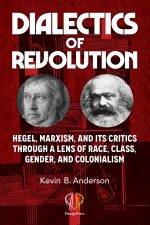
Dialectics of revolution : Hegel, Marxism, and its critics through a lens of race, class, gender, and colonialism
Price range: USD $ 5.00 through USD $ 18.00This book collects four decades of writings on dialectics, a number of them published here for the first time, by Kevin B. Anderson, a well-known scholar-activist in the Marxist-Humanist tradition. The essays cover the dialectics of revolution in a variety of settings, from Hegel and the French Revolution to dialectics today and its poststructuralist and pragmatist critics. In these essays, particular attention is given to Lenin’s encounter with Hegel and its impact on the critique of imperialism, the rejection of crude materialism, and more generally, on world revolutionary developments. Major but neglected works on Hegel and dialectics written under the impact of the struggle against fascism like Lukács’s The Young Hegel and Marcuse’s Reason and Revolution are given full critical treatment. Dunayevskaya’s intersectional revolutionary dialectics is also treated extensively, especially its focus on a dialectics of revolution that avoids class reductionism, placing gender, race, and colonialism at the center alongside class. In addition, key critics of Hegel and dialectics like Jacques Derrida, Michel Foucault, Antonio Negri, Pierre Bourdieu, and Richard Rorty, are themselves analysed and critiqued from a twenty-first century dialectical perspective. The book also takes up the dialectic in global, intersectional settings via a reconsideration of the themes of Anderson’s Marx at the Margins, where nationalism, race, and colonialism were theorized alongside capital and class as key elements in Marxist dialectical thought. As a whole, the book offers a discussion of major themes in the dialectics of revolution that still speak to us today at a time of radical transformation in all spheres of society and of everyday life.
Select options This product has multiple variants. The options may be chosen on the product page -

Fanon and the rationality of revolt
Price range: USD $ 5.00 through USD $ 12.00Select options This product has multiple variants. The options may be chosen on the product page
Fanon and the rationality of revolt
Price range: USD $ 5.00 through USD $ 12.00We inhabit extraordinary times: times in which we are acutely aware of the intensity of what revolutionary thinker Frantz Fanon called “the glare of history’s floodlights.” The velocity and scale at which the revolt against police murder that began in Minnesota after the death of George Floyd on May 25th and moved throughout the US, and then other parts of the world, was astonishing. It was impossible to predict, but then, in retrospect, it is George Floyd’s death becomes a nodal point: calling for action as well as rethinking and self-clarification. Thinking about this moment with the world revolutionary Frantz Fanon, we need to be aware of continuities and discontinuities — or, as he puts it, opacities — between the ages, his and ours. Fanon is always speaking to us, but often in ways we cannot hear. We have to work to listen to him and to understand the new contexts and meanings in relative opacity. It is this constant dialogue that helps illuminate the present and enable ongoing fidelity to Fanon’s call in the conclusion of The Wretched of the Earth the necessity to work out new concepts to confront one of Fanon’s greatest concerns, the betrayal of the revolutionary movement. In this pamphlet we consider how Fanon’s idea of liberation is connected with “the rationality of revolt.” The practice of engaging Fanon not only with revolt but with the reason or rationality of revolt connects with Fanon’s idea of how this liberated humanity is a product of a new consciousness of collectivity open to rethink everything.
Select options This product has multiple variants. The options may be chosen on the product page -

Rooted in struggle
Edited by
Anne Harley and Jonathan LangdonWith
Edward Adeti, Coleman Agyeyomah, Sheena Cameron, Amanor Dzeagu, Leocadio Juracan Salome, Thapelo Mohapi, Zodwa Nsibande, Ro Paradela, Alhassan Shani, Wojciech Tokarz, & Nyeya YenThis book is the culmination of several years of partnership between social movements, social justice organizations and academics in Ghana, South Africa, Guatemala and Canada. Called the Translocal Learning Network, this partnership has generated a space for those facing the multiple and overlapping crises of our time to come together and share knowledge and mutually solidarize with each other’s struggles. This knowledge exchange and mutual solidarity has been non-hierarchical and collaborative in nature, and has taken the form of sharing and commenting on complex stories of these struggles through a participatory research methodology known as narrative restorying. As such, this book will focus on the stories each partner has shared, along with engagement with these stories by other members of the network. This interplay of knowledge sharing will provide a window into the social movement learning of network members.
The central argument of the book was best captured by Thapelo Mohapi from South Africa’s Abahlali baseMjondolo: “It is always assumed that when you are poor, when you are living in a shack, when you live in a rural area, when you are marginalized, that you cannot think for yourself, that you cannot be involved in development, because you are poor”; instead of this “People must make decisions and must be consulted, and they must have a voice to speak about their own development. It must be initiated and completed with the people.” This book is literally a space where those on the front line of struggles against land & livelihood dispossession, violent resource exploitation, climate-fueled emergencies, and the denigration of cultural and traditional indigenous knowledge share their experiences, learning, successes, and defeats, with those facing similar and related struggles but in different contexts.
In addition to the stories of these front-line voices, scholars working alongside these struggles also share some of their learnings and ideas that have emerged from the partnership in the book. Students supporting the partnership also share their learning in the book, as well as describing how their activism also provoked learning in the network. In other words, this book provides a window into a rich, ongoing dialogue of mutual learning and support that will speak to audiences in the activist and critical academic communities.
To that point, this translocal network uses the notion of translocality to push back on the capitalist, colonial, and neo-liberal agenda of a) maintaining divisions between people struggling against oppression in different parts of the world (through border controls, language divisions, and colonial racialized othering); and, b) maintaining a knowledge hierarchy that states, international institutions, intellectual institutions, and corporations are those best able to contend with the many crises we face, and even within activists, it is those movements and organizations with broad, multinational reach that can best speak for the affected. Translocality argues that it is those with local knowledge of crises and context that are best positioned to speak to what needs to change, and that local struggles meeting each other as equals, translocally, is the best way to learn from one another without imposing new forms of knowledge hierarchies. Everaldo Morales Baján, from Commité Campisino del Altiplano (CCDA) in Guatemala captures this sentiment well when he says: “This book captures the essence and importance of the different struggles that exist in various parts of the world, but which converge on always caring for the planet and human rights.”
Chapter Summaries
Introduction: Translocal social movement learning: building mutual solidarity and contesting development for social and environmental justice
Jonathan Langdon; Sheena Cameron; Rodrigo Paradela; Wojciech Tokarz
In an effort to encourage connection and mutual learning between local movements, the Translocal Learning Network (TLN) serves as an effective social justice framework that attempts to build and maintain local to local (i.e. translocal) non-hierarchical connections between movements. The overall goal of this research partnership is to catalyze and animate translocal learning as a means to build capacity among localized movements in their struggles for a climate just and anti-capitalist future, and in so doing trace the contours of a theory of translocal learning – learning based on local to local learning as opposed to top down learning that mimics the very problematic of global dominance these movements contest. Key to this process is an insistence that movements and groups rooted in local social change efforts are crucial authors and actors of a climate just and anti-capitalist future. The members of the TLN address ongoing and emergent injustices to claim rights, assert agency, and demand representation and the redistribution of resources for marginalized communities in South Africa, Ghana, Guatemala and Canada. Creating shared spaces for connection, support, and learning through the ongoing struggles of each social movement has provided continuous moments of solidarity and opportunities for reimagining being in the world. This book showcases the perspectives of our partners, providing rich accounts of their experiences that illuminate struggles, insights, and successes. It also includes academic reflections on intercultural exchanges and offers an in-depth analysis of the collaborative learning process.
‘Players change but the game remains the same’: current realities of the poor, particularly in KwaZulu Natal
Zodwa Nsibande, Church Land Programme
This phrase was used by one member of Abahlali baseMjondolo in a meeting where we were talking about elections and the impact it has on people on the ground, especially who are marginalized and yet they are still expected to participate in the upcoming elections. She cautions that we need to be mindful that even if we change the ruling party, the ‘game’, the electoral system, remains the same, producing elites. Apartheid system favored ‘white’ people. Now the current system favors the elite. The ones who are poor remain poor and left with hope that someday things will change; hope that is shattered yet renewed every five years.
While there is less intense focus on South Africa now that apartheid is over, the sociological legacies continue and the fundamental nature or rules of the game remain intact. It points to the idea that regardless of who is involved, the main objectives, strategies, and overall dynamics of the game do not change. It emphasizes the notion that although the participants may alter, the essence of the game remains unchanged.
CLP will discuss the current realities of the poor, particularly in KwaZulu Natal, under the ongoing oppressive systems in South Africa, that permeates to all aspects of life, including the electoral system that favors the elites, the failing electricity system with load-sharing, and the improper stormwater drainage systems in townships and shack settlements, flood-prone areas (compounded by climate change) that results in loss of homes, food, and lives when it rains.
The Talensi-Nabdam Gold Rush: Local Complicity, Resource Exploitation, and the Crisis of Dignity
Coleman Agyeyomah Venceremos & Alhanssan Shani
This discussion will delve into the profound impact of multi-national mining activities on the communities of the Upper East Region in Ghana, specifically focusing on the alarming stories of dispossession of ancestral lands. The region, rich in cultural heritage and agricultural livelihoods, faces a growing threat as multi-national mining companies seek to exploit its abundant gold resources in collusion with State Institutions.
Through an exploration of real-life stories, light will be shed on the multifaceted consequences of multinational mining-induced dispossession of community lands. From the loss of cultural identity to the disruption of traditional farming practices and land degradation, this narrative will highlight the social, economic, and environmental toll on the affected communities.
The discussion will also provide a comprehensive overview of the mechanisms employed by multinational mining companies to acquire land and the subsequent displacement of local populations. Additionally, throws light on the challenges and complicity faced by these communities in seeking justice and recognition of their rights in the face of powerful corporate interests.
Gold Slavery in Talensi
Edward Adeti & Yen Nyeya, Savannah Research and Advocacy Network
Talensi is a small community in the Upper East Region of Ghana. The Upper East is one of the smallest regions in the country in terms of land size. The people of Talensi are predominantly subsistence farmers who rely on livestock and crop cultivation for their livelihoods.
Mining is one of the commercial activities that require huge parcels of land. Lands earmarked for mining are often fenced and are not available for any other activity even grazing of animals is often not allowed.
The people of Talensi stand the risk of losing their livelihoods due to the influx of a number of mining companies taking up almost 70% of lands earmarked for farming activities
The Río Negro massacre: The abandonment and criminalization of communities in Resistance by the State of Guatemala
Leocadio Juracan Salome, Commité Campisino del Altiplano (CCDA)
The water resource in the highlands of Guatemala, especially in the Verapaces region, has been the scene of large massacres against Indigenous peoples for the implementation of Hydroelectric Plants.
In the 70’s, resistance communities in the banks of Río Negro began facing persecution, dispossession, and criminalization. Río Negro is one of the great rivers that supply the largest Hydroelectric Plant in Guatemala called Chixoy. There were massacres, many disappeared, others forcibly displaced, exiled from their territories where they were born and others who remained in resistance.
With the largest hydroelectric plant in the country 4 kilometers away and despite suffering dispossession and criminalization, more than 500 families from the departments of Quiché, Alta and Baja Verapaz live in conditions of abandonment, without electricity, without development programs for health, housing, education etc.
Despite all the violations against humanity committed in the Río Negro Massacre, many Q’eqch’i’ Mayan families are still waiting for compliance with the resolutions of the Inter-American Court of Human Rights -IACHR-, which mandates the recognition of the violations of Human Rights, the compensation to the families and the legalization of some 1,500 caballerías of territory in favor of the families by the State of Guatemala.
We are not opposed to the energy transition, but respect for the lives of families, their development, respect for the life cycle of Rivers and Mother Nature.
Nothing about us without us – Everybody Thinks!
Thapelo Mohapi, Abahlali baseMjondolo
The dignity of the poor can only be achieved if they are part of their own development, becoming stewards and active participants on their own terms and by their own design. This must be a process undertaken from below, democratically, with people being consulted and making decisions, having a voice to speak about their own development. It must be initiated and completed with the people. “Nothing about us, without us”, the slogan used by many movements to demand that the full and direct participation of members must be integral to decision-making, grounds the work of Abahlali baseMjondolo, a shack dwellers movement in South Africa, with more than 180,000 members that was formed in 2005 to fight for, promote and advance the interests of the poor and marginalized.This contribution grows out of a critique of development and is grounded in the understanding that development is neo-colonial and neo-imperial and that is something that is imposed and done to poor people in the formerly colonized countries, with the backing and financial support of Western governments, aid agencies, companies, and local governments. It is always assumed that when you are poor, when you are living in a shack, when you live in a rural area, when you are poor and marginalized, that you cannot think for yourself, that you cannot be involved in development, because you are poor. AbM demonstrates that people and movements are capable of determining what is best for themselves and to ensure the dignity and rights of the poor.
Ada Songor Lagoon; Our Heartbeat!
Amanor Dzeagu, Radio Ada
November 6, 2023 has become another taboo day for the local salt producers in Ada, just as the police confrontation with community members that led to the death of a pregnant woman in 1985. The Story of the Songor Lagoon: Who Killed Maggie?
Mr. John Korletey Agormedah, a 52 year old salt winner died of bullet wounds after he has been shot three times during an attempt to protect his salt winning business. His killing occurred when a joint taskforce and state police sent by Electrochem Ghana Limited, a private company awarded the entire Ada Songor Lagoon in a monopoly lease by the government and some local chiefs to destroy the community members salt winning equipment in the lagoon communities. Local chiefs fail to condemn the barbaric killing of their subject after three months, rather, they quickly reacted and condemn a political candidate for his comments which has been deemed, uncultured language in a viral video. He has been fined 30,000 Ghana cedis, 4 Rams, 4 foreign schnapps or face a ban in the elections. The police continue to arrest, detain and prosecuting community members including chiefs with the offence of inciting community members against the private company.
Translation, Care, and Political Commitment in the Translocal Learning Network
Ro Paradela; Wojciech Tokarz
This chapter examines translation within the Translocal Learning Network as political infrastructure that shapes collaborative knowledge production. Through translator Ro Paradela’s work – employing gender-inclusive Spanish, strategic domestication, and simultaneous interpretation – translation emerges as relational labor that negotiates power, affirms identities, and fosters belonging across linguistic boundaries, transforming communication into an act of care and solidarity.
Research Assistant Learning from Social Movements (Pending)
Sheena Cameron; Ro Paradela
Cameron and Paradela add another dimension of learning in their chapter, sharing their own learnings and reflections from their participation in this network as research assistants, in relation to the changing context and expressed learnings of other former research assistants over the last twelve years, while simultaneously engaged in their own studies – Paradela as an undergraduate honours student, and Cameron as a PhD student.
Learning from subaltern social movements
Anne Harley; Jonathan Langdon
As engaged scholars, with a long interest in social movements, we have been working with some of the social movements who form part of this group over a number of years. We have learned a great deal from our interaction with them, and have worked together to begin to theorize this learning. In this contribution, we discuss what we mean by the concept ‘subaltern social movement’, and why we feel that the learning from such social movements is critical in current times.
Concluding Chapter
Translocal Learning Network
This chapter emerges from the collective reflections of the network on the process of creating the book, and what we have learned along the way. It will respond to the emergent themes and interlinkages identified in the opening chapter, but also highlight the ways in which we have all responded to each other’s stories, comments and analyses.
Author Bios
Edward Adeti, is a Ghanaian-born investigative journalist widely known for his anti-corruption work and courageous journalism despite facing threats. He was named Ghana’s best journalist in 2024 and won the best investigative journalist award the same year. Some of his notable works include: exposing Ghana’s justice system, leading to a judge’s recusal and a minister’s resignation; the documentary “Cash for Justice”, which led to a senior state attorney’s dismissal; “Stealing from the Sick”, an investigative piece exposing medicine theft at a government hospital, leading to arrests and prosecution of some members of a syndicate; and “Blood Gold”, a series he co-authored with Eryk Bagshaw, an Australian investigative journalist, on human rights violations by mining companies in Ghana, winning multiple international awards in 2023. He is a member of SRAN.
Coleman Agyeyomah formerly of Venceremos Development Consult is currently the Director, of Innovation Development Alternatives (IDEAs), a devolvement and organizational change NGO. Agyeyomah has over 20 years in facilitating and the mobilizing of Community Based Organizations/leaders for social change in poor and vulnerable communities of northern Ghana. Above all, he also teaches and provides field-based experiential learning support for students from Universities of Trent and St. Francis Xavier Canada.
Sheena Cameron is a Lecturer at St. Francis Xavier University (Canada) as well as a Research Coordinator of the Translocal Learning Network. She brings decades of community work in West Africa, Guatemala and Canada and community radio and podcasting experience to the writing of her chapter. She holds a Masters in Communication and Social Justice and she is currently completing a PhD in Social Justice Education at the Ontario Institute for the Study of Education (OISE) at the University of Toronto.
Amanor Dzeagu is a community radio practitioner and development communicator working with Radio Ada, a community radio station in the Greater Accra Region of Ghana. He works closely with local communities to tell their stories, document their traditions, and advocate for inclusive development through radio and community engagement. With a deep respect for the Dangme culture and indigenous systems, Amanor uses the community radio as a bridge between tradition, development, and the voices of the people. He brings more than two decades of community broadcasting experience to the writing of this chapter.
Anne Harley is a senior lecturer in adult education at the University of KwaZulu-Natal (Pietermaritzburg) in South Africa. Working within the radical adult education tradition, she is particularly interested in informal adult education/learning in/through/with struggle, and her work focuses on counter-hegemonic learning and theorising, particularly in subaltern social movements, and is thus related to issues of emancipatory politics, the notion of civil society, and discourses of ‘development’ in South Africa and beyond.
Leocadio Juracan Salome is one of the leaders of the Comité Campasino del Altiplano (CCDA), a large movement of peasant farmers in Guatemala. Leocadio brings decades of political and community organizing experience to CCDA’s contribution to the book.
Jonathan Langdon is a Professor at St. Francis Xavier University (Canada) in Development Studies and Adult Education. Langdon has over 20 years of community engagement, activist organizing and facilitation work, as well as being the convener of the Translocal Learning Network for the last 3 years.
Thapelo Mohapi was born in Matatiele in the Eastern Cape and raised in Durban, KwaZulu Natal. He is the current elected General Secretary of Abahlali baseMjondolo Movement SA, the movement of informal settlements in South Africa, numbering over 180,000 members. Prior to that, he was the chairperson of the Briardene branch in Durban within the movement. He also served as the Provincial Secretary of KwaZulu Natal. AbM is a movement that fights for land, housing and the dignity of the poor in South Africa.
Zodwa Nsibande is a social justice advocate and community leader from Durban, South Africa. She served as General Secretary of the Abahlali baseMjondolo youth league in 2009, she spoke out against the harmful effects of the FIFA 2010 World Cup on shack settlements , leading to threats that forced her into hiding. In 2011, she joined the South African delegation to the Ecumenical Accompaniment Programme in Israel and Palestine (EAPPI), spending three months advocating for peace and human rights. Since 2013, Zodwa has served as a Programme Activist at the Church Land Programme, supporting marginalized communities in securing land rights and dignified living conditions in both rural and urban areas. Most recently, she was a visiting scholar at the University of Sheffield’s School of Law in the United Kingdom from June 24 to July 26, 2024.
Ro Paradela (they/she) is a transfeminist activist from Mexico City. They graduated St. Francis Xavier University with Honours in Sociology and a Subsidiary in Women’s and Gender Studies. They are currently organizing in the fight against the crisis of transfemicidal violence in Mexico.
Alhassan Shani is a development practitioner and works with IDEAs, Northern-Ghana. He has over nine (9) years of experience in development research, community mobilization, social accountability, monitoring and evaluation of projects and development planning process. Alhassan’s development orientation is firmly rooted in participatory development. Additionally, he is passionate about research that encourages community participation, learning and action.
Wojciech Tokarz is a scholar and administrator serving as Associate Professor of Spanish and Interim Dean of the Faculty of Arts at St. Francis Xavier University (Canada). His research examines post-dictatorship Argentine literature, Indigenous representation, and translation theory, in particular how translation facilitates negotiation of Indigenous and LGBTQ+ identities, fostering belonging and advancing decolonial ethics. More information: https://wojciechtokarz.academia.edu
Nyeya Yen is a lifelong social justice activist with over 50 years of advocacy in Ghana and Africa. Exiled in 1982 under the Rawlings regime, he lived in Togo and the UK while campaigning for political justice. Returning in 2014, he continues to fight marginalization in mining-affected communities in Ghana’s Upper East Region.
-
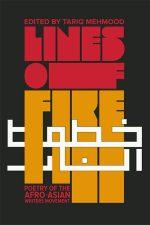
Lines of Fire (2nd Edition)
USD $ 60.00Lines of Fire: Recovering the Lost Arsenal of Anti-Colonial Poetry
Born in Tashkent , forged in clandestine presses, and echoing in today’s streets—this is the recovered front line of a global poetic resistance.
In 1958, at the Afro-Asian Writers’ Conference in Tashkent, a 90-year-old W.E.B. Du Bois stood before the decolonizing world and declared: “I am an American—I am an African.” It was a moment of radical, transnational self-definition.
From that conference emerged a literary movement and its journal, The Call—a direct line for poets from Algiers to Hanoi, Cairo to Beijing, to speak to one another, bypassing the languages and borders of their colonial masters. Though the movement later fractured under Cold War pressures, its two wings—The Call and the Soviet-backed Lotus—remained united in their stand against Zionism, racism, and empire.
Their poetry, often crafted under threat of torture, exile, and surveillance, became a clandestine weapon. Some of it was passed hand to hand, read aloud in underground meetings, and chanted at mass gatherings from Delhi to Ramallah, Cape Town to Gaza.
Now, for the first time, this vital corpus is restored. Lines of Fire, edited by Tariq Mehmood—former leading defendant in the landmark Bradford 12 case and now professor at the American University of Beirut—gathers these living weapons into a single, incendiary anthology. In an age of resurgent fascism and genocide, these voices speak with renewed, unyielding force: their anguish, rage, love, and hope are as urgent now as the day they were penned.
Why This Book Is Essential:
- A Lost Canon, Recovered: Features seminal, often inaccessible work by giants like Mahmoud Darwish, Faiz Ahmed Faiz, Leopold Senghor, Adunis, , Ousmane Sembène, and dozens more from across Africa and Asia.
- Drawn from Rare Sources: Poems curated from scarce issues of The Call and Lotus, long out of print and hidden in archives.
- A Groundbreaking Scholarly Frame: Includes a major introduction tracing the movement’s history, its surveillance by the CIA, the impact of the Sino-Soviet split, and a radical re-examination of solidarity.
- Built to Last & Teach: Published in archival-quality hardcover for libraries, scholars, and lifelong activists. An indispensable text for courses in Decolonial Studies, Global South Literatures, Cold War History, and Postcolonial Poetry.
A Call to Arms for a New Generation.
Edited by Tariq Mehmood, this collection includes poems by:
Salah Abdel Sabour (1931-1981, Ali Ahmad Said Esber, also known as Adunis (1930- ), Mulk Raj Anand (1905-2004), Anar Rasul oghlu Rzayef (1938- ), Nobuo Ayukawa (1920-1986), Fadhil al-Azzawi (1940- ), Abd Al-Wahhab al-Bayati (1926-1999), Mahim Bora (1917- ), Bernard Binlin Dadié (1916- ), Mahmoud Darwish (1942-2008), Osamu Dazai (1909-1948), Mário Pinto de Andrade (1928-1990), D.B. Dhanapala (1905-1971), Mohammed Dib (1920-2003), Gevorg Emin (1918-1998), Sengiin Erdene (1929-2000), Faiz Ahmed Faiz (1911-1984), Rasul Gamzatov (1923-2003), Daniil Granin (1919- ), Colette Anna Gregoire, better known as Anna Greki (1931-1966), Malek Haddad (1927-1978), Pham Ba Ngoan, better known by his pen name Thanh Hai (1930-1980), Buland al-Haidari (1926-1996), Suheil Idris (1925-2008), Yusuf Idris (1927-1991), Fazil Iskander (1929- ), Zulfiya Isroilova (1915-1996), Ali Sardar Jafri (1913-2000), Ghassan Kanafani (1936-1972), Edward al-Kharrat (1926- 2015), Hajime Kijima (1928-2004), Mazisi Kunene (1930-2006), Alex La Guma (1925-1985), U Gtun Kyi, better known by his pen name Minn Latt Yekhaun (1925-1985), Abdul Hayee better known by his pen name Sahir Lundhianvi (1921-1980), Zaki Naguib Mahmoud (1905-1993), Nazik Al-Malaika (1923-2007), Mouloud Mammeri (1917-1989), Yuri Nagibin (1920-1994), Sergey Narovchatov (1919-1981), Dashdorjiin Natsagdorj (1906-1937), Hiroshi Noma (1915-1991), Gabriel jibaba Okara (1921- ), Amrita Pritam (1919-2005), Jean-Joseph Rabearivelo (1901-1937), Richard Rive (1931-1989), Rady Saddouk (1938-2010), Badr Shakir al-Sayyab (1926-1964), Ousmane Sembene (1923- 2007), Leopold Sedar Senghor (1906-2001), Yusuf al-Sibai (1917-1978), Fadwa Tuqan (1917-2003), Sonomyn Udval (1921-1991), Ramses Younan (1913-1966), and Tawfiq Ziad (1929-1994).
Listen to our conversation with Tariq Mehmood here:
#AfroAsianWritersMovement #Lotusjournal #TheCalljournal #NonAlignedMovement #BandungConference #Tashkent1958 #ColdWarculturalhistory #SinoSovietsplit #antiimperialism #anticolonialpoetry #resistanceliterature #resistancepoetry #revolutionarysolidarity #antiracism #antiZionism #settlercolonialism #racialviolence #genocide #GlobalSouthliterature #Africanpoetry #Asianpoetry #Arabpoetry #Palestinianliterature #SouthAsianliterature #AfricanLiterature #Arabpoets #Africanwriters #AfroAsiansolidarity #WEBDuBois #politicalpoetry #20thcenturypoetry
-

Strategic litigation and the struggle for Lesbian, Gay and Bisexual equality in Africa
Price range: USD $ 5.00 through USD $ 25.00Select options This product has multiple variants. The options may be chosen on the product page
Strategic litigation and the struggle for Lesbian, Gay and Bisexual equality in Africa
Price range: USD $ 5.00 through USD $ 25.00There has been a rise in the use of strategic litigation related to seeking equality for lesbian, gay, and bisexual (LGB) persons. Such developments are taking place against the backdrop of active homophobia in Africa. The law and the general public should, argues the author, treat LGB persons in the same way that heterosexuals are treated. In the past two decades,30 strategic cases have been fi led by LGB activists in the Common Law African countries, namely in Botswana, Kenya, Nigeria, South Africa, and Uganda. While the majority of the cases have been successful, they have not resulted in significant social change in any of the countries. On the contrary, there have been active backlashes, counter-mobilisations, and violence against LGB persons, as well as the further criminalisation of same-sex relations and constitutional prohibitions on same-sex marriages in some of the jurisdictions. The author argues that activists in Common Law Africa have to design LGB strategic litigation in such a way as to fi t within the actual social and political conditions in their countries if strategic litigation is to spur social change.
Adrian Jjuuko is an exceptional scholar. A rare combination of intellectual brilliance, commitment and hard work. The book is born of this. It reflects his incisive analytical skills, anchored in solid knowledge of the law and jurisprudential developments in the field. His ventures into political theory, philosophy, and the social sciences give the analysis additional clarity and empirical grounding.
In Strategic Litigation, Adrian Jjuuko has hugely succeeded in bringing to light pertinent issues regarding LGB rights in the African context today. By making reference to various scholarly works and critical analyses, the author has cleverly driven home the message that progressive decriminalization of LGB relationships and constitutional protection of LGB persons in Common Law Africa should be deliberate steps towards demystifying the erstwhile taboo of LGB persons’ equality and social justice. Yet, Jjuuko throws in a word of caution; societal attitudes towards LGB persons still remain largely negative, as exemplified in pervasive disapproval (including religious) of their rights. This implies that a lot is still required from all stakeholders to demystify and accommodate the social position of the LGB community in Common Law Africa today. Kisito, J. M. (2022). Book Review: Strategic litigation and the struggle for lesbian, gay and bisexual equality in Africa by Adrian Jjuuko. Feminism & Psychology, 32(4), 584-587. https://doi-org.proxy.library.carleton.ca/10.1177/09593535221104876 (Original work published 2022)
Select options This product has multiple variants. The options may be chosen on the product page