
-

Politique et culture dans la pensée émancipatrice Africaine
Price range: USD $ 5.00 through USD $ 9.00Select options This product has multiple variants. The options may be chosen on the product page
Politique et culture dans la pensée émancipatrice Africaine
Price range: USD $ 5.00 through USD $ 9.00Au cœur de nos problèmes politiques issus d’un capitalisme racial et d’une oppression (néo)coloniale en Afrique aujourd’hui se trouve l’absence de toute vision émancipatrice véritable. Toute tentative de repenser une politique émancipatrice en Afrique doit pouvoir situer une vision universaliste de la liberté parmi les expériences culturelles singulières que les gens vivent. Les politiques émancipatrices quand elles existaient, bien que pensées dans les luttes pour la liberté ayant lieu dans des contextes historiques particuliers, mettaient toujours en vue une dialectique de ce genre quand elles étaient vraiment basées parmi les traditions populaires. Cependant, seulement une minorité de dirigeants intellectuels et militants comprenait l’importance d’une telle dialectique pour la pensée et l’action.
Ce petit livre trace le contour et discute de deux points de vue très importants sur le rôle de la culture populaire dans la politique émancipatrice en Afrique. Chacun d’entre eux émane de formes d’exploitation capitalistes coloniales distinctes : le premier a vu le jour dans un contexte colonial classique tandis que le second est directement issu d’un contexte étatique néocolonial. Toute politique émancipatrice est développée vis-à-vis le pouvoir d’état et toutes commencent avec un processus de discussion ou est formé un sujet collectif. Un tel sujet politique doit être fondamentalement informé par et conçu en relation avec les cultures populaires.
Les deux auteurs ci-inclus ont compris ce principe et mettent la culture populaire au centre de leur pensées politiques. Le premier, Amílcar Cabral se réfère au rôle principal de la culture dans la lutte contre le colonialisme au Guinée Bissau dans les années 1970 ; le second, Ernest Wamba-dia-Wamba insiste sur le rôle central de la culture populaire pour une politique émancipatrice dans la République Démocratique du Congo aujourd’hui. Malgré la distance temporelle qui les sépare, tous les deux développent au centre de leurs politiques distinctes, une pensée dialectique qui déclenche des pensées universalistes depuis la culture populaire dans le présent. C’est pour cela que leurs points de vue sont d’une importance capitale pour la pensée de la politique émancipatrice en Afrique aujourd’hui.
Select options This product has multiple variants. The options may be chosen on the product page -

Bongoman and the Golden Boots
USD $ 16.25Select options This product has multiple variants. The options may be chosen on the product page
Bongoman and the Golden Boots
USD $ 16.25Bongoman stumbles upon a pair of magical football boots that have the ability to transform the wearer into a football wizard. His legendary love for football induces him to try out the boots, with spectacular results. With his new incredible ability, he suddenly becomes a maestro on the pitch. His brilliant dribbling and scoring tactics attracts international attention and several international premier football teams start seeking him with handsome offers for his services. Bongoman comes to face with the ugly face of game fixing and dirty practices, leading to threats to his life and family. After a series of unsettling incidents, including the kidnap of his nephew, Bongoman decides to play for his local team, but the malpractices run deeper than he had imagined and the mandarins controlling the game he so loves will give him no peace. He has no place in the game if he does not do as they say, but he cannot give up his strong principles for money or fame. Bongoman is in a quandary. Does he abandon his passion for good? Should he take the fall? That is out of the question! His only option is to take the criminals controlling football in the country out of the equation.
Select options This product has multiple variants. The options may be chosen on the product page -

Bongoman and the Magic Potion
USD $ 15.00Select options This product has multiple variants. The options may be chosen on the product page
Bongoman and the Magic Potion
USD $ 15.00Bongoman’s old friend, ‘Prof’, invents a potion that gives that gives someone superhuman strength when ingested, but his assistant, seeking personal benefit, steals a few vials for sale to some shadowy underworld boss. After the gang boss kidnaps the professor’s assistant to get hold of the magic potion’s formula, the professor seeks Bongoman’s assistance to get back his assistant from the crook’s clutches. One of the gang boss’s minions has taken the stolen magic potion and now possesses prodigious strength, wreaking havoc in the neighborhood and imposing a siege on the population. Bongoman must employ all his wits to outsmart his new nemesis. Bongoman finds himself in a full-scale war with an organized criminal gang. He must fight for the soul of his cherished neighborhood. The helpless police also appeal for his assistance in taking down the gang of cutthroats threatening the peace and turning Eastlands into a battleground. This is going to be a bare-knuckle brawl where no prisoners will be taken.
Select options This product has multiple variants. The options may be chosen on the product page -

Bongoman and the Pirates
USD $ 13.00Select options This product has multiple variants. The options may be chosen on the product page
Bongoman and the Pirates
USD $ 13.00Bongoman wins the lottery and believes this is the answer to all his financial woes. He plans to get into the transport industry by purchasing a ‘matatu’ (passenger van). He seeks a vehicle dealer to assist him import a van but a few days later, Bongoman learns that the ship importing his vehicle has been hijacked by Somali pirates in the Indian Ocean off the coast of Kenya. With nowhere to turn to for help, Bongoman decides to take matters into his hands. He must travel to Somalia and get back his vehicle! As he embarks on his mission, he unearths the allies of the hijackers who lay a trap for him. He finds himself stranded in the middle of the Indian Ocean where he has to battle sharks, thirst and exposure. He overcomes these obstacles but falls into the hands of the hijackers, who consequently imprison him. Bongoman worms his way into the hearts of his captors after preparing a delicious meal for them and even accept his offer to join them as cook and soldier. The pirate boss orders him to accompany them to hijack another ship and after the attack goes awry, Bongoman miraculously manages to escape capture by an international anti-piracy force. Will Bongoman get back his vehicle? Will his transport business become a reality?
Select options This product has multiple variants. The options may be chosen on the product page -

Bongoman and the Warlords
USD $ 14.00Select options This product has multiple variants. The options may be chosen on the product page
Bongoman and the Warlords
USD $ 14.00Bongoman lands a job as a reporter and his first assignment for the News Daily is to cover the ongoing war in Somalia between the Transitional Government of Somalia and militant groups in the war-torn country. Bongoman boards a plane to Jowar but due to bad weather the plane is forced to land in Mogadishu, the last place Bongoman wanted to find himself in. The lawless nature of the battle-scarred city catches up with him soon enough. He finds himself at the wrong end of a gun at every turn. He meets an old friend who has a penchant for attracting trouble. To his shock, he learns that she’s running guns for one of the main warlords in the city. He tries to extricate himself from her company but the situation escalates and they both end up in the hands of a regional warlord, who sees in them handsome ransom rewards. An old friend helps Bongoman and his companions escape from their dingy dungeon but they have to contend with a terrorist armed with an RPG. Bongoman has been shot at, blown up, kidnapped and buried in a landslide. It’s time to go back home… but will it be that easy?
Select options This product has multiple variants. The options may be chosen on the product page -

Bongoman Strikes Gold
USD $ 14.00Select options This product has multiple variants. The options may be chosen on the product page
Bongoman Strikes Gold
USD $ 14.00Bongoman bumps into his perpetually broke friend, Rastafasta, driving a flashy car. Rastafasta discloses the secret to his new-found wealth; he is involved in the gold trade. There is a thriving gold business in the mines of Ikolomani, a bustling little town about 350 km from the city. Bongoman embarks on an epic journey to this Eldorado, with dreams of making big money. Halfway through the journey, the bus breaks down and impatient to get to his destination, he disembarks and continues the journey on foot. He jogs through hills and valleys, hour after hour and finally, thirsty and exhausted he finds himself in a dingy bar where he ingests a potent alcoholic brew unknowingly. Shaken but unfazed he continues his journey which is cut short after a gang of robbers posing as passengers hijack the passenger van he is travelling in. After a decisive reckoning with Bongoman, the robbers find themselves behind bars as Bongoman walks away with a hefty bounty derived from their capture. This windfall quickly evaporates after the crafty van driver spikes his drink. He finally arrives at the gold mines of Ikolomani and to his utter dismay, finds that all is not a bed of roses…
Select options This product has multiple variants. The options may be chosen on the product page -

Bongoman vs Mother-In-Law
USD $ 13.00Select options This product has multiple variants. The options may be chosen on the product page
Bongoman vs Mother-In-Law
USD $ 13.00Bongoman’s ill-tempered mother-in-law arrives for a visit. Bongoman is far from thrilled as he doesn’t see eye-to-eye with the old lady. She never has a kind word for him, calling him a good-for-nothing bum. The tranquillity of the Bongoman household is turned upside down as the old lady imposes her uncompromising will, harassing Bongoman at every given opportunity, especially his evening forays to the neighbourhood pub. With no peace of mind, Bongoman pushes back and devises a series of tricks to force her out of his house. None of the tricks works out, and Bongoman finds life unbearable in his own house. He reports an assault against him by his mother-in-law to the police but finds himself in jail as the perpetrator of the assault Bongoman storms out of his house in protest after a brief interlude in jail, taking up residence in the local park, where he has to contend with some unsavoury night-time characters for rights to the more comfortable sleeping spaces and has to fight to assert his position in the pecking order. How will Bongoman rid himself of this terrible relative? Does he have any more tricks up his sleeve?
Select options This product has multiple variants. The options may be chosen on the product page -
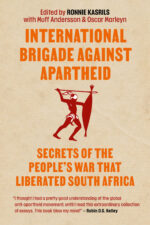
International Brigade Against Apartheid: Secrets of the People’s War That Liberated South Africa
USD $ 27.00Select options This product has multiple variants. The options may be chosen on the product page
International Brigade Against Apartheid: Secrets of the People’s War That Liberated South Africa
USD $ 27.00We hear for the first time from the internationalist secretly working for the ANC’s armed wing, Umkhonto we Sizwe (MK), in the struggle to liberate South Africa from apartheid rule. They acted as couriers, provided safe houses in neighbouring states and within South Africa, helped infiltrate combatants across borders, and smuggled tons of weapons into the country in the most creative ways. Driven by a spirit of international solidarity, they were prepared to take huge risks and face great danger. The internationalists reveal what motivated them as volunteers, not mercenaries: they gained nothing for their endeavours save for the self-esteem in serving a just cause. Against such clandestine involvement, the book includes contributions from key people in the international Anti-Apartheid Movement and its public mobilisation to isolate the apartheid regime. These include worldwide campaigns like Stop the Sports Tours, boycotting of South African products and black American solidarity. The Cuban, East German and Russian contributions outlined those countries’ support for the ANC and MK. The public, global Anti-Apartheid Movement campaigns provide the dimensions from which internationalists who secretly served MK emerged. Edited by Ronnie Kasrils. First published by Jacana Media (Pty) Ltd in 2021, ISBN: 978-1-4314-3202-8, this Daraja Press edition is available in North America and East Africa.
Select options This product has multiple variants. The options may be chosen on the product page -
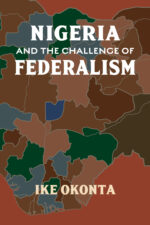
Nigeria and the Challenge of Federalism
Price range: USD $ 5.00 through USD $ 14.00Select options This product has multiple variants. The options may be chosen on the product page
Nigeria and the Challenge of Federalism
Price range: USD $ 5.00 through USD $ 14.00The book identifies three key moments in Nigeria’s experience with federalism and makes the argument that a complex and socially-diverse country like Nigeria can only be successfully governed by a truly federal arrangement, and not the present unitary contraption that has only delivered poverty, social unrest and the powerful centrifugal forces that are now threatening the very existence of the country itself. The time has come, write Ike Okonta, to convene a conference with sovereign powers to design a federal constitution for the country. The current process of amending the 1999 Constitution by the National Assembly will not suffice. The document is so hopelessly flawed that only its discarding and a fresh effort at constitution-making will suffice.
Select options This product has multiple variants. The options may be chosen on the product page -

Dictators as Gatekeepers for Europe
Price range: USD $ 5.00 through USD $ 20.00Select options This product has multiple variants. The options may be chosen on the product page
Dictators as Gatekeepers for Europe
Price range: USD $ 5.00 through USD $ 20.00Dictators as Gatekeepers for Europe is a detailed journalistic account of how the EU is attempting to limit mobility within the African continent as a matter of the EU’s domestic policy agenda, hence the title hinting at the many agreements (with Turkey, Libya, Sudan) aimed at blocking migrants from approaching the European continent. The new “Berlin Wall” not only encircles Europe, but also generates a proliferation of militarised borders in Africa. …To summarise, the authors argue, Europe desires protected borders and open markets. The novelty is the amount of material that this book contains about African desires and strategies, both as a continent and as single states. This, in particular, makes the work a collection of extremely valuable directions of research. In fact, Africa, if one were to simplify the continent’s intentions, is depicted as aspiring to the exact opposite of Europe, namely open borders (with the African Union aspiring to free movement within the continent) and protected markets (protected from Western corporate predatory strategies). Moreover, contrary to the narrative of aid according to which the West “helps develop” Africa, the figures quoted by the authors suggest the opposite: while Sub-Saharan Africa receives $134 billion a year in development funding, $192 billions flow out of Africa, with $46 billion in profit for major corporations and another $35 billion vanishing in tax havens (218). https://www.law.ox.ac.uk/research-subject-groups/centre-criminology/centreborder-criminologies/blog/2022/02/double-book by Oana Pârvan.
Select options This product has multiple variants. The options may be chosen on the product page -

Politics, Democratization and Academia in Uganda: The Case of Makerere University
Price range: USD $ 6.99 through USD $ 20.00Select options This product has multiple variants. The options may be chosen on the product page
Politics, Democratization and Academia in Uganda: The Case of Makerere University
Price range: USD $ 6.99 through USD $ 20.00As the oldest (and arguably best-known) university in Uganda and the wider eastern and central Africa region, Makerere University looms large in the history of higher education on the continent. Alma mater to presidents, public intellectuals and pundits of all disciplines, Makerere has attracted considerable scholarly and popular attention, both in respect of its prominence and achievements, and well as with regard to its failures and foibles. The proposed book focuses on a particularly understudied aspect of the place of higher education in the African context, i.e. the relationship between a public university of unique historical importance and the contestations over democratization that have taken place both within campus and outside of it. It is built around the late-1980s struggle by the Makerere University Academic Staff Association (MUASA) for improved living conditions against the backdrop of the early programs of structural adjustment and economic reform that the National Resistance Army/Movement (NRA/M) government adopted soon after taking power in 1986. Although seemingly introverted in focus, in many respects the MUASA action represented the earliest forms of political struggle against a regime of governance that promised a great deal, but disappointingly delivered considerably less.
The focus on MUASA provides a critical entry-point to a wider debate about the place of organized democratic action by academics in a post-conflict context where the traditional institutions of political and civil society, i.e. political parties and non-governmental organizations (NGOs) have either been severely compromised or discredited, or where they are too weak and inorganic to provide any form of significant counter-juxtaposition to the government in power. By organizing the first strike by academic staff in the sixty-seven (67) year history of the university, for a time MUASA became the focal-point for democratic organizing against a regime that was yet to fully expose its nefarious and anti-democratic colours. The book examines the broader issues concerning the relationship between organized academic action and democratization; the place of the Media in reviewing these struggles; the position of students as a critical component of academe; “big P” and “small p” politics affecting female academics, and finally, the paradoxical role of the School of Law in both aiding and inhibiting the struggle against dictatorship in a country which has enjoyed
Select options This product has multiple variants. The options may be chosen on the product page -

The imperative of Utu / Ubuntu in Africana scholarship
Price range: USD $ 5.00 through USD $ 15.00Select options This product has multiple variants. The options may be chosen on the product page
The imperative of Utu / Ubuntu in Africana scholarship
Price range: USD $ 5.00 through USD $ 15.00Written in commemoration of the 50th anniversary of Africana Studies and Research Center, Cornell University, this publication celebrates the birth of Black studies as a liberated academic zone. Professor Mũgo reflects upon the significance of Africana studies, specifically within the context of America’s predominantly White universities, revisiting the hers/his/torical context that birthed Black studies as a field of knowledge. She reflects on the ownership of knowledge, its production, dissemination and custodianship while proposing utu/ubuntu as imperatives in defining transformative education. The hypothesis and heart of the argument is that knowledge and scholarship can either be colonizing, alienating and enslaving; or, alternatively, they can be conscientizing, humanizing and liberating, creating new human beings with the agency to transform life and the world, for the better. he dismisses the false myth of dominating, colonizing and imperialist cultures that claim to have a monopoly of knowledge and whose purpose is to justify the dehumanization of the conquered, the attempted erasure of their knowledges, heritages and ultimately, entire cultures.
Select options This product has multiple variants. The options may be chosen on the product page -
 Select options This product has multiple variants. The options may be chosen on the product page
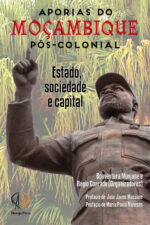
Aporias de Moçambique pós-colonial: Estado, Sociedade e Capital
USD $ 20.00Moçambique celebrou, em Junho de 2020, 45 anos de sua independência. Os ganhos e avanços que o país alcançou nesta quase meia década de independência são inegáveis, mas os desafios que subsistem são muitos. Este livro reflecte sobre Moçambique contemporâneo nos seus vários aspectos, destacando a formação e o papel do Estado, a democracia, a participação dos cidadãos, a política económica e social e o desenvolvimento. Como se pode ver, o livro não é temático e oferece diversas perspectivas de autores e autoras que se dedicam à investigação, ao jornalismo e ao activismo. O livro pretende exactamente oferecer uma leitura do país a partir dos olhos daqueles que não ocupam uma posição de poder mas que vivem, experienciam e lêem a realidade do país a partir de uma perspectiva crítica da sociedade.
O objectivo deste livro é dar uma melhor compreensão do que tem sido o processo de independência em Moçambique e porque é que o país pós-colonial ainda é ‘colonial’ na sua estrutura política e económica. Assim, são dados muitos exemplos para dar ao leitor a possibilidade de confrontar as perspectivas teóricas aqui utilizadas com os casos concretos.
Todos os estudos deste livro mostram que quarenta e cinco anos de independência não foram vividos da mesma forma pelas elites que governam o país e pelas populações que vivem sob o seu domínio. Por um lado, as elites no poder e os seus parentes beneficiaram, e ainda beneficiam, dos recursos do país, enquanto que uma grande parte da população continua à espera das promessas da independência. De um ponto de vista político e económico, os estudos que compõem o livro destacam como o “desenvolvimento” em Moçambique tem estado em contradição com as necessidades do país. Significa que o actual modelo de desenvolvimento responde muito mais ao capital internacional do que à transformação social de Moçambique.Select options This product has multiple variants. The options may be chosen on the product page -
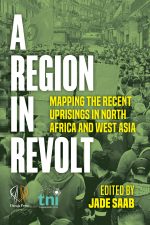
A region in revolt: Mapping the recent uprisings in North Africa and West Asia
Price range: USD $ 5.00 through USD $ 15.00Select options This product has multiple variants. The options may be chosen on the product page
A region in revolt: Mapping the recent uprisings in North Africa and West Asia
Price range: USD $ 5.00 through USD $ 15.00A wave of mass protest movements has spread across North Africa and West Asia, including Sudan, Algeria, Iraq, Lebanon and Iran. The mass protests have much in common, from opposing authoritarian regimes and worsening economic situations to demanding radical changes in social relations. Despite their similarities, each protest movement operates under different conditions that cannot be ignored. The specific historic, political and economic contexts of each country have determined who the key actors of the uprisings are and their location across old and new divides. This book elaborates on these similarities and differences to paint a clearer picture of these movements and draw out lessons to inform future struggles.
Select options This product has multiple variants. The options may be chosen on the product page -

Mau Mau From Within: The Story of the Kenya Land and Freedom Army
Price range: USD $ 12.00 through USD $ 30.00Select options This product has multiple variants. The options may be chosen on the product page
Mau Mau From Within: The Story of the Kenya Land and Freedom Army
Price range: USD $ 12.00 through USD $ 30.00The inside story of the struggles of the Kenya Land and Freedom Army, referred to by British colonialism as the ‘Mau Mau rebellion’, is little known today. The autobiographical material written by Karari Njama (a senior leader in the Mau Mau hierarchy) and compiled by Donald L. Barnett was first published by Monthly Review Press in 1966 as Mau Mau From Within: An Analysis of Kenya’s Peasant Revolt. It was reprinted in 1970; it has remained out of print for many years. As the late Basil Davidson put it in his review of the first edition: “Njama writes of the forest leaders’ efforts to overcome dissension, to evolve effective tactics, to keep discipline, mete out justice … and to teach men how to survive in those merciless forests. His narrative is crowded with excitement. Those who know much of Africa and those who know little will alike find it compulsive reading. Some 10,000 Africans died fighting in those years . Here, in the harsh detail of everyday experience, are the reasons why.”
The book is an extraordinary story of courage, passion, heroism, combined with recounting of colonial terror, brutality and betrayal. It is a story of how the very idea of being ‘Kenyan’ was intimately linked to the idea of freedom, a connection that was destroyed not only by the firepower of the British, but also by those who collaborated and established themselves as the beneficiaries of neocolonial rule. Disconnecting notions of freedom from identity left only a caricature that rapidly descended into tribalism and ethnicity.
This momentous story of the struggle for freedom described here is relevant not only for a new generation of Kenyans but also for all those engaged in emancipatory struggles internationally. For so long as the experiences arising from the struggles described in this book are perceived as merely ‘African’ or ‘Kenyan’, it is not possible to fully grasp the contributions they have made to the struggle for a universalist humanity.
What is recounted in this publication is more than an ‘analysis of a peasant revolt’. It is, above all, a history of the Kenya Land and Freedom Army. As Ngūgī wa Thiong’o points out in his Preface to this new edition, ‘we don’t have to use the vocabulary of the colonial to describe our struggles.’ We were tempted to rename the book ‘Kenya Land and Freedom Army from Within.’ But because the original title has wide recognition, and one of the characteristics of movements of the oppressed is to appropriate derogatory terms
Select options This product has multiple variants. The options may be chosen on the product page -
 Select options This product has multiple variants. The options may be chosen on the product page
The In-Between World of Kenya’s Media: South Asian Journalism, 1900-1992
USD $ 35.00This book, originally published by AwaaZ in Kenya, provides insights into journalists of Indian origin who wrote about the struggles of Kenyan people.
Select options This product has multiple variants. The options may be chosen on the product page -

Being human after 1492
Price range: USD $ 5.00 through USD $ 13.00Select options This product has multiple variants. The options may be chosen on the product page
Being human after 1492
Price range: USD $ 5.00 through USD $ 13.00The pamphlet begins with two letters written by Paul the Apostle in which Christianity first acquires a universal address. The new religion came to exclude people who were not Christians from the count of the human. This became explicit around a thousand years later when Pope Urban II authorised the First Crusade.
In 1492 planetary history was split in to two. Muhammad XII of Granada conceded defeat to Isabella and Ferdinand, the Catholic monarchs of Portugal and Spain, who went on to expel the Jews from the territory under their control. Europe became a Christian project. In the same year Christopher Columbus arrived in the Caribbean and Europe also became an imperial project with a planetary reach.
The origins of the racial ideology can be seen in this period, in which ideas about religion came to be entangled with fantastical ideas about the imagined purity of blood. But it was in the English colony of Virginia in the seventeenth century that the legitimation for the exclusion from the count of the human began to move from claims made in the name of religion to claims made in the name of science. This is the point at which modern racism, rooted in the appearance of the body, began to cast its malignant shadow across the planet.
The author argues that the struggle to put an end to the epoch of world history that opened in 1492 will require new ideas, and new practices. It follows the Caribbean tradition that runs from Aimé Césaire to Frantz Fanon and Sylvia Wynter in affirming the need for a counter-humanism, a radical humanism, a humanism that, in Césaire’s famous phrases, is “made to the measure of the world”. There is a need for a shift in the ground of reason towards the lived experience and struggles of people rendered, in Wynter’s phrase, as ‘pariahs outside of the new order’.
Select options This product has multiple variants. The options may be chosen on the product page -

in, against, beyond, corona
Price range: USD $ 5.00 through USD $ 12.00Select options This product has multiple variants. The options may be chosen on the product page
in, against, beyond, corona
Price range: USD $ 5.00 through USD $ 12.00Description (1711 / 2500)
Part of what is revealed is what is wrong and toxic – in ourselves, in our relations with others, and in our relation with the rest of non-human nature. But it’s also terribly important to listen for and to seek out what is revealed that is good and life-affirming. Both are vital. Our current situation is deeply structured by capitalism and as such has made all of our lives, livelihoods, relations and goods tied up with, and dependent on, reproducing that system. It is clear that the real catastrophe is the inevitable and accelerating spiral of death that flows from that logic of capital and of money. But new (and old too) forms of experimenting in radically different ways of doing/being/relating that flow from it are also revealed – the ways of thinking and doing that reject the logic of power-over, of competition or profit, of exploitation and humiliation. Can these be sustained beyond the immediate corona crisis?; shouldn’t we be encouraging people to identify these areas and think/act them as a present future, planning and imagining how to extend them forward in time?; and expanding them to growing spheres of life? At the level of values and principles, we do wonder whether kindness, social solidarity, and an appropriate scale of time, aren’t perhaps the most important of these?We are much more likely to actually change the world when we listen and tap into all the many ways in which people’s own questions and thinking, their ways of relating and acting, refuse the logic of toxic power and monetised exchange for profit. Here, we will discover already-existing breaks and practices that, instead, embody and embrace the values and principles for a better way of reproducing life.
Select options This product has multiple variants. The options may be chosen on the product page -
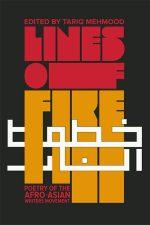
Lines of Fire (2nd Edition)
USD $ 60.00Lines of Fire: Recovering the Lost Arsenal of Anti-Colonial Poetry
Born in Tashkent , forged in clandestine presses, and echoing in today’s streets—this is the recovered front line of a global poetic resistance.
In 1958, at the Afro-Asian Writers’ Conference in Tashkent, a 90-year-old W.E.B. Du Bois stood before the decolonizing world and declared: “I am an American—I am an African.” It was a moment of radical, transnational self-definition.
From that conference emerged a literary movement and its journal, The Call—a direct line for poets from Algiers to Hanoi, Cairo to Beijing, to speak to one another, bypassing the languages and borders of their colonial masters. Though the movement later fractured under Cold War pressures, its two wings—The Call and the Soviet-backed Lotus—remained united in their stand against Zionism, racism, and empire.
Their poetry, often crafted under threat of torture, exile, and surveillance, became a clandestine weapon. Some of it was passed hand to hand, read aloud in underground meetings, and chanted at mass gatherings from Delhi to Ramallah, Cape Town to Gaza.
Now, for the first time, this vital corpus is restored. Lines of Fire, edited by Tariq Mehmood—former leading defendant in the landmark Bradford 12 case and now professor at the American University of Beirut—gathers these living weapons into a single, incendiary anthology. In an age of resurgent fascism and genocide, these voices speak with renewed, unyielding force: their anguish, rage, love, and hope are as urgent now as the day they were penned.
Why This Book Is Essential:
- A Lost Canon, Recovered: Features seminal, often inaccessible work by giants like Mahmoud Darwish, Faiz Ahmed Faiz, Leopold Senghor, Adunis, , Ousmane Sembène, and dozens more from across Africa and Asia.
- Drawn from Rare Sources: Poems curated from scarce issues of The Call and Lotus, long out of print and hidden in archives.
- A Groundbreaking Scholarly Frame: Includes a major introduction tracing the movement’s history, its surveillance by the CIA, the impact of the Sino-Soviet split, and a radical re-examination of solidarity.
- Built to Last & Teach: Published in archival-quality hardcover for libraries, scholars, and lifelong activists. An indispensable text for courses in Decolonial Studies, Global South Literatures, Cold War History, and Postcolonial Poetry.
A Call to Arms for a New Generation.
Edited by Tariq Mehmood, this collection includes poems by:
Salah Abdel Sabour (1931-1981, Ali Ahmad Said Esber, also known as Adunis (1930- ), Mulk Raj Anand (1905-2004), Anar Rasul oghlu Rzayef (1938- ), Nobuo Ayukawa (1920-1986), Fadhil al-Azzawi (1940- ), Abd Al-Wahhab al-Bayati (1926-1999), Mahim Bora (1917- ), Bernard Binlin Dadié (1916- ), Mahmoud Darwish (1942-2008), Osamu Dazai (1909-1948), Mário Pinto de Andrade (1928-1990), D.B. Dhanapala (1905-1971), Mohammed Dib (1920-2003), Gevorg Emin (1918-1998), Sengiin Erdene (1929-2000), Faiz Ahmed Faiz (1911-1984), Rasul Gamzatov (1923-2003), Daniil Granin (1919- ), Colette Anna Gregoire, better known as Anna Greki (1931-1966), Malek Haddad (1927-1978), Pham Ba Ngoan, better known by his pen name Thanh Hai (1930-1980), Buland al-Haidari (1926-1996), Suheil Idris (1925-2008), Yusuf Idris (1927-1991), Fazil Iskander (1929- ), Zulfiya Isroilova (1915-1996), Ali Sardar Jafri (1913-2000), Ghassan Kanafani (1936-1972), Edward al-Kharrat (1926- 2015), Hajime Kijima (1928-2004), Mazisi Kunene (1930-2006), Alex La Guma (1925-1985), U Gtun Kyi, better known by his pen name Minn Latt Yekhaun (1925-1985), Abdul Hayee better known by his pen name Sahir Lundhianvi (1921-1980), Zaki Naguib Mahmoud (1905-1993), Nazik Al-Malaika (1923-2007), Mouloud Mammeri (1917-1989), Yuri Nagibin (1920-1994), Sergey Narovchatov (1919-1981), Dashdorjiin Natsagdorj (1906-1937), Hiroshi Noma (1915-1991), Gabriel jibaba Okara (1921- ), Amrita Pritam (1919-2005), Jean-Joseph Rabearivelo (1901-1937), Richard Rive (1931-1989), Rady Saddouk (1938-2010), Badr Shakir al-Sayyab (1926-1964), Ousmane Sembene (1923- 2007), Leopold Sedar Senghor (1906-2001), Yusuf al-Sibai (1917-1978), Fadwa Tuqan (1917-2003), Sonomyn Udval (1921-1991), Ramses Younan (1913-1966), and Tawfiq Ziad (1929-1994).
Listen to our conversation with Tariq Mehmood here:
#AfroAsianWritersMovement #Lotusjournal #TheCalljournal #NonAlignedMovement #BandungConference #Tashkent1958 #ColdWarculturalhistory #SinoSovietsplit #antiimperialism #anticolonialpoetry #resistanceliterature #resistancepoetry #revolutionarysolidarity #antiracism #antiZionism #settlercolonialism #racialviolence #genocide #GlobalSouthliterature #Africanpoetry #Asianpoetry #Arabpoetry #Palestinianliterature #SouthAsianliterature #AfricanLiterature #Arabpoets #Africanwriters #AfroAsiansolidarity #WEBDuBois #politicalpoetry #20thcenturypoetry
-
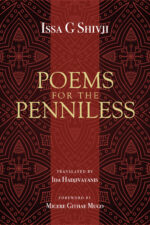
Poems for the Penniless
Price range: USD $ 5.00 through USD $ 18.00Select options This product has multiple variants. The options may be chosen on the product page
Poems for the Penniless
Price range: USD $ 5.00 through USD $ 18.00These poems by Issa Shivji, lawyer, activist and Tanzanian public intellectual, were written at different times in different circumstances. They give vent to personal anguish and political anger. Mostly originally written in Kiswahili, here accompanied by English translations, and they are intensely personal and political.
Poems are clustered under several headings to provide a context. The first combines personal agony at the loss of comrades and friends with poems about love and affection for living ones. The second is about robberies of freedom, resources, and dignity and the loss of justice under neoliberalism. The third section, entitled Hopes and Fears, comprises short poems tweeted over the last five years expressing despair, fear and hope in the human capacity for freedom.
The last section are poems, concerned with Shivji’s period in South Africa in 2018, reflect on the emergence of neo-apartheid with its wanton and shameless exploitation of the majority.
Wonderfully translated by Ida Hadjivayanis.
Select options This product has multiple variants. The options may be chosen on the product page
