
-

I see the invisible
USD $ 5 USD $ 20Price range: USD $ 5 through USD $ 20Select options This product has multiple variants. The options may be chosen on the product page
I see the invisible
USD $ 5 USD $ 20Price range: USD $ 5 through USD $ 20Truth be told, I never thought I would write another volume of poetry after the last, I will not Dance to Your Beat (2011). The reason was that my previous volumes were reactive to the circumstances of the times. Patriots and Cockroaches (1992) was a reaction to the socio-political corruption that had engulfed Africa and dimmed the enthusiasm that had been built by the years of struggle for independence. Whereas we thought we were stepping into a post-colonial era, what we stepped into was a vicious neo-colonial times. The next collection, Poems on the Run (1995) was a reaction to military autocracy and the repression that followed. The volume was literally written underground. This was followed by Intercepted (1998) all written while detained at Kalakuta Republic of Alagbon Close. We Thought it was Oil But it was Blood (2002) responded to two things primarily – extractivism and the accompanying human and environmental rights abuses in the Niger Delta and elsewhere. The massive erosion of biodiversity and attacks on food sovereignty through the introduction of genetically modified organisms (GMOs) into our agricultural system inspired I Will not Dance to your Beat.
What you have in your hands, or on your screens, is a compilation that is largely more meditative than the previous collections. There are moments of reflection on the colonial and neoliberal foundations that permit a willful disconnection from nature and the resultant destructive extractivism.
Some of the poems came through conversations and poetry writing sessions with Peter Molnar, Maryam al-Khawaja — Rafto Human Rights laureates and Salil Tripathi, a member of the board of PEN International, in August 2017. The sessions held at a beautifully rustic location in Celleno, Italy, were documented on celluloid by the duo of Maria Galliana Dyrvik and Anita Jonsterhaug Vedå of SMAU, a multimedia firm in Norway. Poetic relationship with Maria and Anita has continued over the years and their work continues to inspire more and more poems.
Select options This product has multiple variants. The options may be chosen on the product page -

The Second Coming
USD $ 10 USD $ 22Price range: USD $ 10 through USD $ 22Select options This product has multiple variants. The options may be chosen on the product page
The Second Coming
USD $ 10 USD $ 22Price range: USD $ 10 through USD $ 22
In the remnants of a fractured UK, England is on the brink of collapse where far-right militias rise to power. As Islamophobia and English nationalism ignite brutal violence, 19-year-old Marah Sultana is thrust into a fight for survival. Hunted by forces seeking control, she carries a secret powerful enough to change the course of the war—and the future of the world. In a world in which America’s reign as a superpower has crumbled, its mercenaries now rule in its shadow,In The Second Coming, Tariq Mehmood delivers a searing, unflinching narrative that mirrors his own lifelong struggle for justice. This novel is not just fiction—it’s a reflection of real-world battles. Mehmood’s powerful storytelling compels readers to confront uncomfortable truths while offering a gripping, emotional journey of resistance and survival.
A dystopian desi mash-up of The Handmaid’s Tale, Clockwork Orange, and V for Vendetta. The Second Coming warns of the dangers of right-wing nationalism and white supremacy and imagines where such hate could take England if it is not, somehow, nipped in the bud. — Paul Cochrane, journalist, Middle East Eye
A must-read dystopian fantasy about race, religion, and love. Unmissable – Melvin Burgess, novelist, winner of the Carnegie Medal and the LA prize for Teenage Fiction
An unforgettable novel, both vivid and nightmarishly plausible. — Peter Kalu, novelist, storyteller, playwright and poet.
A story of resilience and hope told against the brutal realities of patriarchy and colonial violence.
— Amrit Wilson, activist, feminist, and author of Finding a Voice: Asian Women in Britain (Daraja Press)Select options This product has multiple variants. The options may be chosen on the product page -

Spoon and Shrapnel: Verse and Wartime Recipes
USD $ 10 USD $ 12Price range: USD $ 10 through USD $ 12Select options This product has multiple variants. The options may be chosen on the product page
Spoon and Shrapnel: Verse and Wartime Recipes
USD $ 10 USD $ 12Price range: USD $ 10 through USD $ 12Spoon and Shrapnel uniquely combines poetry and recipes to explore the experience of surviving the Iran-Iraq War through a child’s eyes. As a survivor herself, Sheema Kalbasi brings forth raw memories of fear, loss, and resilience through verse, while accompanying these poignant moments with simple, nourishing recipes that sustained her family amidst scarcity and danger. Each poem is paired with a recipe, alternating between the emotional depth of poetry and the practical art of cooking traditions that offered hope during wartime. The poems deliver vivid, emotional insights into life during the conflict, while the recipes—crafted with scarce ingredients—represent moments of comfort and survival. Together, they form a narrative tapestry where food and poetry intertwine, reflecting how one family, and an entire culture, persevered.
Kalbasi’s work goes beyond her personal experience to present a universal story of resilience, illustrating how, even in the harshest conditions, humanity finds strength in the simple rituals of cooking, eating, and storytelling. Spoon and Shrapnel is a tribute to both physical and emotional survival, offering readers a rare glimpse into everyday life during war.Select options This product has multiple variants. The options may be chosen on the product page -

Religion, Eugenics, Science and Mathematics
USD $ 5 USD $ 45Price range: USD $ 5 through USD $ 45Select options This product has multiple variants. The options may be chosen on the product page
Religion, Eugenics, Science and Mathematics
USD $ 5 USD $ 45Price range: USD $ 5 through USD $ 45Religion, Eugenics, Science and Mathematics by Karim F Hirji examines the dynamic relationship between religion, on the one hand, and science and mathematics, on the other, on historical and conceptual grounds. It focuses on Hinduism, Buddhism, Christianity, Islam, and various shades of secularism, including Marxism. Where relevant, other faiths are integrated into the analysis. The questions it addresses include: Are religion and science mutually exclusive, opposing entities? Do divine beings and divine realms exist? Are science and religion valid but different forms of truth? What are the societal roles of science and religion? Can science provide a tenable, exalted code of ethics? What are the futures of religion and science? Can religion and science cooperate in resolving the daunting, existential problems facing humanity today? All issues are explored in an interdisciplinary, historical manner. Examination of the religious dimension of the doctrine of eugenics, which culminated in the Nazi era extermination pogroms, forms a major case study in the book.
Among other things, the book peruses scriptures, explores practice, enjoins analysis with anecdotes, and contrasts the beliefs of scientists and religious luminaries. Though it is directed toward the general reader, its novel approach, broad consideration of social and economic factors, and the nature of the evidence it has marshalled makes it of interest to theologians and scientists as well.
Religion, Eugenics, Science and Mathematics builds on the foundation laid in Religion, Politics and Society by Karim Hirji. In addition to eugenics, by relating religion to mathematics, genetics, neurology, climate change and other issues, the book reveals that the relationship between religion and science is a complex, entangled knot, not reducible to a simplistic summary.
The ultimate message of the book is that science and religion can exist harmoniously on the moral plane and that the primary obstacle facing human progress today is neither religion nor science but the dominant neoliberal system that generates vast inequality, deep social divisions, including religious divisions and a callous disregard for the global biosphere.Select options This product has multiple variants. The options may be chosen on the product page -

Religion, Politics and Society: A progressive primer
USD $ 5 USD $ 55Price range: USD $ 5 through USD $ 55Select options This product has multiple variants. The options may be chosen on the product page
Religion, Politics and Society: A progressive primer
USD $ 5 USD $ 55Price range: USD $ 5 through USD $ 55Written by Karim F Hirji, a retired professor of Medical Statistics, Religion, Politics and Society focuses on the four major global religions—Hinduism, Buddhism, Christianity and Islam—together with minor religions like the Ahmadiyya, Confucianism, Sikhism, Seventh Day Adventism and Traditional African Religion as well as on Secularism, New Age beliefs and the ancient Paleolithic and Neolithic era belief systems to explore the origin, spiritual import and social function of religion in human society. Utilizing the canons, beliefs, practices, history, eminent personages, institutions of the diverse faiths, it tackles matters like: How did the social function of religion evolve over time? How does religion relate to the power structure of society? Does religion promote or hinder social harmony, justice and equality? Under what circumstances? Is religion necessary for morality? What are the roots of interfaith conflict? How do modern religions and neoliberalism interact with each other? Does religion have a future? Can religion and secularism be harnessed for resolving the globally vexing yet pivotal concerns of human society? If so, how?
These and related issues are tackled with the help of a variety of past and contemporary individual level and broader type of richly illustrated examples. The role of women in religion a topic of focus throughout the text. The varied functions of religion under slavery, feudalism, capitalism, colonialism, neo-colonialism, imperialism. socialism, and neoliberalism are also attended to.
The foundational premise of this book is that while spiritual beliefs differ, all humans are equal in dignity and have equal rights. No religion is more exalted than others; there are no chosen people. We all belong to the global human family. Our religious and cultural diversity is a cause for celebration, not conflict.
Respectful in style and targeted towards the general and knowledgeable readers, Religion, Politics and Society is the first of a two-book project. The second book, Religion, Science and the Pandemic, addresses the relationship between religion, science and mathematics. The key objective of these books is to help uplift the quality and tenor of the current discourse on religion and explore how faith can promote human dignity, equality, social justice and harmony. A genuine consensus and peaceful coexistence cannot emerge from diluting the truth.Select options This product has multiple variants. The options may be chosen on the product page -

Religion, Society and the Pandemic: A complex entanglement
USD $ 5 USD $ 50Price range: USD $ 5 through USD $ 50Select options This product has multiple variants. The options may be chosen on the product page
Religion, Society and the Pandemic: A complex entanglement
USD $ 5 USD $ 50Price range: USD $ 5 through USD $ 50In nearly three years, starting from early January 2020, the coronavirus directly and indirectly consumed the lives of nearly 20 million people worldwide. This book explores the interplay between the coronavirus pandemic and religion on the theological, institutional and societal dimensions. It focuses on Hinduism, Buddhism, Christianity, Islam and secularism, but some minor faith systems are also covered. Exploring the evolution of the pandemic in seventeen nations, it asks: Was religious belief an obstacle or a positive factor in understanding the scientific basis of the coronavirus pandemic? Did religious institutions, leaders and laity facilitate or block the implementation of the official pandemic control measures? Was the role played by religion in the coronavirus pandemic affected by historical, social, economic and political factors? How did secularism operate in the coronavirus pandemic? Did the coronavirus pandemic enhance or undermine religiosity? The basic aim is to draw lessons from this pandemic that will facilitate how humanity may deal with future pandemics in a just and egalitarian social order.
Select options This product has multiple variants. The options may be chosen on the product page -
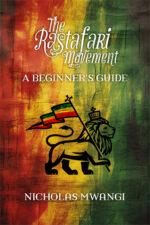
Rastafari Movement, The: A Beginners Guide
USD $ 5 USD $ 15Price range: USD $ 5 through USD $ 15Select options This product has multiple variants. The options may be chosen on the product page
Rastafari Movement, The: A Beginners Guide
USD $ 5 USD $ 15Price range: USD $ 5 through USD $ 15Why is this book necessary today?
Rastafari: A Beginner’s Guide” holds immense relevance due to its unique approach to addressing the complex movement of Rastafarianism. It’s complex nature, encompassing elements of social movements, Pan-Africanism, Afrocentrism, philosophy, and religion, can be overwhelming for new readers. This book serves as an accessible introduction, providing a foundational understanding that caters to both Rastafarians and individuals with limited knowledge of the movement.
By delving into the essence of the Rastafari lifestyle beyond superficial attributes like dreadlocks and cannabis use, the book helps dispel misconceptions and offers a more accurate representation of the movement’s beliefs and principles. Further, this guide aids in shedding light on the depth and significance of Rastafarianism’s contributions to culture, spirituality, and social thought but also its philosophical challenges.
The book’s coverage of Rastafarianism’s historical trajectory and foundational values provides crucial context for understanding its development over time. By highlighting its evolution from its origins in Jamaican ghettoes to its expansion into a more inclusive and diverse community that includes professionals and the middle class, the book underscores the movement’s adaptability and relevance in changing societal landscapes.
Despite existing scholarly contributions, there remains a need for a concise, approachable guide that synthesizes the wealth of information available on Rastafarianism. This book fills that gap, providing readers with a comprehensive yet accessible overview that can serve as a starting point for further exploration.
Select options This product has multiple variants. The options may be chosen on the product page -
 Select options This product has multiple variants. The options may be chosen on the product page
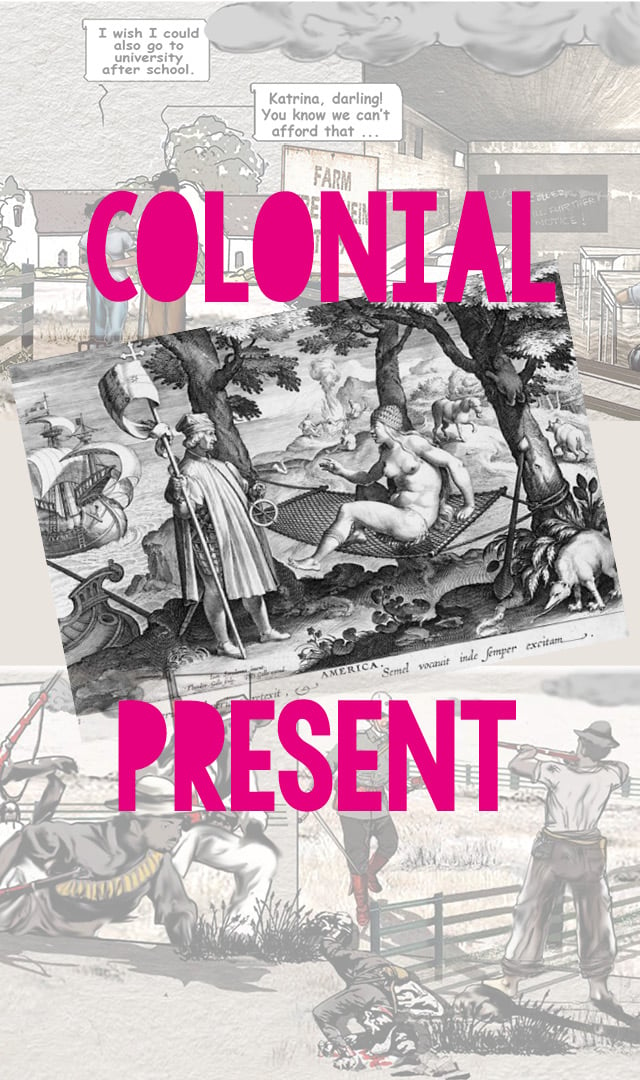
Episodes From a Colonial Present
Editors and Authors: Daniel Bendix, Chandra-Milena Danielzik, Franziska Müller, Lata Narayanaswamy, Juan Telleria, Miriam friz Trzeciak, Aram Ziai
Artists: Hangula Werner, Roshni Vyam, Michel Esselbrügge, Qi Zhou, RotmInas – Rotmi Enciso & Ina Riaskov, Maite Mentxaka Tena, Lena Ziyal
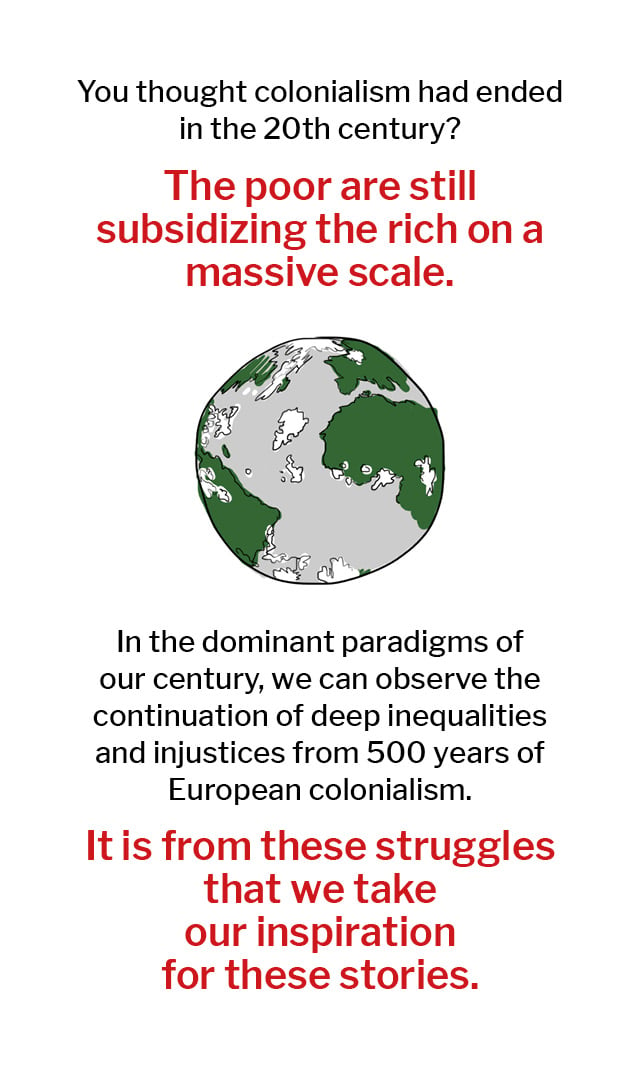
Postcolonial critique reveals the traces of the colonial past in every corner of our present lives and exposes the colonial violence inherent in global inequality. This collective comic project illuminates the coloniality of everyday life as well as the decolonising potential of everyday struggles in the spaces, discourses and practices of so-called global development.

Reviews
What an absolute impertinence! My lawyers are already involved. It’s just as well that I was able to use tax money for the purchase.
—Queen Elizabeth III love true crime books, but this one got a bit boring after a while. It could do with more bloodshed.
—Lothar von TrothaI added this book to my list to burn. Just saying.
—Diego de LandaA waste of time. So glad I didn’t buy it, but stole my copy.
—Christopher ColumbusI didn’t get it. Are they suggesting colonialism is not quite over?
—Harry S. TrumanSelect options This product has multiple variants. The options may be chosen on the product page -
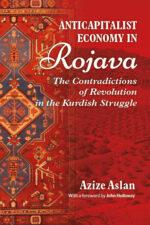
Anticapitalist Economy in Rojava: The Contradictions of Revolution in the Kurdish Struggles
USD $ 5 USD $ 22Price range: USD $ 5 through USD $ 22Select options This product has multiple variants. The options may be chosen on the product page
Anticapitalist Economy in Rojava: The Contradictions of Revolution in the Kurdish Struggles
USD $ 5 USD $ 22Price range: USD $ 5 through USD $ 22This book looks at the anti-capitalist economy and the organization of social relations in the context of the revolution and autonomy of Rojava (Kurdistan-Syria). It questions both the limitations and the historical problems of the phenomenon of revolution, and the conflicts and contradictions that emerge in this process. It also draws from the conflicts and contradictions the author has consistently felt as a “political subject” who wants to change the world, especially through her experience in the Kurdish struggle and the Kurdish Movement. For this reason, every question she raises and attempts to answer in this book—about the Kurds, Rojava, and the world in general, involves what she says is her own subjectivity.
The idea and dreams of revolution have existed since humans created systems of domination. Indeed, revolution, meaning the liberation from systems of domination, has undoubtedly been one of the most discussed subjects in history. There have been moments when the possibility of revolution has been clearer, and there have also been certain agreements on what it is and how to get there, but it has never been something completely definable. This continues to be true today. This book does not intend to define this great phenomenon, rather it looks at the revolutionary practices that create emancipating realities and embraces revolution as an undefined, contradictory and dynamic process. Although the rulers have traditionally written history, the history of social struggles has been and is still being created by many revolutionary and transformational processes. The future is being shaped based on desired revolutions and the struggles that, in turn, transform their actors, the people. Therefore, the desire and quest of the Kurdish people for liberation from the colonial rule of the nation-states of the Middle East—the subject of this book—has always been directly linked to the phenomenon of revolution.Select options This product has multiple variants. The options may be chosen on the product page -
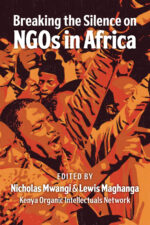
Breaking the Silence on NGOs in Africa
USD $ 5 USD $ 14Price range: USD $ 5 through USD $ 14Select options This product has multiple variants. The options may be chosen on the product page
Breaking the Silence on NGOs in Africa
USD $ 5 USD $ 14Price range: USD $ 5 through USD $ 14Members of the Organic Intellectuals Network are active organizers in the struggle to achieve social justice. They have experienced the contradictions of the NGO discourse and, just like others before them, have found themselves in the struggle versus survival dilemma. To get a clear picture of our contemporary struggles and the despair of NGOs operating in the proletarian movement, comrades decided to reflect, study, and analyze Prof. Issa Shivji’s book Silences in NGO Discourse: The Role and Future of NGOs in Africa. For the authors, these analyses and reflections are based on personal experiences in their day-to-day organizing. In summarizing the authors’ observations regarding the impacts of NGOs in organizing, this book calls into question the fundamental question, ‘why do NGOs exist?’ To answer this question, the authors provide a historical chronology of the resistance in Kenya, Zimbabwe and the rest of Africa, relating those to the subjective factors in existence at every period. Through this, a scientific relationship can be drawn between social movements and NGOs in our current epoch. From their experiences with NGOs, the authors, representing grassroots social movements, highlight the dangers associated with donor funding. Often, donor funding ends abruptly after making people dependent on them, creating severe strain on grassroots organizations. The more one engages with NGOs, the softer one becomes to critique NGOs, particularly in highlighting their relationship to imperialism. Further, NGOs usually help in driving reforms. However, they play no part in revolutionary work. As a result, they merely preserve the present order and help exacerbate the frustrations arising from massive inequality in our society. In the long run, NGOs play a critical role in stifling the development and independence of grassroots social movements. This publication also includes two previously published essays by Prof Issa G Shivji, Silences in NGO Discourse: The Role and Future of NGOs in Africa, &, Reflections on NGOs in Tanzania: What We Are, What We Are Not and What We Ought To Be.
Select options This product has multiple variants. The options may be chosen on the product page -

LENIN: The Heritage We (Don’t) Renounce
USD $ 5 USD $ 37Price range: USD $ 5 through USD $ 37Select options This product has multiple variants. The options may be chosen on the product page
LENIN: The Heritage We (Don’t) Renounce
USD $ 5 USD $ 37Price range: USD $ 5 through USD $ 37These 100 tributes, from every continent, are like building blocks, in word and image creating not a mausoleum, but paths to a new future… It’s about thinking with and through Lenin, and the proof is here. — Isabelle Garo, author of Communism and Strategy.
The organic intellectuals in this book have woven a thread of what is to be done in the heart of fascism today, a tool for reclaiming our humanity. — Gacheke Gachihi, member of the Kenya Organic Intellectuals Network.
A left that rejects Lenin’s legacy in times of catastrophic capitalism and imperialist war can neither be truly left-wing nor have a decisive influence on world history. —Michael Brie, author of Rediscovering Lenin.
Lenin: The Heritage We (Don’t) Renounce brings together 100+ authors and visual artists from 50+ countries across the world – from Afghanistan to Zimbabwe – in order to critically commemorate the hundredth anniversary of the death of Vladimir Ilyich Ulyanov, aka Lenin, on 21 January 1924.
Combining academic, journalistic and more personal-political texts, including poetry, theatrical skits and fictional writing, the books’ contributors aim to identify and constructively engage with the living legacy of Lenin’s life and work before, during and after the October Revolution. Concretely, the 100+ texts deal with a great variety of “old [Leninist] truths that are ever new” (Lenin), both historically and in today’s times: Imperialism, the National Question and the Right to Self-Determination, the Vanguard Party, Trans Liberation, Ecological Leninism, Dialectics, Artificial Intelligence, Military Marxisms, Black Liberation, Communist Feminism as well as Revolutionary Dreaming and Organising, among many others.Also, Lenin is put into dialogue with a number of revolutionary comrades-in-arms, among them Amílcar Cabral, Mao Zedong, Julius Nyerere, José Carlos Mariátegui, Julio Antonio Mella, G.F.W. Hegel, Antonio Gramsci, Qu Quibai, Alexandra Kollontai and Rosa Luxemburg.
In sum, the book aspires to help liberate the old Ilyich from the musty, petrifying solitude of his mausoleum and to invite him back into the “real movement, which abolishes the state of things” (Marx & Engels) in the here and now, i.e. our multiple, intersecting struggles against all types of capitalist-colonial-heteropatriarchal-ableist oppression and for the rekindling and strengthening of the new Communist horizon.
While many on the contemporary Left continue to openly disavow any association with Tovarish Lenin, Lenin: The Heritage We (Don’t) Renounce affirms the opposite – that there will be no revolution without Vladimir Ilyich among our rank-and-file comrade-ancestors. Or in the words of one of the book’s authors, Himani Bannerji, “We neglect Lenin’s voice at our own peril.”
To work, everybody, to work,
the cause of the world socialist revolution
must and will triumph.
(Lenin)Select options This product has multiple variants. The options may be chosen on the product page -
 Select options This product has multiple variants. The options may be chosen on the product page
The Unfinished Business of Liberation and Transformation: Revisiting The 1958 All-African People’s Conference
USD $ 47This book features essays, speeches, and reflections from the 60th-anniversary commemoration of the All-African People’s Conference (AAPC), an epochal event in the history of Africa’s fight for liberation. The four-day conference was a collaboration between the Institute of African Studies, the Trades Union Congress of Ghana, the Socialist Forum of Ghana, Lincoln University, and the Third World Network Africa. The stories, essays, speeches, and poems featured in this book are not simply a reflection of the past – they are a call to action for the present and future generations of Pan‑Africanists. May this book serve as a reminder that our liberation is intertwined with the liberation of others and that we must work together toward building a more just and equitable world. Let us continue to inspire the next generation of Pan-Africanists and keep the spirit of the All‑African People’s Conference alive. The book offers valuable perspectives on Africa’s current predicaments and what a truly liberated Africa can offer to the world.
The Unfinished Business of African Liberation is a path‐breaking collection of proceedings commemorating the 1958 landmark All African People’s Conference. The volume is essential reading for all those interested in pursuing African decolonization and liberation in the 21st century.
— Amina Mama, Professor, Gender, Sexuality & Women’s Studies, University of California, Davis, former Kwame Nkrumah Chair in African Studies at the University of GhanaIt is a must‐read for all who care about the contemporary plight of African people.
— Sylvia Tamale, Decolonial feminist & Professor of Law, School of Law, Makerere University, UgandaThis collection presents critical thinking by a wide spectrum of Pan‐African workers, youth, women, students, intellectuals, businesspeople, activists, academics, and politicians. — Adotey Bing-Pappoe, Senior Lecturer, Department of Economics and International Business, University of Greenwich
Select options This product has multiple variants. The options may be chosen on the product page -

Elsewhereness: Antipoetry
USD $ 6.99 USD $ 15Price range: USD $ 6.99 through USD $ 15Select options This product has multiple variants. The options may be chosen on the product page
Elsewhereness: Antipoetry
USD $ 6.99 USD $ 15Price range: USD $ 6.99 through USD $ 15The book is a literary project with extra-literary objectives and implications. The texts combine various original writing styles to provoke the reader’s creative imagination and make auratic social space attainable. For realizing its main goal, through its creative aesthetics, the book debases normalized forms of social violence, exclusionism, and tribalism. It is meant to be universally relatable by an average reader regardless of her perceived and proclaimed identities. In a way, it is an embodiment of postnihilism, which is a philosophical theory that emphasizes the significance of negativity in the face of unspoken social rules of exclusionism. Postnihilism has been theorized in Revolutionary Hope After Nihilism (Bloomsbury 2022). “Auratic space” is a concept advanced in Totalitarian Space and the Destruction of Aura(SUNY Press 2019) and The Death of Home (De Gruyter 2024).
S. Bahozde’s (Saladdin Ahmed) Elsewhereness antipoetry actualizes its stated marching orders via forceful dialectical serial logic and keen humor (hilarity, really). This book is an “act of attacking the unimaginability of a better world. The Bikonian-Fanonian bursts of anti-poetics, their counter-measures break past the givens to model how such—proper name, place, political calculus—engender and resist, repel and authorize cunning sequences of anti-capitalist trespass. An (anti-) poetics that playfully negates its aesthetic medium of refusal and choice, all the while setting its sights on its key mark: encroaching nihilism in the face of brutal displacement. S. Bahozde’s work dismantles claims in favor of negations, clearing forth space for open-ended, future liberatory claims. Its poetry as propositional logic’s meditations on completion, works, and absence is shudderingly smart. This is poetry as food fueling revolutionary exilic work.”
— Jeremy Matthew Glick, Professor African Diasporic Literature and Modern Drama. Hunter College, English Department, City University of New York, author of The Black Radical TragicA voice speaks here which is at once profoundly Kurdish and cosmopolitan. While tracing the melancholy of the spaces of exile, its loneliness and longing, Bahozde takes the reader into spaces where the disillusionment with history does not lead to nihilism. Here the brevity of aphorism tackles the tangled metaphysics of absence and existence. Here is a foreignness that take us away from “pickled banalities” and disturbs our complacent belonging to places, nations, and histories
— Rohit Dalvi, professor of philosophy, Brock University, author of Deleuze and Guattari ExplainedThis is a passionate and bold set of works that range over topics and concerns widely with an almost febrile intensity. Bahozde’s poetic negations of “normalcy” gain their strength both from rich philosophical insights and from a searching, provocative imagination. Even when set in moments of apparent languor, they have an evident, restless energy.
— Gaurav Majumdar, Whitman College; author, Illegitimate Freedom: Informality in Modernist Literature, 1900-1940Select options This product has multiple variants. The options may be chosen on the product page -
 Select options This product has multiple variants. The options may be chosen on the product page
Filantropia Poscapitalista
«La filantropía poscapitalista es una paradoja en sí misma. Una paradoja es el punto de partida adecuado para el complejo contexto enredado y caótico en el que nos encontramos como especie.» Así es como Alnoor Ladha y Lynn Murphy comienzan este tratado llamado Filantropía poscapitalista. Ambos son activistas veteranos, estrategas políticos y asesores filantrópicos por accidente, y este libro es el resultado de décadas de práctica e investigación que abarcan más de un centenar de entrevistas con guardianes de la sabiduría y con figuras relevantes del activismo, la filantropía, las ciencias sociales y la cosmogonía.
Los autores nos guían en un viaje que recorre la historia de la acumulación de la riqueza, la lógica actual del capitalismo tardío y las posibilidades vividas que pueden abrir paso a otras formas de conocer, sentir y ser en sistemas orientados hacia la vida. Este «giro ontológico», tal y como lo denominan, es la clave del texto. Crear realidades neo-antiguas-emergentes no es solo una cuestión de redistribuir la riqueza o «luchar contra los poderosos», sino de cómo percibimos y somos coherentes con nuestras acciones en nuestra relación con un mundo y un universo dinámicos y animistas.
Véase también la edición en inglés: https://darajapress.com/publication/post-capitalist-philanthropy
Select options This product has multiple variants. The options may be chosen on the product page -

Post Capitalist Philanthropy
USD $ 7.99 USD $ 49Price range: USD $ 7.99 through USD $ 49Select options This product has multiple variants. The options may be chosen on the product page
Post Capitalist Philanthropy
USD $ 7.99 USD $ 49Price range: USD $ 7.99 through USD $ 49“Post capitalist philanthropy is a paradox in terms. A paradox is the appropriate starting place for the complex, entangled, messy context we find ourselves in as a species.” This is how long-time activists, political strategists, and accidental philanthropy advisors Alnoor Ladha and Lynn Murphy start their treatise on Post Capitalist Philanthropy. This book is a result of decades of practice and research, including a hundred plus interviews with leading activists, philanthropists, philosophers, social scientists, cosmologists and wisdom keepers.
The authors take us on a journey from the history of wealth accumulation to the current logic of late-stage capitalism to the lived possibilities of other ways of knowing, sensing and being that can usher in life-centric models. This “ontological shift”, as they call it, is at the heart of the text – creating new-ancient-emerging realities is not simply about how we redistribute wealth or “fight power”, but rather, how we perceive and embody our actions in relationship to a dynamic, animistic world and cosmos.
This book is made available by Daraja Press on behalf of the Transition Resource Circle.
The Spanish version of this book is available at
Select options This product has multiple variants. The options may be chosen on the product page -

Heroes of the African Revolution Volume 2
USD $ 11.50We made this coloring book in order to expose African children to their authentic history. Malcolm X told us decades ago that we had to take responsibility for our children’s education because he understood that our people had been intentionally robbed of their true history. We can no longer rely on institutions to educate our children and must take it upon ourselves to equip our children with the truth so that they can bring a positive contribution to our people’s struggle for justice and freedom.
In Volume 2 of the coloring book, new African revolutionaries are introduced. Some well-known figures, such as Patrice Lumumba and Amilcar Cabral, but we’ve also brought to light lesser-known freedom fighters, such as Fatima Ahmed Ibrahim of Sudan and Elma Francois of Trinidad and Tobago.We have also introduced some games, such as a word search and a maze, both with a Pan-Afican theme. Finally, we included a glossary (with Swahili translations ) highlighting the kind of vocabulary we wish to instill in our youth -

Heroes of the African Revolution: Colouring Book: Volume 1
USD $ 11.50We made this coloring book in order to expose African children to their authentic history. Malcolm X told us decades ago that we had to take responsibility for our children’s education because he understood that our people had been intentionally robbed of their true history. We can no longer rely on institutions to educate our children and must take it upon ourselves to equip our children with the truth so that they can bring a positive contribution to our people’s struggle for justice and freedom. This book highlights some of the key figures within the struggle to achieve Pan-Africanism which is the total liberation and unification of Africa. All of the brave women and men featured in this book were Pan-Africanists. They understood that people of African descent throughout the world faced the same issues and therefore had to unite in order to overcome those issues. We hope this book can inspire the next generation of African children to become Pan-Africanists and to join the struggle to liberate and unite Africa.
-

Les héros de la révolution africaine Tome 1
USD $ 11.50United African Diaspora est une organisation panafricaine basée à Calgary, au Canada. Nous nous engageons à construire une communauté africaine forte et autonome capable de répondre aux besoins de son peuple et de contribuer à la lutte mondiale pour réaliser le panafricanisme : la libération et l’unification de l’Afrique.
Nous avons réalisé ce livre de coloriage afin d’exposer les enfants africains à leur histoire authentique. Malcolm X nous a dit il y a plusieurs décennies que nous devrons être responsable de l’éducation de nos enfants. Il avait compris que notre peuple est intentionnellement dépossédé de sa véritable histoire. Nous ne pouvons plus compter sur les institutions pour éduquer nos enfants et nous devrons prendre sur nous la responsabilité de leur transmettre la vérité afin qu’ils puissent apporter une contribution positive à la lutte de notre peuple pour la justice et la liberté. Ce livre met en lumière quelques-unes des figures clés de la lutte pour le panafricanisme, c’est-à-dire la libération et l’unification totales de l’Afrique. Toutes les femmes et tous les hommes courageux présents dans ce livre étaient des panafricanistes. Ils ont compris que les personnes descendantes africaines du monde entier étaient confrontées aux mêmes problèmes et qu’elles devaient donc s’unir pour les surmonter. Nous espérons que ce livre inspirera la prochaine génération d’enfants africains à devenir des panafricanistes et à se joindre à la lutte pour la libération et l’unification de l’Afrique.
-

Les héros de la révolution africaine Tome 2
USD $ 11.50United African Diaspora est une organisation panafricaine basée à Calgary, au Canada. Nous nous engageons à construire une communauté africaine forte et autonome capable de répondre aux besoins de son peuple et de contribuer à la lutte mondiale pour réaliser le panafricanisme : la libération et l’unification de l’Afrique.
Nous avons réalisé ce livre de coloriage afin d’exposer les enfants africains à leur histoire authentique. Malcolm X nous a dit il y a plusieurs décennies que nous devrons être responsable de l’éducation de nos enfants. Il avait compris que notre peuple est intentionnellement dépossédé de sa véritable histoire. Nous ne pouvons plus compter sur les institutions pour éduquer nos enfants et nous devrons prendre sur nous la responsabilité de leur transmettre la vérité afin qu’ils puissent apporter une contribution positive à la lutte de notre peuple pour la justice et la liberté. Ce livre met en lumière quelques-unes des figures clés de la lutte pour le panafricanisme, c’est-à-dire la libération et l’unification totales de l’Afrique. Toutes les femmes et tous les hommes courageux présents dans ce livre étaient des panafricanistes. Ils ont compris que les personnes descendantes africaines du monde entier étaient confrontées aux mêmes problèmes et qu’elles devaient donc s’unir pour les surmonter. Nous espérons que ce livre inspirera la prochaine génération d’enfants africains à devenir des panafricanistes et à se joindre à la lutte pour la libération et l’unification de l’Afrique.
-
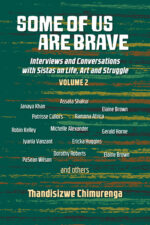
Some Of Us Are Brave (Vol 2): Interviews and Conversations with Sistas in Life and Struggle
USD $ 5 USD $ 23Price range: USD $ 5 through USD $ 23Select options This product has multiple variants. The options may be chosen on the product page
Some Of Us Are Brave (Vol 2): Interviews and Conversations with Sistas in Life and Struggle
USD $ 5 USD $ 23Price range: USD $ 5 through USD $ 23A society born of white supremacy and patriarchy must, by definition, ignore the voices of Black women. We know that unfortunately, such an attitude will also naturally seep into every stratum of that society
Part of the contribution to correct that was the centering and airing of Black women’s voices through Some of Us Are Brave: A Black Women’s Radio Program that aired on Pacifica’s Los Angeles radio station (KPFK) from 2003 until 2011.
The program covered a myriad of issues by amplifying the voices of a broad cross-section of Black women. Some of those voices have been preserved here in this volume. In addition to capturing various moments in time with a variety of women, this is also a means of taking the intellectual production of and about Black women out of the hands of institutions that are both fundamentally anti-Black and anti-woman.
Volume 1 contains interviews under the headings The Shoulders on Which We Stand and Black Lives Have Always Mattered.
Volume 2 covers Black Women’s Health, Bruthas on Sistas, and Sistas in Struggle.
Select options This product has multiple variants. The options may be chosen on the product page