
-

Bongoman and the Warlords
USD $ 14.00Select options This product has multiple variants. The options may be chosen on the product page
Bongoman and the Warlords
USD $ 14.00Bongoman lands a job as a reporter and his first assignment for the News Daily is to cover the ongoing war in Somalia between the Transitional Government of Somalia and militant groups in the war-torn country. Bongoman boards a plane to Jowar but due to bad weather the plane is forced to land in Mogadishu, the last place Bongoman wanted to find himself in. The lawless nature of the battle-scarred city catches up with him soon enough. He finds himself at the wrong end of a gun at every turn. He meets an old friend who has a penchant for attracting trouble. To his shock, he learns that she’s running guns for one of the main warlords in the city. He tries to extricate himself from her company but the situation escalates and they both end up in the hands of a regional warlord, who sees in them handsome ransom rewards. An old friend helps Bongoman and his companions escape from their dingy dungeon but they have to contend with a terrorist armed with an RPG. Bongoman has been shot at, blown up, kidnapped and buried in a landslide. It’s time to go back home… but will it be that easy?
Select options This product has multiple variants. The options may be chosen on the product page -

Bongoman Strikes Gold
USD $ 14.00Select options This product has multiple variants. The options may be chosen on the product page
Bongoman Strikes Gold
USD $ 14.00Bongoman bumps into his perpetually broke friend, Rastafasta, driving a flashy car. Rastafasta discloses the secret to his new-found wealth; he is involved in the gold trade. There is a thriving gold business in the mines of Ikolomani, a bustling little town about 350 km from the city. Bongoman embarks on an epic journey to this Eldorado, with dreams of making big money. Halfway through the journey, the bus breaks down and impatient to get to his destination, he disembarks and continues the journey on foot. He jogs through hills and valleys, hour after hour and finally, thirsty and exhausted he finds himself in a dingy bar where he ingests a potent alcoholic brew unknowingly. Shaken but unfazed he continues his journey which is cut short after a gang of robbers posing as passengers hijack the passenger van he is travelling in. After a decisive reckoning with Bongoman, the robbers find themselves behind bars as Bongoman walks away with a hefty bounty derived from their capture. This windfall quickly evaporates after the crafty van driver spikes his drink. He finally arrives at the gold mines of Ikolomani and to his utter dismay, finds that all is not a bed of roses…
Select options This product has multiple variants. The options may be chosen on the product page -

Bongoman vs Mother-In-Law
USD $ 13.00Select options This product has multiple variants. The options may be chosen on the product page
Bongoman vs Mother-In-Law
USD $ 13.00Bongoman’s ill-tempered mother-in-law arrives for a visit. Bongoman is far from thrilled as he doesn’t see eye-to-eye with the old lady. She never has a kind word for him, calling him a good-for-nothing bum. The tranquillity of the Bongoman household is turned upside down as the old lady imposes her uncompromising will, harassing Bongoman at every given opportunity, especially his evening forays to the neighbourhood pub. With no peace of mind, Bongoman pushes back and devises a series of tricks to force her out of his house. None of the tricks works out, and Bongoman finds life unbearable in his own house. He reports an assault against him by his mother-in-law to the police but finds himself in jail as the perpetrator of the assault Bongoman storms out of his house in protest after a brief interlude in jail, taking up residence in the local park, where he has to contend with some unsavoury night-time characters for rights to the more comfortable sleeping spaces and has to fight to assert his position in the pecking order. How will Bongoman rid himself of this terrible relative? Does he have any more tricks up his sleeve?
Select options This product has multiple variants. The options may be chosen on the product page -

IGOLI EGOLI
USD $ 14.00Select options This product has multiple variants. The options may be chosen on the product page
IGOLI EGOLI
USD $ 14.00Contents
IGOLI
On love (xxxiii) 13 Dorothy Masuku in Sophiatown 2018 14 Re-Map 16 On love (xxxiv) 18 56 Chapman Street 19 Yesterday Today Tomorrow 20 Marlboro Winter 21 Diepsloot Winter (pre-loadshedding) 22 Only in Jozi 23 Dispossession 24 Ontvangs B Helen Joseph Hospital 25 Mammogram Waiting Room Roodepoort 26 Pholosong Emergency 27 1st Road 28 Inclines 29 Counterclock Clock 30 airbnb Meldene 32 Meldene to Melville, COVID-19 late third wave 33 Excess death or, Acer rubrum 34 Westdene Winter or, Masculinity 35 Shrieking yellow 36 Fleurhof 37 Intraction Extraction 38 On love (xxxv) 40 Moon Garden 41 On love (xxxvi) 42 Garnets or, On love (xxxvii) 43 Spirit 44 Lower 4th Westdene or, On love (xxxviii) 45 On love (xxxix) 46 Natalia Molebatsi and Bab’Themba Mokoena in dance 47 Maps 48 inimba 49 On love (xl) 50 On love (xli) 51 Footsteps 52 inimba (ii) 53 On love (xlii) 54 iSothamilo or, On love (xliii) 55 big little forest 56 On love (xliv) 57
EGoli
or, Only in Jozi (ii) or, On love (xlv) 62 Origins 63 metsi/amanzi/emanti/mvura/madzi/ruwa/water/ /l’eau/ 65 Down Main Street Melville or, Umsebenzi 66 Umsebenzi (ii) 67 Footsteps (ii) 68 Where will we go? 69 RosesRunways 70 On love (xlvi) or, Umsebenzi (iii) 71 72 Wealth 74 Recipe or, Wealth (ii) 75 On love (xlvii) 76 sodade (iii) or, Joy of Jazz Sandton 2017 77 Mushrooms in Mint or, On love (xlviii) 78 Footsteps (iii) 80 Distances 81 Only in Jozi (iii) 82 Greenhill Grocer or, On love (xlix) 83 Only in Jozi (iv) or, On love (l) 84 Fidel Castro at Lillisleaf Farm 2017 or, On love (li) 87 After the launch of Cradles or, 2018 or, On love (lii) 90 sodade (iv) EGoli or, On love (liii) On love (liv)
A new collection of poems by Salimah Valiani. IGoli EGoli is a sociopolitical reading of Johannesburg drawing on its famous, and not so famed, people, places, plants & pronouncements.
First published by [email protected]
Select options This product has multiple variants. The options may be chosen on the product page -
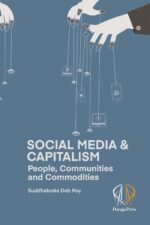
Social Media and Capitalism: People, Communities and Commodities
USD $ 5.00 USD $ 18.00Price range: USD $ 5.00 through USD $ 18.00Select options This product has multiple variants. The options may be chosen on the product page
Social Media and Capitalism: People, Communities and Commodities
USD $ 5.00 USD $ 18.00Price range: USD $ 5.00 through USD $ 18.00Technology is one of the central elements of contemporary human life. The world as one knows it today is a space increasingly mediated by technological interventions, be it in the field of contemporary cultural expressions or political, organizational forms. Social media has played an important role in this transformation. Gone are the days when social media was merely a conduit for conversations. Today, it is a diverse field of operations spanning advertising mechanisms, branding processes and even direct commercial exchanges between users: the prime focus of this particular book.
Direct user-to-user trading through social media within an institutional form is a relatively new dimension in the dynamic world of social media. Yet, just like every other form of innovation within the paradigm of market relations, social media commerce or social media trading has also created newer and diverse alterations in how individuals interact with the existing socio-political fabric within which they exist. This book analyses these alterations and critically investigates the role of Capital in creating them.
The book analyses real-world interactions, interviews and observations through the theoretical framework provided by Marxist political economy and social theory. It draws upon the theoretical scope provided by Marx’s dialectical methods of social analysis and uses it to unearth the effects that trading and commercial activities performed through virtual communities have on society and individuals.
Select options This product has multiple variants. The options may be chosen on the product page -
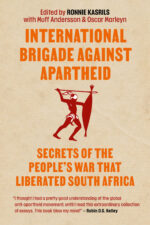
International Brigade Against Apartheid: Secrets of the People’s War That Liberated South Africa
USD $ 27.00Select options This product has multiple variants. The options may be chosen on the product page
International Brigade Against Apartheid: Secrets of the People’s War That Liberated South Africa
USD $ 27.00We hear for the first time from the internationalist secretly working for the ANC’s armed wing, Umkhonto we Sizwe (MK), in the struggle to liberate South Africa from apartheid rule. They acted as couriers, provided safe houses in neighbouring states and within South Africa, helped infiltrate combatants across borders, and smuggled tons of weapons into the country in the most creative ways. Driven by a spirit of international solidarity, they were prepared to take huge risks and face great danger. The internationalists reveal what motivated them as volunteers, not mercenaries: they gained nothing for their endeavours save for the self-esteem in serving a just cause. Against such clandestine involvement, the book includes contributions from key people in the international Anti-Apartheid Movement and its public mobilisation to isolate the apartheid regime. These include worldwide campaigns like Stop the Sports Tours, boycotting of South African products and black American solidarity. The Cuban, East German and Russian contributions outlined those countries’ support for the ANC and MK. The public, global Anti-Apartheid Movement campaigns provide the dimensions from which internationalists who secretly served MK emerged. Edited by Ronnie Kasrils. First published by Jacana Media (Pty) Ltd in 2021, ISBN: 978-1-4314-3202-8, this Daraja Press edition is available in North America and East Africa.
Select options This product has multiple variants. The options may be chosen on the product page -
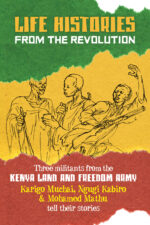
Life Histories from the Revolution: Three militants from the Kenya Land and Freedom Army tell their stories
USD $ 5.00 USD $ 18.00Price range: USD $ 5.00 through USD $ 18.00Select options This product has multiple variants. The options may be chosen on the product page
Life Histories from the Revolution: Three militants from the Kenya Land and Freedom Army tell their stories
USD $ 5.00 USD $ 18.00Price range: USD $ 5.00 through USD $ 18.00In the early 1970s, Donald Barnett — who worked with Karari Njama to produce Mau Mau From Within (published by Daraja Press) — also worked with three militants of the Kenya Land and Freedom Army to enable them to tell the story of their experience in fighting for freedom and against British colonialism. These rarely acknowledged militants were Karigo Muchai, Ngugi Kabiro and Mohamed Mathu. Their stories were published in 1973 by LSM Information Center (Richmond, British Columbia, Canada) as part of a series entitled Life Histories of the Revolution, as The Hardcore: The Story of Karigo Muchai; The Man in the Middle by Ngugi Kabiro; and The Urban Guerrilla by Mohamed Mathu.
As part of its mission of Nurturing reflection, sheltering hope and inspiring audacity, Daraja Press is please to republish the three booklets as a book that will help a new generation of activists — Kenyan and international — reflect on a history that might inspire audacious struggles to continue the struggle for freedom that was the goal of the Kenya Land and Freedom Army.
Donald Barnett’s introduction to each booklet contained the following text:
The life histories in this series have been recorded and prepared as historical documents from the revolutionary struggles of our time. The techniques and methods employed at each stage of the process, from initial contact to final editing, have therefore been chosen or fashioned with the purpose of guaranteeing the authenticity and integrity of the life history concerned. These stories, then, to the best of our ability to make them so, constitute a body of data and testimony as revealed by a few of those history-makers normally condemned to silence while others speak on their behalf.Select options This product has multiple variants. The options may be chosen on the product page -

Love Pandemic: Poems
USD $ 5.99 USD $ 10.00Price range: USD $ 5.99 through USD $ 10.00Select options This product has multiple variants. The options may be chosen on the product page
Love Pandemic: Poems
USD $ 5.99 USD $ 10.00Price range: USD $ 5.99 through USD $ 10.00The poems here were written during the first wave of the COVID-19 pandemic. Most were circulated through What’s App voice notes, an intimate way of keeping distance while reaching out to touch. The poems speak to experiences and occurrences during the first wave in different parts of the world and the pressing need to make love as global and infectious as the novel corona virus. This collection is a prelude to “29 leads to love”, a collection that explores more fully the grand notion of love which began coming to the fore in the beginning of the COVID-19 pandemic, and has largely re-submerged.
Select options This product has multiple variants. The options may be chosen on the product page -
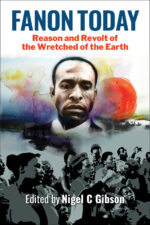
Fanon Today: Reason and Revolt of the Wretched of the Earth
USD $ 10.00 USD $ 30.00Price range: USD $ 10.00 through USD $ 30.00Select options This product has multiple variants. The options may be chosen on the product page
Fanon Today: Reason and Revolt of the Wretched of the Earth
USD $ 10.00 USD $ 30.00Price range: USD $ 10.00 through USD $ 30.00Fanon Today: Reason and Revolt of the Wretched of the Earth is about how new generations are discovering their mission of humanizing the world by claiming Fanon as a thinker for our times. Why Fanon, why now? For the wretched of the earth, conditions have not improved since Fanon’s time and in some cases they have worsened. Reason and revolt are inescapable, quite simply because, as Fanon wrote, it has become ‘impossible for them to breathe, in more than one sense of the word’. To mark the sixtieth anniversary of Fanon’s death (in 1961), the contributors to this book address the resonances of Fanon’s thinking on movements of resistance and mass revolutionary uprisings occurring in response to repression or state violence in Algeria, Brazil, Ghana, Ireland, Kenya, Pakistan, Palestine, Portugal, South Africa, Syria, Trinidad, USA and beyond. The driving force of each chapter of this unique collection of writings is Fanonian praxis, engaging with Fanon the thinker and Fanon the revolutionary.
Select options This product has multiple variants. The options may be chosen on the product page -
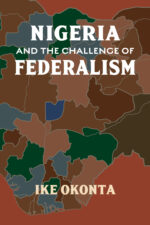
Nigeria and the Challenge of Federalism
USD $ 5.00 USD $ 14.00Price range: USD $ 5.00 through USD $ 14.00Select options This product has multiple variants. The options may be chosen on the product page
Nigeria and the Challenge of Federalism
USD $ 5.00 USD $ 14.00Price range: USD $ 5.00 through USD $ 14.00The book identifies three key moments in Nigeria’s experience with federalism and makes the argument that a complex and socially-diverse country like Nigeria can only be successfully governed by a truly federal arrangement, and not the present unitary contraption that has only delivered poverty, social unrest and the powerful centrifugal forces that are now threatening the very existence of the country itself. The time has come, write Ike Okonta, to convene a conference with sovereign powers to design a federal constitution for the country. The current process of amending the 1999 Constitution by the National Assembly will not suffice. The document is so hopelessly flawed that only its discarding and a fresh effort at constitution-making will suffice.
Select options This product has multiple variants. The options may be chosen on the product page -

Racism, Capitalism, and COVID-19 Pandemic
USD $ 5.00 USD $ 15.00Price range: USD $ 5.00 through USD $ 15.00Select options This product has multiple variants. The options may be chosen on the product page
Racism, Capitalism, and COVID-19 Pandemic
USD $ 5.00 USD $ 15.00Price range: USD $ 5.00 through USD $ 15.00he COVID-19 pandemic has brought into sharp relief the deep structural problems affecting nonwhite racialized workers in the core and periphery. Yet, many social scientific analyses of the global political economy, at least in the pre-COVID era, are race neutral or willfully indifferent to the persistent racial pattern of global inequalities. This pamphlet explains how the unremitting super-exploitation of Black and other nonwhite racialized labor in the core and the periphery persisted throughout the COVID-19 crisis through the lens of Black radical scholarship on racism and capitalism.
Edwards not only captures how people of African descent have been disproportionately impacted by COVID, but also the historical, sociological and structural roots of the inequalities that affect vulnerable groups across the world, tied to what she has described as the architecture of the global economy linked to race and gender. She represents a refreshing voice in our time and part of a Caribbean radical tradition in the spirit of Claudia Jones, Eric Williams, Oliver C. Cox, and C.L.R. James, from her native Trinidad, as well as Guyana’s Walter Rodney and Andaiye.Select options This product has multiple variants. The options may be chosen on the product page -
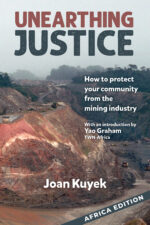
Unearthing justice: How to protect your community from the mining industry AFRICA EDITION
ONLY AVAILABLE IN EASTERN AND SOUTHERN AFRICA
We are pleased to announce that Daraja Press will soon be making Unearthing Justice, originally published by Between The Lines, available in Africa through our partners at Zand Graphics Ltd (throughout East Africa and the Horn) and Sherwood Books (South Africa, Namibia, Botswana, Lesotho, Mozambique and Swaziland).
Originally published in 2019, this new edition has an Introduction by Yao Graham, TWN-Africa. The author, Joan Kuyek, is a community-focused mining analyst and organizer living in Ottawa. She was the founding National Co-ordinator of MiningWatch Canada from 1999–2009 and continues to do work for MiningWatch and for a number of communities affected by mining.
The mining industry continues to be at the forefront of colonial dispossession around the world. It controls information about its intrinsic costs and benefits, propagates myths about its contribution to the economy, shapes government policy and regulation, and deals ruthlessly with its opponents.
Brimming with case studies, anecdotes, resources, and illustrations, Unearthing Justice exposes the mining process and its externalized impacts on the environment, Indigenous Peoples, communities, workers, and governments. But, most importantly, the book shows how people are fighting back. Whether it is to stop a mine before it starts, to get an abandoned mine cleaned up, to change laws and policy, or to mount a campaign to influence investors, Unearthing Justice is an essential handbook for anyone trying to protect the places and people they love.
-

Dictators as Gatekeepers for Europe
USD $ 5.00 USD $ 20.00Price range: USD $ 5.00 through USD $ 20.00Select options This product has multiple variants. The options may be chosen on the product page
Dictators as Gatekeepers for Europe
USD $ 5.00 USD $ 20.00Price range: USD $ 5.00 through USD $ 20.00Dictators as Gatekeepers for Europe is a detailed journalistic account of how the EU is attempting to limit mobility within the African continent as a matter of the EU’s domestic policy agenda, hence the title hinting at the many agreements (with Turkey, Libya, Sudan) aimed at blocking migrants from approaching the European continent. The new “Berlin Wall” not only encircles Europe, but also generates a proliferation of militarised borders in Africa. …To summarise, the authors argue, Europe desires protected borders and open markets. The novelty is the amount of material that this book contains about African desires and strategies, both as a continent and as single states. This, in particular, makes the work a collection of extremely valuable directions of research. In fact, Africa, if one were to simplify the continent’s intentions, is depicted as aspiring to the exact opposite of Europe, namely open borders (with the African Union aspiring to free movement within the continent) and protected markets (protected from Western corporate predatory strategies). Moreover, contrary to the narrative of aid according to which the West “helps develop” Africa, the figures quoted by the authors suggest the opposite: while Sub-Saharan Africa receives $134 billion a year in development funding, $192 billions flow out of Africa, with $46 billion in profit for major corporations and another $35 billion vanishing in tax havens (218). https://www.law.ox.ac.uk/research-subject-groups/centre-criminology/centreborder-criminologies/blog/2022/02/double-book by Oana Pârvan.
Select options This product has multiple variants. The options may be chosen on the product page -

JACKSON EN REVUELTA
Suggested Price: USD $ 10.00[Spanish edition of Jackson Rising]
Mississipi; el estado más pobre de los EEUU, el que tiene el porcen- taje más alto de población Negra y con una historia dramática de terror racial y de resistencia Negra. Este es el contexto de la resistencia presentada en este recopilatorio de escritos.
Sin desanimarse por la incertidumbre, el miedo y la an- siedad causadas por el constante deterioro del orden ne- oliberal, la respuesta de las activistas Negras de Jackson ha sido organizarse. Inspiradas por la rica historia de lucha y resistencia en Mississipi y comprometidas con la Estra- tegia Jackson-Kush, construyen instituciones arreladas en el poder comunitario, que combinan política y desarrollo económico y que satisfacen necesidades reales de la gente para crear un model social alternativo.
Las experiencias y análisis recogidas reflejan el poder creativo que se genera cuando la lucha política se basa en una visión del mundo liberada de las contradicciones y li- mitaciones inherentes al liberalismo. Esta es, en definitiva, una historia sobre un porceso decolonial y socialista, orga- nizado y dirigido por personas Negras.
-
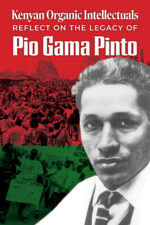
Kenyan Organic Intellectuals Reflect on the Legacy of Pio Gama Pinto
USD $ 5.00 USD $ 11.00Price range: USD $ 5.00 through USD $ 11.00Select options This product has multiple variants. The options may be chosen on the product page
Kenyan Organic Intellectuals Reflect on the Legacy of Pio Gama Pinto
USD $ 5.00 USD $ 11.00Price range: USD $ 5.00 through USD $ 11.00This booklet on Pio Gama Pinto has been produced in the tradition of ‘looking back, in order to move forward’ to not only salvage history but also to use it as a mirror to reflect on the current political, economic and social conditions in Kenya. The essays, dubbed reflections, that appear in the booklet are a product of the efforts and dedication of young women and men under the banner of the ‘Organic Intellectuals Network’ in Kenya. We use the concept of ‘organic intellecutal’ as developed by Antonio Gramsci.
Members of the Organic Intellectual Network selected the book Pio Gama Pinto: Kenya’s Unsung Martyr 1927-1965 by Shiraz Durrani (Vita Books, 2018) as a basis for discussion for celebrating and remembering the life of Pio Gama Pinto, Kenya first Martyr, a dedicated and selfless individual in the struggle for freedom in Kenya.Select options This product has multiple variants. The options may be chosen on the product page -

Partisan Universalism: Essays in Honour of Ato Sekyi-Otu
USD $ 5.00 USD $ 18.00Price range: USD $ 5.00 through USD $ 18.00Select options This product has multiple variants. The options may be chosen on the product page
Partisan Universalism: Essays in Honour of Ato Sekyi-Otu
USD $ 5.00 USD $ 18.00Price range: USD $ 5.00 through USD $ 18.00The collection of essays in Partisan Universalism celebrates the work of Ato Sekyi-Otu, a scholar, teacher and friend, marking his extraordinary contribution to the philosophy, politics and praxis of liberation. As Ato Sekyi-Otu has argued in his recent book, Left Universalism, Africacentric Essays (Routlege 2019), universalism is an ‘inescapable presupposition of ethical judgment in general and critique in particular, especially indispensable for radical criticism of conditions of existence in postcolonial society and for vindicating visions of social regeneration’. Universalism must and can only be partisan.
“Responding to the invitation ‘to re-member severed but shareable things’, these lovers of truth, freedom, and dignity celebrate the searing intellect, generosity, wit, and compassion of the person and the scholar Ato Sekyi-Otu. … this is a precious contribution. Not to be missed!” —Jane Anna Gordon, author of Statelessness and Contemporary Enslavement and co-editor (with Drucilla Cornell) of Creolizing Rosa Luxemburg. /
“Critically engaging Ato Sekyi-Otu’s notion of partisan universalism, this timely volume of essays speaks directly to the onto-metaphysical issues that will give Africana thought the new foundations that will enable it to move beyond the linguistic turn, brush aside the ashes of Afro-pessimism. … A must read for all concerned with the future of Africana theory and praxis.” —Paget Henry, author of Caliban’s Reason/
“Ato Sekyi-Otu’s thought is one of the most important and exciting in Africa today. The texts compiled in this volume celebrate and engage with the work of Sekyi-Otu … They bear eloquent witness to Sekyi-Otu’s stature as a thinker and to his consistent commitment to the universalization of humanity in both theory and practice.” — Michael Neocosmos, Emeritus Professor in the Humanities, Rhodes University, South Africa.Select options This product has multiple variants. The options may be chosen on the product page -
 Select options This product has multiple variants. The options may be chosen on the product page
Undaunted: Stories of Freedom in a Shackled Society
USD $ 15.00….to free oneself or assist in liberating others involves taking risks, being suspicious of the status quo, leaving the safety of the shore and launching out into the deep and the unknown. This is a very lonely calling too as one immerses oneself into the whole of reality with courage to confront and listen. Yet, the calling is not to be the liberator of the oppressed but to make a commitment to fight alongside them, as Paulo Freire wrote in Pedagogy of the Oppressed. — Fr Gabriel Dolan
From his work in Turkana, Kitale, Kapenguria and Mombasa, Father Gabriel reminds us that true transformative change comes from the people themselves, from the bottom up. This is a challenge that the social justice/human rights practitioners must internalize and the sooner the better. The idea of being the “voice of the voiceless” must transform to facilitating, encouraging and giving space to those who suffer the indignities of injustice, violence, poverty and repression. Indeed, one of the most significant tasks for the human rights community is to devolve away from Nairobi, in real, practical, and substantive ways.
It is not easy for a white man, with all the attendant privileges that brings, to become an integral part of the struggle for pro-poor transformative change in Kenya, and be subject to arrest, harassment, and repression. For those who read these memoirs, please circulate them to everyone you know. Translate them, read them in the mosques, churches and under trees so that Kenyans can get a sense of where we have come from, what we should avoid, and what it takes to make some gains that benefit the majority of our people. — Maina Kiai
Select options This product has multiple variants. The options may be chosen on the product page -

Agroecología Abolicionista, Soberanía Alimentaria y Prevención de Pandemias
USD $ 5.00 USD $ 15.00Price range: USD $ 5.00 through USD $ 15.00Select options This product has multiple variants. The options may be chosen on the product page
Agroecología Abolicionista, Soberanía Alimentaria y Prevención de Pandemias
USD $ 5.00 USD $ 15.00Price range: USD $ 5.00 through USD $ 15.00La COVID-19 ha expuesto la naturaleza racializada de los sistemas alimentarios, pero también potencialmente otorga oportunidades para construir de nuevo. Maywa Montenegro explora una serie de defectos, desde las cadenas de suministro fracturadas hasta las infecciones no controladas entre los trabajadores de alimentos esenciales y comunidades negras, marrones e indígenas victimizadas por el virus a lo largo de viejos surcos de opresión racial. Ella rastrea los orígenes probables de la COVID-19 hasta los sitios de desborde forjados por la expansión agroindustrial en regiones boscosas donde los patógenos brotan libremente e infectan a los humanos. La agricultura animal de tipo industrial impulsa estos cambios ecológicos que incuban futuros brotes. Las pandemias tienen sus raíces en la separación violenta de las comunidades de sus territorios, semillas, conocimientos y riqueza. El racismo permite ese robo como elemento fundamental para la expansión capitalista.
Para hacer frente a las pandemias y las injusticias alimentarias, Montenegro invoca una agroecoecología abolicionista. Ninguna alternativa anticapitalista puede ignorar el racismo que es fundamental para el sistema alimentario industrial transnacional. Académicos como Angela Davis, Ruth Wilson Gilmore y Mariame Kaba han argumentado que, aunque la abolición se ve con frecuencia como una estrategia de oposición, para erradicar, por ejemplo, prisiones y policía: la abolición es igualmente propositiva. Una agroecología abolicionista abre múltiples posibilidades que responden a las exigencias de un planeta pandémico: no existe una “normalidad” a la que podamos regresar con seguridad.
Select options This product has multiple variants. The options may be chosen on the product page -

El Significado Revolucionario de la Revuelta de George Floyd
USD $ 5.00 USD $ 15.00Price range: USD $ 5.00 through USD $ 15.00Select options This product has multiple variants. The options may be chosen on the product page
El Significado Revolucionario de la Revuelta de George Floyd
USD $ 5.00 USD $ 15.00Price range: USD $ 5.00 through USD $ 15.00No hubo nada más que oscuridad en la primavera de 2020 cuando la pandemia de Covid-19 se enfureció y cerró la economía. Pero mientras que los manifestantes de derecha exigieron el fin del cierre de emergencia, un conflicto mucho más grande se estaba gestando bajo la superficie. Una rebelión exploto en Minneapolis en respuesta al asesinato policial de George Floyd, y durante la rebelion una estación de policía fue tomada y prendido fuego. Después de esto la revuelta se extendió rápidamente por todo los Estados Unidos. Los manifestantes saquearon los centros urbanos, lucharon contra la policía, quemaron coches de policía y destruyeron edificios de gobierno. El proletario negro lideró la carga, pero los proletarios blancos, latinos, asiáticos e indígenas también se unieron a la lucha, demostrando nuevas posibilidades para construir alianzas en esta sociedad segregada. Si bien las rebeliones contra la policía continuaron durante el verano y el otoño, el levantamiento retrocedió con el comienzo del invierno. Pero este conflicto está lejos de terminar.
Preparándonos para las grandes luchas que vienen, El Significado Revolucionario de la Revuelta de George Floyd proporciona un análisis de lo que sucedió durante los disturbios de 2020 en los Estados Unidos, sus potenciales, límites internos, e implicaciones estratégicas.
Select options This product has multiple variants. The options may be chosen on the product page -

Extracting Profit: Imperialism, Neoliberalism and the New Scramble for Africa
A piercing historical explanation of poverty and inequality in African societies today and the social impact of resource-driven growth, Extracting Profit explains why Africa, in the first decade and a half of the twenty-first century, has undergone an economic boom. Rising global prices in oil and minerals have produced a scramble for Africa’s natural resources, led by investment from U.S., European and Chinese companies, and joined by emerging economies from around the globe. African economies have reached new heights, even outpacing rates of growth seen in much of the rest of the world. Examined through the lens of case studies of the oil fields of the Niger River Delta, the Chad-Cameroon Pipeline and the East African infrastructure boom, this period of “Africa rising” did not lead to the creation of jobs, but has instead fueled the extraction of natural resources, profits accruing to global capital, and an increasingly wealthy African ruling class.
Extracting Profit argues that the roots of today’s social and economic conditions lie in the historical legacies of colonialism and the imposition of so-called “reforms” by global financial institutions such as the World Bank and International Monetary Fund. The chokehold of debt and austerity of the late twentieth century paved the way for severe assaults on African working classes through neoliberal privatization and deregulation. And while the scramble for Africa’s resources has heightened the pace of ecological devastation, examples from Somalia and the West African Ebola outbreak reveal a frightening surge of militarization on the part of China and the U.S.
Yet this “new scramble” has not gone unchallenged. With accounts of platinum workers’ struggles in South Africa, Nigerian labor organizing and pro-democracy upheavals in Uganda and Burkina Faso, Extracting Profit offers several narratives of grassroots organizing and protest, pointing to the potential for resistance to global capital and fundamental change, in Africa and beyond.
And in an updated Preface, the author analyses the implications of the Covid-19 pandemic and escalating climate emergency, as both the crises and resistance to extraction accelerate across the continent.
Reviews-
“Lee Wengraf’s Extracting Profit – Imperialism, Neoliberalism and The New Scramble for Africa is at once historical and contemporary. It unpacks ongoing resource crimes by analytically exposing its historical roots and pointing to ways by which the oppressed can cut off the bonds that lock in their subjugation.” —Nnimmo Bassey, Director, Health of Mother Earth Foundation
“Lee Wengraf provides an important reminder that Africa’s position within the world economy is heavily determined by its unequal insertion into the global capitalist system and ongoing manifestations of imperialism.” –James Chamberlain, Sheffield Political Economy Research Institute
“Lee Wengraf’s Extracting Profit provides a breathtakingly detailed account and analysis of some of the major socioeconomic ills that have been plaguing Africa for centuries. Amongst the host of issues she tackles, arguably the most consequential are mass poverty in African societies, their indefensible economic inequalities and the steady plundering of the continent’s resources, starting from the slave-trade era up till the present-day.” –Remi Adekoya, Review of African Political Economy
“Extracting Profit offers several narratives of grassroots organizing and protest, pointing to the potential for resistance to global capital and fundamental change, in Africa and beyond.” –Developing Economics
“Evidently, this book is well-researched and it contributes to the expansion of the frontiers of Marxist scholarship on Africa’s development dilemma within the global capitalist order. This book lends credence to the pioneering works of such notable radical scholars as Andre Gunder Frank, Walter Rodney, and Samir Amin among several others. It should be read by students and teachers of political economy, development studies, Marxism and philosophy.” –Marx & Philosophy Review of Books
“Extracting Profit provides a great arch of scutiny from the earliest carve-up of the African continent, through colonialism, war, imperialism, to the recent neoliberal takeover. The book demonstrates the continued importance of Marxist analysis on the continent, asserting the centrality of class analysis and a project of revolutionary change. Wengraf provides us with a major contribution, that highlights contemporary developments and the role of China on the African continent that has perplexed and baffled scholars. An indispensable volume.” —Leo Zeilig, author of Frantz Fanon: The Militant Philosopher of Third World Revolution
“The history of resource frontiers everywhere is always one of lethal violence, militarism, empire amidst the forcing house of capital accumulation. Lee Wengraf in Extracting Profit powerfully reveals the contours of Africa’s 21st century version of this history. The scramble for resources, markets, and investments have congealed into a frightening militarization across the continent, creating and fueling the conditions for further political instability. Wengraf documents how expanded American, but also Chinese, presence coupled with the War on Terror, point to both the enduring rivalry among global superpowers across the continent and a perfect storm of resource exploitation. Wengraf offers up a magisterial synopsis of the challenges confronting contemporary Africa.” —Michael Watts, University of California, Berkeley
“One of the most well-known stylized facts of Africa’s recent growth experience is that it has been inequality-inducing in ways that previous growth spurts were not. Lee Wengraf, in her new book Extracting Profit , expertly utilises the machinery of Marxian class analysis in making sense of this stylized fact. Along the way we learn much about Africa’s historical relationship with imperialism and its contemporary manifestations. This book should be required reading for all those who care about Africa and its future.” —Grieve Chelwa, Contributing Editor, Africa Is A Country
“In recent years countries in the African continent have experienced an economic boom—but not all have benefited equally. Extracting Profit is a brilliant and timely analysis that explodes the myth of “Africa Rising,” showing how neoliberal reforms have made the rich richer, while leaving tens of millions of poor and working class people behind. Lee Wengraf tells this story within the context of an imperial rivalry between the United States and China, two global superpowers that have expanded their economic and military presence across the continent. Extracting Profit is incisive, powerful, and necessary: If you read one book about the modern scramble for Africa, and what it means for all of us, make it this one.” —Anand Gopal, author, No Good Men Among the Living: America, the Taliban, and the War Through Afghan Eyes
“Thorough and thoughtful, Wengraf’s book has a radical depth that underscores its significance. It’s definitely a must-read for anyone who cherishes an advanced knowledge on the exploitation of Africa as well as the politics that undermines Africa’s class freedom.” —Kunle Wizeman Ajayi, Convener, Youths Against Austerity and General Secretary of the United Action for Democracy, Nigeria
“Extracting Profit is a very important book for understanding why the immense majority of the African population remain pauperised, despite impressive growth rates of mineral-rich countries on the continent. It continues the project of Walter Rodney’s How Europe Underdeveloped Africa. And in several ways, it also goes beyond it, capturing the changing dynamics of global capitalism 45 years after Rodney’s magnus opus.
In this book, Lee Wengraf debunks the myth of “Africa Rising” and the supposed expansion of an entrepreneurial middle-class, revealing “reforms” imposed by international financial institutions as mechanisms for fostering imperialism in an era of sharpening contradictions of the global capitalist economy. The adverse social, economic, political and environmental impact of these are elaborated on as a systemic whole, through the book’s examination of the sinews of capital’s expansion in the region: the extractive industries.
But, Wengraf does not stop at interrogating the underdevelopment of Africa. Her book identifies a major reason for the failures of national liberation projects: while the working masses were mobilised to fight against colonial domination, the leadership of these movements lay in the hands of aspiring capitalists, and intellectuals. The urgency of the need for a strategy for workers’ power internationally, she stresses correctly, cannot be overemphasized.
Reading Extracting Profit would be exceedingly beneficial for any change-seeking activist in the labour movement within and beyond Africa.” —Baba Aye, editor, Socialist Worker (Nigeria)
-
-

Politics, Democratization and Academia in Uganda: The Case of Makerere University
USD $ 6.99 USD $ 20.00Price range: USD $ 6.99 through USD $ 20.00Select options This product has multiple variants. The options may be chosen on the product page
Politics, Democratization and Academia in Uganda: The Case of Makerere University
USD $ 6.99 USD $ 20.00Price range: USD $ 6.99 through USD $ 20.00As the oldest (and arguably best-known) university in Uganda and the wider eastern and central Africa region, Makerere University looms large in the history of higher education on the continent. Alma mater to presidents, public intellectuals and pundits of all disciplines, Makerere has attracted considerable scholarly and popular attention, both in respect of its prominence and achievements, and well as with regard to its failures and foibles. The proposed book focuses on a particularly understudied aspect of the place of higher education in the African context, i.e. the relationship between a public university of unique historical importance and the contestations over democratization that have taken place both within campus and outside of it. It is built around the late-1980s struggle by the Makerere University Academic Staff Association (MUASA) for improved living conditions against the backdrop of the early programs of structural adjustment and economic reform that the National Resistance Army/Movement (NRA/M) government adopted soon after taking power in 1986. Although seemingly introverted in focus, in many respects the MUASA action represented the earliest forms of political struggle against a regime of governance that promised a great deal, but disappointingly delivered considerably less.
The focus on MUASA provides a critical entry-point to a wider debate about the place of organized democratic action by academics in a post-conflict context where the traditional institutions of political and civil society, i.e. political parties and non-governmental organizations (NGOs) have either been severely compromised or discredited, or where they are too weak and inorganic to provide any form of significant counter-juxtaposition to the government in power. By organizing the first strike by academic staff in the sixty-seven (67) year history of the university, for a time MUASA became the focal-point for democratic organizing against a regime that was yet to fully expose its nefarious and anti-democratic colours. The book examines the broader issues concerning the relationship between organized academic action and democratization; the place of the Media in reviewing these struggles; the position of students as a critical component of academe; “big P” and “small p” politics affecting female academics, and finally, the paradoxical role of the School of Law in both aiding and inhibiting the struggle against dictatorship in a country which has enjoyed
Select options This product has multiple variants. The options may be chosen on the product page -
 Select options This product has multiple variants. The options may be chosen on the product page
The Enduring Relevance of Walter Rodney’s ‘How Europe Underdeveloped Africa’
USD $ 15.00Soon after its publication in 1972, Walter Rodney’s How Europe Underdeveloped Africa gained global popularity among students, scholars, activists and people concerned with African affairs. His innovative application of the method of political economy transformed the paradigm for rendition of the continent’s past. Because it stridently took the traditional historians and the prevailing neo-colonial order to task, it was also pilloried by the defenders of the status quo. And, in these neoliberal times, mainstream scholars and pundits proclaim that it is no longer relevant for Africa.
In Walter Rodney: An Enduring Legacy, Karim Hirji makes a systematic case that, on the contrary, Rodney’s seminal work retains its singular value for understanding where Africa has come from, where it is going, and charting the path towards genuine development for its people. After giving a broad picture of Rodney and his times, Hirji examines in detail the criticisms levelled against his work, and conducts a focused review of modern day textbooks on African history. It is seen that most of the claims against Rodney lack a sound basis and that direct representations of his ideas are replete with distortions, unfair selectivity and political bias. Yet, the long term influence of Rodney on African history is unmistakable.
Hirji’s succinct, coherent defence of an intellectual giant who lived and died for humanity is an essential read for anyone with an interest in Africa and related regions.
Select options This product has multiple variants. The options may be chosen on the product page -

The imperative of Utu / Ubuntu in Africana scholarship
USD $ 5.00 USD $ 15.00Price range: USD $ 5.00 through USD $ 15.00Select options This product has multiple variants. The options may be chosen on the product page
The imperative of Utu / Ubuntu in Africana scholarship
USD $ 5.00 USD $ 15.00Price range: USD $ 5.00 through USD $ 15.00Written in commemoration of the 50th anniversary of Africana Studies and Research Center, Cornell University, this publication celebrates the birth of Black studies as a liberated academic zone. Professor Mũgo reflects upon the significance of Africana studies, specifically within the context of America’s predominantly White universities, revisiting the hers/his/torical context that birthed Black studies as a field of knowledge. She reflects on the ownership of knowledge, its production, dissemination and custodianship while proposing utu/ubuntu as imperatives in defining transformative education. The hypothesis and heart of the argument is that knowledge and scholarship can either be colonizing, alienating and enslaving; or, alternatively, they can be conscientizing, humanizing and liberating, creating new human beings with the agency to transform life and the world, for the better. he dismisses the false myth of dominating, colonizing and imperialist cultures that claim to have a monopoly of knowledge and whose purpose is to justify the dehumanization of the conquered, the attempted erasure of their knowledges, heritages and ultimately, entire cultures.
Select options This product has multiple variants. The options may be chosen on the product page -
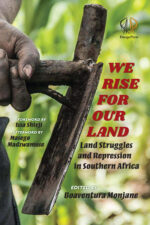
We Rise for Our Land: Land Struggles and Repression in Southern Africa
USD $ 5.00 USD $ 18.00Price range: USD $ 5.00 through USD $ 18.00Select options This product has multiple variants. The options may be chosen on the product page
We Rise for Our Land: Land Struggles and Repression in Southern Africa
USD $ 5.00 USD $ 18.00Price range: USD $ 5.00 through USD $ 18.00In recent years southern Africa has aroused the interest of domestic and foreign investors targeting several sectors. Agrarian and extractive capital has been penetrating the countryside, causing land conflicts, displacement of local peasant communities and in worse cases, deaths. Rural people in general have not, been passive—alone or in alliance with non-governmental organizations and activists, they have organized raised their voices. Resistance movements to capital are taking place throughout the region, even when faced with repression. The book provides critical assessments of the dynamics of agrarian and extractive capital in southern Africa: with contributions from DRC, Namibia, Zambia, Malawi, Zimbabwe, Swaziland, Mozambique, Mauritius and Madagascar.
Select options This product has multiple variants. The options may be chosen on the product page -
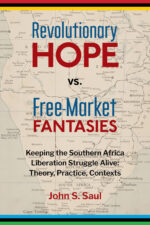
Revolutionary Hope vs Free-Market Fantasies Keeping the Southern Africa Liberation Struggle Alive: Theory, Practice, Context
USD $ 5.00 USD $ 20.00Price range: USD $ 5.00 through USD $ 20.00Select options This product has multiple variants. The options may be chosen on the product page
Revolutionary Hope vs Free-Market Fantasies Keeping the Southern Africa Liberation Struggle Alive: Theory, Practice, Context
USD $ 5.00 USD $ 20.00Price range: USD $ 5.00 through USD $ 20.00John S. Saul, born and first educated in Toronto, Canada, moved to Tanzania almost sixty years ago and, since then, has also taught in Mozambique and South Africa as well as back in Canada at York University. In Tanzania, he discovered the centrality of the war for freedom from white rule and global capitalist dictate then taking shape further south – in Mozambique, Angola, Zimbabwe, Namibia and South Africa. Both his scholarly interest and his activist bent drew him to support and to seek to better understand the struggles in these nations-in-the-making, a political choice that now culminates in a final trilogy of books under the general title, The Rethinking Southern African Liberation Trilogy. The first volume of this trilogy, On Building a Social Movement: The North American Campaign for Southern African Liberation Revisited, was published by Africa World Press / Fernwood Books (2017). The present book is the second in that trilogy, with a third volume entitled Class, Race and the Thirty Years War for Southern African Liberation – A History set to conclude his work to be published by Cambridge University Press in 2022.
Here, Saul’s extended first chapter lays out the broad premises of the thinking that has guided his endeavours, ideas that takes the core reality of economic production and exploitation centrally but that are alive to the tangible impact on outcomes of a wide range of other social realities, including class, race, gender, sexuality, nationalism, the environment, politics and the state. A second section covers the essential unity of theory and political practice that underpins Saul’s findings. And a third and final section paints illuminating pictures of some core aspects of the diverse regional contexts — sites of both recolonization and continuing struggle, and all contexts whose trajectories will be further explored in his forthcoming third volume.
Select options This product has multiple variants. The options may be chosen on the product page -
Moving Beyond Capitalist Agriculture: Could Agroecology Prevent Further Pandemics?
USD $ 5.00 USD $ 15.00Price range: USD $ 5.00 through USD $ 15.00Select options This product has multiple variants. The options may be chosen on the product page
Moving Beyond Capitalist Agriculture: Could Agroecology Prevent Further Pandemics?
USD $ 5.00 USD $ 15.00Price range: USD $ 5.00 through USD $ 15.00Pathogens repeatedly are emerging from a global agrifood system rooted in inequality, labor exploitation, and unfettered extractivism by which communities are robbed of their natural and social resources. A crisis-prone economic system that prioritizes production for profit over meeting human needs and ecological preservation is organized around intense monocultural production that, along the way, allows the deadliest of diseases to emerge. The PReP Agroecologies working group focuses on how agriculture might be reimagined as the kind of community-wide intervention that could stop coronaviruses and other pathogens from emerging in the first place. We address how mainstream science supports the same political and economic systems that helped produce the pandemic. Then we introduce agroecology, an environmentalism of the peasantry, the poor, and indigenous, long in practice, that treats agriculture as a part of the ecology out of which humanity grows its food. Agroecology—a science, movement, and practice—combines ecological science, indigenous and peasant knowledges, and social movements for food and territorial sovereignty to achieve environmentally just food systems.
Peasant- and indigenous-led agroecology is uniquely positioned to limit the spread of zoonotic viruses: Post-capitalist agroecology champions the indigenous and smallholders who protect agricultural biodiversity. A diverse agroecological matrix of farm plots, agroforestry, and grazing lands all embedded within a forest can conserve animal biodiversity in the landscape. Agricultural biodiversity can make it more difficult for zoonotic diseases to prevail. Such a mode of conservation also takes into account the economic and social conditions of people currently tending the land, rather than a conservation that uproots people to foster the private accumulation of capital.
Select options This product has multiple variants. The options may be chosen on the product page -
Abolitionist Agroecology, Food Sovereignty and Pandemic Prevention
USD $ 5.00 USD $ 15.00Price range: USD $ 5.00 through USD $ 15.00Select options This product has multiple variants. The options may be chosen on the product page
Abolitionist Agroecology, Food Sovereignty and Pandemic Prevention
USD $ 5.00 USD $ 15.00Price range: USD $ 5.00 through USD $ 15.00COVID-19 has exposed the racialized nature of food systems, but also potentially grants opportunities to build anew. Maywa Montenegro explores a series of breakdowns, from fractured supply chains to uncontrolled infection among essential food workers to Black, Brown, and Indigenous communities scythed through by the virus along old grooves of race-class oppression. She traces the likely origins of COVID-19 to spillover sites forged by agroindustrial expansion into forested regions where pathogens spring free and infect humans. Industrial animal agriculture drives these ecological changes that incubate future outbreaks. Pandemics have their roots in the violent separation of communities from their territories, seeds, knowledge and wealth. Racism enables such theft as fundamental to capitalist expansion.
To tackle pandemics and food injustices, Montenegro calls for an abolitionist agroecology. No anti-capitalist alternative can ignore the racism that is central to the transnational industrial food system. Scholars including Angela Davis, Ruth Wilson Gilmore, and Mariame Kaba have argued that although abolition is frequently seen as an oppositional strategy — to eradicate, for example, prisons and police — abolition is equally propositional. An abolitionist agroecology cracks open multiple possibilities that respond to the exigencies of a pandemic planet — there is no ‘normal’ to which we can safely return.
Select options This product has multiple variants. The options may be chosen on the product page -
 Select options This product has multiple variants. The options may be chosen on the product page
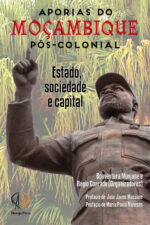
Aporias de Moçambique pós-colonial: Estado, Sociedade e Capital
USD $ 20.00Moçambique celebrou, em Junho de 2020, 45 anos de sua independência. Os ganhos e avanços que o país alcançou nesta quase meia década de independência são inegáveis, mas os desafios que subsistem são muitos. Este livro reflecte sobre Moçambique contemporâneo nos seus vários aspectos, destacando a formação e o papel do Estado, a democracia, a participação dos cidadãos, a política económica e social e o desenvolvimento. Como se pode ver, o livro não é temático e oferece diversas perspectivas de autores e autoras que se dedicam à investigação, ao jornalismo e ao activismo. O livro pretende exactamente oferecer uma leitura do país a partir dos olhos daqueles que não ocupam uma posição de poder mas que vivem, experienciam e lêem a realidade do país a partir de uma perspectiva crítica da sociedade.
O objectivo deste livro é dar uma melhor compreensão do que tem sido o processo de independência em Moçambique e porque é que o país pós-colonial ainda é ‘colonial’ na sua estrutura política e económica. Assim, são dados muitos exemplos para dar ao leitor a possibilidade de confrontar as perspectivas teóricas aqui utilizadas com os casos concretos.
Todos os estudos deste livro mostram que quarenta e cinco anos de independência não foram vividos da mesma forma pelas elites que governam o país e pelas populações que vivem sob o seu domínio. Por um lado, as elites no poder e os seus parentes beneficiaram, e ainda beneficiam, dos recursos do país, enquanto que uma grande parte da população continua à espera das promessas da independência. De um ponto de vista político e económico, os estudos que compõem o livro destacam como o “desenvolvimento” em Moçambique tem estado em contradição com as necessidades do país. Significa que o actual modelo de desenvolvimento responde muito mais ao capital internacional do que à transformação social de Moçambique.Select options This product has multiple variants. The options may be chosen on the product page -

The Revolutionary Meaning of the George Floyd Uprising
USD $ 5.00 USD $ 15.00Price range: USD $ 5.00 through USD $ 15.00Select options This product has multiple variants. The options may be chosen on the product page
The Revolutionary Meaning of the George Floyd Uprising
USD $ 5.00 USD $ 15.00Price range: USD $ 5.00 through USD $ 15.00There was nothing but darkness in the spring of 2020 as the Covid-19 pandemic raged and shut down the economy. But as right-wing protesters demanded an end to the lockdown, a much bigger social conflict was brewing under the surface. A rebellion exploded in Minneapolis in response to the brutal police murder of George Floyd in late May, during which a police station was overtaken and burned down. The uprising quickly spread across the United States as protesters looted downtown urban centers, set fire to cop cars, vandalized government buildings, and fought the police. The Black proletariat led the charge, but white, Latinx, Asian, and Indigenous proletarians also joined the fight, demonstrating new possibilities for building alliances. While anti-police rebellions continued throughout the summer and fall, the uprising receded with the start of the winter. But this conflict is far from over.
In an effort to think through the experience of the uprising and prepare for the great struggles that are coming, The Revolutionary Meaning of the George Floyd Uprising provides an in-depth analysis of what exactly happened during the 2020 uprising, its potentials, internal limits, and strategic implications.
Select options This product has multiple variants. The options may be chosen on the product page -
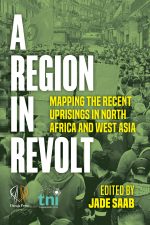
A region in revolt: Mapping the recent uprisings in North Africa and West Asia
USD $ 5.00 USD $ 15.00Price range: USD $ 5.00 through USD $ 15.00Select options This product has multiple variants. The options may be chosen on the product page
A region in revolt: Mapping the recent uprisings in North Africa and West Asia
USD $ 5.00 USD $ 15.00Price range: USD $ 5.00 through USD $ 15.00A wave of mass protest movements has spread across North Africa and West Asia, including Sudan, Algeria, Iraq, Lebanon and Iran. The mass protests have much in common, from opposing authoritarian regimes and worsening economic situations to demanding radical changes in social relations. Despite their similarities, each protest movement operates under different conditions that cannot be ignored. The specific historic, political and economic contexts of each country have determined who the key actors of the uprisings are and their location across old and new divides. This book elaborates on these similarities and differences to paint a clearer picture of these movements and draw out lessons to inform future struggles.
Select options This product has multiple variants. The options may be chosen on the product page
