
-
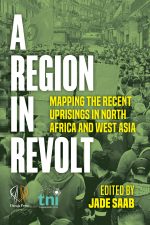
A region in revolt: Mapping the recent uprisings in North Africa and West Asia
Price range: USD $ 5.00 through USD $ 15.00Select options This product has multiple variants. The options may be chosen on the product page
A region in revolt: Mapping the recent uprisings in North Africa and West Asia
Price range: USD $ 5.00 through USD $ 15.00A wave of mass protest movements has spread across North Africa and West Asia, including Sudan, Algeria, Iraq, Lebanon and Iran. The mass protests have much in common, from opposing authoritarian regimes and worsening economic situations to demanding radical changes in social relations. Despite their similarities, each protest movement operates under different conditions that cannot be ignored. The specific historic, political and economic contexts of each country have determined who the key actors of the uprisings are and their location across old and new divides. This book elaborates on these similarities and differences to paint a clearer picture of these movements and draw out lessons to inform future struggles.
Select options This product has multiple variants. The options may be chosen on the product page -

Mau Mau From Within: The Story of the Kenya Land and Freedom Army
Price range: USD $ 12.00 through USD $ 30.00Select options This product has multiple variants. The options may be chosen on the product page
Mau Mau From Within: The Story of the Kenya Land and Freedom Army
Price range: USD $ 12.00 through USD $ 30.00The inside story of the struggles of the Kenya Land and Freedom Army, referred to by British colonialism as the ‘Mau Mau rebellion’, is little known today. The autobiographical material written by Karari Njama (a senior leader in the Mau Mau hierarchy) and compiled by Donald L. Barnett was first published by Monthly Review Press in 1966 as Mau Mau From Within: An Analysis of Kenya’s Peasant Revolt. It was reprinted in 1970; it has remained out of print for many years. As the late Basil Davidson put it in his review of the first edition: “Njama writes of the forest leaders’ efforts to overcome dissension, to evolve effective tactics, to keep discipline, mete out justice … and to teach men how to survive in those merciless forests. His narrative is crowded with excitement. Those who know much of Africa and those who know little will alike find it compulsive reading. Some 10,000 Africans died fighting in those years . Here, in the harsh detail of everyday experience, are the reasons why.”
The book is an extraordinary story of courage, passion, heroism, combined with recounting of colonial terror, brutality and betrayal. It is a story of how the very idea of being ‘Kenyan’ was intimately linked to the idea of freedom, a connection that was destroyed not only by the firepower of the British, but also by those who collaborated and established themselves as the beneficiaries of neocolonial rule. Disconnecting notions of freedom from identity left only a caricature that rapidly descended into tribalism and ethnicity.
This momentous story of the struggle for freedom described here is relevant not only for a new generation of Kenyans but also for all those engaged in emancipatory struggles internationally. For so long as the experiences arising from the struggles described in this book are perceived as merely ‘African’ or ‘Kenyan’, it is not possible to fully grasp the contributions they have made to the struggle for a universalist humanity.
What is recounted in this publication is more than an ‘analysis of a peasant revolt’. It is, above all, a history of the Kenya Land and Freedom Army. As Ngūgī wa Thiong’o points out in his Preface to this new edition, ‘we don’t have to use the vocabulary of the colonial to describe our struggles.’ We were tempted to rename the book ‘Kenya Land and Freedom Army from Within.’ But because the original title has wide recognition, and one of the characteristics of movements of the oppressed is to appropriate derogatory terms
Select options This product has multiple variants. The options may be chosen on the product page -

For the love of the struggle: Memoirs from El Salvador
Price range: USD $ 5.00 through USD $ 18.00Select options This product has multiple variants. The options may be chosen on the product page
For the love of the struggle: Memoirs from El Salvador
Price range: USD $ 5.00 through USD $ 18.00From his home in El Salvador, the author shares an intimate personal and political memoir that follows his remarkable journey from the comfort and security of a picturesque New England town to a stirring and heroic engagement in common cause with the struggle for peace and justice in El Salvador. After four years as a Peace Corp worker in northern Liberia beginning in the late 1960’s, followed by a stretch back in the United States as a street worker in the ghettos of North Philadelphia, McKinley finds himself in Central America as an aid worker in 1978. He quickly becomes engulfed by the political violence of the region and engaged with the people and their struggles against five decades of military dictatorship, centuries of poverty and exploitation. The story is marked by terror, adventure and courage, by trials and tragedy redeemed by the beauty and transcendence of people in struggle. Originally based in Guatemala heading up a Catholic relief agency, his commitment to the struggles for change in the country attracts the attention of the military, and his own government, forcing him to leave the country in late 1980. He moves to El Salvador where he begins a gradual incursion into the revolutionary struggle of this country, in a commitment that will last the rest of his life. Interwoven with this personal journey, is the story of Teresa Rivas, her husband Antonio, and their five children, a peasant family It also describes their life after the war, with resettlement in the lowlands of Guazapa where many ex-combatants were building a new life. It explains in detail the gradual emergence of the objective and subjective conditions for revolution in El Salvador, including the difficult choice for the use of violence as the only available option for transformative change in the country. The book also details the challenges of reconstruction after the Peace Accords that end the war in 1992, and the tragedy of opportunities lost during the immediate post-war period in the face of the ongoing resistance of traditional opponents to reform. As the memoir closes, the author reflects on his choice to be in El Salvador over the past 43 years, and the country as he finds it in these changing times; on the family with whom he has shared love and life there; on his continuing relationship with Antonio Rivas and his surviving family; and his gradual reconciliation, from a distance, with the country of his birth.
Select options This product has multiple variants. The options may be chosen on the product page -

Lenin150 (Samizdat): 2nd expanded edition
Price range: USD $ 5.00 through USD $ 30.00Select options This product has multiple variants. The options may be chosen on the product page
Lenin150 (Samizdat): 2nd expanded edition
Price range: USD $ 5.00 through USD $ 30.00Lenin150 (Samizdat) aims to contribute to the re-kindling of the communist attractor by engaging, in the spirit of critical solidarity, with Vladimir Ilyich Ulyanov in the year of his 150th anniversary. Conceived out of the former Soviet republic of Kyrgyzstan, the book brings together contributions from all continents, ranging in style from the academic to the lyrical. As such, these compelling, and in some cases absolutely urgent, appropriations of (the spectre of) Lenin aspire to be of considerable use-value for the struggles ahead.
Select options This product has multiple variants. The options may be chosen on the product page -

Dialectics of revolution : Hegel, Marxism, and its critics through a lens of race, class, gender, and colonialism
Price range: USD $ 5.00 through USD $ 18.00Select options This product has multiple variants. The options may be chosen on the product page
Dialectics of revolution : Hegel, Marxism, and its critics through a lens of race, class, gender, and colonialism
Price range: USD $ 5.00 through USD $ 18.00This book collects four decades of writings on dialectics, a number of them published here for the first time, by Kevin B. Anderson, a well-known scholar-activist in the Marxist-Humanist tradition. The essays cover the dialectics of revolution in a variety of settings, from Hegel and the French Revolution to dialectics today and its poststructuralist and pragmatist critics. In these essays, particular attention is given to Lenin’s encounter with Hegel and its impact on the critique of imperialism, the rejection of crude materialism, and more generally, on world revolutionary developments. Major but neglected works on Hegel and dialectics written under the impact of the struggle against fascism like Lukács’s The Young Hegel and Marcuse’s Reason and Revolution are given full critical treatment. Dunayevskaya’s intersectional revolutionary dialectics is also treated extensively, especially its focus on a dialectics of revolution that avoids class reductionism, placing gender, race, and colonialism at the center alongside class. In addition, key critics of Hegel and dialectics like Jacques Derrida, Michel Foucault, Antonio Negri, Pierre Bourdieu, and Richard Rorty, are themselves analysed and critiqued from a twenty-first century dialectical perspective. The book also takes up the dialectic in global, intersectional settings via a reconsideration of the themes of Anderson’s Marx at the Margins, where nationalism, race, and colonialism were theorized alongside capital and class as key elements in Marxist dialectical thought. As a whole, the book offers a discussion of major themes in the dialectics of revolution that still speak to us today at a time of radical transformation in all spheres of society and of everyday life.
Select options This product has multiple variants. The options may be chosen on the product page -
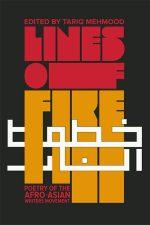
Lines of Fire (2nd Edition)
USD $ 60.00Lines of Fire: Recovering the Lost Arsenal of Anti-Colonial Poetry
Born in Tashkent , forged in clandestine presses, and echoing in today’s streets—this is the recovered front line of a global poetic resistance.
In 1958, at the Afro-Asian Writers’ Conference in Tashkent, a 90-year-old W.E.B. Du Bois stood before the decolonizing world and declared: “I am an American—I am an African.” It was a moment of radical, transnational self-definition.
From that conference emerged a literary movement and its journal, The Call—a direct line for poets from Algiers to Hanoi, Cairo to Beijing, to speak to one another, bypassing the languages and borders of their colonial masters. Though the movement later fractured under Cold War pressures, its two wings—The Call and the Soviet-backed Lotus—remained united in their stand against Zionism, racism, and empire.
Their poetry, often crafted under threat of torture, exile, and surveillance, became a clandestine weapon. Some of it was passed hand to hand, read aloud in underground meetings, and chanted at mass gatherings from Delhi to Ramallah, Cape Town to Gaza.
Now, for the first time, this vital corpus is restored. Lines of Fire, edited by Tariq Mehmood—former leading defendant in the landmark Bradford 12 case and now professor at the American University of Beirut—gathers these living weapons into a single, incendiary anthology. In an age of resurgent fascism and genocide, these voices speak with renewed, unyielding force: their anguish, rage, love, and hope are as urgent now as the day they were penned.
Why This Book Is Essential:
- A Lost Canon, Recovered: Features seminal, often inaccessible work by giants like Mahmoud Darwish, Faiz Ahmed Faiz, Leopold Senghor, Adunis, , Ousmane Sembène, and dozens more from across Africa and Asia.
- Drawn from Rare Sources: Poems curated from scarce issues of The Call and Lotus, long out of print and hidden in archives.
- A Groundbreaking Scholarly Frame: Includes a major introduction tracing the movement’s history, its surveillance by the CIA, the impact of the Sino-Soviet split, and a radical re-examination of solidarity.
- Built to Last & Teach: Published in archival-quality hardcover for libraries, scholars, and lifelong activists. An indispensable text for courses in Decolonial Studies, Global South Literatures, Cold War History, and Postcolonial Poetry.
A Call to Arms for a New Generation.
Edited by Tariq Mehmood, this collection includes poems by:
Salah Abdel Sabour (1931-1981, Ali Ahmad Said Esber, also known as Adunis (1930- ), Mulk Raj Anand (1905-2004), Anar Rasul oghlu Rzayef (1938- ), Nobuo Ayukawa (1920-1986), Fadhil al-Azzawi (1940- ), Abd Al-Wahhab al-Bayati (1926-1999), Mahim Bora (1917- ), Bernard Binlin Dadié (1916- ), Mahmoud Darwish (1942-2008), Osamu Dazai (1909-1948), Mário Pinto de Andrade (1928-1990), D.B. Dhanapala (1905-1971), Mohammed Dib (1920-2003), Gevorg Emin (1918-1998), Sengiin Erdene (1929-2000), Faiz Ahmed Faiz (1911-1984), Rasul Gamzatov (1923-2003), Daniil Granin (1919- ), Colette Anna Gregoire, better known as Anna Greki (1931-1966), Malek Haddad (1927-1978), Pham Ba Ngoan, better known by his pen name Thanh Hai (1930-1980), Buland al-Haidari (1926-1996), Suheil Idris (1925-2008), Yusuf Idris (1927-1991), Fazil Iskander (1929- ), Zulfiya Isroilova (1915-1996), Ali Sardar Jafri (1913-2000), Ghassan Kanafani (1936-1972), Edward al-Kharrat (1926- 2015), Hajime Kijima (1928-2004), Mazisi Kunene (1930-2006), Alex La Guma (1925-1985), U Gtun Kyi, better known by his pen name Minn Latt Yekhaun (1925-1985), Abdul Hayee better known by his pen name Sahir Lundhianvi (1921-1980), Zaki Naguib Mahmoud (1905-1993), Nazik Al-Malaika (1923-2007), Mouloud Mammeri (1917-1989), Yuri Nagibin (1920-1994), Sergey Narovchatov (1919-1981), Dashdorjiin Natsagdorj (1906-1937), Hiroshi Noma (1915-1991), Gabriel jibaba Okara (1921- ), Amrita Pritam (1919-2005), Jean-Joseph Rabearivelo (1901-1937), Richard Rive (1931-1989), Rady Saddouk (1938-2010), Badr Shakir al-Sayyab (1926-1964), Ousmane Sembene (1923- 2007), Leopold Sedar Senghor (1906-2001), Yusuf al-Sibai (1917-1978), Fadwa Tuqan (1917-2003), Sonomyn Udval (1921-1991), Ramses Younan (1913-1966), and Tawfiq Ziad (1929-1994).
Listen to our conversation with Tariq Mehmood here:
#AfroAsianWritersMovement #Lotusjournal #TheCalljournal #NonAlignedMovement #BandungConference #Tashkent1958 #ColdWarculturalhistory #SinoSovietsplit #antiimperialism #anticolonialpoetry #resistanceliterature #resistancepoetry #revolutionarysolidarity #antiracism #antiZionism #settlercolonialism #racialviolence #genocide #GlobalSouthliterature #Africanpoetry #Asianpoetry #Arabpoetry #Palestinianliterature #SouthAsianliterature #AfricanLiterature #Arabpoets #Africanwriters #AfroAsiansolidarity #WEBDuBois #politicalpoetry #20thcenturypoetry
-

Class, gender, race and colonialism
Price range: USD $ 5.00 through USD $ 11.00Select options This product has multiple variants. The options may be chosen on the product page
Class, gender, race and colonialism
Price range: USD $ 5.00 through USD $ 11.00Description (1600 / 2500)
It is important to see both Marx’s brilliant generalisations about capitalist society and the very concrete ways in which he examined not only class, but also gender, race, and colonialism, and what today would be called the intersectionality of all of these. His underlying revolutionary humanism was the enemy of all forms of abstraction that denied the variety and multiplicity of human experience, especially as his vision extended outward from Western Europe. For these reasons, no thinker speaks to us today with such force and clarity.It is clear today that the emancipation of labour from capitalist alienation and exploitation is a task that still confronts us. Marx’s concept of the worker is not limited to European white males, but includes Irish and Black super-exploited and therefore doubly revolutionary workers, as well as women of all races and nations. But, his research and his concept of revolution go further, incorporating a wide range of agrarian non-capitalist societies of his time, from India to Russia and from Algeria to the Indigenous peoples of the Americas, often emphasising their gender relations. In his last, still partially unpublished writings, he turns his gaze Eastward and Southward. In these regions outside Western Europe, he finds important revolutionary possibilities among peasants and their ancient communistic social structures, even as these are being undermined by their formal subsumption under the rule of capital. In his last published text, he envisions an alliance between these non-working-class strata and the Western European working class.
Select options This product has multiple variants. The options may be chosen on the product page -

October 1917 Revolution
Price range: USD $ 5.00 through USD $ 15.00Select options This product has multiple variants. The options may be chosen on the product page
October 1917 Revolution
Price range: USD $ 5.00 through USD $ 15.00Great revolutions make history. Conservative resistance and counter-revolutions only delay their progress. The French revolution invented modern politics and democracy, the Russian revolution paved the way for the socialist transition, while the Chinese revolution connected the emancipation of those peoples oppressed by imperialism with the path to socialism. These revolutions are great precisely because they are bearers of undertakings that are far ahead of the immediate demands of their time. beacons that illuminate the still unfinished struggles of the peoples for the realization of these goals. It is impossible to understand the contemporary world by ignoring these great revolutions. To commemorate these revolutions, says Samir Amin, one needs both to assess their ambitions (the utopia of today will be the reality of tomorrow), and to understand the reasons for their temporary setbacks. Conservative and reactionary minds refuse to do so—they wish us to believe that great revolutions have been nothing more than unfortunate accidents, that the peoples who have made them were carried away by their deceitful enthusiasm, diversions from the normal current of history. This collection of essays helps to situate the lessons of the October 1917 Russian Revolution from a perspective of 100 years.
Egyptian economist and intellectual, Samir Amin (1931-2018), was one of the world’s greatest radical thinkers —a creative Marxist’. He was the director of Third World Forum (Forum du tiers monde), Dakar and President of the World Forum for Alternatives. He published numerous books and papers, including The Law of Value and Historical Materialism, Eurocentrism – Modernity, Religion and Democracy: A Critique of Eurocentrism and Culturalism, Ending the Crisis of Capitalism or Ending Capitalism?‘, Global History – a View from the South and Russia and the Long Transition from Capitalism to Socialism
Select options This product has multiple variants. The options may be chosen on the product page -

Rinky-Dink Revolution: Moving Beyond Capitalism
Price range: USD $ 5.00 through USD $ 15.00Select options This product has multiple variants. The options may be chosen on the product page
Rinky-Dink Revolution: Moving Beyond Capitalism
Price range: USD $ 5.00 through USD $ 15.00This pamphlet tackles the question: how do we get from A to B, capitalism to post-capitalism?
It is critical reading to understand why:
* Capitalist-oriented industrial agriculture and its destruction of habitat are the upstream causes that led to the COVID-19 pandemic as well as other past and future pandemics of devastating, emerging viral pathogens.
* COVID-19 may trigger a collapse of the global capitalist system but it is not the cause.
* Health-care and public-health systems organized around capitalist principles don’t do well in pandemics, compared to those not organized around capitalist principles.
* The current economic collapse, triggered by a pandemic, opens a door for revolutionary transformation.The pamphlet is also available in Spanish and Korean.
Select options This product has multiple variants. The options may be chosen on the product page -

Revolución Rinky-Dink: Yendo Más Allá del Capitalismo Negando Consentimiento, y Promoviendo Construcciones Creativas y Destrucciones Creativas
Suggested Price: USD $ 4.99Este panfleto aborda la pregunta: ¿cómo podemos pasar de A a B, del capitalismo al poscapitalismo? La revolución de Rinky-dink involucra acciones e inacciones que son fáciles, seguras, mundanas, sin glamour y factibles dentro de la vida de cada persona.
Howard Waitzkin presenta una intervención clara y directa para el cambio revolucionario en el sistema económico capitalista global. Cubre mucho terreno, con sofisticación, mientras mantiene la discusión en tierra. Su enfoque en las formas de facilitar un desafío al capital y construir una mayor transformación revolucionaria es crucial en esta coyuntura histórica. Esta discusión sobre construcciones creativas y destrucciones creativas es particularmente útil.
— Brett Clark, profesor de sociología de la Universidad de Utah y autor De El Robo De La Naturaleza: Capitalismo Y Grieta Ecológica, The Robbery of Nature: Capitalism and Ecological Rift en inglés.
El fin del capitalismo es posible. Waitzkin nos lleva un paso más allá en el proceso creativo para esta transformación. A través de ejemplos específicos de grupos organizados dentro de los Estados Unidos y en el extranjero, este trabajo constituye una guía práctica para todos. Waitzkin alienta nuestra creatividad para actos organizados y seguros además de omisiones para trascender el capitalismo.
— Nylca J. Munoz Sosa, abogada, líder de salud pública y activista centrada en la justicia sanitaria y la descolonización en Puerto Rico.
-

소소한 혁명
Suggested Price: USD $ 4.99어떻게 자본주의를 넘어설 것인가라는 질문에 대한 답을, 지금 우리가 “감히” 찾아보려고 한다. 이 소책자를 통해, 자본주의를 벗어나 생태사회주의로 향하는 길을 찾는 우리의 노력이 뚜렷해지길 바란다.
자본주의에 갇힌 우리는, 어떤 형태로든 행동 또는 비행동inaction에 관여하고 있다. 행동은, 자본주의를 직접 마주하기 보다는 자본주의가 초래하는 심각한 여러 문제를 개선하기 위한 투쟁에 참여하는 모습을 띈다. 즉, 우리의 행동은 원인이 아니라 결과에 초점을 맞추는 모순을 보인다.
반면, 비행동은 동의를 의미하게 된다. 우리는 자본주의 경제 체계를 영속시키는 경제 활동에 문제 제기를 하거나 변화를 요구하는 행동을 하지 않음으로써 자본주의에 [암묵적으로] 동의하고 있다. 결과적으로 평범한 우리가 자본주의에 봉사하는 자본가 역할을 계속하고 있는 것이다.
왜 자본주의 억압의 대상인 우리가 억압에 동의하는가? 그 이유가 단지 [외부의] 탄압 때문만은 아니라고, 이탈리아 파시즘 하의 감옥에서 그람시Antonio Gramci는 말했다. 즉, “헤게모니”를 장악하는 이념이 우리의 삶을 둘러싼 억압적인 환경을 설명하고 정당화하는 것이다.
“소소한 혁명”은, 개개인의 삶 속에서, 쉽고 안전하게, 엄청 근사하지는 않지만 일상적이고 실천가능한 행동과 비행동을 얘기한다. 지금까지의 혁명사는, 혁명을 가능하게 했던 전체 민중보다는 소수의 혁명가에 주목했었지만, 자본주의에 맞서는 “우리는” 마르크스나 엥겔스가 떠올렸던 주인공들보다 훨씬 다양하고 규모가 커졌다. 자본주의를 수호하기 위해 싸우는 “그들은” 전 세계 인구의 극소수일 뿐이다.
자본주의의 어떤 특징이 억압적이고 그래서 제거되어야 하는지, 또 반대로 어떤 사회경제구조의 특징이 억압적이지 않으며 그래서 남겨져야 하는지를 뚜렷이 설명하는 전략이 필요하다. 자본주의 이후 사회가 어떤 모습이어야 할지는 점점 명확해지고 있다. 소소한 혁명은, 자본주의의 영속과 발전에 필수적인 과정에 대한 우리의 동의를 거두는 데에서 시작하여, 수 백 만의 우리가, 여전히 적은 소수이긴 하지만, 건설적인 혹은 파괴적인 노력에 창의적으로 참여할 수 있는 방법 또한 포함한다.
세상은 자본주의 그 이후로 이미 진행 중이다. 세계 곳곳에서 창의적인 모습의 공동체communal organization들이 생겨나 스스로 통치하고 구성원들의 생존과 안녕을 보장하기 위해 활동하고 있다. 복지 국가를 포함한 자본주의 국가를 넘어서는 것은 국가 자체를 넘어서는 결과로 이어진다. 연대 경제solidarity economy는 먼저, 소규모의 협동조합 성격을 띄는, 저렴하고 유쾌하고 편안한 주거 공간을 구성하는 방법을 모색하여, 착취적인 임대료, 빚, 세금, 보험에 대한 공동의 해결책을 제시한다. 또한 이러한 공동체는, 영양이 풍부한 먹거리를 지역에서 생산하여 유통하는 방법으로, 자본주의식 농업으로부터 독립을 꾀할 수 있다.
창조적 파괴는, 허가를 받아 하는 대규모의 시위가 아니라 자본주의가 순조롭게 기능할 수 없게 멈추거나 둔화시키는 직접 행동으로 가능하게 된다. 우리가 투자나 세금으로 흘러가게 내버려 두는 돈의 흐름을 비자본주의적인 연대경제에 돌리는 것도 창조적 파괴의 한 방법이다.
소소한 혁명은, 간단하고 안전하며, 자신의 삶을 조금이라도 바꾸고 싶은 의지가 있는 사람이라면 실천가능하다. 자본주의가 우리의 안녕과 행복을 파괴하는 체계라는 것을 알면서도, 부지불식간에 자본주의를 지지하고 동의하는 행동을 멈추는 즐거움을 누릴 수 있다. 놀랍게도 혁명을 위해 다치거나 죽지 않아도 되고, 심지어 큰 불편을 감수하지 않아도 된다. 우리가 해야 할 일은 단 하나. 어차피 하기 싫었던 여러 일들을 이제 정말 그만두는 것이다.
