
-

White Saviorism in International Development: Theories, Practices and Lived Experiences
USD $ 5.00 USD $ 22.00Price range: USD $ 5.00 through USD $ 22.00Select options This product has multiple variants. The options may be chosen on the product page
White Saviorism in International Development: Theories, Practices and Lived Experiences
USD $ 5.00 USD $ 22.00Price range: USD $ 5.00 through USD $ 22.00Given the growing interest in understanding the meaning, manifestations, analyses and implications of racism in North/South relations, White Saviorism in International Development seeks to remedy the shortcomings of the development studies literature on the prevalence of White Saviorism in Western development initiatives in the Global South. The volume comprises theoretical chapters, testimonies, stories and lived experiences from 19 contributors from across the Global South. With sensitivity and intelligence, these practitioners and academics create a tapestry that unveils the implicit and explicit forms of White Saviorism in international development.
Select options This product has multiple variants. The options may be chosen on the product page -
![Aufbruch in Jackson [German edition of Jackson Rising: Black self-management and solidarity economy]](https://darajapress.com/wp-content/uploads/2023/12/174_Akuno_Jackson_web-150x225.jpg)
Aufbruch in Jackson [German edition of Jackson Rising: Black self-management and solidarity economy]
USD $ 24.00German translation of Jackson Rising: The Struggle for Economic Democracy and Black Self-Determination in Jackson, MississippiHow black activists are building liberation practically from below: Departure in Jackson documents the history of one of the most exciting revolutionary experiments in the USA Present.
Since the 1970s, black liberation movements in majority-black Mississippi have taken change into their own hands. The Deep South should become the center of their independence – “Free the Land!” In the 2010s, the election of Chokwe Lumumba as mayor in the capital Jackson took an important step towards implementing the vision of assembly democracy, solidarity economy and an end to racial inequality. Lumumba dies unexpectedly in 2014, but his son Antar and the Cooperation Jackson continue to move forward.
We learn about the pitfalls of radical local politics and struggles for housing and land, democratic economic models and ecology, internationalist solidarity and the parallels to the Rojava Revolution and the Zapatistas, about encouraging experiences in which different concerns go hand in hand.
-
 Select options This product has multiple variants. The options may be chosen on the product page
From Citizen to Refugee: Uganda Asians Come to Britain
USD $ 15.50In his introduction to this new edition of From Citizen to Refugee: Uganda Asians Come to Britain, Mahmood Mamdani reminds us that long before 1972, most Ugandan ‘Asians’ had already been disenfranchised by law, both Ugandan and British. Despite a global industry that insists otherwise, Uganda Asians are a poor fit as victims: there was no large-scale loss of life during the expulsion, nor were there massacres of Asians, only of ‘indigenous’ peoples. Asians in Uganda, as in East or Southern Africa, he argues, were immigrants, not settlers: immigrants are prepared to be a part of the political community, whereas settlers ‘create their own political community, a colony, more precisely, settler colonialism.’ Mamdani insists that there is no single Asian legacy. there are several and they are contradictory. The Asian question in Uganda remains, but it is no longer the original Asian question. But it does allow us to think more broadly. Just as US law recognizes African Americans as Americans of African descent, so too must those of Asian origin in Africa consider themselves, and be considered, Asian Africans. It is in his bittersweet and touching book on the Asian expulsion from Uganda that one can trace the beginnings of author and intellectual Mahmood Mamdani’s world-view.. … In From Citizen to Refugee: Uganda Asians Come to Britain Mamdani offers portraits of people reduced to a vegetative existence in refugee camps, feeling the burden of not being fluent in English and struggling with the uncomfortably cold weather. Not surprisingly, these few months played a pivotal role in shaping Mamdani’s theoretical and political leanings, and it is here that one can locate his preoccupation with the formation of racial, ethnic and class identities during the colonial era and his overarching concern with issues of citizenship.
Select options This product has multiple variants. The options may be chosen on the product page -

A Mutiny of Morning: Reclaiming the Black Body from Heart of Darkness
USD $ 5.00 USD $ 15.00Price range: USD $ 5.00 through USD $ 15.00Select options This product has multiple variants. The options may be chosen on the product page
A Mutiny of Morning: Reclaiming the Black Body from Heart of Darkness
USD $ 5.00 USD $ 15.00Price range: USD $ 5.00 through USD $ 15.00Nikesha Breeze has taken pages from Joseph Conrad’s Heart of Darkness, taken his words, and forced them to leave his colonized mind. She has made the words her own in poetic form. She illuminates the invisible Black voices inside, a radical, surgical, and unapologetic Black appropriation, at the same time as a careful birthing and spiritual road map. The resulting poems are sizzling purifications, violent restorations of integrity, pain, wound, bewilderment, rage, and, sometimes, luminous generosity. This is a work of Reclamation. The author, Nikesha Breeze, has slowly, page by page, reclaimed the text of the book Heart of Darkness by Joseph Conrad. This racist turn-of-the-19th-century book was pivotal in the continued dehumanization of Black people and in particular of African people, as it painted an image of bestiality on the Congo people and the continent. It is laced with racist imagery and language. The author has reappropriated the book, page by page, making “BlackOut” poetry for each page, isolating methodically the words to create new poems of power and black voice within the text —stealing the language and reappropriating the power.
Select options This product has multiple variants. The options may be chosen on the product page -
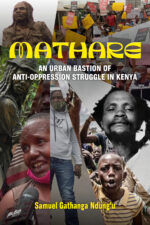
MATHARE: An Urban Bastion of Anti-Oppression Struggle in Kenya.
USD $ 5.00 USD $ 15.00Price range: USD $ 5.00 through USD $ 15.00Select options This product has multiple variants. The options may be chosen on the product page
MATHARE: An Urban Bastion of Anti-Oppression Struggle in Kenya.
USD $ 5.00 USD $ 15.00Price range: USD $ 5.00 through USD $ 15.00History is written by the victors of any war. But what happens when the victors forget to write down their history or omit the cog of the struggle? This is the untold story of Mathare Slum that has never been told to the world: of the role it played in anti-colonial struggle and the planning ground for the Mau Mau struggle which culminated with the fall of the British Colonial Empire in Kenya in the midnight of December 12th 1963. Mathare has also played a critical role in anti-oppression struggle against the four regimes that we’ve had since independence and continues to do so up to date. This history has not been documented and has only been done piecemeal. This has overtime eroded the rich history of Mathare and led to a distorted history of once a planning ground and a bulwark of Kenya Land and Freedom Army (KFLA). The current generation are not cognizant with the critical role Mathare played in the independence of our country. Presently, Mathare is majorly known for all the negative reasons and its proximity to Mathari Mental Hospital has contorted its image to the outside world. My story tries to re-tell the history of Mathare from an informed insider perspective by threading the struggles from the colonial era to the present day and the role it has played in agitating for social justice. My story brings to view the past history of this informal settlement in the heart of Nairobi, the present struggle and the promising future through community organizing.
Select options This product has multiple variants. The options may be chosen on the product page -

Mental Health and Human Rights in Palestine
From: USD $ 5.00Select options This product has multiple variants. The options may be chosen on the product page
Mental Health and Human Rights in Palestine
From: USD $ 5.00This is a biography of the life of Dr Eyad El Sarraj, Gaza’s pioneering psychiatrist and founder of the Gaza Community Mental Healthcare Programme, written by his son, Wasseem El Sarraj. It is also a history of Palestine with a focus on Gaza. Eyad’s life was intimately intertwined with Palestine’s struggles so his choices and reactions reflected many of the major historical moments of the last 70 years. The book is an effort to provide a perspective on how the forces around him impacted his life, and how he took control of what he could achieve in an intractable situation. The book is interspersed with Wasseem’s own reflections as a mixed-race Palestinian, and as someone who has lived under occupation in Gaza.
Select options This product has multiple variants. The options may be chosen on the product page -
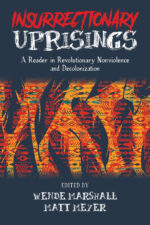
Insurrectionary Uprisings: A Reader in Revolutionary Nonviolence and Decolonization
USD $ 10.00 USD $ 25.00Price range: USD $ 10.00 through USD $ 25.00Select options This product has multiple variants. The options may be chosen on the product page
Insurrectionary Uprisings: A Reader in Revolutionary Nonviolence and Decolonization
USD $ 10.00 USD $ 25.00Price range: USD $ 10.00 through USD $ 25.00The volume includes two sections exploring nonviolence in the long Black freedom struggle within the US. From Ella Baker to Martin Luther King, Jr. and Fannie Lou Hamer, from Vincent Harding and Grace Lee Boggs to Colin Kaepernick, the two sections on the Black liberation movement highlight the theory of nonviolence in direct and indirect ways and foreground the relevance of these historic texts for the present moment of political uprisings on both the left and the right. Black strategies for survival and power are analyzed in terms of the ongoing US economic and epidemiological crises as well as the global climate crisis and ecological collapse. A section on revolutionary nonviolence in Africa presents a previously unpublished piece on the role of armed struggle by Franz Fanon, as well as essays by Amilcar Cabral, Barbara Deming, Graca Machel, Kenneth Kaunda, and Nozizwe Madlala-Routledge This section clearly contextualizes the continent’s anti-colonial struggles with the practical thinking about military and unarmed tactics which those movements faced over the course of a half-century.
The section on nonviolence and feminist struggle highlight the work of Grace Paley, Audre Lorde, and Arundhati Roy, along with a little-read piece by Johnnie Tilmon, a leader of the 1960s welfare rights movement. The section on resistance against empire tilts toward Latin American scholars/activists with essays by Maria Lugones, Anibla Quijano and Berta Caceres. This section includes pieces that draw from current debates about the role of state power in building towards radical change and the push to build holistic perspectives on what liberation means for all peoples. The final section on social change in the 21st Century reflects on specific aspects of organizing that are facing campaigns and movements of today and tomorrow. Our goal is to provide challenges and insights for building effectively against all forms of oppression! Though primarily compiling key texts not often seen or contextualized together, the book also provides new strategic commentaries from key leaders including Ela Gandhi, Ruby Sales, ecofeminist Ynestra King, Africa World Press’ Kassahun Checole, and Palestinian Quaker Joyce Ajlouney, Hakim Williams, and Mireille Fanon Mèndes-France.Select options This product has multiple variants. The options may be chosen on the product page -

Social Media and Capitalism: People, Communities and Commodities
USD $ 5.00 USD $ 18.00Price range: USD $ 5.00 through USD $ 18.00Select options This product has multiple variants. The options may be chosen on the product page
Social Media and Capitalism: People, Communities and Commodities
USD $ 5.00 USD $ 18.00Price range: USD $ 5.00 through USD $ 18.00Technology is one of the central elements of contemporary human life. The world as one knows it today is a space increasingly mediated by technological interventions, be it in the field of contemporary cultural expressions or political, organizational forms. Social media has played an important role in this transformation. Gone are the days when social media was merely a conduit for conversations. Today, it is a diverse field of operations spanning advertising mechanisms, branding processes and even direct commercial exchanges between users: the prime focus of this particular book.
Direct user-to-user trading through social media within an institutional form is a relatively new dimension in the dynamic world of social media. Yet, just like every other form of innovation within the paradigm of market relations, social media commerce or social media trading has also created newer and diverse alterations in how individuals interact with the existing socio-political fabric within which they exist. This book analyses these alterations and critically investigates the role of Capital in creating them.
The book analyses real-world interactions, interviews and observations through the theoretical framework provided by Marxist political economy and social theory. It draws upon the theoretical scope provided by Marx’s dialectical methods of social analysis and uses it to unearth the effects that trading and commercial activities performed through virtual communities have on society and individuals.
Select options This product has multiple variants. The options may be chosen on the product page -
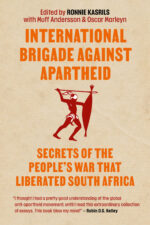
International Brigade Against Apartheid: Secrets of the People’s War That Liberated South Africa
USD $ 27.00Select options This product has multiple variants. The options may be chosen on the product page
International Brigade Against Apartheid: Secrets of the People’s War That Liberated South Africa
USD $ 27.00We hear for the first time from the internationalist secretly working for the ANC’s armed wing, Umkhonto we Sizwe (MK), in the struggle to liberate South Africa from apartheid rule. They acted as couriers, provided safe houses in neighbouring states and within South Africa, helped infiltrate combatants across borders, and smuggled tons of weapons into the country in the most creative ways. Driven by a spirit of international solidarity, they were prepared to take huge risks and face great danger. The internationalists reveal what motivated them as volunteers, not mercenaries: they gained nothing for their endeavours save for the self-esteem in serving a just cause. Against such clandestine involvement, the book includes contributions from key people in the international Anti-Apartheid Movement and its public mobilisation to isolate the apartheid regime. These include worldwide campaigns like Stop the Sports Tours, boycotting of South African products and black American solidarity. The Cuban, East German and Russian contributions outlined those countries’ support for the ANC and MK. The public, global Anti-Apartheid Movement campaigns provide the dimensions from which internationalists who secretly served MK emerged. Edited by Ronnie Kasrils. First published by Jacana Media (Pty) Ltd in 2021, ISBN: 978-1-4314-3202-8, this Daraja Press edition is available in North America and East Africa.
Select options This product has multiple variants. The options may be chosen on the product page -
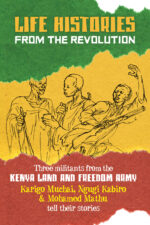
Life Histories from the Revolution: Three militants from the Kenya Land and Freedom Army tell their stories
USD $ 5.00 USD $ 18.00Price range: USD $ 5.00 through USD $ 18.00Select options This product has multiple variants. The options may be chosen on the product page
Life Histories from the Revolution: Three militants from the Kenya Land and Freedom Army tell their stories
USD $ 5.00 USD $ 18.00Price range: USD $ 5.00 through USD $ 18.00In the early 1970s, Donald Barnett — who worked with Karari Njama to produce Mau Mau From Within (published by Daraja Press) — also worked with three militants of the Kenya Land and Freedom Army to enable them to tell the story of their experience in fighting for freedom and against British colonialism. These rarely acknowledged militants were Karigo Muchai, Ngugi Kabiro and Mohamed Mathu. Their stories were published in 1973 by LSM Information Center (Richmond, British Columbia, Canada) as part of a series entitled Life Histories of the Revolution, as The Hardcore: The Story of Karigo Muchai; The Man in the Middle by Ngugi Kabiro; and The Urban Guerrilla by Mohamed Mathu.
As part of its mission of Nurturing reflection, sheltering hope and inspiring audacity, Daraja Press is please to republish the three booklets as a book that will help a new generation of activists — Kenyan and international — reflect on a history that might inspire audacious struggles to continue the struggle for freedom that was the goal of the Kenya Land and Freedom Army.
Donald Barnett’s introduction to each booklet contained the following text:
The life histories in this series have been recorded and prepared as historical documents from the revolutionary struggles of our time. The techniques and methods employed at each stage of the process, from initial contact to final editing, have therefore been chosen or fashioned with the purpose of guaranteeing the authenticity and integrity of the life history concerned. These stories, then, to the best of our ability to make them so, constitute a body of data and testimony as revealed by a few of those history-makers normally condemned to silence while others speak on their behalf.Select options This product has multiple variants. The options may be chosen on the product page -
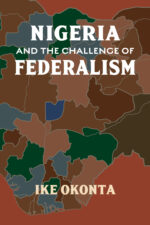
Nigeria and the Challenge of Federalism
USD $ 5.00 USD $ 14.00Price range: USD $ 5.00 through USD $ 14.00Select options This product has multiple variants. The options may be chosen on the product page
Nigeria and the Challenge of Federalism
USD $ 5.00 USD $ 14.00Price range: USD $ 5.00 through USD $ 14.00The book identifies three key moments in Nigeria’s experience with federalism and makes the argument that a complex and socially-diverse country like Nigeria can only be successfully governed by a truly federal arrangement, and not the present unitary contraption that has only delivered poverty, social unrest and the powerful centrifugal forces that are now threatening the very existence of the country itself. The time has come, write Ike Okonta, to convene a conference with sovereign powers to design a federal constitution for the country. The current process of amending the 1999 Constitution by the National Assembly will not suffice. The document is so hopelessly flawed that only its discarding and a fresh effort at constitution-making will suffice.
Select options This product has multiple variants. The options may be chosen on the product page -
 Select options This product has multiple variants. The options may be chosen on the product page
Undaunted: Stories of Freedom in a Shackled Society
USD $ 15.00….to free oneself or assist in liberating others involves taking risks, being suspicious of the status quo, leaving the safety of the shore and launching out into the deep and the unknown. This is a very lonely calling too as one immerses oneself into the whole of reality with courage to confront and listen. Yet, the calling is not to be the liberator of the oppressed but to make a commitment to fight alongside them, as Paulo Freire wrote in Pedagogy of the Oppressed. — Fr Gabriel Dolan
From his work in Turkana, Kitale, Kapenguria and Mombasa, Father Gabriel reminds us that true transformative change comes from the people themselves, from the bottom up. This is a challenge that the social justice/human rights practitioners must internalize and the sooner the better. The idea of being the “voice of the voiceless” must transform to facilitating, encouraging and giving space to those who suffer the indignities of injustice, violence, poverty and repression. Indeed, one of the most significant tasks for the human rights community is to devolve away from Nairobi, in real, practical, and substantive ways.
It is not easy for a white man, with all the attendant privileges that brings, to become an integral part of the struggle for pro-poor transformative change in Kenya, and be subject to arrest, harassment, and repression. For those who read these memoirs, please circulate them to everyone you know. Translate them, read them in the mosques, churches and under trees so that Kenyans can get a sense of where we have come from, what we should avoid, and what it takes to make some gains that benefit the majority of our people. — Maina Kiai
Select options This product has multiple variants. The options may be chosen on the product page -
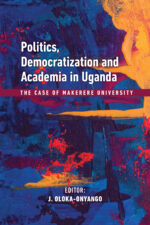
Politics, Democratization and Academia in Uganda: The Case of Makerere University
USD $ 6.99 USD $ 20.00Price range: USD $ 6.99 through USD $ 20.00Select options This product has multiple variants. The options may be chosen on the product page
Politics, Democratization and Academia in Uganda: The Case of Makerere University
USD $ 6.99 USD $ 20.00Price range: USD $ 6.99 through USD $ 20.00As the oldest (and arguably best-known) university in Uganda and the wider eastern and central Africa region, Makerere University looms large in the history of higher education on the continent. Alma mater to presidents, public intellectuals and pundits of all disciplines, Makerere has attracted considerable scholarly and popular attention, both in respect of its prominence and achievements, and well as with regard to its failures and foibles. The proposed book focuses on a particularly understudied aspect of the place of higher education in the African context, i.e. the relationship between a public university of unique historical importance and the contestations over democratization that have taken place both within campus and outside of it. It is built around the late-1980s struggle by the Makerere University Academic Staff Association (MUASA) for improved living conditions against the backdrop of the early programs of structural adjustment and economic reform that the National Resistance Army/Movement (NRA/M) government adopted soon after taking power in 1986. Although seemingly introverted in focus, in many respects the MUASA action represented the earliest forms of political struggle against a regime of governance that promised a great deal, but disappointingly delivered considerably less.
The focus on MUASA provides a critical entry-point to a wider debate about the place of organized democratic action by academics in a post-conflict context where the traditional institutions of political and civil society, i.e. political parties and non-governmental organizations (NGOs) have either been severely compromised or discredited, or where they are too weak and inorganic to provide any form of significant counter-juxtaposition to the government in power. By organizing the first strike by academic staff in the sixty-seven (67) year history of the university, for a time MUASA became the focal-point for democratic organizing against a regime that was yet to fully expose its nefarious and anti-democratic colours. The book examines the broader issues concerning the relationship between organized academic action and democratization; the place of the Media in reviewing these struggles; the position of students as a critical component of academe; “big P” and “small p” politics affecting female academics, and finally, the paradoxical role of the School of Law in both aiding and inhibiting the struggle against dictatorship in a country which has enjoyed
Select options This product has multiple variants. The options may be chosen on the product page -
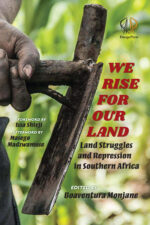
We Rise for Our Land: Land Struggles and Repression in Southern Africa
USD $ 5.00 USD $ 18.00Price range: USD $ 5.00 through USD $ 18.00Select options This product has multiple variants. The options may be chosen on the product page
We Rise for Our Land: Land Struggles and Repression in Southern Africa
USD $ 5.00 USD $ 18.00Price range: USD $ 5.00 through USD $ 18.00In recent years southern Africa has aroused the interest of domestic and foreign investors targeting several sectors. Agrarian and extractive capital has been penetrating the countryside, causing land conflicts, displacement of local peasant communities and in worse cases, deaths. Rural people in general have not, been passive—alone or in alliance with non-governmental organizations and activists, they have organized raised their voices. Resistance movements to capital are taking place throughout the region, even when faced with repression. The book provides critical assessments of the dynamics of agrarian and extractive capital in southern Africa: with contributions from DRC, Namibia, Zambia, Malawi, Zimbabwe, Swaziland, Mozambique, Mauritius and Madagascar.
Select options This product has multiple variants. The options may be chosen on the product page -
 Select options This product has multiple variants. The options may be chosen on the product page
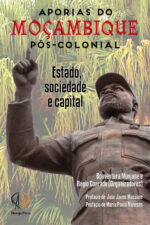
Aporias de Moçambique pós-colonial: Estado, Sociedade e Capital
USD $ 20.00Moçambique celebrou, em Junho de 2020, 45 anos de sua independência. Os ganhos e avanços que o país alcançou nesta quase meia década de independência são inegáveis, mas os desafios que subsistem são muitos. Este livro reflecte sobre Moçambique contemporâneo nos seus vários aspectos, destacando a formação e o papel do Estado, a democracia, a participação dos cidadãos, a política económica e social e o desenvolvimento. Como se pode ver, o livro não é temático e oferece diversas perspectivas de autores e autoras que se dedicam à investigação, ao jornalismo e ao activismo. O livro pretende exactamente oferecer uma leitura do país a partir dos olhos daqueles que não ocupam uma posição de poder mas que vivem, experienciam e lêem a realidade do país a partir de uma perspectiva crítica da sociedade.
O objectivo deste livro é dar uma melhor compreensão do que tem sido o processo de independência em Moçambique e porque é que o país pós-colonial ainda é ‘colonial’ na sua estrutura política e económica. Assim, são dados muitos exemplos para dar ao leitor a possibilidade de confrontar as perspectivas teóricas aqui utilizadas com os casos concretos.
Todos os estudos deste livro mostram que quarenta e cinco anos de independência não foram vividos da mesma forma pelas elites que governam o país e pelas populações que vivem sob o seu domínio. Por um lado, as elites no poder e os seus parentes beneficiaram, e ainda beneficiam, dos recursos do país, enquanto que uma grande parte da população continua à espera das promessas da independência. De um ponto de vista político e económico, os estudos que compõem o livro destacam como o “desenvolvimento” em Moçambique tem estado em contradição com as necessidades do país. Significa que o actual modelo de desenvolvimento responde muito mais ao capital internacional do que à transformação social de Moçambique.Select options This product has multiple variants. The options may be chosen on the product page -

Mau Mau From Within: The Story of the Kenya Land and Freedom Army
USD $ 12.00 USD $ 30.00Price range: USD $ 12.00 through USD $ 30.00Select options This product has multiple variants. The options may be chosen on the product page
Mau Mau From Within: The Story of the Kenya Land and Freedom Army
USD $ 12.00 USD $ 30.00Price range: USD $ 12.00 through USD $ 30.00The inside story of the struggles of the Kenya Land and Freedom Army, referred to by British colonialism as the ‘Mau Mau rebellion’, is little known today. The autobiographical material written by Karari Njama (a senior leader in the Mau Mau hierarchy) and compiled by Donald L. Barnett was first published by Monthly Review Press in 1966 as Mau Mau From Within: An Analysis of Kenya’s Peasant Revolt. It was reprinted in 1970; it has remained out of print for many years. As the late Basil Davidson put it in his review of the first edition: “Njama writes of the forest leaders’ efforts to overcome dissension, to evolve effective tactics, to keep discipline, mete out justice … and to teach men how to survive in those merciless forests. His narrative is crowded with excitement. Those who know much of Africa and those who know little will alike find it compulsive reading. Some 10,000 Africans died fighting in those years . Here, in the harsh detail of everyday experience, are the reasons why.”
The book is an extraordinary story of courage, passion, heroism, combined with recounting of colonial terror, brutality and betrayal. It is a story of how the very idea of being ‘Kenyan’ was intimately linked to the idea of freedom, a connection that was destroyed not only by the firepower of the British, but also by those who collaborated and established themselves as the beneficiaries of neocolonial rule. Disconnecting notions of freedom from identity left only a caricature that rapidly descended into tribalism and ethnicity.
This momentous story of the struggle for freedom described here is relevant not only for a new generation of Kenyans but also for all those engaged in emancipatory struggles internationally. For so long as the experiences arising from the struggles described in this book are perceived as merely ‘African’ or ‘Kenyan’, it is not possible to fully grasp the contributions they have made to the struggle for a universalist humanity.
What is recounted in this publication is more than an ‘analysis of a peasant revolt’. It is, above all, a history of the Kenya Land and Freedom Army. As Ngūgī wa Thiong’o points out in his Preface to this new edition, ‘we don’t have to use the vocabulary of the colonial to describe our struggles.’ We were tempted to rename the book ‘Kenya Land and Freedom Army from Within.’ But because the original title has wide recognition, and one of the characteristics of movements of the oppressed is to appropriate derogatory terms
Select options This product has multiple variants. The options may be chosen on the product page -

Transforming ourselves, Transforming the World: An open conspiracy for social change – Second Edition
USD $ 5.00 USD $ 20.00Price range: USD $ 5.00 through USD $ 20.00Select options This product has multiple variants. The options may be chosen on the product page
Transforming ourselves, Transforming the World: An open conspiracy for social change – Second Edition
USD $ 5.00 USD $ 20.00Price range: USD $ 5.00 through USD $ 20.00This book is for all those—community workers, adult educators, social activists of every kind—who want to overcome pessimism and play a part in changing society in the direction of peace, justice and dignity for all human beings. As author Brian Murphy points out, many of us are pessimistic about our ability to change the world when confronted by the powerful forces of big corporations and big government. Murphy reveals the social and personal dilemmas which hold people back from social engagement, and argues that the various constraints we face can be overcome.
In this new edition, David Austin explains in his Introduction why this book, first published in 1999, is perhaps more relevant to our times than ever, offering insights from his own experiences of engaging critically with the book and with others. And in his Afterword, Brian Murphy reflects on the continued relevance of the original text, emphasizing how our humanity is being corroded and commodified. To reclaim our humanity, he argues, we must transform ourselves to transform the world.
Brian Murphy’s immensely inspiring book,Transforming Ourselves, Transforming the World, deeply challenges us to think and rethink everything we knew and thought we knew.—Nnimmo Bassey, Executive Director, Health of Mother Earth Foundation & Right Livelihood Award Laureate in 2010
We need more conversations like the one in this book, which are rooted in hope while honestly working through a foundational way of seeing and understanding ourselves in the bigger picture.— Christina Warner, Co-Executive Director and Director of Campaigns and Organising, Council of Canadians.
This is one of the coolest, enjoyable and important books I have read in recent years. Written from the heart as well as the head, it is a breathtakingly visionary, unique and insightful take on the life of the ultimate activist.—Hope Chigudu, Feminist activist
Select options This product has multiple variants. The options may be chosen on the product page -
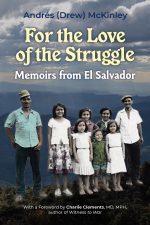
For the love of the struggle: Memoirs from El Salvador
USD $ 5.00 USD $ 18.00Price range: USD $ 5.00 through USD $ 18.00Select options This product has multiple variants. The options may be chosen on the product page
For the love of the struggle: Memoirs from El Salvador
USD $ 5.00 USD $ 18.00Price range: USD $ 5.00 through USD $ 18.00From his home in El Salvador, the author shares an intimate personal and political memoir that follows his remarkable journey from the comfort and security of a picturesque New England town to a stirring and heroic engagement in common cause with the struggle for peace and justice in El Salvador. After four years as a Peace Corp worker in northern Liberia beginning in the late 1960’s, followed by a stretch back in the United States as a street worker in the ghettos of North Philadelphia, McKinley finds himself in Central America as an aid worker in 1978. He quickly becomes engulfed by the political violence of the region and engaged with the people and their struggles against five decades of military dictatorship, centuries of poverty and exploitation. The story is marked by terror, adventure and courage, by trials and tragedy redeemed by the beauty and transcendence of people in struggle. Originally based in Guatemala heading up a Catholic relief agency, his commitment to the struggles for change in the country attracts the attention of the military, and his own government, forcing him to leave the country in late 1980. He moves to El Salvador where he begins a gradual incursion into the revolutionary struggle of this country, in a commitment that will last the rest of his life. Interwoven with this personal journey, is the story of Teresa Rivas, her husband Antonio, and their five children, a peasant family It also describes their life after the war, with resettlement in the lowlands of Guazapa where many ex-combatants were building a new life. It explains in detail the gradual emergence of the objective and subjective conditions for revolution in El Salvador, including the difficult choice for the use of violence as the only available option for transformative change in the country. The book also details the challenges of reconstruction after the Peace Accords that end the war in 1992, and the tragedy of opportunities lost during the immediate post-war period in the face of the ongoing resistance of traditional opponents to reform. As the memoir closes, the author reflects on his choice to be in El Salvador over the past 43 years, and the country as he finds it in these changing times; on the family with whom he has shared love and life there; on his continuing relationship with Antonio Rivas and his surviving family; and his gradual reconciliation, from a distance, with the country of his birth.
Select options This product has multiple variants. The options may be chosen on the product page -

Being human after 1492
USD $ 5.00 USD $ 13.00Price range: USD $ 5.00 through USD $ 13.00Select options This product has multiple variants. The options may be chosen on the product page
Being human after 1492
USD $ 5.00 USD $ 13.00Price range: USD $ 5.00 through USD $ 13.00The pamphlet begins with two letters written by Paul the Apostle in which Christianity first acquires a universal address. The new religion came to exclude people who were not Christians from the count of the human. This became explicit around a thousand years later when Pope Urban II authorised the First Crusade.
In 1492 planetary history was split in to two. Muhammad XII of Granada conceded defeat to Isabella and Ferdinand, the Catholic monarchs of Portugal and Spain, who went on to expel the Jews from the territory under their control. Europe became a Christian project. In the same year Christopher Columbus arrived in the Caribbean and Europe also became an imperial project with a planetary reach.
The origins of the racial ideology can be seen in this period, in which ideas about religion came to be entangled with fantastical ideas about the imagined purity of blood. But it was in the English colony of Virginia in the seventeenth century that the legitimation for the exclusion from the count of the human began to move from claims made in the name of religion to claims made in the name of science. This is the point at which modern racism, rooted in the appearance of the body, began to cast its malignant shadow across the planet.
The author argues that the struggle to put an end to the epoch of world history that opened in 1492 will require new ideas, and new practices. It follows the Caribbean tradition that runs from Aimé Césaire to Frantz Fanon and Sylvia Wynter in affirming the need for a counter-humanism, a radical humanism, a humanism that, in Césaire’s famous phrases, is “made to the measure of the world”. There is a need for a shift in the ground of reason towards the lived experience and struggles of people rendered, in Wynter’s phrase, as ‘pariahs outside of the new order’.
Select options This product has multiple variants. The options may be chosen on the product page -

Ghostlines – Re-Drawing the LAPSSET Corridor in Kenya
Ghostlines is a graphic novel that describes the journey of the author and three Kenyan artists along the LAPSSET development corridor, a braid of roads, pipelines, and resort cities that promises to bring development to Kenya’s marginalized north. It mixes conceptual and empirical insights into the human geography of infrastructure with the narrative flexibility and depth afforded by the medium graphic novel – a geo-graphic novel.
They meet Peter, a retired pilot who had previously worked for a conservancy and can tell stories about the LAPSSET from high above and from the ground. He understands how everyone involved is seeking to benefit from the corridor in their own way, even if that means building uninhabited “ghost huts” that manifest the presence of pastoral communities and thus qualify them for compensation. Jane is an activist for a women’s and Indigenous rights organization. She’s been fighting invisible monsters her entire life: stalking hyenas (metaphorical and real), corrupt politicians, and the patriarchy itself. The spectre of the LAPSSET is only the last one of these hidden monsters. They meet Joseph, a herder, who hopes that the LAPSSET might connect him to far places but worries that it will instead cut him off of the grazing grounds that are essential for the survival of his family. What is the LAPSSET – a road or a fence? In Oldonyoro they meet Rashid, a poet, who writes about the long history of the corridor. In his mind, it reaches far back to colonial times. “My grandfather suffered greatly,” he writes, “Is it my turn to face the worst? I wonder, a tricky treasure”. In the last village on their journey, they meet a group of women who have come together to support each other. Their position on the LAPSSET is more optimistic. The real connections of solidarity they forged contrast with the imaginary ghostlines of the LAPSSET. The narrative structure of the geo-graphic novel draws connections between the narrators, that is, the team of researchers and artists and the interviewees. They seek to unravel the idea of the omniscient or unbiased narrator and to reveal how storytellers bring their own ghosts into stories. By connecting all of these narratives along their journey, they challenge the single, universalist story that planners tell about large-scale infrastructure projects. Instead, they invite the reader to embrace the often-contradictory multiplicity of infrastructural relations, to see the ostensibly solid lines on maps for what they are: a messy, ever-changing braiding of multitudes.