
-

Jahan Malek Khatun
USD $ 16.00This book presents the first extensive English study and translation of the poetry of Jahan Malek Khatun, a fourteenth-century Persian princess and one of the most important women in the history of Persian literature. Translator Sheema Kalbasi first introduced Jahan Malek Khatun to the general English-speaking audience in 2008 through her anthology Seven Valleys of Love: A Bilingual Anthology of Women Poets from Medieval Persia to Present Day Iran, which marked the earliest appearance of Jahan’s poetry in English translation. Her surviving divan, which contains more than a thousand ghazals along with qasidas and shorter lyric forms, offers an unparalleled window into the intellectual, emotional, and cultural world of a noblewoman who wrote with clarity, restraint, and philosophical depth during a period of profound political instability.
The volume introduces readers to the historical and literary contexts that shaped her life and work, and it situates her authorship within a long Iranian tradition in which women participated in governance, education, and artistic patronage from the ancient empires through the Islamic period. It recreates the refined yet precarious milieu of fourteenth-century Shiraz, where poetry functioned not only as an aesthetic practice but also as a medium of political expression and ethical contemplation.
Through close readings, the book explores the disciplined craft of Jahan Malek Khatun’s ghazals. Her poetry turns repeatedly to a stable constellation of images, such as wind, candle, threshold, and healer, that guide the reader through themes of longing, moral endurance, sovereignty, and judgment. Each couplet acts as a brief meditation, and the poems together form a sustained inquiry into the relationship between beauty, discipline, and survival.
The study also examines the transmission of her work, the role of women as readers and preservers of literary culture, and the challenges inherent in translating a voice shaped by both privilege and constraint. Through this analysis and the accompanying translations, Jahan Malek Khatun emerges as a major intellectual presence and an essential figure for understanding the richness and complexity of the Persian lyric tradition.
-
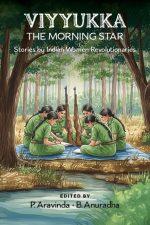
Viyyukka – The Morning Star
USD $ 20.00Select options This product has multiple variants. The options may be chosen on the product page
Viyyukka – The Morning Star
USD $ 20.00Viyyukka: The Morning Star is a rare and compelling anthology of stories written in Telugu over four decades by nearly fifty Maoist women revolutionaries in India. The title, Viyyukka, is a Gondi word meaning morning star. This collection is unique because these narratives are not traditional fiction; they are “lived experiences written from within the movement” while the authors served as guerrilla soldiers, often under extreme duress.
The stories offer a vital glimpse into the human dimensions of armed struggle, highlighting the agency, resilience, and moral consciousness of the women participants. The authors, active in India’s ongoing revolutionary conflict, document everything from tactical and ideological engagements to intimate realities such as love, loss, and camaraderie within their squads.
At its core, the Morning Star series centers on the fierce struggle for survival: of people, forests, rivers, and a way of life. The narratives capture how local struggles against exploitation and dispossession evolved into a wider movement challenging the “Iron Heel of the Indian State” and global capital.
Geographically rooted in Central Indian regions like Dandakaranya, the book vividly portrays the Adivasi (indigenous) resistance for the defense of jal, jangal, and jameen (water, forest, and land). The resistance documented in these pages, particularly against corporate mining and state repression, shares a “common thread” with the struggles of indigenous communities across the globe, positioning this collective testimony as a crucial document of resistance against colonial and capitalist forces.
Select options This product has multiple variants. The options may be chosen on the product page -

Spring Revolution in Myanmar
USD $ 18.00Select options This product has multiple variants. The options may be chosen on the product page
Spring Revolution in Myanmar
USD $ 18.00Myanmar is synonymous with ethnic conflicts, brutal military repression and insurgencies. The ongoing civil war against the junta has been described as the longest and one of the most violent conflicts in the world today with a growing humanitarian crisis.
This book celebrates the spirit of defiance, resilience and enormous courage of the Burmese people in the face of the military regime’s extreme violence. It is a window into the world of Burmese resistance and the myriad cultural expressions that it has taken ever since the February 2021 coup. Crowdfunded by the Burmese diaspora, but largely ignored by the international community, this is a resistance where every cultural form – poems, songs and even tattoos – has been explored as a weapon.
The regime has tried to ban these songs of resistance, and persecuted and even executed artists, musicians and poets. But as poet Khet Thi (1986-2021) said, before he was killed by the junta, “You try to bury us underground, because you don’t know that we are the seeds.”
Select options This product has multiple variants. The options may be chosen on the product page -
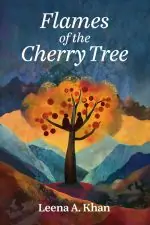
Flames of the Cherry Tree
USD $ 12.00 USD $ 22.00Price range: USD $ 12.00 through USD $ 22.00Select options This product has multiple variants. The options may be chosen on the product page
Flames of the Cherry Tree
USD $ 12.00 USD $ 22.00Price range: USD $ 12.00 through USD $ 22.00The year is 1940, and the winds of change stir in the valley of Kashmir. Aafreen Khan is a young girl that dreams to be a doctor like her beloved grandfather, defying the boundaries of convention as a Muslim and a woman in a country rigged against her. But as the partition of India looms closer, Kashmir reels under the weight of greed and power, and Aafreen is swept into the whirlwind of a story much larger than her own. When love, loss, and revolution reshape her entire world, Aafreen learns the terrible truth of what it means to survive.
Flames of the Cherry Tree is a sweeping, intimate portrait of a young woman’s coming-of-age against the backdrop of colonialism, rebellion, and the violent birth of today’s occupied Kashmir. At once tender and unflinching, it traces the story of one family through oppression and resistance, illuminating the forgotten histories that have shaped Kashmir and the hope that survives in its people.
Leena Khan speaks about her first novel ‘Flames of the Cherry Tree’
A lyrical, unflinching novel that rebuilds Kashmir from beneath the rubble of empire — a testament to the people who refused to disappear.
– Tariq Mehmood, author, The Second ComingLight and tender yet deeply haunting, this luminous tale of friendship and love unfolds in Kashmir against the gathering darkness of partition and local political churnings, bearing witness to both the radiant beauty of young love and the unspeakable horrors unleashed when hatred fractures a subcontinent along religious lines.
– Anuradha Bhasin, Managing Editor of the Kashmir TimesA hauntingly beautiful tale of loss and resilience where the author masterfully weaves history with humanity. Tender, brave, and unforgettable.
—Rumana Makhdoomi, author of Warriors and Falcons: Life Sketches of 100 Outstanding Kashmiri DoctorsSelect options This product has multiple variants. The options may be chosen on the product page -
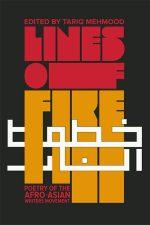
Lines of Fire (2nd Edition)
USD $ 50.00Lines of Fire: Recovering the Lost Arsenal of Anti-Colonial Poetry
Born in Tashkent , forged in clandestine presses, and echoing in today’s streets—this is the recovered front line of a global poetic resistance.
In 1958, at the Afro-Asian Writers’ Conference in Tashkent, a 90-year-old W.E.B. Du Bois stood before the decolonizing world and declared: “I am an American—I am an African.” It was a moment of radical, transnational self-definition.
From that conference emerged a literary movement and its journal, The Call—a direct line for poets from Algiers to Hanoi, Cairo to Beijing, to speak to one another, bypassing the languages and borders of their colonial masters. Though the movement later fractured under Cold War pressures, its two wings—The Call and the Soviet-backed Lotus—remained united in their stand against Zionism, racism, and empire.
Their poetry, often crafted under threat of torture, exile, and surveillance, became a clandestine weapon. Some of it was passed hand to hand, read aloud in underground meetings, and chanted at mass gatherings from Delhi to Ramallah, Cape Town to Gaza.
Now, for the first time, this vital corpus is restored. Lines of Fire, edited by Tariq Mehmood—former leading defendant in the landmark Bradford 12 case and now professor at the American University of Beirut—gathers these living weapons into a single, incendiary anthology. In an age of resurgent fascism and genocide, these voices speak with renewed, unyielding force: their anguish, rage, love, and hope are as urgent now as the day they were penned.
Why This Book Is Essential:
- A Lost Canon, Recovered: Features seminal, often inaccessible work by giants like Mahmoud Darwish, Faiz Ahmed Faiz, Leopold Senghor, Adunis, , Ousmane Sembène, and dozens more from across Africa and Asia.
- Drawn from Rare Sources: Poems curated from scarce issues of The Call and Lotus, long out of print and hidden in archives.
- A Groundbreaking Scholarly Frame: Includes a major introduction tracing the movement’s history, its surveillance by the CIA, the impact of the Sino-Soviet split, and a radical re-examination of solidarity.
- Built to Last & Teach: Published in archival-quality hardcover for libraries, scholars, and lifelong activists. An indispensable text for courses in Decolonial Studies, Global South Literatures, Cold War History, and Postcolonial Poetry.
A Call to Arms for a New Generation.
Edited by Tariq Mehmood, this collection includes poems by:
Salah Abdel Sabour (1931-1981, Ali Ahmad Said Esber, also known as Adunis (1930- ), Mulk Raj Anand (1905-2004), Anar Rasul oghlu Rzayef (1938- ), Nobuo Ayukawa (1920-1986), Fadhil al-Azzawi (1940- ), Abd Al-Wahhab al-Bayati (1926-1999), Mahim Bora (1917- ), Bernard Binlin Dadié (1916- ), Mahmoud Darwish (1942-2008), Osamu Dazai (1909-1948), Mário Pinto de Andrade (1928-1990), D.B. Dhanapala (1905-1971), Mohammed Dib (1920-2003), Gevorg Emin (1918-1998), Sengiin Erdene (1929-2000), Faiz Ahmed Faiz (1911-1984), Rasul Gamzatov (1923-2003), Daniil Granin (1919- ), Colette Anna Gregoire, better known as Anna Greki (1931-1966), Malek Haddad (1927-1978), Pham Ba Ngoan, better known by his pen name Thanh Hai (1930-1980), Buland al-Haidari (1926-1996), Suheil Idris (1925-2008), Yusuf Idris (1927-1991), Fazil Iskander (1929- ), Zulfiya Isroilova (1915-1996), Ali Sardar Jafri (1913-2000), Ghassan Kanafani (1936-1972), Edward al-Kharrat (1926- 2015), Hajime Kijima (1928-2004), Mazisi Kunene (1930-2006), Alex La Guma (1925-1985), U Gtun Kyi, better known by his pen name Minn Latt Yekhaun (1925-1985), Abdul Hayee better known by his pen name Sahir Lundhianvi (1921-1980), Zaki Naguib Mahmoud (1905-1993), Nazik Al-Malaika (1923-2007), Mouloud Mammeri (1917-1989), Yuri Nagibin (1920-1994), Sergey Narovchatov (1919-1981), Dashdorjiin Natsagdorj (1906-1937), Hiroshi Noma (1915-1991), Gabriel jibaba Okara (1921- ), Amrita Pritam (1919-2005), Jean-Joseph Rabearivelo (1901-1937), Richard Rive (1931-1989), Rady Saddouk (1938-2010), Badr Shakir al-Sayyab (1926-1964), Ousmane Sembene (1923- 2007), Leopold Sedar Senghor (1906-2001), Yusuf al-Sibai (1917-1978), Fadwa Tuqan (1917-2003), Sonomyn Udval (1921-1991), Ramses Younan (1913-1966), and Tawfiq Ziad (1929-1994).
#AfroAsianWritersMovement #Lotusjournal #TheCalljournal #NonAlignedMovement #BandungConference #Tashkent1958 #ColdWarculturalhistory #SinoSovietsplit #antiimperialism #anticolonialpoetry #resistanceliterature #resistancepoetry #revolutionarysolidarity #antiracism #antiZionism #settlercolonialism #racialviolence #genocide #GlobalSouthliterature #Africanpoetry #Asianpoetry #Arabpoetry #Palestinianliterature #SouthAsianliterature #AfricanLiterature #Arabpoets #Africanwriters #AfroAsiansolidarity #WEBDuBois #politicalpoetry #20thcenturypoetry
USD $ 60.00
