
-

Breaking the Frontiers
USD $ 15.00 USD $ 40.00Price range: USD $ 15.00 through USD $ 40.00Select options This product has multiple variants. The options may be chosen on the product page
Breaking the Frontiers
USD $ 15.00 USD $ 40.00Price range: USD $ 15.00 through USD $ 40.00Breaking Frontiers: Debates in Marxist Theory Today brings together twenty-four groundbreaking essays from leading critical-Marxist thinkers across the globe, offering a panoramic view of the most urgent debates in contemporary Marxist theory. Edited by John Holloway and Sun Liang, this collection emerges from a cross-cultural dialogue that bridges Western and Chinese Marxist traditions, challenging readers to rethink the very possibilities of anti-capitalist struggle in an era of deepening crisis.
The book spans a remarkable range of themes: from artificial intelligence and cognitive capitalism to the crisis of social reproduction, from the critique of the state and world market to the politics of time, urban commons, and the rise of posthuman fascism. Contributors include Silvia Federici, Franco Berardi, Ariel Salleh, Michael Neocosmos, Werner Bonefeld, and many others, each offering distinctive perspectives on how Marxism can speak to the catastrophes of our present.
At its core, the collection wrestles with a defining question: does Marxism today merely theorise catastrophe, or can it still think revolution? The chapters engage with the fragmentation of the working class, the transformation of labor under AI, the centrality of reproductive work, the nature of state power, and the temporalities of rebellion. The book closes with a dialogue between the editors, debating the role of the Party, the state, and subjective agency in social transformation.
Breaking Frontiers does not offer easy answers. It invites readers into a turmoil of thinking, affirming that another world is not only possible but more urgently necessary than ever. Essential reading for scholars, activists, and anyone seeking to understand capitalism’s destructiveness and the possibilities of resistance.
Select options This product has multiple variants. The options may be chosen on the product page -
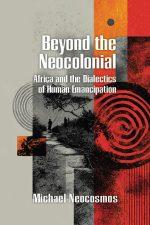
Beyond the Neocolonial
USD $ 7.99 USD $ 30.00Price range: USD $ 7.99 through USD $ 30.00Select options This product has multiple variants. The options may be chosen on the product page
Beyond the Neocolonial
USD $ 7.99 USD $ 30.00Price range: USD $ 7.99 through USD $ 30.00Humanity faces existential crises driven by the persistence of neocolonial capitalism and a state form that continues to de-humanise the majority. In Beyond the Neocolonial, Michael Neocosmos argues that the failure to enable, let alone to realise the popular desire for freedom in post-independence Africa lies in the continuity of the colonial state and the dominance of analytical, statist thought over the transformative power of the dialectic.
Tracing the genealogy of emancipatory politics from the ancient wisdom of Egypt’s Ma’at and Ionia’s isonomia to the revolutionary theories of Lenin, Mao, Fanon, and Cabral, Neocosmos asserts that politics must be understood as a collective thought-practice of universal equality. He challenges the “stasis” of the current world order by recovering silenced histories of African popular inventiveness: from the egalitarian society constructed by the Bossales in Haiti to the mass democratic experiments of the United Democratic Front in South Africa.
Critiquing the exhausted “party form” and the myth of the “heroic liberator,” the book highlights the emancipatory potential within African popular culture, arguing that proverbs and the Palaver contain latent prescriptions for resolving contradictions and healing community. This work is a call to abandon the “epistemology of ignorance” and revive a dialectics of becoming, locating the agency for a truly human future not in the state, but in the masses who make history.
Listen to Michael Neocosmos talking about his book.
Table of Contents
Three Poems by Bertolt Brecht, Okot p’Bitek, and Yannis Ritsos
Dedications and Acknowledgments
Prefatory Remark
In Lieu of a Foreword: some inspirational declarations and metaphors
Introduction: what is to be thought?
1. Politics as a Collective Thought-Practice and Human Emancipation as its Essence: thinking the common good
2. The Ancients and the Thought of Politics: arkhē and the dialectic of physis and nomos
3. Sourcing an Emancipatory Politics for Today: reviewing the classics
4. Thinking Emancipatory Politics through African Popular Culture
5. Resolving Contradictions among the People and the Dialectical Emancipatory Potential of Proverbial Metaphors
6. Haiti from Inventive Popular Sovereignty to Neocolonial State
7. Beyond the Party Form? An alternative political experiment and the figure of the heroic liberator
8. Democracy as Perverted Freedom: the anatomy of the African neocolonial state
Conclusion: silencing as analytical procedure in political theory and practice
References
Author bio
Select options This product has multiple variants. The options may be chosen on the product page -

Cinema of Unfinished Witnessing
This is not a book about films in the conventional sense. It is a book about the conditions under which films become legible, forgettable, weaponised, or necessary.
Across essays that move between review and reportage, festival and platform, myth and documentary, Narendra Pachkhédé reads global cinema as a moral technology of the present. He follows the contemporary attention regime, the coercions of watchability, the choreography of awards and public virtue, and the quiet ways propaganda teaches a society what to feel plausible. The question is not only what we watch, but how we have been conditioned to watch: how viewing is trained by ideological settings, how sensibility is numbed by repetition and spectacle, how attention is corralled into habits that feel like choice.
This is a book about the world of cinema and its assemblages. It attends to cinema’s extended life in media ecologies: streaming interfaces and festival circuits, platform logics and institutional gatekeeping, the politics of narrative and the global circulation of stories. It returns repeatedly to the politics of reception, where a work is domesticated or rejected, where controversy polices a field, where filmmakers bond, quarrel, protect, and betray, and where institutions decide what counts as witness. Cinema, here, is not only an art form but a system of mediation that defines the political terms under which stories are consumed.
The book crosses geographies and film worlds, tracing how nations dream through genre and how history is refashioned into culture, suspended between memory and forgetting. From the seductions of nostalgia to the endurance of Béla Tarr, from Korean modernity’s neutralised ruptures to Palestinian cinema’s custody under pressure, these essays insist that cinema is never only an image. It is an argument about reality, and a rehearsal for what a public can bear to know.
The Cinema of Unfinished Witnessing asks a simpler, harsher question: why do some stories become global vigils while others vanish into the feed? It is a book about how we come to believe what we believe, and what cinema has to do with that failure. It is also a wager that, by looking closely and naming the terms of looking, one can still be a form of care.
-

Form as History
USD $ 12.00 USD $ 16.00Price range: USD $ 12.00 through USD $ 16.00Select options This product has multiple variants. The options may be chosen on the product page
Form as History
USD $ 12.00 USD $ 16.00Price range: USD $ 12.00 through USD $ 16.00Form as History: When History No Longer Requires Us offers a concise and penetrating critique of contemporary historical thought. It argues that while modern scholarship has made Muslim life increasingly legible as a site of ethics, resistance, and normativity, this achievement can obscure a more unsettling condition: that history itself has learned to proceed without requiring meaning, address, or human obligation.A rigorous and unsettling meditation on what it means to live in a world where history continues to function, but no longer feels compelled to answer to human life.The book turns on a central tension. On one side stands the European figure of the Muselmann, drawn from Holocaust testimony, who reveals history’s capacity to continue efficiently while no longer demanding anything from the humans it governs. This is not loss, but abandonment. On the other side stands the Muslim, rendered in modern discourse as a knowable and agentive subject of history. The book shows how an emphasis on this agency can function as a displacement, allowing the radical danger exposed by the Muselmann—history’s indifference to human address—to be misread as a cultural or religious condition.What becomes of history when it no longer requires struggle, meaning, or even us, yet continues efficiently all the same?Refusing nostalgia and moralizing alike, the book examines how forms of life, particularly within Muslim legal and commercial traditions, have sustained obligation and necessity even after political centrality receded. Its aim is diagnostic rather than prescriptive: to make visible the quiet threshold where life is managed rather than addressed, and to clarify how historical necessity depends not on power or visibility, but on the survival of forms that still compel the world to answer.
Select options This product has multiple variants. The options may be chosen on the product page -
 Select options This product has multiple variants. The options may be chosen on the product page
Claim No Easy Victories: The Legacy of Amilcar Cabral
USD $ 26.00“Never has it been more certain that our victory depends principally on our own actions. Tell no lies, claim no easy victories . . .” —Amílcar Cabral On the centennial of Amílcar Cabral’s birth, and fifty years after his passing, Claim No Easy Victories brings to life the resonance of his thought for today’s freedom movements. World-renowned revolutionary, poet, liberation philosopher, and leader of the anticolonial independence movement of Guinea Bissau and Cape Verde, Amílcar Cabral’s legacy stretches well beyond the shores of West Africa. His profound influence on the pan-Africanist movement and the Black liberation movement in the United States and the English-speaking world spans the ages—and is only growing in an era of renewed anti-imperialist internationalist struggle. In this unique collection of essays, radical thinkers from across Africa, the United States, and internationally commemorate Cabral’s life and legacy and his relevance to contemporary struggles for self-determination and emancipation. Claim No Easy Victories serves equally as an introduction or reintroduction to a figure and militant history that the rulers and beneficiaries of global racial capitalism would rather see forgotten. Understanding Cabral then and now sheds light on the necessity of grounding radical change in the creation of theory based on the actual conditions within which movements develop. The depth and dimension of Cabral’s theoretical ideas and revolutionary practice of building popular movements for liberation are assessed by each of the authors and critically reanimated for a new generation of freedom fighters. The book features contributions by: Kali Akuno, Samir Amin, David Austin, Jesse Benjamin, Angela Davis, Bill Fletcher Jr, Mireille Fanon-Mendès France, Lewis Gordon, Firoze Manji, Asha Rodney, Patricia Rodney, Olúfémi Táíwò—and others.
Select options This product has multiple variants. The options may be chosen on the product page -

Religion, Eugenics, Science and Mathematics
USD $ 5.00 USD $ 45.00Price range: USD $ 5.00 through USD $ 45.00Select options This product has multiple variants. The options may be chosen on the product page
Religion, Eugenics, Science and Mathematics
USD $ 5.00 USD $ 45.00Price range: USD $ 5.00 through USD $ 45.00Religion, Eugenics, Science and Mathematics by Karim F Hirji examines the dynamic relationship between religion, on the one hand, and science and mathematics, on the other, on historical and conceptual grounds. It focuses on Hinduism, Buddhism, Christianity, Islam, and various shades of secularism, including Marxism. Where relevant, other faiths are integrated into the analysis. The questions it addresses include: Are religion and science mutually exclusive, opposing entities? Do divine beings and divine realms exist? Are science and religion valid but different forms of truth? What are the societal roles of science and religion? Can science provide a tenable, exalted code of ethics? What are the futures of religion and science? Can religion and science cooperate in resolving the daunting, existential problems facing humanity today? All issues are explored in an interdisciplinary, historical manner. Examination of the religious dimension of the doctrine of eugenics, which culminated in the Nazi era extermination pogroms, forms a major case study in the book.
Among other things, the book peruses scriptures, explores practice, enjoins analysis with anecdotes, and contrasts the beliefs of scientists and religious luminaries. Though it is directed toward the general reader, its novel approach, broad consideration of social and economic factors, and the nature of the evidence it has marshalled makes it of interest to theologians and scientists as well.
Religion, Eugenics, Science and Mathematics builds on the foundation laid in Religion, Politics and Society by Karim Hirji. In addition to eugenics, by relating religion to mathematics, genetics, neurology, climate change and other issues, the book reveals that the relationship between religion and science is a complex, entangled knot, not reducible to a simplistic summary.
The ultimate message of the book is that science and religion can exist harmoniously on the moral plane and that the primary obstacle facing human progress today is neither religion nor science but the dominant neoliberal system that generates vast inequality, deep social divisions, including religious divisions and a callous disregard for the global biosphere.Select options This product has multiple variants. The options may be chosen on the product page -

Religion, Politics and Society: A progressive primer
USD $ 5.00 USD $ 55.00Price range: USD $ 5.00 through USD $ 55.00Select options This product has multiple variants. The options may be chosen on the product page
Religion, Politics and Society: A progressive primer
USD $ 5.00 USD $ 55.00Price range: USD $ 5.00 through USD $ 55.00Written by Karim F Hirji, a retired professor of Medical Statistics, Religion, Politics and Society focuses on the four major global religions—Hinduism, Buddhism, Christianity and Islam—together with minor religions like the Ahmadiyya, Confucianism, Sikhism, Seventh Day Adventism and Traditional African Religion as well as on Secularism, New Age beliefs and the ancient Paleolithic and Neolithic era belief systems to explore the origin, spiritual import and social function of religion in human society. Utilizing the canons, beliefs, practices, history, eminent personages, institutions of the diverse faiths, it tackles matters like: How did the social function of religion evolve over time? How does religion relate to the power structure of society? Does religion promote or hinder social harmony, justice and equality? Under what circumstances? Is religion necessary for morality? What are the roots of interfaith conflict? How do modern religions and neoliberalism interact with each other? Does religion have a future? Can religion and secularism be harnessed for resolving the globally vexing yet pivotal concerns of human society? If so, how?
These and related issues are tackled with the help of a variety of past and contemporary individual level and broader type of richly illustrated examples. The role of women in religion a topic of focus throughout the text. The varied functions of religion under slavery, feudalism, capitalism, colonialism, neo-colonialism, imperialism. socialism, and neoliberalism are also attended to.
The foundational premise of this book is that while spiritual beliefs differ, all humans are equal in dignity and have equal rights. No religion is more exalted than others; there are no chosen people. We all belong to the global human family. Our religious and cultural diversity is a cause for celebration, not conflict.
Respectful in style and targeted towards the general and knowledgeable readers, Religion, Politics and Society is the first of a two-book project. The second book, Religion, Science and the Pandemic, addresses the relationship between religion, science and mathematics. The key objective of these books is to help uplift the quality and tenor of the current discourse on religion and explore how faith can promote human dignity, equality, social justice and harmony. A genuine consensus and peaceful coexistence cannot emerge from diluting the truth.Select options This product has multiple variants. The options may be chosen on the product page -

“Nada mal para um N—, Não?” “No está mal para un N—, ¿no?”
USD $ 5.00 USD $ 15.00Price range: USD $ 5.00 through USD $ 15.00Select options This product has multiple variants. The options may be chosen on the product page
“Nada mal para um N—, Não?” “No está mal para un N—, ¿no?”
USD $ 5.00 USD $ 15.00Price range: USD $ 5.00 through USD $ 15.00Escrito durante as comemorações do septuagésimo quinto aniversário da publicação de Black Skin, White Masks (“Pele Negra, Máscaras Brancas”), de Frantz Fanon, “Not Bad for a N—, No?” oferece reflexões sobre as circunstâncias da publicação desta obra clássica com os insights de Fanon sobre o que ele chamou de tentativa de “assassinato do homem” e a necessidade urgente de a humanidade se tornar “acional”.
Escrito durante las celebraciones del septuagésimo quinto aniversario de la publicación de Black Skin, White Masks (“Piel negra, máscaras blancas”) de Frantz Fanon, “Not Bad for a N—, No?” ofrece reflexiones sobre las circunstancias de la publicación de esta obra clásica con las ideas de Fanon sobre lo que llamó el intento de “asesinato del hombre” y la urgente necesidad de que la humanidad se vuelva “acción”.
Select options This product has multiple variants. The options may be chosen on the product page -
Black Anarchism and the Black Radical Tradition: Moving Beyond Racial Capitalism
USD $ 5.00 USD $ 18.00Price range: USD $ 5.00 through USD $ 18.00Select options This product has multiple variants. The options may be chosen on the product page
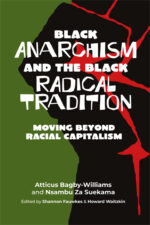
Black Anarchism and the Black Radical Tradition: Moving Beyond Racial Capitalism
USD $ 5.00 USD $ 18.00Price range: USD $ 5.00 through USD $ 18.00This work is an important achievement in clarifying the history and current importance of Black anarchism. The information that the book presents will be new to many readers. For instance, one important component involves the explanations of how hierarchical principles within the Black Panther Party and Black Liberation Army helped generate the emergence of Black anarchism among key party members who later developed their ideas and strategies while in prison. Likewise, the book breaks new ground in demonstrating that Black anarchism has emerged not from the European/ North American anarchist traditions but rather from roots in Pan-Africanism, the Black radical tradition focusing on racial capitalism and the work of Cedric Robinson, and grassroots struggles partly in the U.S. South. An in-depth analysis of the somewhat different but complementary focuses within the two generations of Black anarchism also is very helpful. Finally, the book highlights concrete, contemporary implications for revolutionary strategy, including a perceptive analysis of the compatibilities between socialist and Black anarchist approaches to current transformative struggles. This publication will become widely known and used because it brings enlightening new ways to understand and act on the intertwined structures of racial capitalism and the capitalist state.
Select options This product has multiple variants. The options may be chosen on the product page -

“Not Bad for a N—, No?” / «Pas mal pour un N—, n’est-ce pas? »
USD $ 5.00 USD $ 11.00Price range: USD $ 5.00 through USD $ 11.00Select options This product has multiple variants. The options may be chosen on the product page
“Not Bad for a N—, No?” / «Pas mal pour un N—, n’est-ce pas? »
USD $ 5.00 USD $ 11.00Price range: USD $ 5.00 through USD $ 11.00Written during the seventy-fifth anniversary celebrations of the publication of Frantz Fanon’s Peau noir, masques blancs (“Black Skin, White Masks”), “Not Bad for a N—, No?” offers reflections on the circumstances of the publication of this classic work with Fanon’s insights on what he called the attempted “murder of man” and the urgent need for humanity to become “actional.”
Écrit lors des célébrations du soixante-quinzième anniversaire de la publication de Frantz Fanon de Peau noir masques blancs, «Pas mal pour un N—, n’est-ce pas? » offre des réflexions sur les circonstances de la publication de cette œuvre classique avec les idées de Fanon sur ce qu’il a appelé la tentative de «meurtre de l’homme» et le besoin urgent que l’humanité devienne «actionnelle».
Select options This product has multiple variants. The options may be chosen on the product page -

Domains of politics and modes of rule/ Sphères politiques et contrôle étatique (en/fr)
USD $ 5.00 USD $ 10.00Price range: USD $ 5.00 through USD $ 10.00Select options This product has multiple variants. The options may be chosen on the product page
Domains of politics and modes of rule/ Sphères politiques et contrôle étatique (en/fr)
USD $ 5.00 USD $ 10.00Price range: USD $ 5.00 through USD $ 10.00This work consists of a brief attempt to orient the study of the neocolonial state in Africa through an assessment of the manner in which it rules its people. It is argued that the state produces different modes of rule by deploying different politics over different parts of the population. In this manner, it can combine a genuinely democratic rule in the image of the West over some while subjecting the majority to colonial forms of domination. Imported political subjectivities from the West and its obsession with human rights discourse are reserved largely for a sphere of civil society in which the right to have rights is conferred upon citizens. In the domains of uncivil society and traditional society, the right to rights is not observed by the state so that different subjectivities, regularly including violence, govern the manner political problems and solutions are addressed both by the state and by people. In consequence, distinct political subjectivities prevail in the conceptualization of popular resistance in all three domains, and it becomes difficult to rally such different concerns and conceptions within an overall anti-neocolonial struggle.
Il s’agit d’une brève tentative d’orienter l’étude de l’État néocolonial en Afrique à travers une évaluation de la manière dont il gouverne son peuple. On soutient que l’État produit différents modes de contrôle étatique en déployant différentes politiques sur différentes parties de la population. De cette manière, il peut combiner une règle véritablement démocratique à l’image de l’Occident sur certains tout en soumettant la majorité à des formes coloniales de domination. Les subjectivités politiques importées de l’Occident et son obsession du discours sur les droits de l’homme sont largement réservées à une sphère de la société civile dans laquelle le droit d’avoir des droits est conféré aux citoyens. Dans les domaines de la société incivile et de la société « traditionnelle », le droit aux droits n’est pas respecté par l’État, de sorte que différentes subjectivités, y compris régulièrement la violence, régissent la manière dont les problèmes politiques et leurs solutions sont abordés à la fois par l’État et par le peuple. En conséquence, des subjectivités politiques distinctes prévalent dans la conceptualisation de la résistance populaire dans chacun des trois domaines, et il devient difficile de rallier des préoccupations et des conceptions aussi différentes au sein d’une lutte anticoloniale nationSelect options This product has multiple variants. The options may be chosen on the product page -

Homestead, Homeland, Home
USD $ 5.00 USD $ 19.00Price range: USD $ 5.00 through USD $ 19.00Select options This product has multiple variants. The options may be chosen on the product page
Homestead, Homeland, Home
USD $ 5.00 USD $ 19.00Price range: USD $ 5.00 through USD $ 19.00This is a collection of observations and meditations by Professor Emeritus (York University, Toronto) and philosopher Ato Sekyi-Otu on events, issues, people and ideas culled from recent history and the world, from the US and Canada to Ghana. If there is a persistent thread in these entries, it is this: Virtually all of them testify to the ironic truth of the saying that there is no place like home, no place, that is to say, which looks like the lodestar called home or comes close to approximating its promise of being a just space of human flourishing. Most of the entries are, therefore, harsh, particularly those on the USA. That is because that nation, in his view, has, in recent history, made a major contribution to rendering the world and every homestead we inhabit unhomely and sabotaging attempts to better it. But no one or place is spared, certainly not the author’s native land, Ghana. Canada appears intermittently in these pages in rather fragmentary and contrastive observations. That paucity of comments may be taken to be the complement the author pays to Canada as a place of relative civility and glimmers of decency in a mad and cruel world. It is a short work of predominantly gloomy pictures. But there are a few countervailing images and invocations of hope here and there. There are 166 entries of unequal lengths arranged around 14 headings. These epigrams are contrapuntal variations on the philosopher’s searing imprecation and visionary invocation: unfinished ode, resounding with intermittent fury, to the dawn of human existence set free from all tyrannizing enclosures.
Select options This product has multiple variants. The options may be chosen on the product page -

Domains of politics and modes of rule : Political structures of the neocolonial state in Africa
USD $ 5.00 USD $ 10.00Price range: USD $ 5.00 through USD $ 10.00Select options This product has multiple variants. The options may be chosen on the product page
Domains of politics and modes of rule : Political structures of the neocolonial state in Africa
USD $ 5.00 USD $ 10.00Price range: USD $ 5.00 through USD $ 10.00“A concise, dense and illuminating dissection of the workings of the post-independence African state that also charts a path towards imagining and working for a true politics of liberation.” — Ndongo Samba Sylla, Senior Researcher, Rosa Luxemburg Foundation.
This is a brief attempt to orient the study of the neocolonial state in Africa through an assessment of the manner in which it rules its people. It is argued that the state produces different modes of rule by deploying different politics over different parts of the population. In this manner, it can combine a genuinely democratic rule in the image of the West over some while subjecting the majority to colonial forms of domination. Imported political subjectivities from the West and its obsession with human rights discourse are reserved largely for a sphere of civil society in which the right to have rights is conferred upon citizens. In the domains of uncivil society and ‘traditional’ society, the right to rights is not observed by the state so different subjectivities, regularly including violence, govern the manner political problems and solutions are addressed both by the state and by people. In consequence, distinct political subjectivities prevail in the conceptualization of popular resistance in all three domains, and it becomes difficult to rally such different concerns and conceptions within an overall anti-neocolonial struggle.∴Select options This product has multiple variants. The options may be chosen on the product page -

Left Alone: On Solitude and Loneliness amid Collective Struggle
USD $ 5.00 USD $ 28.00Price range: USD $ 5.00 through USD $ 28.00Select options This product has multiple variants. The options may be chosen on the product page
Left Alone: On Solitude and Loneliness amid Collective Struggle
USD $ 5.00 USD $ 28.00Price range: USD $ 5.00 through USD $ 28.00Left Alone brings together 13 authors and 6 visual artists from Africa, Asia, Latin America, Europe and North America to individually and collectively reflect – in words and images – on an urgent psycho-political issue that has not yet been explicitly addressed through a left political lens, that is, Left Loneliness. Combining academic and more personal-political texts, including an interview, poetry, a Rap and a powerful short story, the book explores the contributors personally and/or vicariously lived experiences of Left Loneliness from a variety of genres and left political currents: Marxist, Feminist, Anti-/De-Colonial, Anti-Racist, Queer, Post-Soviet, Anti-Ableist and others. Says Feminist writer Sara Ahmed: “Loneliness might be what we are threatened with if we persist in being or doing what we are being or doing.” In this sense, Left Loneliness is neither a metaphor nor a secondary contradiction and definitely not a type of petty bourgeois “personalism”. Rather, it might be considered one of the rank and file psycho-affective elements shaping and at the same time resulting from our myriad, intersecting, unremitting, yet always fragile and potentially shattering political attempts to revolutionise our inner and outer worlds. Given its (growing?) existence in our everyday left subjectivities, the book argues that Left Loneliness and related states of solitude, isolation and alienation, among others, have both debilitating and productive (epistemic) dimensions, with very concrete psycho-somatic repercussions for Left Mental and Physical Health and hence our capacities to persist and build on “being or doing what we are being or doing”. Given that continuing and deepening our multiple ongoing struggles for liberation will depend on our constant ability to (re-)create, sustain and care for both our individual selves and the communities that we are a part of, the aim of Left Alone is to contribute to the strengthening of these personal collectivities in action in-against-and beyond capitalism, colonialism and heteropatriarchy by inviting the comrade-readers into what will ideally be a deeply stimulating and enabling personal-political engagement with the texts and images hailing from countries such as Argentina, Kenya, Kyrgyzstan, Guinea-Bissau/Portugal, Turkey/Kurdistan, Jamaica, Italy, the UK, Germany and the USA. As Lena Grace Anyuolo from Kenya puts it, “My sisters and brothers, Come, Let us gather, To lay the structures for a joyous existence.”
Select options This product has multiple variants. The options may be chosen on the product page -
Insurrectionary Uprisings: A Reader in Revolutionary Nonviolence and Decolonization
USD $ 10.00 USD $ 25.00Price range: USD $ 10.00 through USD $ 25.00Select options This product has multiple variants. The options may be chosen on the product page
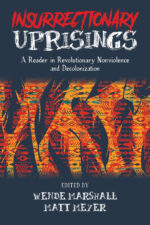
Insurrectionary Uprisings: A Reader in Revolutionary Nonviolence and Decolonization
USD $ 10.00 USD $ 25.00Price range: USD $ 10.00 through USD $ 25.00The volume includes two sections exploring nonviolence in the long Black freedom struggle within the US. From Ella Baker to Martin Luther King, Jr. and Fannie Lou Hamer, from Vincent Harding and Grace Lee Boggs to Colin Kaepernick, the two sections on the Black liberation movement highlight the theory of nonviolence in direct and indirect ways and foreground the relevance of these historic texts for the present moment of political uprisings on both the left and the right. Black strategies for survival and power are analyzed in terms of the ongoing US economic and epidemiological crises as well as the global climate crisis and ecological collapse. A section on revolutionary nonviolence in Africa presents a previously unpublished piece on the role of armed struggle by Franz Fanon, as well as essays by Amilcar Cabral, Barbara Deming, Graca Machel, Kenneth Kaunda, and Nozizwe Madlala-Routledge This section clearly contextualizes the continent’s anti-colonial struggles with the practical thinking about military and unarmed tactics which those movements faced over the course of a half-century.
The section on nonviolence and feminist struggle highlight the work of Grace Paley, Audre Lorde, and Arundhati Roy, along with a little-read piece by Johnnie Tilmon, a leader of the 1960s welfare rights movement. The section on resistance against empire tilts toward Latin American scholars/activists with essays by Maria Lugones, Anibla Quijano and Berta Caceres. This section includes pieces that draw from current debates about the role of state power in building towards radical change and the push to build holistic perspectives on what liberation means for all peoples. The final section on social change in the 21st Century reflects on specific aspects of organizing that are facing campaigns and movements of today and tomorrow. Our goal is to provide challenges and insights for building effectively against all forms of oppression! Though primarily compiling key texts not often seen or contextualized together, the book also provides new strategic commentaries from key leaders including Ela Gandhi, Ruby Sales, ecofeminist Ynestra King, Africa World Press’ Kassahun Checole, and Palestinian Quaker Joyce Ajlouney, Hakim Williams, and Mireille Fanon Mèndes-France.Select options This product has multiple variants. The options may be chosen on the product page -

Social Media and Capitalism: People, Communities and Commodities
USD $ 5.00 USD $ 18.00Price range: USD $ 5.00 through USD $ 18.00Select options This product has multiple variants. The options may be chosen on the product page
Social Media and Capitalism: People, Communities and Commodities
USD $ 5.00 USD $ 18.00Price range: USD $ 5.00 through USD $ 18.00Technology is one of the central elements of contemporary human life. The world as one knows it today is a space increasingly mediated by technological interventions, be it in the field of contemporary cultural expressions or political, organizational forms. Social media has played an important role in this transformation. Gone are the days when social media was merely a conduit for conversations. Today, it is a diverse field of operations spanning advertising mechanisms, branding processes and even direct commercial exchanges between users: the prime focus of this particular book.
Direct user-to-user trading through social media within an institutional form is a relatively new dimension in the dynamic world of social media. Yet, just like every other form of innovation within the paradigm of market relations, social media commerce or social media trading has also created newer and diverse alterations in how individuals interact with the existing socio-political fabric within which they exist. This book analyses these alterations and critically investigates the role of Capital in creating them.
The book analyses real-world interactions, interviews and observations through the theoretical framework provided by Marxist political economy and social theory. It draws upon the theoretical scope provided by Marx’s dialectical methods of social analysis and uses it to unearth the effects that trading and commercial activities performed through virtual communities have on society and individuals.
Select options This product has multiple variants. The options may be chosen on the product page -
Fanon Today: Reason and Revolt of the Wretched of the Earth
USD $ 10.00 USD $ 30.00Price range: USD $ 10.00 through USD $ 30.00Select options This product has multiple variants. The options may be chosen on the product page
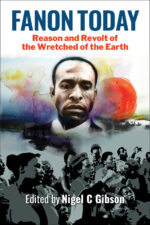
Fanon Today: Reason and Revolt of the Wretched of the Earth
USD $ 10.00 USD $ 30.00Price range: USD $ 10.00 through USD $ 30.00Fanon Today: Reason and Revolt of the Wretched of the Earth is about how new generations are discovering their mission of humanizing the world by claiming Fanon as a thinker for our times. Why Fanon, why now? For the wretched of the earth, conditions have not improved since Fanon’s time and in some cases they have worsened. Reason and revolt are inescapable, quite simply because, as Fanon wrote, it has become ‘impossible for them to breathe, in more than one sense of the word’. To mark the sixtieth anniversary of Fanon’s death (in 1961), the contributors to this book address the resonances of Fanon’s thinking on movements of resistance and mass revolutionary uprisings occurring in response to repression or state violence in Algeria, Brazil, Ghana, Ireland, Kenya, Pakistan, Palestine, Portugal, South Africa, Syria, Trinidad, USA and beyond. The driving force of each chapter of this unique collection of writings is Fanonian praxis, engaging with Fanon the thinker and Fanon the revolutionary.
Select options This product has multiple variants. The options may be chosen on the product page -

Racism, Capitalism, and COVID-19 Pandemic
USD $ 5.00 USD $ 15.00Price range: USD $ 5.00 through USD $ 15.00Select options This product has multiple variants. The options may be chosen on the product page
Racism, Capitalism, and COVID-19 Pandemic
USD $ 5.00 USD $ 15.00Price range: USD $ 5.00 through USD $ 15.00he COVID-19 pandemic has brought into sharp relief the deep structural problems affecting nonwhite racialized workers in the core and periphery. Yet, many social scientific analyses of the global political economy, at least in the pre-COVID era, are race neutral or willfully indifferent to the persistent racial pattern of global inequalities. This pamphlet explains how the unremitting super-exploitation of Black and other nonwhite racialized labor in the core and the periphery persisted throughout the COVID-19 crisis through the lens of Black radical scholarship on racism and capitalism.
Edwards not only captures how people of African descent have been disproportionately impacted by COVID, but also the historical, sociological and structural roots of the inequalities that affect vulnerable groups across the world, tied to what she has described as the architecture of the global economy linked to race and gender. She represents a refreshing voice in our time and part of a Caribbean radical tradition in the spirit of Claudia Jones, Eric Williams, Oliver C. Cox, and C.L.R. James, from her native Trinidad, as well as Guyana’s Walter Rodney and Andaiye.Select options This product has multiple variants. The options may be chosen on the product page -

Partisan Universalism: Essays in Honour of Ato Sekyi-Otu
USD $ 5.00 USD $ 18.00Price range: USD $ 5.00 through USD $ 18.00Select options This product has multiple variants. The options may be chosen on the product page
Partisan Universalism: Essays in Honour of Ato Sekyi-Otu
USD $ 5.00 USD $ 18.00Price range: USD $ 5.00 through USD $ 18.00The collection of essays in Partisan Universalism celebrates the work of Ato Sekyi-Otu, a scholar, teacher and friend, marking his extraordinary contribution to the philosophy, politics and praxis of liberation. As Ato Sekyi-Otu has argued in his recent book, Left Universalism, Africacentric Essays (Routlege 2019), universalism is an ‘inescapable presupposition of ethical judgment in general and critique in particular, especially indispensable for radical criticism of conditions of existence in postcolonial society and for vindicating visions of social regeneration’. Universalism must and can only be partisan.
“Responding to the invitation ‘to re-member severed but shareable things’, these lovers of truth, freedom, and dignity celebrate the searing intellect, generosity, wit, and compassion of the person and the scholar Ato Sekyi-Otu. … this is a precious contribution. Not to be missed!” —Jane Anna Gordon, author of Statelessness and Contemporary Enslavement and co-editor (with Drucilla Cornell) of Creolizing Rosa Luxemburg. /
“Critically engaging Ato Sekyi-Otu’s notion of partisan universalism, this timely volume of essays speaks directly to the onto-metaphysical issues that will give Africana thought the new foundations that will enable it to move beyond the linguistic turn, brush aside the ashes of Afro-pessimism. … A must read for all concerned with the future of Africana theory and praxis.” —Paget Henry, author of Caliban’s Reason/
“Ato Sekyi-Otu’s thought is one of the most important and exciting in Africa today. The texts compiled in this volume celebrate and engage with the work of Sekyi-Otu … They bear eloquent witness to Sekyi-Otu’s stature as a thinker and to his consistent commitment to the universalization of humanity in both theory and practice.” — Michael Neocosmos, Emeritus Professor in the Humanities, Rhodes University, South Africa.Select options This product has multiple variants. The options may be chosen on the product page -

Politics, Democratization and Academia in Uganda: The Case of Makerere University
USD $ 6.99 USD $ 20.00Price range: USD $ 6.99 through USD $ 20.00Select options This product has multiple variants. The options may be chosen on the product page
Politics, Democratization and Academia in Uganda: The Case of Makerere University
USD $ 6.99 USD $ 20.00Price range: USD $ 6.99 through USD $ 20.00As the oldest (and arguably best-known) university in Uganda and the wider eastern and central Africa region, Makerere University looms large in the history of higher education on the continent. Alma mater to presidents, public intellectuals and pundits of all disciplines, Makerere has attracted considerable scholarly and popular attention, both in respect of its prominence and achievements, and well as with regard to its failures and foibles. The proposed book focuses on a particularly understudied aspect of the place of higher education in the African context, i.e. the relationship between a public university of unique historical importance and the contestations over democratization that have taken place both within campus and outside of it. It is built around the late-1980s struggle by the Makerere University Academic Staff Association (MUASA) for improved living conditions against the backdrop of the early programs of structural adjustment and economic reform that the National Resistance Army/Movement (NRA/M) government adopted soon after taking power in 1986. Although seemingly introverted in focus, in many respects the MUASA action represented the earliest forms of political struggle against a regime of governance that promised a great deal, but disappointingly delivered considerably less.
The focus on MUASA provides a critical entry-point to a wider debate about the place of organized democratic action by academics in a post-conflict context where the traditional institutions of political and civil society, i.e. political parties and non-governmental organizations (NGOs) have either been severely compromised or discredited, or where they are too weak and inorganic to provide any form of significant counter-juxtaposition to the government in power. By organizing the first strike by academic staff in the sixty-seven (67) year history of the university, for a time MUASA became the focal-point for democratic organizing against a regime that was yet to fully expose its nefarious and anti-democratic colours. The book examines the broader issues concerning the relationship between organized academic action and democratization; the place of the Media in reviewing these struggles; the position of students as a critical component of academe; “big P” and “small p” politics affecting female academics, and finally, the paradoxical role of the School of Law in both aiding and inhibiting the struggle against dictatorship in a country which has enjoyed
Select options This product has multiple variants. The options may be chosen on the product page