
-
 Select options This product has multiple variants. The options may be chosen on the product page
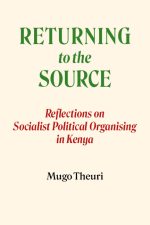
Returning to the Source
Returning to the Source offers a bold and critical examination of Kenya’s political evolution, tracing how colonial rule laid the groundwork for an exclusionary democracy that persists today. The book dissects the contradictions at the heart of the nation’s post-independence politics—from elite handshakes and voter cynicism to the repeated stalling of leftist organising. Moving beyond conventional histories, the author explores why socialist movements in Kenya have struggled to gain traction, examining internal rivalries, caution, and the lingering shadows of figures like Jaramogi Oginga Odinga and the banned Kenya People’s Union (KPU). The book also sheds light on the complex, contradictory unity among leaders such as Kenyatta, Mboya, and Odinga, and argues for a politics based on listening and moral authority rather than raw power. Crucially, Returning to the Source confronts the erasure of women from political memory and the patriarchal shackles that continue to limit liberation. It calls for localising heroism and recovering indigenous political intelligence as essential tools for rebuilding genuine socialist organising. By recovering erased histories and championing local heroes, the book offers both a critique and a path forward—urging a return to listening, collective action, and a more inclusive, transformative politics for Kenya and beyond.
The author is a Kenyan political thinker, organiser, and scholar whose work sits at the intersection of history, socialist theory, and grassroots mobilisation. Drawing on decades of engagement with social movements and a deep commitment to recovering suppressed narratives, they bring both academic rigour and lived political experience to the page. Having themselves been imprisoned and tortured for their political beliefs, the author writes not from abstract detachment but from the brutal reality of state repression. This personal history of surviving state violence infuses every chapter, lending the book an urgent moral weight and an unflinching honesty. Their writing challenges conventional hero worship and instead centres collective action, indigenous intelligence, and the often-overlooked roles of women and local figures in liberation struggles. Returning to the Source is the culmination of a lifelong commitment forged in resistance—understanding why progressive change in Kenya has repeatedly faltered, and how it might yet be revived through courage, listening, and solidarity.
1. How Colonialism Shaped an Exclusionary Democracy, 19
2, The Nationalist Inheritance and Its Blind Spots, 33
3, Democracy: Handshakes, Elite Pacts, Voter Cynicism, 44
4, Why Leftist Organising in Kenya Keeps Stalling, 69
5, Politics of Hesitation, Caution, and Internal Rivalry, 86
6, Lessons from Kenya’s Socialist Movements, 100
7, Challenges of Socialist Organising after Jaramogi’s KPU, 113
8, The Place of Indigenous Political Intelligence in Organising, 123
9, The Contradictory Unity: Kenyatta, Mboya and Odinga, 135
10, Leadership as Listening: Moral Authority Vs. Power, 146
11, The Erasure of Women from Political Memory, 158
12, Liberating Women from the Shackles of Patriarchy, 179
13, Localising Liberation Heroism to Rescue Erased Histories, 194
14, Local Heroes and the Struggle for Socialist Organising, 221
Bibliography, 240
About the Author, 251Select options This product has multiple variants. The options may be chosen on the product page -
 Select options This product has multiple variants. The options may be chosen on the product page
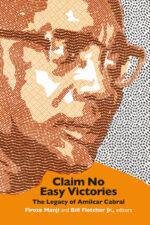
Claim No Easy Victories: The Legacy of Amilcar Cabral
USD $ 26.00“Never has it been more certain that our victory depends principally on our own actions. Tell no lies, claim no easy victories . . .” —Amílcar Cabral On the centennial of Amílcar Cabral’s birth, and fifty years after his passing, Claim No Easy Victories brings to life the resonance of his thought for today’s freedom movements. World-renowned revolutionary, poet, liberation philosopher, and leader of the anticolonial independence movement of Guinea Bissau and Cape Verde, Amílcar Cabral’s legacy stretches well beyond the shores of West Africa. His profound influence on the pan-Africanist movement and the Black liberation movement in the United States and the English-speaking world spans the ages—and is only growing in an era of renewed anti-imperialist internationalist struggle. In this unique collection of essays, radical thinkers from across Africa, the United States, and internationally commemorate Cabral’s life and legacy and his relevance to contemporary struggles for self-determination and emancipation. Claim No Easy Victories serves equally as an introduction or reintroduction to a figure and militant history that the rulers and beneficiaries of global racial capitalism would rather see forgotten. Understanding Cabral then and now sheds light on the necessity of grounding radical change in the creation of theory based on the actual conditions within which movements develop. The depth and dimension of Cabral’s theoretical ideas and revolutionary practice of building popular movements for liberation are assessed by each of the authors and critically reanimated for a new generation of freedom fighters. The book features contributions by: Kali Akuno, Samir Amin, David Austin, Jesse Benjamin, Angela Davis, Bill Fletcher Jr, Mireille Fanon-Mendès France, Lewis Gordon, Firoze Manji, Asha Rodney, Patricia Rodney, Olúfémi Táíwò—and others.
Select options This product has multiple variants. The options may be chosen on the product page -
Política e cultura no pensamento emancipatório africano
USD $ 5.00 USD $ 9.00Price range: USD $ 5.00 through USD $ 9.00Select options This product has multiple variants. The options may be chosen on the product page
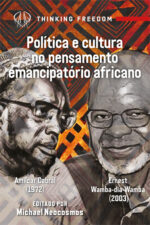
Política e cultura no pensamento emancipatório africano
USD $ 5.00 USD $ 9.00Price range: USD $ 5.00 through USD $ 9.00Description (2132 / 2500)
A atual ausência de uma visão emancipatória para a África está no centro dos nossos problemas políticos relacionados à opressão racial capitalista e colonial. Qualquer tentativa de repensar a emancipação política no continente africano deve ser capaz de localizar uma concepção universal de liberdade no interior das experiências culturais singulares que as pessoas vivem. Quando esteve baseada nas tradições populares, a política emancipatória exibiu tais traços dialéticos, independentemente da maneira específica na qual cada luta pela liberdade foi pensada em diferentes contextos históricos. No entanto, apenas alguns intelectuais militantes compreenderam a importância dessa dialética no pensamento.O presente volume esboça e discute dois pontos de vista particularmente importantes sobre o papel e a relevância da cultura popular na política emancipatória em África. Cada um deles resulta de formas distintas de exploração capitalista e colonialista: o primeiro viu a luz do dia em um contexto colonial, enquanto o segundo é diretamente confrontado pelo estado neocolonial. Todas as políticas emancipatórias são desenvolvidas em confronto com o poder estatal, e todas começam com um processo de discussão e debate através do qual um sujeito coletivo começa a se formar. No continente africano, a construção de tal sujeito político coletivo tem sido informada, de maneira fundamental, pelas culturas populares.
Os dois autores cujos ensaios estão aqui incluídos entenderam isso e colocaram a cultura popular no centro de suas políticas. O primeiro, Amílcar Cabral, aborda o papel central da cultura popular na luta pela independência da Guiné-Bissau nos anos 1970; o segundo, Ernest Wamba-dia-Wamba, aborda a centralidade da cultura popular africana para uma política emancipatória endereçada à atual República Democrática do Congo. Apesar das décadas que os separam, tanto Cabral como Wamba-dia-Wamba desenvolvem, no centro de sua política, uma dialética que ativa os universais da cultura no presente. É essa característica que confere às suas visões uma importância central para o pensamento emancipatório contemporâneo.
Select options This product has multiple variants. The options may be chosen on the product page -
Politics and Culture in African Emancipatory Thought
USD $ 5.00 USD $ 15.00Price range: USD $ 5.00 through USD $ 15.00Select options This product has multiple variants. The options may be chosen on the product page
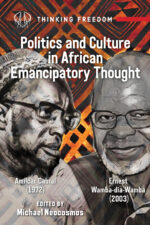
Politics and Culture in African Emancipatory Thought
USD $ 5.00 USD $ 15.00Price range: USD $ 5.00 through USD $ 15.00The current absence of any emancipatory vision for Africa lies at the heart of our political problems of racial capitalist and colonial oppression. Any attempt to rethink political emancipation on the African continent must be able to locate a universal conception of freedom within singular cultural experiences where people live. Irrespective of the specific manner in which such struggles for freedom were thought within different historical contexts, emancipatory politics always exhibited such a dialectic when it was based within popular traditions. Yet only some militant intellectual leaders understood the importance of this dialectic in thought.
The present volume outlines and discusses two particularly important views concerning the role and importance of popular culture in emancipatory politics in Africa. Each is the product of distinct forms of colonial capitalist exploitation: the former saw the light of day within a colonial context while the latter is directly confronted by the neocolonial state. All emancipatory politics are developed in confrontation with state power, and all begin with a process of discussion and debate whereby a collective subject begins to be formed. The formation of such a collective political subject has been fundamentally informed by popular cultures on the African continent.
The two authors whose essays are included here understood this and posit popular culture at the centre of their politics. The first, Amílcar Cabral, addresses the central role of popular culture in the independence struggle of Guinea Bissau in the 1970s; the second, Ernest Wamba-dia-Wamba, addresses the centrality of African popular culture in an emancipatory politics for the current Democratic Republic of Congo. Despite the distance in time that separates them, both Cabral and Wamba-dia-Wamba develop a dialectics at the core of their politics which activates the universals of culture in the present. It is this that makes their views of central importance to emancipatory thought today.Select options This product has multiple variants. The options may be chosen on the product page -

Politique et culture dans la pensée émancipatrice Africaine
USD $ 5.00 USD $ 9.00Price range: USD $ 5.00 through USD $ 9.00Select options This product has multiple variants. The options may be chosen on the product page
Politique et culture dans la pensée émancipatrice Africaine
USD $ 5.00 USD $ 9.00Price range: USD $ 5.00 through USD $ 9.00Au cœur de nos problèmes politiques issus d’un capitalisme racial et d’une oppression (néo)coloniale en Afrique aujourd’hui se trouve l’absence de toute vision émancipatrice véritable. Toute tentative de repenser une politique émancipatrice en Afrique doit pouvoir situer une vision universaliste de la liberté parmi les expériences culturelles singulières que les gens vivent. Les politiques émancipatrices quand elles existaient, bien que pensées dans les luttes pour la liberté ayant lieu dans des contextes historiques particuliers, mettaient toujours en vue une dialectique de ce genre quand elles étaient vraiment basées parmi les traditions populaires. Cependant, seulement une minorité de dirigeants intellectuels et militants comprenait l’importance d’une telle dialectique pour la pensée et l’action.
Ce petit livre trace le contour et discute de deux points de vue très importants sur le rôle de la culture populaire dans la politique émancipatrice en Afrique. Chacun d’entre eux émane de formes d’exploitation capitalistes coloniales distinctes : le premier a vu le jour dans un contexte colonial classique tandis que le second est directement issu d’un contexte étatique néocolonial. Toute politique émancipatrice est développée vis-à-vis le pouvoir d’état et toutes commencent avec un processus de discussion ou est formé un sujet collectif. Un tel sujet politique doit être fondamentalement informé par et conçu en relation avec les cultures populaires.
Les deux auteurs ci-inclus ont compris ce principe et mettent la culture populaire au centre de leur pensées politiques. Le premier, Amílcar Cabral se réfère au rôle principal de la culture dans la lutte contre le colonialisme au Guinée Bissau dans les années 1970 ; le second, Ernest Wamba-dia-Wamba insiste sur le rôle central de la culture populaire pour une politique émancipatrice dans la République Démocratique du Congo aujourd’hui. Malgré la distance temporelle qui les sépare, tous les deux développent au centre de leurs politiques distinctes, une pensée dialectique qui déclenche des pensées universalistes depuis la culture populaire dans le présent. C’est pour cela que leurs points de vue sont d’une importance capitale pour la pensée de la politique émancipatrice en Afrique aujourd’hui.
Select options This product has multiple variants. The options may be chosen on the product page
