
-

LENIN: The Heritage We (Don’t) Renounce
USD $ 5 USD $ 37Price range: USD $ 5 through USD $ 37Select options This product has multiple variants. The options may be chosen on the product page
LENIN: The Heritage We (Don’t) Renounce
USD $ 5 USD $ 37Price range: USD $ 5 through USD $ 37These 100 tributes, from every continent, are like building blocks, in word and image creating not a mausoleum, but paths to a new future… It’s about thinking with and through Lenin, and the proof is here. — Isabelle Garo, author of Communism and Strategy.
The organic intellectuals in this book have woven a thread of what is to be done in the heart of fascism today, a tool for reclaiming our humanity. — Gacheke Gachihi, member of the Kenya Organic Intellectuals Network.
A left that rejects Lenin’s legacy in times of catastrophic capitalism and imperialist war can neither be truly left-wing nor have a decisive influence on world history. —Michael Brie, author of Rediscovering Lenin.
Lenin: The Heritage We (Don’t) Renounce brings together 100+ authors and visual artists from 50+ countries across the world – from Afghanistan to Zimbabwe – in order to critically commemorate the hundredth anniversary of the death of Vladimir Ilyich Ulyanov, aka Lenin, on 21 January 1924.
Combining academic, journalistic and more personal-political texts, including poetry, theatrical skits and fictional writing, the books’ contributors aim to identify and constructively engage with the living legacy of Lenin’s life and work before, during and after the October Revolution. Concretely, the 100+ texts deal with a great variety of “old [Leninist] truths that are ever new” (Lenin), both historically and in today’s times: Imperialism, the National Question and the Right to Self-Determination, the Vanguard Party, Trans Liberation, Ecological Leninism, Dialectics, Artificial Intelligence, Military Marxisms, Black Liberation, Communist Feminism as well as Revolutionary Dreaming and Organising, among many others.Also, Lenin is put into dialogue with a number of revolutionary comrades-in-arms, among them Amílcar Cabral, Mao Zedong, Julius Nyerere, José Carlos Mariátegui, Julio Antonio Mella, G.F.W. Hegel, Antonio Gramsci, Qu Quibai, Alexandra Kollontai and Rosa Luxemburg.
In sum, the book aspires to help liberate the old Ilyich from the musty, petrifying solitude of his mausoleum and to invite him back into the “real movement, which abolishes the state of things” (Marx & Engels) in the here and now, i.e. our multiple, intersecting struggles against all types of capitalist-colonial-heteropatriarchal-ableist oppression and for the rekindling and strengthening of the new Communist horizon.
While many on the contemporary Left continue to openly disavow any association with Tovarish Lenin, Lenin: The Heritage We (Don’t) Renounce affirms the opposite – that there will be no revolution without Vladimir Ilyich among our rank-and-file comrade-ancestors. Or in the words of one of the book’s authors, Himani Bannerji, “We neglect Lenin’s voice at our own peril.”
To work, everybody, to work,
the cause of the world socialist revolution
must and will triumph.
(Lenin)Select options This product has multiple variants. The options may be chosen on the product page -

(Bengali edition) হিন্দুত্ববাদ ও ইহুদী জাতীয়তাবাদ : একটি ক্রমবর্ধমান সম্পর্ক)
USD $ 5 USD $ 10Price range: USD $ 5 through USD $ 10Select options This product has multiple variants. The options may be chosen on the product page
(Bengali edition) হিন্দুত্ববাদ ও ইহুদী জাতীয়তাবাদ : একটি ক্রমবর্ধমান সম্পর্ক)
USD $ 5 USD $ 10Price range: USD $ 5 through USD $ 10This is a Bengali translation of Hindutva and its relationship with Zionism, by Amrit Wilson: ISBN 978-1-990263-76-7. Written in December 2022, this text is based on a lecture given earlier at the invitation of the Institute of Palestine Studies. Since then, the relationship between Israel and India has deepened further and atrocities have skyrocketed in both countries. On 5 April 2023, Israeli forces stormed Al Aqsa Mosque compound in occupied East Jerusalem and attacked worshippers inside. At the same time, Israel is facing internal turmoil in a battle between a diverse group, including those who think the current settler colony is a democratic nation and want things to remain as they are, and those who stand even further to the right. Significantly, the BJP, India’s ruling party, supports the latter. This book is about Hindutva, the ideology which drives the Hindu-supremacist Bharatiya Janata Party (BJP) regime of Prime Minister Narendra Modi, and Zionism, the ideology of the Israeli apartheid state. In this era of rising fascism, these two remarkably similar ideologies are crucially important in cementing the economic and military alliance between two of the world’s most repressive right-wing states – while helping to legitimize them in cultural arenas. Israel is, of course, a settler colonial state, but it is also, like India, a fascist state, not only because of ‘the extremist parties that [are] part of the government’ but also because of ‘their enablers – Netanyahu and his chauvinistic Likud party which long strove for a Jewish state dominating both sides of the Jordan River.’ In the words of Marwan Bishara, Netanyahu is ‘the godfather of modern Israeli fascism.’ This essay focuses primarily on Hindutva, discussing Zionism mainly to highlight its similarities, links and increasing alliances with Hindutva.
Select options This product has multiple variants. The options may be chosen on the product page -

Religion, Society and the Pandemic: A complex entanglement
USD $ 5 USD $ 50Price range: USD $ 5 through USD $ 50Select options This product has multiple variants. The options may be chosen on the product page
Religion, Society and the Pandemic: A complex entanglement
USD $ 5 USD $ 50Price range: USD $ 5 through USD $ 50In nearly three years, starting from early January 2020, the coronavirus directly and indirectly consumed the lives of nearly 20 million people worldwide. This book explores the interplay between the coronavirus pandemic and religion on the theological, institutional and societal dimensions. It focuses on Hinduism, Buddhism, Christianity, Islam and secularism, but some minor faith systems are also covered. Exploring the evolution of the pandemic in seventeen nations, it asks: Was religious belief an obstacle or a positive factor in understanding the scientific basis of the coronavirus pandemic? Did religious institutions, leaders and laity facilitate or block the implementation of the official pandemic control measures? Was the role played by religion in the coronavirus pandemic affected by historical, social, economic and political factors? How did secularism operate in the coronavirus pandemic? Did the coronavirus pandemic enhance or undermine religiosity? The basic aim is to draw lessons from this pandemic that will facilitate how humanity may deal with future pandemics in a just and egalitarian social order.
Select options This product has multiple variants. The options may be chosen on the product page -
![Aufbruch in Jackson [German edition of Jackson Rising: Black self-management and solidarity economy]](https://darajapress.com/wp-content/uploads/2023/12/174_Akuno_Jackson_web-150x225.jpg)
Aufbruch in Jackson [German edition of Jackson Rising: Black self-management and solidarity economy]
USD $ 24German translation of Jackson Rising: The Struggle for Economic Democracy and Black Self-Determination in Jackson, MississippiHow black activists are building liberation practically from below: Departure in Jackson documents the history of one of the most exciting revolutionary experiments in the USA Present.
Since the 1970s, black liberation movements in majority-black Mississippi have taken change into their own hands. The Deep South should become the center of their independence – “Free the Land!” In the 2010s, the election of Chokwe Lumumba as mayor in the capital Jackson took an important step towards implementing the vision of assembly democracy, solidarity economy and an end to racial inequality. Lumumba dies unexpectedly in 2014, but his son Antar and the Cooperation Jackson continue to move forward.
We learn about the pitfalls of radical local politics and struggles for housing and land, democratic economic models and ecology, internationalist solidarity and the parallels to the Rojava Revolution and the Zapatistas, about encouraging experiences in which different concerns go hand in hand.
-

Banana Girls, The
USD $ 5 USD $ 20Price range: USD $ 5 through USD $ 20Select options This product has multiple variants. The options may be chosen on the product page
Banana Girls, The
USD $ 5 USD $ 20Price range: USD $ 5 through USD $ 20The Banana Girls chronicles 2003 days in the lives of two bosom friends, Rehema and Fatuma, and millions of days in the existence of the banana, the fruit which, eaten either ripe or cooked, the girls at some point determine will be the only solid component of their daily diets. The banana becomes not only the symbol of ideal nutrition but also, by turns, of social engineering and neo-imperialist exploitation. …Rehema and Fatuma are Tanzanians by nationality and brainboxes by genetic coding, with an enduring monopoly of either the first or second position in any examination for which they sit. They excel in Mathematics, Chemistry and Physics particularly and are always the first two to solve any mathematical or scientific challenges that are presented to their successive year groups and, by extension, to readers of the book.
… As the days go by, Rehema and Fatuma abandon junk food forever, they also adopt wholesome tastes in what they watch and what they listen to, and they make a good friend, Alice, who, unlike them, is from a rich family but who is adequately informed to join them as committed activists in the BLF, the Banana Liberation Front. Their activism lands them in jail. All three girls see through the machinations of their own government to oppress their own people and of global capitalism to bring about régime change, the better to sustain a stranglehold over poorer economies and to prop up aptly named ‘banana republics’. One malevolent operator is pointed out by name: he is President Ronald Grump of the United States of America.
Select options This product has multiple variants. The options may be chosen on the product page -

Insurgent Feminisms: Writing War
USD $ 5 USD $ 35Price range: USD $ 5 through USD $ 35Select options This product has multiple variants. The options may be chosen on the product page
Insurgent Feminisms: Writing War
USD $ 5 USD $ 35Price range: USD $ 5 through USD $ 35War is never just the war itself, it’s not the event or the epoch. War is the impossible and unending afterlife, the struggle to breathe after being bludgeoned, and the re-situating of one’s self and of one’s place after displacement and fragmentation.
Insurgent Feminisms: Writing War advances a new paradigm of war writing by focusing on gender. War is always fought upon the backs of women, often under the pretense of saving them. Yet, along the way, the brutalities unleashed on women during wartime remain relentless. In this collection, insurgency emerges in the raw and meticulous language of witnessing, and in the desire to render the space of conflict in radically different ways. These feminist and queer perspectives on war come out of regions and positions that disobey the rules of war writing. Comprising reportage, fiction, memoir, poetry, and conversations from over sixty writers, the collection includes contributions by Chika Unigwe, Nathalie Handal, Ubah Cristina Ali Farah, Suchitra Vijayan, Bélen Fernández, Uzma Falak, Otoniya Juliane Okot Bitek, Sarah Ladipo Manyika, Lara Pawson, Gaiutra Bahadur, Robtel Neajai Pailey, Sumana Roy and Lina Mounzer, among several others.
Bhakti Shringarpure co-founded Warscapes magazine in November 2011 and it has now transitioned into the Radical Books Collective.
Veruska Cantelli is a writer, translator, editor, and Associate Professor of Interdisciplinary Studies at Champlain College in Vermont, USA.
Select options This product has multiple variants. The options may be chosen on the product page -

Rastafari Movement, The: A Beginners Guide
USD $ 5 USD $ 15Price range: USD $ 5 through USD $ 15Select options This product has multiple variants. The options may be chosen on the product page
Rastafari Movement, The: A Beginners Guide
USD $ 5 USD $ 15Price range: USD $ 5 through USD $ 15Why is this book necessary today?
Rastafari: A Beginner’s Guide” holds immense relevance due to its unique approach to addressing the complex movement of Rastafarianism. It’s complex nature, encompassing elements of social movements, Pan-Africanism, Afrocentrism, philosophy, and religion, can be overwhelming for new readers. This book serves as an accessible introduction, providing a foundational understanding that caters to both Rastafarians and individuals with limited knowledge of the movement.
By delving into the essence of the Rastafari lifestyle beyond superficial attributes like dreadlocks and cannabis use, the book helps dispel misconceptions and offers a more accurate representation of the movement’s beliefs and principles. Further, this guide aids in shedding light on the depth and significance of Rastafarianism’s contributions to culture, spirituality, and social thought but also its philosophical challenges.
The book’s coverage of Rastafarianism’s historical trajectory and foundational values provides crucial context for understanding its development over time. By highlighting its evolution from its origins in Jamaican ghettoes to its expansion into a more inclusive and diverse community that includes professionals and the middle class, the book underscores the movement’s adaptability and relevance in changing societal landscapes.
Despite existing scholarly contributions, there remains a need for a concise, approachable guide that synthesizes the wealth of information available on Rastafarianism. This book fills that gap, providing readers with a comprehensive yet accessible overview that can serve as a starting point for further exploration.
Select options This product has multiple variants. The options may be chosen on the product page -

“Nada mal para um N—, Não?” “No está mal para un N—, ¿no?”
USD $ 5 USD $ 15Price range: USD $ 5 through USD $ 15Select options This product has multiple variants. The options may be chosen on the product page
“Nada mal para um N—, Não?” “No está mal para un N—, ¿no?”
USD $ 5 USD $ 15Price range: USD $ 5 through USD $ 15Escrito durante as comemorações do septuagésimo quinto aniversário da publicação de Black Skin, White Masks (“Pele Negra, Máscaras Brancas”), de Frantz Fanon, “Not Bad for a N—, No?” oferece reflexões sobre as circunstâncias da publicação desta obra clássica com os insights de Fanon sobre o que ele chamou de tentativa de “assassinato do homem” e a necessidade urgente de a humanidade se tornar “acional”.
Escrito durante las celebraciones del septuagésimo quinto aniversario de la publicación de Black Skin, White Masks (“Piel negra, máscaras blancas”) de Frantz Fanon, “Not Bad for a N—, No?” ofrece reflexiones sobre las circunstancias de la publicación de esta obra clásica con las ideas de Fanon sobre lo que llamó el intento de “asesinato del hombre” y la urgente necesidad de que la humanidad se vuelva “acción”.
Select options This product has multiple variants. The options may be chosen on the product page -
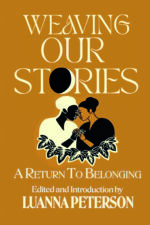
Weaving Our Stories: Return To Belonging – An Anthology
USD $ 5 USD $ 26Price range: USD $ 5 through USD $ 26Select options This product has multiple variants. The options may be chosen on the product page
Weaving Our Stories: Return To Belonging – An Anthology
USD $ 5 USD $ 26Price range: USD $ 5 through USD $ 26Weaving Our Stories is a Hawaii-rooted abolitionist program that utilizes storytelling as a vehicle for liberation. Our mission revolves around teaching storytelling as an act of resistance, dismantling harmful existing narratives, and nurturing our ability to weave counter-narratives that acknowledge and celebrate the inherent beauty and brilliance within our storytellers. Through our stories, we advocate for justice and liberation.
This anthology follows the trail of esteemed works such as “This Bridge Called My Back: Writings of Radical Women of Color” and “Na Wahine Koa: Hawaiian Women for Sovereignty and Demilitarization.” This anthology includes poetry, essays, visual art, and narratives penned by authors and artists who identify as Black, Indigenous, and people of color from Hawaii and beyond. While our contributors span a diverse spectrum of experiences and identities, they all share a common commitment to individual and collective well-being. Our contributors astutely showcase how their expressions of resistance and liberation, whether through visual art or written text, align with one or more of the central themes of Weaving Our Stories: resistance through cultural memory, accountability, resisting false binaries, and countering hegemony.
In tandem with the community collection of stories that revolve around resistance, this anthology also highlights the remarkable achievements of our six accomplished Black youth organizers. These young individuals dedicated a year to the Weaving Our Stories Youth Series during the pandemic, delving into the power and relevance of storytelling in our journey of resistance and liberation. Each of the six youth activists provides an overview of their Community Impact Design Projects.
These culminating endeavors addressed community issues by proposing interventions that harness our resistance themes and our three Pillars of Liberation—namely, institutions, structures/methodology, and people.
This anthology offers celebrations of our triumphs, our joys, and our unwavering resilience. Simultaneously, they advocate for our ongoing resistance, insisting on justice and a sincere confrontation with the often-overlooked lived experiences that deserve acknowledgement.
Select options This product has multiple variants. The options may be chosen on the product page -

I see the invisible
USD $ 5 USD $ 20Price range: USD $ 5 through USD $ 20Select options This product has multiple variants. The options may be chosen on the product page
I see the invisible
USD $ 5 USD $ 20Price range: USD $ 5 through USD $ 20Truth be told, I never thought I would write another volume of poetry after the last, I will not Dance to Your Beat (2011). The reason was that my previous volumes were reactive to the circumstances of the times. Patriots and Cockroaches (1992) was a reaction to the socio-political corruption that had engulfed Africa and dimmed the enthusiasm that had been built by the years of struggle for independence. Whereas we thought we were stepping into a post-colonial era, what we stepped into was a vicious neo-colonial times. The next collection, Poems on the Run (1995) was a reaction to military autocracy and the repression that followed. The volume was literally written underground. This was followed by Intercepted (1998) all written while detained at Kalakuta Republic of Alagbon Close. We Thought it was Oil But it was Blood (2002) responded to two things primarily – extractivism and the accompanying human and environmental rights abuses in the Niger Delta and elsewhere. The massive erosion of biodiversity and attacks on food sovereignty through the introduction of genetically modified organisms (GMOs) into our agricultural system inspired I Will not Dance to your Beat.
What you have in your hands, or on your screens, is a compilation that is largely more meditative than the previous collections. There are moments of reflection on the colonial and neoliberal foundations that permit a willful disconnection from nature and the resultant destructive extractivism.
Some of the poems came through conversations and poetry writing sessions with Peter Molnar, Maryam al-Khawaja — Rafto Human Rights laureates and Salil Tripathi, a member of the board of PEN International, in August 2017. The sessions held at a beautifully rustic location in Celleno, Italy, were documented on celluloid by the duo of Maria Galliana Dyrvik and Anita Jonsterhaug Vedå of SMAU, a multimedia firm in Norway. Poetic relationship with Maria and Anita has continued over the years and their work continues to inspire more and more poems.
Select options This product has multiple variants. The options may be chosen on the product page -

Mudarse Màs Allá de la Agricultura Capitalista
USD $ 5 USD $ 15Price range: USD $ 5 through USD $ 15Select options This product has multiple variants. The options may be chosen on the product page
Mudarse Màs Allá de la Agricultura Capitalista
USD $ 5 USD $ 15Price range: USD $ 5 through USD $ 15Los agentes patógenos surgen una y otra vez de un sistema agroalimentario global arraigado en la desigualdad, la explotación laboral y el extractivismo sin límites por el que se despoja a las comunidades de sus recursos naturales y sociales. Un sistema económico propenso a la crisis que prioriza la producción para obtener beneficios por encima de la satisfacción de las necesidades humanas y la preservación ecológica se organiza en torno a una intensa producción monocultural que, por el camino, permite la aparición de las enfermedades más mortíferas.
La Investigación sobre la Pandemia para el Pueblo (PReP) se centra en cómo la agricultura podría ser reimaginada por el tipo de intervención a nivel de la comunidad que podría detener la aparición del coronavirus y otros patógenos en primer lugar. Abordamos cómo la ciencia convencional apoya los mismos sistemas políticos y económicos que ayudaron a producir la aparición del coronavirus y otros patógenos en primer lugar.
Introducimos la agroecología, un ecologismo de los campesinos, los pobres y los indígenas, que existe desde hace mucho tiempo, y que trata la agricultura como una parte de la ecología de la que la humanidad cultiva sus alimentos. La agroecología -una ciencia, un movimiento y práctica- combina la ciencia ecológica, los conocimientos indígenas y campesinos y los movimientos sociales por la soberanía alimentaria y territorial para lograr sistemas alimentarios ambientalmente justos.
Select options This product has multiple variants. The options may be chosen on the product page -

“Not Bad for a N—, No?” / «Pas mal pour un N—, n’est-ce pas? »
USD $ 5 USD $ 11Price range: USD $ 5 through USD $ 11Select options This product has multiple variants. The options may be chosen on the product page
“Not Bad for a N—, No?” / «Pas mal pour un N—, n’est-ce pas? »
USD $ 5 USD $ 11Price range: USD $ 5 through USD $ 11Written during the seventy-fifth anniversary celebrations of the publication of Frantz Fanon’s Peau noir, masques blancs (“Black Skin, White Masks”), “Not Bad for a N—, No?” offers reflections on the circumstances of the publication of this classic work with Fanon’s insights on what he called the attempted “murder of man” and the urgent need for humanity to become “actional.”
Écrit lors des célébrations du soixante-quinzième anniversaire de la publication de Frantz Fanon de Peau noir masques blancs, «Pas mal pour un N—, n’est-ce pas? » offre des réflexions sur les circonstances de la publication de cette œuvre classique avec les idées de Fanon sur ce qu’il a appelé la tentative de «meurtre de l’homme» et le besoin urgent que l’humanité devienne «actionnelle».
Select options This product has multiple variants. The options may be chosen on the product page -
 Select options This product has multiple variants. The options may be chosen on the product page
Partitions of the Heart: Unmaking the Idea of India
USD $ 18In Partitions of the Heart: Unmaking the Idea of India, human rights and peace worker Harsh Mander takes stock of whether the republic has upheld the values it set out to achieve and offers painful, unsparing insight into the contours of hate violence. Through vivid stories from his own work, Mander shows that hate speech, communal propaganda and vigilante violence are mounting a fearsome climate of dread, that targeted crime is systematically fracturing our community, and that the damage to the country’s social fabric may be irreparable. At the same time, he argues that hate can indeed be fought, but only with solidarity, reconciliation and love, and when all of these are founded on fairness.
‘At last a book that turns a powerful searchlight on the evil tide of hatred and violence stalking our country, where our minorities live in fear, and Muslims among us are killed under a government that has declared war on Islam.’ —Nayantara Sahgal, journalist, author of Day of Reckoning: Stories (2015).
‘Harsh Mander’s is the voice of Kabir come alive in our violent times. We can hear it to our redemption, ignore it to our peril.’ —Gopalkrishna Gandhi, former administrator and diplomat, Governor of West Bengal 2004-2009
This book is absolutely mandatory reading. You owe it to the much-vaunted “motherland” which is being abused so shamelessly.’—Kiran Nagarkar, novelist, playwright, film critic and screenwriter.
Select options This product has multiple variants. The options may be chosen on the product page -
 Select options This product has multiple variants. The options may be chosen on the product page
Claim No Easy Victories: The Legacy of Amilcar Cabral
USD $ 26“Never has it been more certain that our victory depends principally on our own actions. Tell no lies, claim no easy victories . . .” —Amílcar Cabral On the centennial of Amílcar Cabral’s birth, and fifty years after his passing, Claim No Easy Victories brings to life the resonance of his thought for today’s freedom movements. World-renowned revolutionary, poet, liberation philosopher, and leader of the anticolonial independence movement of Guinea Bissau and Cape Verde, Amílcar Cabral’s legacy stretches well beyond the shores of West Africa. His profound influence on the pan-Africanist movement and the Black liberation movement in the United States and the English-speaking world spans the ages—and is only growing in an era of renewed anti-imperialist internationalist struggle. In this unique collection of essays, radical thinkers from across Africa, the United States, and internationally commemorate Cabral’s life and legacy and his relevance to contemporary struggles for self-determination and emancipation. Claim No Easy Victories serves equally as an introduction or reintroduction to a figure and militant history that the rulers and beneficiaries of global racial capitalism would rather see forgotten. Understanding Cabral then and now sheds light on the necessity of grounding radical change in the creation of theory based on the actual conditions within which movements develop. The depth and dimension of Cabral’s theoretical ideas and revolutionary practice of building popular movements for liberation are assessed by each of the authors and critically reanimated for a new generation of freedom fighters. The book features contributions by: Kali Akuno, Samir Amin, David Austin, Jesse Benjamin, Angela Davis, Bill Fletcher Jr, Mireille Fanon-Mendès France, Lewis Gordon, Firoze Manji, Asha Rodney, Patricia Rodney, Olúfémi Táíwò—and others.
Select options This product has multiple variants. The options may be chosen on the product page -
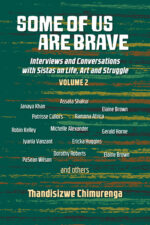
Some Of Us Are Brave (Vol 2): Interviews and Conversations with Sistas in Life and Struggle
USD $ 5 USD $ 23Price range: USD $ 5 through USD $ 23Select options This product has multiple variants. The options may be chosen on the product page
Some Of Us Are Brave (Vol 2): Interviews and Conversations with Sistas in Life and Struggle
USD $ 5 USD $ 23Price range: USD $ 5 through USD $ 23A society born of white supremacy and patriarchy must, by definition, ignore the voices of Black women. We know that unfortunately, such an attitude will also naturally seep into every stratum of that society
Part of the contribution to correct that was the centering and airing of Black women’s voices through Some of Us Are Brave: A Black Women’s Radio Program that aired on Pacifica’s Los Angeles radio station (KPFK) from 2003 until 2011.
The program covered a myriad of issues by amplifying the voices of a broad cross-section of Black women. Some of those voices have been preserved here in this volume. In addition to capturing various moments in time with a variety of women, this is also a means of taking the intellectual production of and about Black women out of the hands of institutions that are both fundamentally anti-Black and anti-woman.
Volume 1 contains interviews under the headings The Shoulders on Which We Stand and Black Lives Have Always Mattered.
Volume 2 covers Black Women’s Health, Bruthas on Sistas, and Sistas in Struggle.
Select options This product has multiple variants. The options may be chosen on the product page -
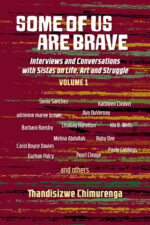
Some of Us Are Brave (Volume 1): Interviews and Conversations with Sistas in Life and Struggle
USD $ 5 USD $ 23Price range: USD $ 5 through USD $ 23Select options This product has multiple variants. The options may be chosen on the product page
Some of Us Are Brave (Volume 1): Interviews and Conversations with Sistas in Life and Struggle
USD $ 5 USD $ 23Price range: USD $ 5 through USD $ 23This is the literature of liberation! The truth. It waters the roots of a strong and timeless tree and bears the fruit of freedom. In the tradition of Ida B. Wells, Thandisizwe Chimurenga writes for the people because she is the people, and she loves the people. The interviews and conversations in Some Of Us Are Brave include Black women and Black men on Black women. This book will educate, inspire and strengthen the mind and spirit of Black women and those that love them. —Dr. Alice Nicholas, Africologist, Assistant Professor, Poet
Some of Us Are Brave is a courageous exploration of Black feminism within the Black left, offering invaluable insights and igniting much-needed conversations. It is a must-read for anyone seeking a deeper understanding of this vital aspect of our history and the transformative power of Black feminist thought. In a media landscape that often falls short when it comes to representing the voices of Black feminists, this series is a breath of fresh air. — Piper Carter, Detroit-based Arts & Culture Organizer
Host of “Beyond Breaking Barriers” podcast on Black Power MediaA society born of white supremacy and patriarchy must, by definition, ignore the voices of Black women. We know that unfortunately, such an attitude will also naturally seep into every stratum of that society
Part of the contribution to correct that was the centering and airing of Black women’s voices through Some of Us Are Brave: A Black Women’s Radio Program that aired on Pacifica’s Los Angeles radio station (KPFK) from 2003 until 2011.
The program covered a myriad of issues by amplifying the voices of a broad cross-section of Black women. Some of those voices have been preserved here in this volume. In addition to capturing various moments in time with a variety of women, this is also a means of taking the intellectual production of and about Black women out of the hands of institutions that are both fundamentally anti-Black and anti-woman.
Volume 1 contains interviews under the headings The Shoulders on Which We Stand and Black Lives Have Always Mattered.
Volume 2 covers Black Women’s Health, Bruthas on Sistas, and Sistas in Struggle.
Select options This product has multiple variants. The options may be chosen on the product page -

Singing to Liberation: Songs of Freedom and Nights of Resistance on Indian Campuses
USD $ 5 USD $ 16Price range: USD $ 5 through USD $ 16Select options This product has multiple variants. The options may be chosen on the product page
Singing to Liberation: Songs of Freedom and Nights of Resistance on Indian Campuses
USD $ 5 USD $ 16Price range: USD $ 5 through USD $ 16Student activism and cultural activism go hand in hand on Indian campuses. Over the last few years, especially after 2014, student movements in the country against social injustice have increased in numbers and tenacity. Cultural modes of expressing dissent have played a key role within this new wave of student movements that have gripped the nation. This book takes the reader through a journey into the ways cultural activists analyse cultural modes of protest, especially in the context of student movements in the Global South. The book delves into the political and ideological contours set by organisations such as the Indian Progressive Theatre Association (IPTA) and the Progressive Writers’ Association (PWA), and by figures such as Faiz Ahmed Faiz, Habib Jalib, Hemanga Biswas and Safdar Hashmi. The book locates them within the contemporary wave of cultural protests, analyses their continued relevance and argues for a revival of theoretical and practical engagement with the early progenitors of the progressive cultural movement in India.
Select options This product has multiple variants. The options may be chosen on the product page -

Heroes of the African Revolution: Colouring Book: Volume 1
USD $ 11.50We made this coloring book in order to expose African children to their authentic history. Malcolm X told us decades ago that we had to take responsibility for our children’s education because he understood that our people had been intentionally robbed of their true history. We can no longer rely on institutions to educate our children and must take it upon ourselves to equip our children with the truth so that they can bring a positive contribution to our people’s struggle for justice and freedom. This book highlights some of the key figures within the struggle to achieve Pan-Africanism which is the total liberation and unification of Africa. All of the brave women and men featured in this book were Pan-Africanists. They understood that people of African descent throughout the world faced the same issues and therefore had to unite in order to overcome those issues. We hope this book can inspire the next generation of African children to become Pan-Africanists and to join the struggle to liberate and unite Africa.
-

The revolutionary ecological legacy of Herbert Marcuse – 2nd Edition
USD $ 5 USD $ 25Price range: USD $ 5 through USD $ 25Select options This product has multiple variants. The options may be chosen on the product page
The revolutionary ecological legacy of Herbert Marcuse – 2nd Edition
USD $ 5 USD $ 25Price range: USD $ 5 through USD $ 25Description (2188 / 2500)
The author appeals to the energies of those engaged in a wide range of contemporary social justice struggles such as ecosocialism, antiracism, the women’s movement, LGBTQ rights, and antiwar forces. As the dialectical counterpart of Marcuse’s Great Refusal, the book, which culminates with the ‘EarthCommonWealth Project’ is keyed to what we are struggling for, not just what we are struggling against. The author argues that regressive political forces must be countered today, and this is best accomplished through radical collaboration around an agenda recognizing the basic economic and political needs of diverse subaltern communities. System negation must become a new general interest. The author discusses core ethical insights from African philosophical sources, indigenous American philosophy, and radical feminist philosophy. Humanity’s first teachings on ethics are to be found in ancient African proverbs. These subsequently served also as a critique of colonialism and neocolonialism. Long-suppressed indigenous American sources supply a philosophical and political critique of Euro-centric economic and cultural values. They also offer an understanding of humanity’s place in nature and the leadership of women and attest to modes of cooperative and egalitarian forms of community. Feminist anthropology furnishes an historical context for understanding the origins of patriarchy and how to move beyond dominator power to new forms of partnership power.The book envisions the displacement and transcendence of capitalist oligarchy as such, not simply its most bestial and destructive components. This is a green economic alternative because its ecological vision sees all living things and their non-living earthly surroundings as a global community capable of a dignified, deliberate coexistence. It is searching for a new system of ecological production, egalitarian distribution, shared ownership, and democratized governance, having its foundation in the ethics of partnership productivity with an ecosocialist and humanist commitment to living our lives on the planet consistent with the most honorable and aesthetic forms of human social and political fulfillment.
Select options This product has multiple variants. The options may be chosen on the product page -

Política e cultura no pensamento emancipatório africano
USD $ 5 USD $ 9Price range: USD $ 5 through USD $ 9Select options This product has multiple variants. The options may be chosen on the product page
Política e cultura no pensamento emancipatório africano
USD $ 5 USD $ 9Price range: USD $ 5 through USD $ 9Description (2132 / 2500)
A atual ausência de uma visão emancipatória para a África está no centro dos nossos problemas políticos relacionados à opressão racial capitalista e colonial. Qualquer tentativa de repensar a emancipação política no continente africano deve ser capaz de localizar uma concepção universal de liberdade no interior das experiências culturais singulares que as pessoas vivem. Quando esteve baseada nas tradições populares, a política emancipatória exibiu tais traços dialéticos, independentemente da maneira específica na qual cada luta pela liberdade foi pensada em diferentes contextos históricos. No entanto, apenas alguns intelectuais militantes compreenderam a importância dessa dialética no pensamento.O presente volume esboça e discute dois pontos de vista particularmente importantes sobre o papel e a relevância da cultura popular na política emancipatória em África. Cada um deles resulta de formas distintas de exploração capitalista e colonialista: o primeiro viu a luz do dia em um contexto colonial, enquanto o segundo é diretamente confrontado pelo estado neocolonial. Todas as políticas emancipatórias são desenvolvidas em confronto com o poder estatal, e todas começam com um processo de discussão e debate através do qual um sujeito coletivo começa a se formar. No continente africano, a construção de tal sujeito político coletivo tem sido informada, de maneira fundamental, pelas culturas populares.
Os dois autores cujos ensaios estão aqui incluídos entenderam isso e colocaram a cultura popular no centro de suas políticas. O primeiro, Amílcar Cabral, aborda o papel central da cultura popular na luta pela independência da Guiné-Bissau nos anos 1970; o segundo, Ernest Wamba-dia-Wamba, aborda a centralidade da cultura popular africana para uma política emancipatória endereçada à atual República Democrática do Congo. Apesar das décadas que os separam, tanto Cabral como Wamba-dia-Wamba desenvolvem, no centro de sua política, uma dialética que ativa os universais da cultura no presente. É essa característica que confere às suas visões uma importância central para o pensamento emancipatório contemporâneo.
Select options This product has multiple variants. The options may be chosen on the product page