Featured Books
-
Beyond the Neocolonial
USD $ 30.00Select options This product has multiple variants. The options may be chosen on the product page
Beyond the Neocolonial
USD $ 30.00Humanity faces existential crises driven by the persistence of neocolonial capitalism and a state form that continues to de-humanise the majority. In Beyond the Neocolonial, Michael Neocosmos argues that the failure to enable, let alone to realise the popular desire for freedom in post-independence Africa lies in the continuity of the colonial state and the dominance of analytical, statist thought over the transformative power of the dialectic.
Tracing the genealogy of emancipatory politics from the ancient wisdom of Egypt’s Ma’at and Ionia’s isonomia to the revolutionary theories of Lenin, Mao, Fanon, and Cabral, Neocosmos asserts that politics must be understood as a collective thought-practice of universal equality. He challenges the “stasis” of the current world order by recovering silenced histories of African popular inventiveness: from the egalitarian society constructed by the Bossales in Haiti to the mass democratic experiments of the United Democratic Front in South Africa.
Critiquing the exhausted “party form” and the myth of the “heroic liberator,” the book highlights the emancipatory potential within African popular culture, arguing that proverbs and the Palaver contain latent prescriptions for resolving contradictions and healing community. This work is a call to abandon the “epistemology of ignorance” and revive a dialectics of becoming, locating the agency for a truly human future not in the state, but in the masses who make history.
Table of Contents
Three Poems by Bertolt Brecht, Okot p’Bitek, and Yannis Ritsos
Dedications and Acknowledgments
Prefatory Remark
In Lieu of a Foreword: some inspirational declarations and metaphors
Introduction: what is to be thought?
1. Politics as a Collective Thought-Practice and Human Emancipation as its Essence: thinking the common good
2. The Ancients and the Thought of Politics: arkhē and the dialectic of physis and nomos
3. Sourcing an Emancipatory Politics for Today: reviewing the classics
4. Thinking Emancipatory Politics through African Popular Culture
5. Resolving Contradictions among the People and the Dialectical Emancipatory Potential of Proverbial Metaphors
6. Haiti from Inventive Popular Sovereignty to Neocolonial State
7. Beyond the Party Form? An alternative political experiment and the figure of the heroic liberator
8. Democracy as Perverted Freedom: the anatomy of the African neocolonial state
Conclusion: silencing as analytical procedure in political theory and practice
References
Author bio
Select options This product has multiple variants. The options may be chosen on the product page -
Viyyukka – The Morning Star (Vol 2)
USD $ 26.00Select options This product has multiple variants. The options may be chosen on the product page
Viyyukka – The Morning Star (Vol 2)
USD $ 26.00Edited by P. Aravinda and B. Anuradha
This second volume of Viyyukka continues the powerful anthology of stories written by women revolutionaries in India’s Maoist movement, translated from Telugu to English. The collection brings together narratives penned by guerrilla soldiers who document their lived experiences within the revolutionary struggle, offering rare insights into the intersection of armed resistance, gender politics, and Adivasi community life.
The stories span four decades of revolutionary movement history, capturing both tactical engagements and intimate human moments—love, loss, camaraderie, and daily existence in guerrilla squads. What distinguishes this volume is the inclusion of autobiographical sketches by Adivasi women, narrated in their own tongues, detailing the circumstances that led them to become guerrillas. These first-person accounts reveal how poverty, land dispossession, state repression, and patriarchal violence converge to shape revolutionary consciousness.
Set primarily in the Dandakaranya forest region spanning multiple Indian states, the narratives illuminate the movement’s efforts to build alternative structures of governance through Janatana Sarkars (people’s governments), which implemented collective farming, education, healthcare, and resistance to mining corporations. The stories confront the brutal reality of state counter-insurgency operations including Salwa Judum and Operation Green Hunt, while celebrating the resilience of women who constitute nearly half the guerrilla army.
The collection demonstrates how women revolutionaries perform multiple roles—soldiers, writers, historians, doctors, and teachers—documenting their own history while fighting for land, dignity, and self-determination. These are not conventional fictions but testimonies written under extreme duress, smuggled across regions and preserved against overwhelming odds, offering a window into one of India’s most significant contemporary resistance movements.
This is a powerful and timely book. Reading Viyyukka is to encounter history in its most urgent form: not as abstract doctrine, but as the lived, written, and too-often silenced testimony of women for whom the pen was as vital as the gun. This anthology does not simply add voices to a historical record; it fundamentally questions the record itself. By foregrounding the female guerrilla imaginary—with its profound complexities of comradeship, grief, motherhood, and even the critique of revolutionary justice—these stories exceed the boundaries of political propaganda to become essential documents of human endurance and creativity. In a time when their politics is declared defeated, the women of Viyyukka remind us that some struggles are not measured by victory alone, but by the indestructible insistence on bearing witness. — Sharmila Purkayastha, independent researcher, New Delhi
Select options This product has multiple variants. The options may be chosen on the product page -
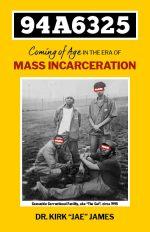
94A6325
Price range: USD $ 7.99 through USD $ 20.00Select options This product has multiple variants. The options may be chosen on the product page
94A6325
Price range: USD $ 7.99 through USD $ 20.0094A6325 is the compelling coming-of-age memoir of Dr. Kirk “Jae” James, a Black male, Jamaican immigrant, and father, chronicling his nearly decade-long experience (3,268 days) within the New York State carceral apparatus. The narrative is anchored by his arrest on April 13, 1994, when he was 18 years old, charged under the draconian Rockefeller Drug Laws and subsequently sentenced to life in prison. The story details his survival in infamous facilities such as Rikers Island, the maximum-security adolescent prison “The Cat” (Coxsackie), and Wyoming, where he fought to maintain his humanity while facing overwhelming fear and anxiety.
The book powerfully illustrates how legislative actions like the 13th Amendment, “tough on crime” rhetoric, the 1994 Crime Bill, and the 1996 Immigration laws acted as contemporary black codes and slave catchers, perpetually dehumanizing and criminalizing Black and brown populations. Jae endures three denials by the Parole Board while simultaneously fighting a six-year battle against a mandatory deportation order.
Drawing inspiration from mentors and comrades—including revolutionaries and activists like George Jackson and Pops—Jae transforms his time in prison into a quest for knowledge and self-actualization, culminating in earning an Associate Degree and winning his 212c waiver hearing against deportation in 2002.
More than just a survival story, 94A6325 serves as a vital first-person account and a call to embrace Abolition. The author, now a Clinical Assistant Professor at NYU, shares his journey as essential knowledge needed to confront the historical violence and systemic white supremacy woven into American democracy, urging readers to imagine a world without human cages, grounded in abundance and love. The story officially ends with his release on March 25, 2003.
This book is the first part in a series, with this one focusing on his incarceration from 1994 to 2003.
Dr Kirk “Jae James” talks about the book. The event centered on Dr. Kirk James’ memoir “94A6325: Coming of Age in the Era of Mass Incarceration,” which explores his nearly 9-year incarceration experience and its broader implications for systemic injustice. The panel discussion included Councilman Yusuf Salam, Dr. Michelle Munson, and Dr. Pierre Hargrove, who engaged in a conversation about the human impact of mass incarceration, the importance of community support during incarceration, and the ongoing challenges faced by formerly incarcerated individuals. The participants shared personal experiences and insights, highlighting the need for systemic change, the power of storytelling, and the resilience of those affected by the criminal justice system. The event aimed to foster reflection and dialogue on the structural harms of mass incarceration and the potential for collective healing and transformation. Watch the video here.
Published in collaboration with:
Select options This product has multiple variants. The options may be chosen on the product page -

Wir sind noch immer da
Price range: USD $ 12.00 through USD $ 27.00Select options This product has multiple variants. The options may be chosen on the product page
Wir sind noch immer da
Price range: USD $ 12.00 through USD $ 27.00Professor Zahid Pranjol ist Professor für Biomedizinische Wissenschaften an der University of Sussex. Er ist eine führende Stimme in der inklusiven Wissenschaftsbildung und Lehrplanreform und leitet Bestrebungen zur Dekolonisierung des Lehrplans der Biowissenschaften, indem er eurozentrische Vorurteile hinterfragt und Leselisten diversifiziert. Seit April 2024 unterstützt er über 2.000 Studierende an drei großen Universitäten in Gaza, indem er Lehrmaterialien, Forschungsmentorate, Englischsprachtraining sowie Zugang zu professioneller und psychologischer Unterstützung bereitstellt.
Jacob Norris ist außerordentlicher Professor für Geschichte des Nahen Ostens an der University of Sussex. Er hat umfassend zur palästinensischen Geschichte im 19. und 20. Jahrhundert publiziert und arbeitet derzeit zur Geschichte der palästinensischen Solidarität in Lateinamerika.
Select options This product has multiple variants. The options may be chosen on the product page -
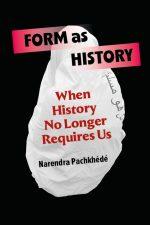
Form as History
Price range: USD $ 12.00 through USD $ 16.00Select options This product has multiple variants. The options may be chosen on the product page
Form as History
Price range: USD $ 12.00 through USD $ 16.00Form as History: When History No Longer Requires Us offers a concise and penetrating critique of contemporary historical thought. It argues that while modern scholarship has made Muslim life increasingly legible as a site of ethics, resistance, and normativity, this achievement can obscure a more unsettling condition: that history itself has learned to proceed without requiring meaning, address, or human obligation.A rigorous and unsettling meditation on what it means to live in a world where history continues to function, but no longer feels compelled to answer to human life.The book turns on a central tension. On one side stands the European figure of the Muselmann, drawn from Holocaust testimony, who reveals history’s capacity to continue efficiently while no longer demanding anything from the humans it governs. This is not loss, but abandonment. On the other side stands the Muslim, rendered in modern discourse as a knowable and agentive subject of history. The book shows how an emphasis on this agency can function as a displacement, allowing the radical danger exposed by the Muselmann—history’s indifference to human address—to be misread as a cultural or religious condition.What becomes of history when it no longer requires struggle, meaning, or even us, yet continues efficiently all the same?Refusing nostalgia and moralizing alike, the book examines how forms of life, particularly within Muslim legal and commercial traditions, have sustained obligation and necessity even after political centrality receded. Its aim is diagnostic rather than prescriptive: to make visible the quiet threshold where life is managed rather than addressed, and to clarify how historical necessity depends not on power or visibility, but on the survival of forms that still compel the world to answer.
Select options This product has multiple variants. The options may be chosen on the product page -

Jahan Malek Khatun
This book presents the first extensive English study and translation of the poetry of Jahan Malek Khatun, a fourteenth-century Persian princess and one of the most important women in the history of Persian literature. Translator Sheema Kalbasi first introduced Jahan Malek Khatun to the general English-speaking audience in 2008 through her anthology Seven Valleys of Love: A Bilingual Anthology of Women Poets from Medieval Persia to Present Day Iran, which marked the earliest appearance of Jahan’s poetry in English translation. Her surviving divan, which contains more than a thousand ghazals along with qasidas and shorter lyric forms, offers an unparalleled window into the intellectual, emotional, and cultural world of a noblewoman who wrote with clarity, restraint, and philosophical depth during a period of profound political instability.
The volume introduces readers to the historical and literary contexts that shaped her life and work, and it situates her authorship within a long Iranian tradition in which women participated in governance, education, and artistic patronage from the ancient empires through the Islamic period. It recreates the refined yet precarious milieu of fourteenth-century Shiraz, where poetry functioned not only as an aesthetic practice but also as a medium of political expression and ethical contemplation.
Through close readings, the book explores the disciplined craft of Jahan Malek Khatun’s ghazals. Her poetry turns repeatedly to a stable constellation of images, such as wind, candle, threshold, and healer, that guide the reader through themes of longing, moral endurance, sovereignty, and judgment. Each couplet acts as a brief meditation, and the poems together form a sustained inquiry into the relationship between beauty, discipline, and survival.
The study also examines the transmission of her work, the role of women as readers and preservers of literary culture, and the challenges inherent in translating a voice shaped by both privilege and constraint. Through this analysis and the accompanying translations, Jahan Malek Khatun emerges as a major intellectual presence and an essential figure for understanding the richness and complexity of the Persian lyric tradition.
-

We Are Still Here
Price range: USD $ 7.99 through USD $ 27.00Select options This product has multiple variants. The options may be chosen on the product page
We Are Still Here
Price range: USD $ 7.99 through USD $ 27.00Since the start of the unfolding genocide against Palestinians in Gaza, carried out through settler-colonial Israeli violence, higher education institutions have been systematically destroyed. Campuses lie in ruins, academics and students have been killed or forcibly displaced, and what was once a thriving, intellectually vibrant student population now lives under daily threat of bombardment, forced starvation, and death. For nearly two years, students have been cut off not only from their universities, but from their dreams, their futures, and even their most basic sense of safety.
Yet, despite this unimaginable trauma, many are still writing.
We Are Still Here is an anthology of these voices—raw, unfiltered, and courageous. It features short and long stories, poems, essays, and testimonies written by students from Gaza’s universities. These are not retrospective reflections or distant analyses; they are real-time words, emerging from the depths of genocide, displacement, and grief. These writings may be their last hopes to reach the world, a final act of resistance through expression.
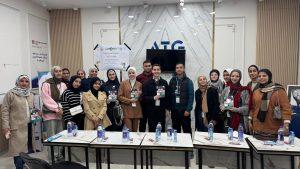
Listen to our podcast conversation
with the student contributors hereOr you can subscribe to Daraja Press podcasts wherever you get your podcasts.
All royalties from the sales of this book go to the student authors in Gaza.
Surviving at the darkest extremes of suffering, of destruction and displacement, famine and the constant threat of maiming or death, these young writers speak to us with piercing lucidity. Their resilience is their only form of optimism. Paradoxically, reading them lifts the heart.
– Ian McEwan, author of Atonement and Enduring LoveA moving, painful and yet hopeful collection of the younger generation of the people of Gaza. Sumud, resilience, was never so powerful and clear, as it appears in this must read and urgent collection. —Ilan Pappé, professor, University of Exeter’s College of Social Sciences and International Studies, author, A Very Short History of the Israel-Palestine Conflict
In the heart of suffering, words are born — and from beneath the rubble, creativity rises. This book is more than a collection of written pages; it is the echo of resilient souls and the cries of pens that spoke when voices were silenced. — Professor Dr. Omar Kh. Melad, President of Al-Azhar University– Gaza
We Are Still Here is not a book about war — it is a book about being alive after the world has decided you are already gone, written in rooms that may no longer stand. These pages are dispatches from the thin edge of the present: letters from hunger, fragments of interrupted lives, flashes of hope so unyielding it burns. Here, young people shape the record of their time on earth, knowing that their time may be short. You will not leave this book with the comfort of closure. It will stay with you long after the final page has turned. — Leila Sansour, filmmaker and founder of Open Bethlehem
These Gaza poignant reflections in prose and poetry from the midst of genocide are both heart-rending and full of life and promise. Israel may have physically killed many of their young authors, but will never kill their words, which live on in this powerful collection of their writings. — Ghada Karmi.
Death is not an ideation for these young writers, but an everyday reality. This collection is a testimony to the power of words. It reveals how love, creativity and hope can galvanise us against fear and inaction. — Selma Dabbagh, author of the novel Out of It and editor of the anthology We Wrote in Symbols; Love and Lust by Arab Women Writers.
Sara Alkhaldy, one of the contributors to We Are Still Here, a new Gazan anthology of student writing, says: ‘I wish I could bottle the scent of our home and take it with me as I left.’ Rula Elkhair writes of studying during displacement: ‘Even in places with no electricity, no water and no stable internet, I installed an eSIM on my phone and climbed to the rooftop under buzzing drones to download lectures. I took exams in cafés by the sea. I studied while hungry, while afraid, while grieving.’ — Selma Dabbagh in London Review of BooksKnowledge of the Relevant Facts
You can find the French language edition here: Nous Sommes Toujours Là
Select options This product has multiple variants. The options may be chosen on the product page -

Nous sommes toujours là
USD $ 18.00Select options This product has multiple variants. The options may be chosen on the product page
Nous sommes toujours là
USD $ 18.00Depuis le début du génocide contre les Palestiniens à Gaza, mené par la violence coloniale israélienne, les établissements d’enseignement supérieur ont été systématiquement détruits. Les campus sont en ruines, les universitaires et les étudiants ont été tués ou déplacés de force, et ce qui était autrefois une population étudiante florissante et intellectuellement dynamique vit maintenant sous la menace quotidienne de bombardement, de famine forcée et de mort. Pendant près de deux ans, les étudiants ont été coupés non seulement de leurs universités, mais aussi de leurs rêves, de leur avenir et même de leur sentiment de sécurité le plus élémentaire.
Pourtant, malgré ce traumatisme inimaginable, beaucoup écrivent encore.
Nous sommes toujours là est une anthologie de ces voix – brutes, non filtrées et courageuses. Il présente des histoires courtes et longues, des poèmes, des essais et des témoignages écrits par des étudiants des universités de Gaza. Ce ne sont pas des réflexions rétrospectives ou des analyses à distance ; ce sont des mots en temps réel, émergeant des profondeurs du génocide, du déplacement et du deuil. Ces écrits peuvent être leurs derniers espoirs d’atteindre le monde, un dernier acte de résistance par l’expression.
Les droits d’auteur de la vente de ce livre sont intégralement reversés aux étudiants auteurs de Gaza.
Survivant aux extrêmes les plus sombres de la souffrance, de la destruction et du déplacement, de la famine et de la menace constante de mutilation ou de mort, ces jeunes écrivains nous parlent avec une lucidité perçante. Leur résilience est leur seule forme d’optimisme. Paradoxalement, les lire soulève le cœur.
– Ian McEwan, auteur d’Expiation et d’Amour ÉternelUn recueil bouleversant, douloureux et pourtant plein d’espoir, de la jeune génération du peuple de Gaza. Le Sumud, la résilience, n’a jamais été aussi puissant et clair qu’il ne l’apparaît dans cette collection incontournable et urgente. —Ilan Pappé, professeur au Collège des Sciences Sociales et des Études Internationales de l’Université d’Exeter, auteur de Une histoire très courte du conflit israélo-palestinien
Au cœur de la souffrance, les mots naissent — et sous les décombres, la créativité s’élève. Ce livre est plus qu’un recueil de pages écrites ; c’est l’écho d’âmes résilientes et le cri de plumes qui ont parlé lorsque les voix ont été réduites au silence. — Professeur Dr. Omar Kh. Melad, Président de l’Université Al-Azhar de Gaza
Nous Sommes Toujours Là n’est pas un livre sur la guerre — c’est un livre sur le fait d’être en vie après que le monde a décidé que vous avez déjà disparu, écrit dans des pièces qui ne tiennent peut-être plus debout. Ces pages sont des dépêches du fil étroit du présent : des lettres de la faim, des fragments de vies interrompues, des éclairs d’espoir si inflexibles qu’ils brûlent. Ici, des jeunes gens façonnent le témoignage de leur temps sur terre, sachant que leur temps peut être court. Vous ne quitterez pas ce livre avec le confort d’une conclusion. Il restera avec vous bien après que la dernière page aura été tournée. — Leila Sansour, réalisatrice et fondatrice d’Open Bethlehem
Ces réflexions poignantes de Gaza, en prose et en poésie, du milieu d’un génocide, sont à la fois déchirantes et pleines de vie et de promesse. Israël a peut-être physiquement tué nombre de leurs jeunes auteurs, mais il ne tuera jamais leurs mots, qui vivent dans ce puissant recueil de leurs écrits. — Ghada Karmi.
La mort n’est pas une idée pour ces jeunes écrivains, mais une réalité quotidienne. Ce recueil témoigne de la puissance des mots. Il révèle comment l’amour, la créativité et l’espoir peuvent nous galvaniser contre la peur et l’inaction. — Selma Dabbagh, auteure du roman Out of It et éditrice de l’anthologie We Wrote in Symbols; Love and Lust by Arab Women Writers.
Sara Alkhaldy, l’une des contributrices de Nous Sommes Toujours Là, une nouvelle anthologie d’écrits d’étudiants de Gaza, déclare : “Je voudrais pouvoir mettre en bouteille l’odeur de notre maison et l’emporter avec moi en partant.” Rula Elkhair écrit à propos des études pendant le déplacement : “Même dans des endroits sans électricité, sans eau et sans internet stable, j’ai installé un eSIM sur mon téléphone et je suis montée sur le toit sous le bourdonnement des drones pour télécharger des cours. J’ai passé des examens dans des cafés au bord de la mer. J’ai étudié en ayant faim, en ayant peur, en étant en deuil.” — Selma Dabbagh dans la London Review of Books Connaissance des Faits Pertinents.
Écoutez notre conversation en podcast
avec les étudiants contributeursLa version anglaise de ce livre est disponible ici : We Are Still Here
Select options This product has multiple variants. The options may be chosen on the product page -
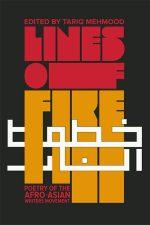
Lines of Fire (2nd Edition)
USD $ 60.00Lines of Fire: Recovering the Lost Arsenal of Anti-Colonial Poetry
Born in Tashkent , forged in clandestine presses, and echoing in today’s streets—this is the recovered front line of a global poetic resistance.
In 1958, at the Afro-Asian Writers’ Conference in Tashkent, a 90-year-old W.E.B. Du Bois stood before the decolonizing world and declared: “I am an American—I am an African.” It was a moment of radical, transnational self-definition.
From that conference emerged a literary movement and its journal, The Call—a direct line for poets from Algiers to Hanoi, Cairo to Beijing, to speak to one another, bypassing the languages and borders of their colonial masters. Though the movement later fractured under Cold War pressures, its two wings—The Call and the Soviet-backed Lotus—remained united in their stand against Zionism, racism, and empire.
Their poetry, often crafted under threat of torture, exile, and surveillance, became a clandestine weapon. Some of it was passed hand to hand, read aloud in underground meetings, and chanted at mass gatherings from Delhi to Ramallah, Cape Town to Gaza.
Now, for the first time, this vital corpus is restored. Lines of Fire, edited by Tariq Mehmood—former leading defendant in the landmark Bradford 12 case and now professor at the American University of Beirut—gathers these living weapons into a single, incendiary anthology. In an age of resurgent fascism and genocide, these voices speak with renewed, unyielding force: their anguish, rage, love, and hope are as urgent now as the day they were penned.
Why This Book Is Essential:
- A Lost Canon, Recovered: Features seminal, often inaccessible work by giants like Mahmoud Darwish, Faiz Ahmed Faiz, Leopold Senghor, Adunis, , Ousmane Sembène, and dozens more from across Africa and Asia.
- Drawn from Rare Sources: Poems curated from scarce issues of The Call and Lotus, long out of print and hidden in archives.
- A Groundbreaking Scholarly Frame: Includes a major introduction tracing the movement’s history, its surveillance by the CIA, the impact of the Sino-Soviet split, and a radical re-examination of solidarity.
- Built to Last & Teach: Published in archival-quality hardcover for libraries, scholars, and lifelong activists. An indispensable text for courses in Decolonial Studies, Global South Literatures, Cold War History, and Postcolonial Poetry.
A Call to Arms for a New Generation.
Edited by Tariq Mehmood, this collection includes poems by:
Salah Abdel Sabour (1931-1981, Ali Ahmad Said Esber, also known as Adunis (1930- ), Mulk Raj Anand (1905-2004), Anar Rasul oghlu Rzayef (1938- ), Nobuo Ayukawa (1920-1986), Fadhil al-Azzawi (1940- ), Abd Al-Wahhab al-Bayati (1926-1999), Mahim Bora (1917- ), Bernard Binlin Dadié (1916- ), Mahmoud Darwish (1942-2008), Osamu Dazai (1909-1948), Mário Pinto de Andrade (1928-1990), D.B. Dhanapala (1905-1971), Mohammed Dib (1920-2003), Gevorg Emin (1918-1998), Sengiin Erdene (1929-2000), Faiz Ahmed Faiz (1911-1984), Rasul Gamzatov (1923-2003), Daniil Granin (1919- ), Colette Anna Gregoire, better known as Anna Greki (1931-1966), Malek Haddad (1927-1978), Pham Ba Ngoan, better known by his pen name Thanh Hai (1930-1980), Buland al-Haidari (1926-1996), Suheil Idris (1925-2008), Yusuf Idris (1927-1991), Fazil Iskander (1929- ), Zulfiya Isroilova (1915-1996), Ali Sardar Jafri (1913-2000), Ghassan Kanafani (1936-1972), Edward al-Kharrat (1926- 2015), Hajime Kijima (1928-2004), Mazisi Kunene (1930-2006), Alex La Guma (1925-1985), U Gtun Kyi, better known by his pen name Minn Latt Yekhaun (1925-1985), Abdul Hayee better known by his pen name Sahir Lundhianvi (1921-1980), Zaki Naguib Mahmoud (1905-1993), Nazik Al-Malaika (1923-2007), Mouloud Mammeri (1917-1989), Yuri Nagibin (1920-1994), Sergey Narovchatov (1919-1981), Dashdorjiin Natsagdorj (1906-1937), Hiroshi Noma (1915-1991), Gabriel jibaba Okara (1921- ), Amrita Pritam (1919-2005), Jean-Joseph Rabearivelo (1901-1937), Richard Rive (1931-1989), Rady Saddouk (1938-2010), Badr Shakir al-Sayyab (1926-1964), Ousmane Sembene (1923- 2007), Leopold Sedar Senghor (1906-2001), Yusuf al-Sibai (1917-1978), Fadwa Tuqan (1917-2003), Sonomyn Udval (1921-1991), Ramses Younan (1913-1966), and Tawfiq Ziad (1929-1994).
#AfroAsianWritersMovement #Lotusjournal #TheCalljournal #NonAlignedMovement #BandungConference #Tashkent1958 #ColdWarculturalhistory #SinoSovietsplit #antiimperialism #anticolonialpoetry #resistanceliterature #resistancepoetry #revolutionarysolidarity #antiracism #antiZionism #settlercolonialism #racialviolence #genocide #GlobalSouthliterature #Africanpoetry #Asianpoetry #Arabpoetry #Palestinianliterature #SouthAsianliterature #AfricanLiterature #Arabpoets #Africanwriters #AfroAsiansolidarity #WEBDuBois #politicalpoetry #20thcenturypoetry
-
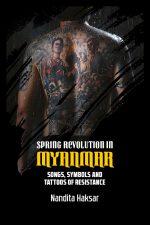
Spring Revolution in Myanmar
USD $ 18.00Select options This product has multiple variants. The options may be chosen on the product page
Spring Revolution in Myanmar
USD $ 18.00Myanmar is synonymous with ethnic conflicts, brutal military repression and insurgencies. The ongoing civil war against the junta has been described as the longest and one of the most violent conflicts in the world today with a growing humanitarian crisis.
This book celebrates the spirit of defiance, resilience and enormous courage of the Burmese people in the face of the military regime’s extreme violence. It is a window into the world of Burmese resistance and the myriad cultural expressions that it has taken ever since the February 2021 coup. Crowdfunded by the Burmese diaspora, but largely ignored by the international community, this is a resistance where every cultural form – poems, songs and even tattoos – has been explored as a weapon.
The regime has tried to ban these songs of resistance, and persecuted and even executed artists, musicians and poets. But as poet Khet Thi (1986-2021) said, before he was killed by the junta, “You try to bury us underground, because you don’t know that we are the seeds.”
Select options This product has multiple variants. The options may be chosen on the product page
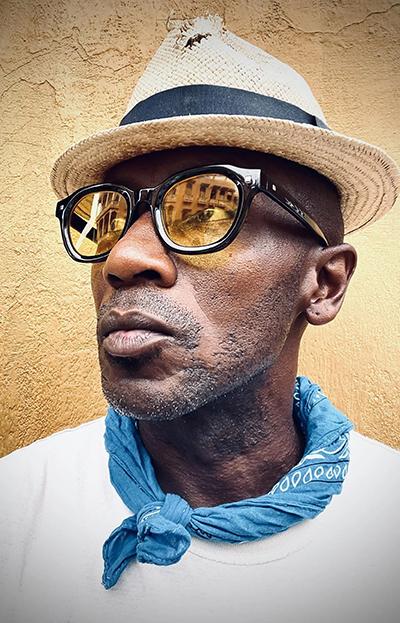
The Path to Abolition: Coming of Age in the Era of Mass Incarceration Part 3
In this final part, James describes the long legal battle for his freedom and his eventual release. Following three traumatic parole denials, his luck began to turn in 2001 when a Supreme Court ruling allowed him to appeal his deportation order. Despite the…
Mentorship and the Political Mind: Coming of Age in the Era of Mass Incarceration: Part 2
This second part of a three-part podcast focuses on James’s time at Coxsackie (the “Cat”) and Greene Correctional Facility, where he began to “decolonize his mind” through the guidance of mentors. At Coxsackie, he met an elder named Pops, a former Black Panther who…
Branded by the State: Coming of Age in the Era of Mass Incarceration: Part 1
In the first part of the interview, Dr. Kirk J. James discusses his arrest in 1994 as an 18-year-old college freshman with no prior record. He explains that his book title, 94A6325, represents his transition from a human being into “state property”: 94…
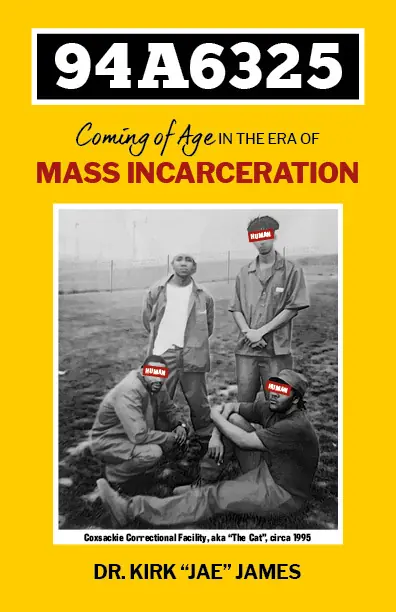
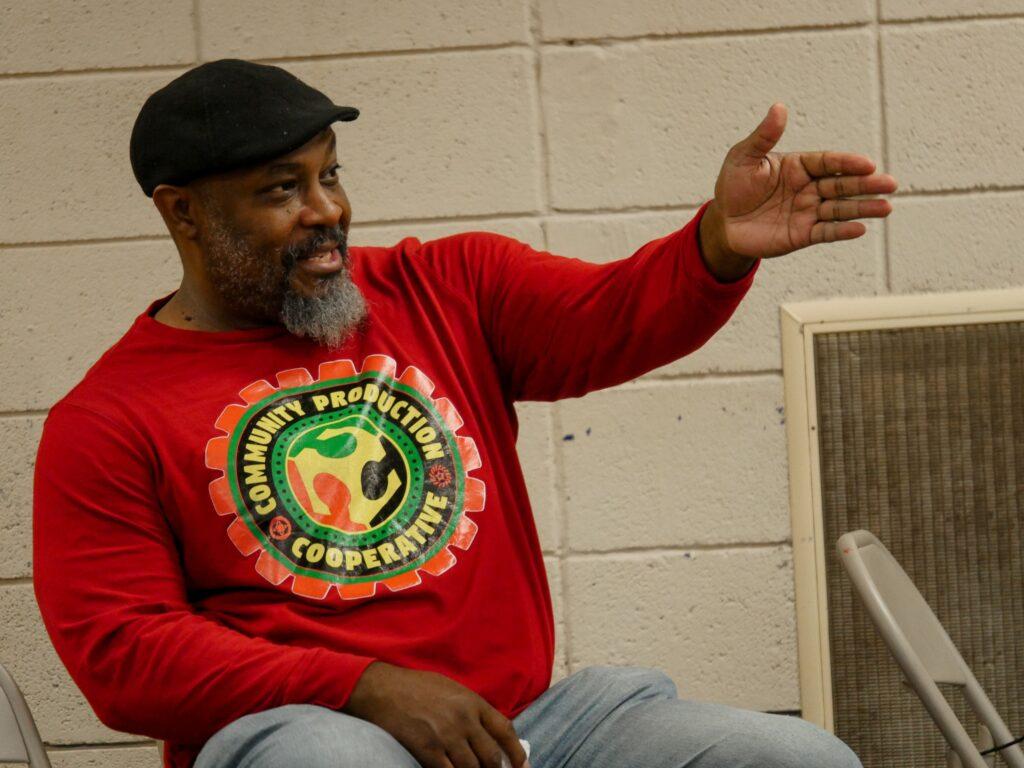
94A6325: Coming of Age in the Era of Mass Incarceration VIDEO
In 1994, eighteen-year-old Kirk “Jae” James was a college freshman with no prior record. But he made the mistake of getting caught in the net of the Rockefeller Drug Laws, and for that, the state of New York stole his…
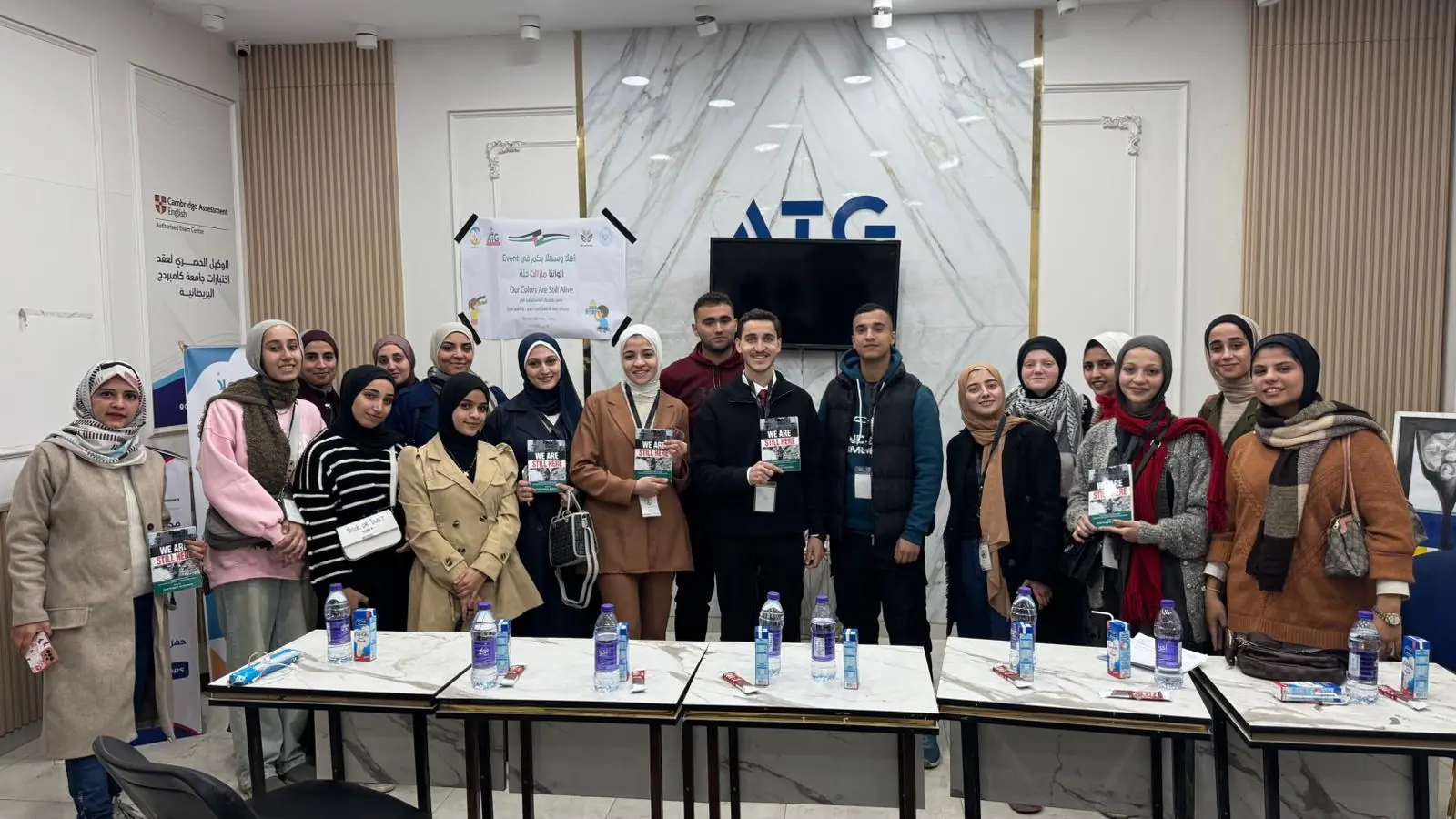
We Are Still Here in Gaza
We Are Still Here, published by Daraja Press, was launched today 15 January 2026 in Gaza, with authors who contributed to the book. In this podcast, we talk with student contributors (and the editors of the anthology) about Since the…
Featured Authors






Podcasts from Daraja Press