
No Author assigned to this book
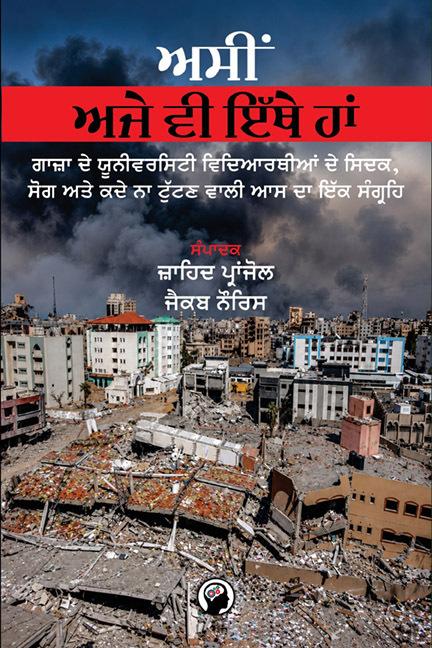
We Are Still Here (Punjabi edition)
An anthology of resilience, grief, and unshattered hope from Gaza’s university students
Categories: Forthcoming, Gaza, India, Palestine, West Asia / Middle East
Print book available from: RETHINK BOOKS
Customer Reviews
There are no reviews yet.
Only logged in customers who have purchased this product may leave a review.
Related products
-
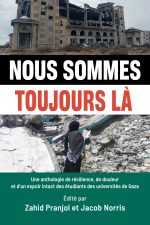
Nous sommes toujours là
USD $ 18Select options This product has multiple variants. The options may be chosen on the product page
Nous sommes toujours là
USD $ 18Depuis le début du génocide contre les Palestiniens à Gaza, mené par la violence coloniale israélienne, les établissements d’enseignement supérieur ont été systématiquement détruits. Les campus sont en ruines, les universitaires et les étudiants ont été tués ou déplacés de force, et ce qui était autrefois une population étudiante florissante et intellectuellement dynamique vit maintenant sous la menace quotidienne de bombardement, de famine forcée et de mort. Pendant près de deux ans, les étudiants ont été coupés non seulement de leurs universités, mais aussi de leurs rêves, de leur avenir et même de leur sentiment de sécurité le plus élémentaire.
Pourtant, malgré ce traumatisme inimaginable, beaucoup écrivent encore.
Nous sommes toujours là est une anthologie de ces voix – brutes, non filtrées et courageuses. Il présente des histoires courtes et longues, des poèmes, des essais et des témoignages écrits par des étudiants des universités de Gaza. Ce ne sont pas des réflexions rétrospectives ou des analyses à distance ; ce sont des mots en temps réel, émergeant des profondeurs du génocide, du déplacement et du deuil. Ces écrits peuvent être leurs derniers espoirs d’atteindre le monde, un dernier acte de résistance par l’expression.
Les droits d’auteur de la vente de ce livre sont intégralement reversés aux étudiants auteurs de Gaza.
Survivant aux extrêmes les plus sombres de la souffrance, de la destruction et du déplacement, de la famine et de la menace constante de mutilation ou de mort, ces jeunes écrivains nous parlent avec une lucidité perçante. Leur résilience est leur seule forme d’optimisme. Paradoxalement, les lire soulève le cœur.
– Ian McEwan, auteur d’Expiation et d’Amour ÉternelUn recueil bouleversant, douloureux et pourtant plein d’espoir, de la jeune génération du peuple de Gaza. Le Sumud, la résilience, n’a jamais été aussi puissant et clair qu’il ne l’apparaît dans cette collection incontournable et urgente. —Ilan Pappé, professeur au Collège des Sciences Sociales et des Études Internationales de l’Université d’Exeter, auteur de Une histoire très courte du conflit israélo-palestinien
Au cœur de la souffrance, les mots naissent — et sous les décombres, la créativité s’élève. Ce livre est plus qu’un recueil de pages écrites ; c’est l’écho d’âmes résilientes et le cri de plumes qui ont parlé lorsque les voix ont été réduites au silence. — Professeur Dr. Omar Kh. Melad, Président de l’Université Al-Azhar de Gaza
Nous Sommes Toujours Là n’est pas un livre sur la guerre — c’est un livre sur le fait d’être en vie après que le monde a décidé que vous avez déjà disparu, écrit dans des pièces qui ne tiennent peut-être plus debout. Ces pages sont des dépêches du fil étroit du présent : des lettres de la faim, des fragments de vies interrompues, des éclairs d’espoir si inflexibles qu’ils brûlent. Ici, des jeunes gens façonnent le témoignage de leur temps sur terre, sachant que leur temps peut être court. Vous ne quitterez pas ce livre avec le confort d’une conclusion. Il restera avec vous bien après que la dernière page aura été tournée. — Leila Sansour, réalisatrice et fondatrice d’Open Bethlehem
Ces réflexions poignantes de Gaza, en prose et en poésie, du milieu d’un génocide, sont à la fois déchirantes et pleines de vie et de promesse. Israël a peut-être physiquement tué nombre de leurs jeunes auteurs, mais il ne tuera jamais leurs mots, qui vivent dans ce puissant recueil de leurs écrits. — Ghada Karmi.
La mort n’est pas une idée pour ces jeunes écrivains, mais une réalité quotidienne. Ce recueil témoigne de la puissance des mots. Il révèle comment l’amour, la créativité et l’espoir peuvent nous galvaniser contre la peur et l’inaction. — Selma Dabbagh, auteure du roman Out of It et éditrice de l’anthologie We Wrote in Symbols; Love and Lust by Arab Women Writers.
Sara Alkhaldy, l’une des contributrices de Nous Sommes Toujours Là, une nouvelle anthologie d’écrits d’étudiants de Gaza, déclare : “Je voudrais pouvoir mettre en bouteille l’odeur de notre maison et l’emporter avec moi en partant.” Rula Elkhair écrit à propos des études pendant le déplacement : “Même dans des endroits sans électricité, sans eau et sans internet stable, j’ai installé un eSIM sur mon téléphone et je suis montée sur le toit sous le bourdonnement des drones pour télécharger des cours. J’ai passé des examens dans des cafés au bord de la mer. J’ai étudié en ayant faim, en ayant peur, en étant en deuil.” — Selma Dabbagh dans la London Review of Books Connaissance des Faits Pertinents.
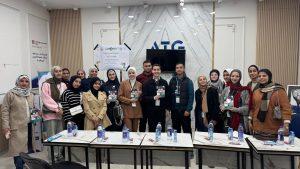 Écoutez notre conversation en podcast
avec les étudiants contributeursLa version anglaise de ce livre est disponible ici : We Are Still Here
Select options This product has multiple variants. The options may be chosen on the product page -
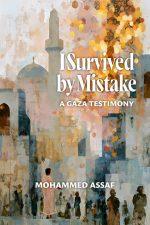
I Survived by Mistake
USD $ 10 USD $ 20Price range: USD $ 10 through USD $ 20Select options This product has multiple variants. The options may be chosen on the product page
I Survived by Mistake
USD $ 10 USD $ 20Price range: USD $ 10 through USD $ 20This deeply personal and introspective work explores survival—not merely physical survival, but emotional and spiritual endurance through love, war, and loss. Written by a Palestinian author against the backdrop of the Gaza genocide, the book weaves together reflections on love, betrayal, killings, displacement, and the search for meaning in a world stripped of humanity.
The narrative oscillates between intimate romantic relationships and the brutal realities of life under bombardment. The author chronicles a turbulent love affair marked by passion, jealousy, betrayal, and eventual dissolution, examining how relationships fracture under the weight of pride, misunderstanding, and external pressures. Simultaneously, he documents the devastating experience of genocidal attacks by Israel in Gaza: displacement, hunger, the loss of loved ones, the daily struggle for survival, and the erosion of human dignity.
Central themes include the nature of survival—questioning whether mere existence constitutes living, and whether those who survive emerge intact or fundamentally altered. The author grapples with grief over the death of his grandmother, the loss of his beloved, and the collective trauma of a people under siege. He explores the tension between hope and despair, the betrayal of humanitarian aid systems, the corruption of values in times of crisis, and the profound loneliness of carrying unspoken pain.
Writing serves as both confession and catharsis—an attempt to staunch internal bleeding and make sense of chaos. The prose is poetic, fragmented, and emotionally raw, reflecting the author’s belief that true survivors do not write; they simply endure. Ultimately, the book is a testament to the impossibility of returning unchanged from love or genocidal attacks, and the quiet dignity of continuing despite everything.
Select options This product has multiple variants. The options may be chosen on the product page -
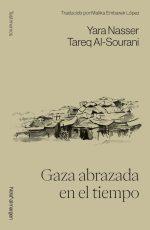
Gaza abrazada en el tiempo
USD $ 22.38Select options This product has multiple variants. The options may be chosen on the product page
Gaza abrazada en el tiempo
USD $ 22.38The Spanish translation of original English edition of Gaza Held in Time is now available, published by Nota al margen in Spain. Copies of this publication are available here: https://www.notalmargen.com/libros/gaza-abrazada-en-el-tiempo/
«Sigo sin saber por qué amamos a Gaza. Tal vez porque nadie más lo hará. O porque dejar de amarla significaría renunciar a nosotros mismos. Ta vez nunca entienda el por qué, o bien sea algo que no necesito explicar. Quizá el amor es lo que queda cuando no queda nada. O quizá, solo quizá, no sea amor en absoluto, sino dolor. Una negativa a dejar de preocuparse, incluso cuando está en llamas. Esto no es una respuesta. Es lo que descubrí cuando empecé a preguntar. Sentir amor por Gaza no es lógico»
Le solía contar cuentos a mi hermana pequeña antes de dormir. Inventaba ciudades con árboles mágicos y bicicletas voladoras, donde la gente no se escondía bajo el hueco de la escalera ni revisaba el depósito de agua a diario, donde nadie se moría ni se suspendían las clases porque la escuela había sido bombardeada.Ella se reía y me preguntaba:
—¿De verdad, eso existe?
—Todavía no —le respondía.
Ese era el truco en Gaza. Decíamos «todavía no», en lugar de «nunca».
Porque la esperanza era lo único que no podían bombardear.
El cielo gritaba fuerte. Y sigue haciéndolo.
Ahora, en lo más hondo de mí, espero el día en que todo se quede en silencio.
Y cuando eso ocurra, alzaré la mirada, no con miedo, sino en paz.
Ese día no ha llegado.
Pero seguimos soñando.
Y seguimos viviendo.«Busco por todas partes un cielo del que esté ausente la muerte. Estoy segura de que está ahí, cuando compruebo los callejones y las avenidas. Se dice que existe justicia bajo ese cielo. Justicia es lo que siempre he anhelado y buscado».
«¿Seguiremos durmiendo en tiendas de campaña durante años? ¿Crecerán los niños entre paredes de nailon, aprendiendo a dibujar con cenizas? ¿Qué ocurrirá cuando el mundo siga adelante —de nuevo— y los únicos que queden para recordar este horror sean quienes no pudieron huir de él?».
«si dejo de escribir, / el silencio escribirá en mi lugar. / Y temo lo que pueda contar».
Select options This product has multiple variants. The options may be chosen on the product page -
 Select options This product has multiple variants. The options may be chosen on the product page
ہندوتواہ اور صیہونیت کے ساتھ اس کا تعلق(Urdu edition)
USD $ 5ہندوتواہ
اور صیہونیت کے ساتھ اس کا تعلقاَمرت وِلسن
اسرائیل پر لیکچرز کا سلسلہ
معاون: لاہورہ آلباسٹ ، ادارہ برائے مطالعہ فلسطین ، یو ایس اے
ثالث: ڈاکٹر وریندر سنگھ کالرا
ایڈیٹر: طارق محمود ، امریکن یونیورسٹی بیروتدسمبر 2022 میں لکھا گیا، یہ متن انسٹی ٹیوٹ آف فلسطین سٹڈیز کی دعوت پر دیے گئے ایک لیکچر پر مبنی ہے۔ اس کے بعد سے اسرائیل اور بھارت کے تعلقات مزید گہرے ہوئے ہیں اور دونوں ممالک میں مظالم آسمان کو چھونے لگے ہیں۔ 5 اپریل 2023 کو اسرائیلی فورسز نے مقبوضہ مشرقی یروشلم میں مسجد اقصیٰ کے احاطے پر دھاوا بول دیا اور اندر نمازیوں پر حملہ کیا۔ ایک ہی وقت میں، اسرائیل کو ایک متنوع گروہ کے درمیان لڑائی میں اندرونی انتشار کا سامنا ہے، جن میں وہ لوگ بھی شامل ہیں جو یہ سمجھتے ہیں کہ موجودہ آباد کار کالونی ایک جمہوری قوم ہے اور چاہتے ہیں کہ چیزیں جوں کی توں رہیں، اور وہ بھی جو دائیں طرف کھڑے ہیں۔ اہم بات یہ ہے کہ بھارت کی حکمران جماعت بی جے پی مؤخر الذکر کی حمایت کرتی ہے۔ یہ کتاب ہندوتوا کے بارے میں ہے، وہ نظریہ جو وزیر اعظم نریندر مودی کی ہندو بالادستی بھارتیہ جنتا پارٹی (بی جے پی) حکومت کو چلاتا ہے، اور صیہونیت، اسرائیلی نسل پرست ریاست کا نظریہ۔ ابھرتے ہوئے فاشزم کے اس دور میں، یہ دونوں نمایاں طور پر ملتے جلتے نظریے دنیا کی دو سب سے زیادہ جابرانہ دائیں بازو کی ریاستوں کے درمیان اقتصادی اور فوجی اتحاد کو مضبوط بنانے میں انتہائی اہم ہیں – جبکہ ثقافتی میدانوں میں انہیں قانونی حیثیت دینے میں مدد فراہم کرتے ہیں۔ اسرائیل بلاشبہ ایک آبادکار نوآبادیاتی ریاست ہے، لیکن یہ بھارت کی طرح ایک فاشسٹ ریاست بھی ہے، نہ صرف ‘انتہا پسند جماعتوں جو کہ حکومت کا حصہ ہیں’ کی وجہ سے بلکہ ‘ان کے اہل کاروں – نیتن یاہو اور مروان بشارا کے الفاظ میں، نیتن یاہو ‘جدید اسرائیلی فاشزم کا گاڈ فادر’ ہے۔
Written in December 2022, this text is based on a lecture given earlier at the invitation of the Institute of Palestine Studies. Since then, the relationship between Israel and India has deepened further and atrocities have skyrocketed in both countries. On 5 April 2023, Israeli forces stormed Al Aqsa Mosque compound in occupied East Jerusalem and attacked worshippers inside. At the same time, Israel is facing internal turmoil in a battle between a diverse group, including those who think the current settler colony is a democratic nation and want things to remain as they are, and those who stand even further to the right. Significantly, the BJP, India’s ruling party, supports the latter. This book is about Hindutva, the ideology which drives the Hindu-supremacist Bharatiya Janata Party (BJP) regime of Prime Minister Narendra Modi, and Zionism, the ideology of the Israeli apartheid state. In this era of rising fascism, these two remarkably similar ideologies are crucially important in cementing the economic and military alliance between two of the world’s most repressive right-wing states – while helping to legitimize them in cultural arenas. Israel is, of course, a settler colonial state, but it is also, like India, a fascist state, not only because of ‘the extremist parties that [are] part of the government’ but also because of ‘their enablers – Netanyahu and his chauvinistic Likud party which long strove for a Jewish state dominating both sides of the Jordan River.’ In the words of Marwan Bishara, Netanyahu is ‘the godfather of modern Israeli fascism.’
Select options This product has multiple variants. The options may be chosen on the product page -
 Select options This product has multiple variants. The options may be chosen on the product page
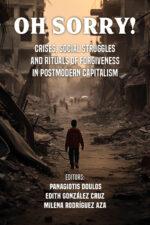
Oh, Sorry! Rituals of Forgiveness, Crises and Social Struggles in Postmodern Capitalism
USD $ 20As the world grapples with the legacy of crimes of enslavement, colonialism, genocide and mass killings, imprisonment and murder of children, attempts at eliminating cultures and history of Indigenous peoples, looting and other crimes against humanity, the performance of public atonement has become increasingly prevalent. Apologies from state actors and institutions are issued in solemn ceremonies, often acknowledging the collective guilt for historical atrocities. Despite the solemnity of these events, there is a growing scepticism surrounding the sincerity of these apologies, particularly when they are not accompanied by tangible reparations, healing, reconciliation or systemic change. This scepticism is rooted in a perception that these acts of contrition are sometimes less about making amends to the aggrieved and more about assuaging the guilt of the aggressors and maintaining the status quo, providing the illusion of progress without the substance.
In this compelling work, Oh, Sorry! Rituals of Forgiveness, Crises and Social Struggles in Postmodern Capitalism, the authors unveil the complex interplay between public apologies, social justice and popular mobilisations. The chapters are devoted primarily to the experiences of Latin America, particularly of Mexico, Guatemala, Chile, and Brazil. But there is also a chapter on the struggles for Palestine — so relevant in the face of the current genocidal invasion by the Zionist State of Israel into Gaza, the world’s largest and most densely populated concentration camp.Select options This product has multiple variants. The options may be chosen on the product page -
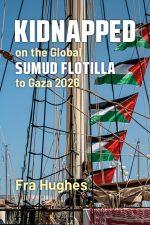
Kidnapped on the Global Sumud Flotilla to Gaza 2026
USD $ 6.99 USD $ 20Price range: USD $ 6.99 through USD $ 20Select options This product has multiple variants. The options may be chosen on the product page
Kidnapped on the Global Sumud Flotilla to Gaza 2026
USD $ 6.99 USD $ 20Price range: USD $ 6.99 through USD $ 20Kidnapped on the Global Sumud Lifeline to Gaza 2026 is the first-person account of Fra Hughes, a Belfast activist who sailed with the Global Sumud Flotilla in April 2026 on a humanitarian mission to break Israel’s siege of Gaza. Carrying food, medicine, and an unshakeable conviction that another world is possible, Hughes and his comrades were intercepted in international waters by Israeli commandos. What followed were three days of kidnapping, imprisonment, and deliberate degradation—from a metal shipping container in the Mediterranean to the high-security Ketziot Prison in the Negev desert.Told with unflinching honesty and dark Irish humour, this memoir spans three decades of activism. Hughes traces his journey from the streets of Belfast during the Troubles—where solidarity with Palestine was forged in the shadow of British occupation—through fifteen years of campaigns, convoys, and protests in Brussels, Barcelona, Cairo, and beyond. He documents the first Gaza convoys of 2010, the slow-burning solidarity movement that kept faith through years of failure, and the 2026 flotilla aboard the Alma: the preparations, the dangers, the extraordinary community of international activists who risked everything together on the water.The book weaves together multiple voices, including Tadhg Hickey’s account of a separate vessel in the same flotilla, and bears witness to atrocities—beatings, sexual assaults, mass arrests—documented in Istanbul medical centres and activist testimony. Against the normalisation of Gaza’s genocide, Hughes insists on naming what he saw.Returning to a hero’s welcome in Dublin and Belfast, his message is unambiguous: international solidarity is not charity but resistance. Kidnapped on the Global Sumud Lifeline to Gaza 2026 is a testament to sumud—steadfast endurance—and a call to action for everyone who refuses to look away.Select options This product has multiple variants. The options may be chosen on the product page -
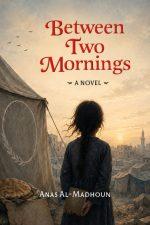
Between Two Mornings
USD $ 12 USD $ 25Price range: USD $ 12 through USD $ 25Select options This product has multiple variants. The options may be chosen on the product page
Between Two Mornings
USD $ 12 USD $ 25Price range: USD $ 12 through USD $ 25Between Two Mornings is a novel that unfolds over a single day in a Gaza displacement camp—from six in the morning until four the next morning. But as the narrator warns, “Time here does not move as you know it.” An hour in a bread queue is longer than the night; a minute at a medical post is enough for a girl to grow ten years older.
Through interlocking chapters, each anchored to a fixed hour and a distinct voice, the novel follows a community trying to live in a time that permits them only to survive. Lujain, a young girl, learns from her teacher that “zero is not nothing”—and writes that “the bread was warm.” Abu Wissam, a former shopkeeper, insists his family is seven even when the register counts five, writing their names in a blue notebook: “We are seven.” Teacher Noor turns sand into a blackboard, teaching children to write their names larger than the wind can erase. Samer searches hospital lists for his missing brother, clutching a photograph worn thin. Rahaf, a nursing student, delivers a baby in a tent with one glove and almost no water, choosing the name Hayat—Life—for a girl. Abu al-Abd counts his grandchildren each night: Radi, Dana, Musab, Adam. Huda waits for a message that says only: “I am here.” Hassan the photographer learns when to raise his camera and when to lower it. Asmaa collects the remnants of the lost—a button, a pen cap, a camera—because “chaos is the final insult.”
The novel refuses a single hero. It asks the reader not for pity, but to see the person before the news: the loaf before the hunger, the name before the list, the small habit that refuses to die. In the devastating conclusion, the fates of these characters are revealed—not as statistics, but as lives that were fully lived before they were lost. “Do not say: they died,” the narrator implores. “Say: Lujain wrote. Abu Wissam counted. Noor taught.”
Select options This product has multiple variants. The options may be chosen on the product page -

Unsilenced
From: USD $ 10Select options This product has multiple variants. The options may be chosen on the product page
Unsilenced
From: USD $ 10Unsilenced: Poems for Palestine is a collection of poems that convey profound emotions and serious reflections on the ongoing situation in Gaza and Palestine since the Nakba. The anthology seeks to express the moral outrage felt by poets from around the world, highlighting the perceived double standards of the West regarding international law and the suffering of the Palestinian people. The poems examine the daily realities of life and philosophical perspectives on the human condition, using nature as a motif to articulate emotions and explore themes of homeland, childhood, exile, genocide, and war. All proceeds from the sale of the collection will be donated to Gaza, demonstrating the poets’ commitment to fostering positive change through their art. Contributors include diverse voices from various countries, each recognizing the urgency and necessity of addressing the inhumane actions perpetrated against Palestine.
Income from the sale of this title will be donated for Palestine.
Praise for Unsilenced
Haunting verses by poets fluent in the language of death and genocide. Each poem rings out as a piece of memory, a bridge and a dream. This elegy will stand as a testimonial, a witness, by brave voices exhausted by the deafening silence of a traumatized world. —Nnimmo Bassey, author of I See the Invisible (poems) and Laureate of the Right to Livelihood Award 2010
… the priceless value of an anthology of lyrics from yet another encircled, blitzed, strafed, and bombarded commune, ghetto, or kibbutz, is that it bears indelible witness to the unbreakable human spirit yearning for freedom, for peace, for bread and wine and water set amid an olive grove or a lemon orchard. That is what you will unfold in editor John P. Portelli’s Unsilenced: Poetry for Palestine. Poets—Jew and Arab, Muslim and Christian, Atheist and Surrealist—voice suffering, resilience, despair, and hope, speaking out of their fragile humanity to demand that vile atrocities cease. — George Elliott Clarke, author of Canticles I-III, 6 vols, MMXVI-MMXXIII (2016-2023)
Unsilenced shows how poetry is written to trigger and provoke, to bear witness, to look at the sky and shout, over and over, as loudly as necessary against injustice. Immanuel Mifsud, Associate Professor, University of Malta and winner of the European Union Prize for Literature (2011).
Contributing Authors
Poems by: Raed Anis Al-Jishi (Kingdom of Saudi Arabia), Ridvan Ardic (Türkiye), Lil Blume (Canada), Taghrid Bou Merhi (Lebanon and Brazil), Hasan Bozdaş (Türkiye), Norbert Bugeja (Malta), Tatev Chakhian (Armenia), Franca Colozzo (Italy), Lana Derkač (Croatia), Josie Di Sciascio-Andrews (Canada), Leanne Ellul (Malta), Marthese Fenech (Malta), Abigail George (South Africa), Joe Giampaolo (Canada), Elham Hamedi (Iran), Xanthi Handrou-Hill (Greece), Jennifer Hosein (Canada), Fady Joudah (USA), Sheema Kalbasi (Iran, Denmark, USA), Rula Kahil (Lebanon and Canada), Nibal Khalil (Palestine), Zeyneb Karaca (Türkiye), Yahia Lababidi (USA), Milica Jeftimijević Lilić (Serbia), Sonia Maddouri (Tunisia), Lisa Suhair Majaj (Palestine, U.S.A., and Cyprus), Marwan Makhoul (Palestine), Leila Marshy (Canada), Taghrid Bou Merhi (Lebanon and Brazil), Ahmed Miqdad (Palestine), Maria Miraglia (Italy), Walid Nabhan (Malta, Jordan, Palestine), Mirela Necula (Romania), Mansour Noorbakhsh (Canada), Joseph C. Ogbonna (Nigeria), Muhammed Huseyin Ozer (Türkiye), John P. Portelli (Malta and Canada), Niloy Rafiq (Bangladesh), Shirani Rajapakse (Sri Lanka), Giovanna Riccio (Canada), Omar Sabbagh (Lebanon), Paul Salvatori (Canada), Eray Saricam (Türkiye), Zulal Sema (Türkiye), Cao Shui (China), Kadir Tepe (Türkiye), Graciela Noemi Villaverde (Argentina), Mirela Leka Xhava (France, Albania), Klara Vassallo (Malta), Anna Yin (Canada), Ghassan Zaqtan (Palestine)Select options This product has multiple variants. The options may be chosen on the product page