The inside story of the struggles of the Kenya Land and Freedom Army, referred to by British colonialism as the ‘Mau Mau rebellion’, is little known today. The autobiographical material written by Karari Njama (a senior leader in the Mau Mau hierarchy) and compiled by Donald L. Barnett was first published by Monthly Review Press in 1966 as Mau Mau From Within: An Analysis of Kenya’s Peasant Revolt. It was reprinted in 1970; it has remained out of print for many years. As the late Basil Davidson put it in his review of the first edition: “Njama writes of the forest leaders’ efforts to overcome dissension, to evolve effective tactics, to keep discipline, mete out justice … and to teach men how to survive in those merciless forests. His narrative is crowded with excitement. Those who know much of Africa and those who know little will alike find it compulsive reading. Some 10,000 Africans died fighting in those years . Here, in the harsh detail of everyday experience, are the reasons why.”
The book is an extraordinary story of courage, passion, heroism, combined with recounting of colonial terror, brutality and betrayal. It is a story of how the very idea of being ‘Kenyan’ was intimately linked to the idea of freedom, a connection that was destroyed not only by the firepower of the British, but also by those who collaborated and established themselves as the beneficiaries of neocolonial rule. Disconnecting notions of freedom from identity left only a caricature that rapidly descended into tribalism and ethnicity.
This momentous story of the struggle for freedom described here is relevant not only for a new generation of Kenyans but also for all those engaged in emancipatory struggles internationally. For so long as the experiences arising from the struggles described in this book are perceived as merely ‘African’ or ‘Kenyan’, it is not possible to fully grasp the contributions they have made to the struggle for a universalist humanity.
What is recounted in this publication is more than an ‘analysis of a peasant revolt’. It is, above all, a history of the Kenya Land and Freedom Army. As Ngūgī wa Thiong’o points out in his Preface to this new edition, ‘we don’t have to use the vocabulary of the colonial to describe our struggles.’ We were tempted to rename the book ‘Kenya Land and Freedom Army from Within.’ But because the original title has wide recognition, and one of the characteristics of movements of the oppressed is to appropriate derogatory terms



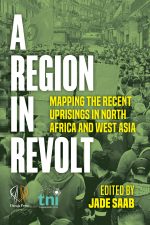




Michael Neocosmos
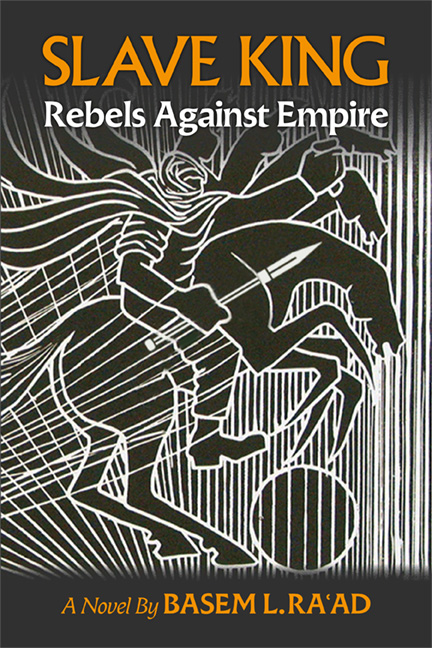
A fictionalized account of a slave rebellion in Roman Sicilia more than sixty years before Spartacus, it tells the story of the slave Younis from Afamia (now in Syria), a mystic and seer who led a great uprising sustained much longer than Spartacus’s. As with the Messinian rebellion against Spartan oppression centuries earlier, the West has been slow to take such events seriously and reinstate their presence in popular culture as expressions of human spirituality and resistance. The role of seers as leaders is reminiscent of Ayi Kwei Armah’s The Healers on ancient Africa. This book is a fascinating and brilliant telling of popular struggle. It is a minor classic. — Michael Neocosmos, Emeritus Professor in Humanities, Rhodes University, South Africa, author of Thinking Freedom; Towards a Theory of Emancipatory Politics
Adrienne Mayor
I highly recommend Basem Ra’ad’s compelling and deeply researched historical novel about the fire-breathing Syrian slave who challenged Roman might in the second century BCE, seeking independence for his thousands of followers. This little-known story of resistance deserves wide attention. … an amazing and important story. — Adrienne Mayor, author, The Poison King: The Life and Legend of Mithradates, Rome’s Deadliest Enemy
Tariq Mehmood
What Basem L. Ra’ad has done in this remarkable novel about slave uprisings against the Roman Empire is to demonstrate how ‘the history of all hitherto existing society is the history of class struggles.’ He shows why the dominant discourse needs to be revised.A moving story that casts light on many of the strifes in our times. — Tariq Mehmood, author, Song of Gulzarina, Associate Professor, American University of Beirut
Hilton Obenzinger
Slave King disrupts two millennia of malign stories about one of antiquity’s original slave revolts. Not cannibals, not demons, but slaves, farmers and herdsmen created a kingdom of equality and compassion. With deep knowledge, Ra’ad re-imagines freedom emerging from Mediterranean multicultural shores. It is a profound re-creation of history in thrilling fiction. —Hilton Obenzinger, author of Witness 2017-2020 and American Palestine: Melville, Twain, and the Holy Land Mania